

Saint Margaret of Antioch and Stories of Her Life
Artist: Painted in the manner of Turino Vanni
Date: 1400 ca.
Classification: Painting
Dimensions: 166 x 106.7 cm
Materials: Gold leaf, Tempera, Ogival poplar panel
Adopted By: The Italian & International Chapter
Total Cost: € 12,500
Description
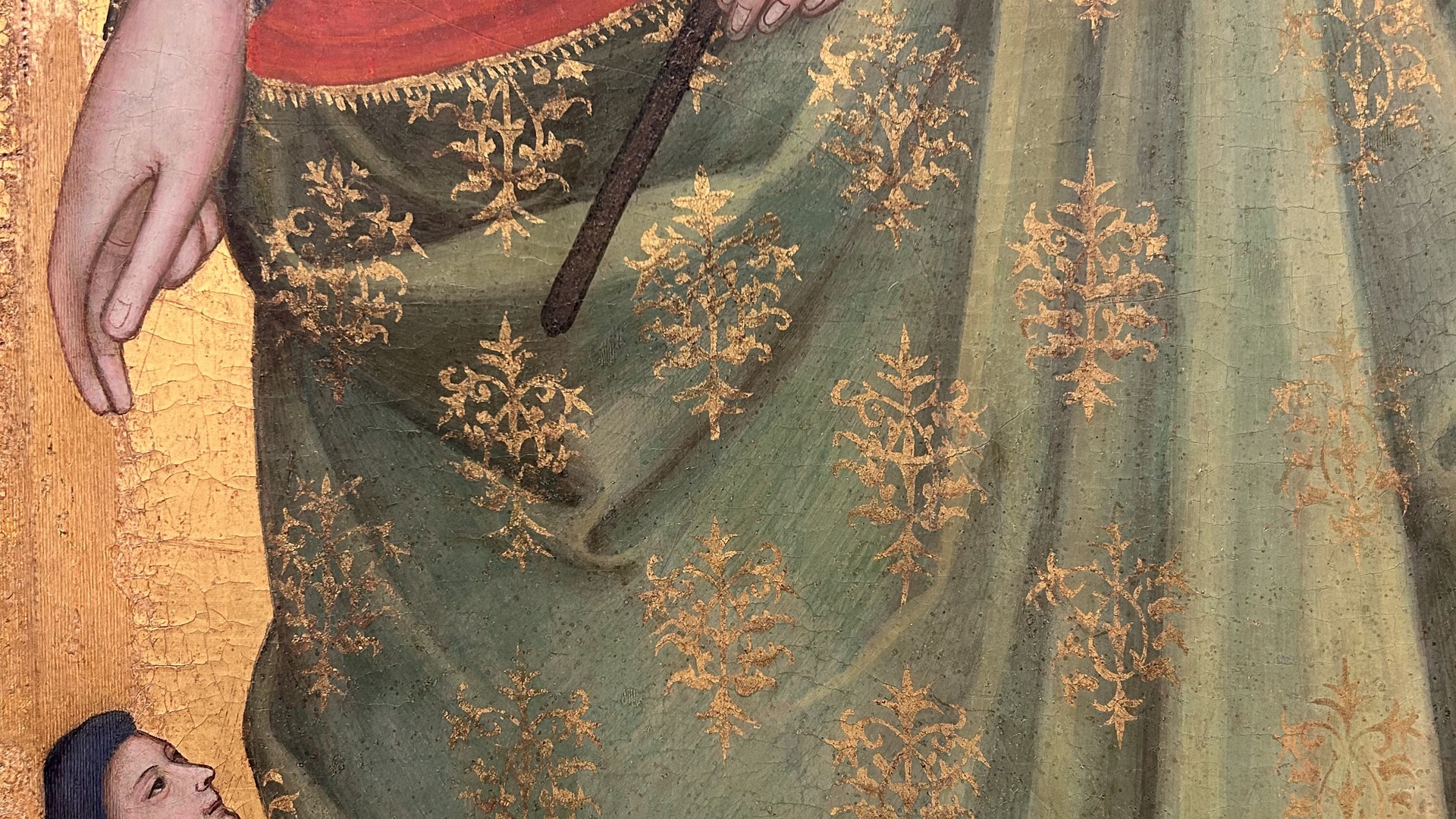
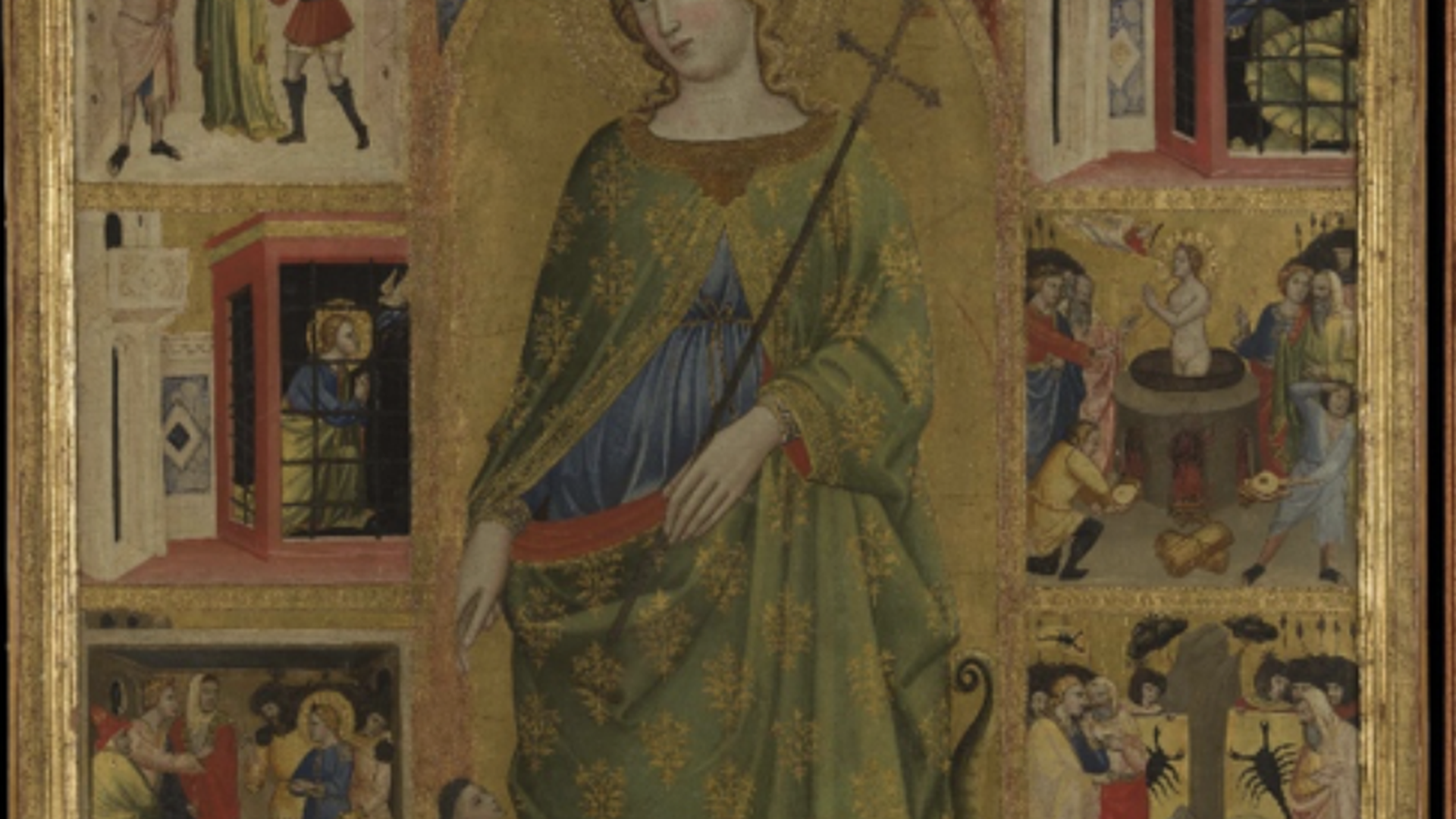
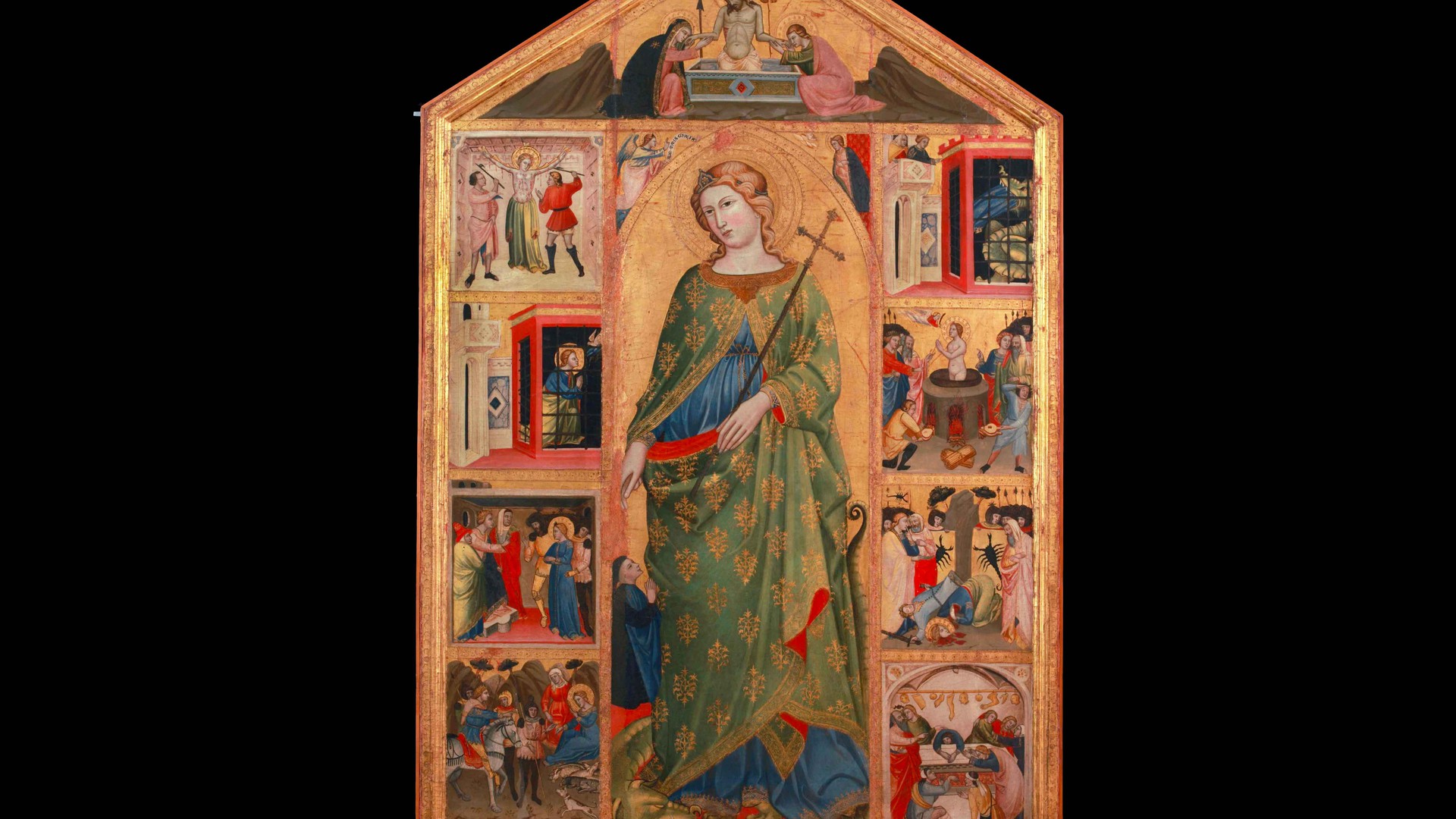
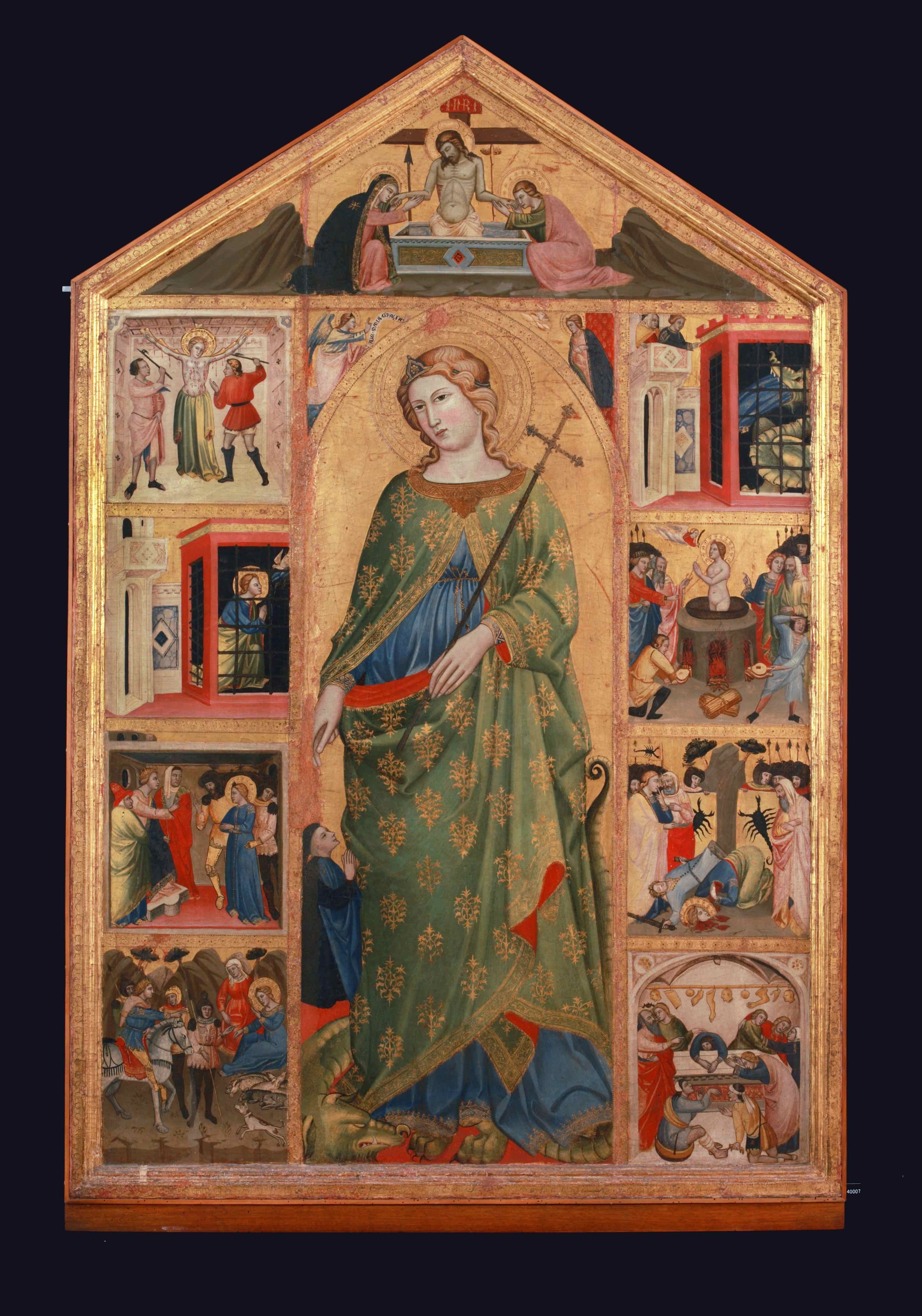
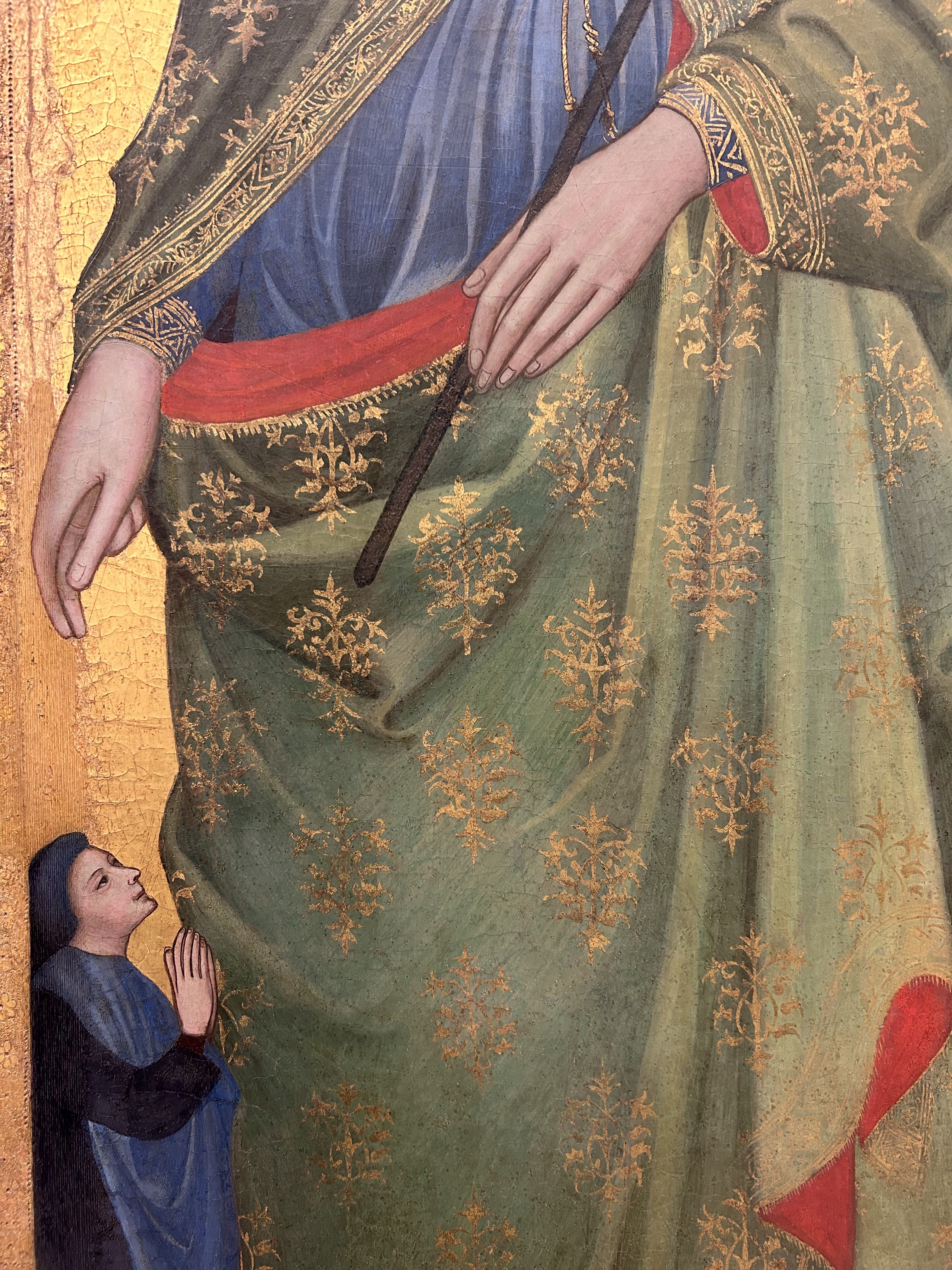
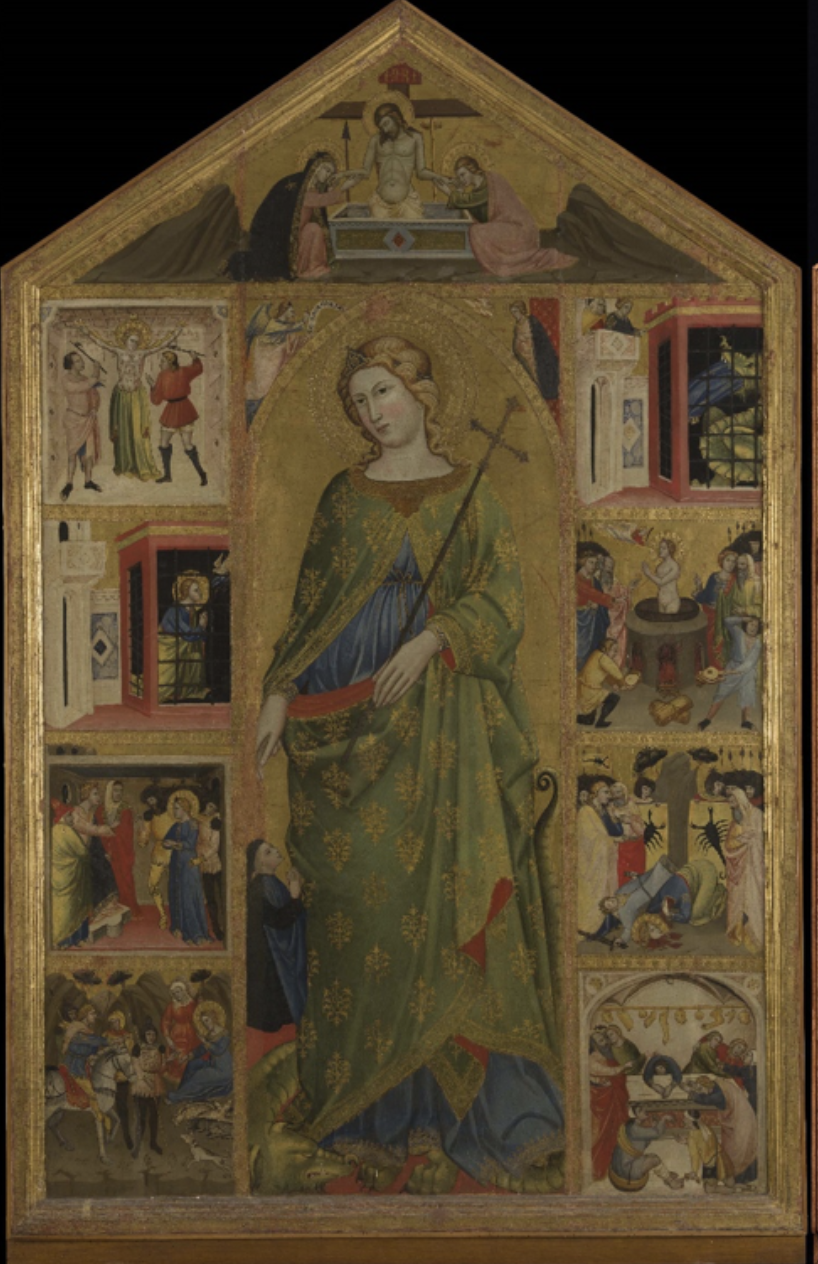
This painting depicts a young Saint Margaret of Antioch, also known as Saint Marina, proud and magnificent on a large vertical ogival panel, which recalls the shape of a tabernacle and framed by a Gothic arch. Draped in a precious cloak of green damask embroidered with a motif of gold palmettes, a crown placed on her golden hair, in one hand she holds a slim Crucifix, while with the other she welcomes the figure on her right, the kneeling donor, who is smaller in scale. At her feet lies the conquered dragon, symbolizing evil and related to an episode from her life. According to the hagiographers, the dragon devoured the Saint who saved herself by slashing its belly open with her Crucifix. The tradition of this extraordinary event gave Margaret the ability to grant wishes to those who invoke her.
In the ogival part of the panel, between the Virgin Mary and St. John the Evangelist is depicted the Vir Dolorum, and below, in the spandrels adjacent to the Gothic arch, are painted two small figures: the announcing Angel and the announced Virgin.
On either side of the Saint are depicted four scenes from her life, starting from the lower left-hand side and ending with the painting on the lower right-hand side. The Legend of Saint Margaret, handed down by a Greek Passio, narrates the story of a girl born in 275 A.D. in Antioch, modern-day Turkey. She was the daughter of a pagan priest when the apostles Barnaby and Paul were spreading the joyful message of the coming of Jesus Christ our Saviour.
Margaret, raised by a wetnurse who had secretly introduced her to Christianity, was martyred as a witness of her faith at the age of 15.The origin of the panel painting is unknown. It was transferred from the Sacred Museum of the Vatican Library to the Pinacoteca, the Vatican Art Gallery, in 1908.
The painting dates back to around the 15th century and was initially attributed to the Tuscan school; however, its style was later likened to that of the painter Turino Vanni (b. Rigoli, Pisa, 1349 d. after 1438) who was active in Pisa and Genoa.
The type of hagiographic panel, albeit with various forms, became common in Tuscany in the early 15th century, with the purpose of celebrating cities through the glorification of their patron saints.
List of stories (from the lower left-hand side to the lower right-hand side)
- In the first scene, the governor Olibrio meets Margaret in the fields and is struck by her beauty.
- In the second scene, the girl is standing in front of the governor refusing to marry him.
- In the third scene, Margaret, who has been imprisoned, is comforted by a dove.
- In the third scene, the girl is brutally scourged.
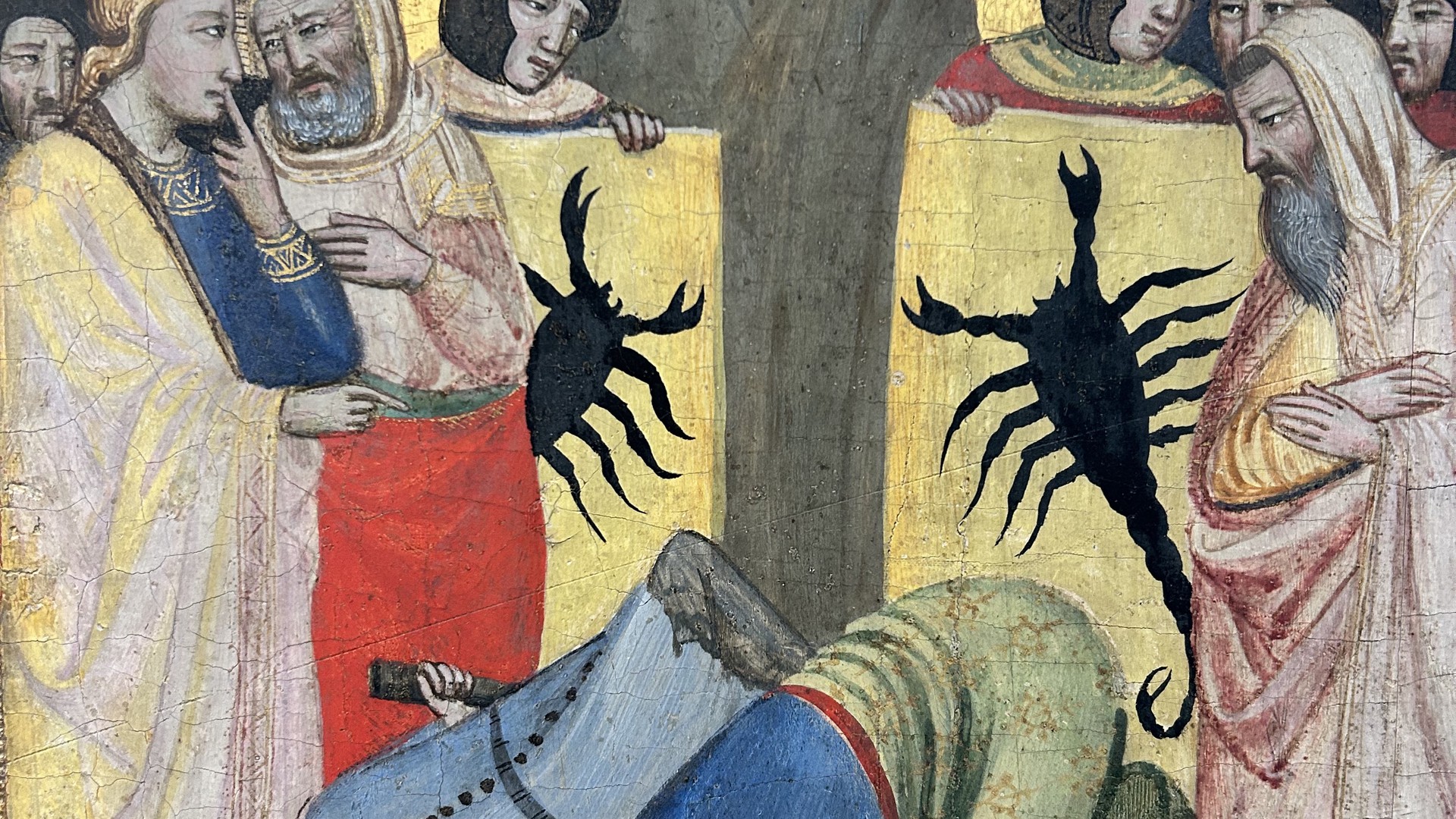
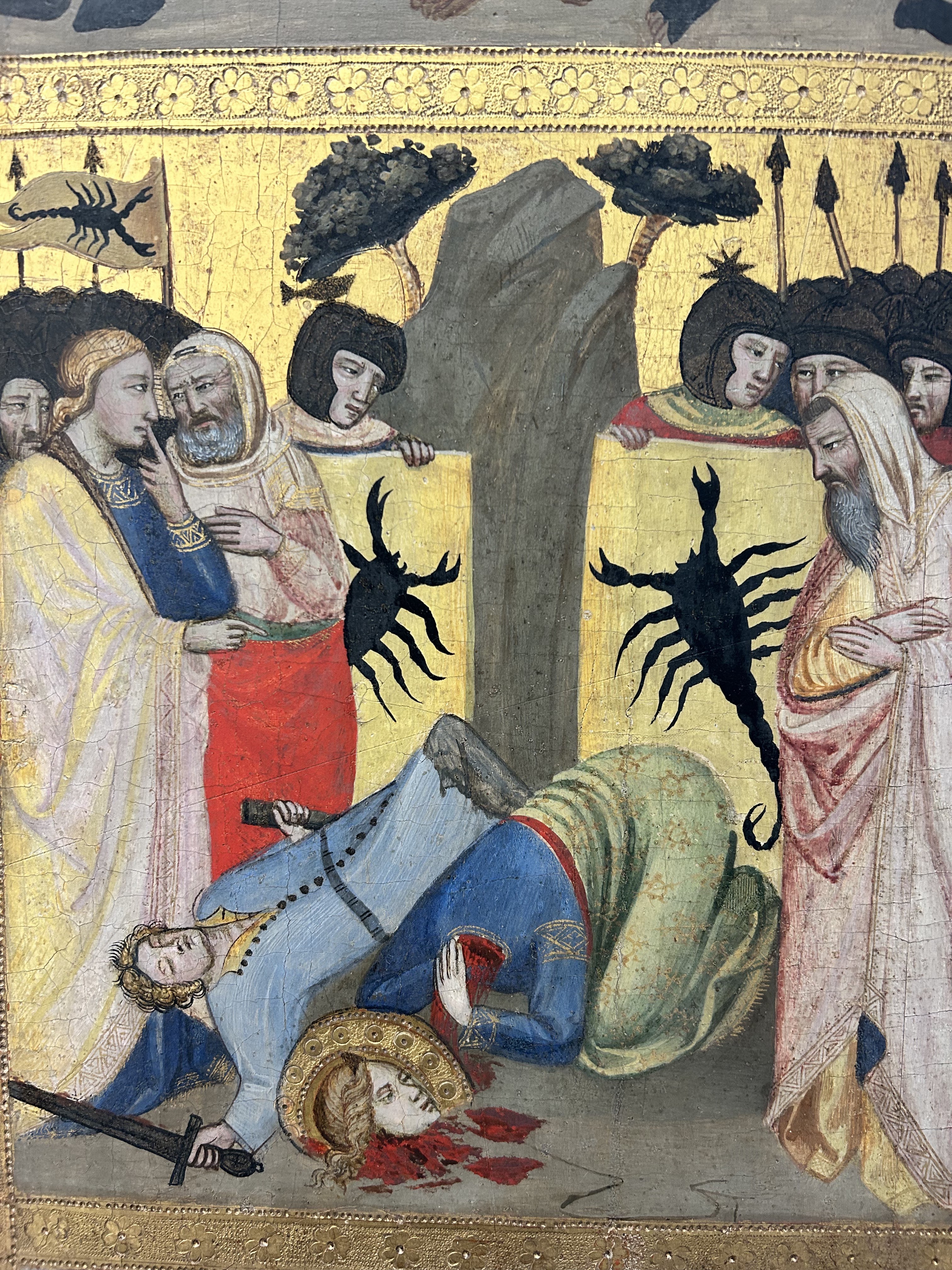
- The story continues on the other side: in the first scene, Margaret is imprisoned, once again, and is attacked by the Dragon.
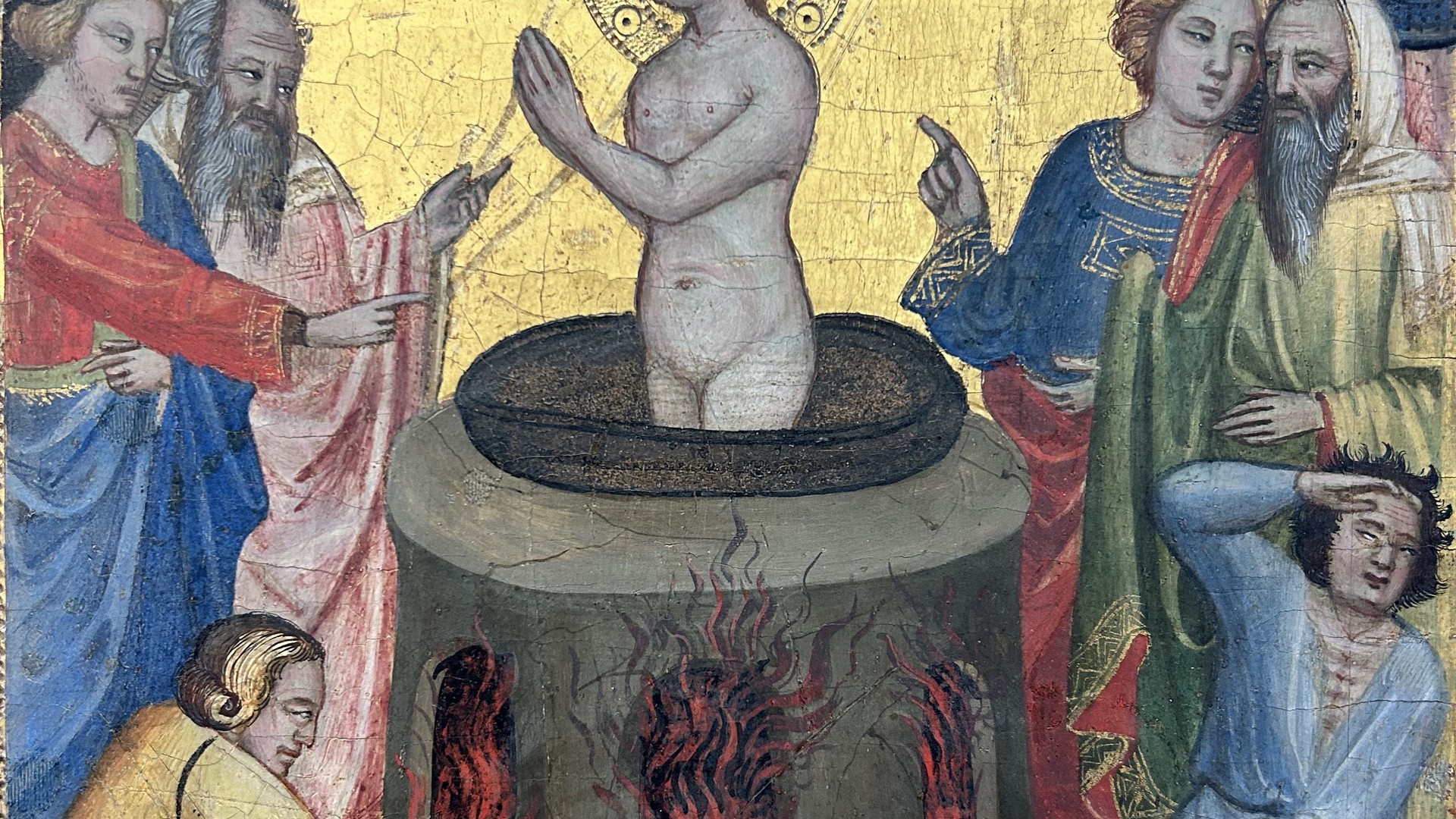
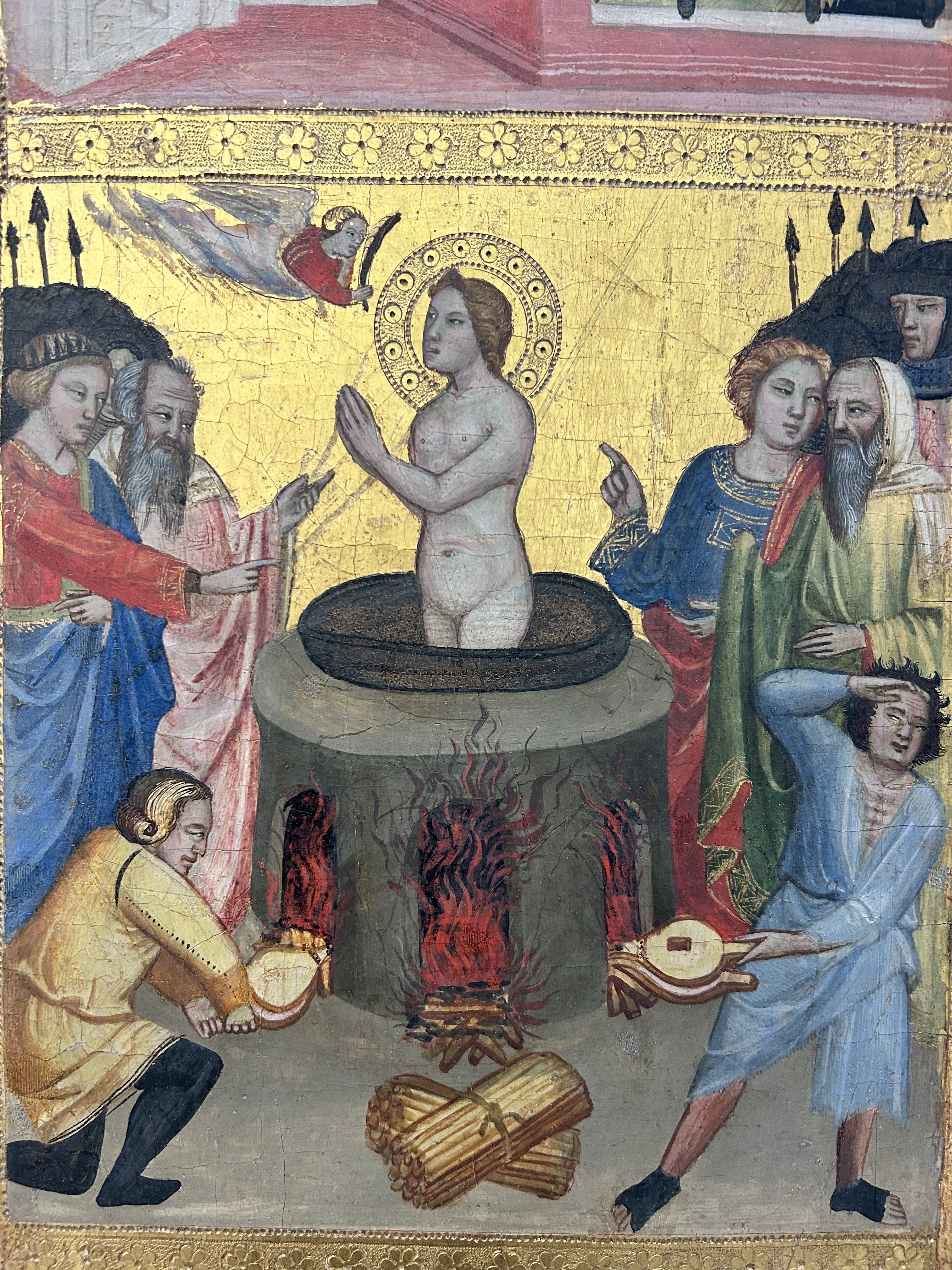
- In the second scene, the girl is plunged into boiling liquid but miraculously remains unharmed.
- In the third scene, the Saint is beheaded and her executioner dies instantly.
- In the final scene, the sick and the crippled gather around the Saint’s tomb, to give thanks.
Detail
Inventory N°: 40007
Artist: Painted in the manner of Turino Vanni
Date: 1400 ca.
Dimensions: 166 x 106.7 cm
Materials: Gold leaf, Tempera, Ogival poplar panel
Total Cost
€ 12,500
Saint Margaret of Antioch and Stories of Her Life Final Restoration Report
The restoration of the painting depicting "Saint Margaret and Stories from her Life" has been completed. The panel, composed of three vertically arranged poplar planks, is painted in tempera, with gilding, gold brush decorations, and some silver leaf details. Most of the gilded surfaces are adorned with elaborate punching. The frame is made of molded laths, glued, and nailed to the board
Past alterations to the piece have transformed some of its characteristics: in fact, the board has been cut along the perimeter, except for the lower side, thus reducing the frame, which now appears disproportionate to the size of the board. It also was thinned by removing the original structure. These and other causes, such as transportation, interventions, and unsuitable places for conservation, led to the need for restoration.
The only documented restoration performed on the structure and the painted surface was in 1965, in the Paintings Laboratory. More than fifty years after, the piece manifested new problems that led the Vatican Museums Directorate to another restoration.
The support structure, now blocked, had created stresses on the panel resulting in cracks and lifting of the paint film.
After the usual preliminary diagnostic imaging campaign performed by the Scientific Research Laboratory, the restoration began by working on the wooden support.
The restorer Alessandra Zarelli covered the painted surface with a glaze that helped secure the paint film and facilitate a general consolidation.
Once removed the previous parquetry the restoration of cracks and missing portions of wood was reviewed and improved, with inserts composed of small poplar wood strips eliminating elements that interfered with the original wooden structure.
Restoration Update - Saint Margaret of Antioch and Stories of Her Life
The restoration of the work followed standard procedures. After the realization of a complete photographic documentation campaign on the state of the work before the intervention, performed by our Photographic Laboratory, we proceeded with the preliminary diagnostic campaign for the images carried out by the Scientific Investigations Laboratory. At the same time, archival research was done on the previous restoration in order to have all the necessary information. After gathering all the material, a preliminary meeting was held with the management and all the professionals involved to present the information and illustrate the intervention project. We then began with the restoration of the wooden support (photo 1 before restoration), preceded by the protective varnishing of the painted surface and proceeding with the following operations:
-
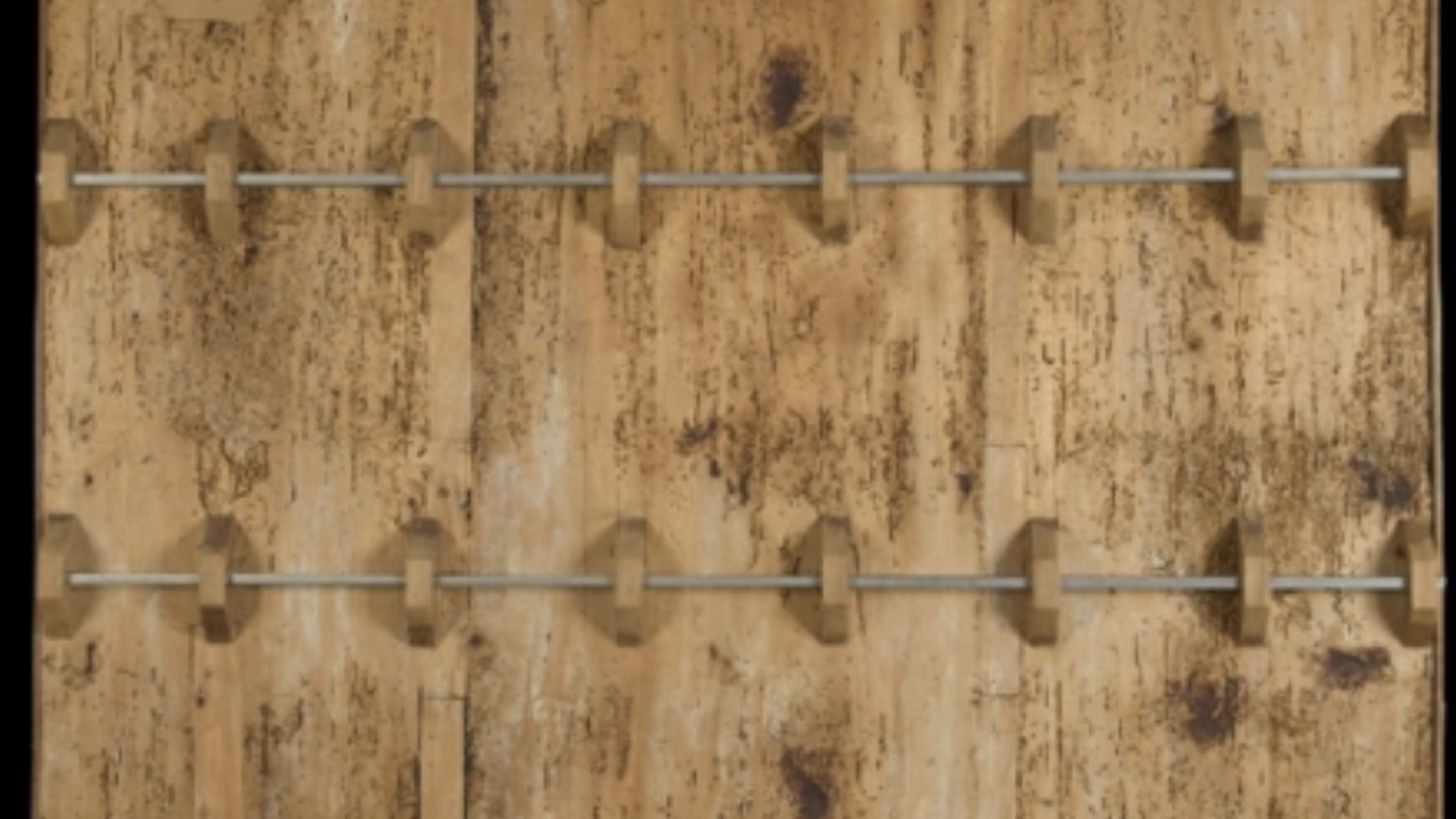
Removal of the previous unsuitable and no longer functional parquet and the iron bar used for the exhibition in the Vatican Museums Pinacoteca.
-
Removal of the old renovation wedges whose excessive dimensions created inhomogeneity in the wooden structure, with consequent formation of cracks when relative humidity changes
-
Reorganization with the insertion of new poplar wedges composed of assembled dowels
-
Replacement of plywood dowels with poplar inserts composed of assembled dowels
-
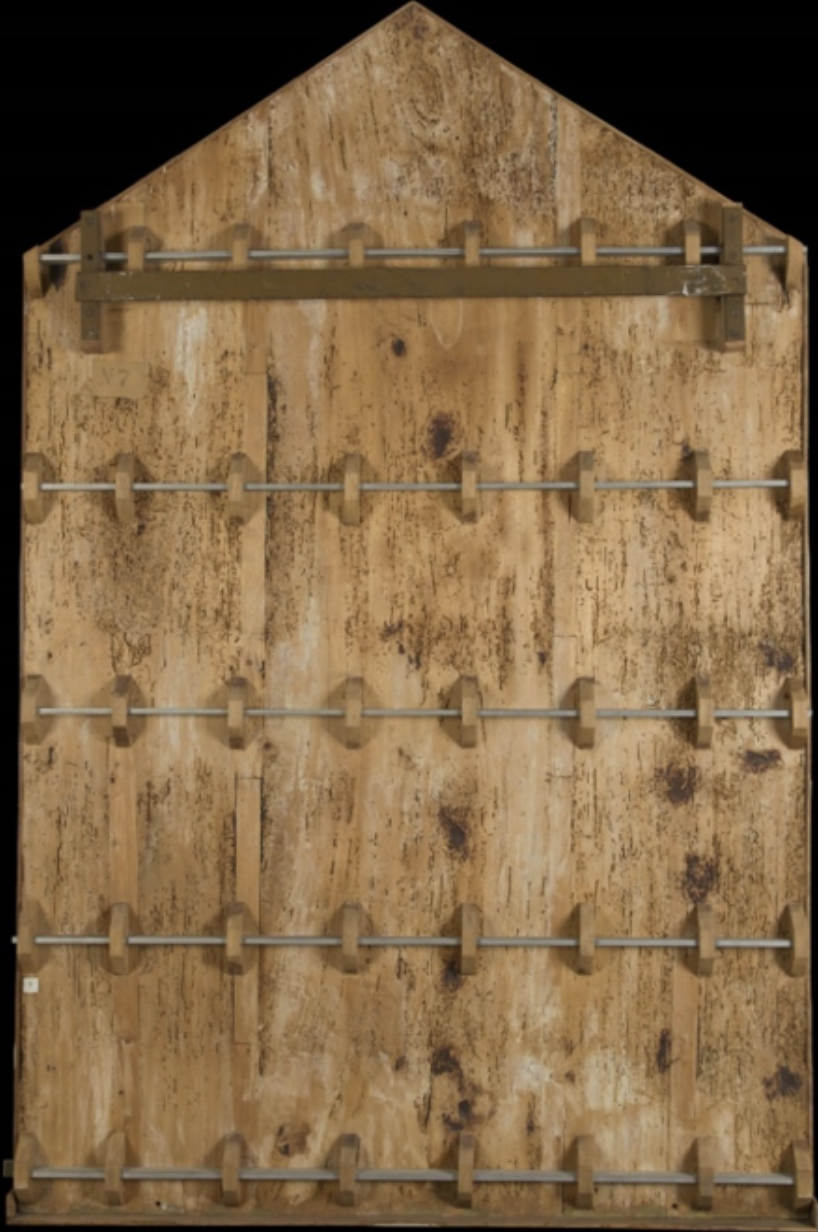
Realization of a new parquet consisting of sliding aluminum crossbars supported by beech-wood skirting
-
Final treatment with mordant walnut color to uniform the color of the structure and finishing virgin beeswax as protective insulation (photo 2 after restoration).
Once the intervention on the support (see images on the following pages) has been completed, the varnish will be removed, which allows for the first cleaning tests. We have achieved good results, but we intend to investigate further with additional scientific investigations. The nature of some substances present in circumscribed areas requires a differentiated cleaning treatment. To date, the restorers in the Vatican Museums Painting and Wood Restoration Laboratory have not made any additional restoration progress on this painting because of the emergencies within the laboratory. Other paintings are of high priority because they are in a critical and compromised state. Work will resume shortly on the restoration of Santa Margherita, and it will be completed by December 2022.

Saint Margaret of Antioch and Stories of Her Life
Details
Adopted by: The Italian & International Chapter
Patrons: Mrs. Olessia Kantor
Inventory: 40007
Artist: Painted in the manner of Turino Vanni
Date: 1400 ca.
Classification: Painting
Materials: Gold leaf, Tempera, Ogival poplar panel
Dimensions: 166 x 106.7 cm
Museum: Pinacoteca
Department: Byzantine - Medieval Art
Laboratory: Painting & Wood
Description
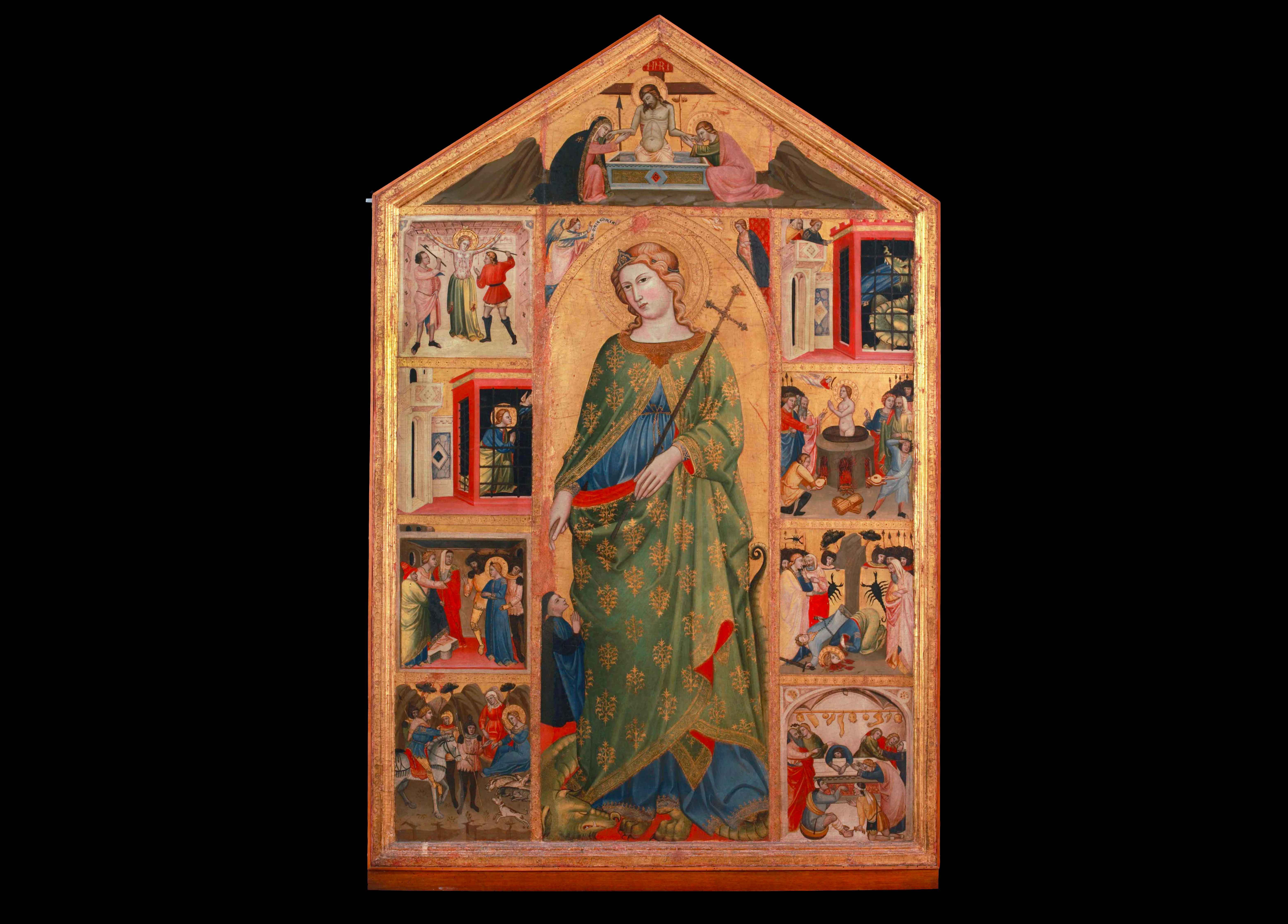
This painting depicts a young Saint Margaret of Antioch, also known as Saint Marina, proud and magnificent on a large vertical ogival panel, which recalls the shape of a tabernacle and framed by a Gothic arch. Draped in a precious cloak of green damask embroidered with a motif of gold palmettes, a crown placed on her golden hair, in one hand she holds a slim Crucifix, while with the other she welcomes the figure on her right, the kneeling donor, who is smaller in scale. At her feet lies the conquered dragon, symbolizing evil and related to an episode from her life. According to the hagiographers, the dragon devoured the Saint who saved herself by slashing its belly open with her Crucifix. The tradition of this extraordinary event gave Margaret the ability to grant wishes to those who invoke her.
In the ogival part of the panel, between the Virgin Mary and St. John the Evangelist is depicted the Vir Dolorum, and below, in the spandrels adjacent to the Gothic arch, are painted two small figures: the announcing Angel and the announced Virgin.
On either side of the Saint are depicted four scenes from her life, starting from the lower left-hand side and ending with the painting on the lower right-hand side. The Legend of Saint Margaret, handed down by a Greek Passio, narrates the story of a girl born in 275 A.D. in Antioch, modern-day Turkey. She was the daughter of a pagan priest when the apostles Barnaby and Paul were spreading the joyful message of the coming of Jesus Christ our Saviour.
Margaret, raised by a wetnurse who had secretly introduced her to Christianity, was martyred as a witness of her faith at the age of 15.The origin of the panel painting is unknown. It was transferred from the Sacred Museum of the Vatican Library to the Pinacoteca, the Vatican Art Gallery, in 1908.
The painting dates back to around the 15th century and was initially attributed to the Tuscan school; however, its style was later likened to that of the painter Turino Vanni (b. Rigoli, Pisa, 1349 d. after 1438) who was active in Pisa and Genoa.
The type of hagiographic panel, albeit with various forms, became common in Tuscany in the early 15th century, with the purpose of celebrating cities through the glorification of their patron saints.
List of stories (from the lower left-hand side to the lower right-hand side)
- In the first scene, the governor Olibrio meets Margaret in the fields and is struck by her beauty.
- In the second scene, the girl is standing in front of the governor refusing to marry him.
- In the third scene, Margaret, who has been imprisoned, is comforted by a dove.
- In the third scene, the girl is brutally scourged.
- The story continues on the other side: in the first scene, Margaret is imprisoned, once again, and is attacked by the Dragon.
- In the second scene, the girl is plunged into boiling liquid but miraculously remains unharmed.
- In the third scene, the Saint is beheaded and her executioner dies instantly.
- In the final scene, the sick and the crippled gather around the Saint’s tomb, to give thanks.
Media
Saint Margaret of Antioch and Stories of Her Life
Restorations Update: Saint Margaret of Antioch and Stories of Her Life Final Restoration Report
The restoration of the painting depicting "Saint Margaret and Stories from her Life" has been completed. The panel, composed of three vertically arranged poplar planks, is painted in tempera, with gilding, gold brush decorations, and some silver leaf details. Most of the gilded surfaces are adorned with elaborate punching. The frame is made of molded laths, glued, and nailed to the board
Past alterations to the piece have transformed some of its characteristics: in fact, the board has been cut along the perimeter, except for the lower side, thus reducing the frame, which now appears disproportionate to the size of the board. It also was thinned by removing the original structure. These and other causes, such as transportation, interventions, and unsuitable places for conservation, led to the need for restoration.
The only documented restoration performed on the structure and the painted surface was in 1965, in the Paintings Laboratory. More than fifty years after, the piece manifested new problems that led the Vatican Museums Directorate to another restoration.
The support structure, now blocked, had created stresses on the panel resulting in cracks and lifting of the paint film.
After the usual preliminary diagnostic imaging campaign performed by the Scientific Research Laboratory, the restoration began by working on the wooden support.
The restorer Alessandra Zarelli covered the painted surface with a glaze that helped secure the paint film and facilitate a general consolidation.
Once removed the previous parquetry the restoration of cracks and missing portions of wood was reviewed and improved, with inserts composed of small poplar wood strips eliminating elements that interfered with the original wooden structure.
Restorations Update: Restoration Update - Saint Margaret of Antioch and Stories of Her Life
The restoration of the work followed standard procedures. After the realization of a complete photographic documentation campaign on the state of the work before the intervention, performed by our Photographic Laboratory, we proceeded with the preliminary diagnostic campaign for the images carried out by the Scientific Investigations Laboratory. At the same time, archival research was done on the previous restoration in order to have all the necessary information. After gathering all the material, a preliminary meeting was held with the management and all the professionals involved to present the information and illustrate the intervention project. We then began with the restoration of the wooden support (photo 1 before restoration), preceded by the protective varnishing of the painted surface and proceeding with the following operations:
-
Removal of the previous unsuitable and no longer functional parquet and the iron bar used for the exhibition in the Vatican Museums Pinacoteca.
-
Removal of the old renovation wedges whose excessive dimensions created inhomogeneity in the wooden structure, with consequent formation of cracks when relative humidity changes
-
Reorganization with the insertion of new poplar wedges composed of assembled dowels
-
Replacement of plywood dowels with poplar inserts composed of assembled dowels
-
Realization of a new parquet consisting of sliding aluminum crossbars supported by beech-wood skirting
-
Final treatment with mordant walnut color to uniform the color of the structure and finishing virgin beeswax as protective insulation (photo 2 after restoration).
Once the intervention on the support (see images on the following pages) has been completed, the varnish will be removed, which allows for the first cleaning tests. We have achieved good results, but we intend to investigate further with additional scientific investigations. The nature of some substances present in circumscribed areas requires a differentiated cleaning treatment. To date, the restorers in the Vatican Museums Painting and Wood Restoration Laboratory have not made any additional restoration progress on this painting because of the emergencies within the laboratory. Other paintings are of high priority because they are in a critical and compromised state. Work will resume shortly on the restoration of Santa Margherita, and it will be completed by December 2022.
© 2026 Patrons of the Arts
in the Vatican Museums
Vatican Museums V-00120,
Vatican City State (Europe)
+39 0669864499