

Room of Constantine
Artist: School of Raphael
Date: 1518 - 1585
Classification: Mural Painting
Dimensions: Various
Materials: Various
Adopted By: The New York Chapter
Total Cost: € 2,735,065
Description
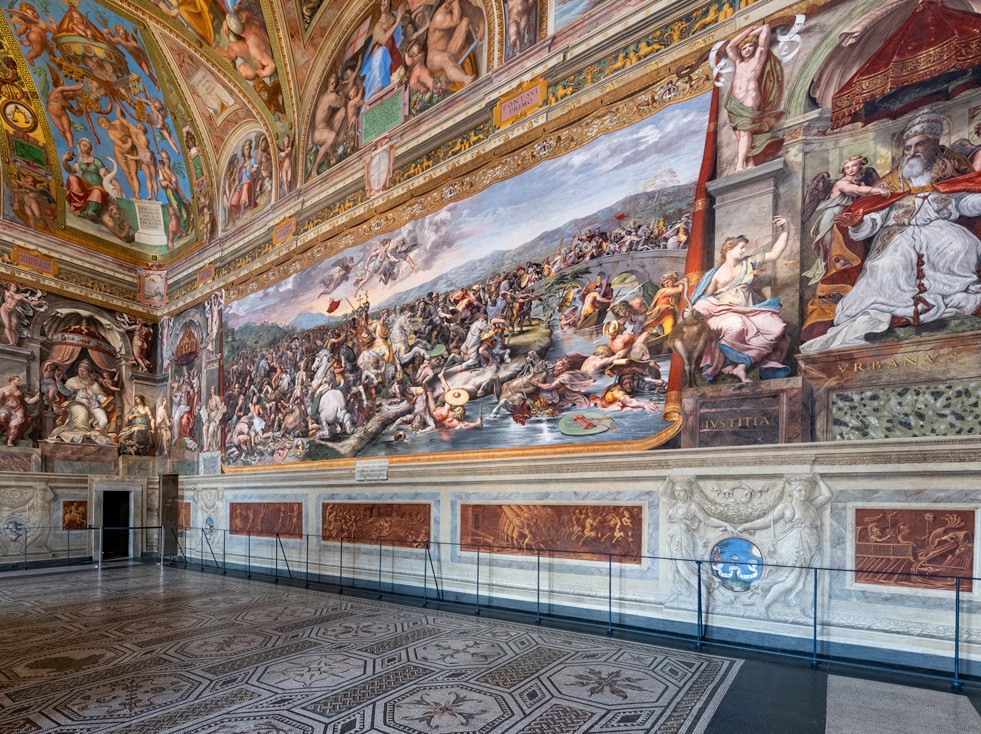
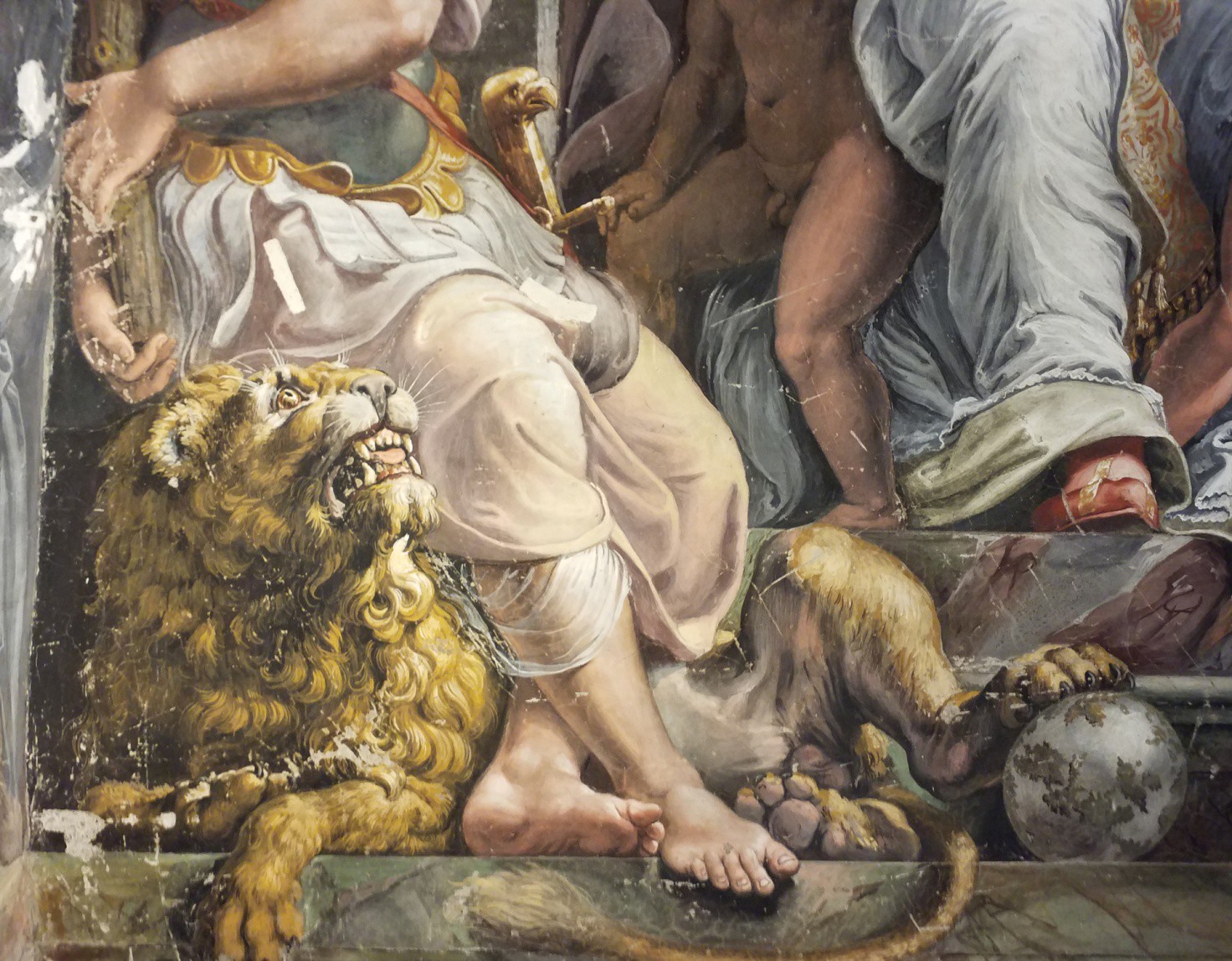
The Room of Constantine is constituted by four walls that are painted mainly by the workshop of Raphael. The walls represent four major events from Emperor Constantine’s life: the Vision of the Cross, the Battle of Ponte Milvio, the Baptism of Constantine and the Donation of Rome. Raphael started the Room of Constantine in 1518/1519 and worked until his sudden death in 1520. His students and pupils finished the room without him and among those workers was the well-known painter Giulio Romano. The work was completed at the end of 1585 under Pope Sixtus V (pontiff from 1585 to 1590). These artists followed the indication of their late master with their own yet, never too different technique to create a powerful representation of the life events from the first Christian Emperor.
Restoration Procedures
The restoration of the Room of Constantine has resulted in exciting discoveries and discussions. A brand new technique to record the before and after of the restoration process was adopted. The Vatican Museums Scientific Restoration Laboratory, supervised by Professor Ulderico Santamaria, created a new photographic quilting technique. The entire wall is divided into one-meter squares and several photographs were taken in extremely high resolution (approx 1 GB).
The restoration laboratory examined these images to observe the rendering of pigments and brushstrokes to record specific details. The small squares are then assembled together like a puzzle and a clear presentation of the entire fresco is revealed. These photographs are used by the laboratory to produce a comparative analysis that records the state of the project before and after the restoration. Additionally, this photographic technique helped confirm that two figures in the Room of Constantine were previously completed with a technique that is different from fresco.
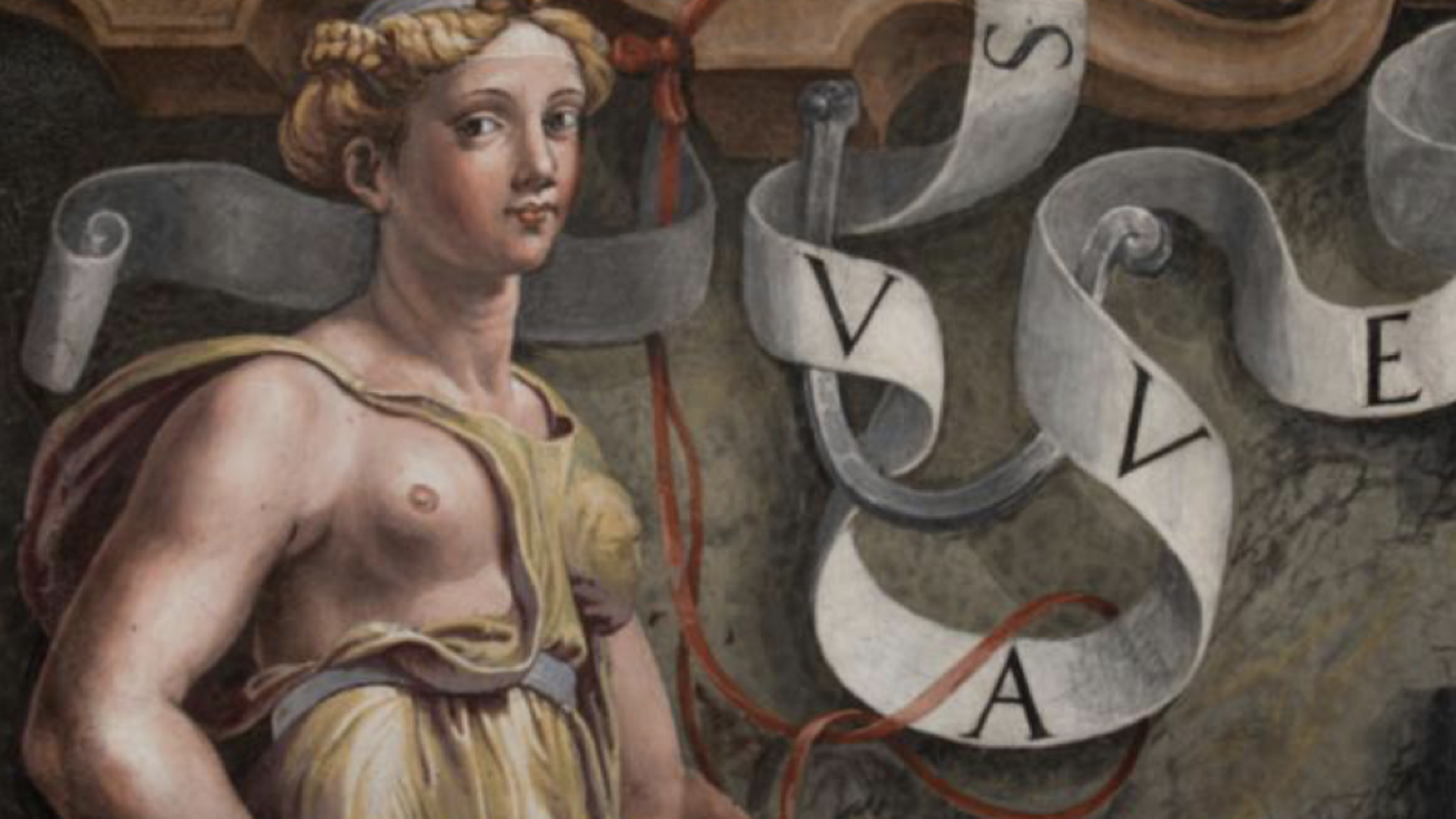
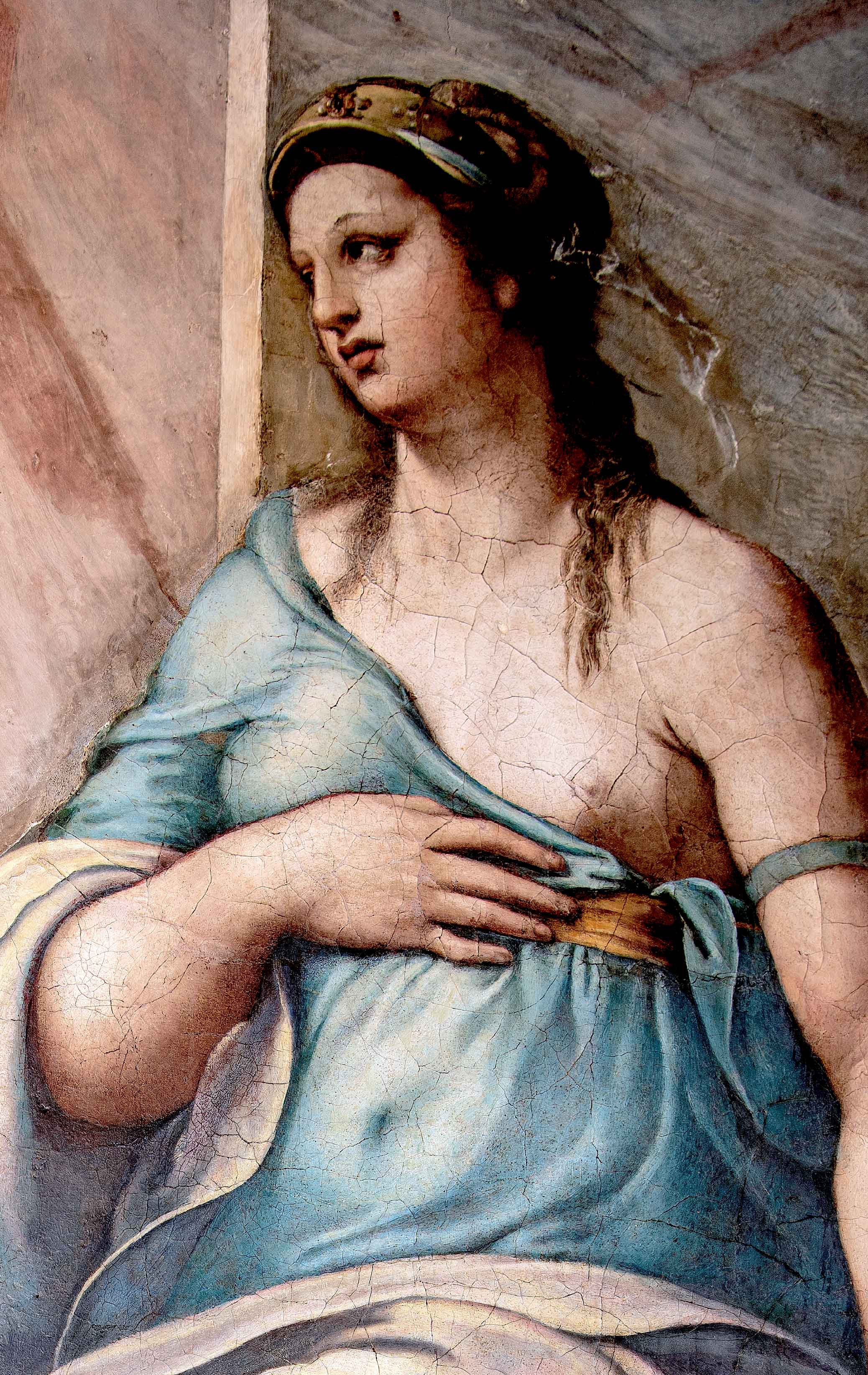
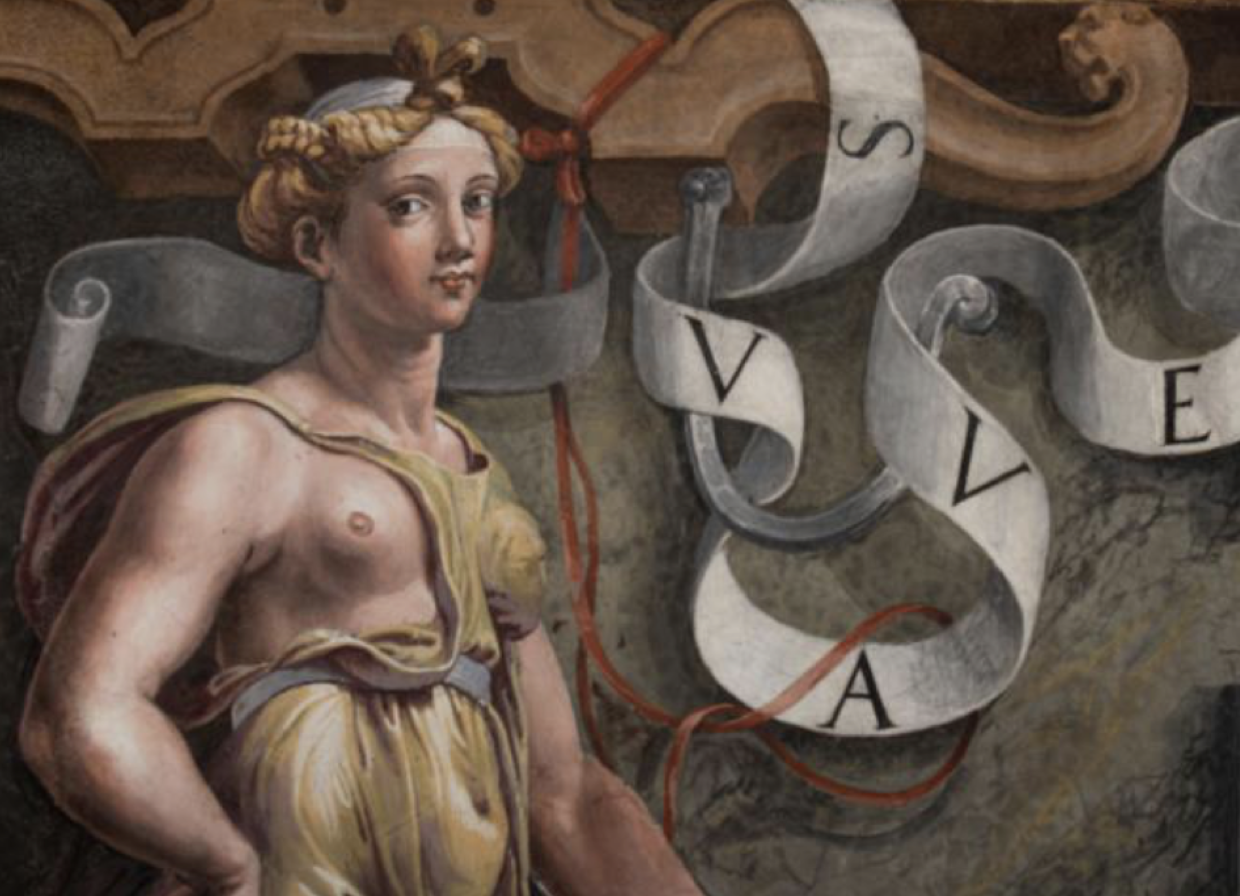
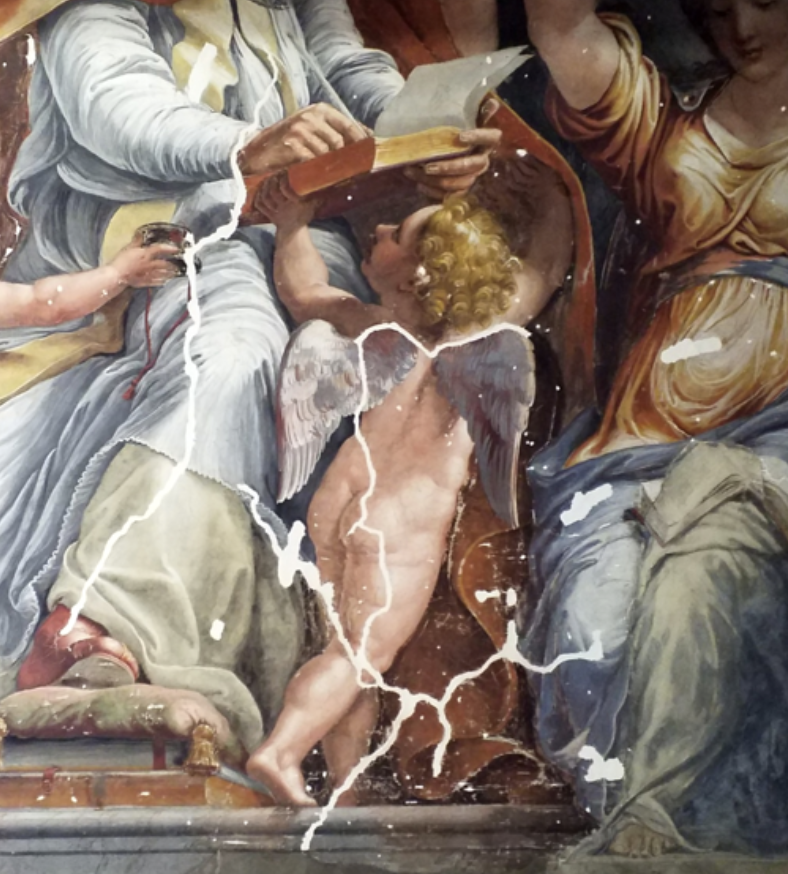
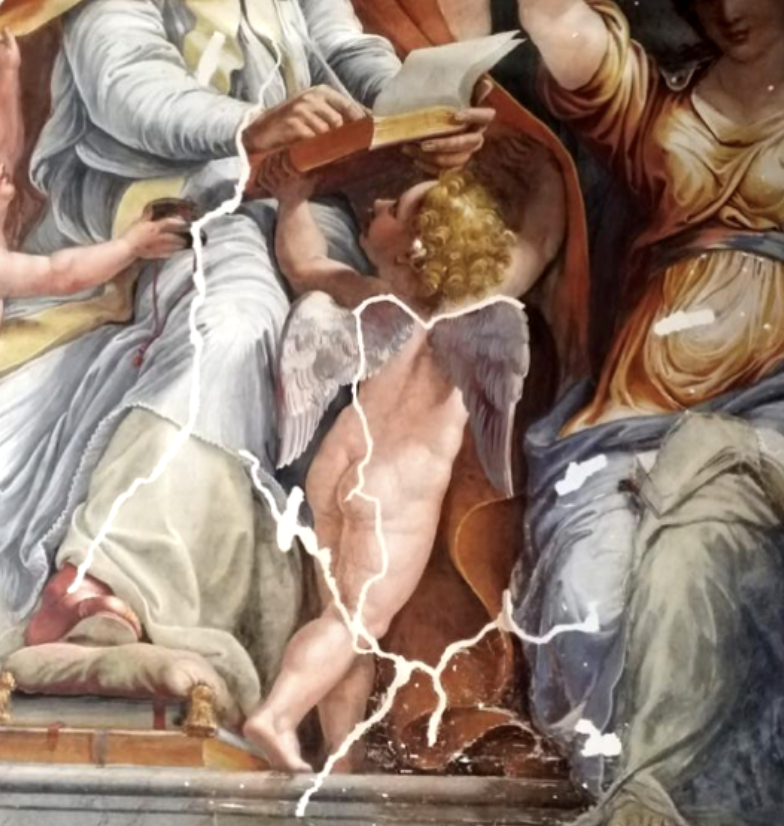
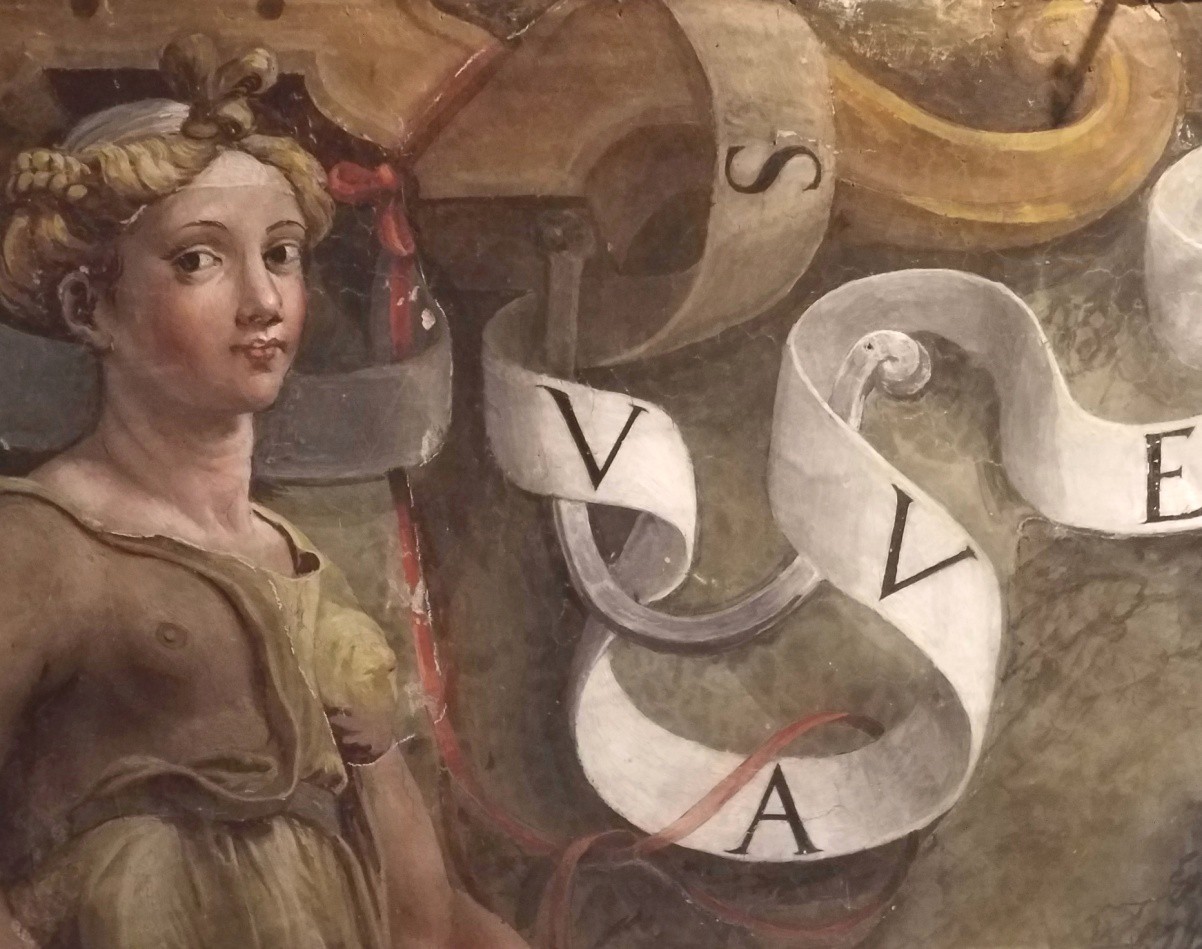
Two allegorical females are located on two different walls in the Room of Constantine. On the east wall, the figure Comitas, the Latin name for the virtue of kindness and courtesy, stands to the right of the portrait of Pope Clement I (whose face represents the features of Pope Leo X) and wears a blue dress. On the south wall, to the left of the portrait of Pope Urban I, is the figure Iustitia, the Latin name for the virtue of justice, and she stares at the scales in her hand. Iustitia is in better condition compared to Comitas as the latter was highly damaged possibly by a fire lit in the Room of Constantine by the troops of Charles V during the Sack of Rome. The two women are of higher quality in style and technique than the surrounding frescoes. These two distinctive figures were previously attributed to Raphael’s workshop however, the ongoing restoration provided additional information about the true identity of the artist.
Confirmed under the scientific direction of Guido Cornini, along with the restoration findings from the efforts of Francesca Persegati and his composed team of experts coordinated by Fabio Piacentini, revealed that the two female figures - Iustitia and Comitas - were brought to life by Raphael’s own hand. The restoration revealed that the women were indeed of higher quality and beneath the wall’s surface, numerous nails were discovered which anchored a layer of rosin, or Greek pitch, to the wall. Raphael spread the material on the wall while hot and then covered it with a thin layer of white plaster, to prepare for the application of the paint. Raphael's distinctive technique in the Room of Constantine acted as a foundation for his paintings that were part of an iconographic cycle dedicated to Constantine, and painted before his sudden death at the age of 37. Giulio Romano and Giovan Francesco Penni, most notably the master’s students and collaborators, completed the surrounding frescos.
Detail
Artist: School of Raphael
Date: 1518 - 1585
Dimensions: Various
Materials: Various
Department:
XV-XVI Century ArtCurators:
Dr. Fabrizio Biferalimuseum:
Raphael's RoomsLaboratories:
Painting & WoodWishbook year: 2017
Total Cost
€ 2,735,065
Room of Constantine - Third Restoration Update
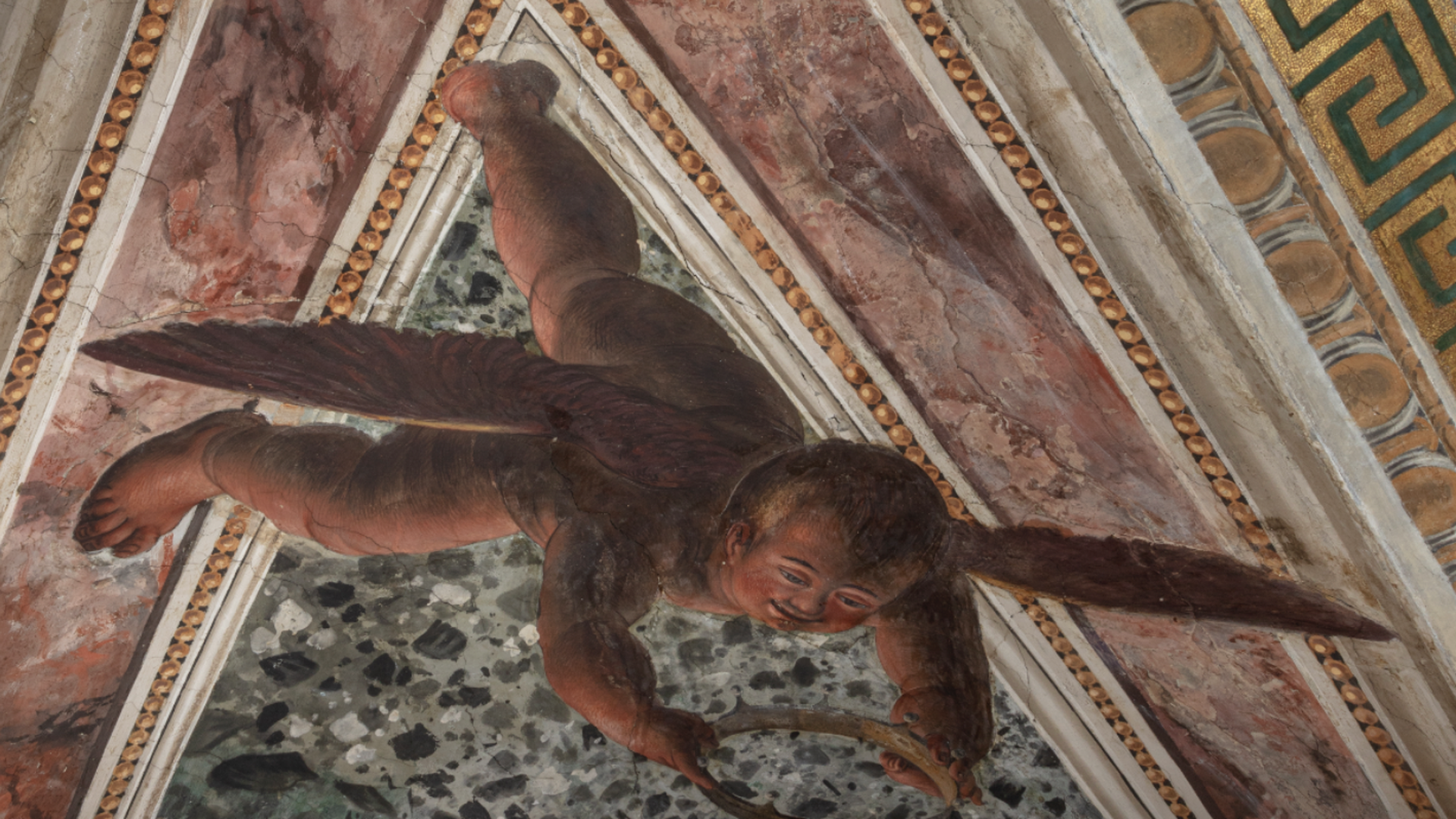
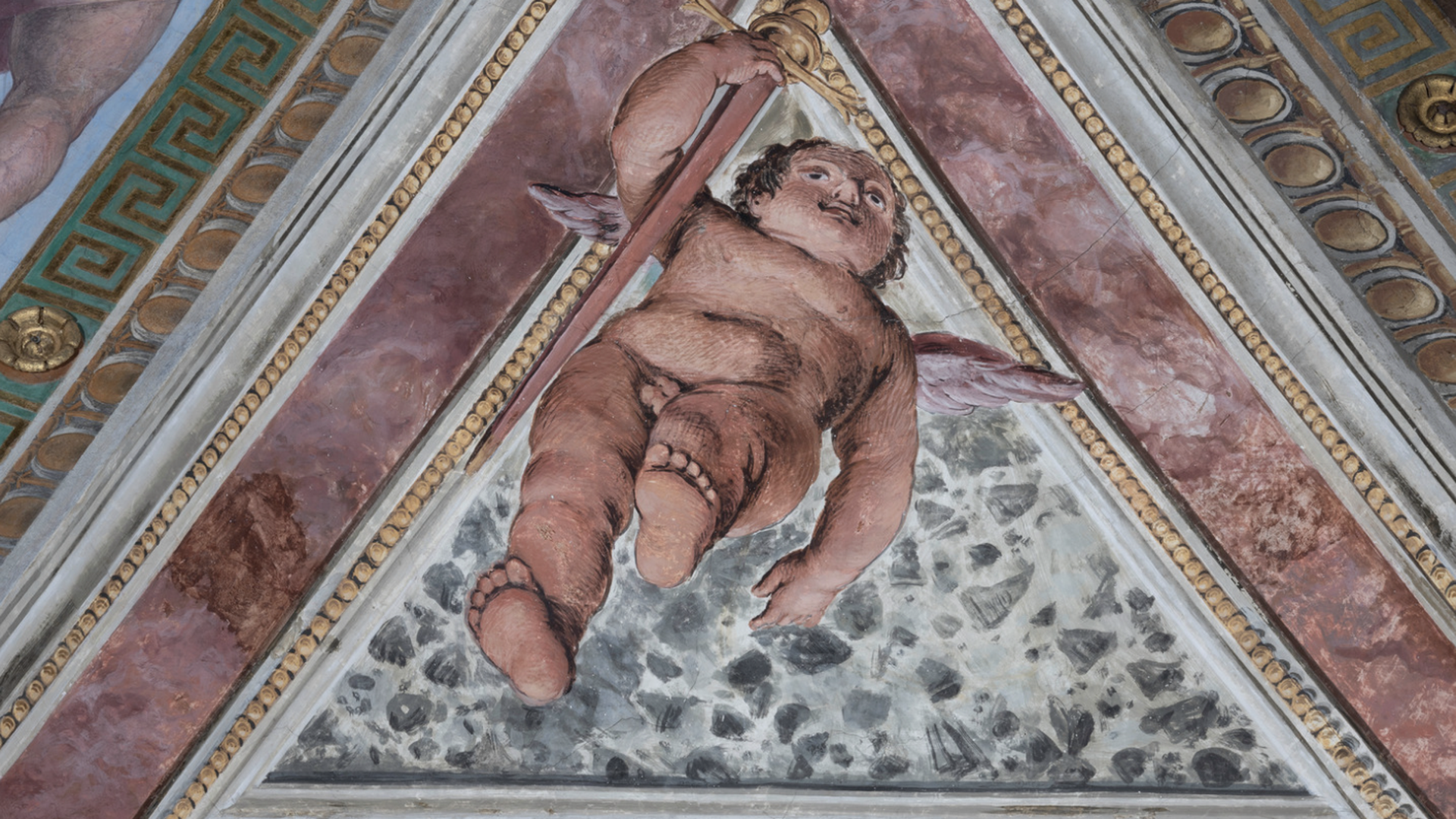
Since November 2023, while awaiting the construction of the new scaffolding, restorers have only been able to work partially on the central section of the vault impost corresponding to the North Wall using the two smaller side scaffoldings. It was not until January 2, 2024, that restorers finally had full access to the entire scaffolding and began the restoration of all painted surfaces, including the central panel.
The ongoing restoration will follow the same operational approach already adopted for the other painted surfaces. The cleaning revealed the actual state of conservation of the frescoes, which have been heavily damaged by past humidity and by the extensive and abundant repainting executed during previous restorations that completely altered the original pictorial balance. Particularly complex were all the restoration operations of the frescoes: cleaning, color consolidation, and new aesthetic presentation.
Room of Constantine - Second Restoration Update
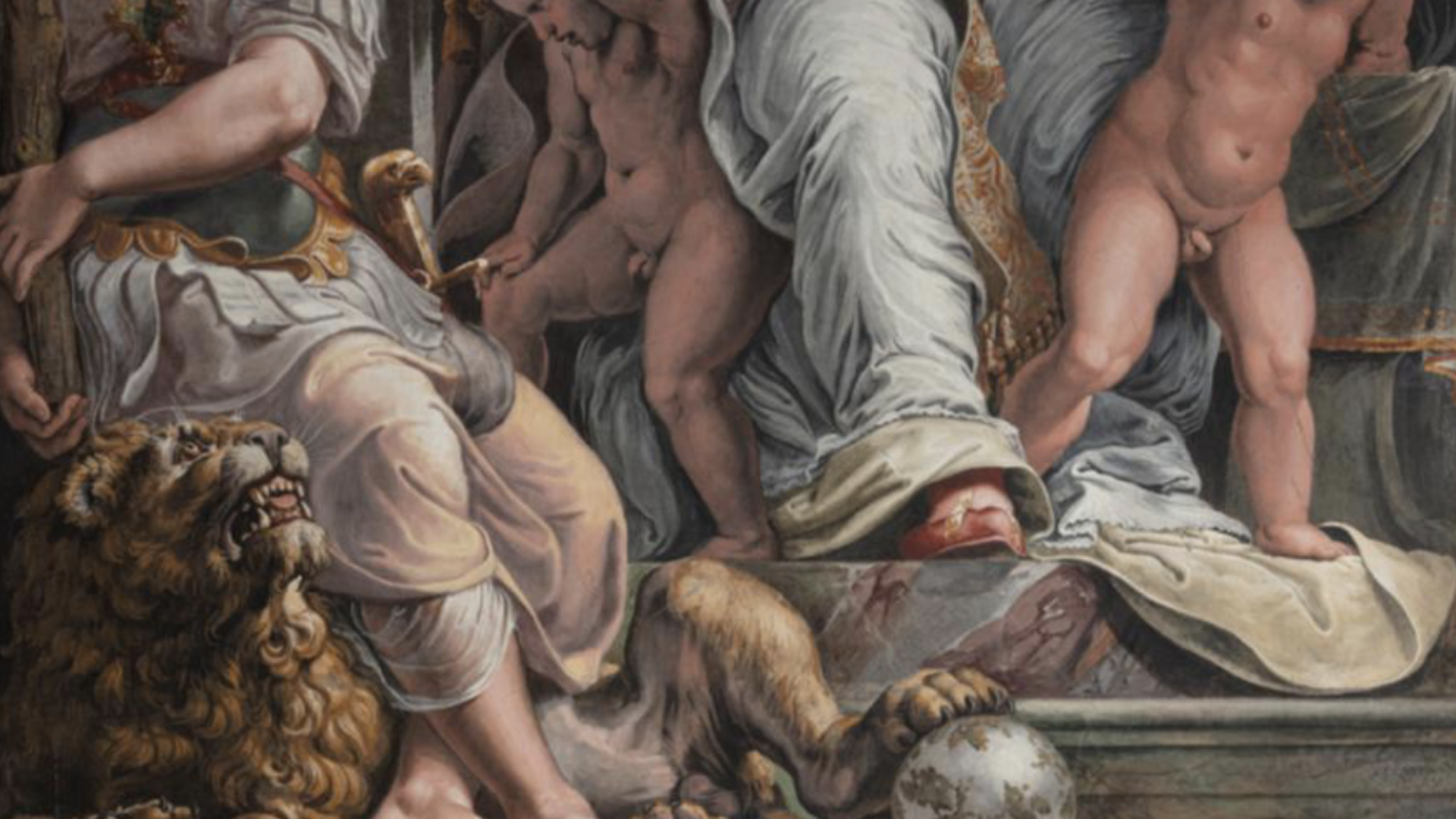
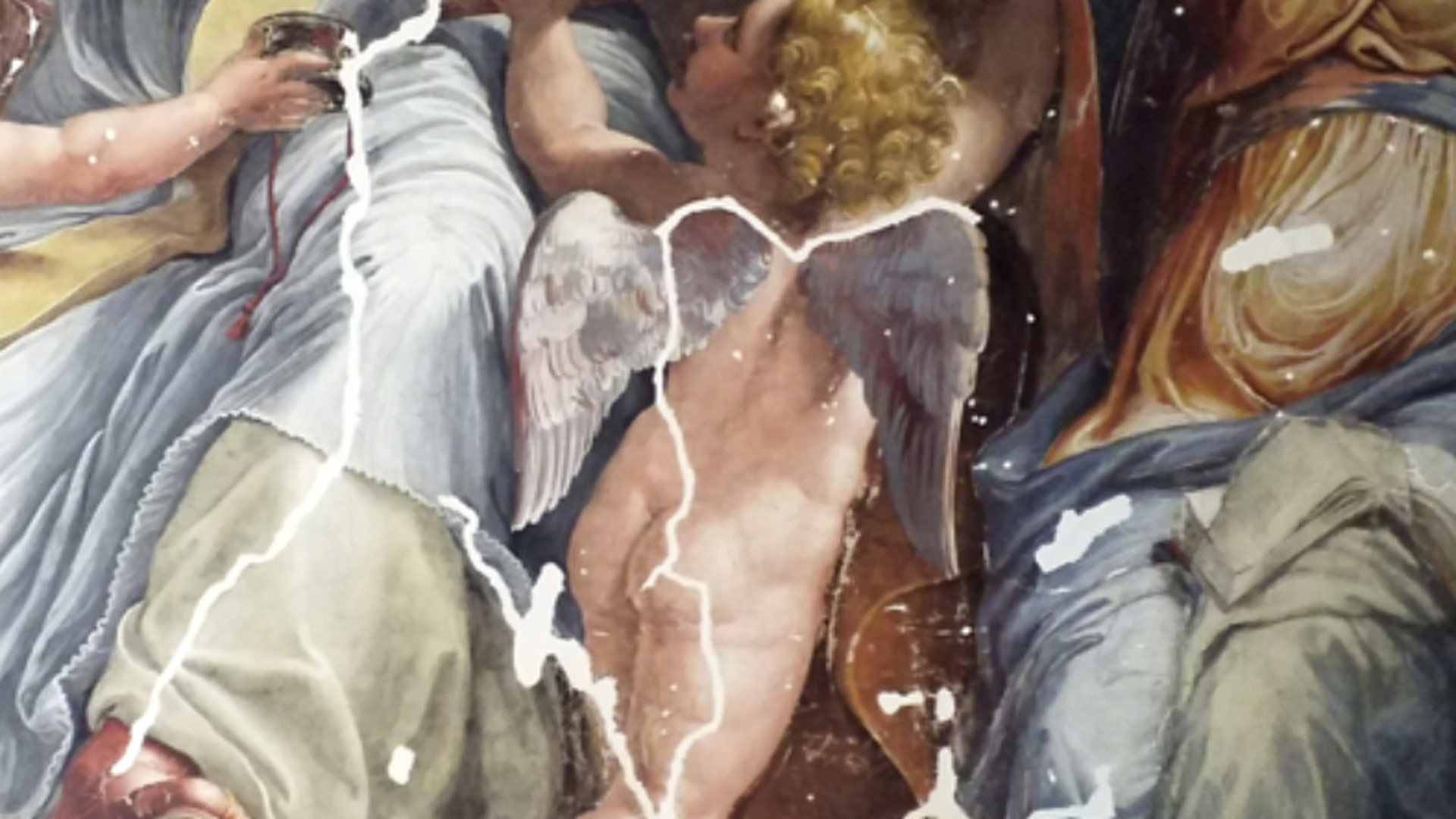
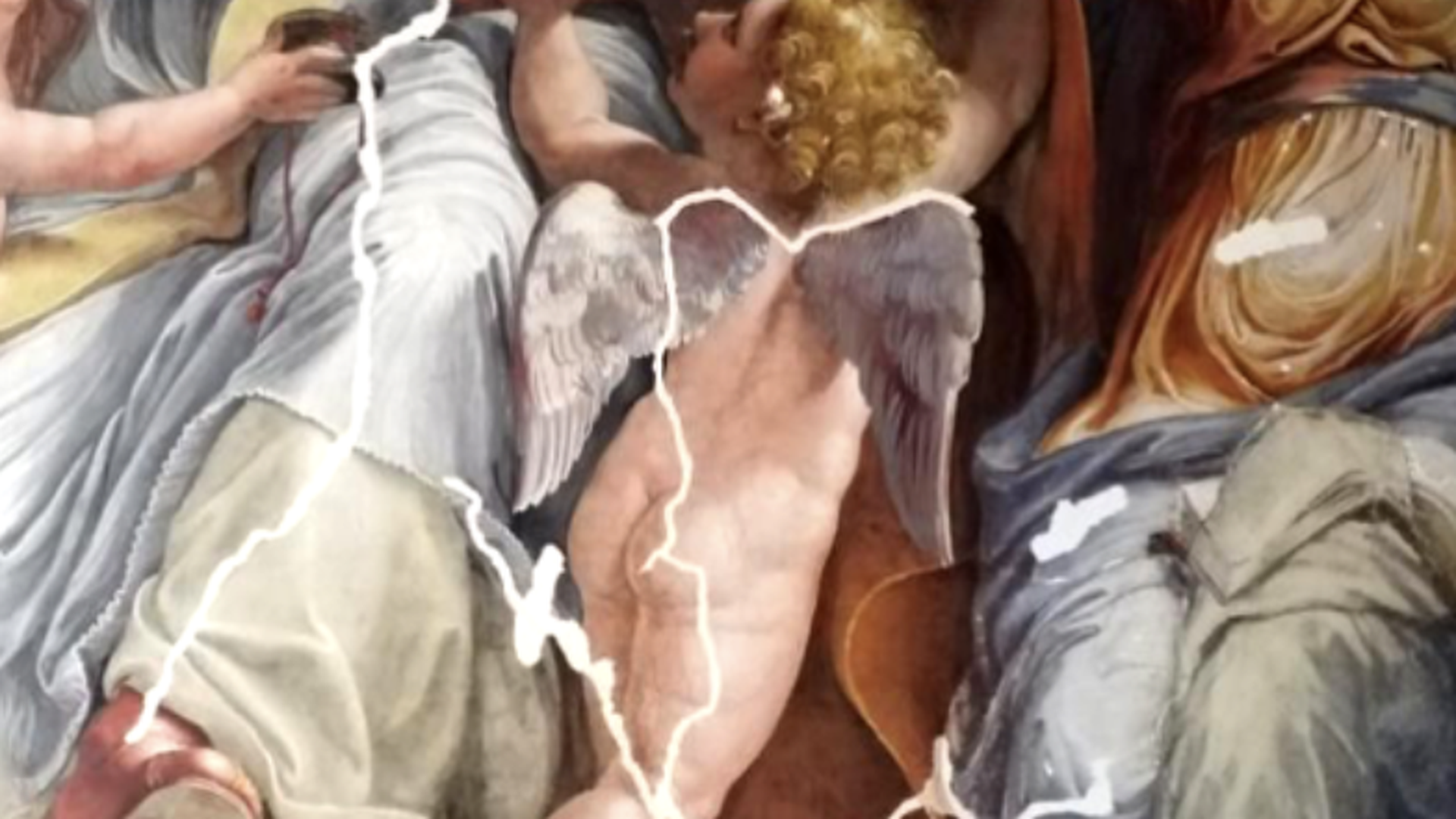
OVERALL RESTORATION STATUS
Restoration work began in March 2015 on the East Wall, depicting the "Allocution" scene, continued from 2016 on the South Wall, with the famous scene of the "Battle of Ponte Milvio" and then, from 2018 onwards, the West Wall, with the "Baptism of the Emperor" was restored.
Simultaneously, restorers worked on the plinths and the corresponding vault sections of all walls.
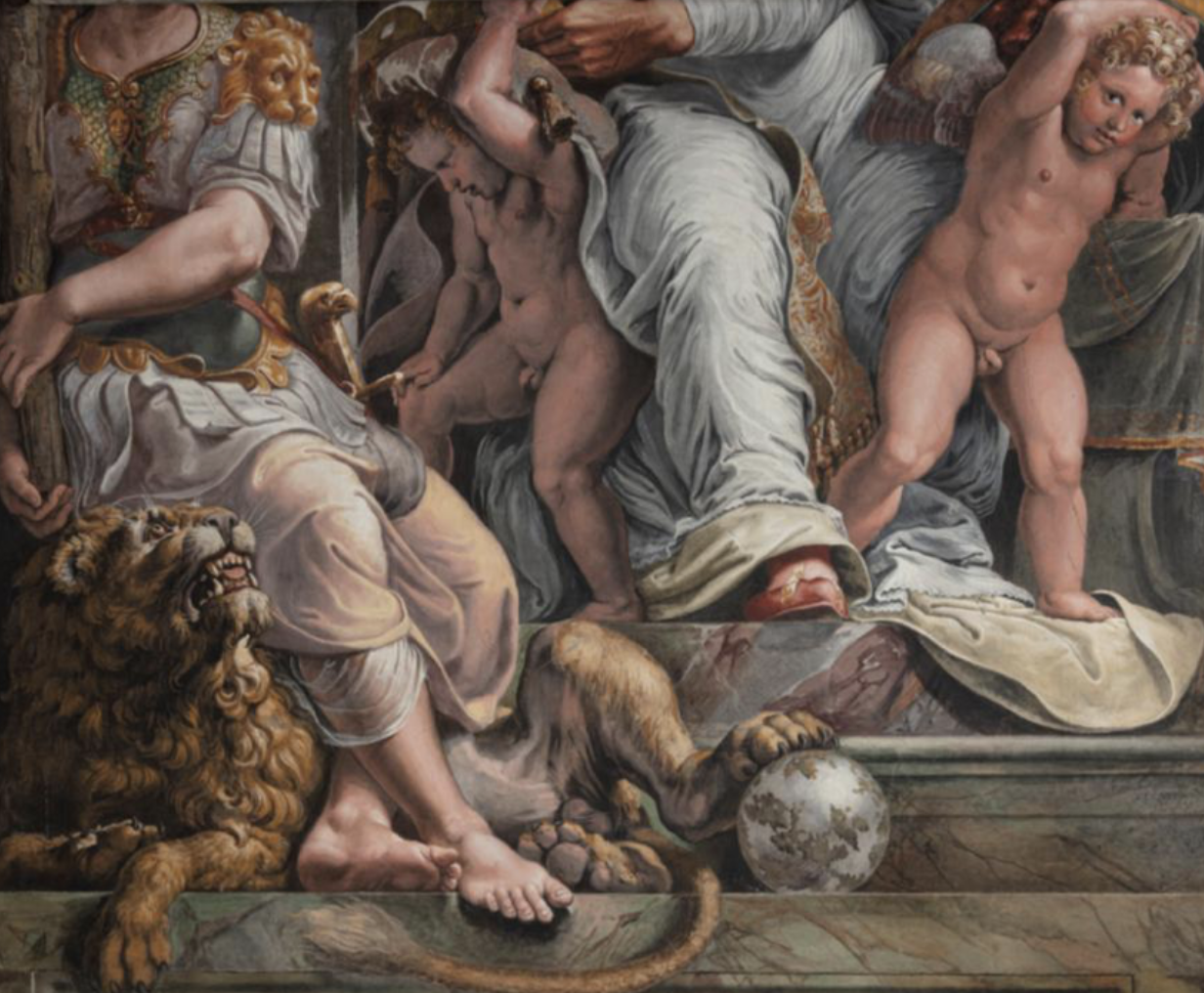
The Covid 19 emergency changed the restoration schedule of the entire project, causing a delay in the succession of interventions.Only in the summer of 2020 (August), the restoration of the scene depicting the "Donation of Rome" painted on the North Wall, immediately above the large marble fireplace, painted by Giulio Romano, a collaborator of Raphael considered a leading artistic figure of the Italian Renaissance, begun.
In July 2022, the restoration continued on the two side walls at the windows, including the area of the frieze of Sixtus V and the vault. In addition, work on the west wall in the section above the doorway to the hall was also completed at this stage.
RESTORATION PROCEDURES
Conservation campaign of the side walls (North Wall) with the "Donation of Rome"
At the end of March 2023, the restorers completed the left side wall conservation, proceeding with the right side wall.
They performed all conservative operations necessary for the aesthetic recovery of the original materials, removing inconsistent surface deposits (dust), consolidating plasters and paint film, cleaning the paintings, and defining the aesthetic layout.
During the work, restorers carried out the graphic relief required to document the state of conservation of the pictorial surface, previous restoration interventions, and the original execution technique.
The Photographic Laboratory of the Vatican Museums documented the different operational phases of the entire restoration through photographic campaigns. In addition, the Scientific Research Laboratory, directed by Prof. Ulderico Santamaria and Dr. Fabio Morresi, supported the work of the restorers through chemical and physical investigations and non-destructive imaging (UV, IR false color, XRF, and IR reflectography).
The restoration continues with the cleaning and consolidation of the paintings in the lower portion of the walls, in correspondence with the windows, and restorers completed the plastering performed in the upper section and the aesthetic layout.
Room of Constantine - Restoration Update
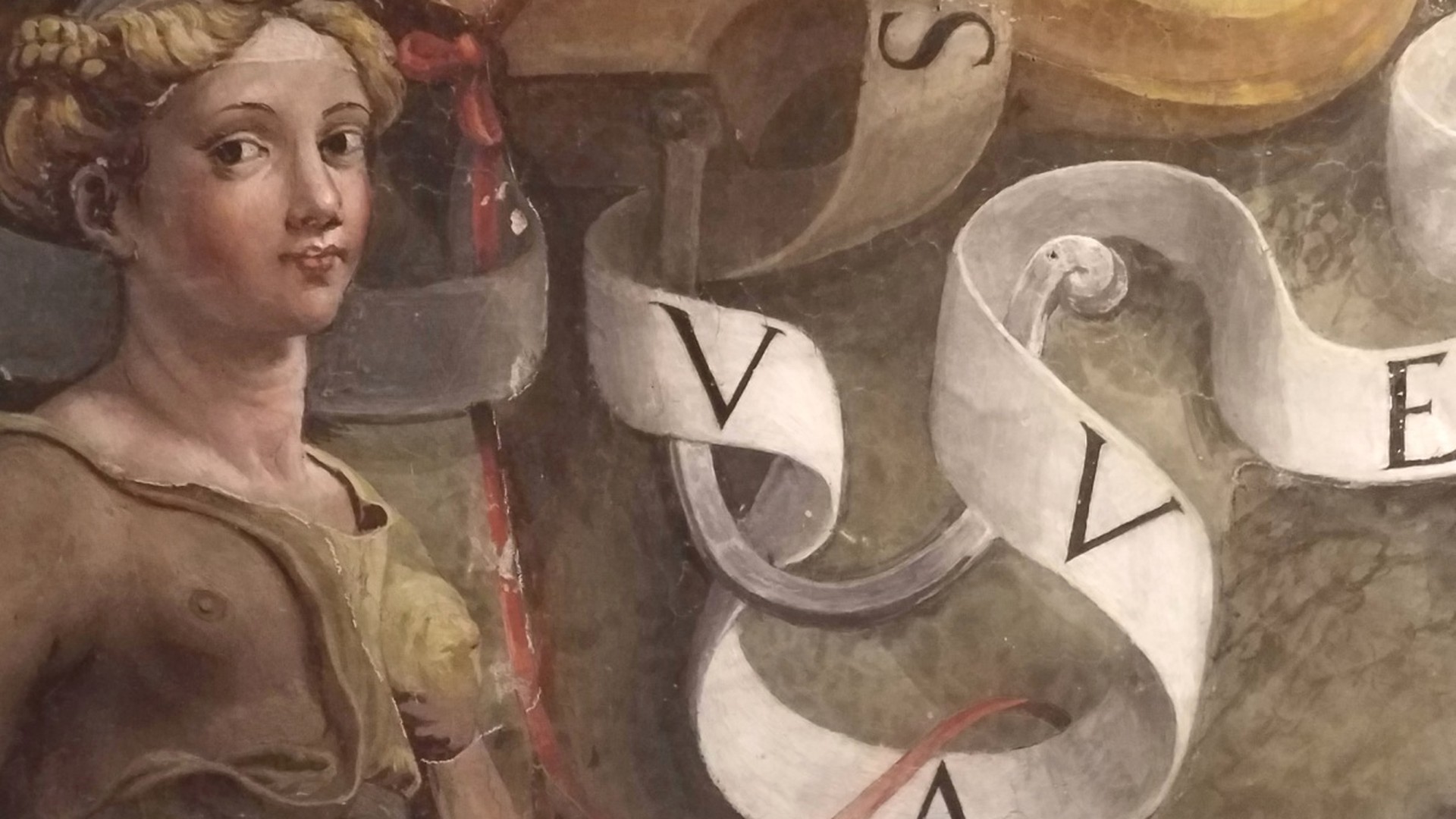
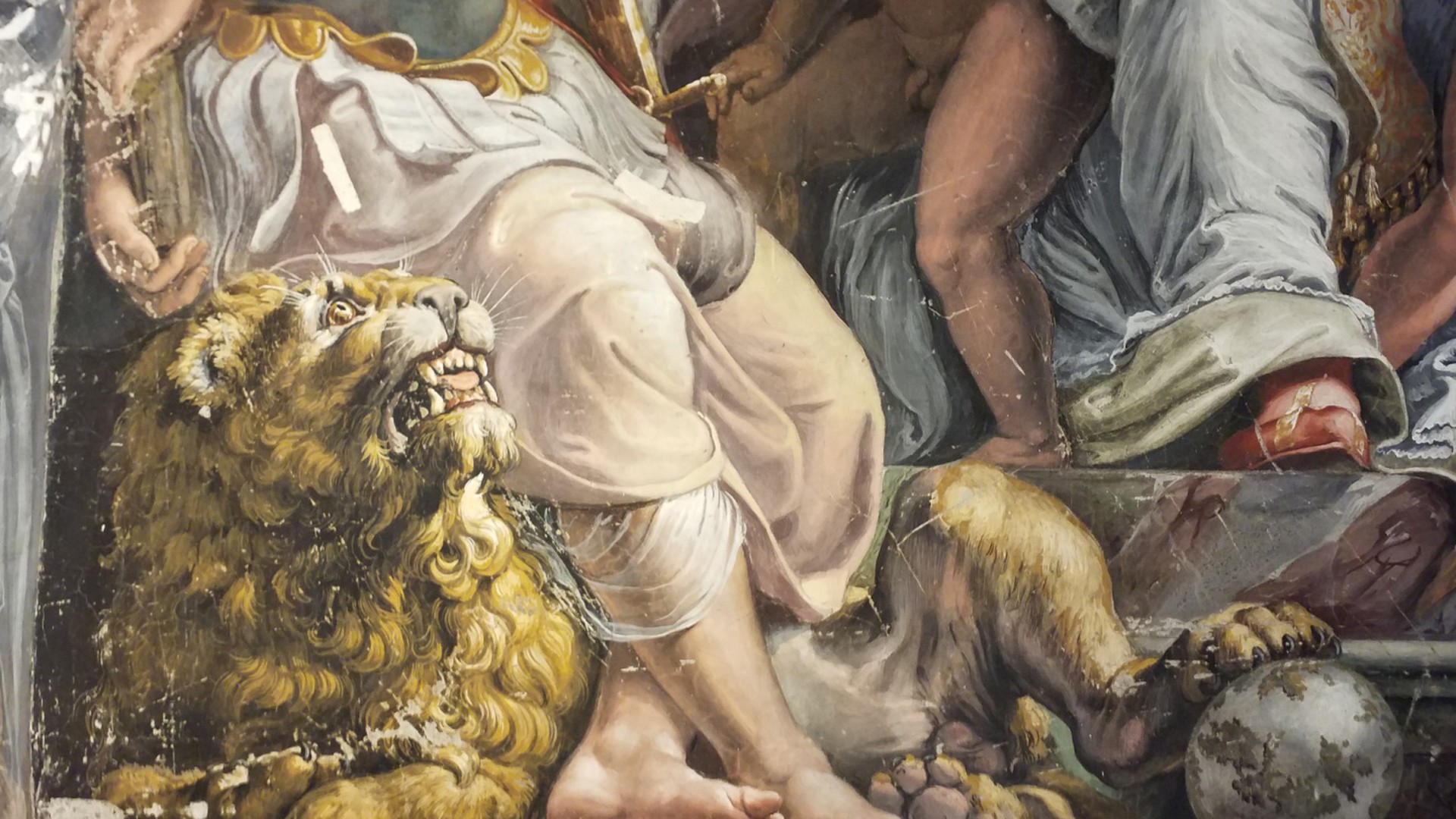
The restoration intervention started in 2015 on the East wall, the Vision of the Cross. In 2016, restoration began on the South wall, the more famous painted scene, the Battle of Ponte Milvio. Afterward, restoration took place in 2018 on the West wall, the Baptism of Emperor Constantine. Restorers also completed their work on the bases and corresponding areas of the vault and walls.
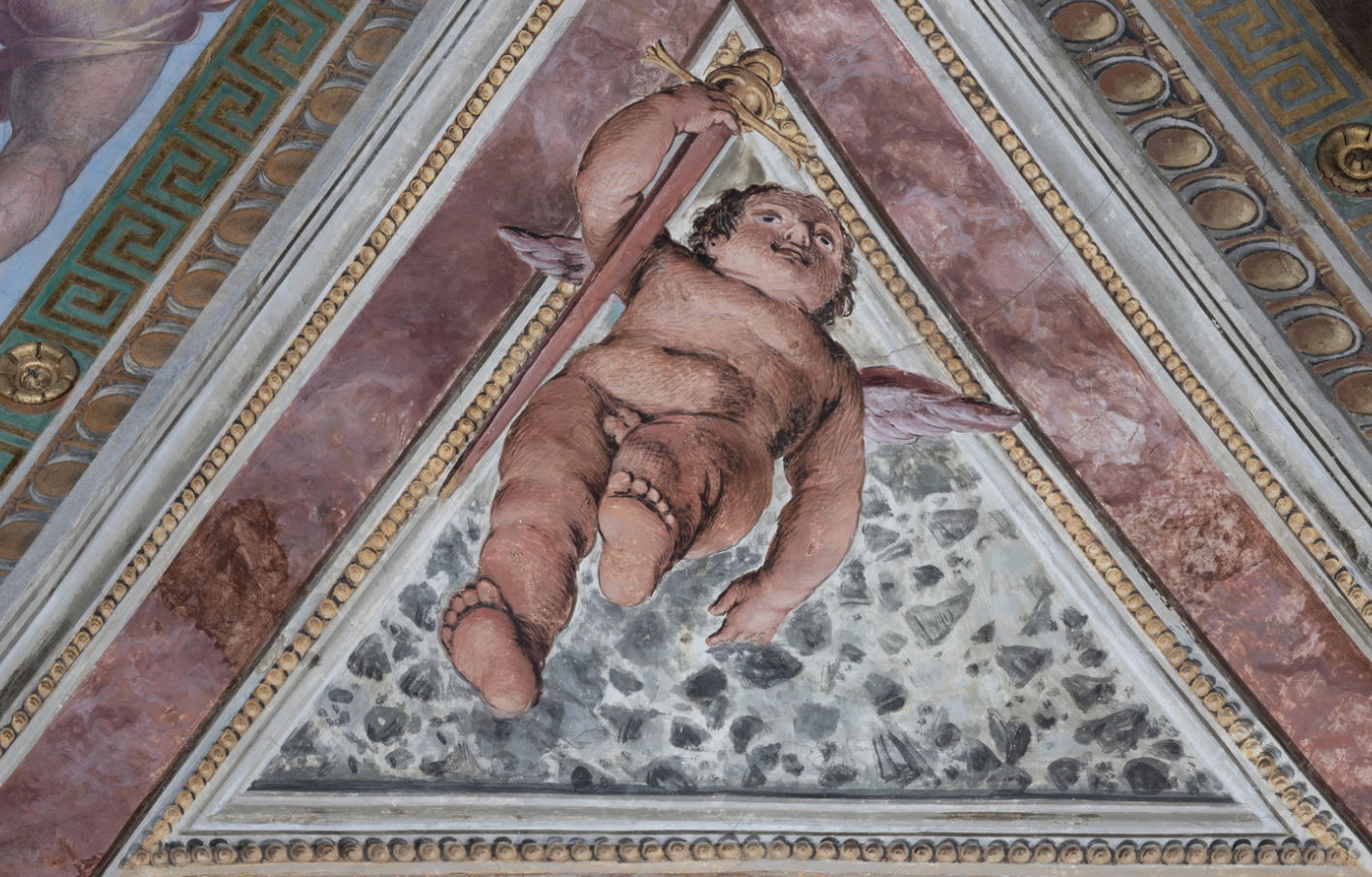
The Covid 19 emergency determined a modification to the work program of the project. However, restoration re-started in August 2020 on the Donation of Rome by Giulio Romano, painted on the North wall between 1523 and 1524. The restoration of the scene terminated in March 2021, and later the restorers Fabio Piacentini and Arabella Bertelli conducted work on the lunettes of the vault (finishing in April 2022). The operating staff, eight restorers, proceed with the work on the vault and the left part of the North wall. They will work on the surfaces on the right in 2023. In the autumn of 2023, the restoration of the vault (central part and north side) will begin. The restorers anticipate finishing - a total of c.820 m2 - in December 2024.
The ongoing restoration of the paintings follows all of the necessary conservation operations: removal of the incoherent (dust) surface deposits, consolidation of the plaster and pictorial film, and the first cleaning phase of the fresco surfaces. The work followed the drawing relief necessary to document the state of conservation of the paintings, the previous restoration interventions, and the executed original technique. The Photographic Laboratory of the Vatican Museums documented with digital photography the different operative phases. Alternatively, the chemical and physical designs (prevalent for the images) support the restoration. They are non-destructive (UV, IR false colors, XRF, and IR reflectography), and conducted by the Diagnostic Laboratory for the Conservation of the Art Work of the Vatican Museums, directed by Prof. Ulderico Santamaria and Dr. Fabio Morresi.

Room of Constantine
Details
Adopted by: The New York Chapter
Patrons: Carlson Estate
Artist: School of Raphael
Date: 1518 - 1585
Classification: Mural Painting
Materials: Various
Dimensions: Various
Museum: Raphael's Rooms
Department: XV-XVI Century Art
Laboratory: Painting & Wood
Wishbook year: 2017
Description
The Room of Constantine is constituted by four walls that are painted mainly by the workshop of Raphael. The walls represent four major events from Emperor Constantine’s life: the Vision of the Cross, the Battle of Ponte Milvio, the Baptism of Constantine and the Donation of Rome. Raphael started the Room of Constantine in 1518/1519 and worked until his sudden death in 1520. His students and pupils finished the room without him and among those workers was the well-known painter Giulio Romano. The work was completed at the end of 1585 under Pope Sixtus V (pontiff from 1585 to 1590). These artists followed the indication of their late master with their own yet, never too different technique to create a powerful representation of the life events from the first Christian Emperor.
Restoration Procedures
The restoration of the Room of Constantine has resulted in exciting discoveries and discussions. A brand new technique to record the before and after of the restoration process was adopted. The Vatican Museums Scientific Restoration Laboratory, supervised by Professor Ulderico Santamaria, created a new photographic quilting technique. The entire wall is divided into one-meter squares and several photographs were taken in extremely high resolution (approx 1 GB).
The restoration laboratory examined these images to observe the rendering of pigments and brushstrokes to record specific details. The small squares are then assembled together like a puzzle and a clear presentation of the entire fresco is revealed. These photographs are used by the laboratory to produce a comparative analysis that records the state of the project before and after the restoration. Additionally, this photographic technique helped confirm that two figures in the Room of Constantine were previously completed with a technique that is different from fresco.
Two allegorical females are located on two different walls in the Room of Constantine. On the east wall, the figure Comitas, the Latin name for the virtue of kindness and courtesy, stands to the right of the portrait of Pope Clement I (whose face represents the features of Pope Leo X) and wears a blue dress. On the south wall, to the left of the portrait of Pope Urban I, is the figure Iustitia, the Latin name for the virtue of justice, and she stares at the scales in her hand. Iustitia is in better condition compared to Comitas as the latter was highly damaged possibly by a fire lit in the Room of Constantine by the troops of Charles V during the Sack of Rome. The two women are of higher quality in style and technique than the surrounding frescoes. These two distinctive figures were previously attributed to Raphael’s workshop however, the ongoing restoration provided additional information about the true identity of the artist.
Confirmed under the scientific direction of Guido Cornini, along with the restoration findings from the efforts of Francesca Persegati and his composed team of experts coordinated by Fabio Piacentini, revealed that the two female figures - Iustitia and Comitas - were brought to life by Raphael’s own hand. The restoration revealed that the women were indeed of higher quality and beneath the wall’s surface, numerous nails were discovered which anchored a layer of rosin, or Greek pitch, to the wall. Raphael spread the material on the wall while hot and then covered it with a thin layer of white plaster, to prepare for the application of the paint. Raphael's distinctive technique in the Room of Constantine acted as a foundation for his paintings that were part of an iconographic cycle dedicated to Constantine, and painted before his sudden death at the age of 37. Giulio Romano and Giovan Francesco Penni, most notably the master’s students and collaborators, completed the surrounding frescos.
Media
The Unveiling of the Room of Constantine
Battle of Ponte Milvio - Before Restoration
Battle of Ponte Milvio - During Restoration
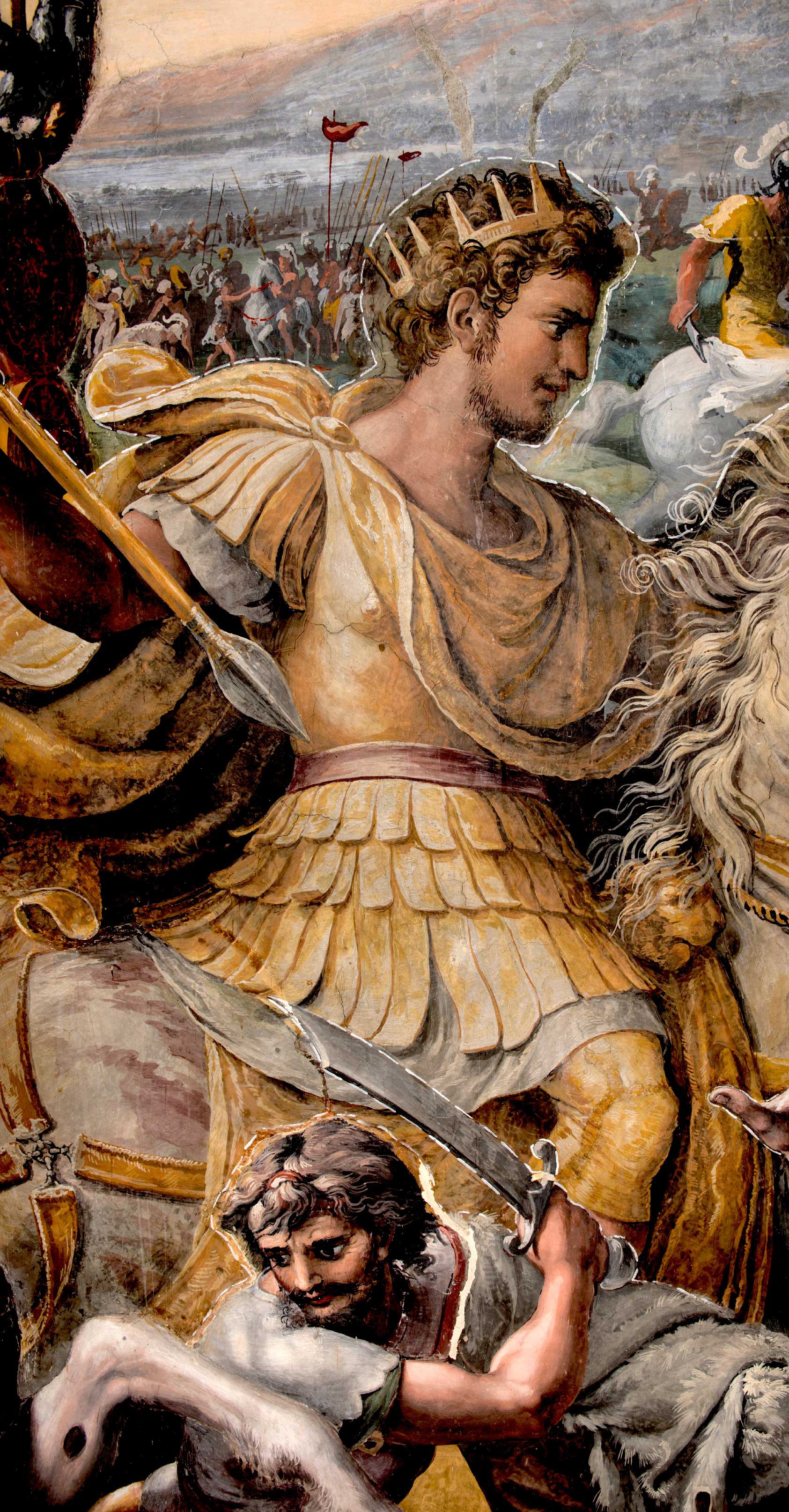
Battle of Ponte Milvio - During Restoration 1
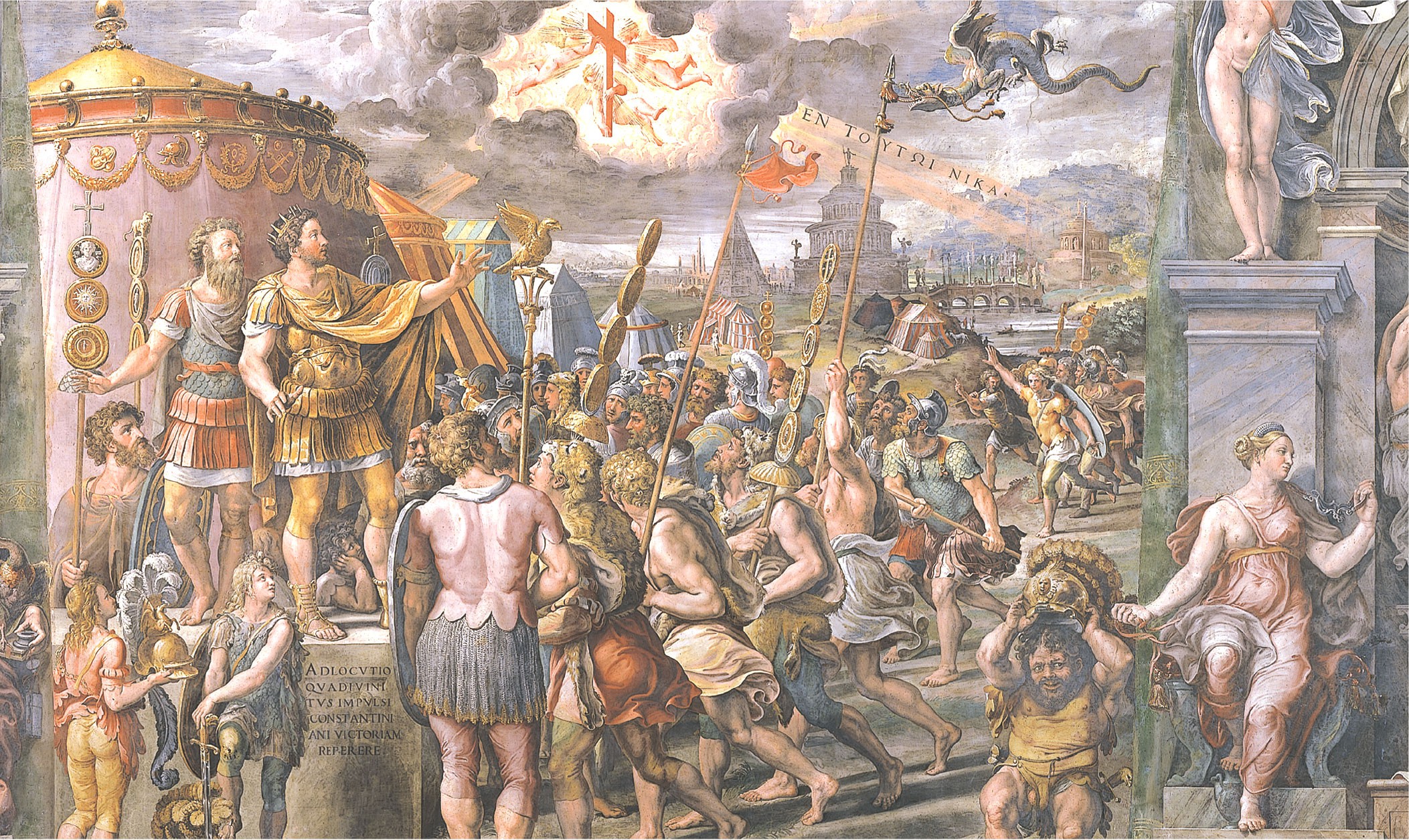
Vision of the Cross - Before Restoration
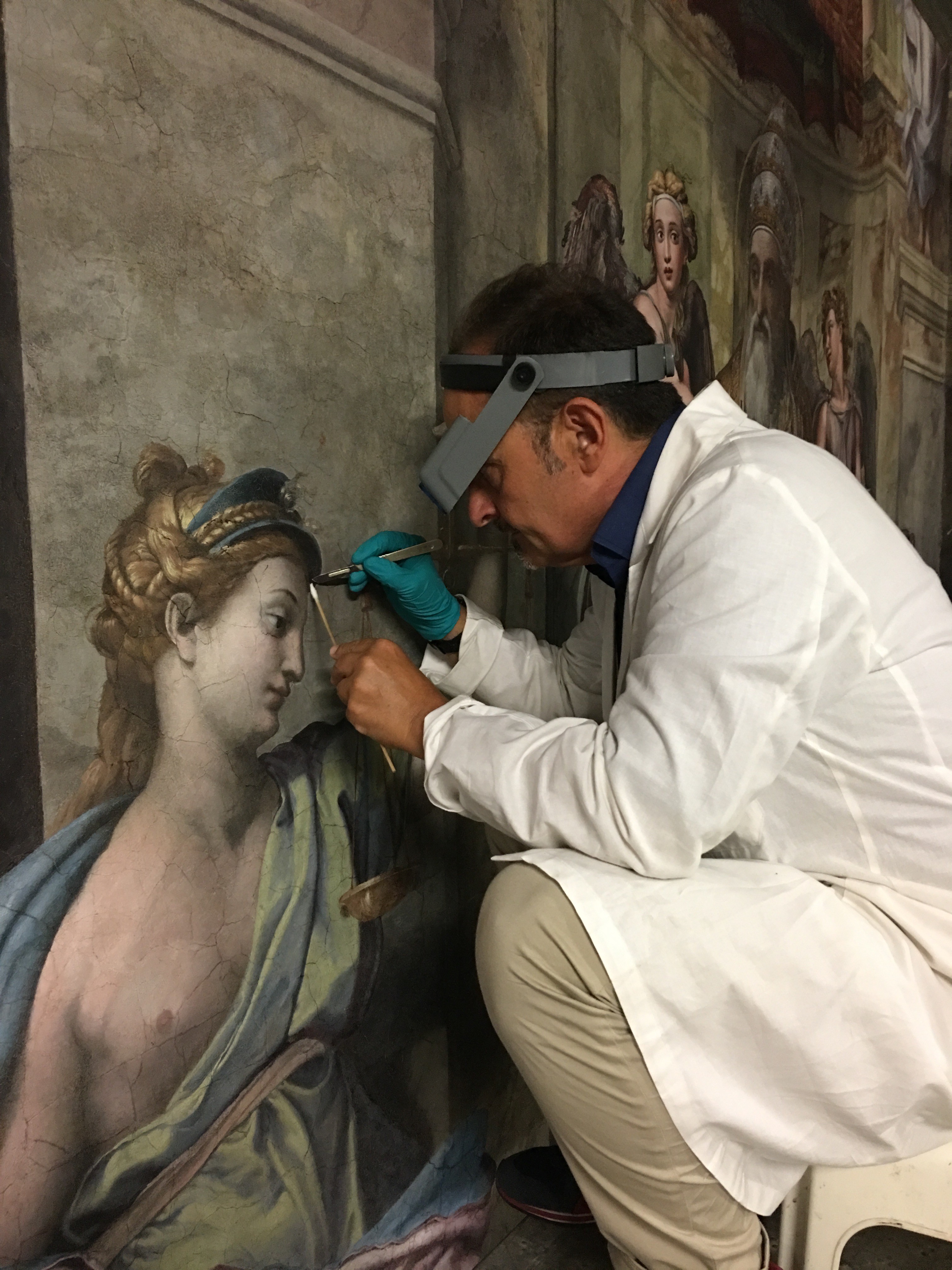
Painting Lab - Constantine Room
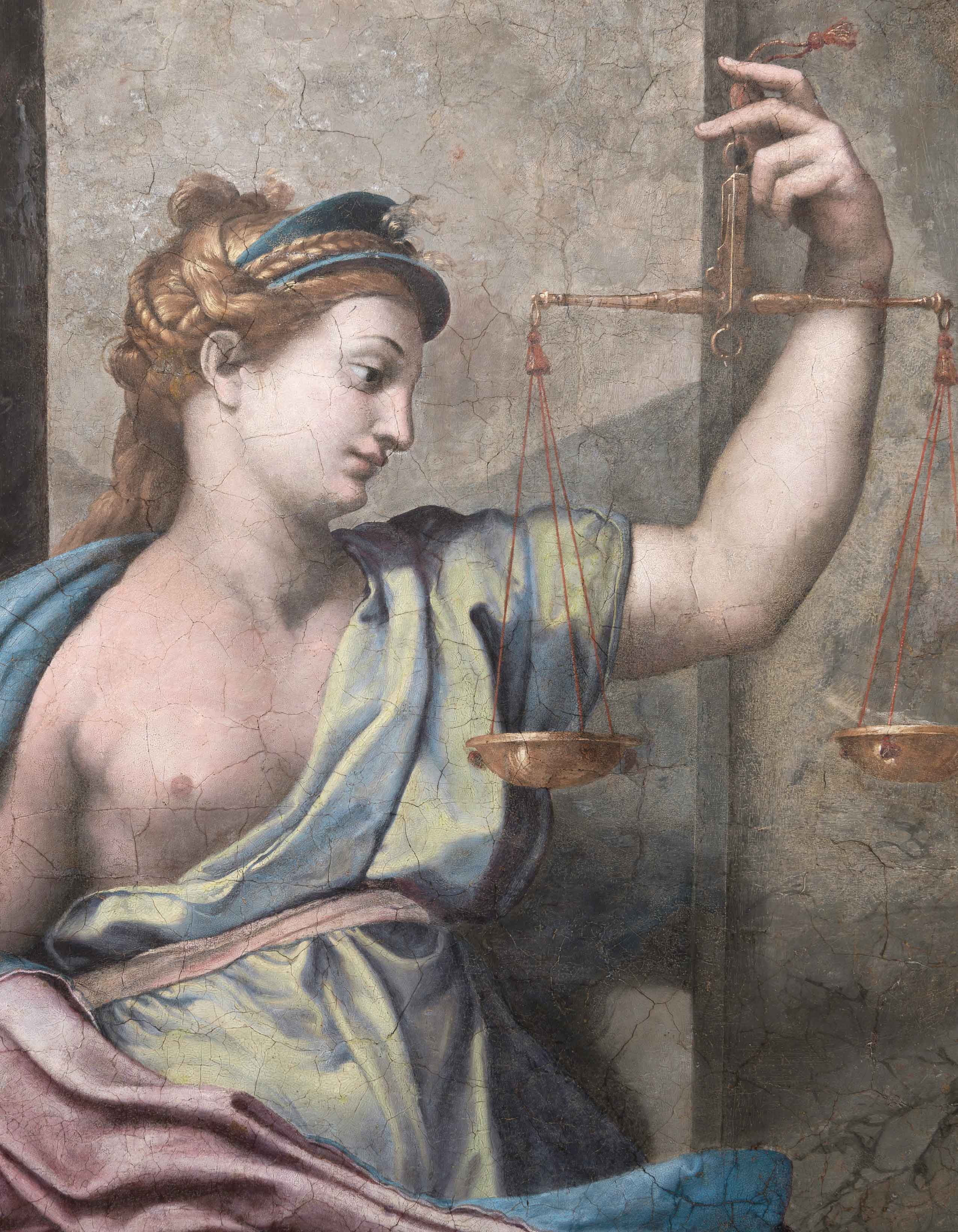
Iusticia - After Restoration
Comitas - After Restoration
Restorations Update: Room of Constantine - Third Restoration Update
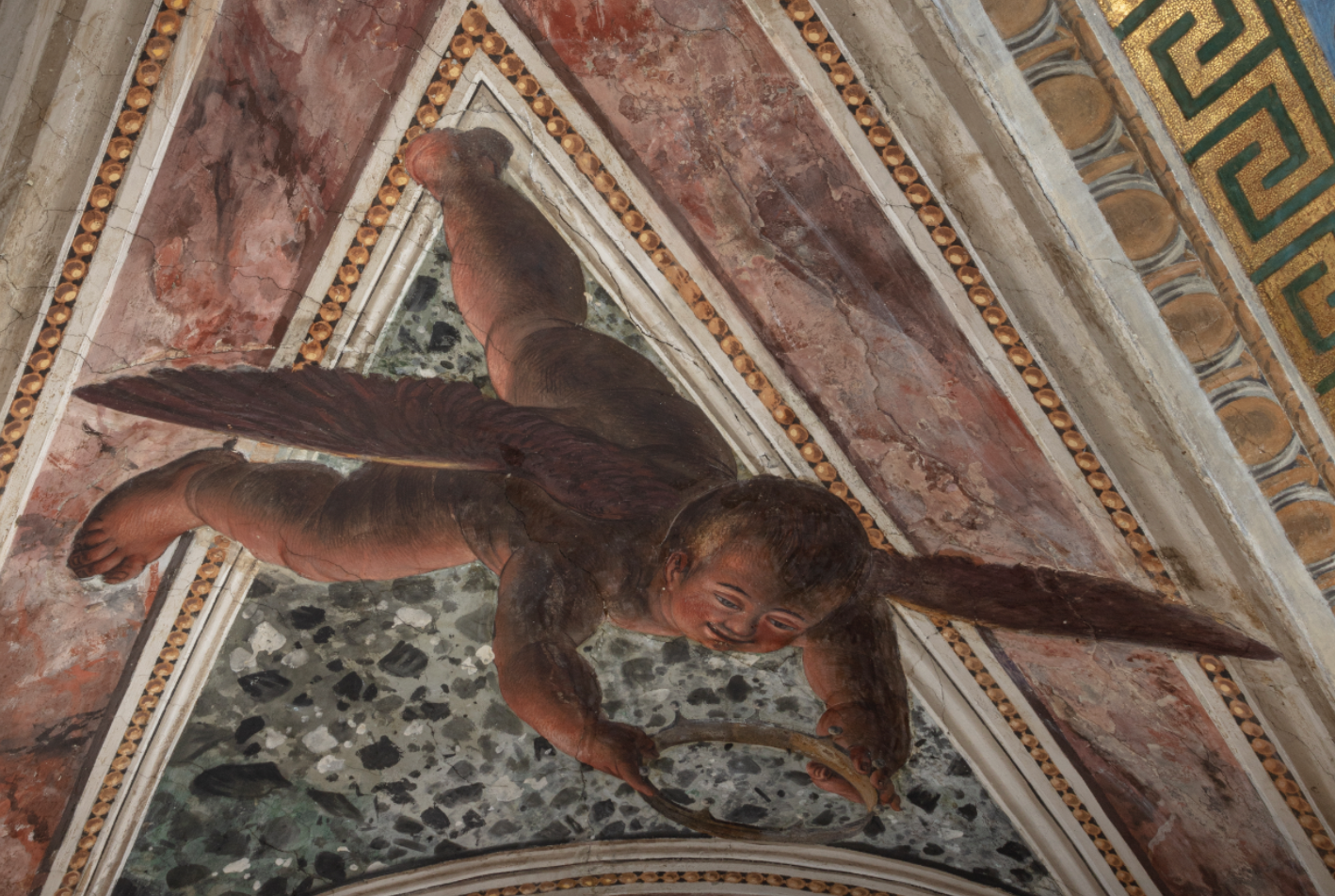
Since November 2023, while awaiting the construction of the new scaffolding, restorers have only been able to work partially on the central section of the vault impost corresponding to the North Wall using the two smaller side scaffoldings. It was not until January 2, 2024, that restorers finally had full access to the entire scaffolding and began the restoration of all painted surfaces, including the central panel.
The ongoing restoration will follow the same operational approach already adopted for the other painted surfaces. The cleaning revealed the actual state of conservation of the frescoes, which have been heavily damaged by past humidity and by the extensive and abundant repainting executed during previous restorations that completely altered the original pictorial balance. Particularly complex were all the restoration operations of the frescoes: cleaning, color consolidation, and new aesthetic presentation.
Restorations Update: Room of Constantine - Second Restoration Update
OVERALL RESTORATION STATUS
Restoration work began in March 2015 on the East Wall, depicting the "Allocution" scene, continued from 2016 on the South Wall, with the famous scene of the "Battle of Ponte Milvio" and then, from 2018 onwards, the West Wall, with the "Baptism of the Emperor" was restored.
Simultaneously, restorers worked on the plinths and the corresponding vault sections of all walls.
The Covid 19 emergency changed the restoration schedule of the entire project, causing a delay in the succession of interventions.Only in the summer of 2020 (August), the restoration of the scene depicting the "Donation of Rome" painted on the North Wall, immediately above the large marble fireplace, painted by Giulio Romano, a collaborator of Raphael considered a leading artistic figure of the Italian Renaissance, begun.
In July 2022, the restoration continued on the two side walls at the windows, including the area of the frieze of Sixtus V and the vault. In addition, work on the west wall in the section above the doorway to the hall was also completed at this stage.
RESTORATION PROCEDURES
Conservation campaign of the side walls (North Wall) with the "Donation of Rome"
At the end of March 2023, the restorers completed the left side wall conservation, proceeding with the right side wall.
They performed all conservative operations necessary for the aesthetic recovery of the original materials, removing inconsistent surface deposits (dust), consolidating plasters and paint film, cleaning the paintings, and defining the aesthetic layout.
During the work, restorers carried out the graphic relief required to document the state of conservation of the pictorial surface, previous restoration interventions, and the original execution technique.
The Photographic Laboratory of the Vatican Museums documented the different operational phases of the entire restoration through photographic campaigns. In addition, the Scientific Research Laboratory, directed by Prof. Ulderico Santamaria and Dr. Fabio Morresi, supported the work of the restorers through chemical and physical investigations and non-destructive imaging (UV, IR false color, XRF, and IR reflectography).
The restoration continues with the cleaning and consolidation of the paintings in the lower portion of the walls, in correspondence with the windows, and restorers completed the plastering performed in the upper section and the aesthetic layout.
Restorations Update: Room of Constantine - Restoration Update
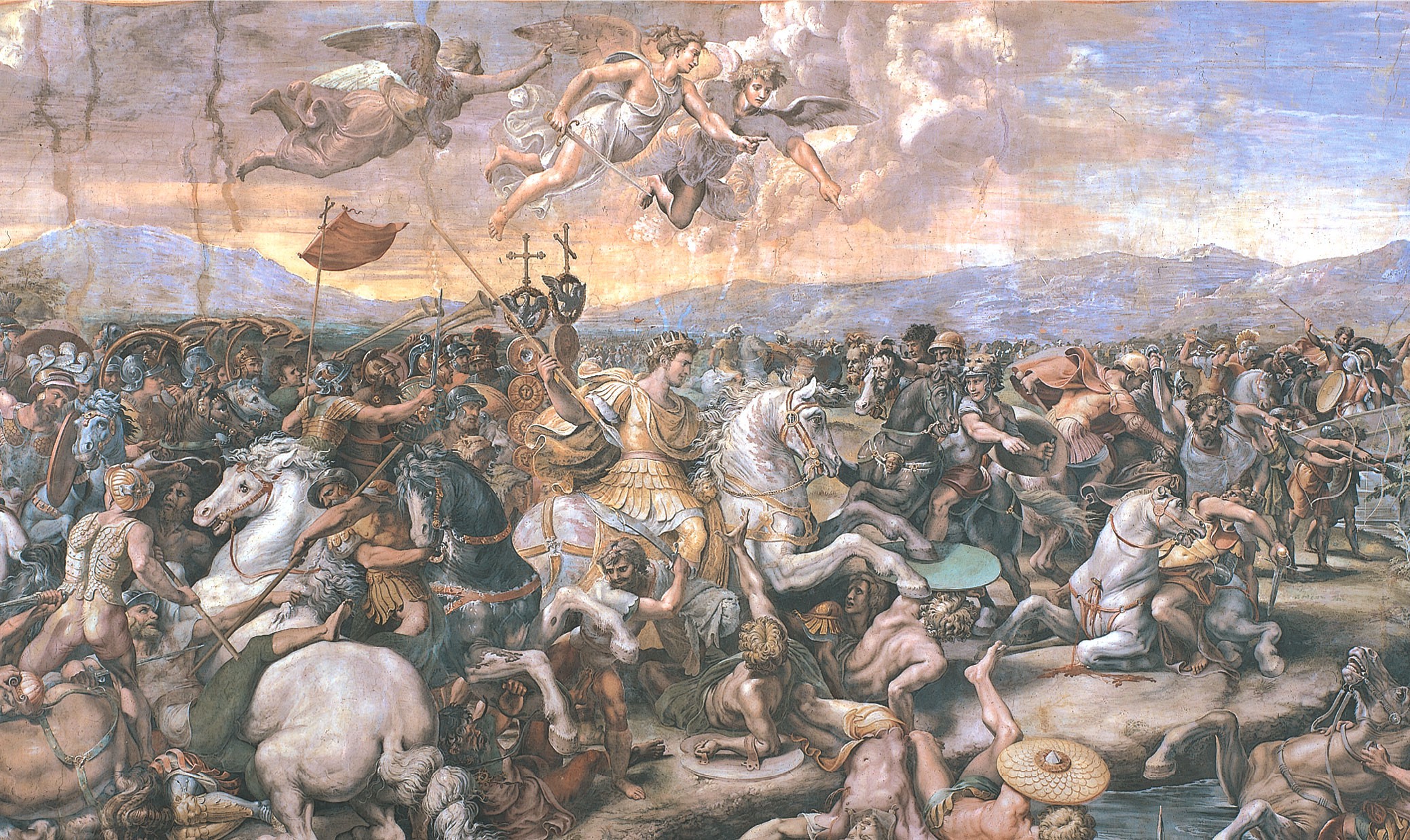
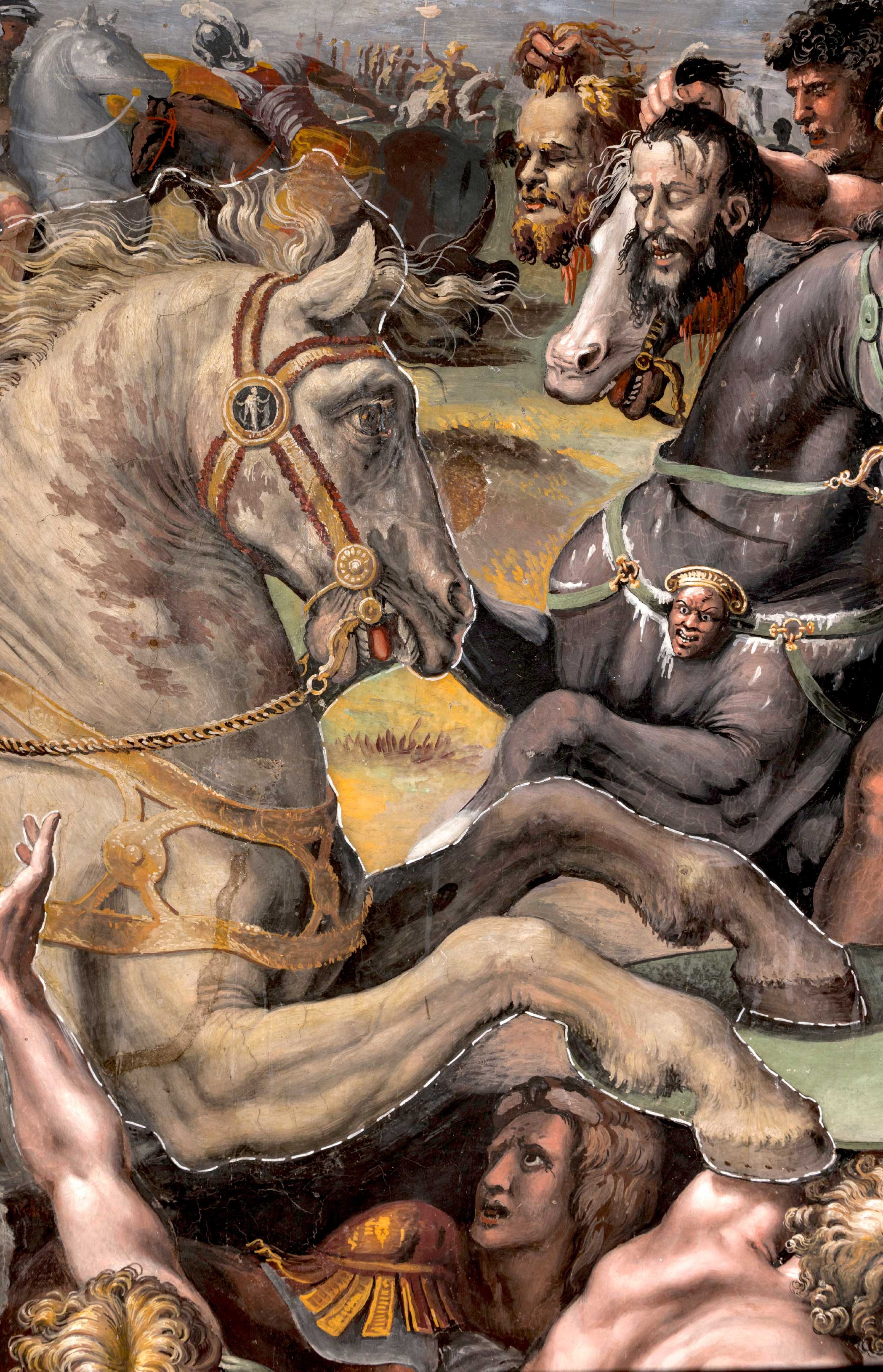
The restoration intervention started in 2015 on the East wall, the Vision of the Cross. In 2016, restoration began on the South wall, the more famous painted scene, the Battle of Ponte Milvio. Afterward, restoration took place in 2018 on the West wall, the Baptism of Emperor Constantine. Restorers also completed their work on the bases and corresponding areas of the vault and walls.
The Covid 19 emergency determined a modification to the work program of the project. However, restoration re-started in August 2020 on the Donation of Rome by Giulio Romano, painted on the North wall between 1523 and 1524. The restoration of the scene terminated in March 2021, and later the restorers Fabio Piacentini and Arabella Bertelli conducted work on the lunettes of the vault (finishing in April 2022). The operating staff, eight restorers, proceed with the work on the vault and the left part of the North wall. They will work on the surfaces on the right in 2023. In the autumn of 2023, the restoration of the vault (central part and north side) will begin. The restorers anticipate finishing - a total of c.820 m2 - in December 2024.
The ongoing restoration of the paintings follows all of the necessary conservation operations: removal of the incoherent (dust) surface deposits, consolidation of the plaster and pictorial film, and the first cleaning phase of the fresco surfaces. The work followed the drawing relief necessary to document the state of conservation of the paintings, the previous restoration interventions, and the executed original technique. The Photographic Laboratory of the Vatican Museums documented with digital photography the different operative phases. Alternatively, the chemical and physical designs (prevalent for the images) support the restoration. They are non-destructive (UV, IR false colors, XRF, and IR reflectography), and conducted by the Diagnostic Laboratory for the Conservation of the Art Work of the Vatican Museums, directed by Prof. Ulderico Santamaria and Dr. Fabio Morresi.
© 2026 Patrons of the Arts
in the Vatican Museums
Vatican Museums V-00120,
Vatican City State (Europe)
+39 0669864499