

Paintings in the Second Loggia of the Apostolic Palace
Total Cost: € 5,436,701
Description
HIGH PRIORITY PROJECT
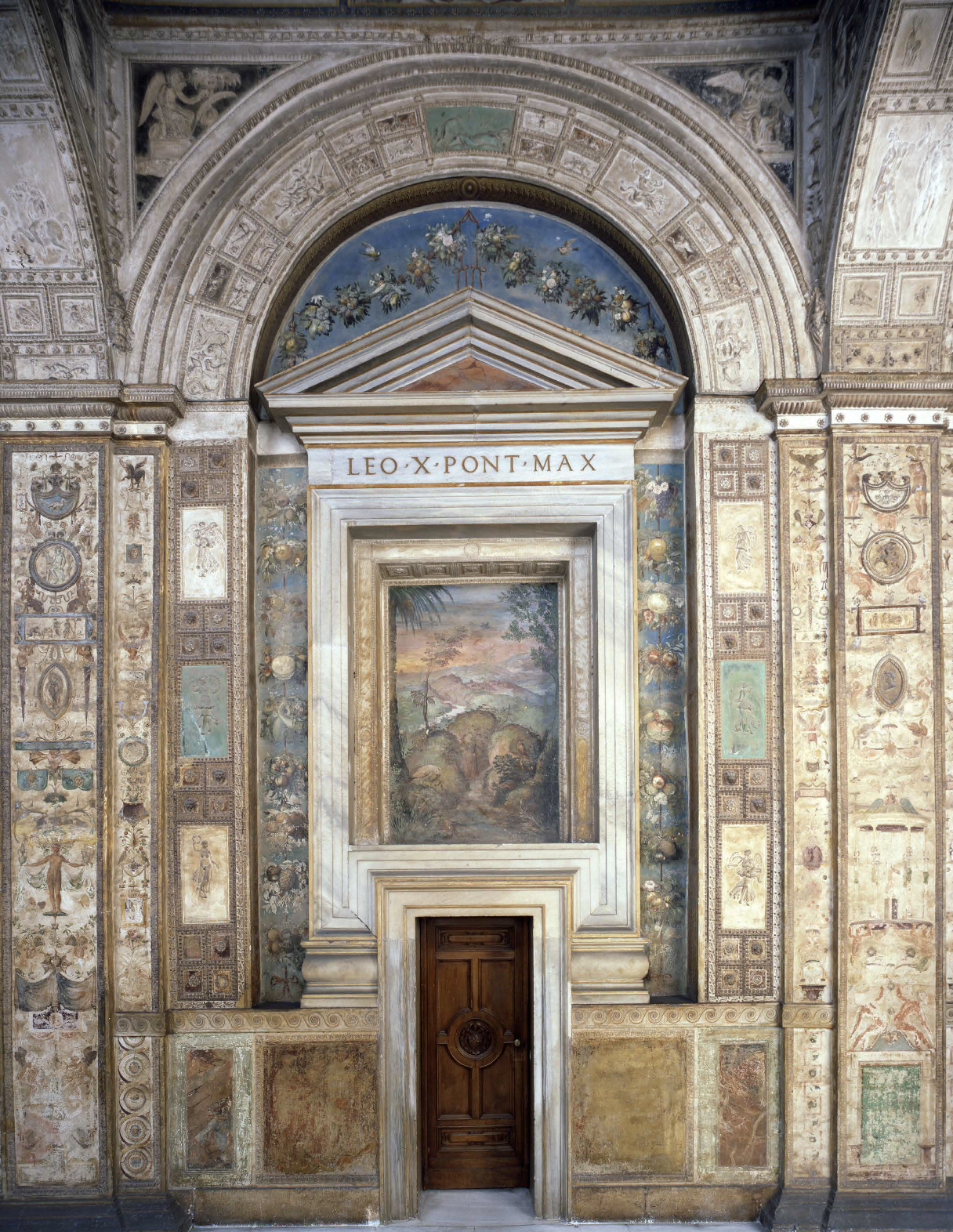
The Loggias of San Damaso, the architectural jewel of the Apostolic Palace, visible from St Peter’s Square like a fascinating stage set, do not limit their beauty to the outside but are the guardians of precious galleries that changed the course of Renaissance art history. Between 1517 and 1519, during the pontificate of Pope Leo X, Raphael directed his experienced workshop to decorate the second floor of the first “fifth” building erected in front of the Apostolic Palace, having completed the construction of the three floors of the entire façade after Bramante’s death. The project was so successful that it became a key reference point for copyists and imitators in the spread of Raphael’s work in Italy, Europe, and even Russia in the 18th century and America in the 19th. In a perfect blend of the sacred and the profane, the great artist managed to set stories from the Old Testament along thirteen spans, with architectural elements covered in stucco and grotesques, whose richness of representation comes from subjects found in the “grottoes” of the Domus Aurea, hence the name, but also from known ancient artifacts or finds found throughout the city of Rome, which did not escape Raphael’s attention as the Prefect in charge of the area’s antiquities. On the other hand, this precious environment, currently unknown to most because it is not part of the Vatican Museums, has become notorious for its conservation history, punctuated by a series of failures or frustrated attempts. Unlike the adjacent areas, such as the contemporary Stanze, the Sistine Chapel, and the pictorial cycle of the Borgia Apartment, the decorative apparatus of the Raphael’s Loggia has never been the subject of organic restoration. Since the late 17th century, it was described as a ruin or a relic. The reason for this attitude of resignation, combined with a reverential fear, lies in the awareness of the inadequacy of the means available to deal with an intervention in a poor state of conservation. This perception was renewed in the early 1970s after the unsuccessful result of of a consolidation attempt. Therefore, the only measures implemented on several occasions were limited to consolidating and protecting the paintings and reliefs as much as possible, leaving the work of the numerous copyists who succeeded each other over time to transmit the pictorial patrimony of the precious cycle. The most important intervention was the closure of the east side with stained glass windows in 1813. The reason for this difficulty lies in the specific characteristics of this unique corridor.
Total Cost: € 5.436.701,00 ($ 5,592,190.65)
State of Preservation
The variety and peculiarity of the painting techniques used - delicate dry-painting on Roman stucco for the grotesques, tempera or lime on a fresco base for the festoons and azurite backgrounds - combined with the microclimate typical of an environment exposed for centuries to the direct action of atmospheric agents, have led to an extremely poor state of conservation. Most of the figurations can now only be understood by reading the negative traces left on the background, or they can be seen through tenacious layers of foreign matter resulting from the transformation of treatments applied in previous interventions, which obscure the underlying design and color scheme. Until now, the main obstacle to any cleaning operation using traditional methods, has been the fear of losing traces of the basic design and original backgrounds on the painted parts. These, as mentioned, are often only visible as an outline due to the fall of the paint film, the only reminder of the precious decoration. The conservation problems are not limited to the fragility of the paint film surfaces but also include severe detachments of the preparatory layers, which jeopardize the future of the paintings and stuccoes, as well as the above-mentioned overlying substances, which render the already highly compromised decorations illegible.
Restoration Procedures
DOCUMENTATION
- Surface survey - execution technique, state of preservation, interventions
- Design on Autocad
MURAL PAINTING
- Removal of uneven surface deposits (dust)
- Partial restoration of adhesion and cohesion (pre-consolidation) of the paint film, preparation for consolidation and cleaning operations in case of disintegration and lifting of the paint film
- Application and removal of support and protection bandages on parts at risk of falling, to support the plaster during consolidation operations or even as a precursor to detachment or cracking operation
- Restoring adhesion between the layers of plaster that support the painting by injecting filler adhesives
- Cleaning - removal of partially coherent superficial deposits such as sedimented dust, altered fixatives and substances of various kinds superimposed on the painting by applying organic and/or inorganic solvents
- Rinsing with distilled water and application of absorbent material to remove dust partially adhering to the painting, extraction of soluble salts and residues of organic salts used for cleaning operations
- Cleaning - removal of various types of superimposed substances such as oils, varnishes, waxes, etc. using laser equipment
- Sealing of cracks, breaks and falling plaster layers
- Glazing with watercolours or re-integration of drops in the paint film or surface abrasions
STUCCO RELIEFS AND GILDING
- Removal of inconsistent surface deposits (dusting)
- Restoration of adhesion and cohesion of gilding or plastering (pre-consolidation), preparatory to cleaning operations
- Removal or lightening of encrustations, repainting, or layers adhering to the surface using laser equipment
- Restoration of flakes and fragments of limited weight and size
- Grouting of cracks, fractures, and falling plaster layers
- Watercolour glazing or reintegration of surface falls or abrasions of gilding or plastering
LAPIDAR MATERIALS
- Removal of inconsistent surface deposits (dusting)
- Removal of inconsistent surface deposits, encrustations, concretions, and altered fixatives by chemical and/or physical means
- Possible plastic integration of small missing parts, micro plastering of cracks and fissures
- Color revision in watercolor for balancing the grouting
SCIENTIFIC RESEARCHES
The scientific research on the paintings and stuccoes will focus on the study of technique, degradation phenomena, and the development and monitoring of cleaning techniques. Specifically, the Scientific Research Laboratory will conduct an initial campaign of non-invasive analyses and, depending on the data collected, targeted, and calibrated, will perform invasive analyses to define certain chemical and physical aspects.
- Non-invasive analyses: image analysis campaign - The image analysis necessary to define and document the state of conservation will be carried out on all painted surfaces. Induced ultraviolet fluorescence and false-color infrared analyses will obtain a scientific map of previous restorations performed on the paintings and information on the original execution technique. Any areas showing deterioration induced by previous restorations and infiltration will receive special attention. Many copper-based pigments show conspicuous chemical transformations with color changes.
- Non-invasive analysis: chemical-physical analysis campaign - Subsequently and according to the results of the image analysis, the Scientific Research Laboratory will perform analytical techniques such as spectrophotometric, FT-IR, Raman, and X-fluorescence through the use of portable instruments to define the chemical species present on the external surface, performing organic chemical analyses to study and identify any substances applied to the surface of the paintings, and inorganic chemical analyses to determine the original and retouched pigments.
- Non-invasive analyses: stratigraphic and chromatographic analysis campaign - Stratigraphic sections, combined with analyses using electron microscopy and FT-IR microscopy, will allow us to understand the different levels and better define the state of conservation and the degree of degradation caused by previous restorations. Defining the exact chemical state of the processes triggered by aluminate treatment will be crucial and requires accurate crystallographic measurements, resulting in analytical techniques such as stratigraphic sections, SEM-EDS analysis, FT IR microscopy, XRD, and CG MS. • Analyses in support of restoration - Defining the exact chemical state of the processes triggered by aluminate treatment will be crucial and requires accurate crystallographic measurements resulting from analytical techniques such as stratigraphic sections, SEM-EDS analysis, FT-IR microscopy, XRD, and CG MS.

Paintings in the Second Loggia of the Apostolic Palace
Details
Laboratory: Painting & Wood
Wishbook year: 2025
Description
HIGH PRIORITY PROJECT
The Loggias of San Damaso, the architectural jewel of the Apostolic Palace, visible from St Peter’s Square like a fascinating stage set, do not limit their beauty to the outside but are the guardians of precious galleries that changed the course of Renaissance art history. Between 1517 and 1519, during the pontificate of Pope Leo X, Raphael directed his experienced workshop to decorate the second floor of the first “fifth” building erected in front of the Apostolic Palace, having completed the construction of the three floors of the entire façade after Bramante’s death. The project was so successful that it became a key reference point for copyists and imitators in the spread of Raphael’s work in Italy, Europe, and even Russia in the 18th century and America in the 19th. In a perfect blend of the sacred and the profane, the great artist managed to set stories from the Old Testament along thirteen spans, with architectural elements covered in stucco and grotesques, whose richness of representation comes from subjects found in the “grottoes” of the Domus Aurea, hence the name, but also from known ancient artifacts or finds found throughout the city of Rome, which did not escape Raphael’s attention as the Prefect in charge of the area’s antiquities. On the other hand, this precious environment, currently unknown to most because it is not part of the Vatican Museums, has become notorious for its conservation history, punctuated by a series of failures or frustrated attempts. Unlike the adjacent areas, such as the contemporary Stanze, the Sistine Chapel, and the pictorial cycle of the Borgia Apartment, the decorative apparatus of the Raphael’s Loggia has never been the subject of organic restoration. Since the late 17th century, it was described as a ruin or a relic. The reason for this attitude of resignation, combined with a reverential fear, lies in the awareness of the inadequacy of the means available to deal with an intervention in a poor state of conservation. This perception was renewed in the early 1970s after the unsuccessful result of of a consolidation attempt. Therefore, the only measures implemented on several occasions were limited to consolidating and protecting the paintings and reliefs as much as possible, leaving the work of the numerous copyists who succeeded each other over time to transmit the pictorial patrimony of the precious cycle. The most important intervention was the closure of the east side with stained glass windows in 1813. The reason for this difficulty lies in the specific characteristics of this unique corridor.
Total Cost: € 5.436.701,00 ($ 5,592,190.65)
State of Preservation
The variety and peculiarity of the painting techniques used - delicate dry-painting on Roman stucco for the grotesques, tempera or lime on a fresco base for the festoons and azurite backgrounds - combined with the microclimate typical of an environment exposed for centuries to the direct action of atmospheric agents, have led to an extremely poor state of conservation. Most of the figurations can now only be understood by reading the negative traces left on the background, or they can be seen through tenacious layers of foreign matter resulting from the transformation of treatments applied in previous interventions, which obscure the underlying design and color scheme. Until now, the main obstacle to any cleaning operation using traditional methods, has been the fear of losing traces of the basic design and original backgrounds on the painted parts. These, as mentioned, are often only visible as an outline due to the fall of the paint film, the only reminder of the precious decoration. The conservation problems are not limited to the fragility of the paint film surfaces but also include severe detachments of the preparatory layers, which jeopardize the future of the paintings and stuccoes, as well as the above-mentioned overlying substances, which render the already highly compromised decorations illegible.
Restoration Procedures
DOCUMENTATION
- Surface survey - execution technique, state of preservation, interventions
- Design on Autocad
MURAL PAINTING
- Removal of uneven surface deposits (dust)
- Partial restoration of adhesion and cohesion (pre-consolidation) of the paint film, preparation for consolidation and cleaning operations in case of disintegration and lifting of the paint film
- Application and removal of support and protection bandages on parts at risk of falling, to support the plaster during consolidation operations or even as a precursor to detachment or cracking operation
- Restoring adhesion between the layers of plaster that support the painting by injecting filler adhesives
- Cleaning - removal of partially coherent superficial deposits such as sedimented dust, altered fixatives and substances of various kinds superimposed on the painting by applying organic and/or inorganic solvents
- Rinsing with distilled water and application of absorbent material to remove dust partially adhering to the painting, extraction of soluble salts and residues of organic salts used for cleaning operations
- Cleaning - removal of various types of superimposed substances such as oils, varnishes, waxes, etc. using laser equipment
- Sealing of cracks, breaks and falling plaster layers
- Glazing with watercolours or re-integration of drops in the paint film or surface abrasions
STUCCO RELIEFS AND GILDING
- Removal of inconsistent surface deposits (dusting)
- Restoration of adhesion and cohesion of gilding or plastering (pre-consolidation), preparatory to cleaning operations
- Removal or lightening of encrustations, repainting, or layers adhering to the surface using laser equipment
- Restoration of flakes and fragments of limited weight and size
- Grouting of cracks, fractures, and falling plaster layers
- Watercolour glazing or reintegration of surface falls or abrasions of gilding or plastering
LAPIDAR MATERIALS
- Removal of inconsistent surface deposits (dusting)
- Removal of inconsistent surface deposits, encrustations, concretions, and altered fixatives by chemical and/or physical means
- Possible plastic integration of small missing parts, micro plastering of cracks and fissures
- Color revision in watercolor for balancing the grouting
SCIENTIFIC RESEARCHES
The scientific research on the paintings and stuccoes will focus on the study of technique, degradation phenomena, and the development and monitoring of cleaning techniques. Specifically, the Scientific Research Laboratory will conduct an initial campaign of non-invasive analyses and, depending on the data collected, targeted, and calibrated, will perform invasive analyses to define certain chemical and physical aspects.
- Non-invasive analyses: image analysis campaign - The image analysis necessary to define and document the state of conservation will be carried out on all painted surfaces. Induced ultraviolet fluorescence and false-color infrared analyses will obtain a scientific map of previous restorations performed on the paintings and information on the original execution technique. Any areas showing deterioration induced by previous restorations and infiltration will receive special attention. Many copper-based pigments show conspicuous chemical transformations with color changes.
- Non-invasive analysis: chemical-physical analysis campaign - Subsequently and according to the results of the image analysis, the Scientific Research Laboratory will perform analytical techniques such as spectrophotometric, FT-IR, Raman, and X-fluorescence through the use of portable instruments to define the chemical species present on the external surface, performing organic chemical analyses to study and identify any substances applied to the surface of the paintings, and inorganic chemical analyses to determine the original and retouched pigments.
- Non-invasive analyses: stratigraphic and chromatographic analysis campaign - Stratigraphic sections, combined with analyses using electron microscopy and FT-IR microscopy, will allow us to understand the different levels and better define the state of conservation and the degree of degradation caused by previous restorations. Defining the exact chemical state of the processes triggered by aluminate treatment will be crucial and requires accurate crystallographic measurements, resulting in analytical techniques such as stratigraphic sections, SEM-EDS analysis, FT IR microscopy, XRD, and CG MS. • Analyses in support of restoration - Defining the exact chemical state of the processes triggered by aluminate treatment will be crucial and requires accurate crystallographic measurements resulting from analytical techniques such as stratigraphic sections, SEM-EDS analysis, FT-IR microscopy, XRD, and CG MS.
© 2026 Patrons of the Arts
in the Vatican Museums
Vatican Museums V-00120,
Vatican City State (Europe)
+39 0669864499