

Litanies of the Virgin Mary
Artist: Mario Deluigi
Date: 1946
Classification: Painting
Dimensions: 220 x 220 cm
Materials: Oil and collage on wood
Adopted By: The Northwest Chapter
Description
MEDIUM PRIORITY PROJECT
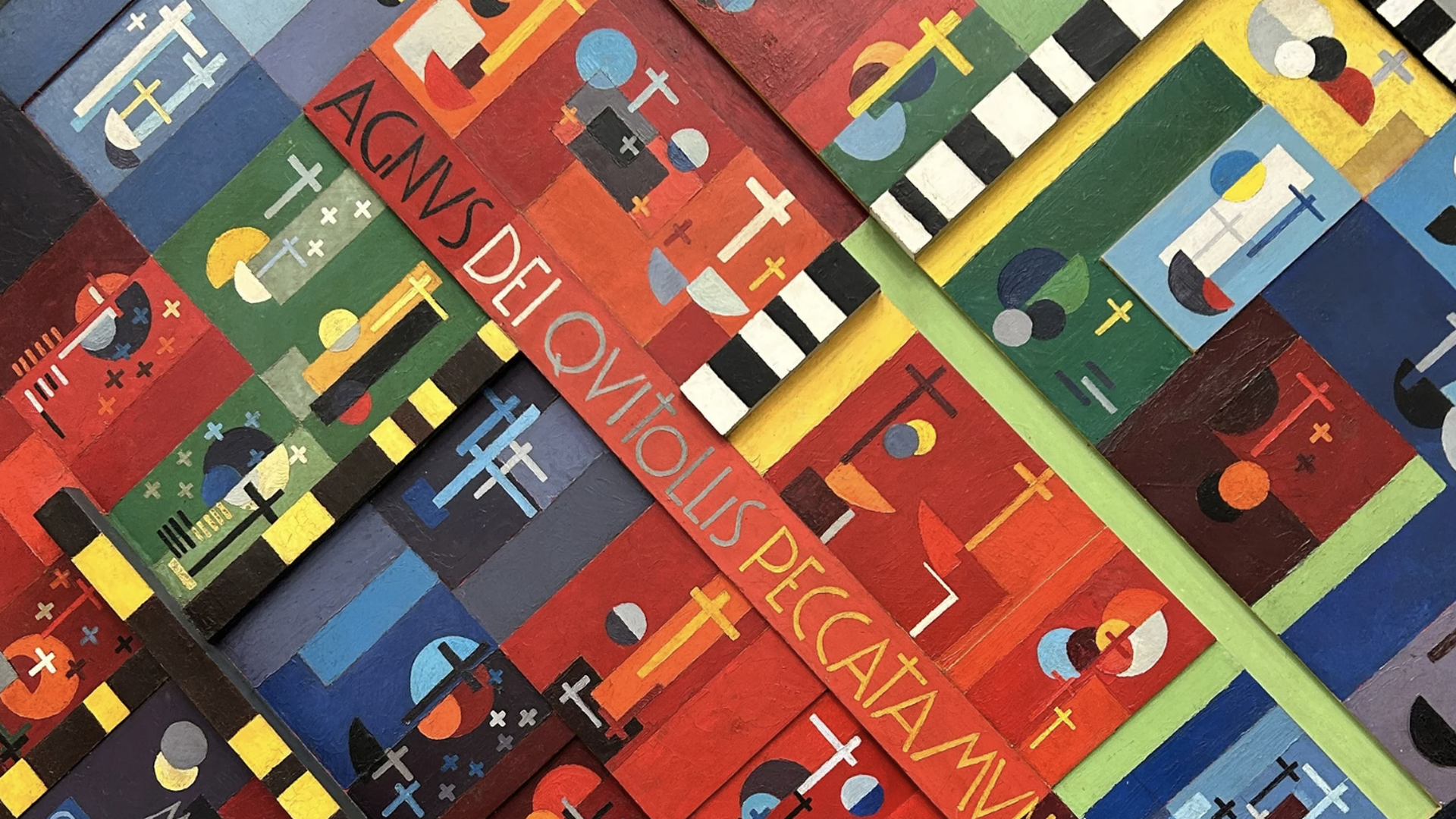
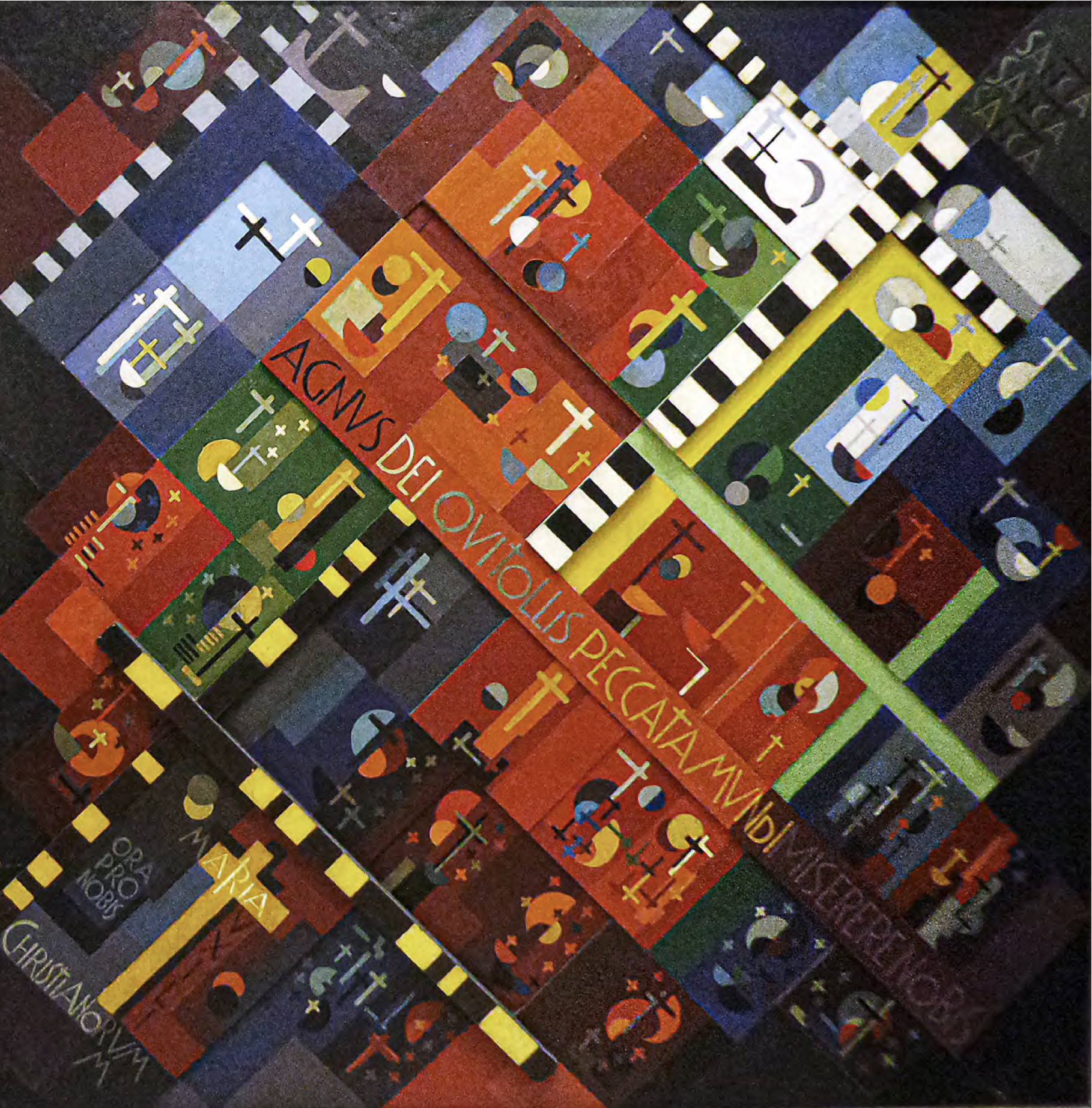
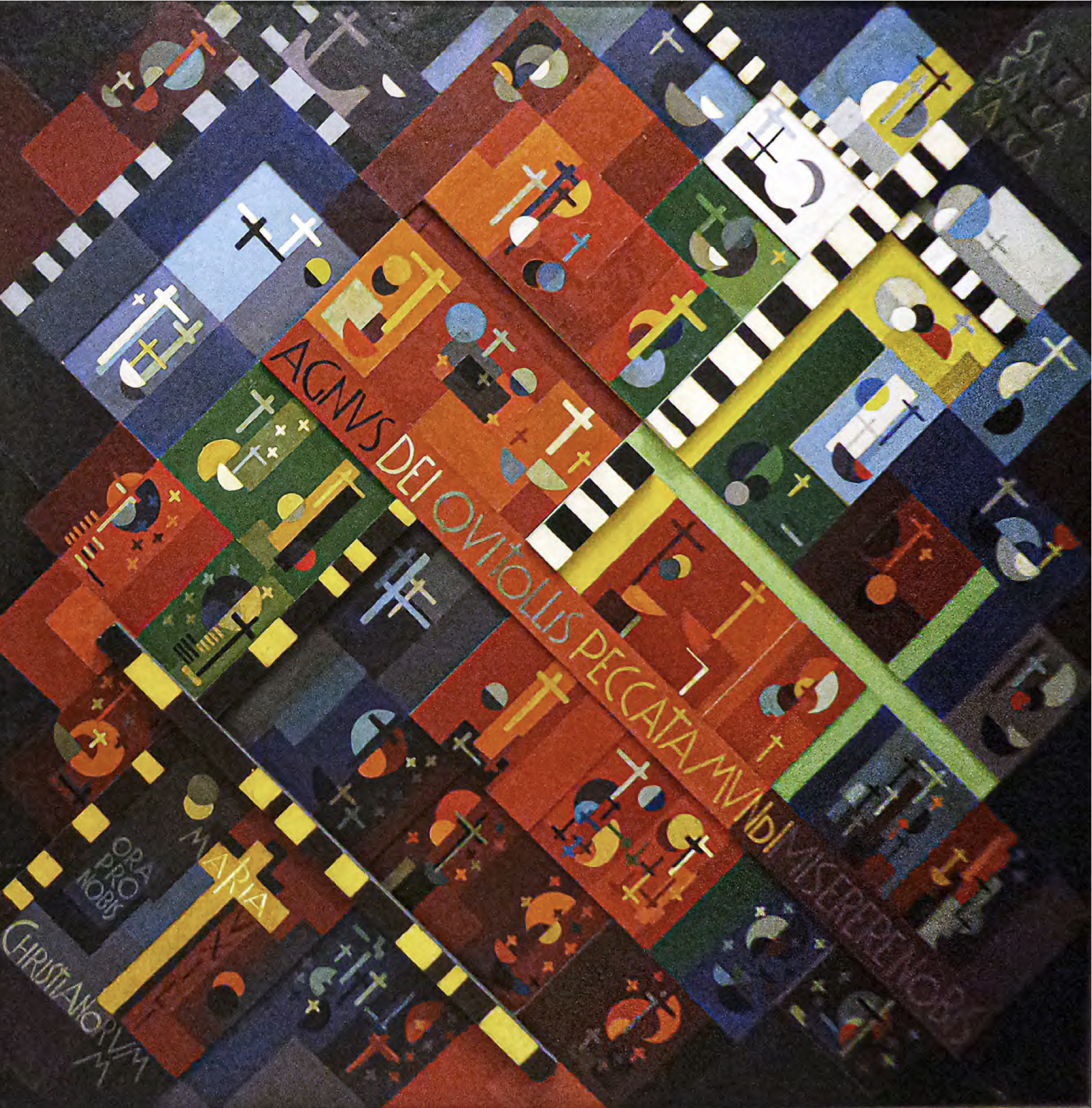
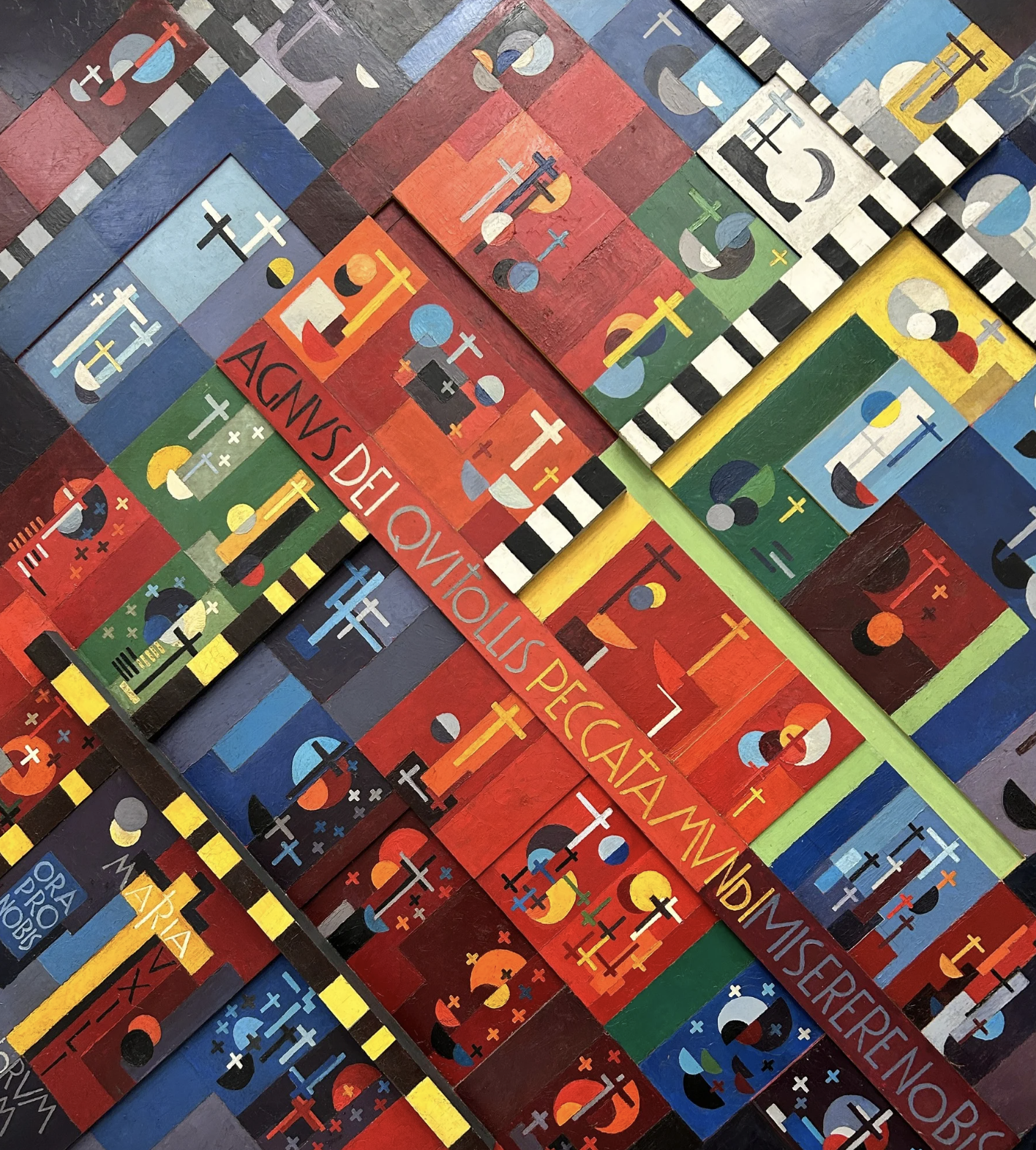
Mario Deluigi, between the 1940s and 1950s, often dealt with themes inspired by the Old and New Testaments. His family, observant Catholics, and his classical studies with the Salesians influenced his religious and spiritual formation. Although he was not known as particularly religious, the figure of the angel as protector and God as light is often in his notes and aphorisms. The painting, made in 1949, was on display at the Venice International Art Biennale in 1952. It represents an interesting example of a comparison between language influenced by abstract experience and the visualization of a prayer.
TOTAL COST: € 17.478,41 ($ 18,677.43)
State of Preservation
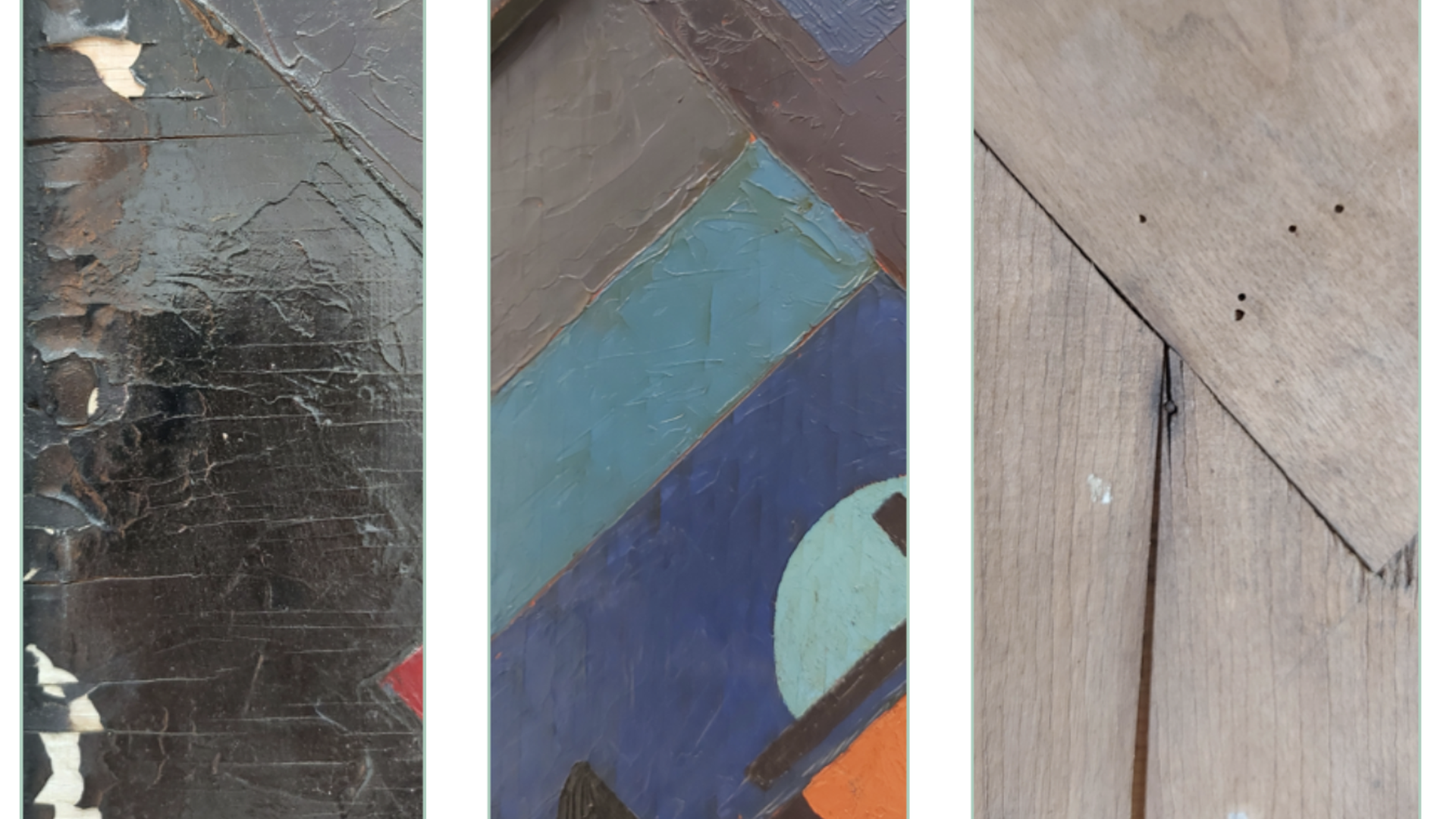
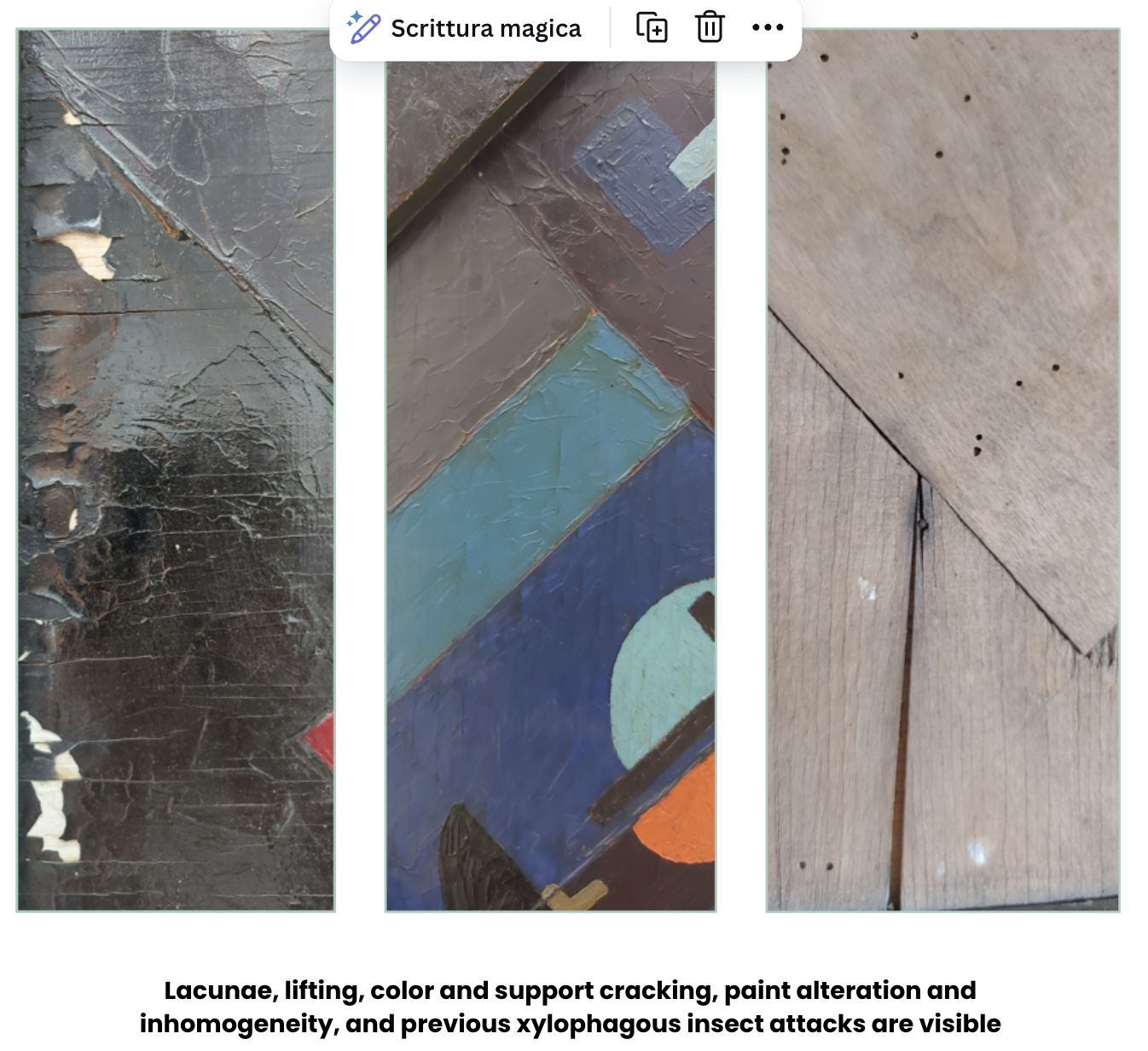
There are lamellar lifts and some gaps in the wood. Inspections of the wooden parts will verify the stability of their anchorage to the rest of the planar surface. The painting has undergone previous restorations. The final protective varnish is dulled and yellowed in many areas, altering the original color scheme. Along with the moderate wear, there are countless lifts in the paint film, especially along the perimeter, in the lower right corner, and at the top. Many altered retouches refer to a previous restoration, and several gaps are evident
Restoration Procedures
- Anoxic treatment of the work and frame
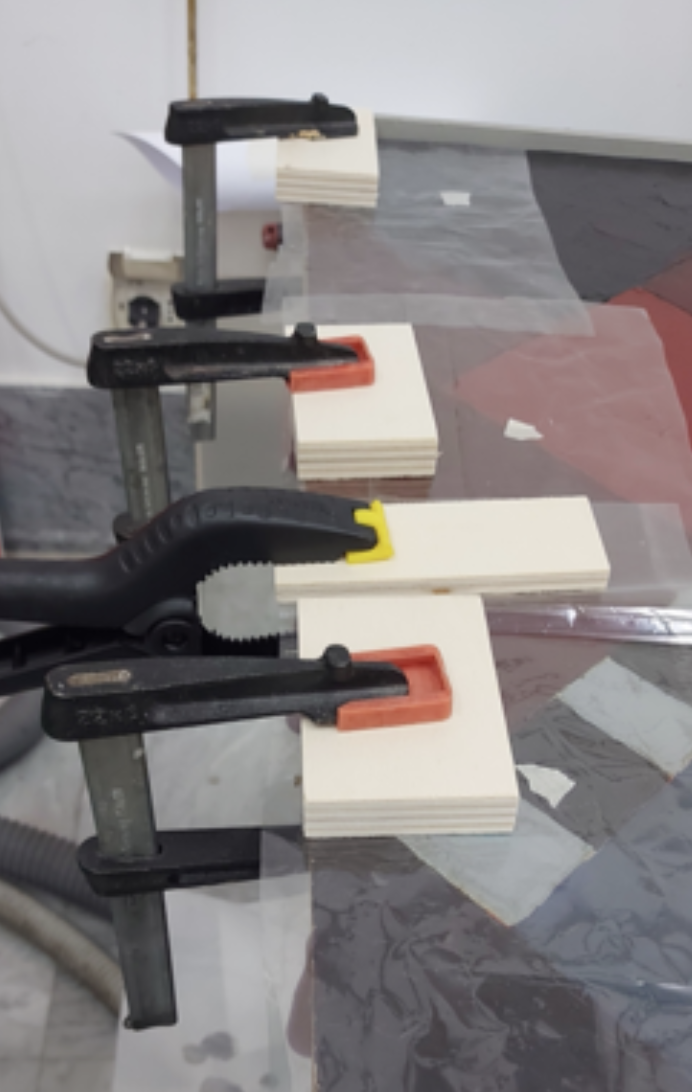
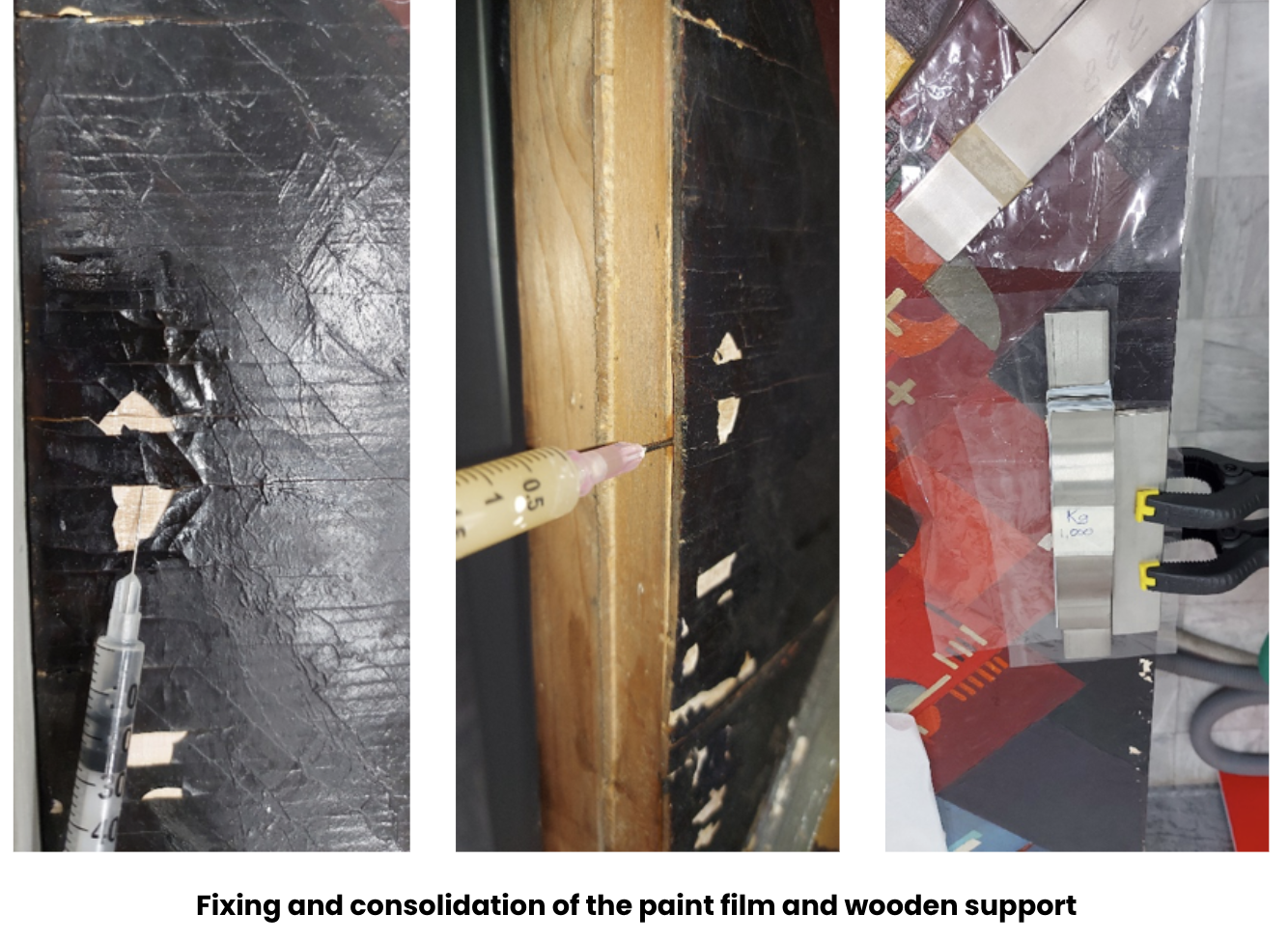
- Consolidation of lamellar lifts and the projecting parts of the wooden support
- Restoration of the gaps
- Fixing lifts on the painted surface
- Removal of varnish and altered restoration retouches
- Filling gaps/wormholes (on the painting and frame)
- Varnishing
Detail
Inventory N°: 24381
Artist: Mario Deluigi
Date: 1946
Dimensions: 220 x 220 cm
Materials: Oil and collage on wood
Department:
XIX Century and Contemporary ArtLaboratories:
Painting & WoodWishbook year: 2024
Litanies of the Virgin Mary - Final restoration report
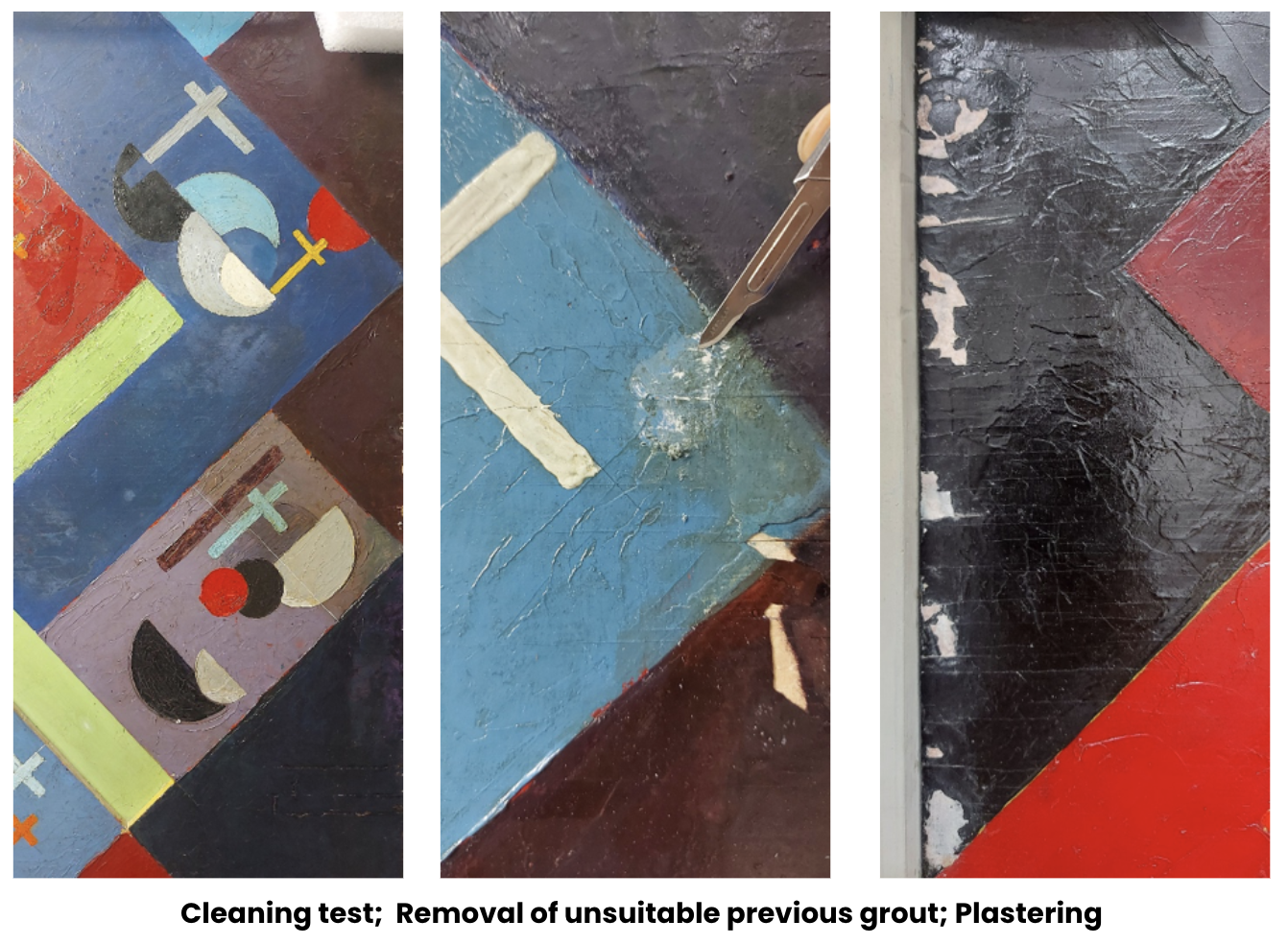
The restoration consisted of four major phases: Scientific studies to determine the state of conservation and the technique of execution Consolidation of the pictorial preparation/color layer and restoration of the wooden support Cleaning of the painted surface to recover the original color relationship Plastering chromatic reintegration and final painting After these stages, the new aluminum frame was mounted on the original wooden structure to allow the painting to be displayed on the wall in a rhomboid shape, respecting the intention of the artist. Before the restoration, the artwork painted on wood with overhanging panels showed an altered varnish on a large part of the painted surface, with visible unevenness compromising the color scheme. Several gaps, lifts, cracks, and previous xylophagous insect attacks were visible along the perimeter. The wooden support had some minor and medium cracks and damaged wooden parts. The grey perimeter batten, used as a frame, had stains, holes from the previous nailing, and some cracking
The artwork was executed with plywood panels of different thicknesses, creating a modulated surface.
The artist applied a pictorial layer of paint, chalk, and glue to a thin layer of plywood. The expressive design of the Litany of the Virgin's theme has been translated into a painting by the author using direct engraving for the inscriptions, indirect engraving for the crosses, and graphite drawing for some shapes.
The paint was applied mainly with a spatula, sometimes with the help of masks or slats, and sometimes with a flat brush.
The chronological order of execution is assumed to start with the broader backgrounds, some on the chalk preparation applied directly to the support, such as the blacks, and some on various color spread as 'preparation'.
Then, the artist developed the theme with geometric shapes, spheres and hemispheres, rectangles of different sizes, and crosses. The religious message is conveyed directly through the inscriptions. Mario De Luigi's work, painted in 1949, is also a tribute to Mondrian's Victory Boogie-Woogie, painted between 1942 and 1944.
Artist's palette
- Whites: zinc, titanium, barium, sangiovanni
- Reds: mainly cadmium and cinnabar
- Greens: based on chromium, cadmium, in some cases copper
- Light blue: based on cobalt and copper
- Blue: Prussian blue
Litanies of the Virgin Mary - Restoration Update
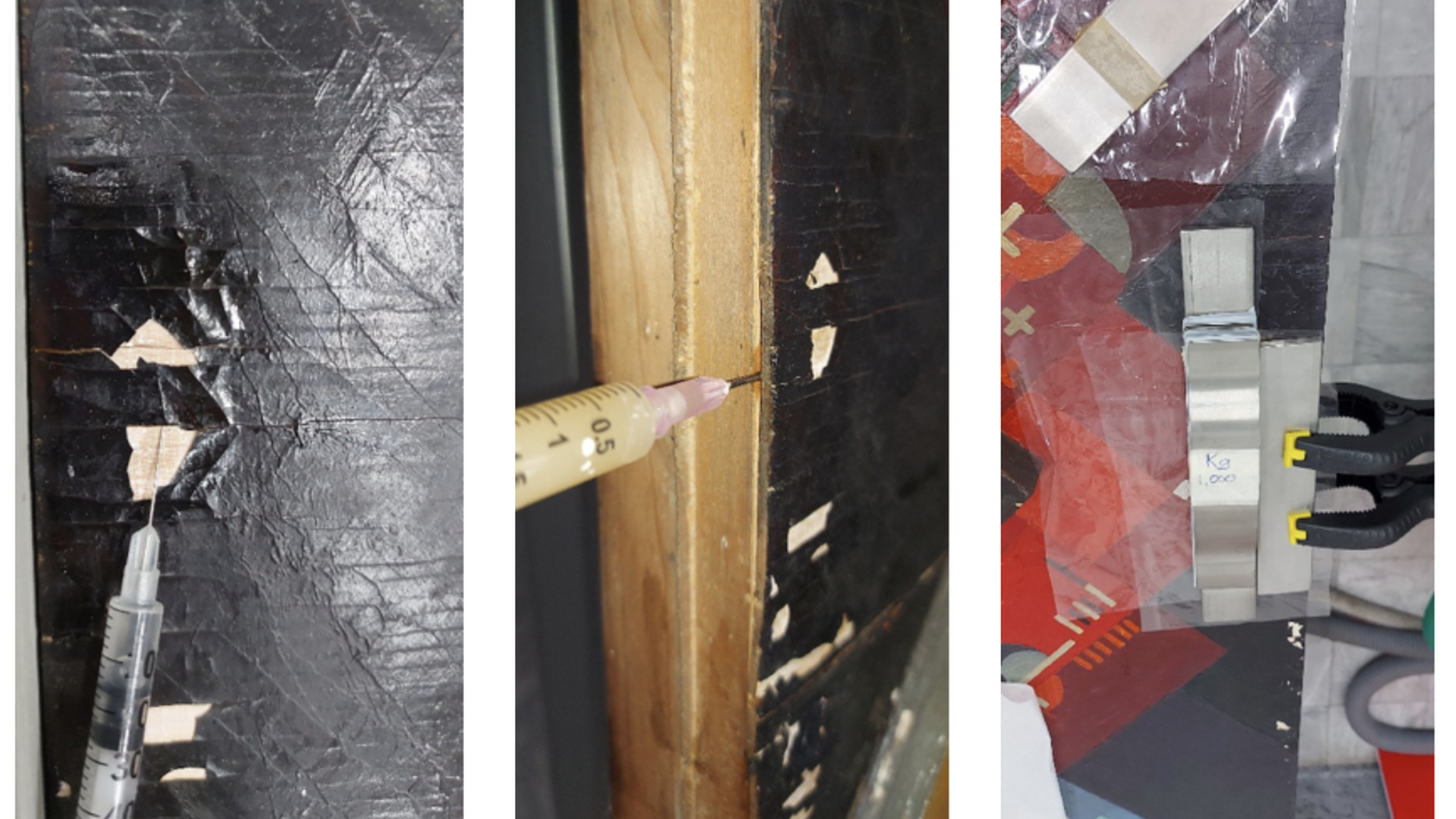

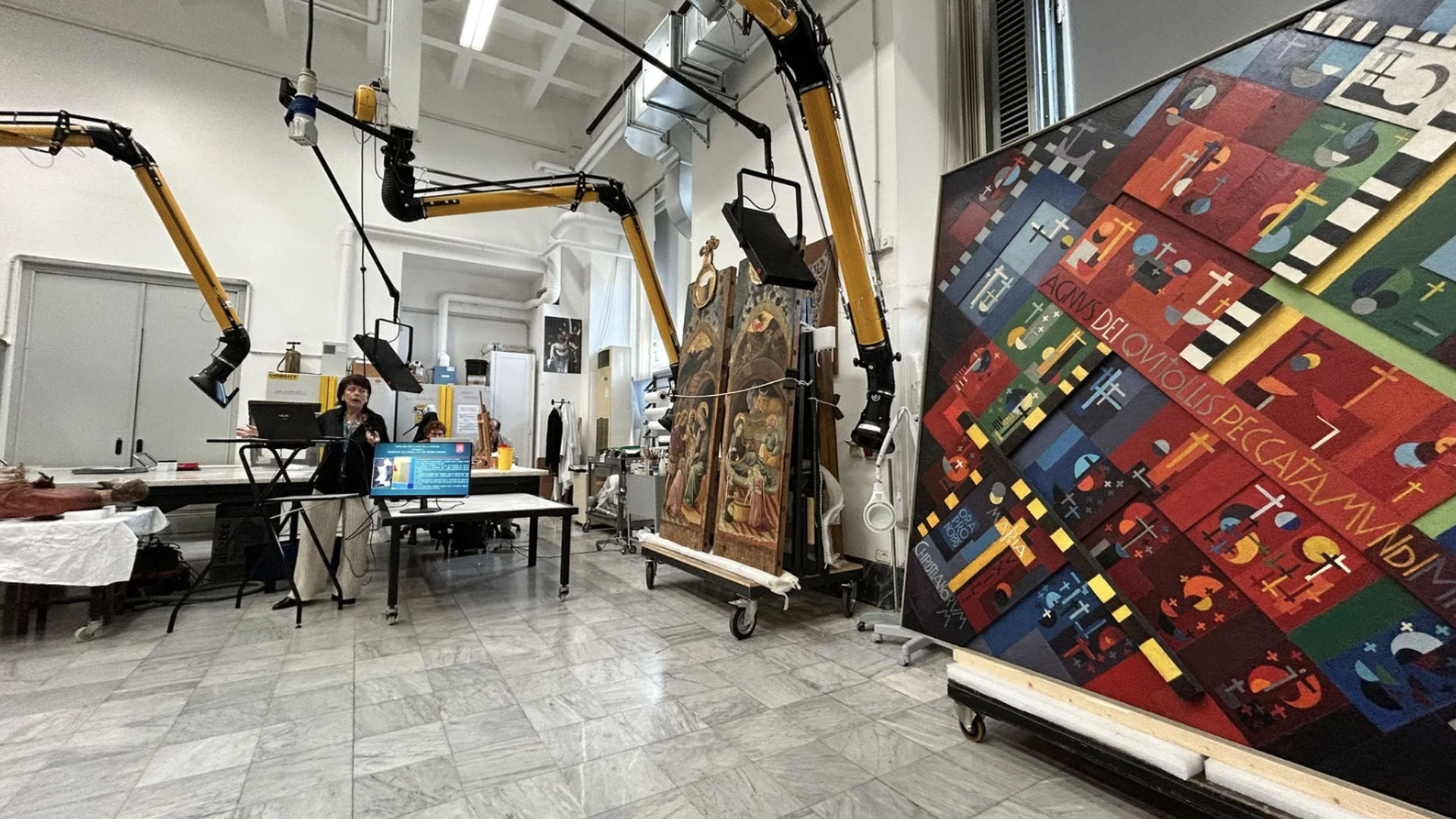
The work was painted on wood with overhanging panels before restoration. The varnish was severely altered over most of the painted surface, with visible irregularities affecting the color relationship.
The painting was affected by numerous gaps, lifts, cracks, and previous xylophagous insect attacks along the perimeter.
Restoration Procedures
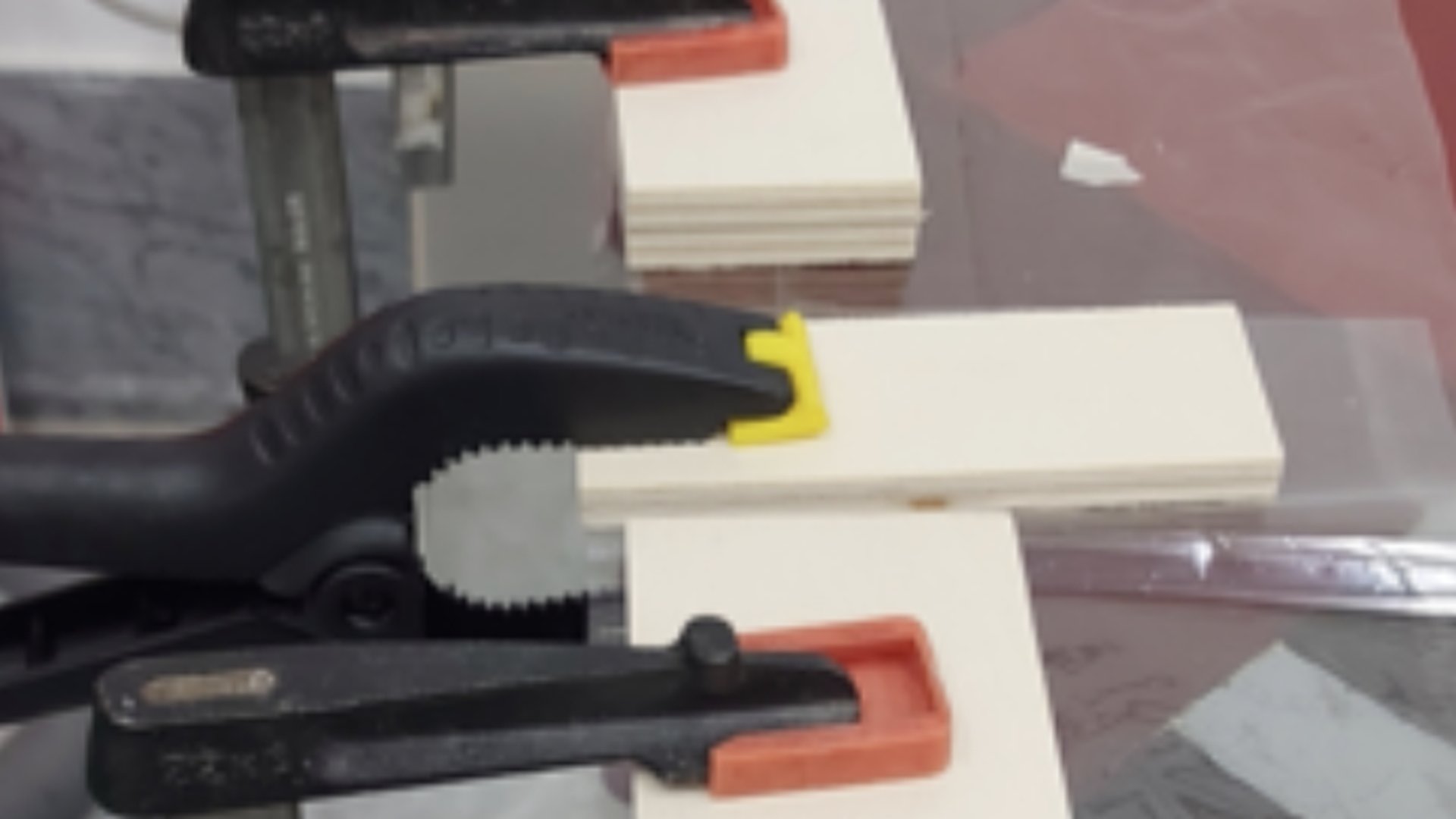
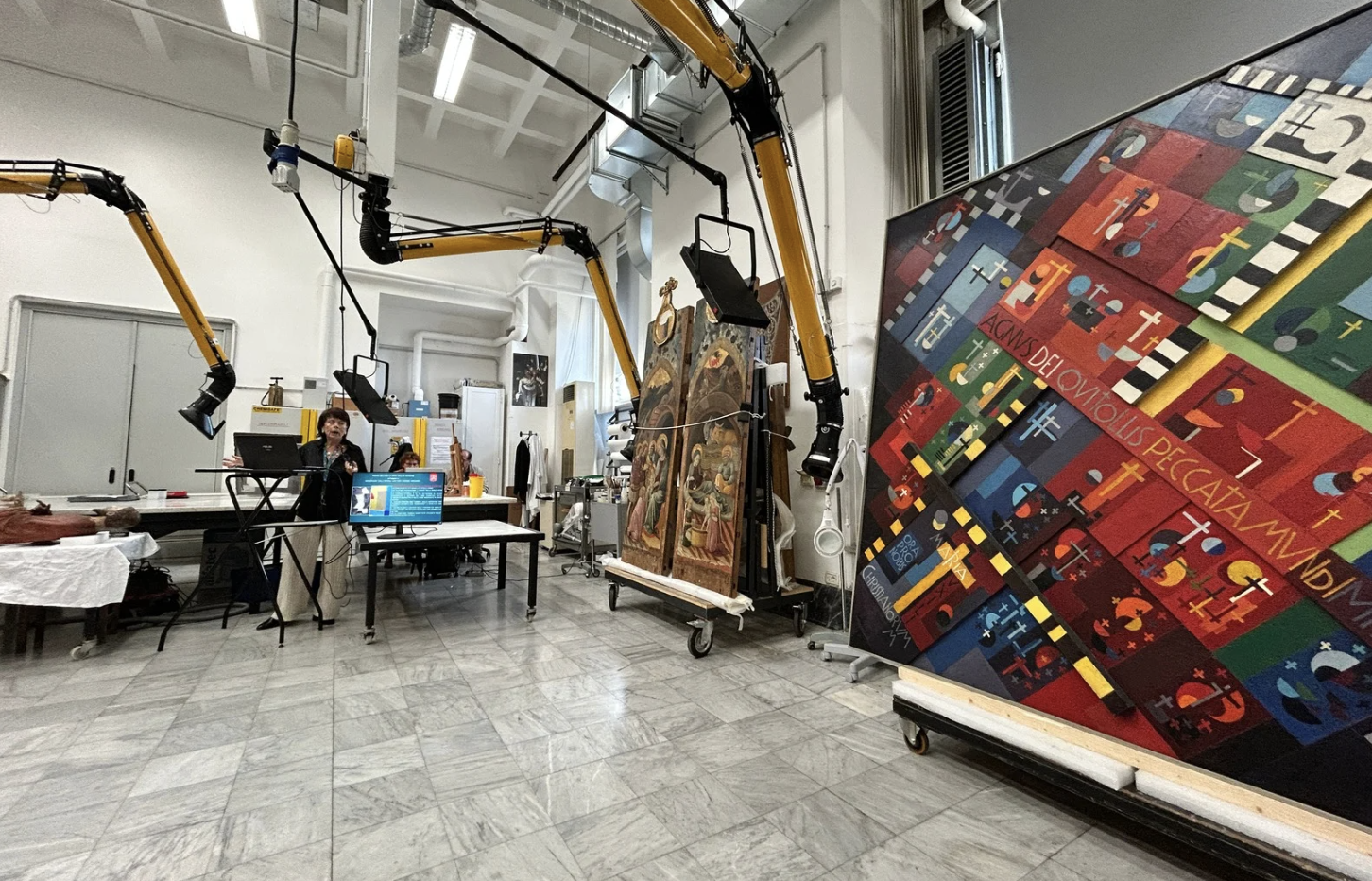
The intervention first included scientific protocol studies. Then, restorers fixed and consolidated the wooden support and the paint film and performed cleaning tests to determine the appropriate procedures to follow. Once completed the cleaning phase the restorer filled the gaps. A new aluminum frame was made and applied to the original wooden structure to allow for a rhomboidal wall display as conceived by the artist. On the four sides of the painting, there is a gray wooden slat, which was disassembled and repaired, and at the same time, restorers consolidated the strips of slat. On the back, the restorer inserted a wooden insert to supplement a missing part of the present retaining frame, consolidated the plywood panels, and reassembled the perimeter laths with a more suitable anchoring system. Upcoming work will include color reinstatement of the gaps, final painting, and graphic and photographic documentation.

Litanies of the Virgin Mary
Details
Adopted by: The Northwest Chapter
Patrons: In honor of Father Jordan Bradshaw
Inventory: 24381
Artist: Mario Deluigi
Date: 1946
Classification: Painting
Materials: Oil and collage on wood
Dimensions: 220 x 220 cm
Department: XIX Century and Contemporary Art
Laboratory: Painting & Wood
Wishbook year: 2024
Description
MEDIUM PRIORITY PROJECT
Mario Deluigi, between the 1940s and 1950s, often dealt with themes inspired by the Old and New Testaments. His family, observant Catholics, and his classical studies with the Salesians influenced his religious and spiritual formation. Although he was not known as particularly religious, the figure of the angel as protector and God as light is often in his notes and aphorisms. The painting, made in 1949, was on display at the Venice International Art Biennale in 1952. It represents an interesting example of a comparison between language influenced by abstract experience and the visualization of a prayer.
TOTAL COST: € 17.478,41 ($ 18,677.43)
State of Preservation
There are lamellar lifts and some gaps in the wood. Inspections of the wooden parts will verify the stability of their anchorage to the rest of the planar surface. The painting has undergone previous restorations. The final protective varnish is dulled and yellowed in many areas, altering the original color scheme. Along with the moderate wear, there are countless lifts in the paint film, especially along the perimeter, in the lower right corner, and at the top. Many altered retouches refer to a previous restoration, and several gaps are evident
Restoration Procedures
- Anoxic treatment of the work and frame
- Consolidation of lamellar lifts and the projecting parts of the wooden support
- Restoration of the gaps
- Fixing lifts on the painted surface
- Removal of varnish and altered restoration retouches
- Filling gaps/wormholes (on the painting and frame)
- Varnishing
Media
Litanies of the Virgin Mary
Restorations Update: Litanies of the Virgin Mary - Final restoration report
The restoration consisted of four major phases: Scientific studies to determine the state of conservation and the technique of execution Consolidation of the pictorial preparation/color layer and restoration of the wooden support Cleaning of the painted surface to recover the original color relationship Plastering chromatic reintegration and final painting After these stages, the new aluminum frame was mounted on the original wooden structure to allow the painting to be displayed on the wall in a rhomboid shape, respecting the intention of the artist. Before the restoration, the artwork painted on wood with overhanging panels showed an altered varnish on a large part of the painted surface, with visible unevenness compromising the color scheme. Several gaps, lifts, cracks, and previous xylophagous insect attacks were visible along the perimeter. The wooden support had some minor and medium cracks and damaged wooden parts. The grey perimeter batten, used as a frame, had stains, holes from the previous nailing, and some cracking
The artwork was executed with plywood panels of different thicknesses, creating a modulated surface.
The artist applied a pictorial layer of paint, chalk, and glue to a thin layer of plywood. The expressive design of the Litany of the Virgin's theme has been translated into a painting by the author using direct engraving for the inscriptions, indirect engraving for the crosses, and graphite drawing for some shapes.
The paint was applied mainly with a spatula, sometimes with the help of masks or slats, and sometimes with a flat brush.
The chronological order of execution is assumed to start with the broader backgrounds, some on the chalk preparation applied directly to the support, such as the blacks, and some on various color spread as 'preparation'.
Then, the artist developed the theme with geometric shapes, spheres and hemispheres, rectangles of different sizes, and crosses. The religious message is conveyed directly through the inscriptions. Mario De Luigi's work, painted in 1949, is also a tribute to Mondrian's Victory Boogie-Woogie, painted between 1942 and 1944.
Artist's palette
- Whites: zinc, titanium, barium, sangiovanni
- Reds: mainly cadmium and cinnabar
- Greens: based on chromium, cadmium, in some cases copper
- Light blue: based on cobalt and copper
- Blue: Prussian blue
Restorations Update: Litanies of the Virgin Mary - Restoration Update
The work was painted on wood with overhanging panels before restoration. The varnish was severely altered over most of the painted surface, with visible irregularities affecting the color relationship.
The painting was affected by numerous gaps, lifts, cracks, and previous xylophagous insect attacks along the perimeter.
Restoration Procedures
The intervention first included scientific protocol studies. Then, restorers fixed and consolidated the wooden support and the paint film and performed cleaning tests to determine the appropriate procedures to follow. Once completed the cleaning phase the restorer filled the gaps. A new aluminum frame was made and applied to the original wooden structure to allow for a rhomboidal wall display as conceived by the artist. On the four sides of the painting, there is a gray wooden slat, which was disassembled and repaired, and at the same time, restorers consolidated the strips of slat. On the back, the restorer inserted a wooden insert to supplement a missing part of the present retaining frame, consolidated the plywood panels, and reassembled the perimeter laths with a more suitable anchoring system. Upcoming work will include color reinstatement of the gaps, final painting, and graphic and photographic documentation.
© 2026 Patrons of the Arts
in the Vatican Museums
Vatican Museums V-00120,
Vatican City State (Europe)
+39 0669864499