

Ducal Hall in the Apostolic Palace
Artist: Various
Date: 1198 - 1280 Architecture, 1500 Wall decorations. 1600 Bernini redesigns the rooms. 1900 Pope Benedict XV completes the new floor
Classification: Hall
Dimensions: Various
Materials: Various
Adopted By: The California Chapter, The New York Chapter
Total Cost: € 945,668
Description
The Sala Ducale is in the oldest part of the Vatican Apostolic Palace, built during the time of Popes Innocent II (1198-1216) and Nicolas III (1277-1280). The space was used for official ceremonies to receive important personalities, such as the “Dukes of highest power,” thus resulting in its name, the Ducal Hall. It was also used as a public Consistory, wherein the solemn assembly of the cardinals headed by the Pope would gather together to discuss and deliberate on topics such as beatifications and sanctifications (these were also open to other clergy and laity). Originally the hall was divided into two distinct spaces: the second and third chambers. The second chamber, adjacent to the Sala Regia, served as a sort of lobby or waiting room, and the third chamber was where the ceremonies were held. The hall is still reserved in the Apostolic Palace for ceremonial occasions. Initially upon entering the hall, what is immediately striking to the eye is the spectacular arch, dressed in sumptuous drapery. The illusion of fabric upheld by putti, or little cherubs, is a creative work in stucco by the great sculptor Gian Lorenzo Bernini (1598-1680). The artist was commissioned by Pope Alexander VII (1655-1667) and entrusted the physical execution to Antonio Raggi (1624-1686), one of his most valuable aids. This resultant grandiose scene is not only exquisite in its Baroque taste but also a genius execution by Bernini to successfully unify the two areas and mask the distinct aesthetic and architectural irregularities existing between the two zones.
The old separation between the second and third chambers is, however, still evident in the decorations of the vaults and walls, which remain different for each of the two environments. They were completed at different times as a result of various Pontiffs commissioning the work. These incongruences are visible even if the wide use of grotesques to connect the landscapes, mythological scenes, putti, and allegorical figures throughout the room give a certain harmony to the whole. As for the third room, in 1555, Paul IV (1555-1559) entrusted to artist G.P. Venale the decorations of the grotesques, as recalled in the inscription in his family coat of arms. His fresco work of landscapes within oval geometries with almost a Flemish flair was inspired by the work of Matteo da Siena (1533-1588), a landscape and grotesque painter who had an active role in the Gallery of the Maps. The frieze with the stories of Phaedrus, in which appears grotesques and the Medici Coat of Arms, was the work of an artist who worked closely with Giovanni da Udine (1487-1561) and was commissioned by Pius IV (1559-1565), a Medici Pope.
The second chamber, on the other hand, has its vault divided into three panes. The great Medici emblem dominates the center pane, bearing reference to the pontificate of Pius IV. Meanwhile, the two panels facing the room of the vestments and the Sala Regia were painted by Lorenzo Sabbatini(1530-1576) and Raffaellino da Reggio(1550-1578), respectively. Both panels illustrate the story of Hercules. The two artists also worked for Pope Gregory XIII (1572-1585), who is invoked through dragon-like elements constituting the coat of arms. The frieze of landscapes and allegorical figures underlying the vault that the holy pontiff also commissioned are attributed to Ceasar Arbasi Piedmont (1540-1614). After the aforementioned strategy of Bernini in the 17th century to create a single magnificent room suited to the demands of the papal court, the installation of the floor should not be disregarded. The unique geometric marble polychrome design was completed under the pontificate of Benedict XV (1914-1922). His reign also witnessed the grotesque decoration of the walls and two landscapes in the lunette of the third chamber.
State of Preservation
The high priority of the overall effort is motivated by the precarious adhesive state of the plaster to the wall; the buckles and bulges are easily detectable with the naked eye from below; there is quote notable detaching of the plaster from the rear wall supports. Some of the areas that buckled and thus created a void space were subjected to previous interventions wherein the “empty pockets” were filled. However, this has neither hindered nor stopped further deterioration. The degradation of the colorful superficial layers is consolidated to select areas and correlates to areas where a dry fresco technique was executed, as well in the areas subject to high heat concentration from the lighting fixtures used to illuminate the hall.
Restoration Procedures
- Cleaning and dusting of all surfaces
- Preventative fixing of the paint layers and gilded areas
- Preventative filling of the gaps and cracks with varying methods according to the size of the void space
- Consolidation and re-adhesion of the plaster to the supportive wall using injections of premixed fluid mortar solutions and/or vinyl resin; application will be through pressed injections and wherever possible the surface area will be evened and leveled. This requires employing fiberglass to create anchorage points within the interior of the void space between the plaster and masonry
- Cleaning of the surfaces coherent and incoherent deposits
- Aesthetic reconstruction involving visual reintegration of the watercolor to cover gaps
- Diagnostic tests and documentation by the Scientific Research Lab
Detail
Artist: Various
Date: 1198 - 1280 Architecture, 1500 Wall decorations. 1600 Bernini redesigns the rooms. 1900 Pope Benedict XV completes the new floor
Provenience: Apostolic Palace
Dimensions: Various
Materials: Various
Wishbook year: 2017
Total Cost
€ 945,668
Ducal Hall in the Apostolic Palace - Restoration update
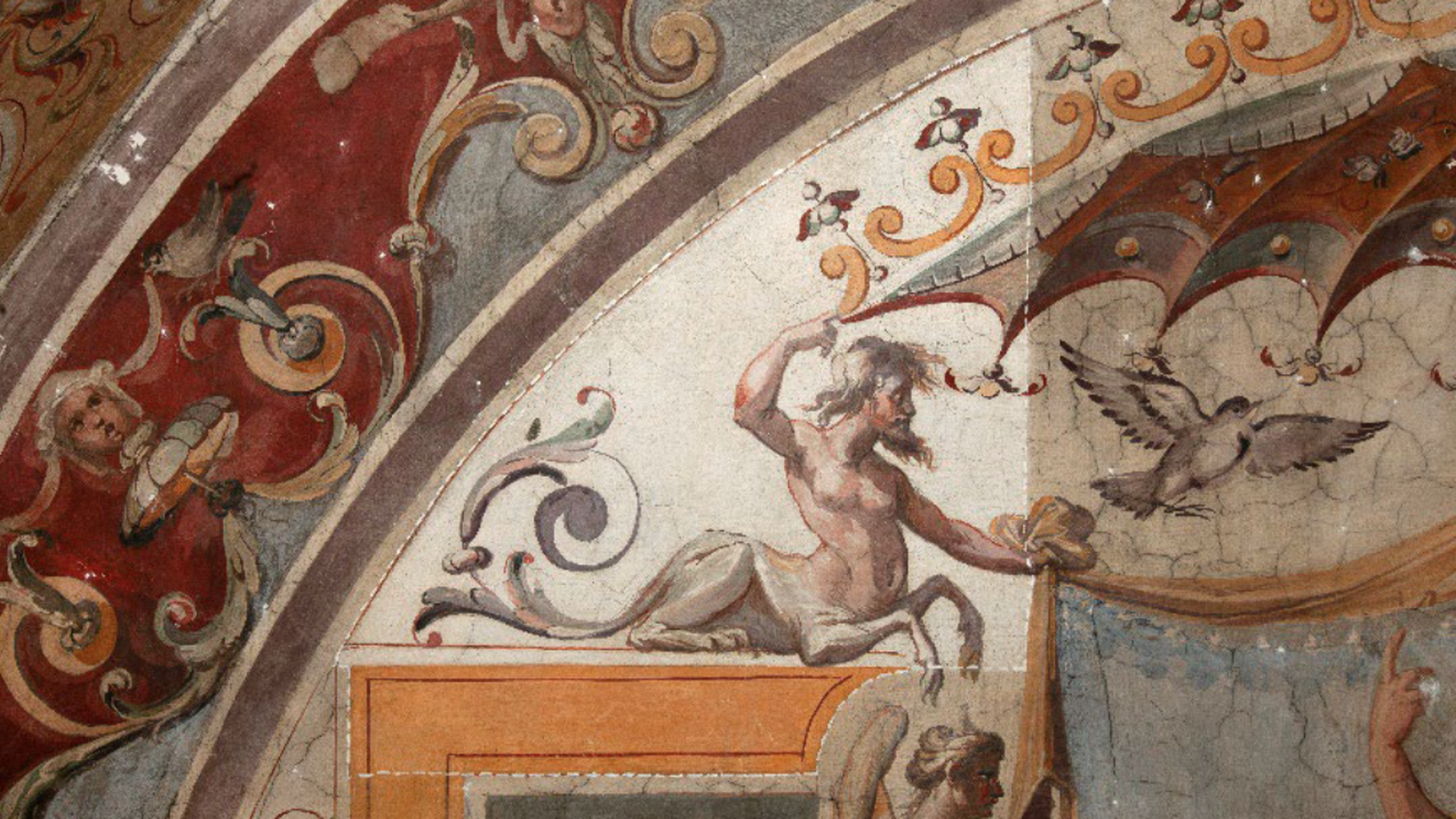
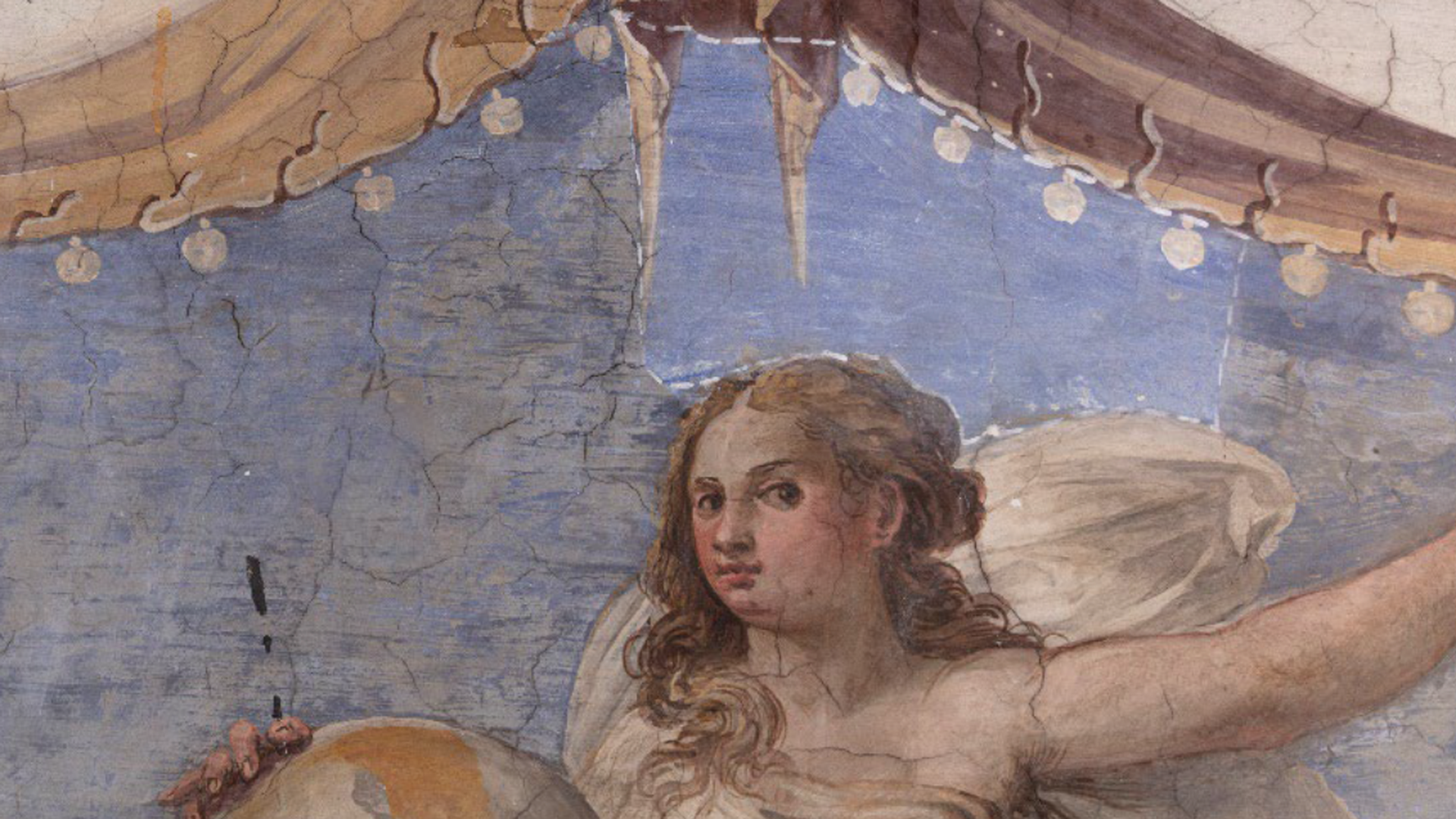
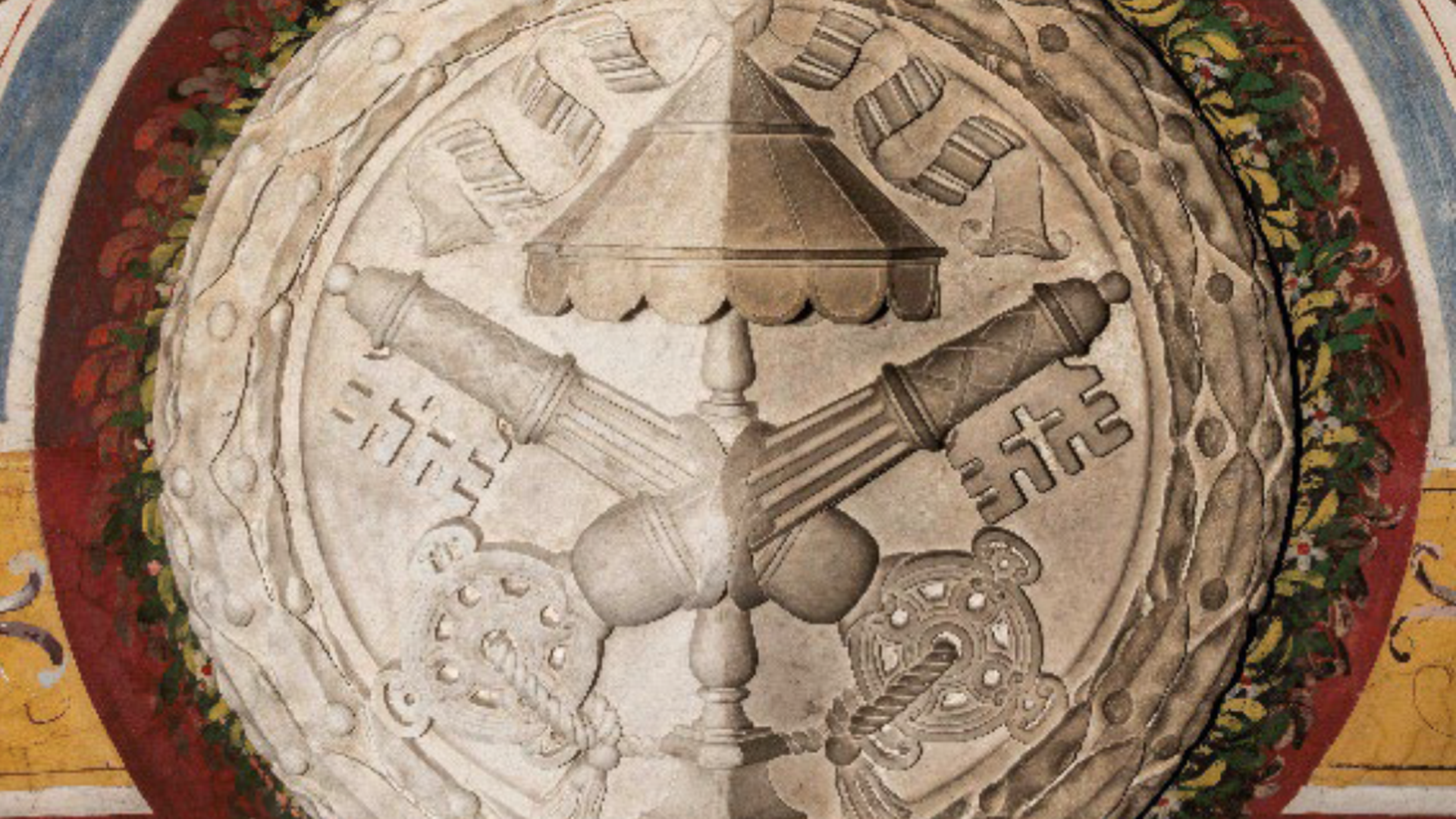
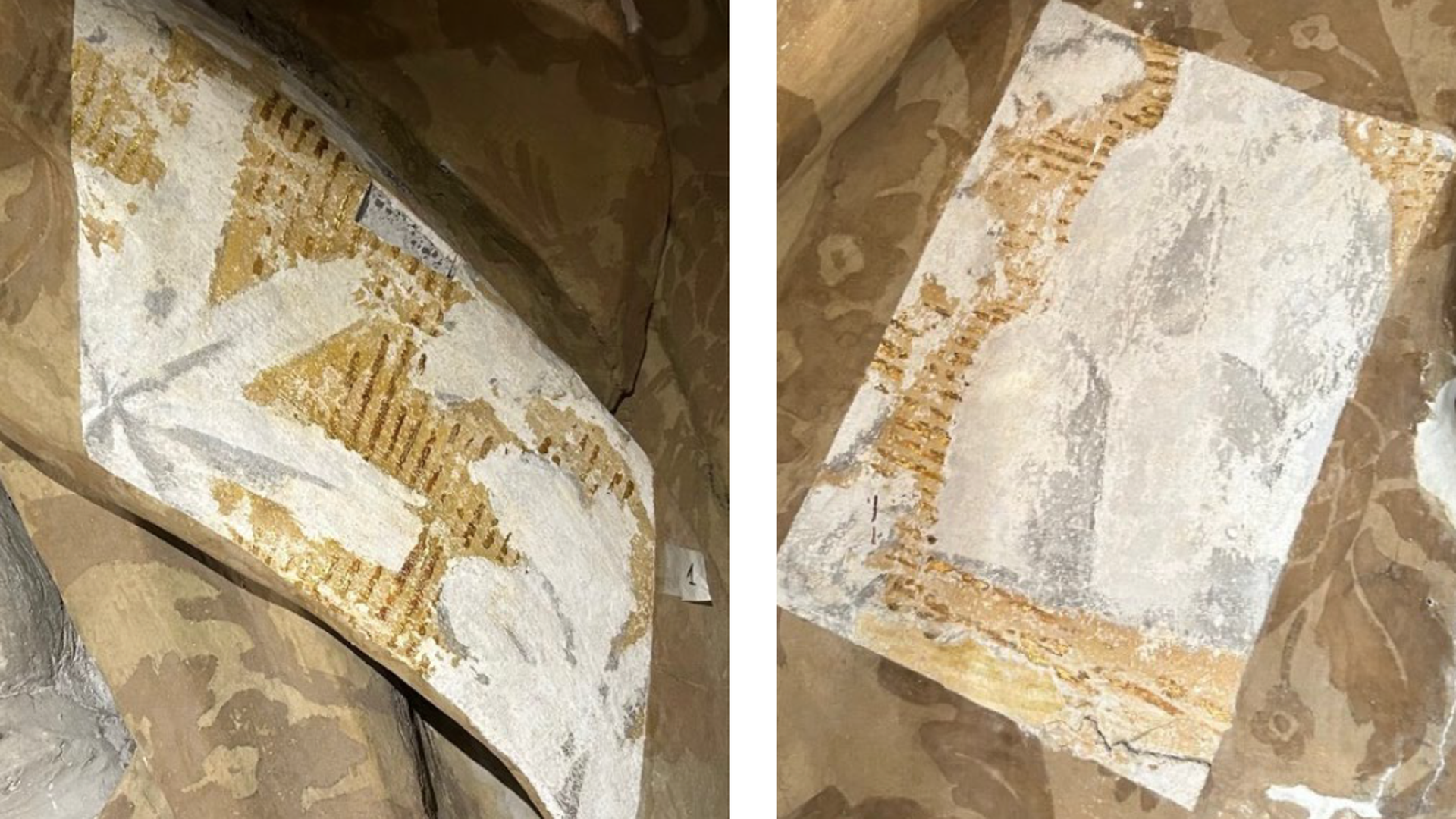
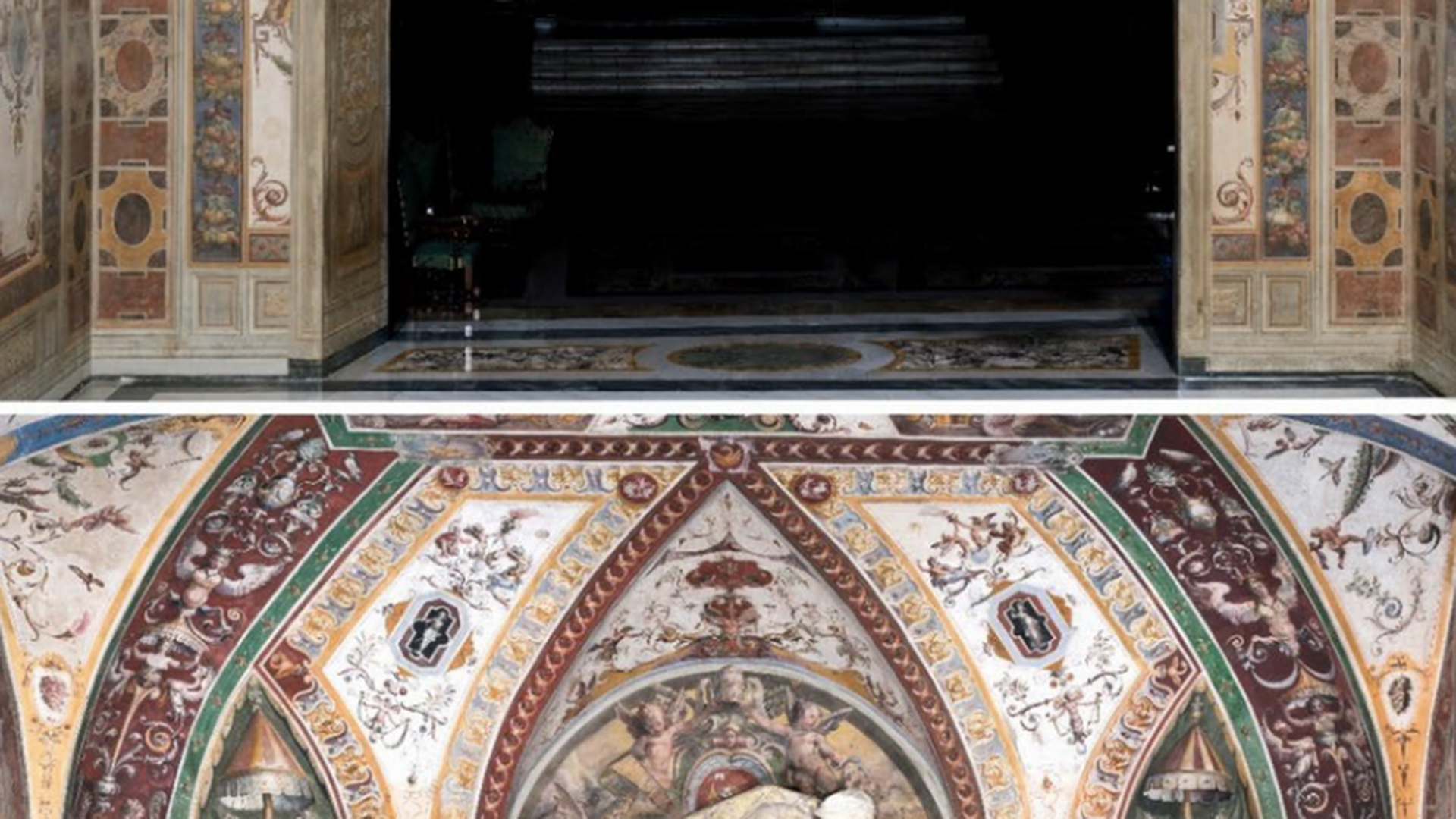
Restoration of the paintings of the vault, lunettes, frieze, and Bernini curtains
Aula Secunda
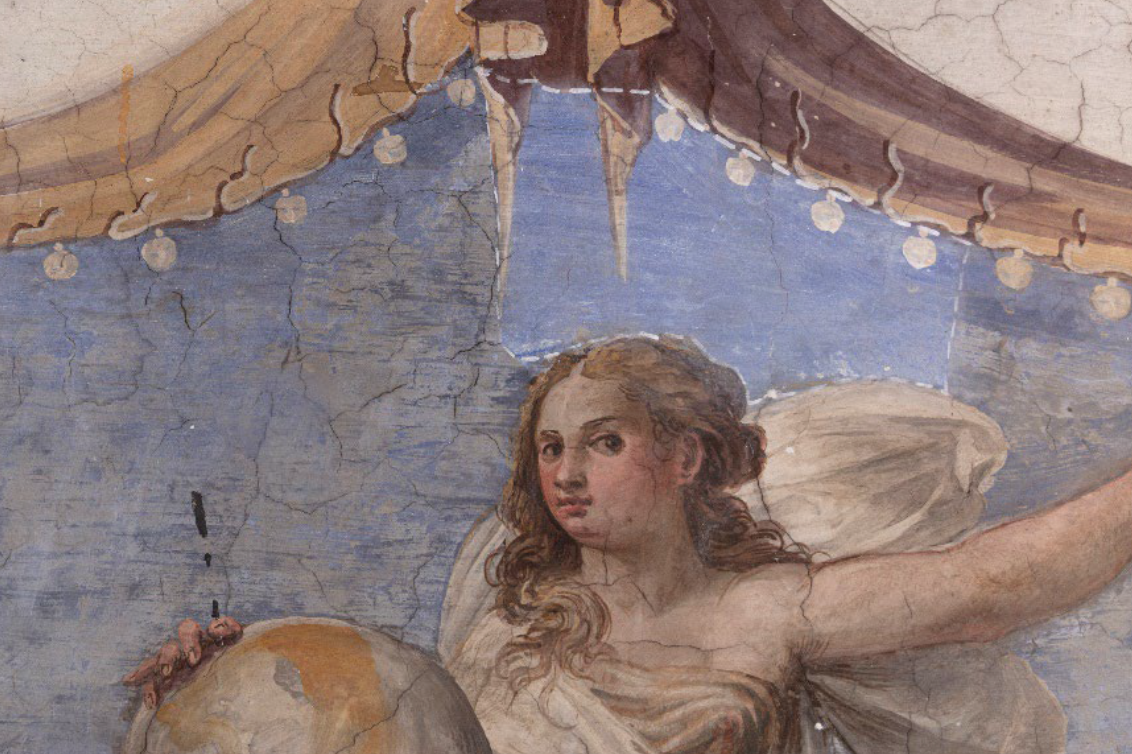
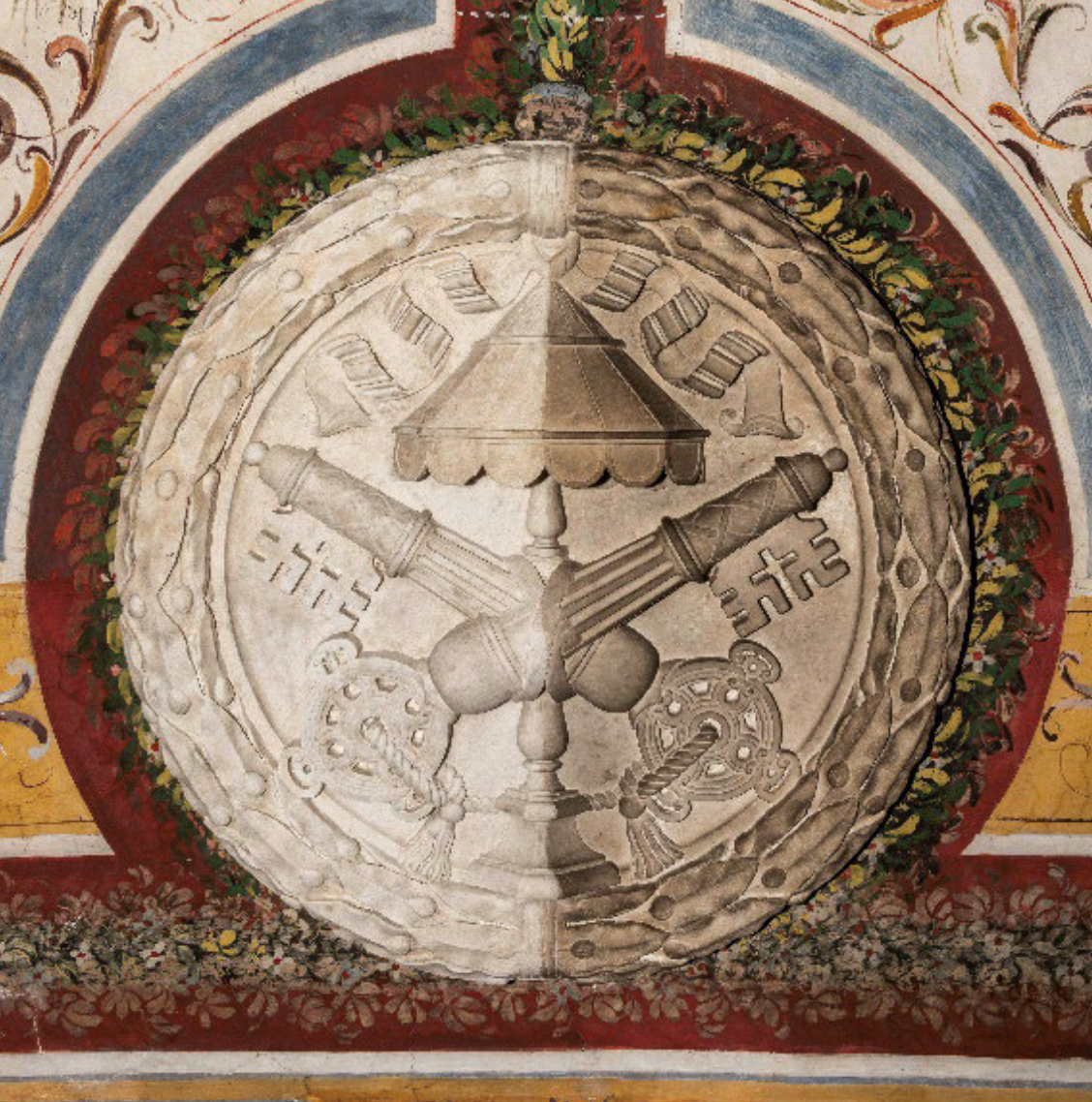
Since February 2023, following the results of the analysis of the Scientific Research Laboratory and the various cleaning tests, the cleaning of the paintings of the Vault of the Aula Secunda and the marble coats of arms started.
The surface of the Aula Secunda Vault is mostly painted on plaster with a base of lime and pozzolan, on which the white background was painted with lime. Only a few portions were painted on Roman stucco plaster, such as the entire Vault of the Aula Tertia. Moreover, the analysis revealed the use of valuable ancient pigments (lacquer, cinnabar, minium) and several detected previous restoration interventions. It was, therefore, necessary to carry out a calibrated and very targeted cleaning, depending on the problems, to remove the blackened layer on the pictorial surface.
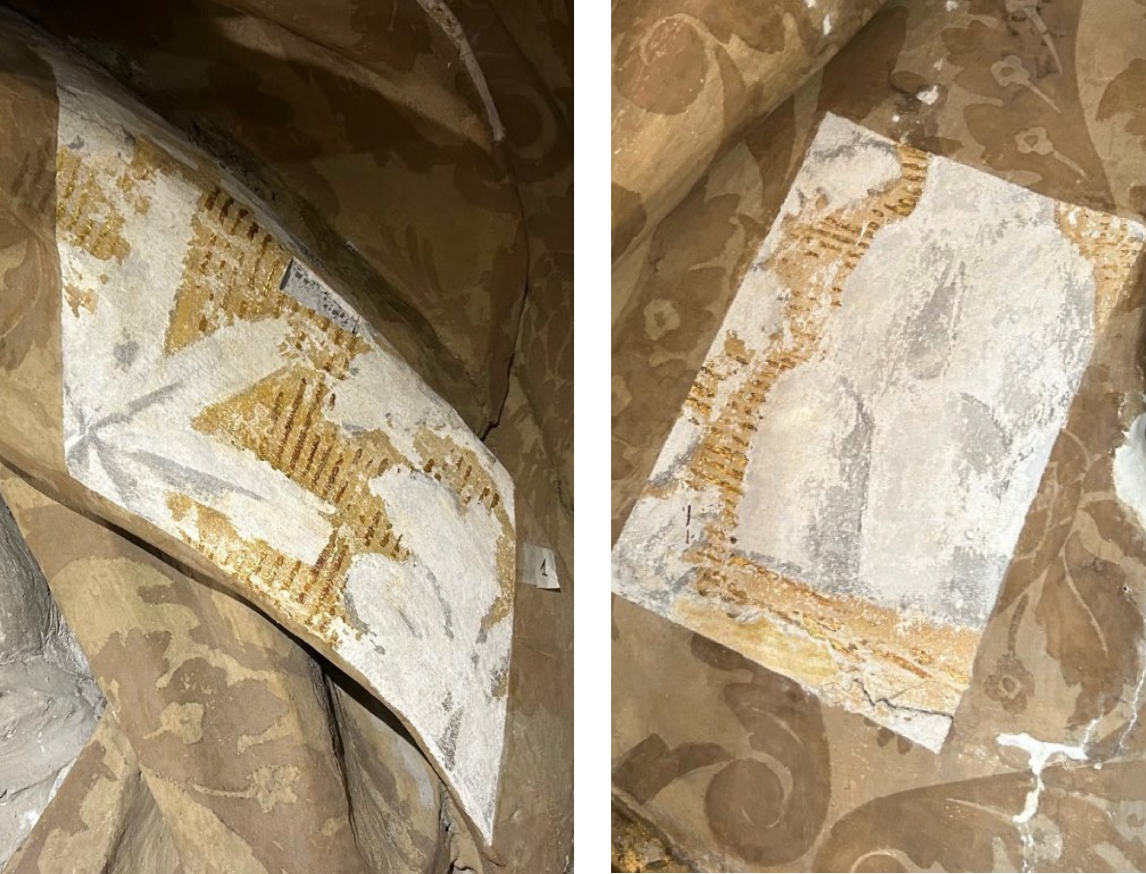
From April until early August 2023, restorers performed depth consolidations of the Bernini drapery and carried out additional cleaning tessellations to better study the older painted layers. By comparing the tessellations with the eighteenth-century engraving showing the original design of the curtain with the arms of Alexander VII, it was found that the painting matched the ancient design.
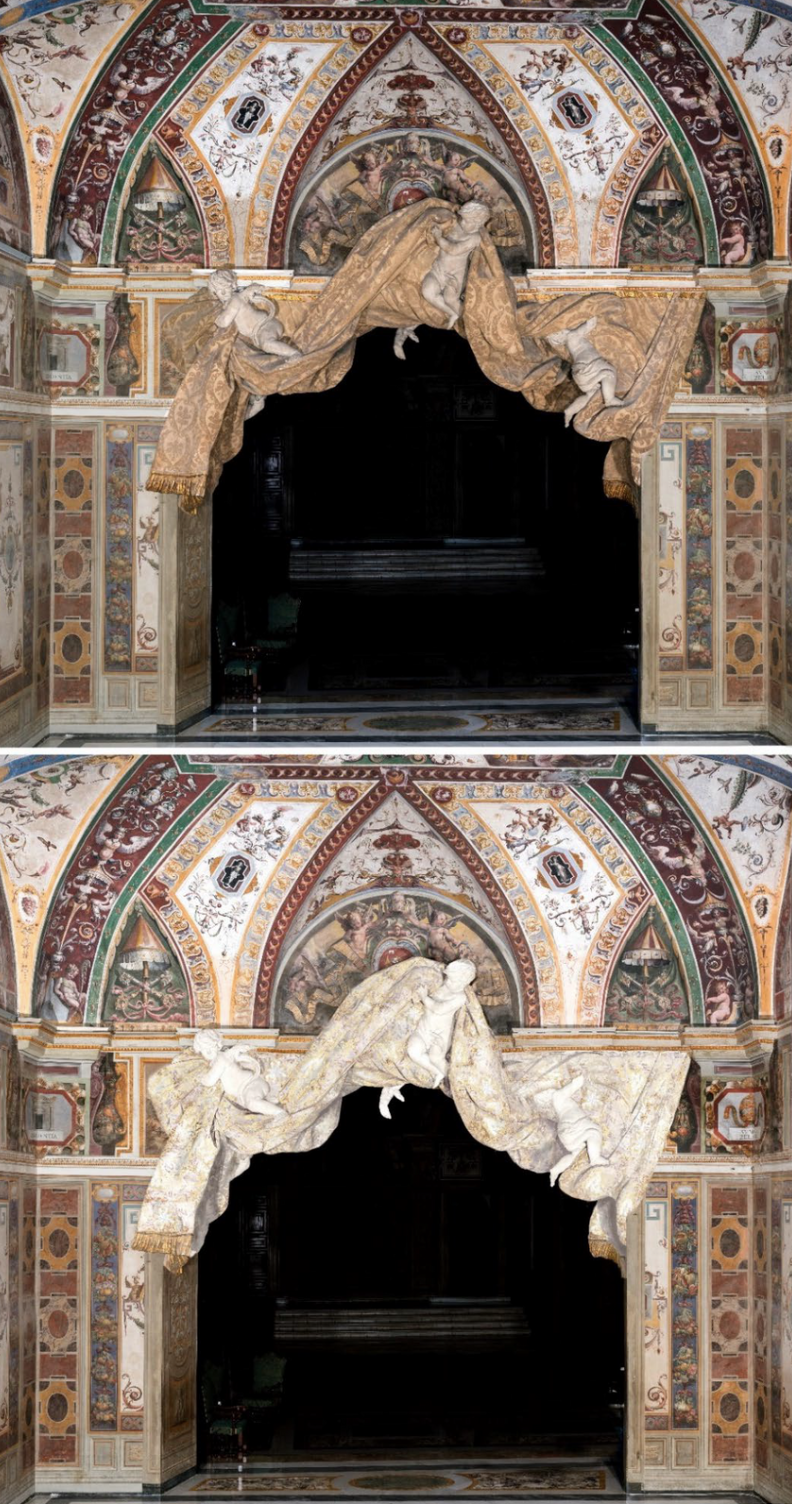
The restorers made a rendering to understand how the drapery, currently chromatically linked to the walls from the 1900s, was instead anciently connected to the paintings of the Aula Secunda and Aula Tertia Vaults.

Ducal Hall in the Apostolic Palace

Details
Adopted by: The California Chapter, The New York Chapter
Artist: Various
Date: 1198 - 1280 Architecture, 1500 Wall decorations. 1600 Bernini redesigns the rooms. 1900 Pope Benedict XV completes the new floor
Provenience: Apostolic Palace
Classification: Hall
Materials: Various
Dimensions: Various
Department: XV-XVI Century Art
Laboratory: Painting & Wood
Wishbook year: 2017
Description
The Sala Ducale is in the oldest part of the Vatican Apostolic Palace, built during the time of Popes Innocent II (1198-1216) and Nicolas III (1277-1280). The space was used for official ceremonies to receive important personalities, such as the “Dukes of highest power,” thus resulting in its name, the Ducal Hall. It was also used as a public Consistory, wherein the solemn assembly of the cardinals headed by the Pope would gather together to discuss and deliberate on topics such as beatifications and sanctifications (these were also open to other clergy and laity). Originally the hall was divided into two distinct spaces: the second and third chambers. The second chamber, adjacent to the Sala Regia, served as a sort of lobby or waiting room, and the third chamber was where the ceremonies were held. The hall is still reserved in the Apostolic Palace for ceremonial occasions. Initially upon entering the hall, what is immediately striking to the eye is the spectacular arch, dressed in sumptuous drapery. The illusion of fabric upheld by putti, or little cherubs, is a creative work in stucco by the great sculptor Gian Lorenzo Bernini (1598-1680). The artist was commissioned by Pope Alexander VII (1655-1667) and entrusted the physical execution to Antonio Raggi (1624-1686), one of his most valuable aids. This resultant grandiose scene is not only exquisite in its Baroque taste but also a genius execution by Bernini to successfully unify the two areas and mask the distinct aesthetic and architectural irregularities existing between the two zones.
The old separation between the second and third chambers is, however, still evident in the decorations of the vaults and walls, which remain different for each of the two environments. They were completed at different times as a result of various Pontiffs commissioning the work. These incongruences are visible even if the wide use of grotesques to connect the landscapes, mythological scenes, putti, and allegorical figures throughout the room give a certain harmony to the whole. As for the third room, in 1555, Paul IV (1555-1559) entrusted to artist G.P. Venale the decorations of the grotesques, as recalled in the inscription in his family coat of arms. His fresco work of landscapes within oval geometries with almost a Flemish flair was inspired by the work of Matteo da Siena (1533-1588), a landscape and grotesque painter who had an active role in the Gallery of the Maps. The frieze with the stories of Phaedrus, in which appears grotesques and the Medici Coat of Arms, was the work of an artist who worked closely with Giovanni da Udine (1487-1561) and was commissioned by Pius IV (1559-1565), a Medici Pope.
The second chamber, on the other hand, has its vault divided into three panes. The great Medici emblem dominates the center pane, bearing reference to the pontificate of Pius IV. Meanwhile, the two panels facing the room of the vestments and the Sala Regia were painted by Lorenzo Sabbatini(1530-1576) and Raffaellino da Reggio(1550-1578), respectively. Both panels illustrate the story of Hercules. The two artists also worked for Pope Gregory XIII (1572-1585), who is invoked through dragon-like elements constituting the coat of arms. The frieze of landscapes and allegorical figures underlying the vault that the holy pontiff also commissioned are attributed to Ceasar Arbasi Piedmont (1540-1614). After the aforementioned strategy of Bernini in the 17th century to create a single magnificent room suited to the demands of the papal court, the installation of the floor should not be disregarded. The unique geometric marble polychrome design was completed under the pontificate of Benedict XV (1914-1922). His reign also witnessed the grotesque decoration of the walls and two landscapes in the lunette of the third chamber.
State of Preservation
The high priority of the overall effort is motivated by the precarious adhesive state of the plaster to the wall; the buckles and bulges are easily detectable with the naked eye from below; there is quote notable detaching of the plaster from the rear wall supports. Some of the areas that buckled and thus created a void space were subjected to previous interventions wherein the “empty pockets” were filled. However, this has neither hindered nor stopped further deterioration. The degradation of the colorful superficial layers is consolidated to select areas and correlates to areas where a dry fresco technique was executed, as well in the areas subject to high heat concentration from the lighting fixtures used to illuminate the hall.
Restoration Procedures
- Cleaning and dusting of all surfaces
- Preventative fixing of the paint layers and gilded areas
- Preventative filling of the gaps and cracks with varying methods according to the size of the void space
- Consolidation and re-adhesion of the plaster to the supportive wall using injections of premixed fluid mortar solutions and/or vinyl resin; application will be through pressed injections and wherever possible the surface area will be evened and leveled. This requires employing fiberglass to create anchorage points within the interior of the void space between the plaster and masonry
- Cleaning of the surfaces coherent and incoherent deposits
- Aesthetic reconstruction involving visual reintegration of the watercolor to cover gaps
- Diagnostic tests and documentation by the Scientific Research Lab
Restorations Update: Ducal Hall in the Apostolic Palace - Restoration update
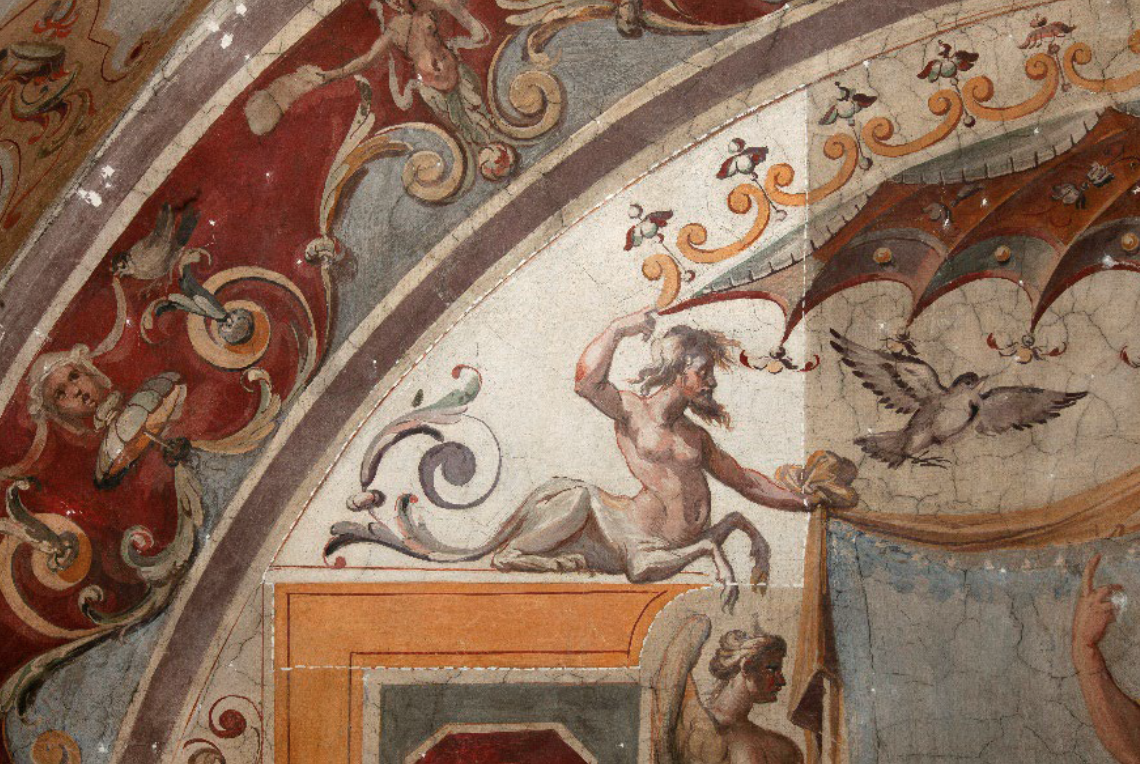
Restoration of the paintings of the vault, lunettes, frieze, and Bernini curtains
Aula Secunda
Since February 2023, following the results of the analysis of the Scientific Research Laboratory and the various cleaning tests, the cleaning of the paintings of the Vault of the Aula Secunda and the marble coats of arms started.
The surface of the Aula Secunda Vault is mostly painted on plaster with a base of lime and pozzolan, on which the white background was painted with lime. Only a few portions were painted on Roman stucco plaster, such as the entire Vault of the Aula Tertia. Moreover, the analysis revealed the use of valuable ancient pigments (lacquer, cinnabar, minium) and several detected previous restoration interventions. It was, therefore, necessary to carry out a calibrated and very targeted cleaning, depending on the problems, to remove the blackened layer on the pictorial surface.
From April until early August 2023, restorers performed depth consolidations of the Bernini drapery and carried out additional cleaning tessellations to better study the older painted layers. By comparing the tessellations with the eighteenth-century engraving showing the original design of the curtain with the arms of Alexander VII, it was found that the painting matched the ancient design.
The restorers made a rendering to understand how the drapery, currently chromatically linked to the walls from the 1900s, was instead anciently connected to the paintings of the Aula Secunda and Aula Tertia Vaults.
© 2026 Patrons of the Arts
in the Vatican Museums
Vatican Museums V-00120,
Vatican City State (Europe)
+39 0669864499