

The Cumaean Sibyl
Artist: Ciro Ferri
Date: 1679-1680
Classification: Painting
Dimensions: 397 x 360 cm
Materials: Oil on canvas
Adopted By: The Northwest Chapter
Description
HIGH PRIORITY PROJECT
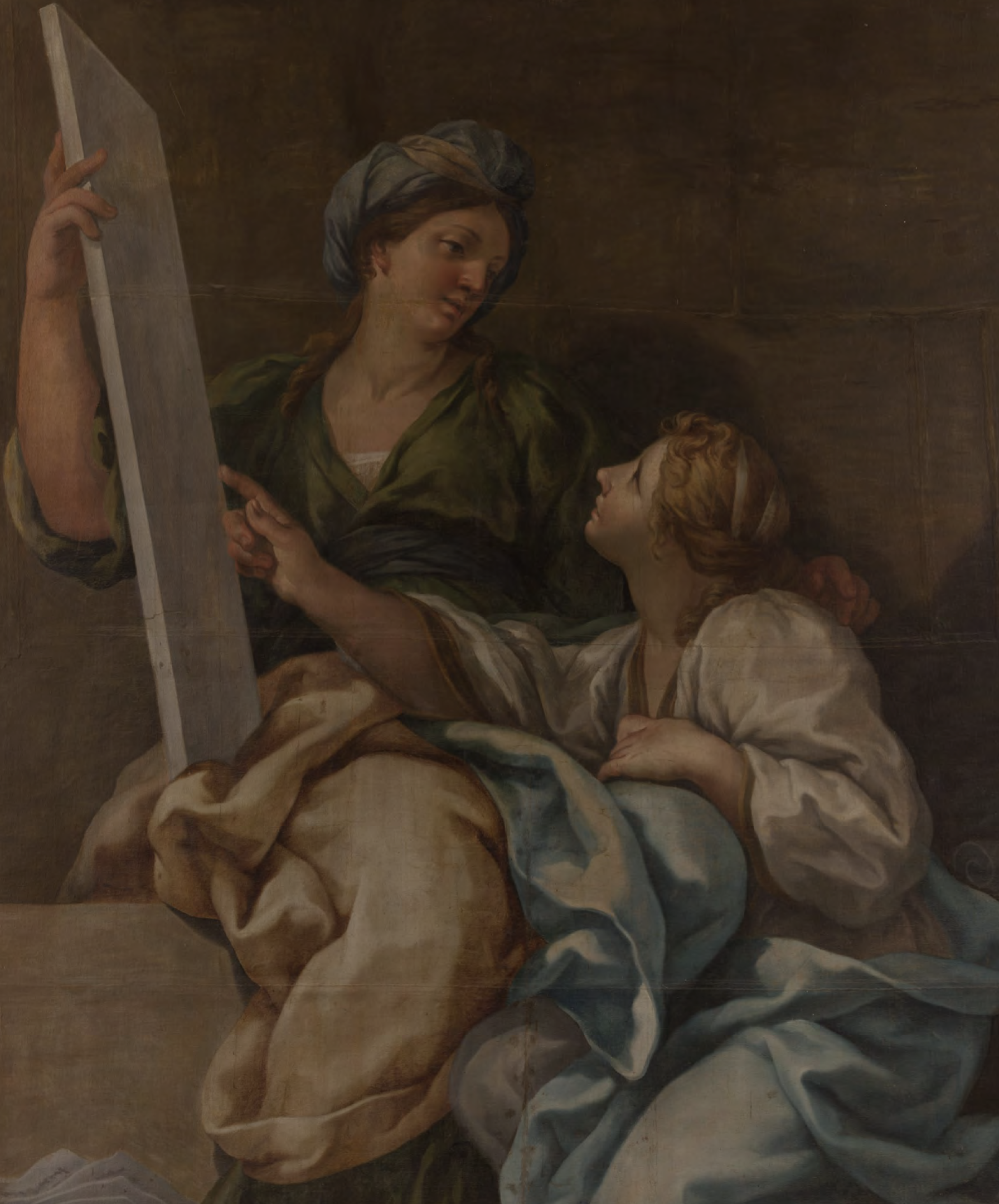
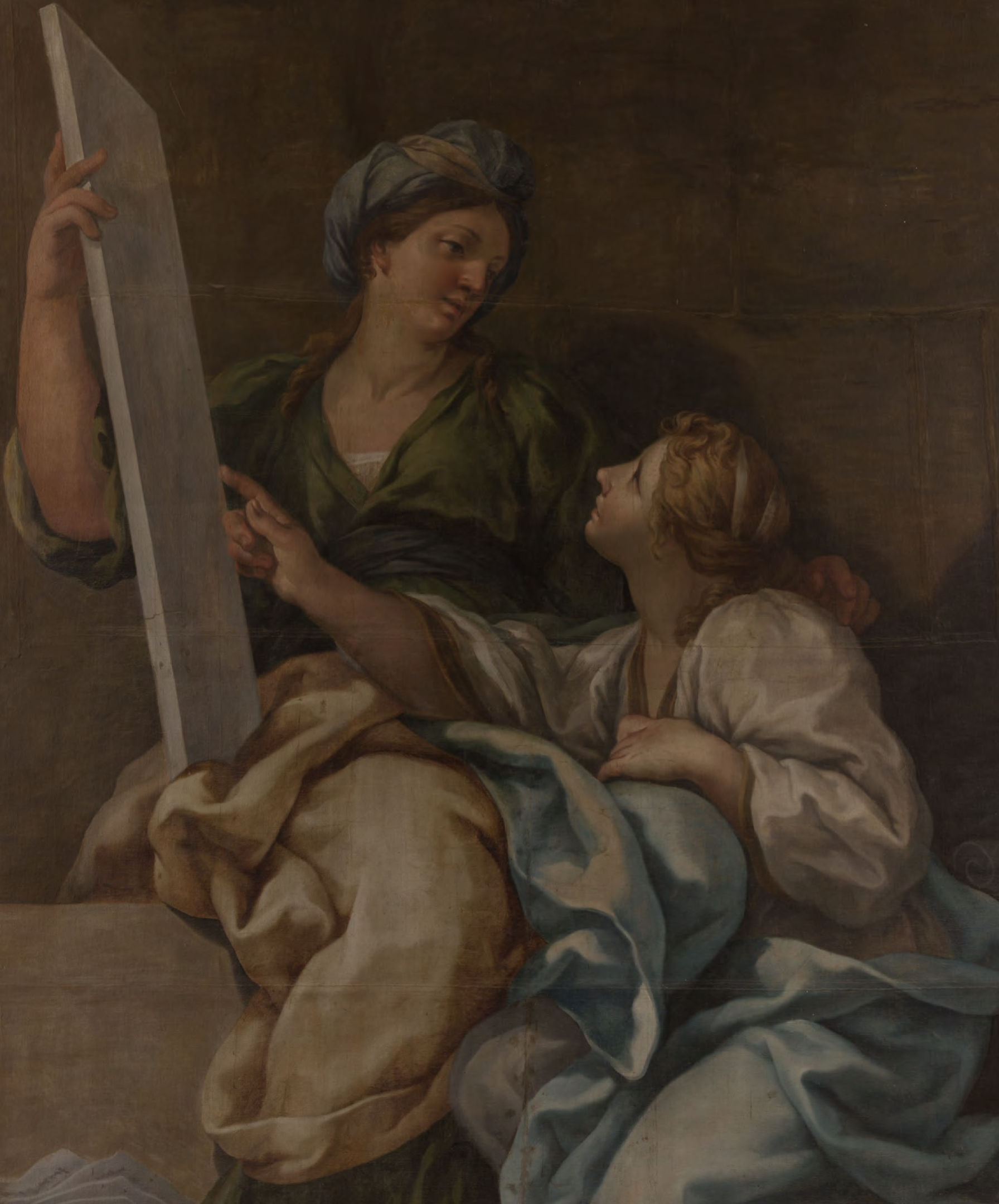
The large painted canvas is the cartoon used by Fabio Cristofari for one of the mosaics in the Chapel of the Most Holy Crucifix in St. Peter’s Basilica. Pietro da Cortona (1597-1669) was a celebrated artist who created preparatory drawings and models that his artistic heir Ciro Ferri (1634-1689) continued. These great protagonists of Baroque painting in the 17th century created preparatory drawings and models for the dome and lunettes of the chapel, inspired by characters and events from the Old Testament. Ciro Ferri’s masterfully executed image shows the Cumaean Sibyl prophesying in the foreground as the soft drapery of the robes stands out, enveloping the figure and giving beautiful movement to the scene.
TOTAL COST: € 41.771,94 ($ 44,637.50)
State of Preservation
Frame: Good condition
Canvas: Good condition, sufficient tension Pictorial film: Covered with a thick layer of coherent and noncoherent deposits, abrasions at the bottom, some retouching concentrated mainly along the central axis (possibly bent or fitted to the previous frame). There appears to be no final varnish.
Restoration Procedures
- Overhaul of frame to make it functional again
- Cleaning of pictorial film and removal of altered retouching
- Filling of gaps
- Pictorial reintegration and possible painting
- Light cleaning of frame
Detail
Inventory N°: 40859
Artist: Ciro Ferri
Date: 1679-1680
Dimensions: 397 x 360 cm
Materials: Oil on canvas
Department:
XVII-XVIII Century ArtLaboratories:
Painting & WoodWishbook year: 2024
The Cumaean Sibyl - Third Restoration Update
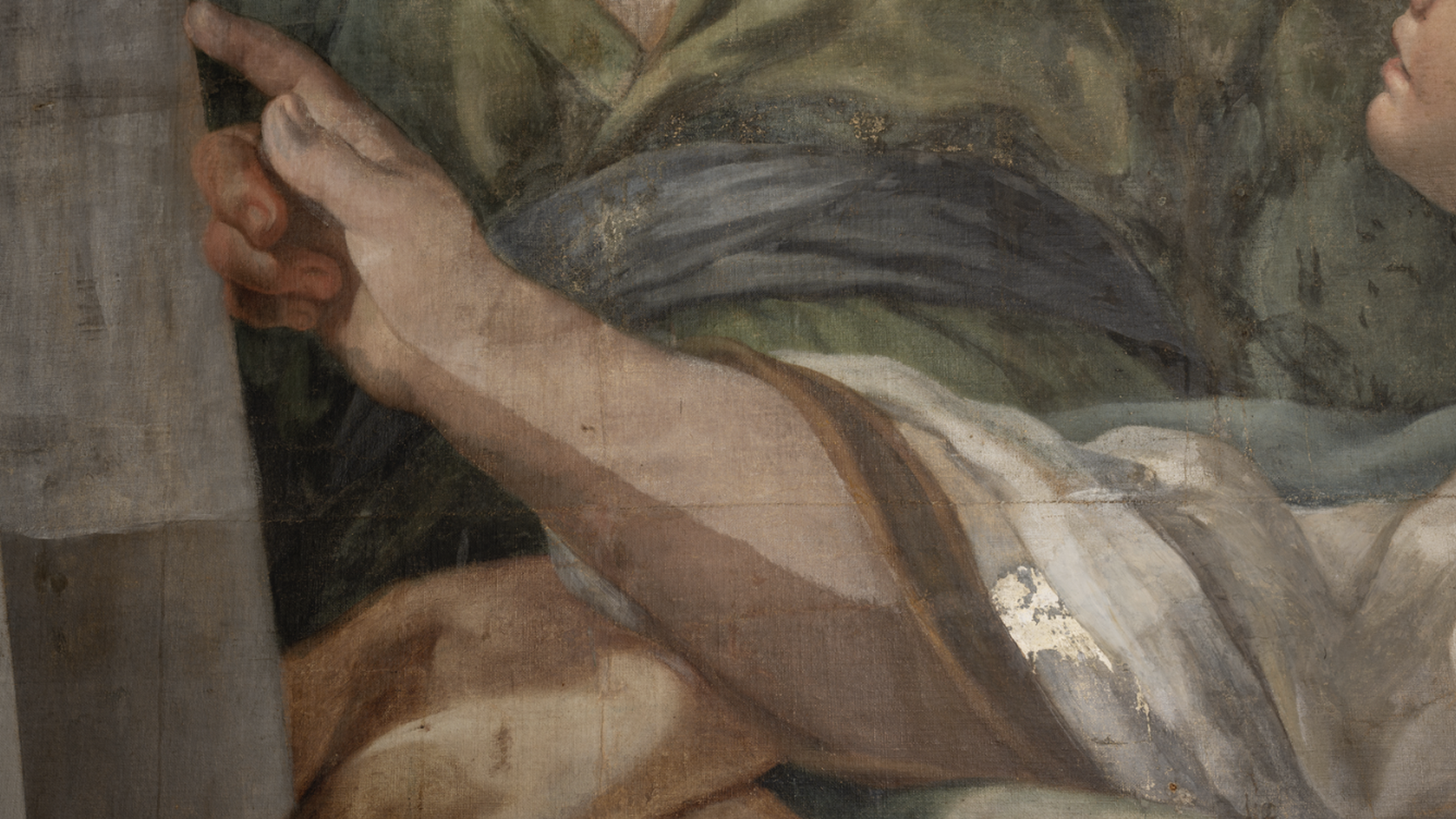
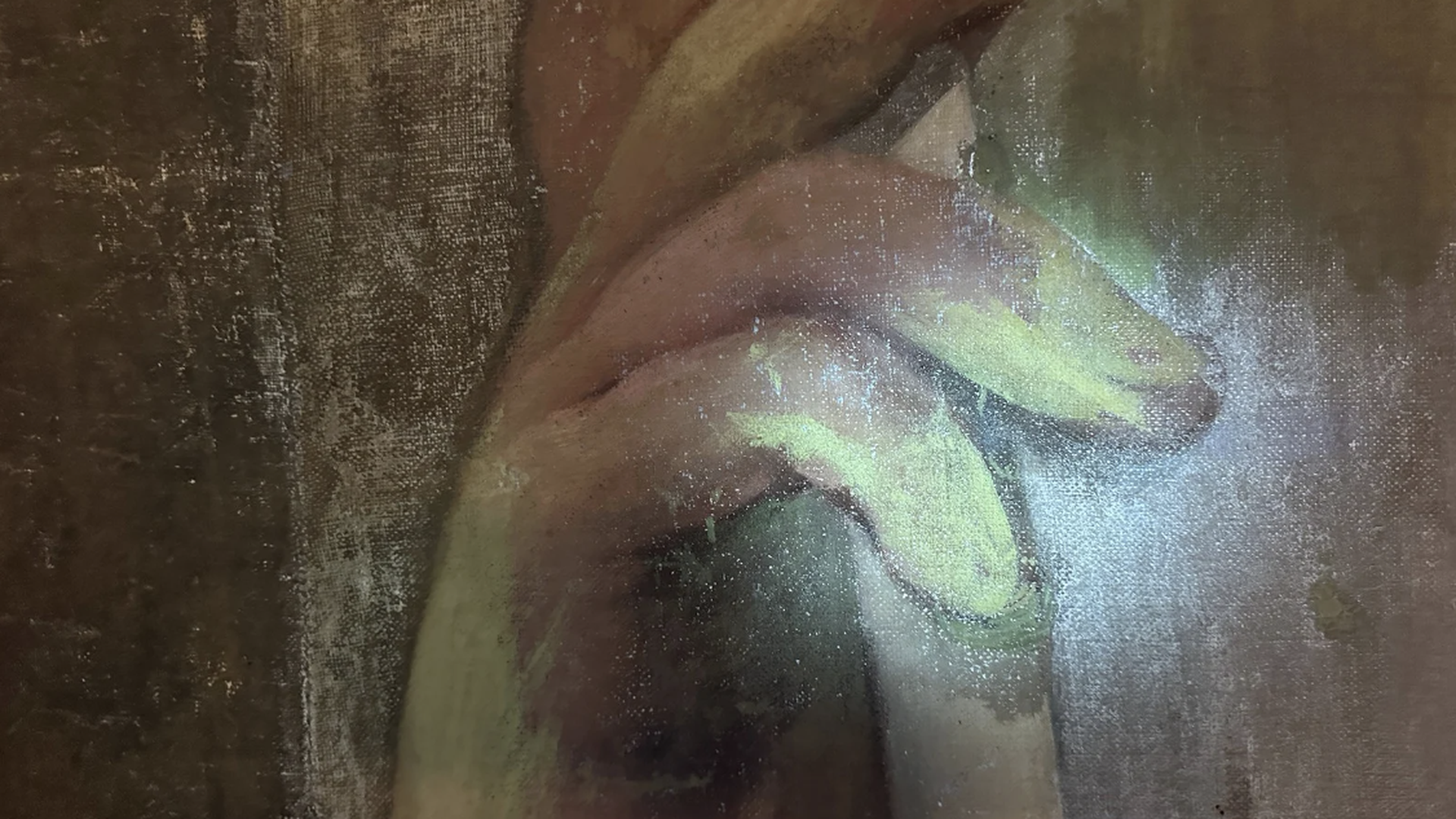
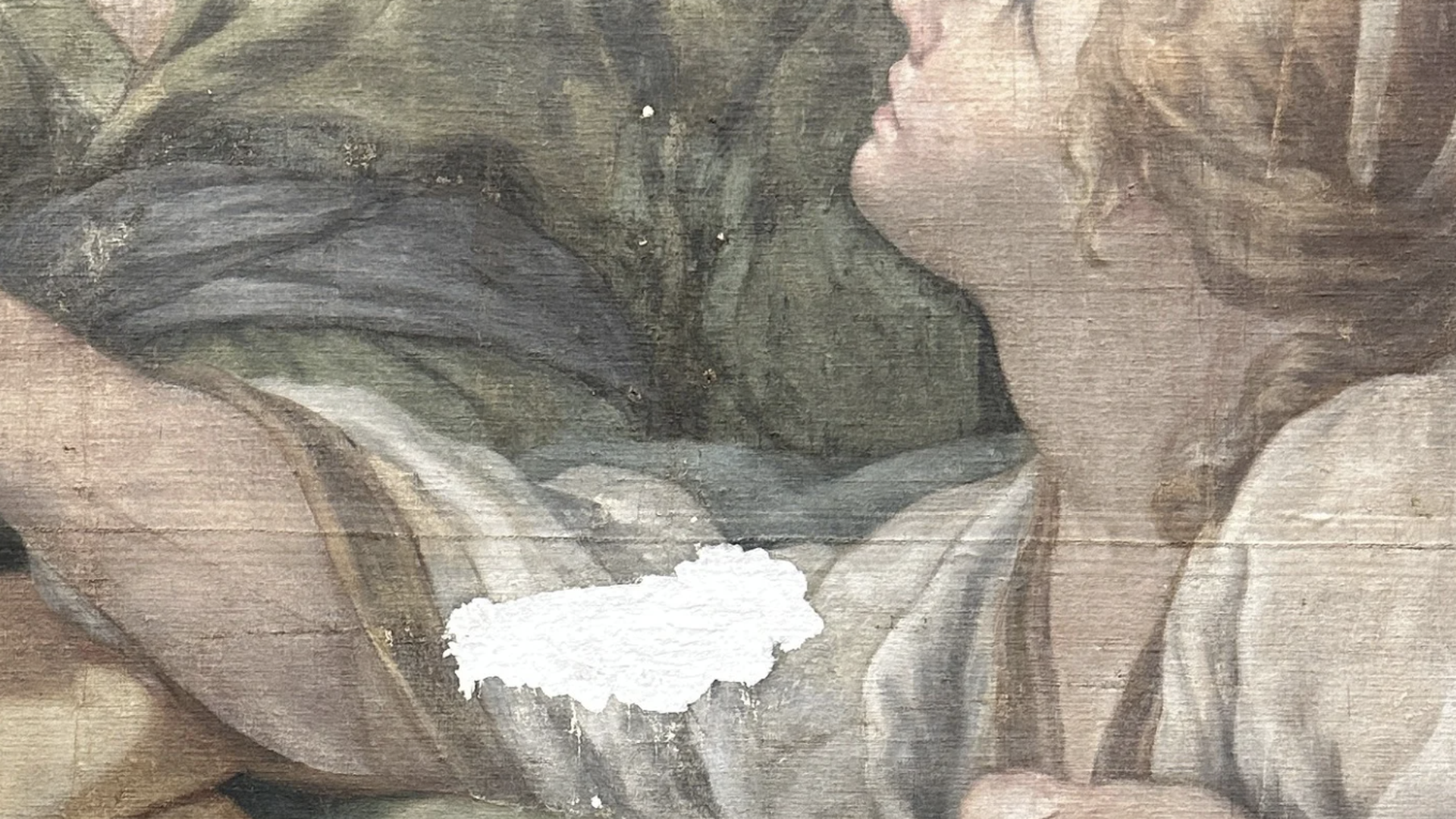
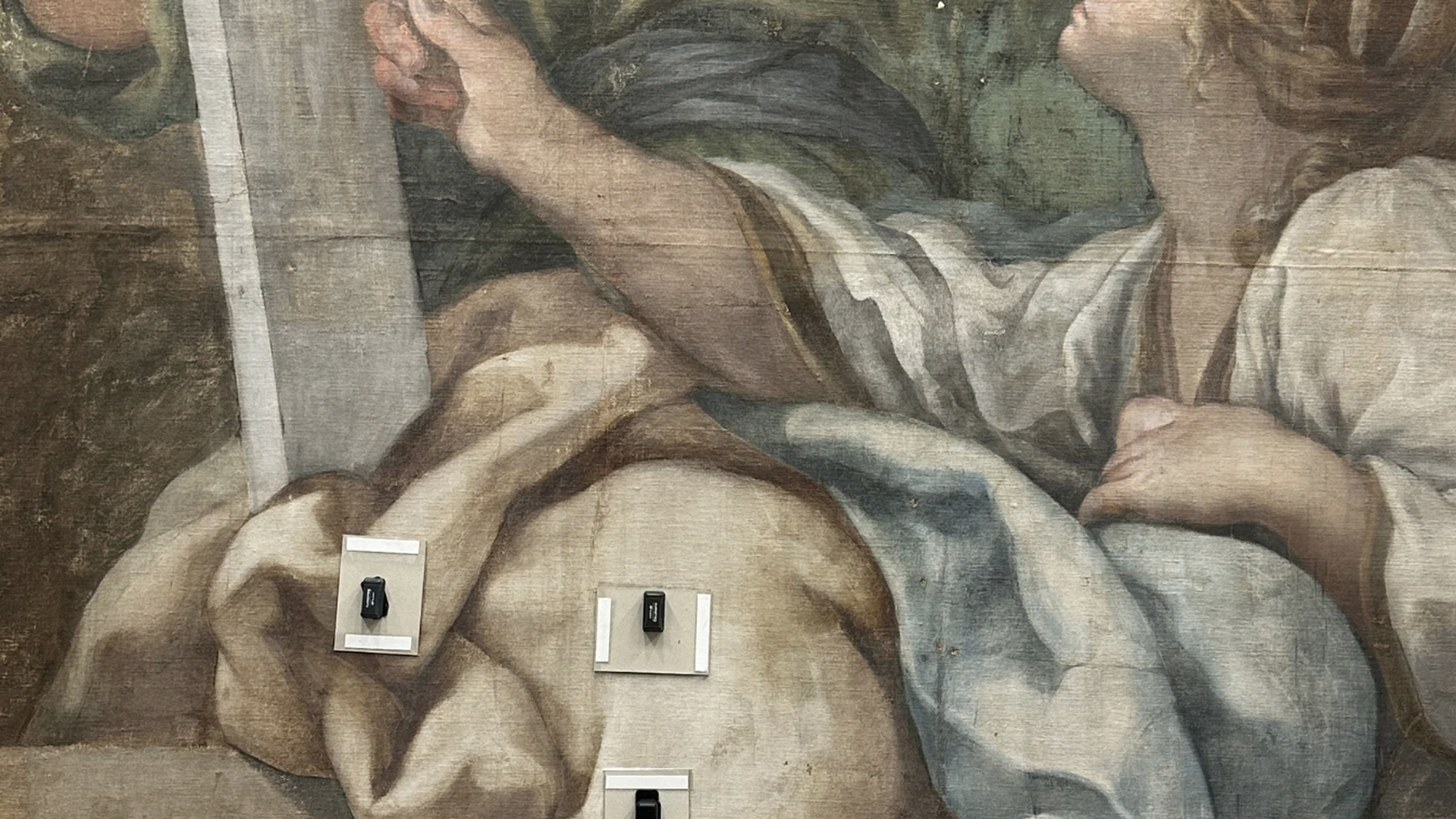
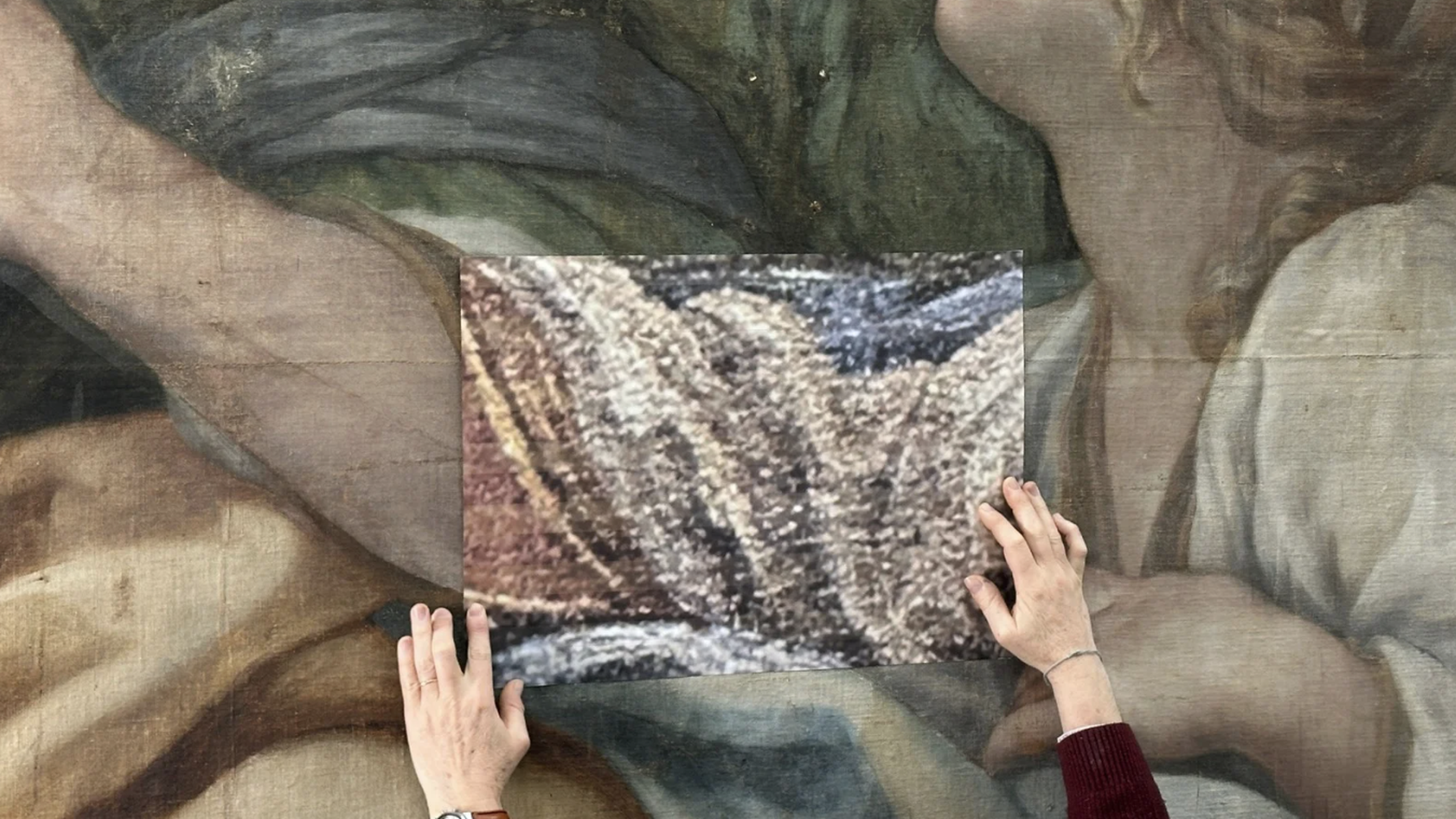
The restorer began the paint cleaning in January 2025, which took about two months. The restoration procedures comprehended:
- To remove the damaged protective layers
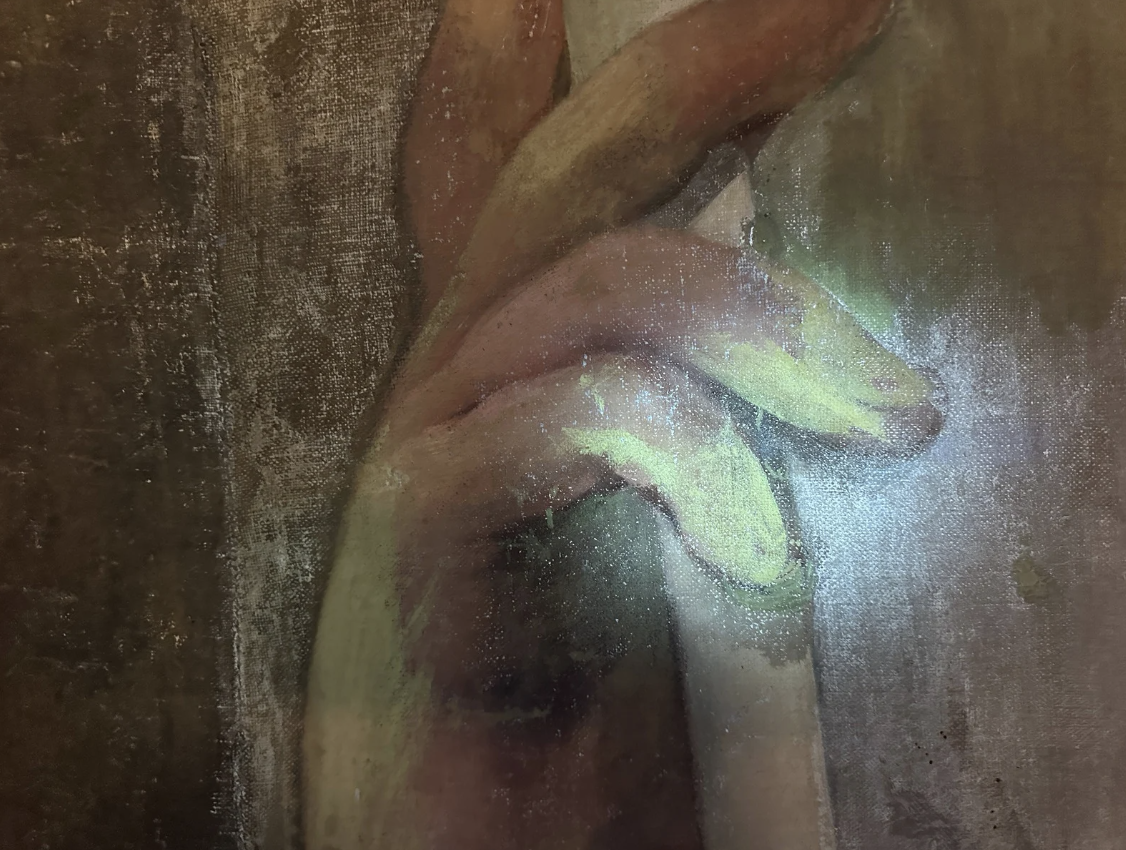
- To use an ultraviolet lamp on selected areas that need to be repainted and treated
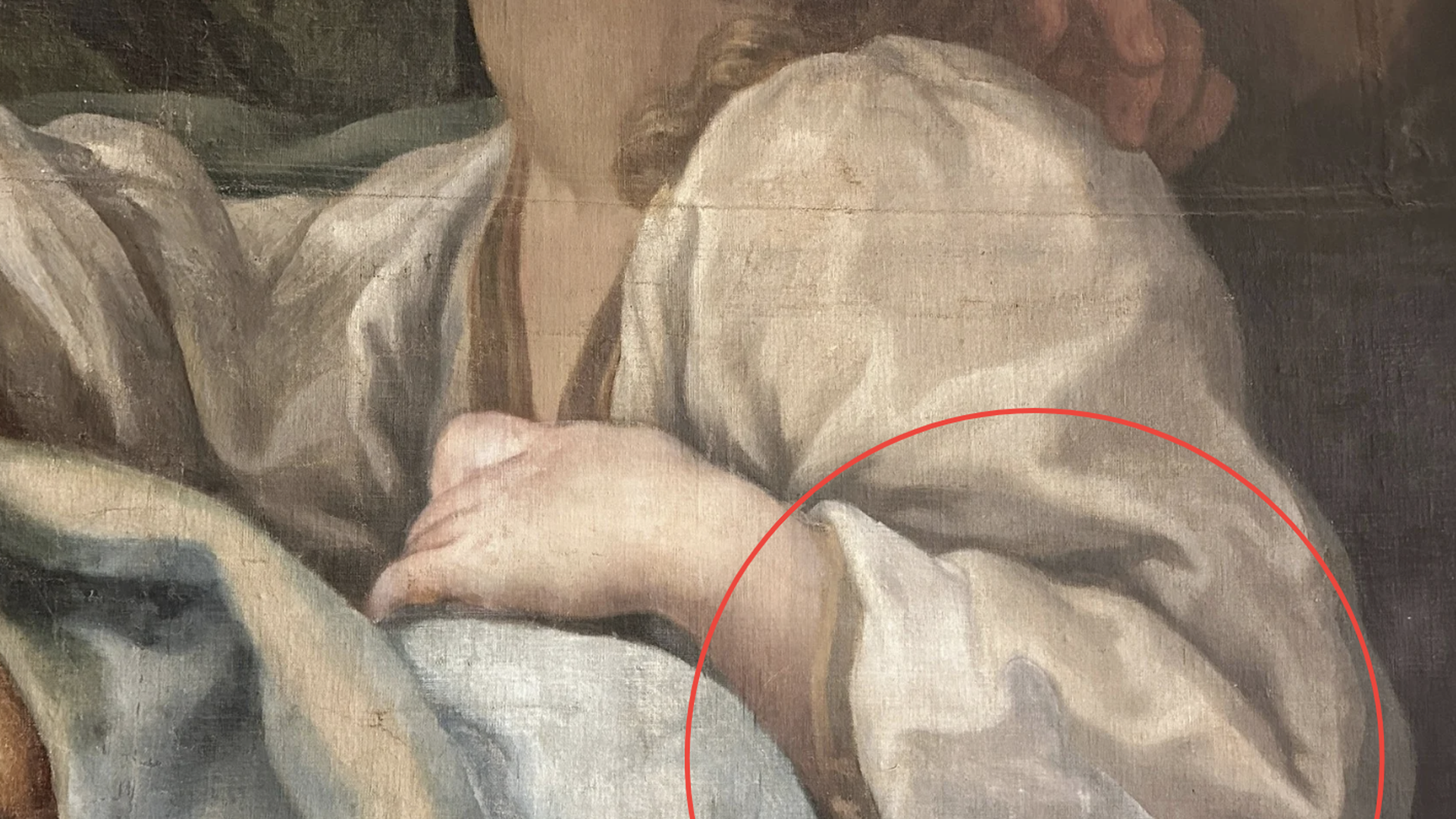
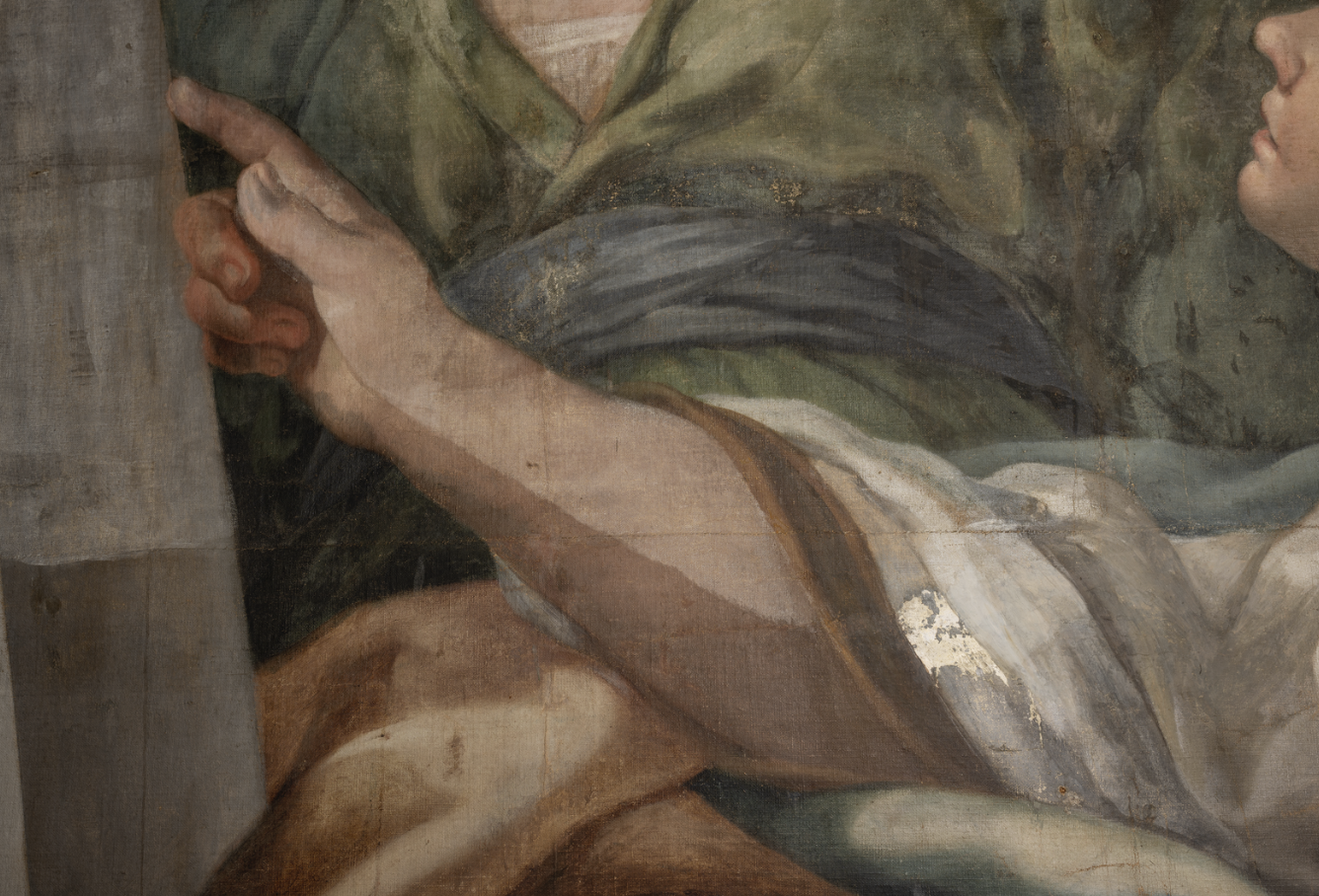
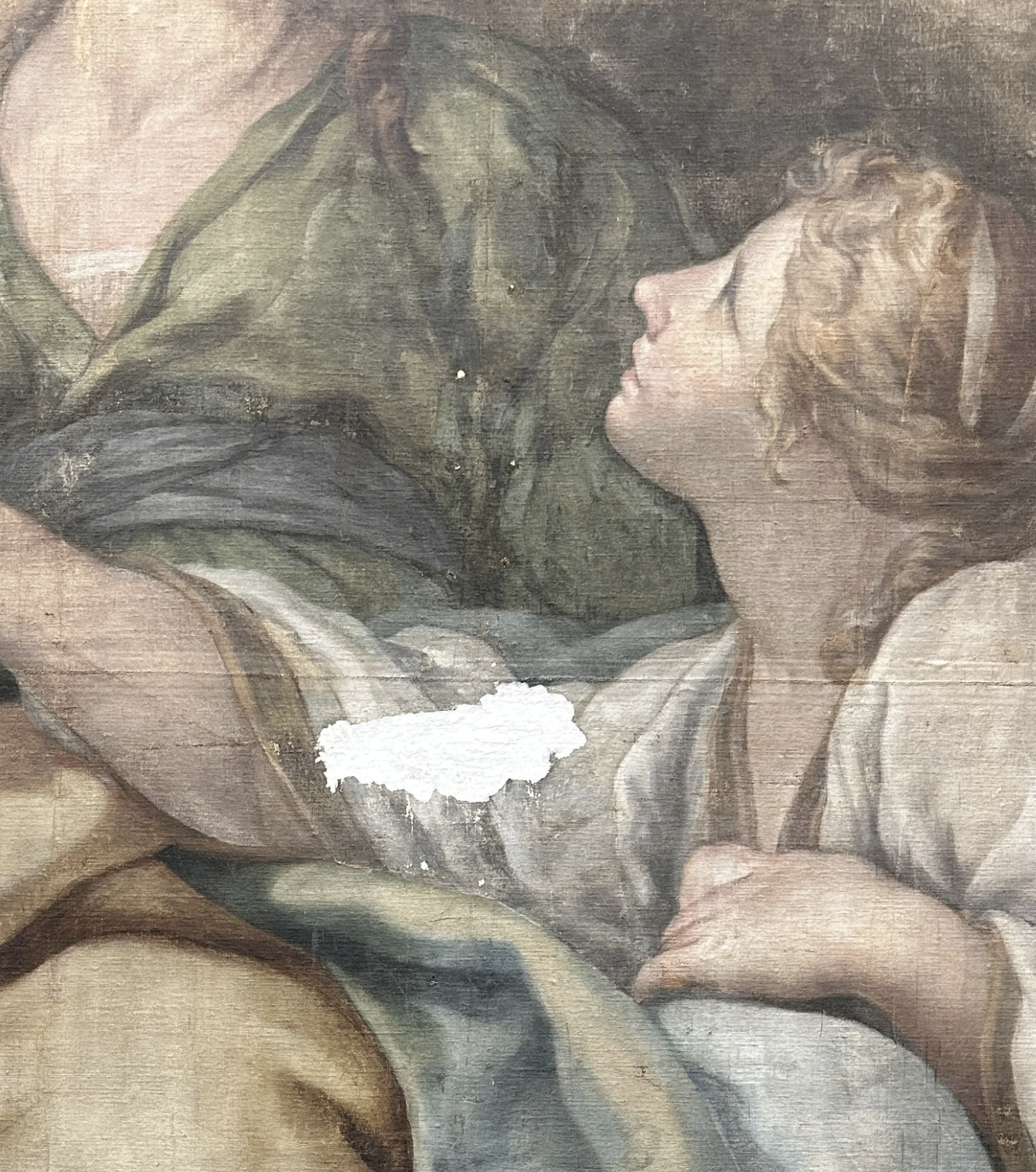
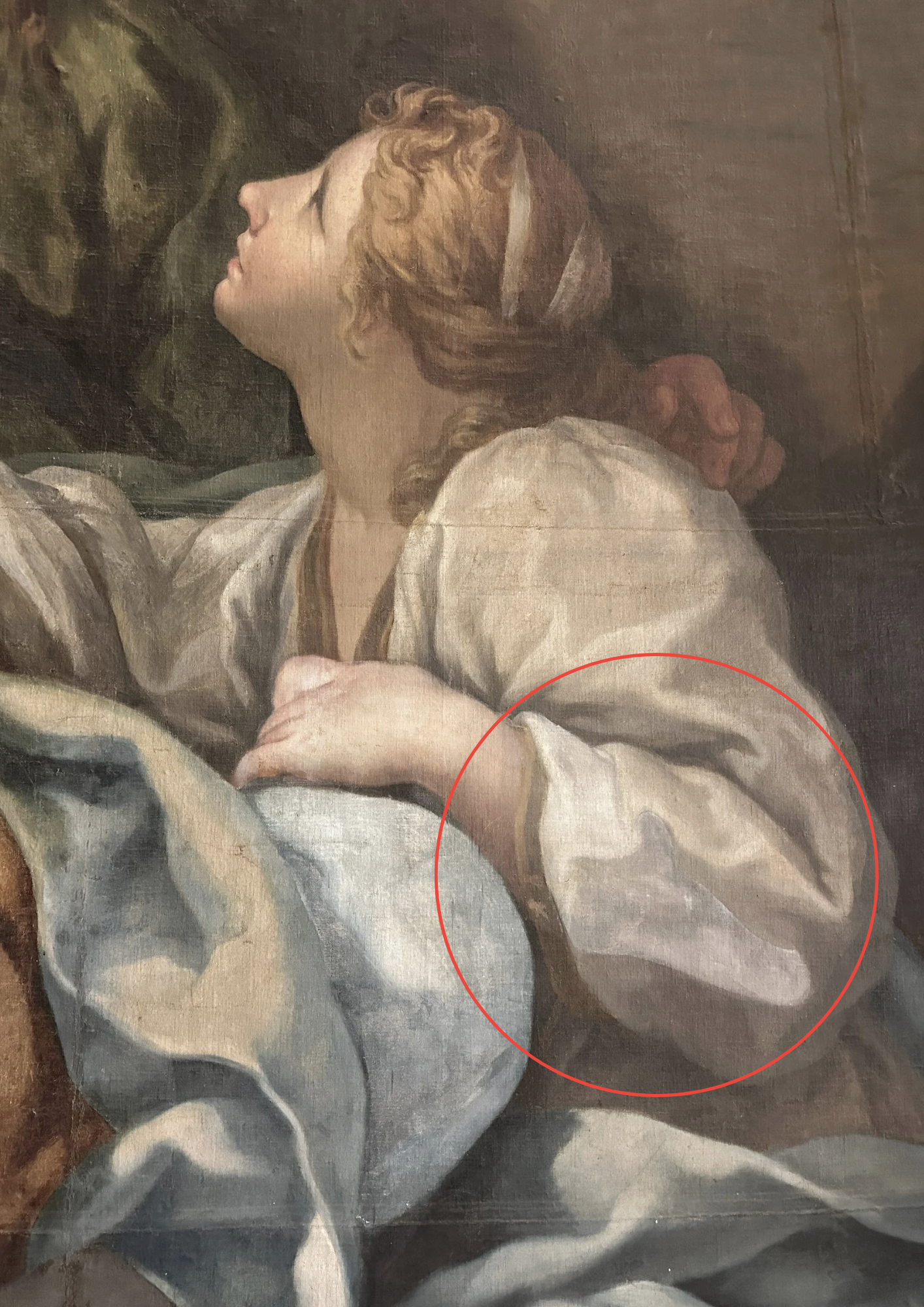
After cleaning, diffuse abrasions appeared on the pictorial layer previously covered by retouching. The gaps were small, except for a wide gap on the right of the figure's sleeve, where the conservator found two different types of plaster from previous restorations. The Painting Restoration Laboratory decided to remove the plaster and the heavy repainting visible on it and to apply a new plaster retouched with recognizable linear tones.
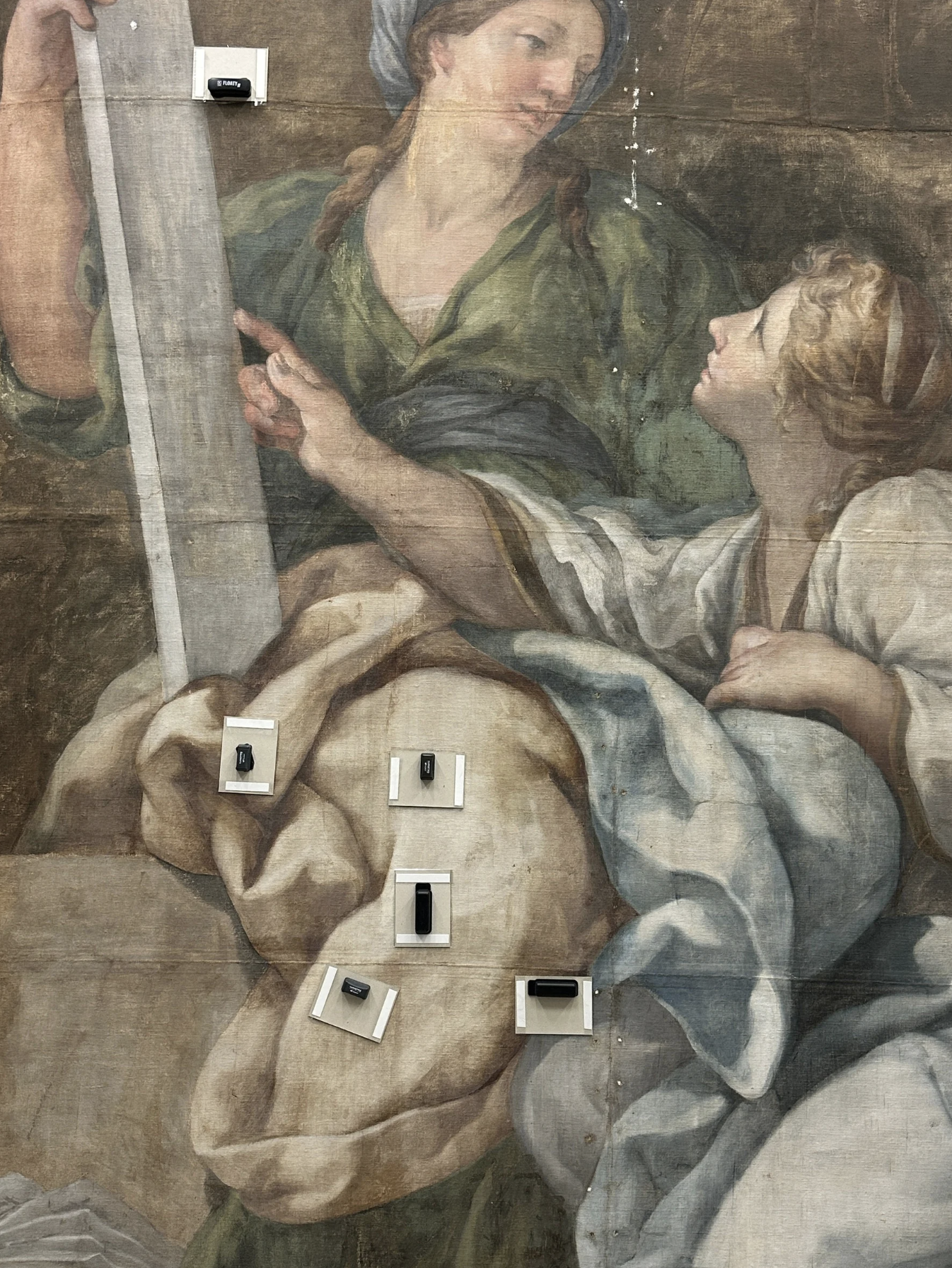
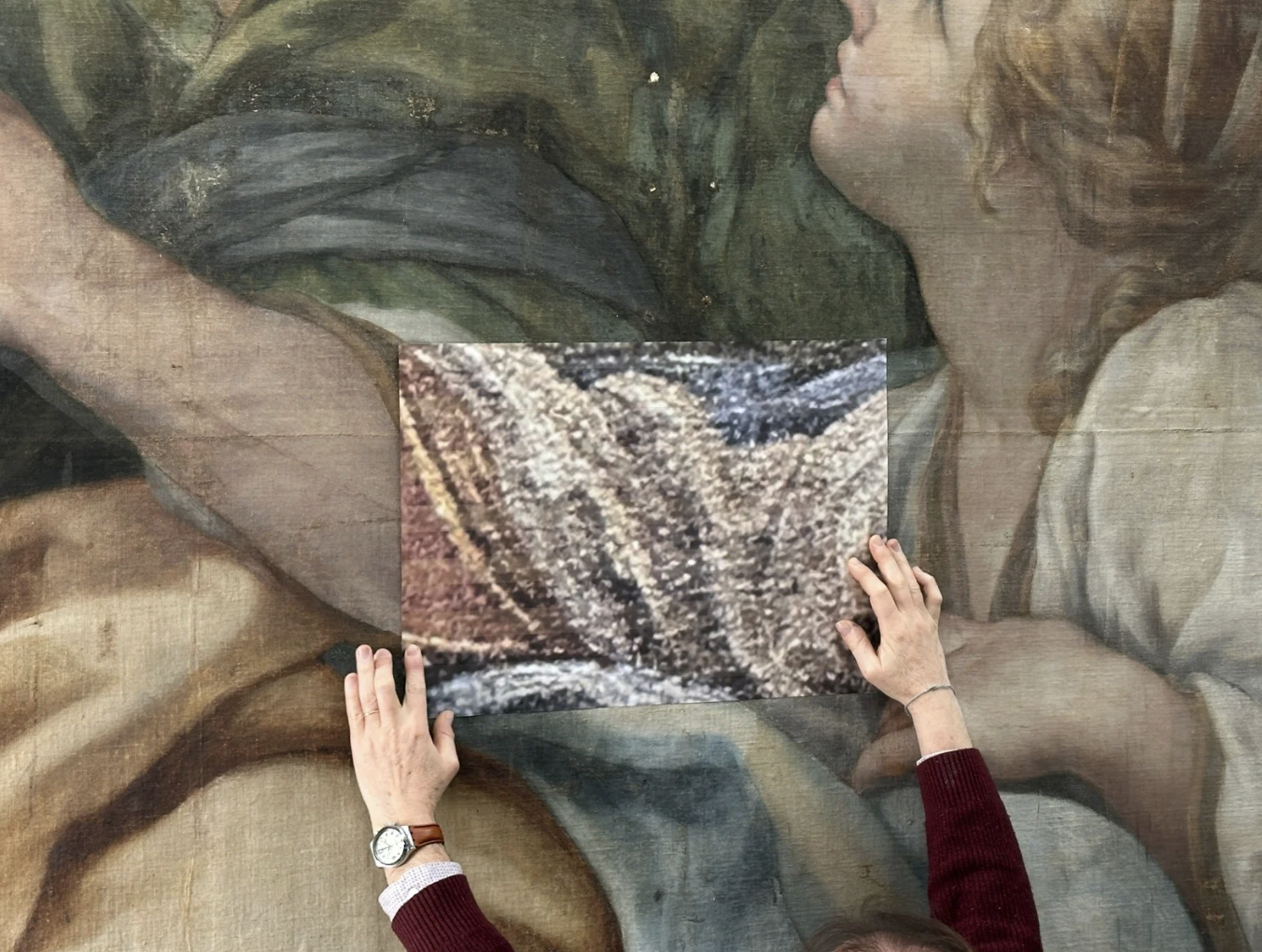
The corresponding mosaic image was used to determine the correct arrangement of the drapery folds. In some areas, the restorer intervened on the original detached fabric and tapestry, performing a specific intervention with injections of adhesive and subsequent pressure on the surface using magnets placed on the front and back of the artwork.
The reintegration phases are currently underway.
The Cumaean Sibyl - Second Restoration Update
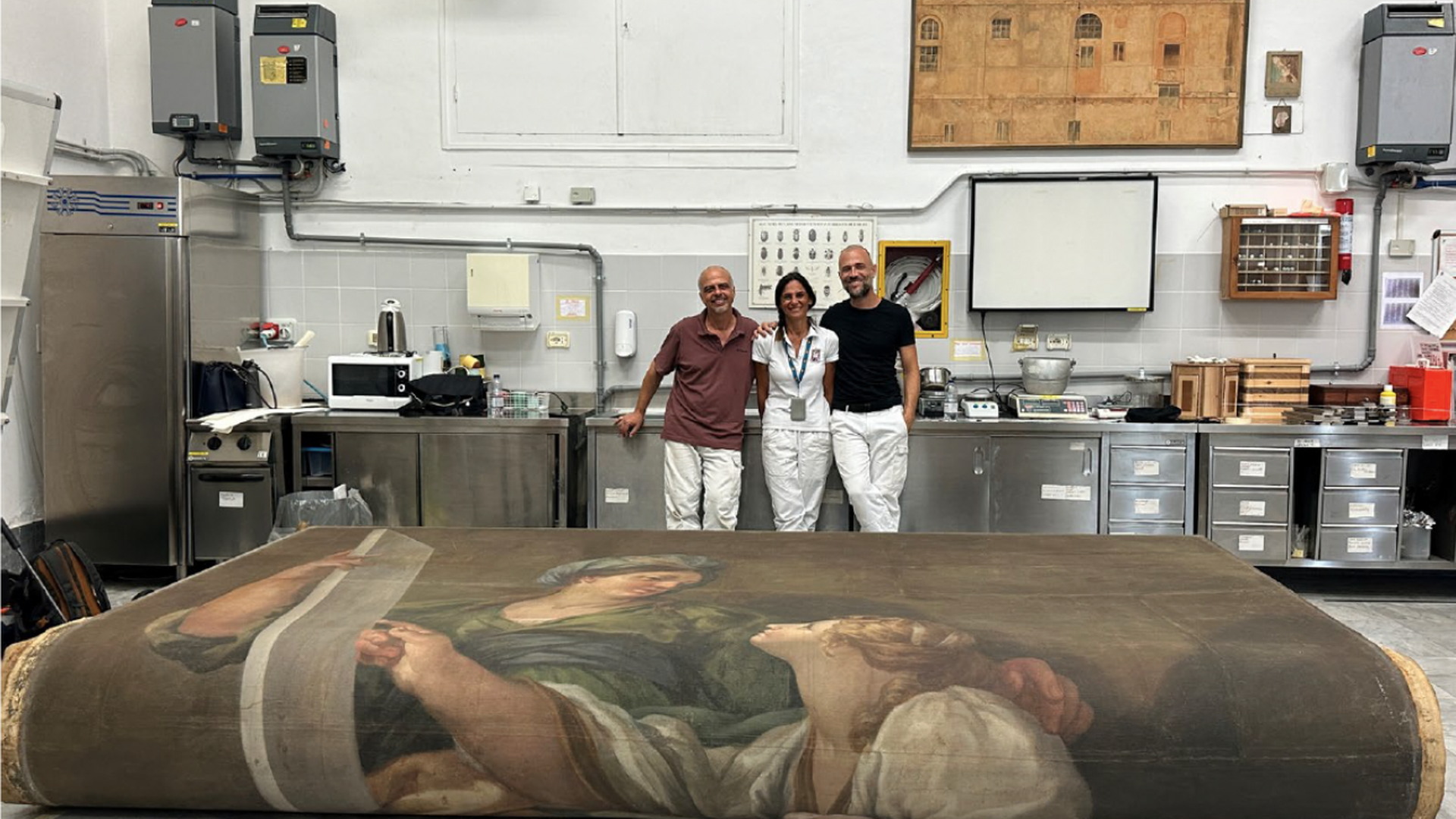
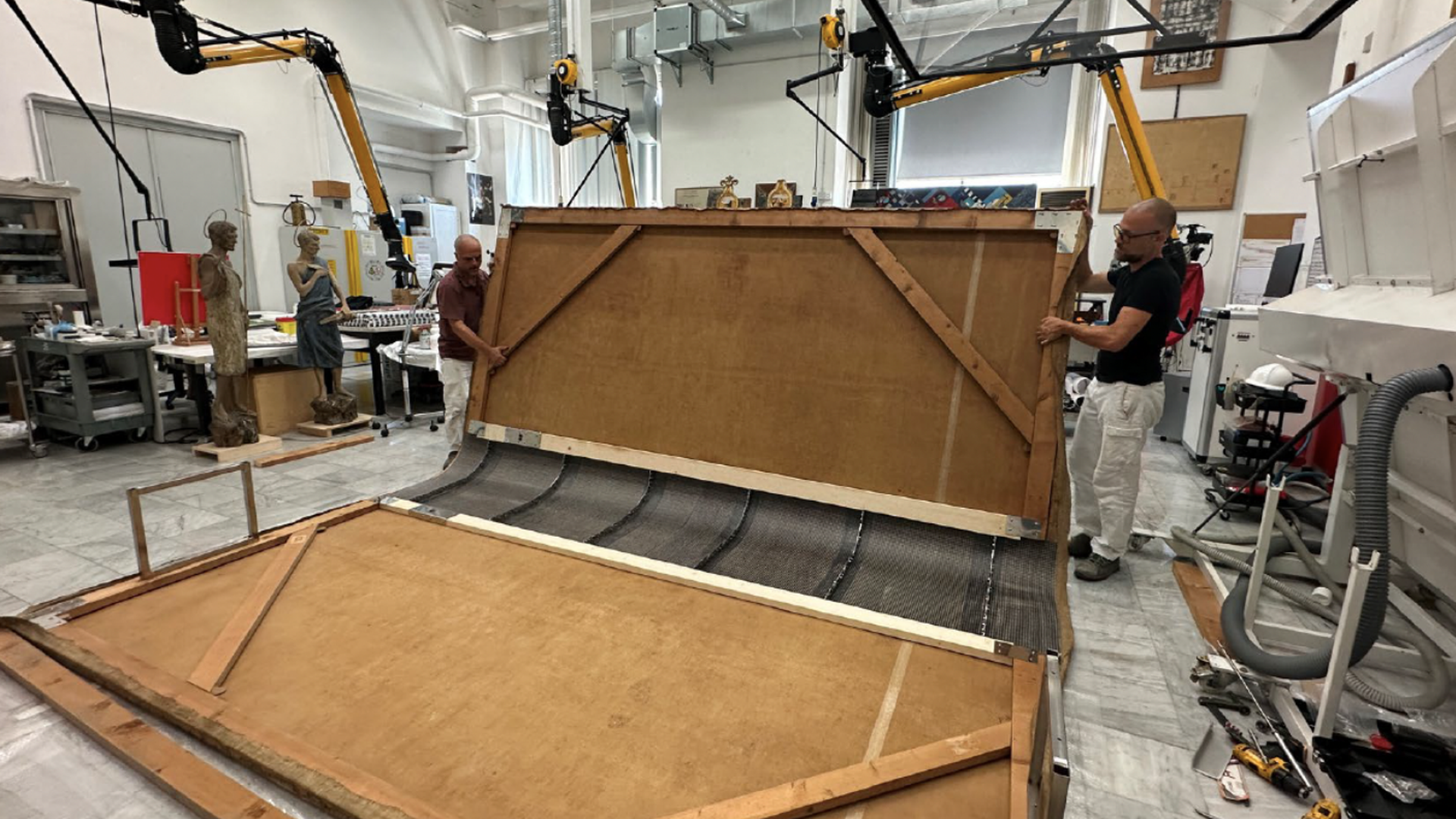
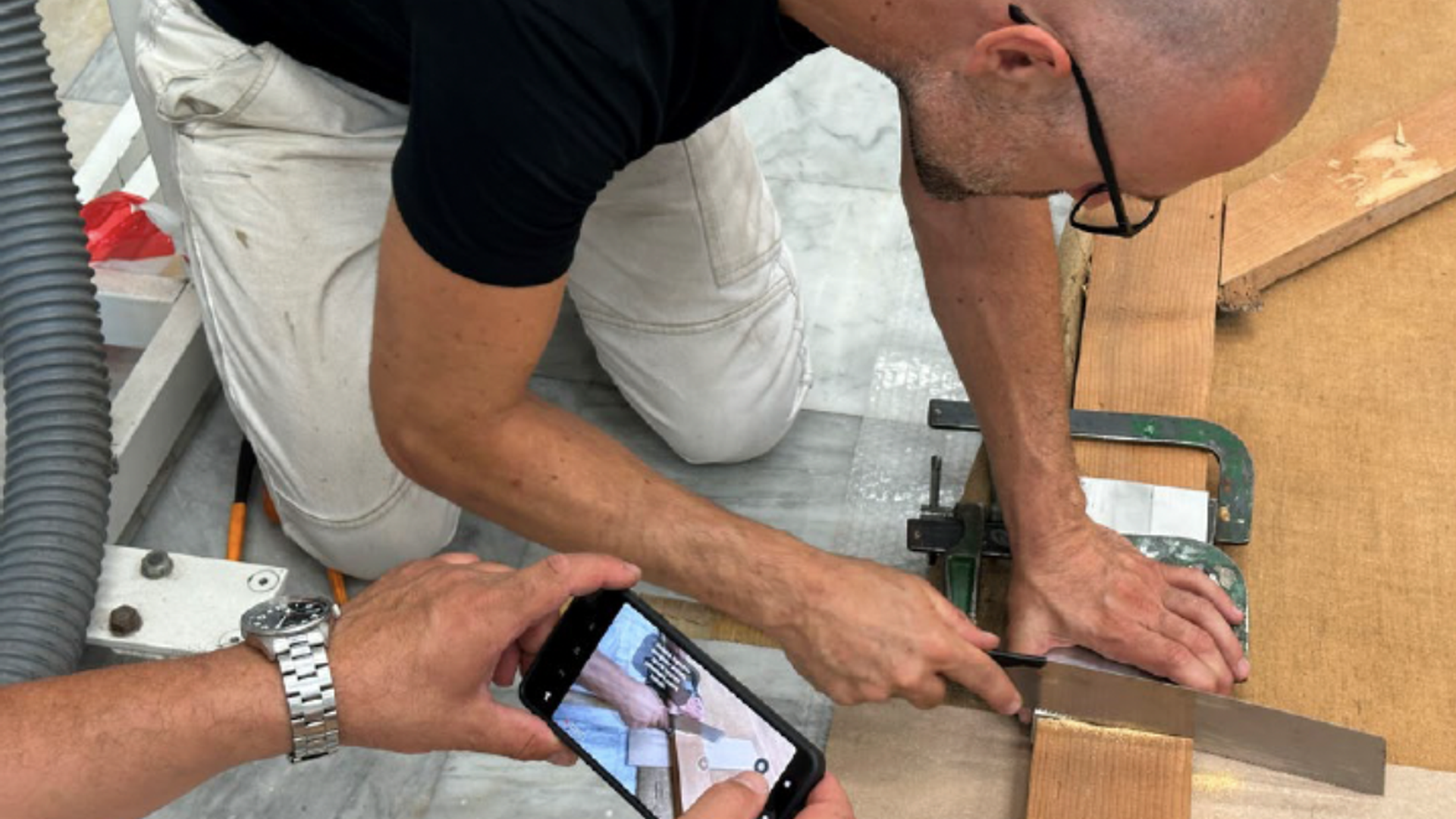
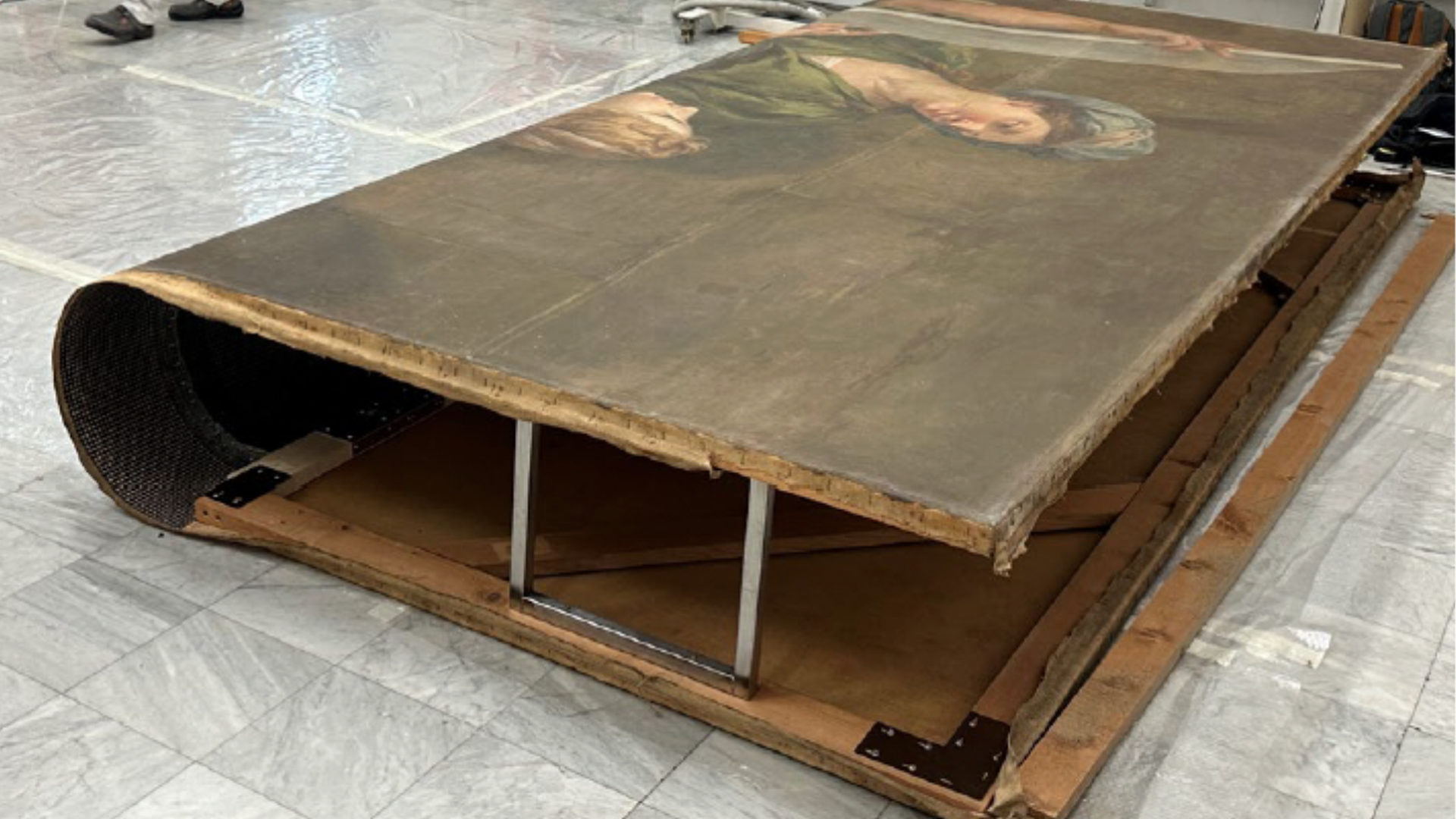
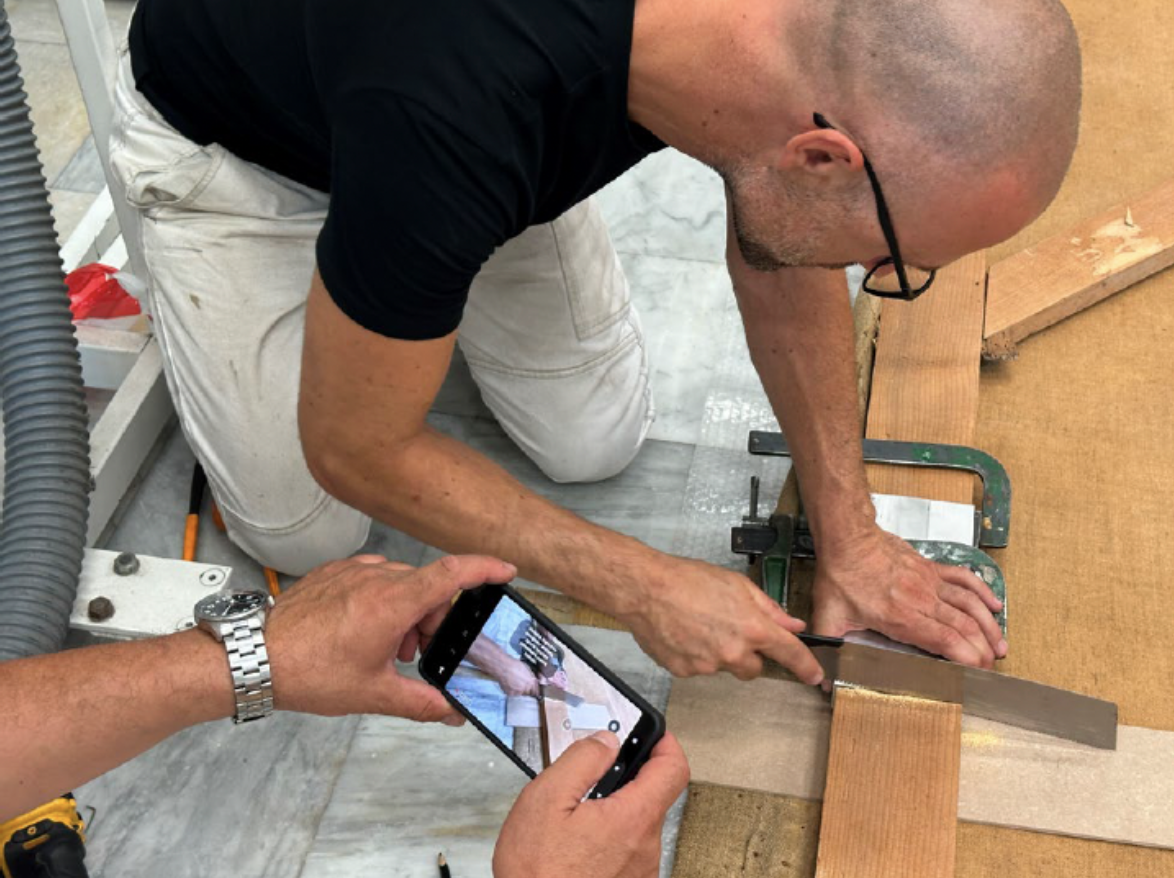
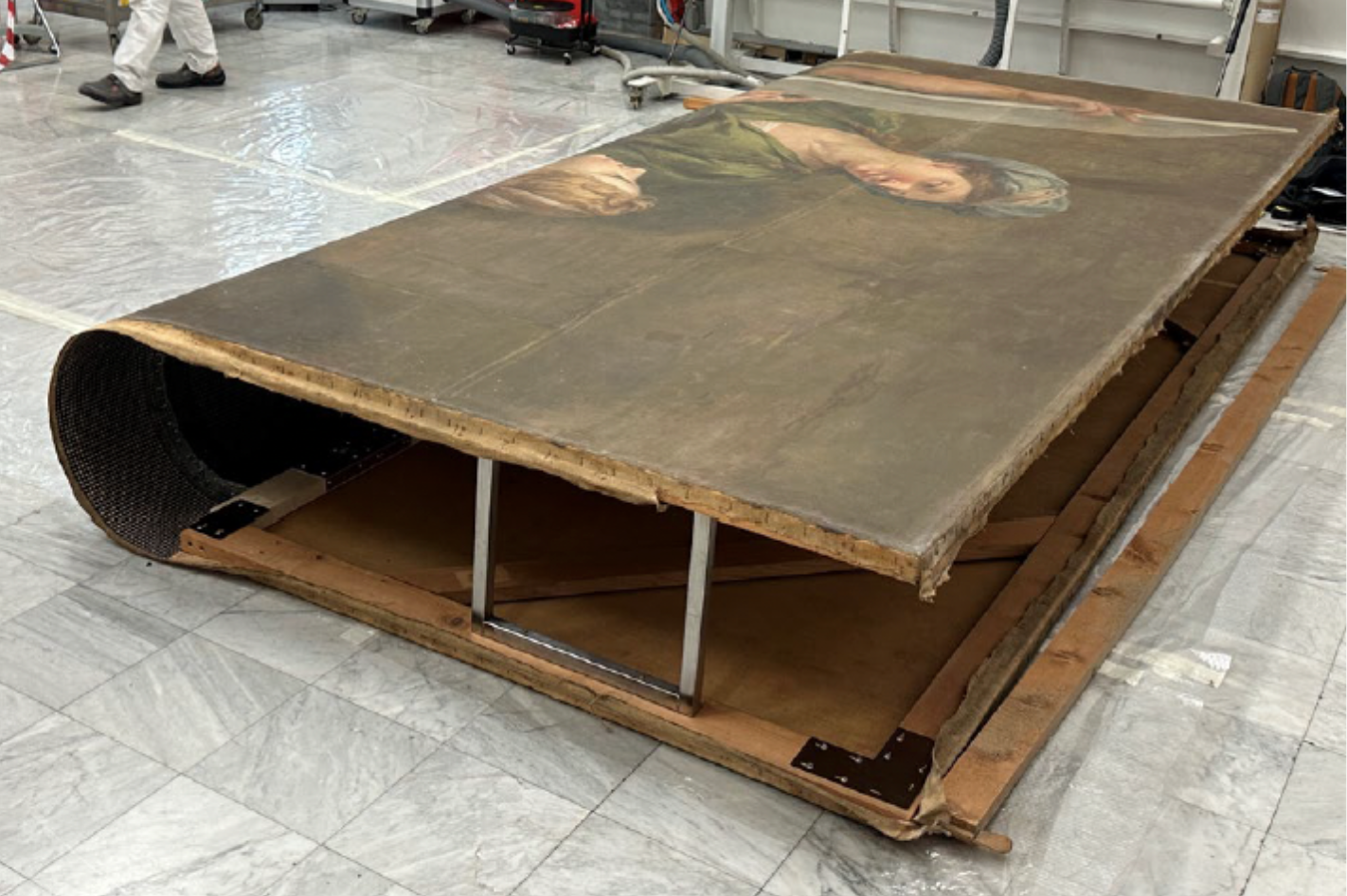
In July and August, the Equilibrarte company, under the supervision of the Painting and Wood Laboratory, carried out the intervention to facilitate the future handling of the work, which consisted of designing and building a specific frame.
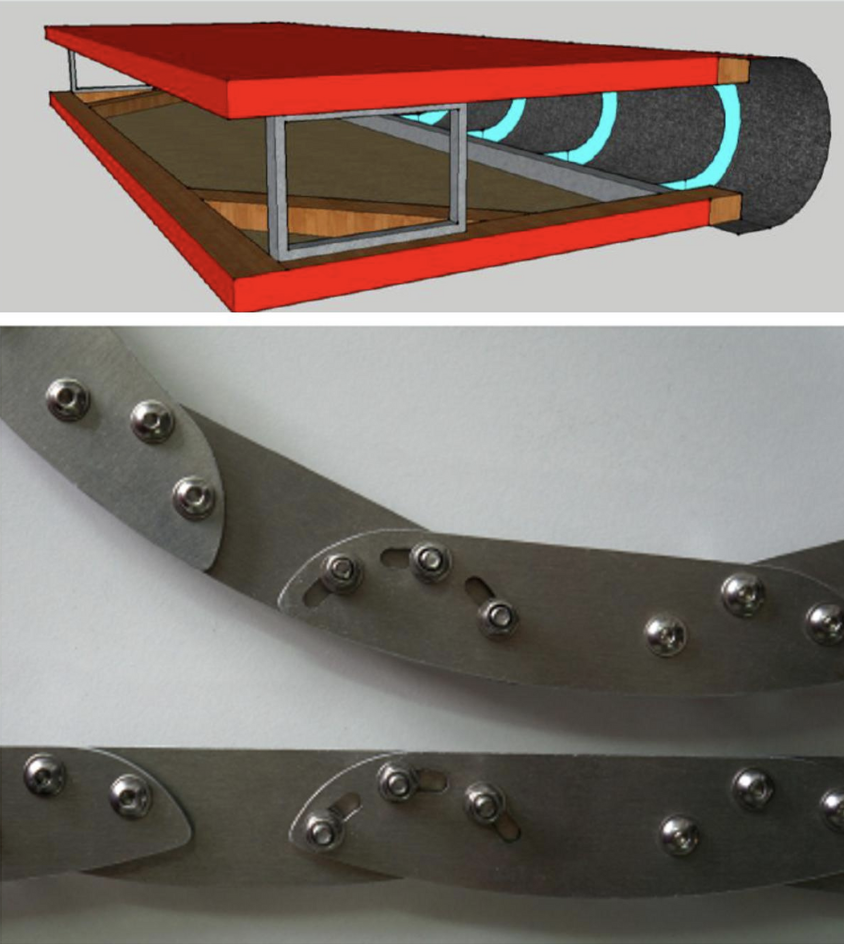
The delicate process involved modifying just a few parts of the frame and transforming it into a structure that could be folded if necessary. The canvas wasn't removed from its support except for the areas affected by the modification, which minimized the stress on the work.
This is the first time the Painting Laboratory has experimented with this technique, as, on other occasions, the wooden frame has been replaced with a steel one.
The successful outcome of this intervention offers the possibility of simplifying the transport and installation of the big artworks for temporary exhibitions without affecting the painting and the original support structures during both the construction and transport phases.
While waiting to transport the painting to the laboratory and begin the conservation process, the restorers are documenting its condition.
The Cumaean Sibyl - Restoration Update
For the restoration of this large painting, an ad hoc laboratory has been set up in a space outside the Painting Restoration Laboratory, which already housed another large canvas, Mattathias' Wrath Against the Idolater, also made as a model for the mosaics of St. Peter's Basilica.
The painting of the Cumaean Sibyl, attributed to Ciro Ferri, arrived at the Vatican Museums in 1926 and was restored and placed as a decoration in the long corridor in front of the Restoration Laboratories in 1934.
Subsequent structural modifications to the building now prevent the painting from leaving its location; some wall structures block the passage of the large work (3.97 x 3.60 m).
Resolving this problem became a priority for transport to the laboratory for restoration and future handling of exhibitions and displays.
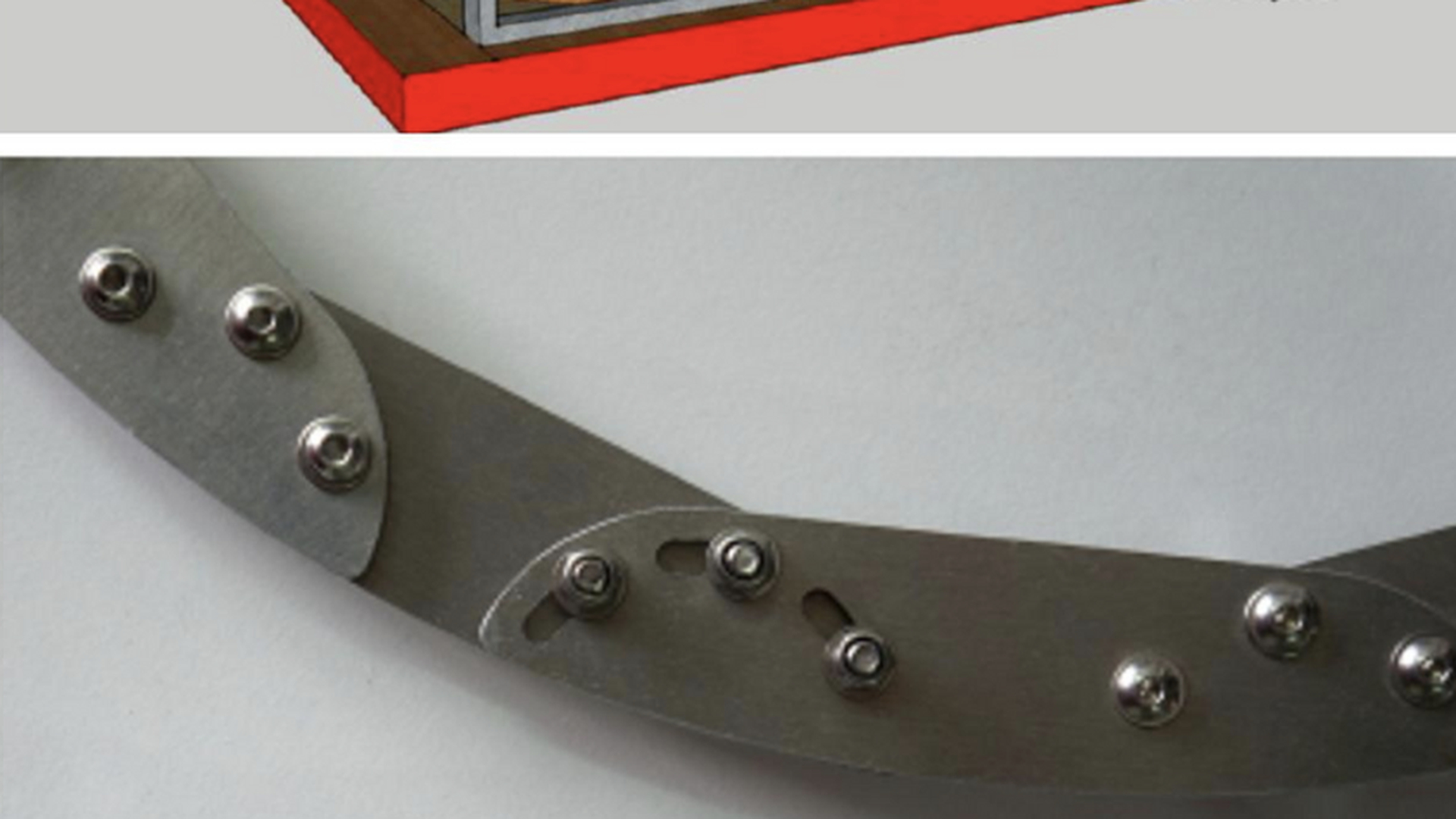
The restoration company Equilibrarte, which specializes in supports and structures for works on canvas, was consulted. Together with them, the Painting and Wood Laboratory of the Vatican Museums designed a frame modification that will allow the work to be folded into two parts and thus easily moved.
A similar intervention has already been performed on Simon Hantaϊ's large painting, Le Manteau de la Vierge. The following photographs give an idea of the work that will be performed in July 2024. During the planning stages of this particular intervention, the Photographic Laboratory took photographs of the front and back of the work before restoration, and the Scientific Research Laboratory will carry out non-destructive studies. Restorers performed an initial cleaning test to determine the proper cleaning methodology for this artwork.

The Cumaean Sibyl
Details
Adopted by: The Northwest Chapter
Patrons: Rick and Lisa Altig
Inventory: 40859
Artist: Ciro Ferri
Date: 1679-1680
Classification: Painting
Materials: Oil on canvas
Dimensions: 397 x 360 cm
Department: XVII-XVIII Century Art
Laboratory: Painting & Wood
Wishbook year: 2024
Description
HIGH PRIORITY PROJECT
The large painted canvas is the cartoon used by Fabio Cristofari for one of the mosaics in the Chapel of the Most Holy Crucifix in St. Peter’s Basilica. Pietro da Cortona (1597-1669) was a celebrated artist who created preparatory drawings and models that his artistic heir Ciro Ferri (1634-1689) continued. These great protagonists of Baroque painting in the 17th century created preparatory drawings and models for the dome and lunettes of the chapel, inspired by characters and events from the Old Testament. Ciro Ferri’s masterfully executed image shows the Cumaean Sibyl prophesying in the foreground as the soft drapery of the robes stands out, enveloping the figure and giving beautiful movement to the scene.
TOTAL COST: € 41.771,94 ($ 44,637.50)
State of Preservation
Frame: Good condition
Canvas: Good condition, sufficient tension Pictorial film: Covered with a thick layer of coherent and noncoherent deposits, abrasions at the bottom, some retouching concentrated mainly along the central axis (possibly bent or fitted to the previous frame). There appears to be no final varnish.
Restoration Procedures
- Overhaul of frame to make it functional again
- Cleaning of pictorial film and removal of altered retouching
- Filling of gaps
- Pictorial reintegration and possible painting
- Light cleaning of frame
Media
The Cumaean Sibyl
Restorations Update: The Cumaean Sibyl - Third Restoration Update
The restorer began the paint cleaning in January 2025, which took about two months. The restoration procedures comprehended:
- To remove the damaged protective layers
- To use an ultraviolet lamp on selected areas that need to be repainted and treated
After cleaning, diffuse abrasions appeared on the pictorial layer previously covered by retouching. The gaps were small, except for a wide gap on the right of the figure's sleeve, where the conservator found two different types of plaster from previous restorations. The Painting Restoration Laboratory decided to remove the plaster and the heavy repainting visible on it and to apply a new plaster retouched with recognizable linear tones.
The corresponding mosaic image was used to determine the correct arrangement of the drapery folds. In some areas, the restorer intervened on the original detached fabric and tapestry, performing a specific intervention with injections of adhesive and subsequent pressure on the surface using magnets placed on the front and back of the artwork.
The reintegration phases are currently underway.
Restorations Update: The Cumaean Sibyl - Second Restoration Update
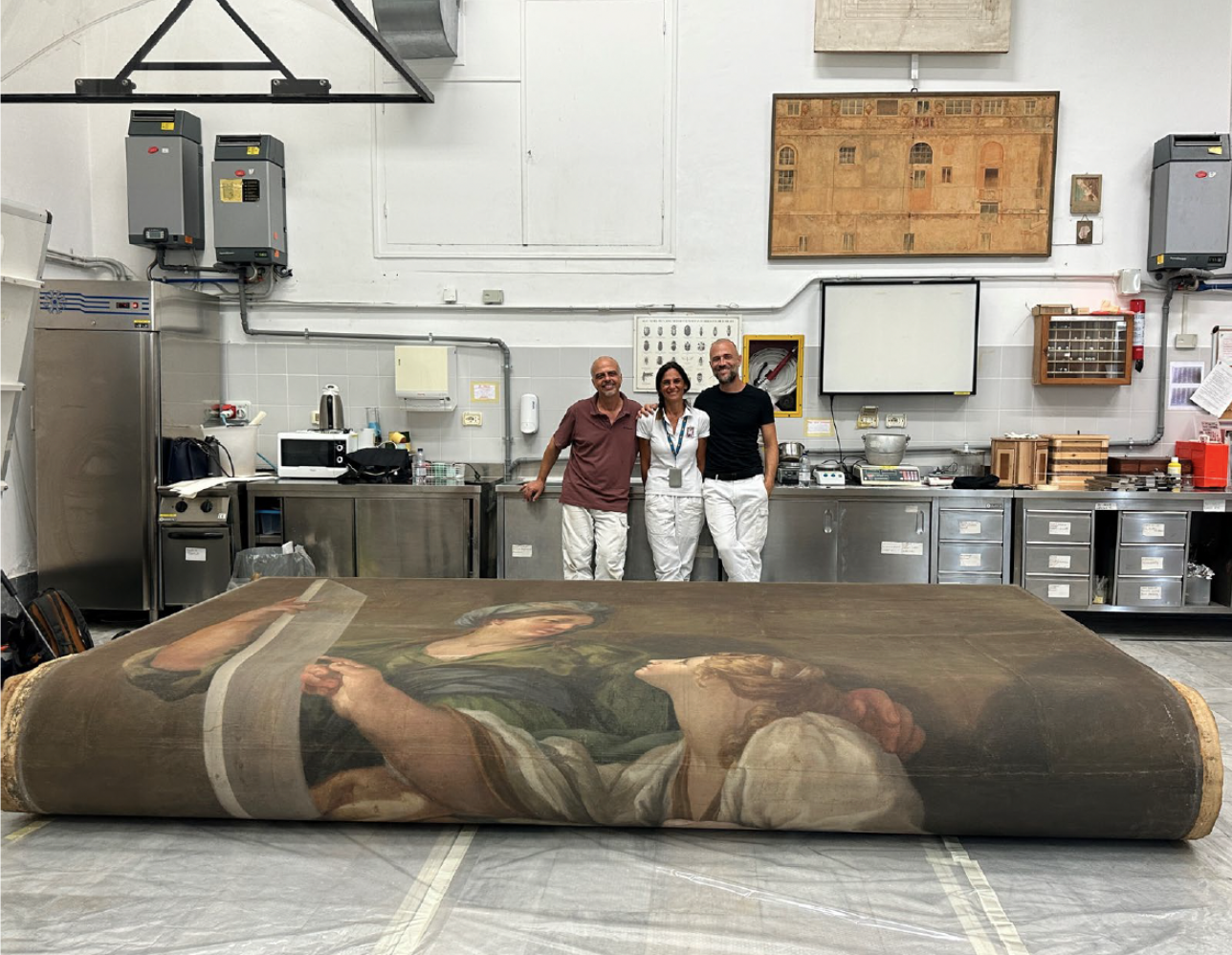
In July and August, the Equilibrarte company, under the supervision of the Painting and Wood Laboratory, carried out the intervention to facilitate the future handling of the work, which consisted of designing and building a specific frame.
The delicate process involved modifying just a few parts of the frame and transforming it into a structure that could be folded if necessary. The canvas wasn't removed from its support except for the areas affected by the modification, which minimized the stress on the work.
This is the first time the Painting Laboratory has experimented with this technique, as, on other occasions, the wooden frame has been replaced with a steel one.
The successful outcome of this intervention offers the possibility of simplifying the transport and installation of the big artworks for temporary exhibitions without affecting the painting and the original support structures during both the construction and transport phases.
While waiting to transport the painting to the laboratory and begin the conservation process, the restorers are documenting its condition.
Restorations Update: The Cumaean Sibyl - Restoration Update
For the restoration of this large painting, an ad hoc laboratory has been set up in a space outside the Painting Restoration Laboratory, which already housed another large canvas, Mattathias' Wrath Against the Idolater, also made as a model for the mosaics of St. Peter's Basilica.
The painting of the Cumaean Sibyl, attributed to Ciro Ferri, arrived at the Vatican Museums in 1926 and was restored and placed as a decoration in the long corridor in front of the Restoration Laboratories in 1934.
Subsequent structural modifications to the building now prevent the painting from leaving its location; some wall structures block the passage of the large work (3.97 x 3.60 m).
Resolving this problem became a priority for transport to the laboratory for restoration and future handling of exhibitions and displays.
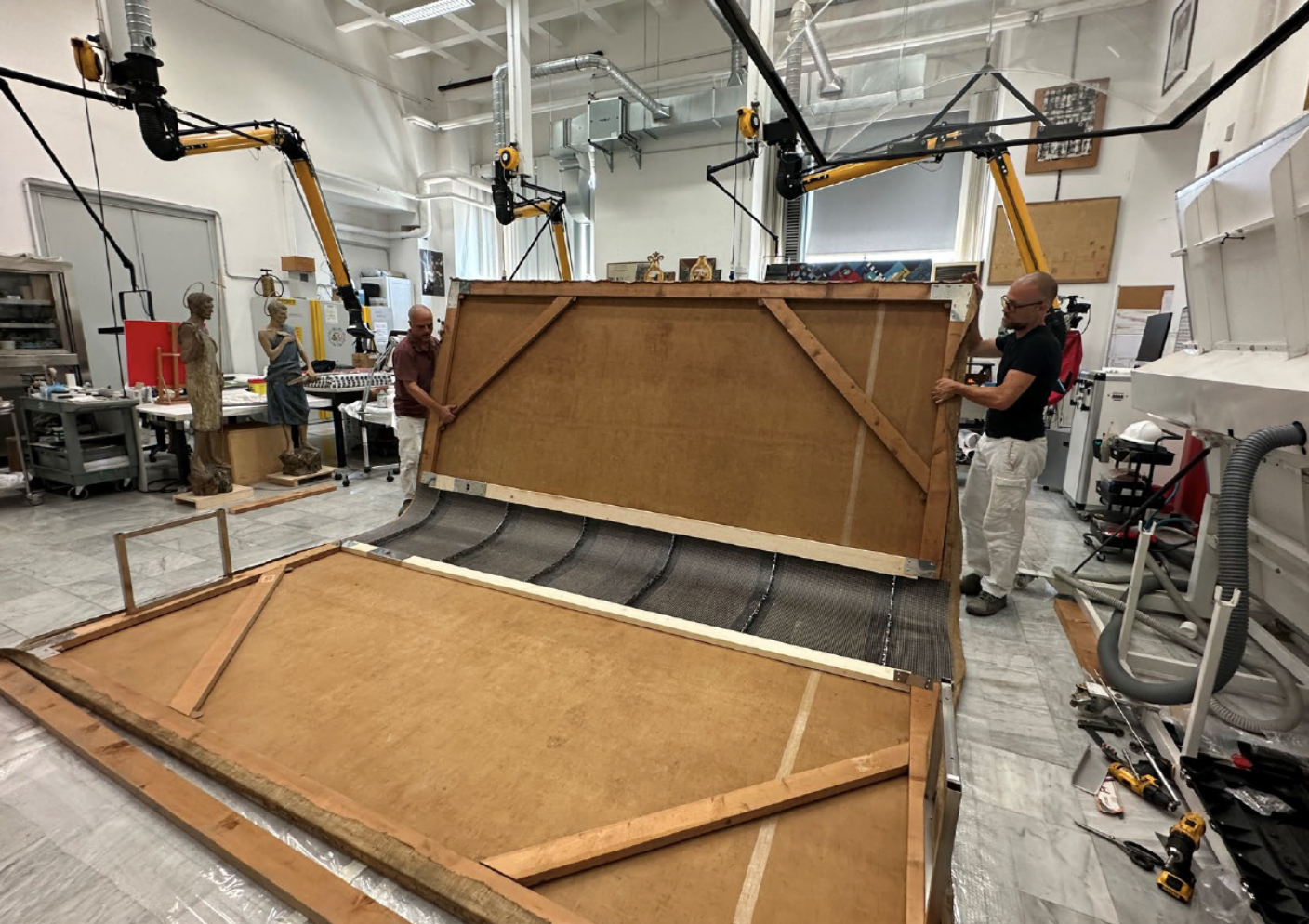
The restoration company Equilibrarte, which specializes in supports and structures for works on canvas, was consulted. Together with them, the Painting and Wood Laboratory of the Vatican Museums designed a frame modification that will allow the work to be folded into two parts and thus easily moved.
A similar intervention has already been performed on Simon Hantaϊ's large painting, Le Manteau de la Vierge. The following photographs give an idea of the work that will be performed in July 2024. During the planning stages of this particular intervention, the Photographic Laboratory took photographs of the front and back of the work before restoration, and the Scientific Research Laboratory will carry out non-destructive studies. Restorers performed an initial cleaning test to determine the proper cleaning methodology for this artwork.
© 2026 Patrons of the Arts
in the Vatican Museums
Vatican Museums V-00120,
Vatican City State (Europe)
+39 0669864499