

Assumption of the Virgin at The Basilica of St. Mary Major
Artist: Girolamo Siciolante da Sermoneta
Date: 1570-1573
Classification: Painting
Dimensions: 298 x 195 x 4 cm
Materials: Oil on wood
Adopted By: The Ohio Chapter
Description
MEDIUM PRIORITY PROJECT
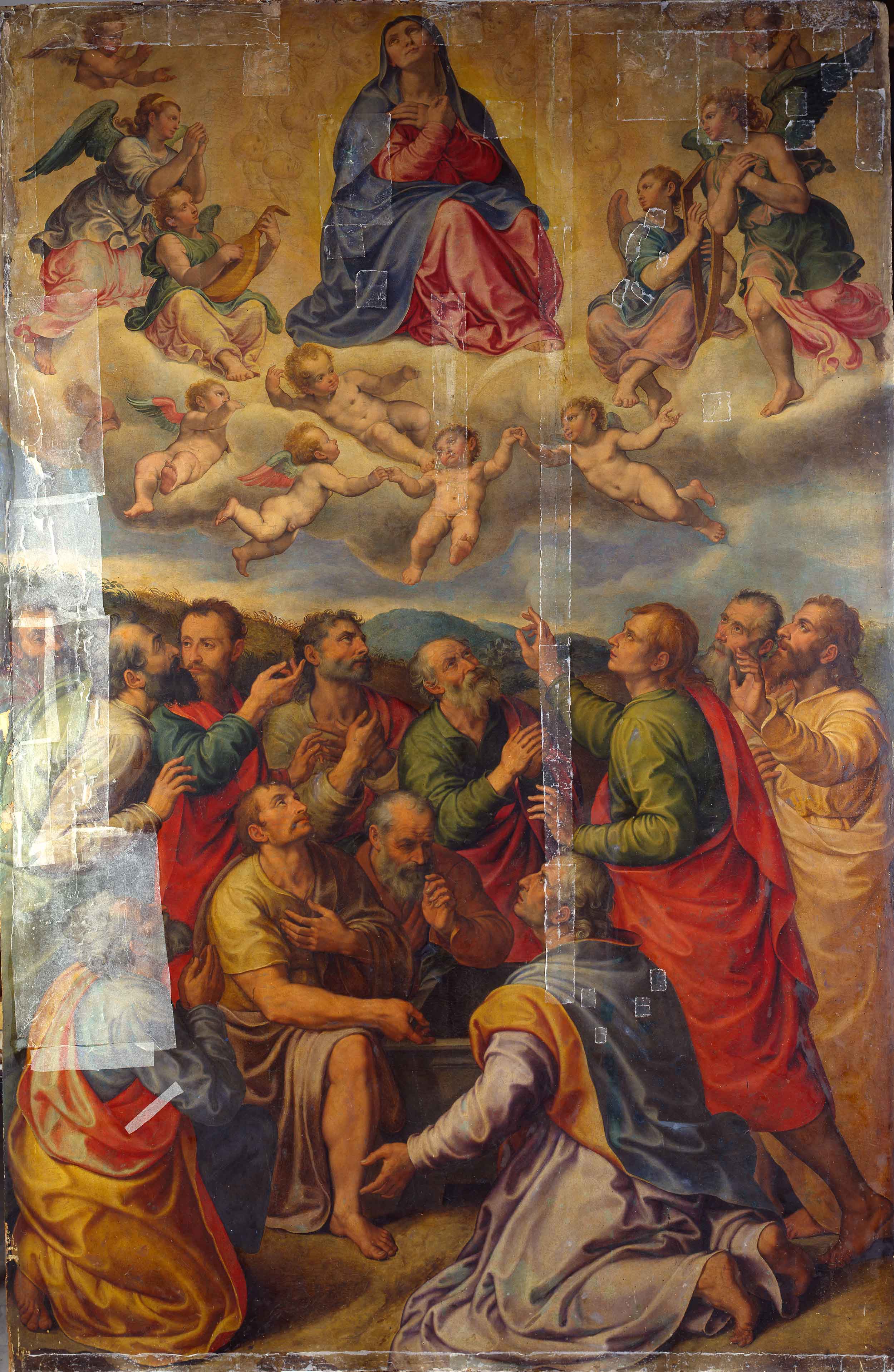
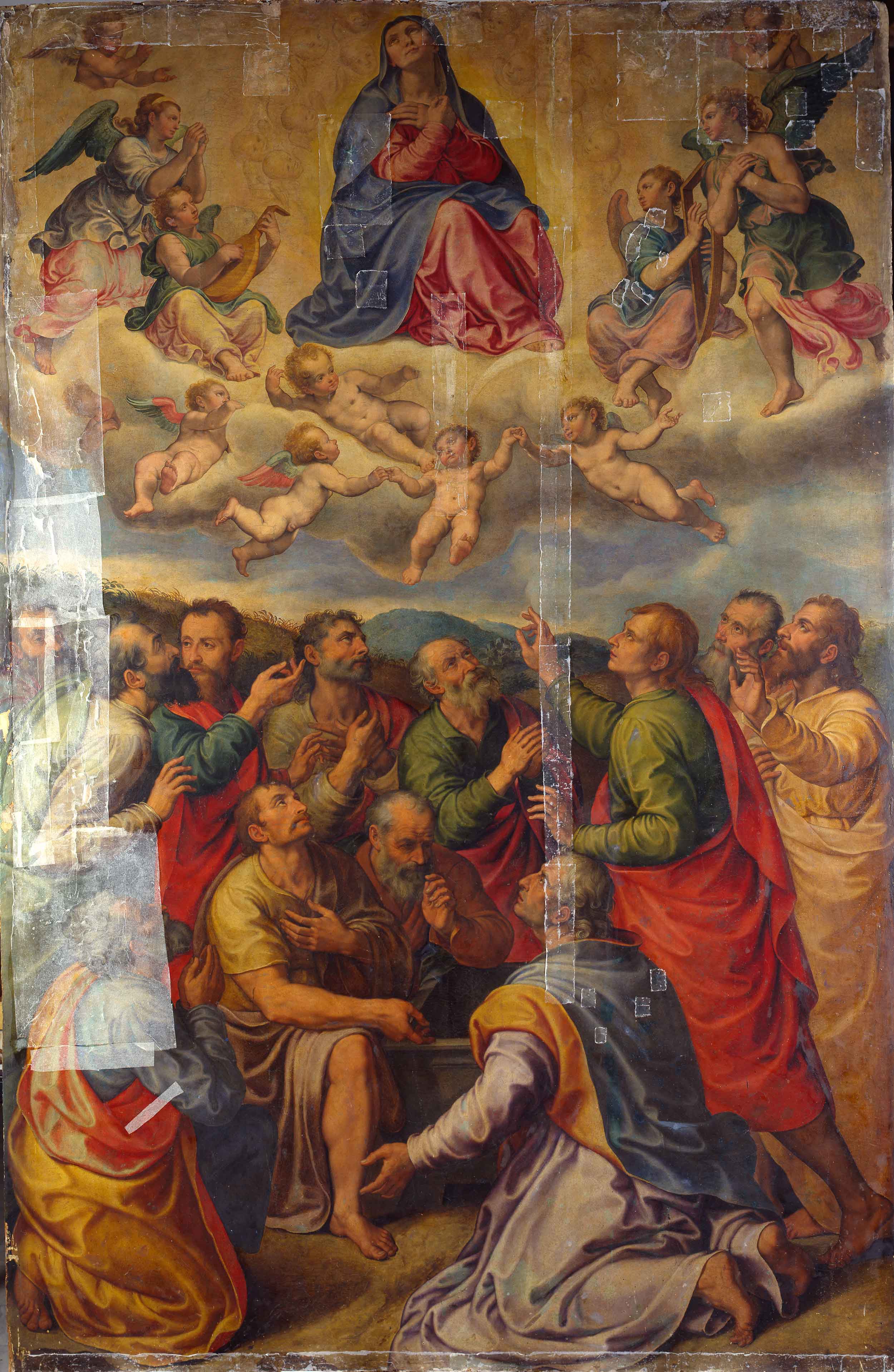
The large altarpiece by Girolamo Siciolante (Sermoneta 1521 - Roma 1575) of the Assumption of the Virgin, painted around 1570-1573, is part of the decoration on the chapel designed by Michelangelo for Cardinal Guido Ascanio Sforza of Santa Fiora, nephew of Pope Paul III. This major work is Siciolante’s last phase, influenced by Buonarroti’s late style. It is essential to mention Giovanni Baglione’s Nine Churches (1639) and Lives (1642), the first to describe “the chapel of the Sforza noblemen with a façade, pilasters, and frontispiece of broken travertines, beautifully designed by Michelangelo Buonarroti Fiorentino”. It is also worth mentioning the work of Girolamo da Siciolante’s altar, “the painted Virgin assumed with the Apostles”.
TOTAL COST: € 61.639,16 ($ 60,246.11)
Restoration Procedures
-
Wood support structure: survey the complex metal support structure applied in 2001 and evaluate the functionality of the wood movement containment system
-
Implementation of the modifications, to be decided
-
Pictorial film: adhesion of the numerous lifts
-
Removal of Japanese paper glazing
-
Light cleaning, plastering, reintegration, and balancing of the final paint job
Detail
Inventory N°: n/a
Artist: Girolamo Siciolante da Sermoneta
Date: 1570-1573
Dimensions: 298 x 195 x 4 cm
Materials: Oil on wood
Department:
XV-XVI Century ArtLaboratories:
Painting & WoodWishbook year: 2023
Assumption of the Virgin at The Basilica of St. Mary Major - Final Restoration Report
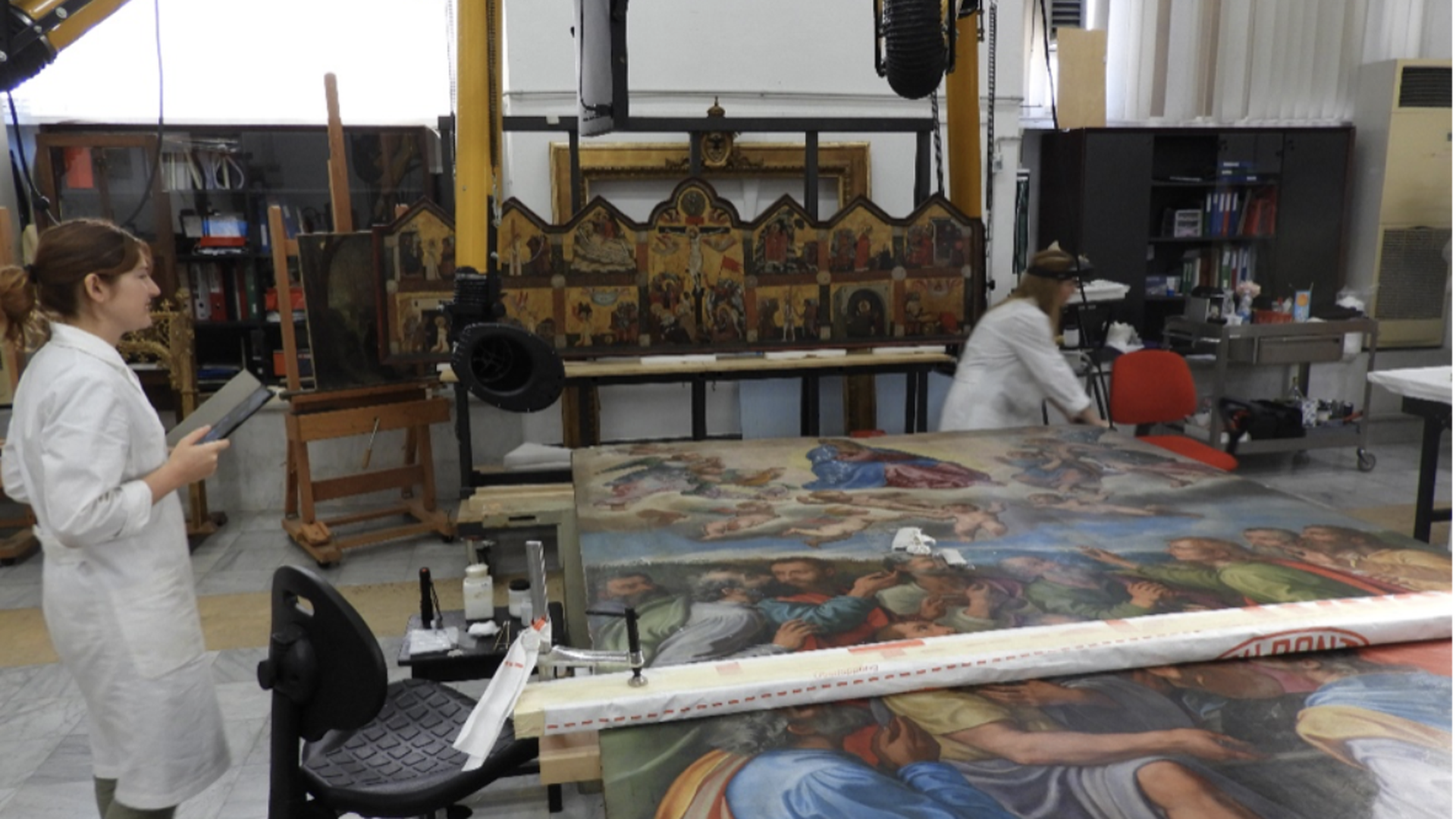
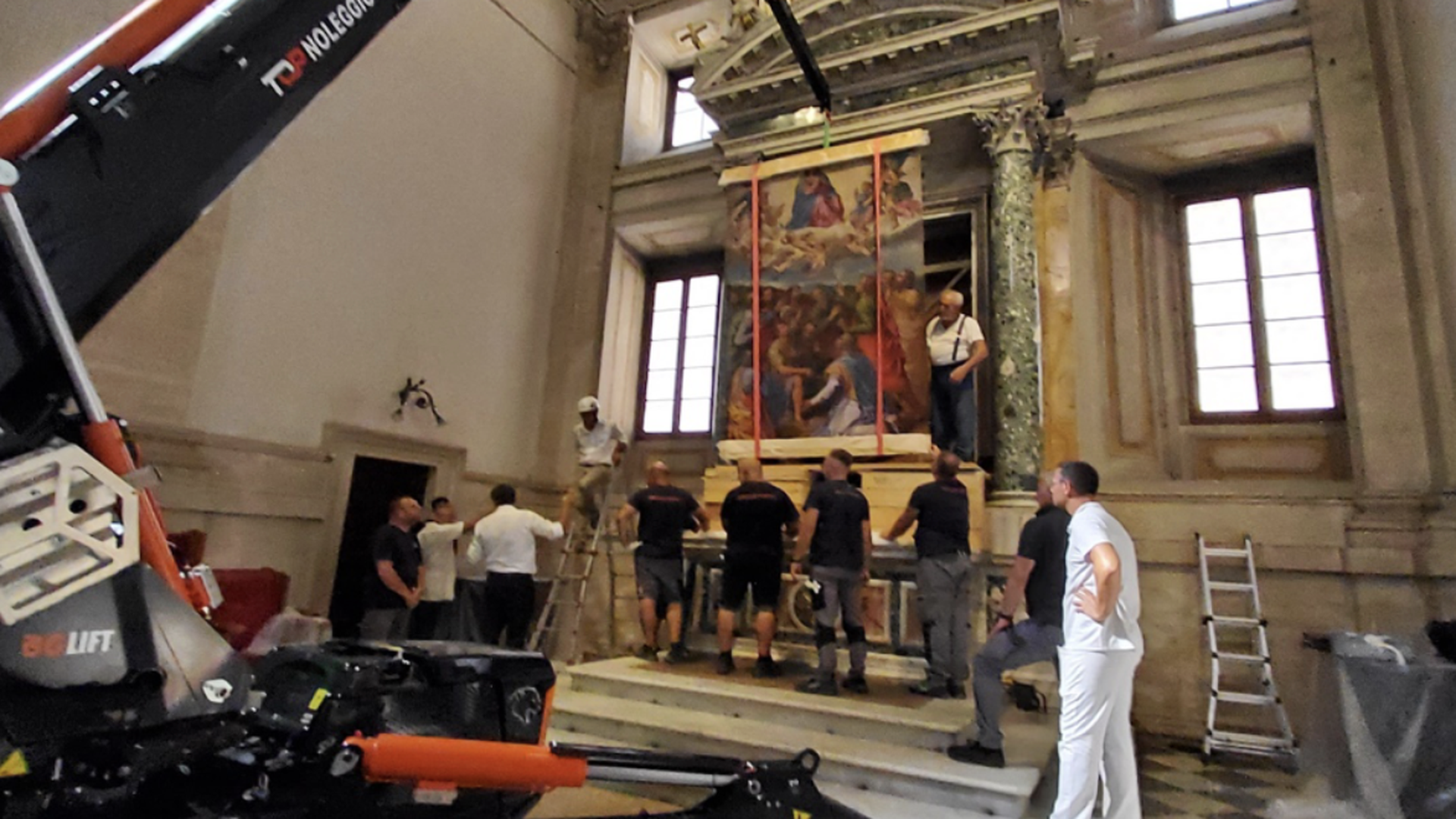
At the resumption of activities, the panel was taken to the laboratory, where the restoration and consolidation project was initiated, which included the following operations
- Reconnaissance and study of the support structure and evaluation of the functionality of the wood movement containment system
- Consolidation of the pictorial film
- Aesthetic revision of the pictorial surface: removal of greasy dust deposits, plastering, and pictorial reintegration of the consolidated and repaired areas
- Revision of the final varnishing of the entire painted surface
- Modification of the support structure to restore the functionality of the system
- Transportation and relocation of the work to its place of origin
The first operation carried out on arrival at the Vatican was the partial removal of the support structure, which couldn't control the movement of the wood, underlying the conservation problems of the pictorial layers.
The panel, thus freed from the constraints of the metal structure, was left in storage for some time to allow the wooden support to settle, a period that extended beyond the original schedule due to the closure.
Assumption of the Virgin at The Basilica of St. Mary Major - Restoration Update
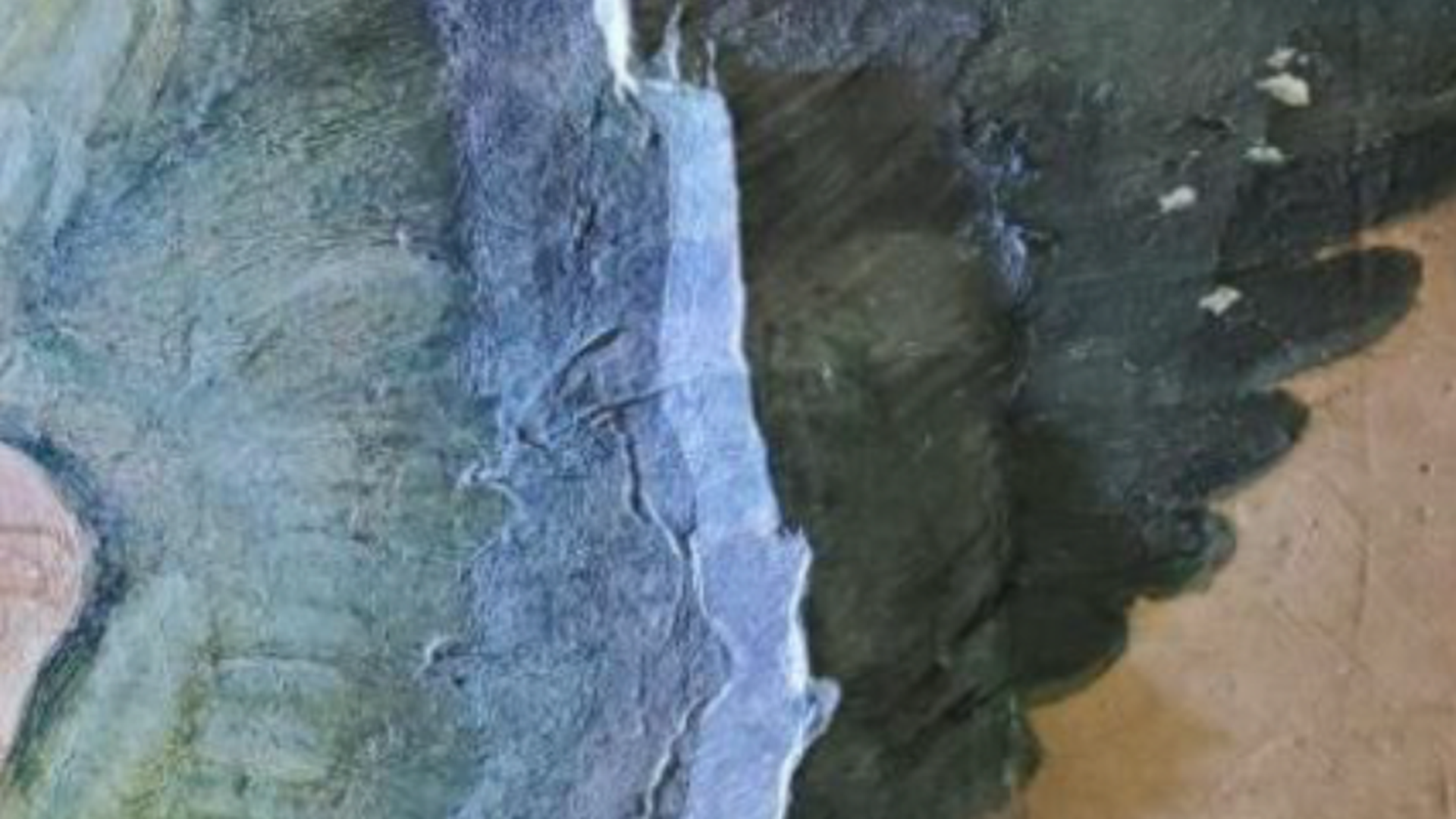
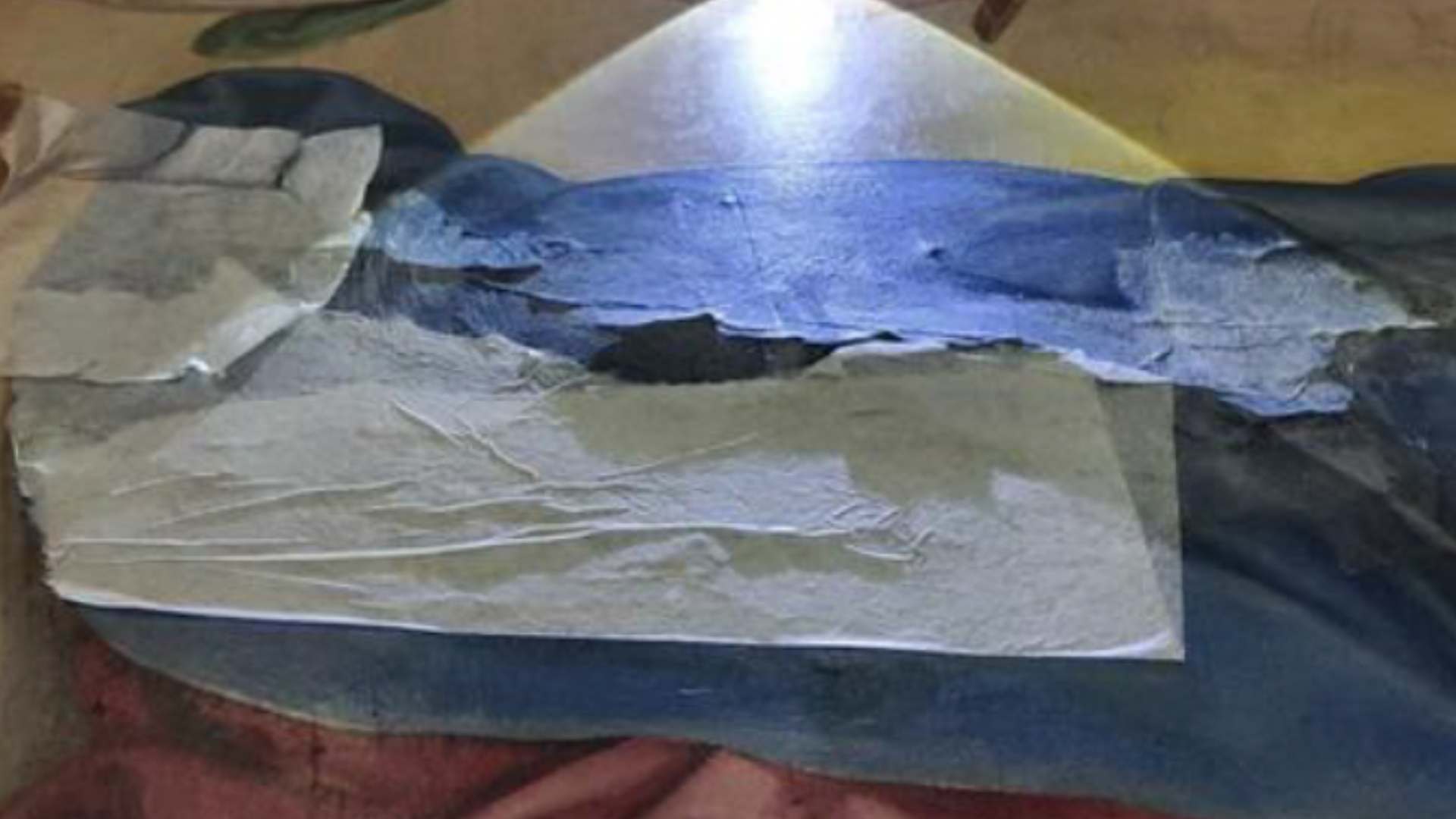
Between 2000 and 2001, following an initial emergency protection and veiling intervention carried out in 1994, the painting was carefully restored in the Vatican Museums' Painting Restoration Laboratory by restorers Giovanni Cecchini, Javier Camacho Barbasan, Marcello Mattarocci, and Massimo Alesi.
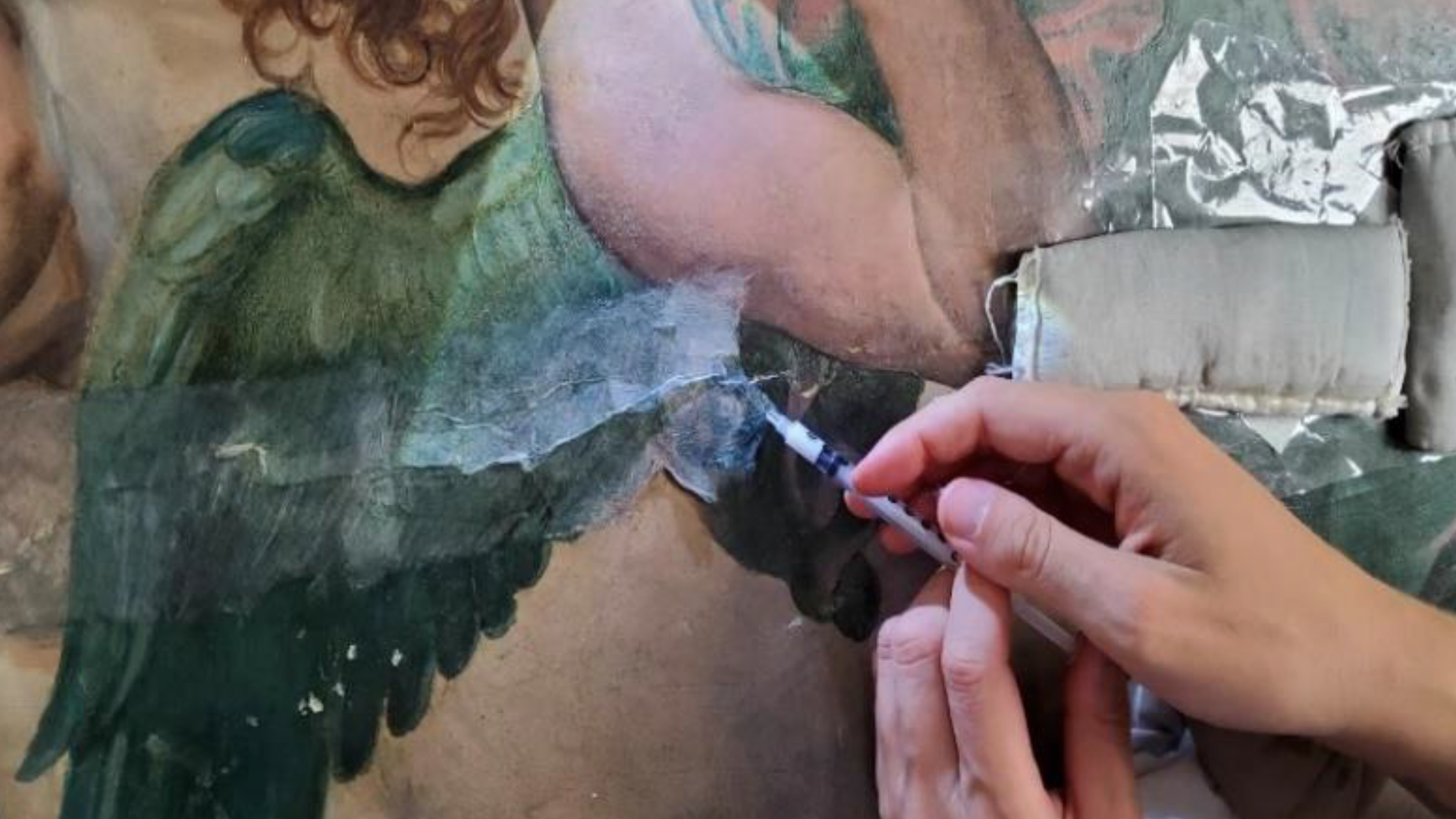
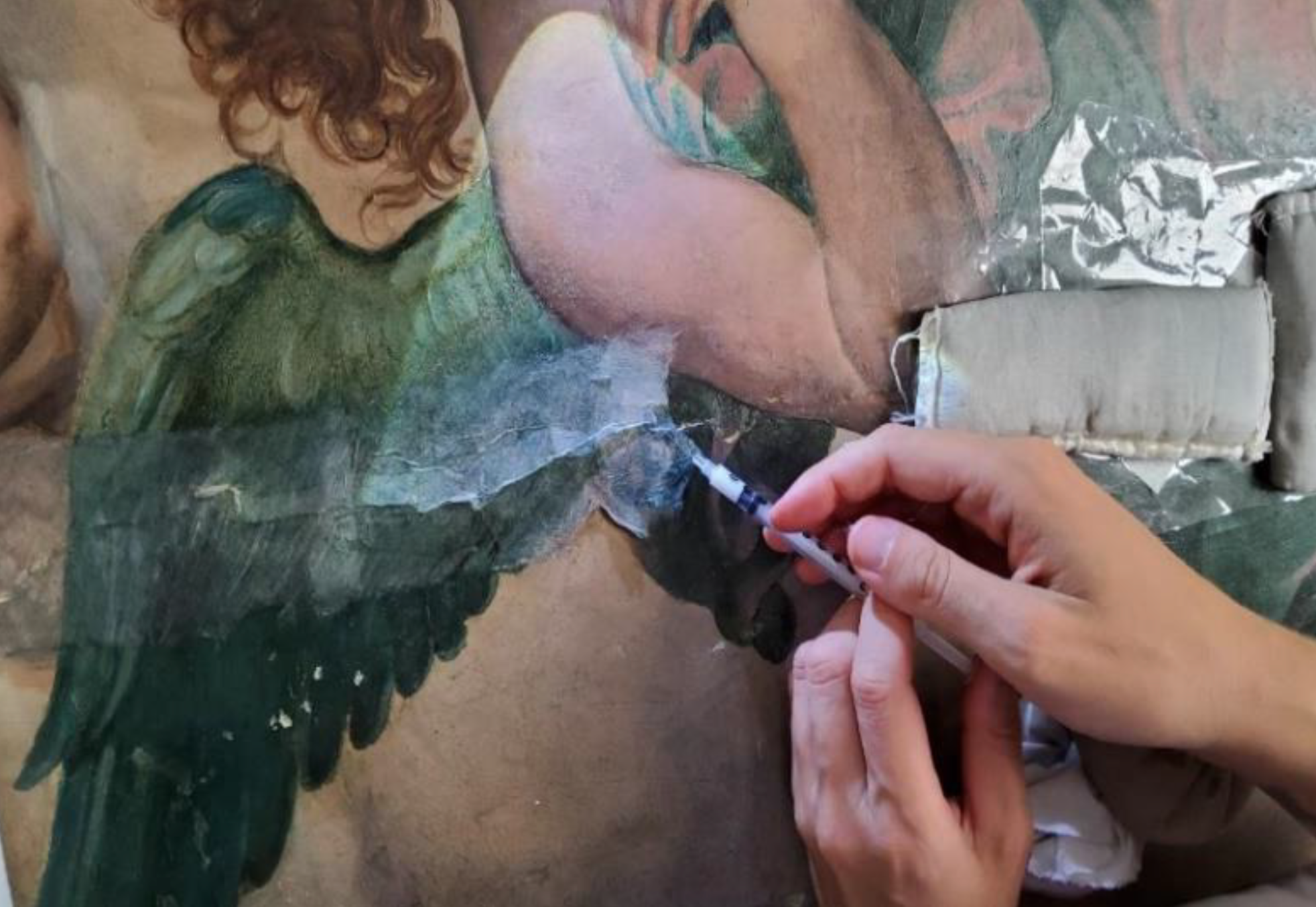
The main problem found in the painting was the presence of severe lifts and gaps formed due to the lack of adhesion between the preparation layer and the wooden support. The primary cause of this state of preservation was the poor quality of the wood used to make the panel. The restorers performed an in-depth study of the movements of the support, which led, at the same time as the consolidation operations of the pictorial film, to the design and construction of a metal structure to control the movements of the support.
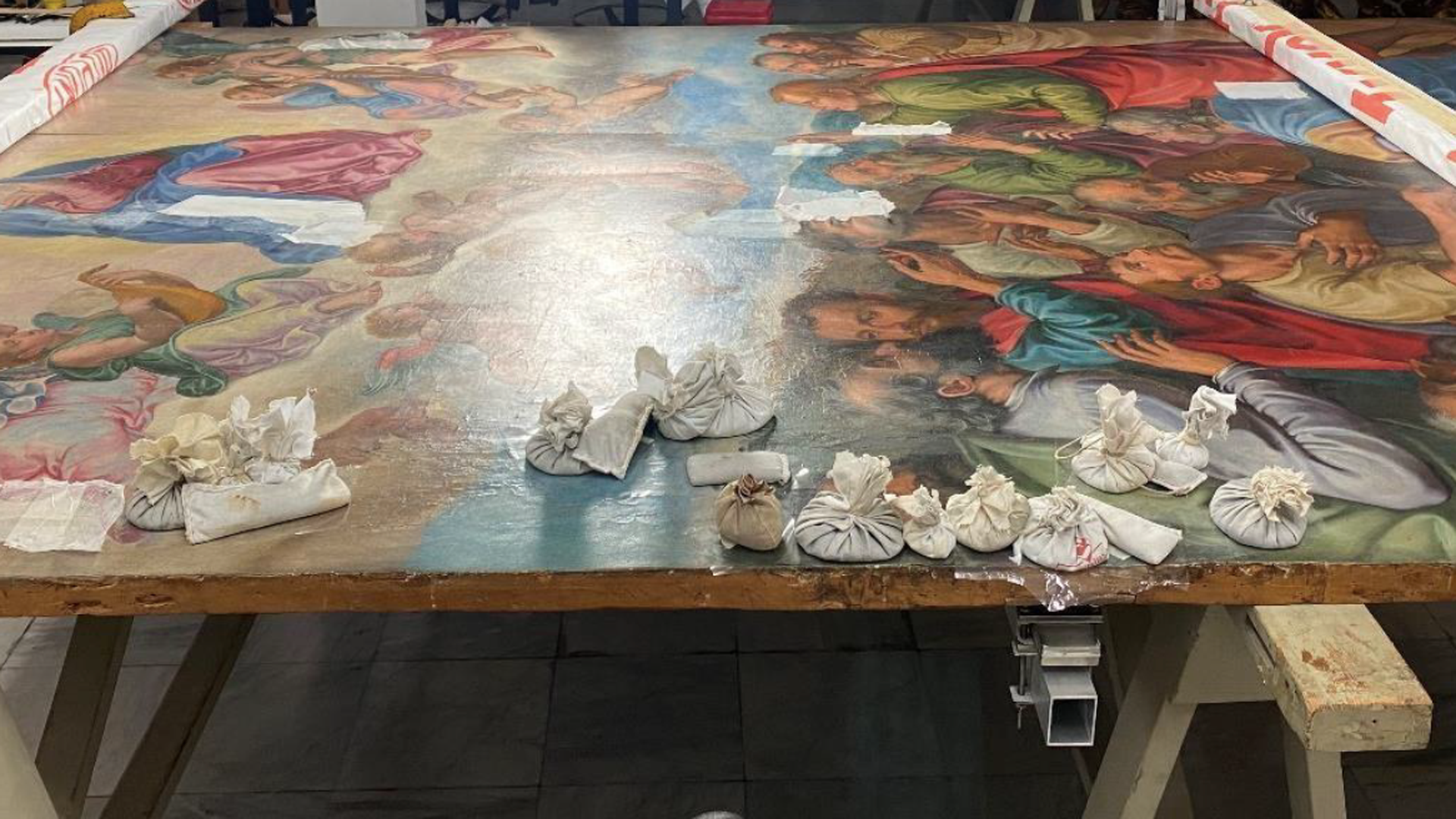
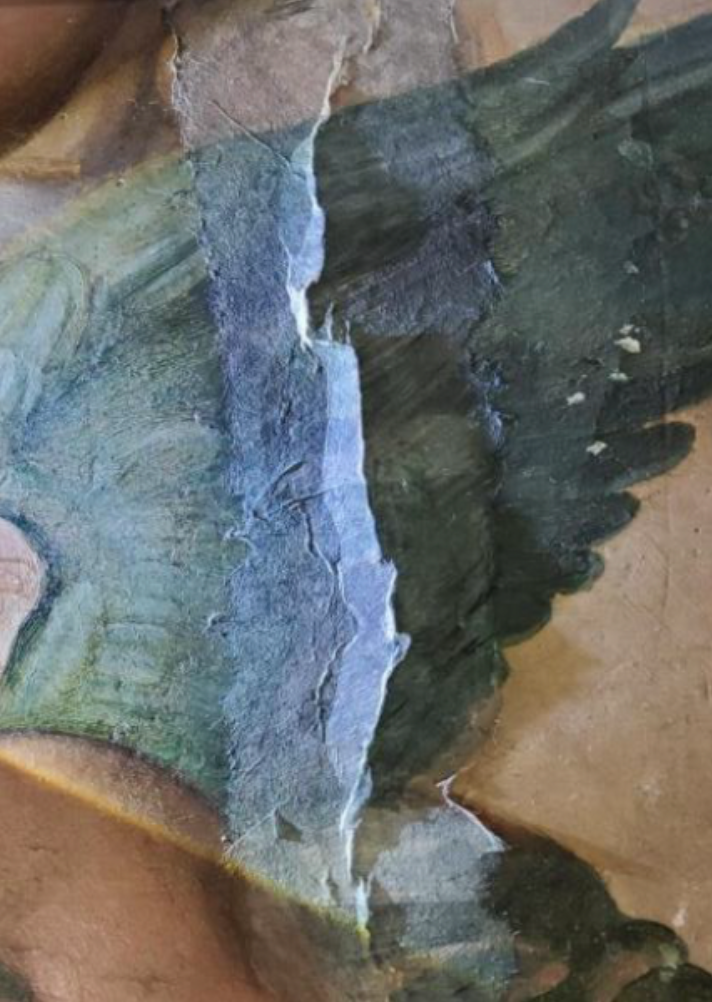
After almost twenty years, an examination of the painting in 2019 revealed problems comparable to those discussed in the last restoration. A grazing light view showed the presence of very pronounced "curtain" type lifts.
Most of these were concentrated on the Virgin's mantle and along the left edge of the painting. A comparison with the graphic documentation of the state of preservation before the 2000 restoration showed that some of the lifts were contiguous with and corresponding to the areas where previous restoration had been done. In contrast, the lifts in the upper part of the right and left angles and the line between the landscape and the sky were in areas that had not previously manifested degradation.
The work was also affected by altered retouches with thick accumulations of greasy dust.
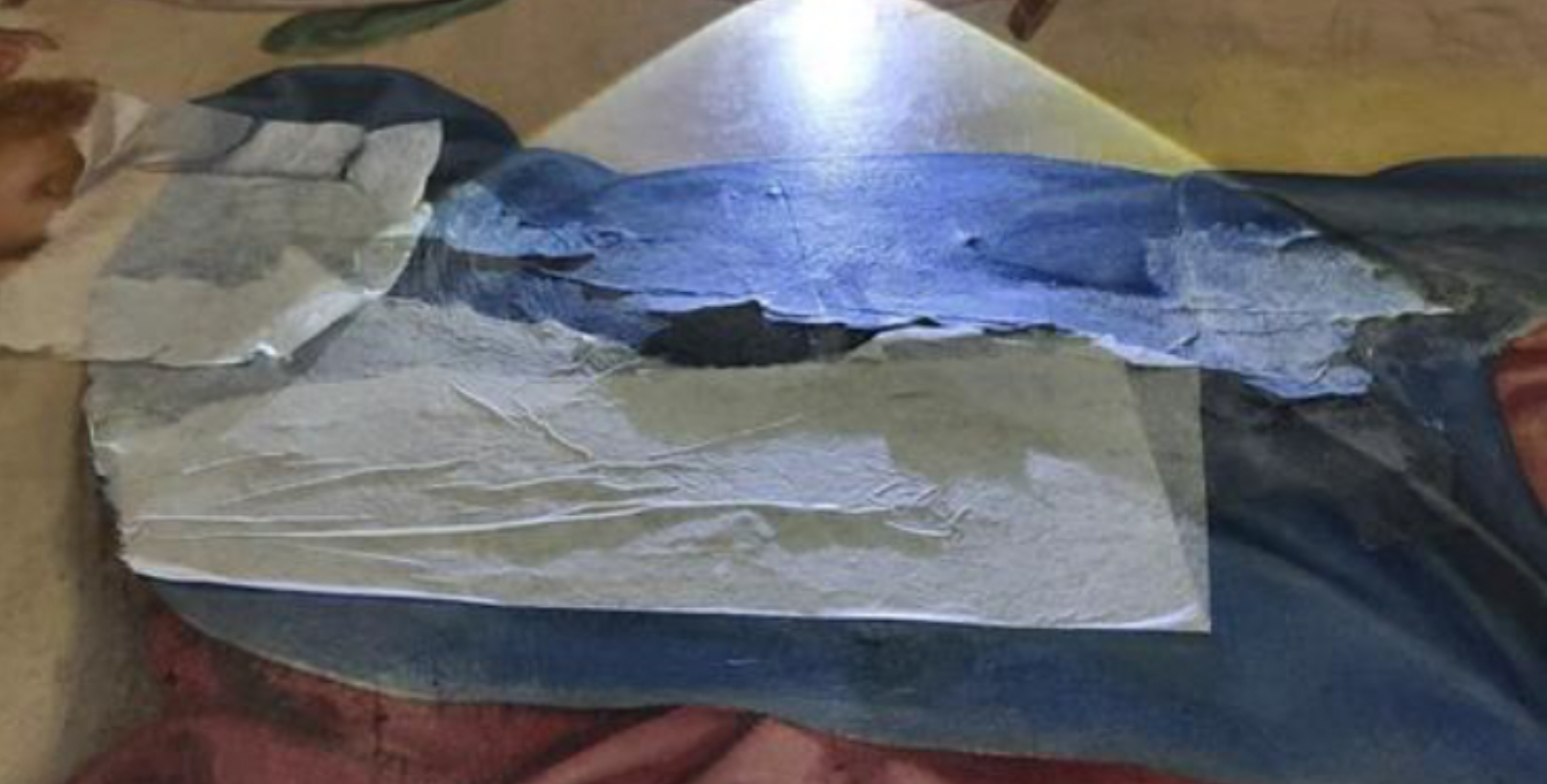
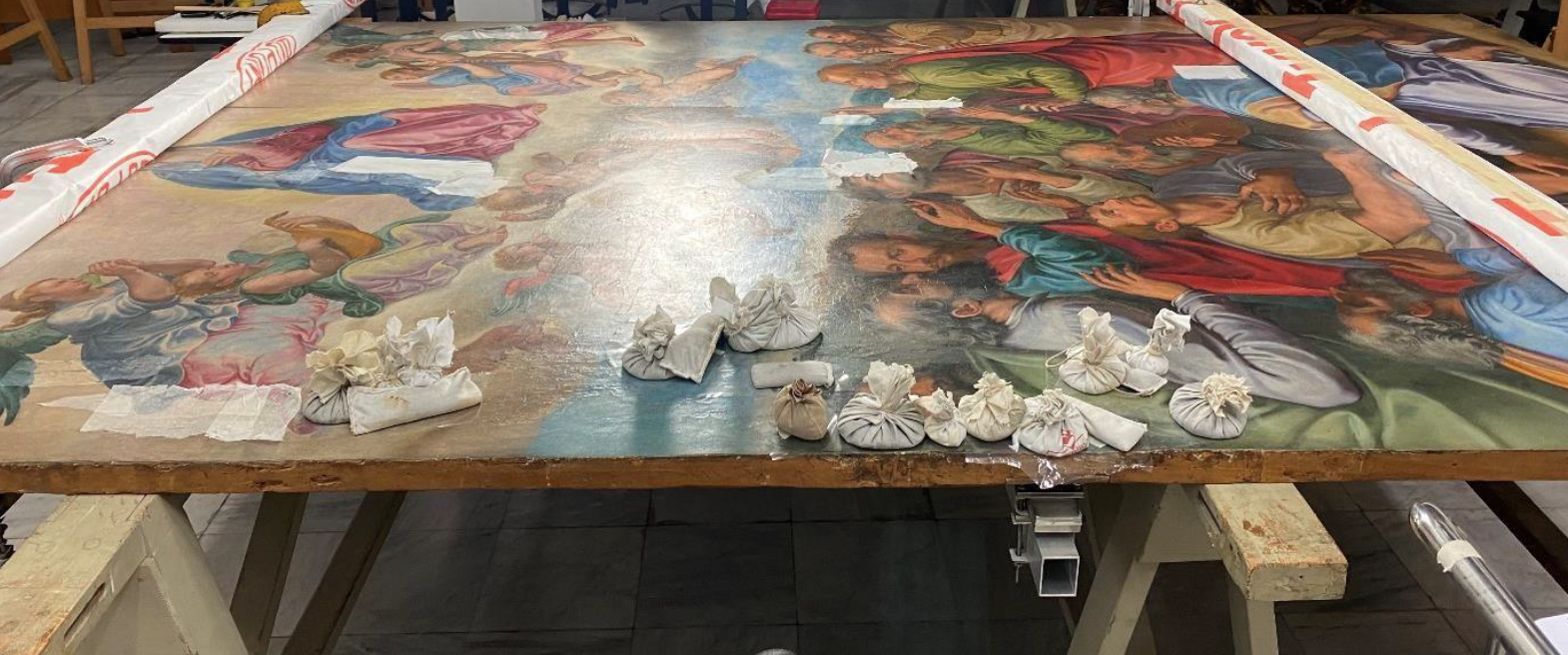
Before moving it to the Vatican Museums' Painting and Wood Restoration Laboratory and with the painting still on the wall, the restorers protected the areas affected by the detachments with an emergency veiling with Japanese paper and Klucel (5%) to secure the unstable areas of the painting and prevent any loss of the paint film. After injecting the consolidant, the restorers lowered the lifts by exerting light pressure with a double-leaf spatula, interposing a sheet of Melinex. To ensure proper adhesion of the paint film lifts and restore the original flatness, during the adhesive drying phase, the treated areas were left under the action of localized weights, again interposing a sheet of Melinex.

Assumption of the Virgin at The Basilica of St. Mary Major
Details
Adopted by: The Ohio Chapter
Patrons: The Sam J. Frankino Foundation
Inventory: n/a
Artist: Girolamo Siciolante da Sermoneta
Date: 1570-1573
Classification: Painting
Materials: Oil on wood
Dimensions: 298 x 195 x 4 cm
Department: XV-XVI Century Art
Laboratory: Painting & Wood
Wishbook year: 2023
Description
MEDIUM PRIORITY PROJECT
The large altarpiece by Girolamo Siciolante (Sermoneta 1521 - Roma 1575) of the Assumption of the Virgin, painted around 1570-1573, is part of the decoration on the chapel designed by Michelangelo for Cardinal Guido Ascanio Sforza of Santa Fiora, nephew of Pope Paul III. This major work is Siciolante’s last phase, influenced by Buonarroti’s late style. It is essential to mention Giovanni Baglione’s Nine Churches (1639) and Lives (1642), the first to describe “the chapel of the Sforza noblemen with a façade, pilasters, and frontispiece of broken travertines, beautifully designed by Michelangelo Buonarroti Fiorentino”. It is also worth mentioning the work of Girolamo da Siciolante’s altar, “the painted Virgin assumed with the Apostles”.
TOTAL COST: € 61.639,16 ($ 60,246.11)
Restoration Procedures
-
Wood support structure: survey the complex metal support structure applied in 2001 and evaluate the functionality of the wood movement containment system
-
Implementation of the modifications, to be decided
-
Pictorial film: adhesion of the numerous lifts
-
Removal of Japanese paper glazing
-
Light cleaning, plastering, reintegration, and balancing of the final paint job
Media
Assumption of the Virgin at The Basilica of St. Mary Major
Restorations Update: Assumption of the Virgin at The Basilica of St. Mary Major - Final Restoration Report
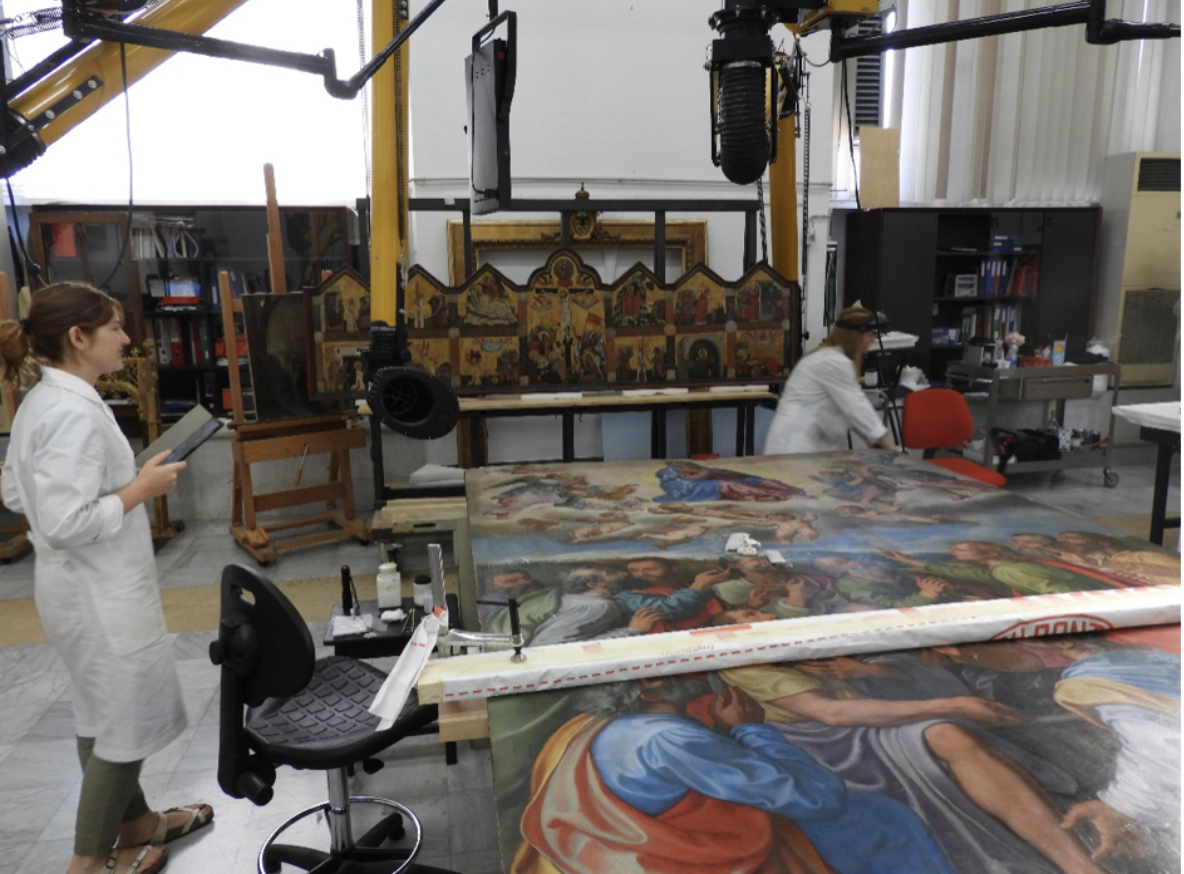
At the resumption of activities, the panel was taken to the laboratory, where the restoration and consolidation project was initiated, which included the following operations
- Reconnaissance and study of the support structure and evaluation of the functionality of the wood movement containment system
- Consolidation of the pictorial film
- Aesthetic revision of the pictorial surface: removal of greasy dust deposits, plastering, and pictorial reintegration of the consolidated and repaired areas
- Revision of the final varnishing of the entire painted surface
- Modification of the support structure to restore the functionality of the system
- Transportation and relocation of the work to its place of origin
The first operation carried out on arrival at the Vatican was the partial removal of the support structure, which couldn't control the movement of the wood, underlying the conservation problems of the pictorial layers.
The panel, thus freed from the constraints of the metal structure, was left in storage for some time to allow the wooden support to settle, a period that extended beyond the original schedule due to the closure.
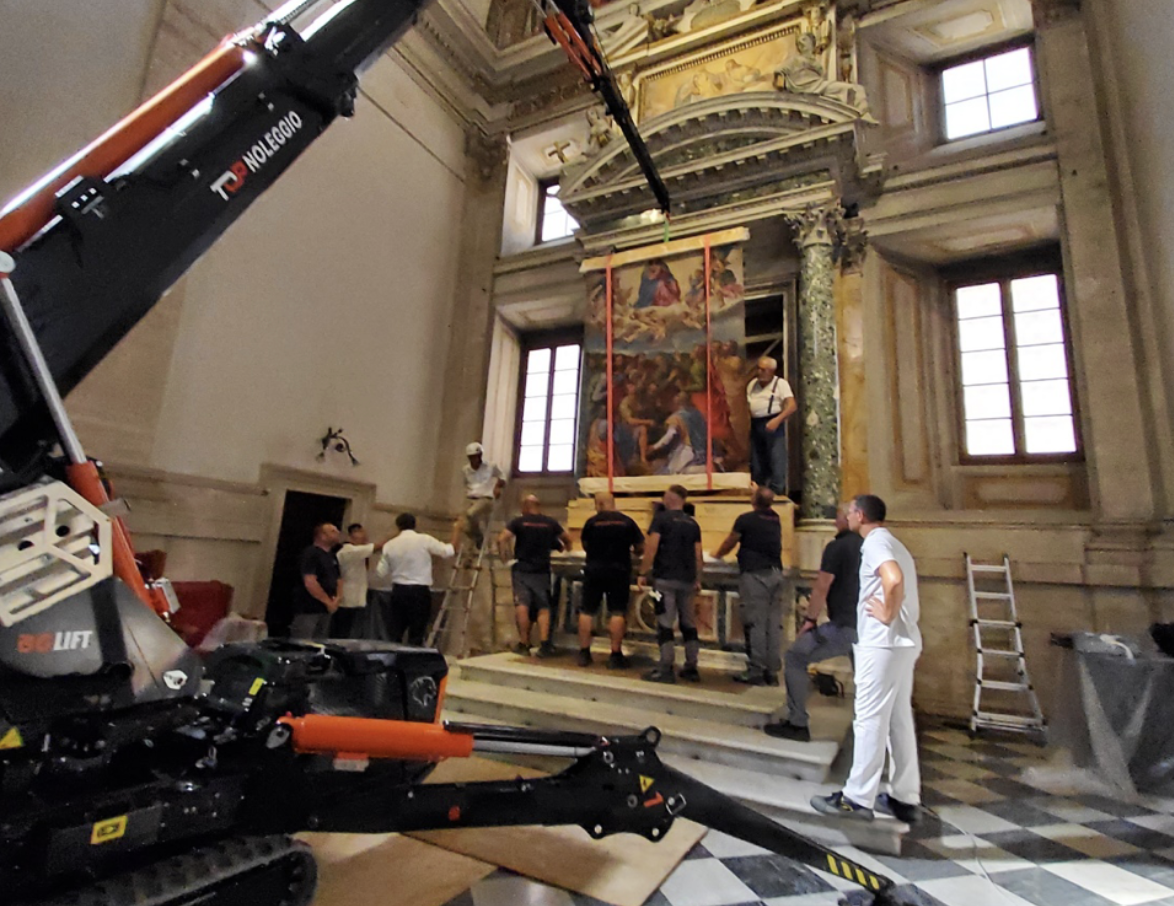
Restorations Update: Assumption of the Virgin at The Basilica of St. Mary Major - Restoration Update
Between 2000 and 2001, following an initial emergency protection and veiling intervention carried out in 1994, the painting was carefully restored in the Vatican Museums' Painting Restoration Laboratory by restorers Giovanni Cecchini, Javier Camacho Barbasan, Marcello Mattarocci, and Massimo Alesi.
The main problem found in the painting was the presence of severe lifts and gaps formed due to the lack of adhesion between the preparation layer and the wooden support. The primary cause of this state of preservation was the poor quality of the wood used to make the panel. The restorers performed an in-depth study of the movements of the support, which led, at the same time as the consolidation operations of the pictorial film, to the design and construction of a metal structure to control the movements of the support.
After almost twenty years, an examination of the painting in 2019 revealed problems comparable to those discussed in the last restoration. A grazing light view showed the presence of very pronounced "curtain" type lifts.
Most of these were concentrated on the Virgin's mantle and along the left edge of the painting. A comparison with the graphic documentation of the state of preservation before the 2000 restoration showed that some of the lifts were contiguous with and corresponding to the areas where previous restoration had been done. In contrast, the lifts in the upper part of the right and left angles and the line between the landscape and the sky were in areas that had not previously manifested degradation.
The work was also affected by altered retouches with thick accumulations of greasy dust.
Before moving it to the Vatican Museums' Painting and Wood Restoration Laboratory and with the painting still on the wall, the restorers protected the areas affected by the detachments with an emergency veiling with Japanese paper and Klucel (5%) to secure the unstable areas of the painting and prevent any loss of the paint film. After injecting the consolidant, the restorers lowered the lifts by exerting light pressure with a double-leaf spatula, interposing a sheet of Melinex. To ensure proper adhesion of the paint film lifts and restore the original flatness, during the adhesive drying phase, the treated areas were left under the action of localized weights, again interposing a sheet of Melinex.
© 2026 Patrons of the Arts
in the Vatican Museums
Vatican Museums V-00120,
Vatican City State (Europe)
+39 0669864499