

Description
NORMAL PRIORITY PROJECT
20 INTERNS PER SEMESTER
Total Cost: € 360.000,00 ($ 423,576.00)
These Internships are open to young people who have completed their studies and submit an application as instructed on the dedicated website page: https://www.museivaticani.va/content/museivaticani/en/musei-del-papa/stage.html
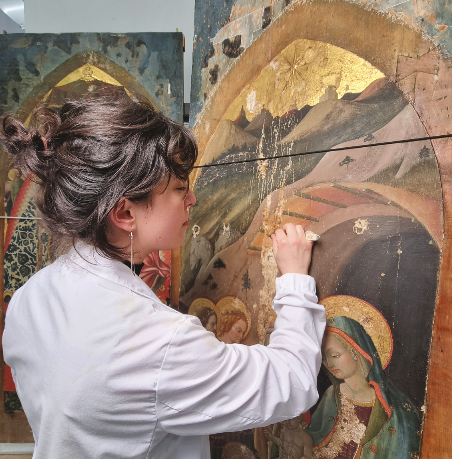
The Internship Commission, appointed by the Director of the Museums, evaluates applications based on the criteria established by the relevant regulations and selects potential supervisors to oversee groups of up to 20 interns starting each semester (April–September or October–March). Placements cover a wide range of activities performed by the Directorate of Museums and Cultural Heritage. Most candidates are assigned to the Arts or Archaeology Departments, the Restoration Laboratories, Scientific and Technology department, and Communications. However, over time, some profiles have also been included in specific areas such as reception, the bookshop, administration, personnel affairs, and the images laboratory. When accepting an intern, the tutor must outline a general project plan with assigned activities tailored to the specific needs and profile of the selected candidate. Specific projects aimed at writing a bachelor’s or doctoral thesis may also be accepted, provided they are relevant to current activities. During the semester, interns participate in joint and dedicated activities designed to expand their knowledge and improve their understanding of how different professions collaborate to achieve the same museum goal. Specifically:
- Starting day: interns will begin the semester on the same day when they will meet the management, tutors, colleagues, and interns from the previous semester and learn about their individual activities.
- Internal courses: planning joint lessons dedicated to museums and their activities. The initial meetings focus on understanding the organizational structure, the history and formation of the collections and the history and methodology of the Restoration Laboratories. Subsequently, lessons on various professional fields are offered by the respective managers, such as the Press Office, Educational Activities, Specific Services, and Departments.
- Guided tours: conducted by colleagues in specific areas, (e.g., Restoration Laboratories), and in places of particular interest that are not usually open to the public (e.g., specific departments, internal exhibitions, and the Necropolis of the Via Triumphalis). These tours always aim to educate participants about the activities and methodologies applied by professionals in the field, such as restorers, art historians, and archaeologists. Other visits involve interns in special programs, such as multisensory tours of the museum or the Vatican Gardens for visitors with disabilities.
- Fresco workshop: all interns participate in a fresco workshop, led by a decorator from the Painting Restoration Laboratory, in which they produce a portion of a fresco on a subject of their choice during a day, starting with the application of mortar on a mobile support and ending with the dusting and application of colors. This activity brings not only future restorers and art historians but other museum related disciplines, into direct contact with one of the most ancient and well- known artistic processes and the material itself, involving everyone in a hands-on approach to the actual artwork technique.
- Assessment: The Internship Committee assesses the progress of the internship twice, meeting with the interns mid-semester and at the end of the semester to discuss activities, critical issues, and suggestions. The Committee members are always available to the interns for any needs that may arise during the internship.
- End of internship day: coinciding with the start of the next semester, interns produce a presentation on their work to those present (colleagues and new interns), often in the form of a free exhibition or a jointly produced video. On this occasion, interns receive a certificate of participation and, if necessary, a letter of reference for future employment.
As detailed above, the joint activities aim to raise trainees’ awareness of the different professions involved in large-scale team efforts. Furthermore, forming the group enables discussion and the exchange of information, which is made even more open thanks to the participants’ international backgrounds. The presence of interns in various work areas has also proven particularly important, as they bring a sense of novelty and enthusiasm, as well as new knowledge and a desire for further study. Consequently, interns are not merely seen as labor, but also as a source of inspiration for the staff with whom they work. Their competent involvement has also often led to their participation, with their names, in scientific publications by the Vatican Museums. Their subsequent professional careers benefit from their experience at the Vatican Museums, as attested by tutors with whom interns often remain in contact. In some cases, participation in the internship has also been a relevant factor in the selection of permanent Vatican Museums staff, once the minimum regulatory period of 18 months from the end of the relevant semester has elapsed.

Vatican Museums Internship - Years 2027, 2028, 2029
Details
Wishbook year: 2026
Description
NORMAL PRIORITY PROJECT
20 INTERNS PER SEMESTER
Total Cost: € 360.000,00 ($ 423,576.00)
These Internships are open to young people who have completed their studies and submit an application as instructed on the dedicated website page: https://www.museivaticani.va/content/museivaticani/en/musei-del-papa/stage.html
The Internship Commission, appointed by the Director of the Museums, evaluates applications based on the criteria established by the relevant regulations and selects potential supervisors to oversee groups of up to 20 interns starting each semester (April–September or October–March). Placements cover a wide range of activities performed by the Directorate of Museums and Cultural Heritage. Most candidates are assigned to the Arts or Archaeology Departments, the Restoration Laboratories, Scientific and Technology department, and Communications. However, over time, some profiles have also been included in specific areas such as reception, the bookshop, administration, personnel affairs, and the images laboratory. When accepting an intern, the tutor must outline a general project plan with assigned activities tailored to the specific needs and profile of the selected candidate. Specific projects aimed at writing a bachelor’s or doctoral thesis may also be accepted, provided they are relevant to current activities. During the semester, interns participate in joint and dedicated activities designed to expand their knowledge and improve their understanding of how different professions collaborate to achieve the same museum goal. Specifically:
- Starting day: interns will begin the semester on the same day when they will meet the management, tutors, colleagues, and interns from the previous semester and learn about their individual activities.
- Internal courses: planning joint lessons dedicated to museums and their activities. The initial meetings focus on understanding the organizational structure, the history and formation of the collections and the history and methodology of the Restoration Laboratories. Subsequently, lessons on various professional fields are offered by the respective managers, such as the Press Office, Educational Activities, Specific Services, and Departments.
- Guided tours: conducted by colleagues in specific areas, (e.g., Restoration Laboratories), and in places of particular interest that are not usually open to the public (e.g., specific departments, internal exhibitions, and the Necropolis of the Via Triumphalis). These tours always aim to educate participants about the activities and methodologies applied by professionals in the field, such as restorers, art historians, and archaeologists. Other visits involve interns in special programs, such as multisensory tours of the museum or the Vatican Gardens for visitors with disabilities.
- Fresco workshop: all interns participate in a fresco workshop, led by a decorator from the Painting Restoration Laboratory, in which they produce a portion of a fresco on a subject of their choice during a day, starting with the application of mortar on a mobile support and ending with the dusting and application of colors. This activity brings not only future restorers and art historians but other museum related disciplines, into direct contact with one of the most ancient and well- known artistic processes and the material itself, involving everyone in a hands-on approach to the actual artwork technique.
- Assessment: The Internship Committee assesses the progress of the internship twice, meeting with the interns mid-semester and at the end of the semester to discuss activities, critical issues, and suggestions. The Committee members are always available to the interns for any needs that may arise during the internship.
- End of internship day: coinciding with the start of the next semester, interns produce a presentation on their work to those present (colleagues and new interns), often in the form of a free exhibition or a jointly produced video. On this occasion, interns receive a certificate of participation and, if necessary, a letter of reference for future employment.
As detailed above, the joint activities aim to raise trainees’ awareness of the different professions involved in large-scale team efforts. Furthermore, forming the group enables discussion and the exchange of information, which is made even more open thanks to the participants’ international backgrounds. The presence of interns in various work areas has also proven particularly important, as they bring a sense of novelty and enthusiasm, as well as new knowledge and a desire for further study. Consequently, interns are not merely seen as labor, but also as a source of inspiration for the staff with whom they work. Their competent involvement has also often led to their participation, with their names, in scientific publications by the Vatican Museums. Their subsequent professional careers benefit from their experience at the Vatican Museums, as attested by tutors with whom interns often remain in contact. In some cases, participation in the internship has also been a relevant factor in the selection of permanent Vatican Museums staff, once the minimum regulatory period of 18 months from the end of the relevant semester has elapsed.
© 2026 Patrons of the Arts
in the Vatican Museums
Vatican Museums V-00120,
Vatican City State (Europe)
+39 0669864499