

Statue of Flora
Artist: Unknown
Classification: Statue
Materials: Marble
Adopted By: The California Chapter
Description
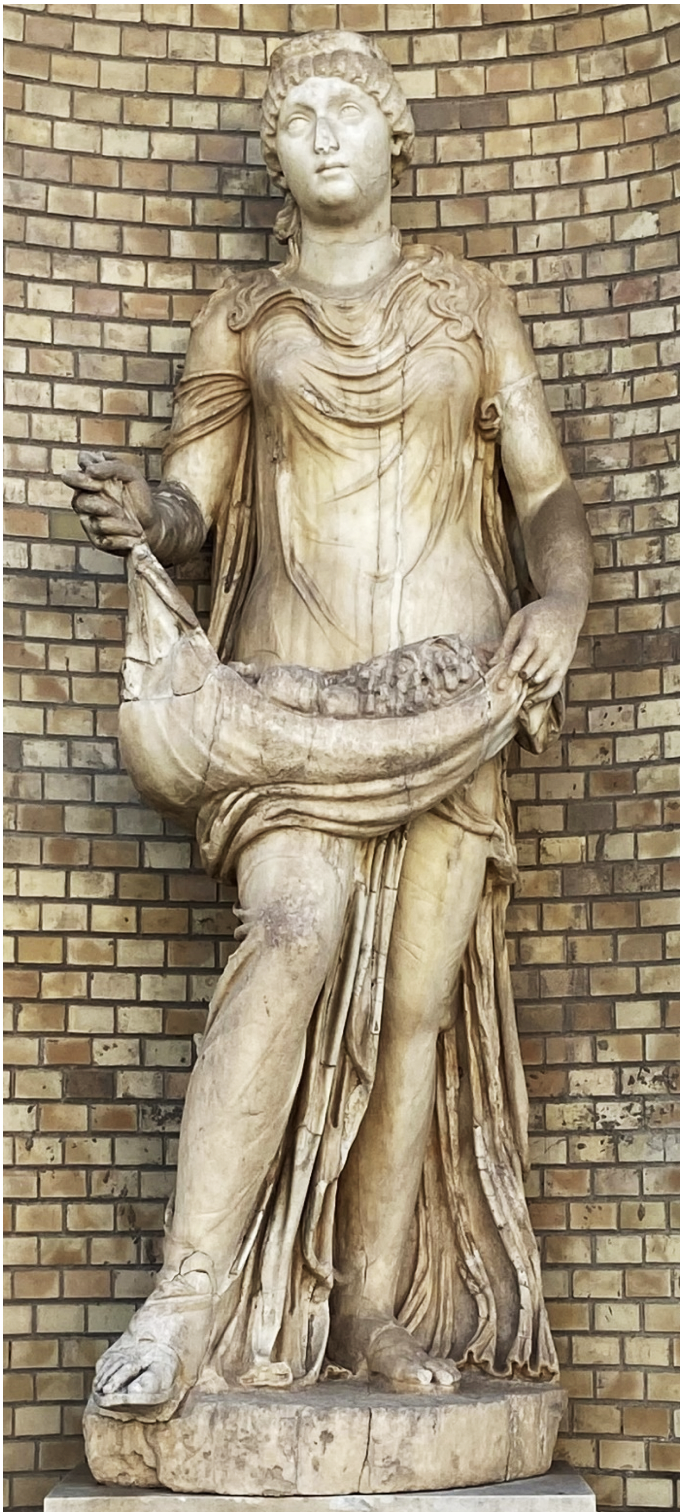
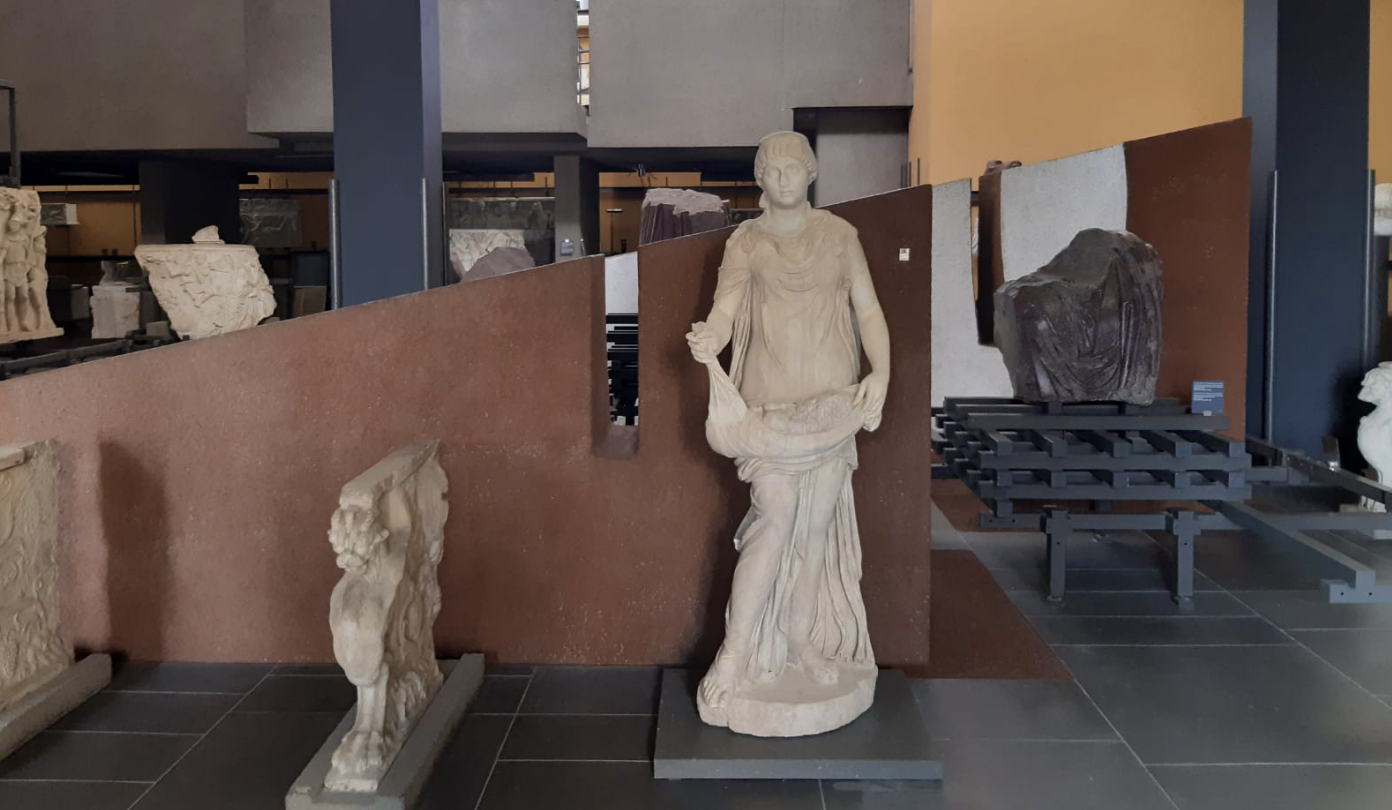
The statue represents Flora or Pomona - the goddess of Nature and Abundance. The statue normally sits on top of the principle drinkable water fountain on the Terrace of the Vatican Pinacoteca (Painting Gallery), one of the most visited places in the Vatican Museums with one of the best views of St. Peter's Basilica.
State of Preservation
The intervention of the Flora statue started because it was in a more precarious condition than the other statues, and it needed urgent intervention. The interventions on the protome and the basin will be carried out next to the fountain and at a specific site. It will be essential to avoid the cold season, which is not as suitable for the adopted methodologies.
Modern open-air exposure for more than a century caused parts of advanced degradation to the Flora statue in different ways. In addition to the ancient and post-ancient restoration, the statue underwent alterations.
The result is a degradation that affects both the surface and the structure. In particular, the main problems that require interventions are:
- Cracks (more or less advanced) provoked by the spontaneous decohesion of the material and levels typical of the marble.
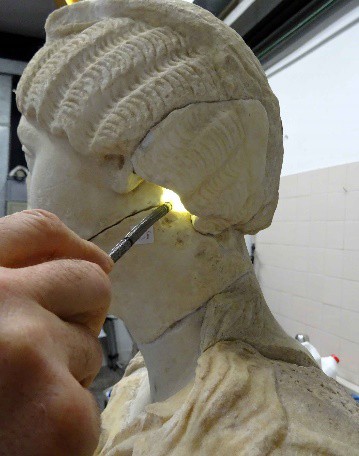
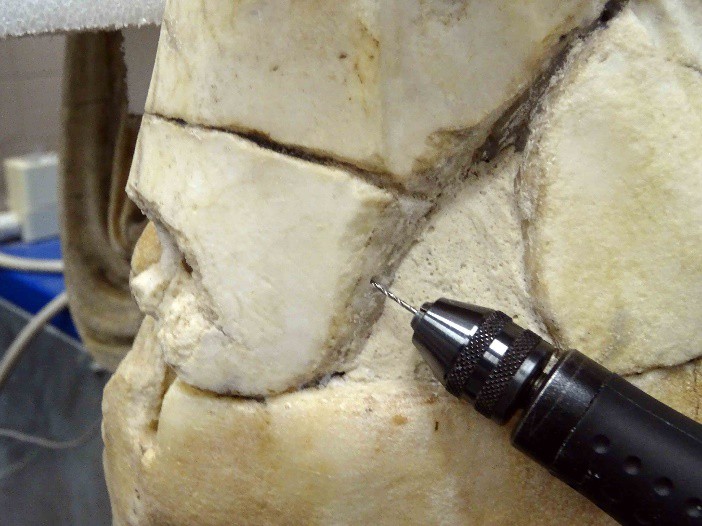
- Special research conducted from historical photos showed that the fissures along the left cheek were already there in the 30s of the XIX century. They seem not to be progressing if they are subject to a stable microclimate
Nonetheless, diagnostic investigations are on the agenda to verify that there are no metallic elements in active expansion.
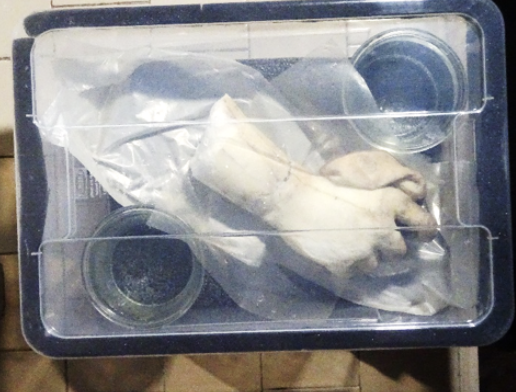
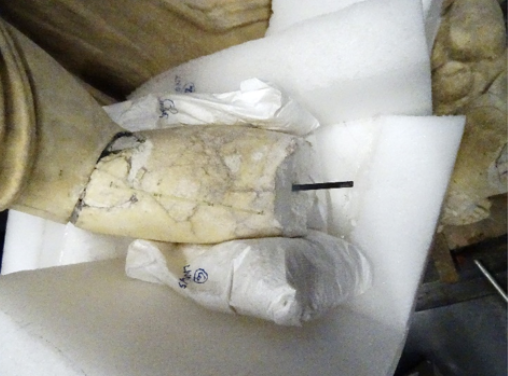
- There is superficial erosion in the most exposed areas and de-cohesion on the right arm, the support of the right hand, and the hair inserts. On the right arm, the phenomenon produced the formation of a superficial crust, raised cracks, and detachments from the forearm. Underneath, the crystalline texture has almost lost its consistency, and the right hand has spontaneously detached from the forearm. Fortunately, this happened when the statue was already protected and provided with temporary support. The operation minimized the damage caused by the detachment.
- There is a phenomenon of chromatic alterations due to internal oxidation of the marble. There are also deposits and infiltration of foreign particles, residues of bio-deteriogenic attacks, and alterations of superimposed artificial substances such as partial patination.
The peculiarity of this restoration, and the urgency, show the complexity. Additionally, it shows how the different problems connect. It is necessary to find particular solutions and operational sequences that do not interfere with each other.
Restoration Procedures
The necessary and preventive diagnostic campaign carried out so far by GRS used the ultraviolet fluorescence filming and analytical sampling for stratigraphic analysis. In addition, a 3D acquisition of the statue in its pre-restoration state was performed to produce a prototype copy to insert in the niche of the fountain that remained empty. The statue will be displayed in the gallery at the end of the restoration. During the cleaning, colorimetric measurements were taken to document the reduction of the chromatic changes. The first operation was to remove the old stucco. This task is very tedious because of the bad hydraulics, in cement or synthetic resin, and separating it from the marble border. This area is more fragile than the face because it is intrinsically decohered. On the less de-cohesive and eroded areas with a considerable deposit, almost all on the back, cleaning was carried out by softening absorbent substances, based on zeolitic clay and cellulose. Certain areas have better-preserved surfaces. For others, there is the need for a more delicate cleaning because they were already clear compared to the rest. Restorers use agar agar-based hard gels and
hot deionized water as a buffer. Most of the surface has been treated with laser equipment, which avoids the use of water on the most delicate areas full of salts. So far, only one device has been used. At the moment, the experimentation of other models of machinery is not excluded, according to the needs that will be encountered. Currently, the method of consolidation treatment of the right arm is being investigated, as well as the choice of the most suitable materials and techniques for its replacement. A temporary modular brace currently guarantees its safety. At the moment, the cleaning is continuing. Restorers are compressing some areas already treated with lasers. They are also investigating the use of bacteria and localized biocidal treatments on melamine complexes of meristematic fungal populations (if confirmed by analysis).
Detail
Inventory N°: 20298
Artist: Unknown
Materials: Marble
Department:
Greek and Roman AntiquitiesCurators:
Dr. Giandomenico Spinolamuseum:
Chiaramonti MuseumLaboratories:
Stone MaterialsStatue of Flora Final Restoration Report
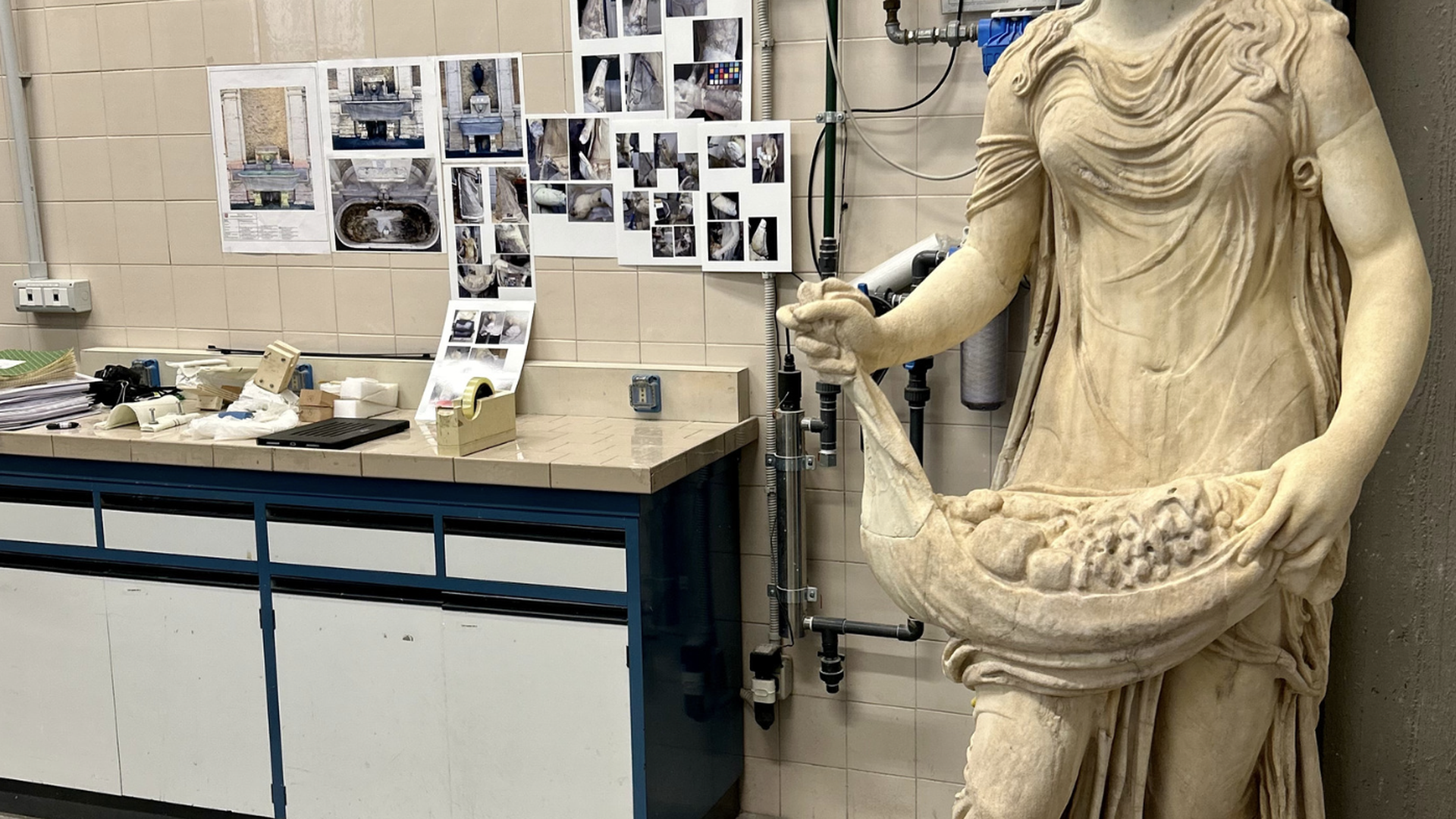
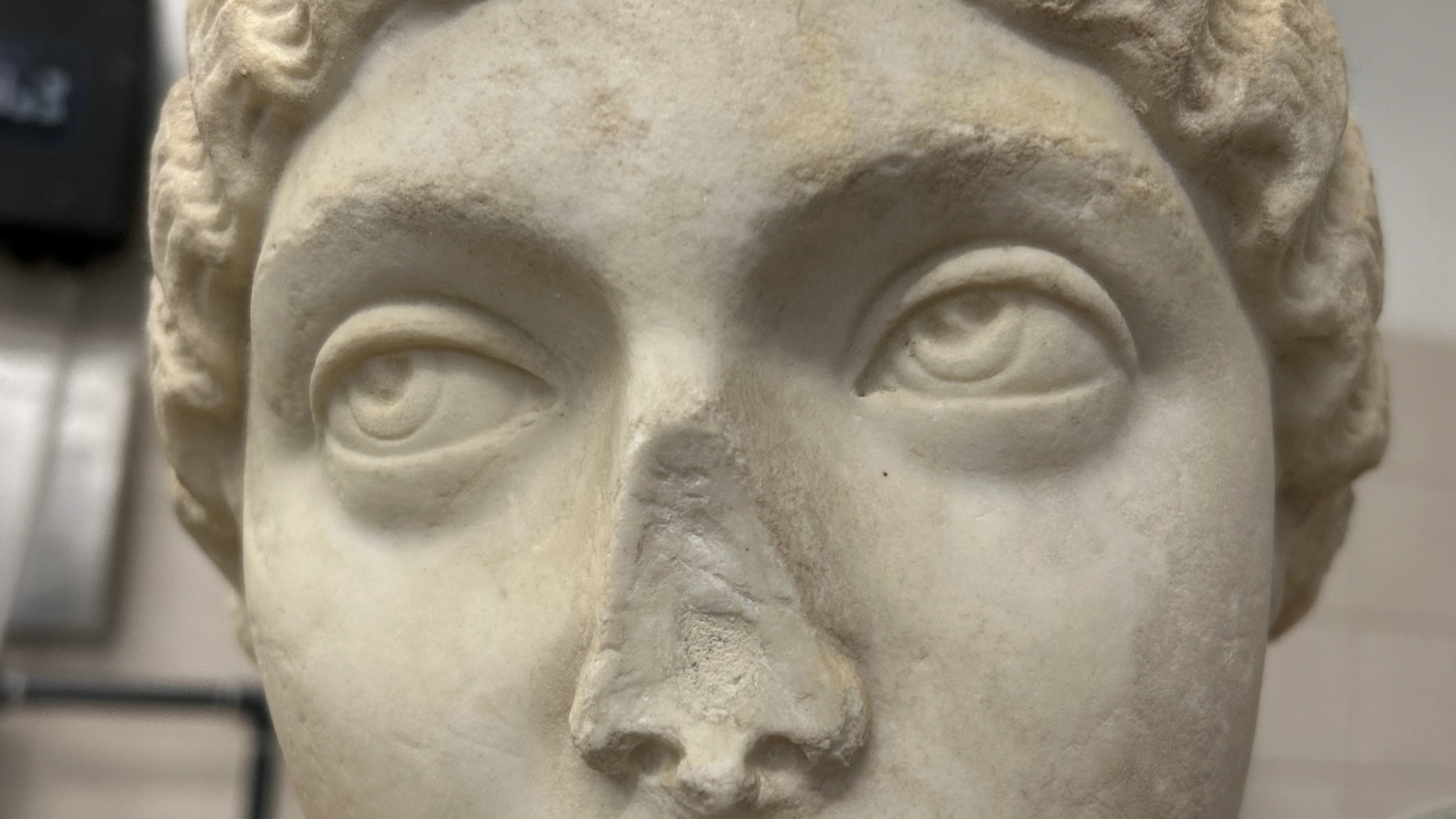
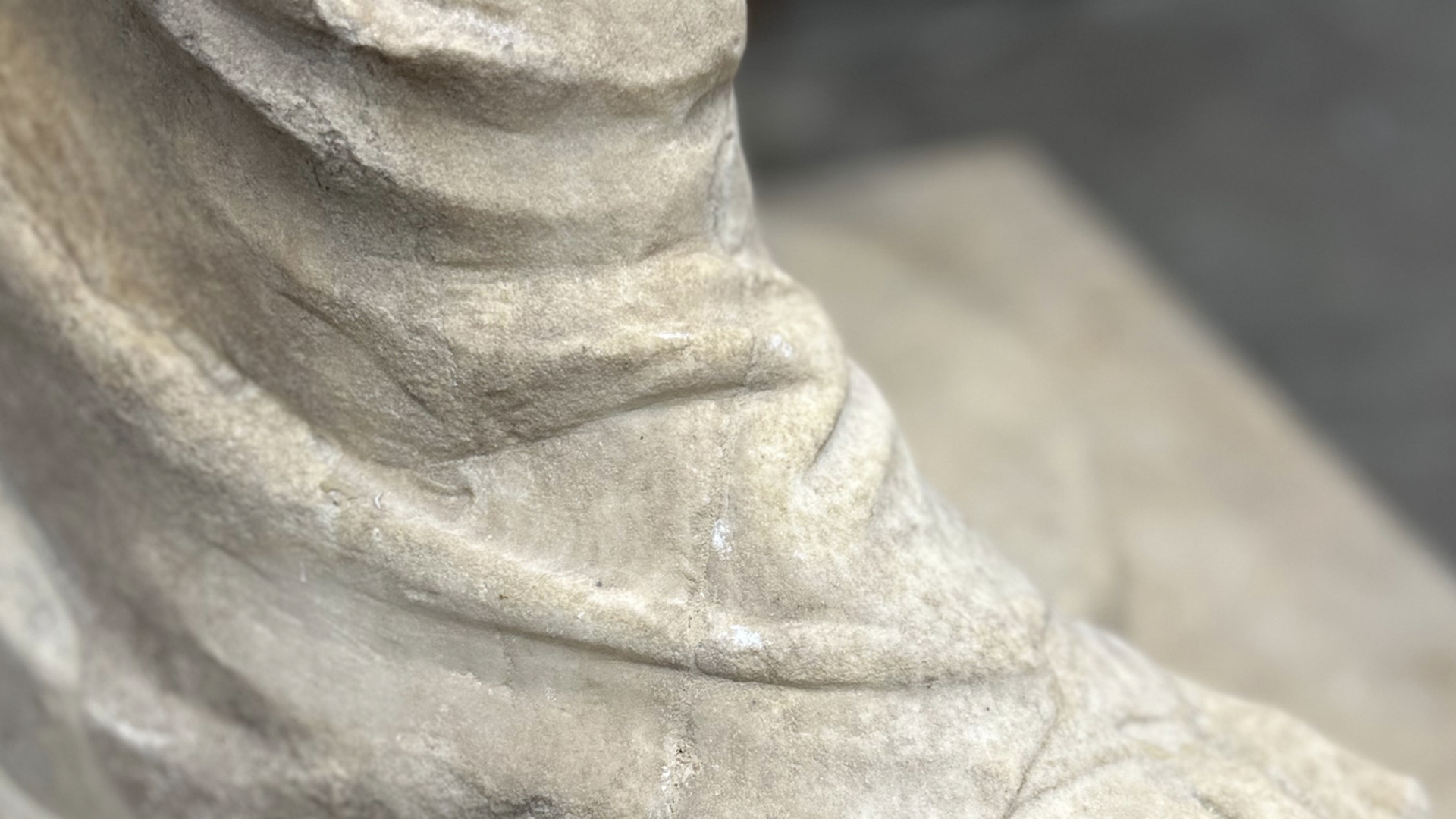
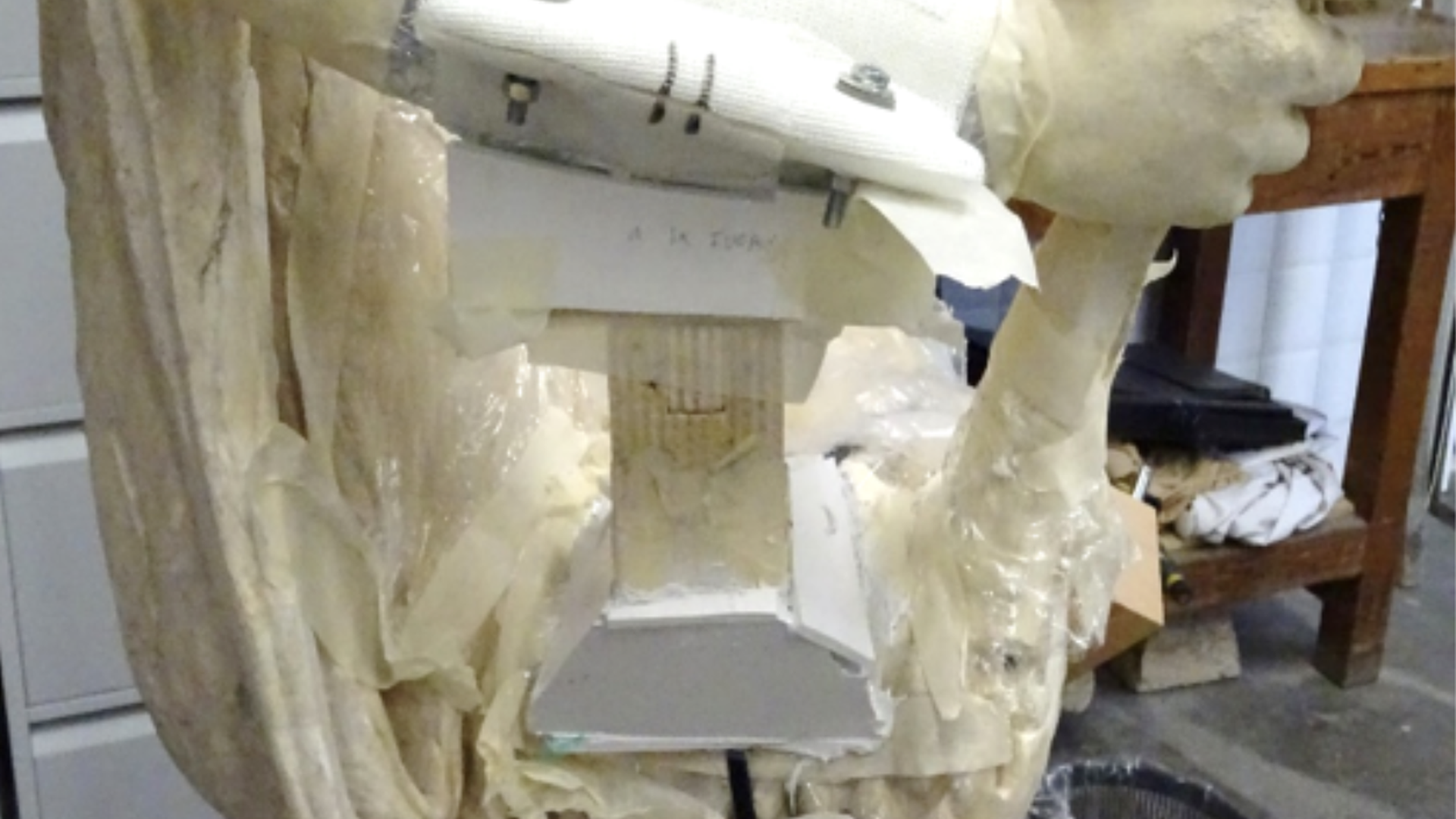
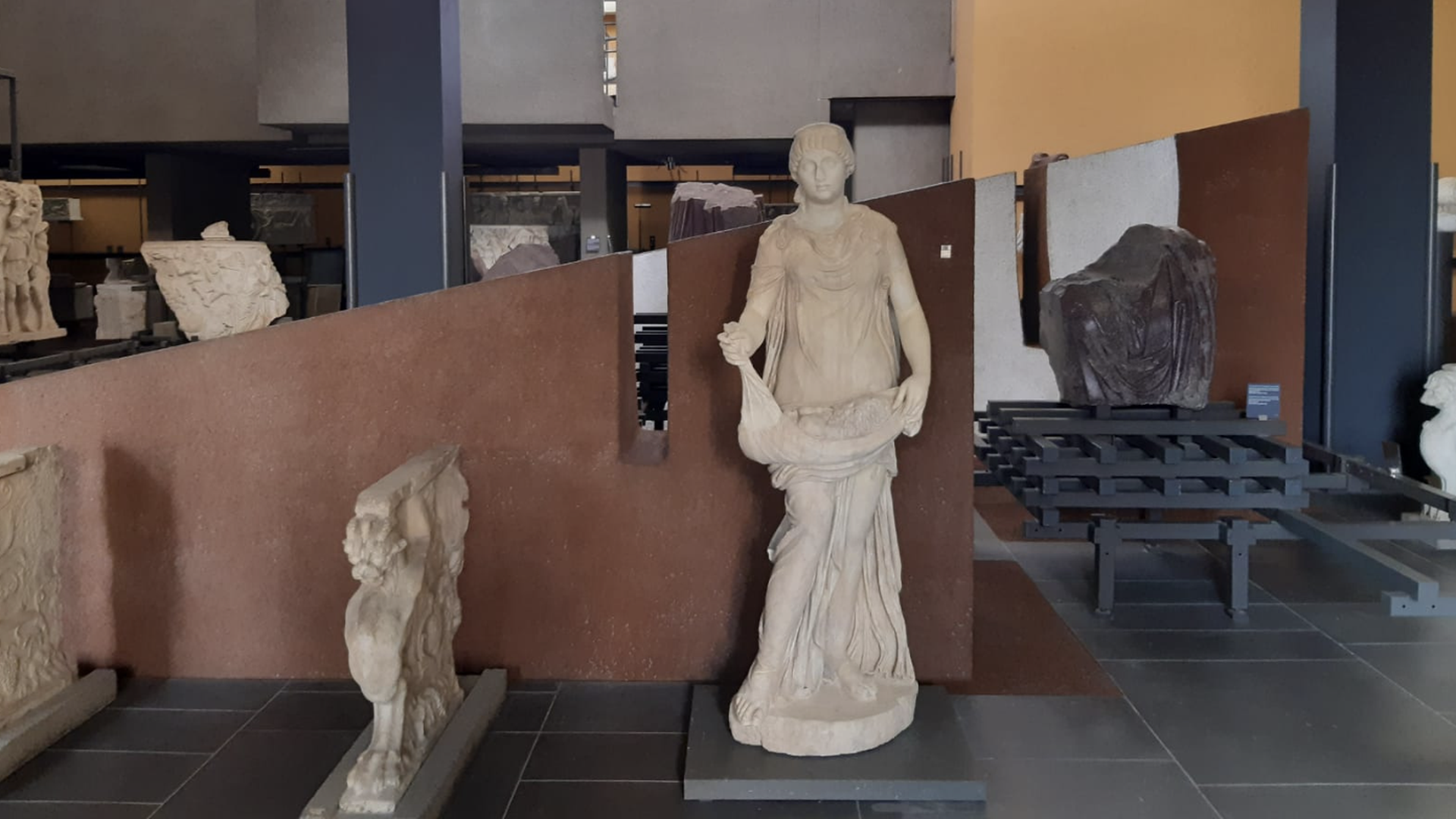
The restorer Stefano Spada completed structural work and plastering on the sculpture, developing valuable innovations for the choice of materials used, design solutions, and the actual technical process steps. The most challenging and delicate phase was the preparation for the final gluing of the right hand.
Because of the delicacy of the right arm, even after the conservation intervention, the restorer created a provisional support and brace sleeve for the arm, which has provided stability for the last movement of the statue from the Stone Materials Restoration Laboratory to the Gregorian Profane Museum.
Restoration Update - Statue of Flora
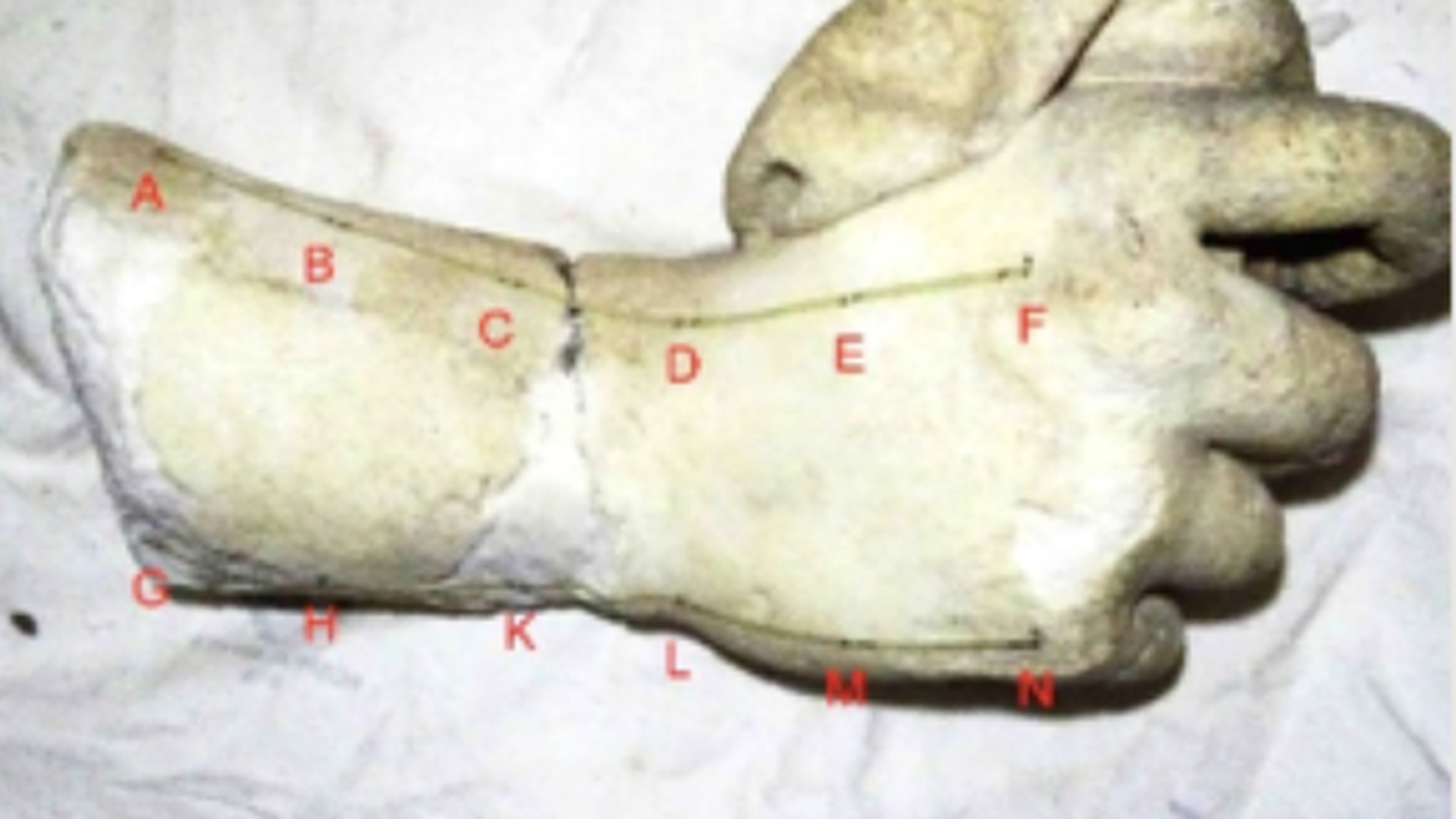
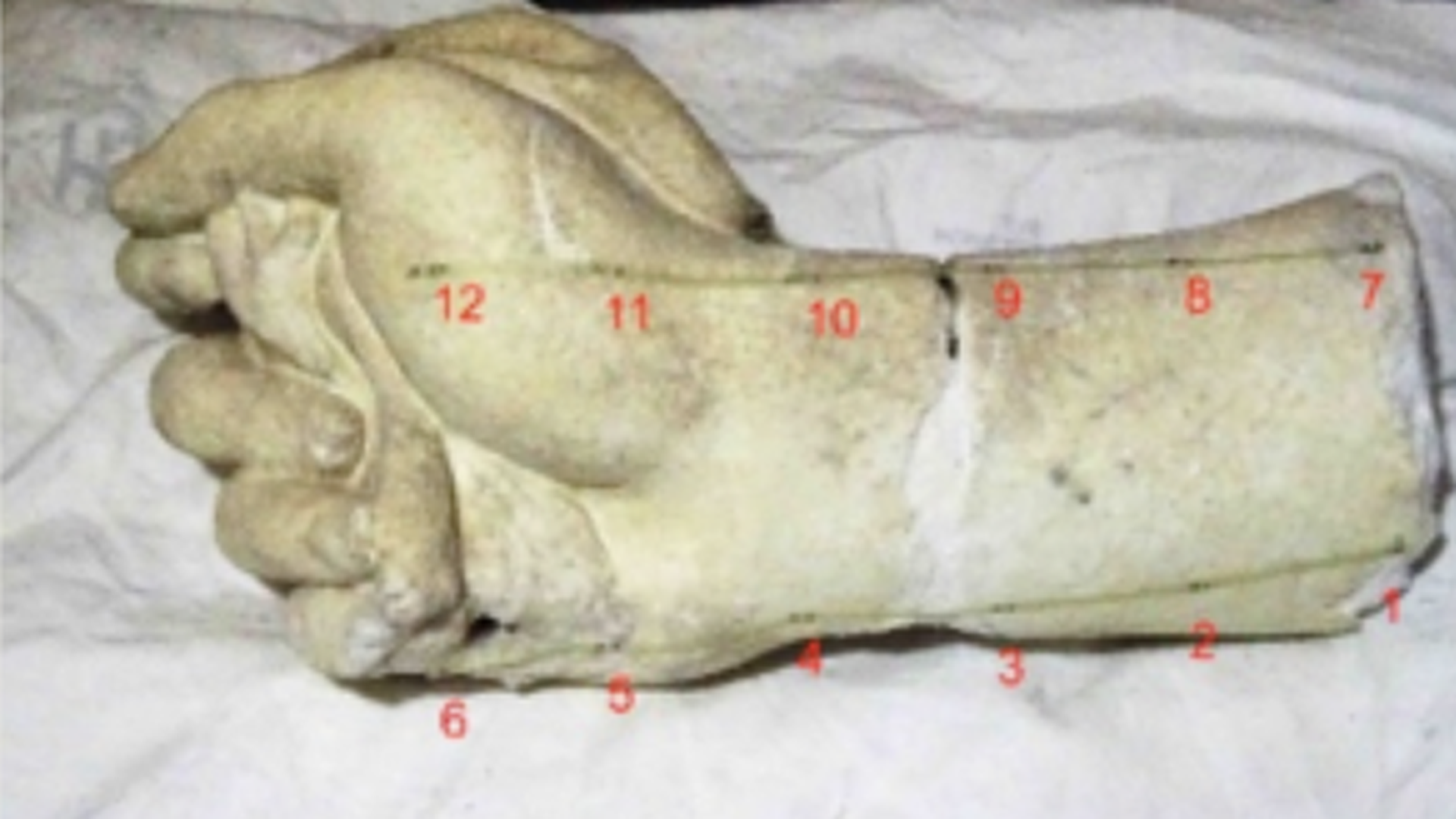

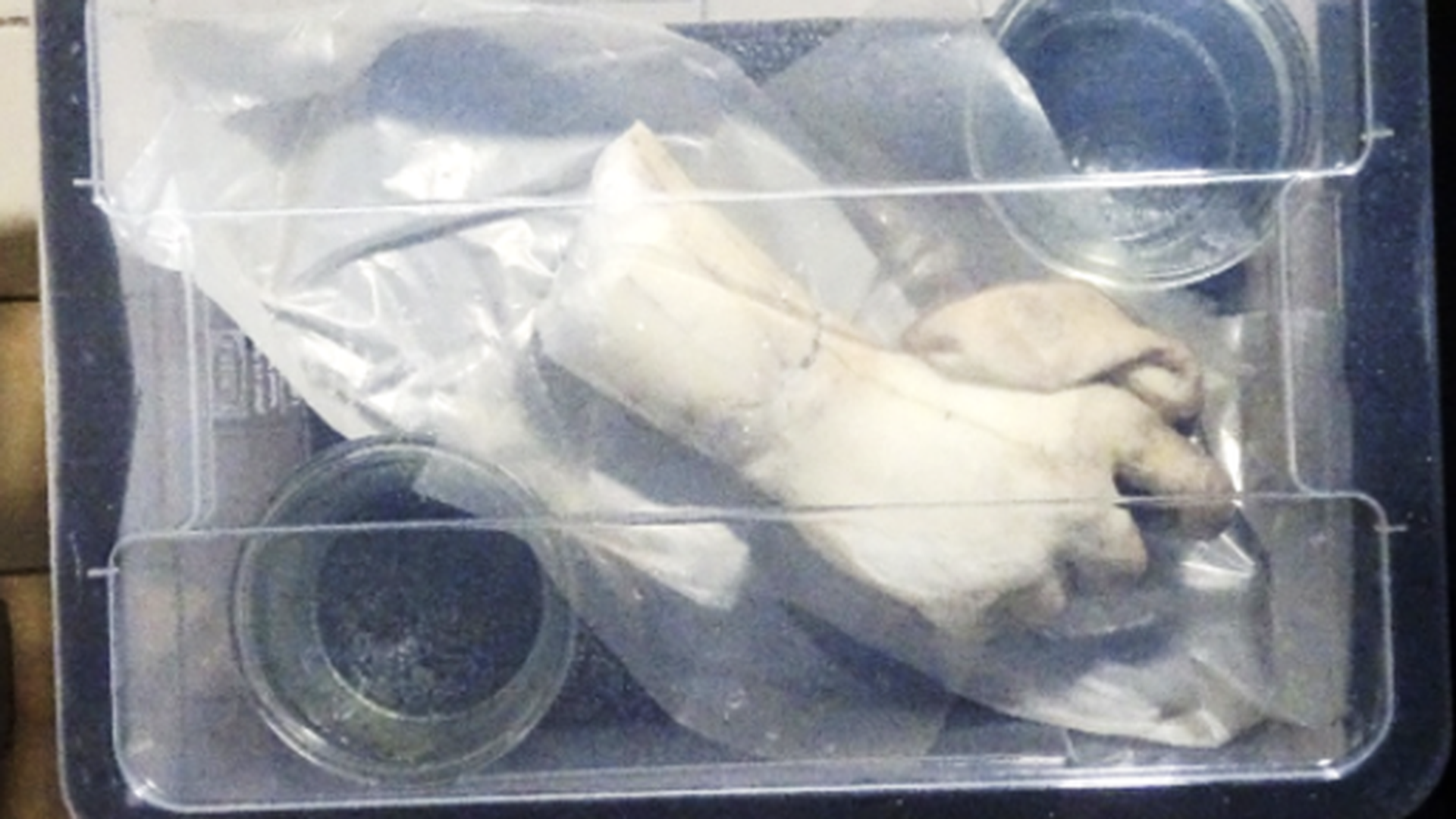
The restoration of Flora has reached its last stage, and the consolidation of the right arm of this ancient statue, detached in March during the restoration works, is being undertaken.
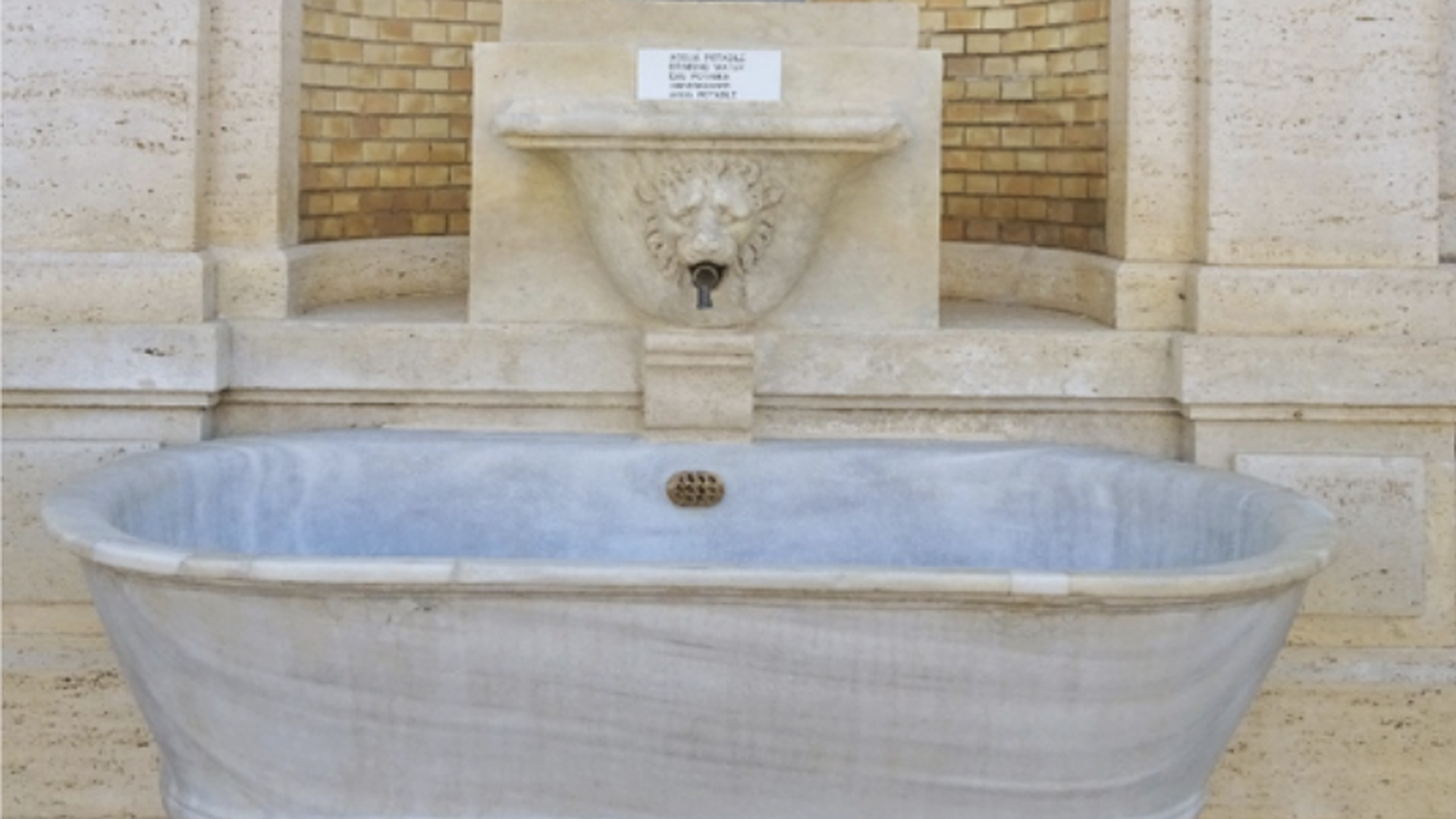
Restoration of the fountain, which consists of a lion's head decoration and a marble basin set on two large marble corbels, was performed inside the construction site in the Pinacoteca Courtyard. As of today, the construction site has been dismantled, and it is once again possible for visitors to use the drinking water fountain. The fountain is now equipped with an anti-scale device to prevent harmful deposits.
During the same period of time, the question arose of how best to preserve and enhance the statue, rehousing and displaying it in the museum, and what to replace it with in the niche. The installation base for the new artifact was appropriately prepared and modified.
At the same time, work continued on the sculpture, where the main focus was on the consolidation of the right arm and hand with an advanced and highly effective method, but rather complex in its application, both from the point of view of the modalities (by immersion) and in compliance with precise chemical-physical and environmental parameters.
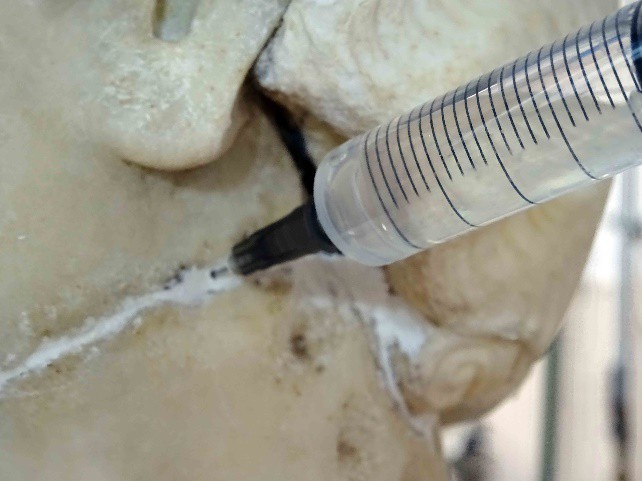
Most of the plastering has been done, creating numerous new mixes for the different mixtures following the considerable chromatic variability of the sculpture's patina, respecting the use of materials used in the current restoration tradition. There is a lack of grout and color rebalancing related to areas where structural restoration still needs to be completed.
Restoration Update - Statue of Flora
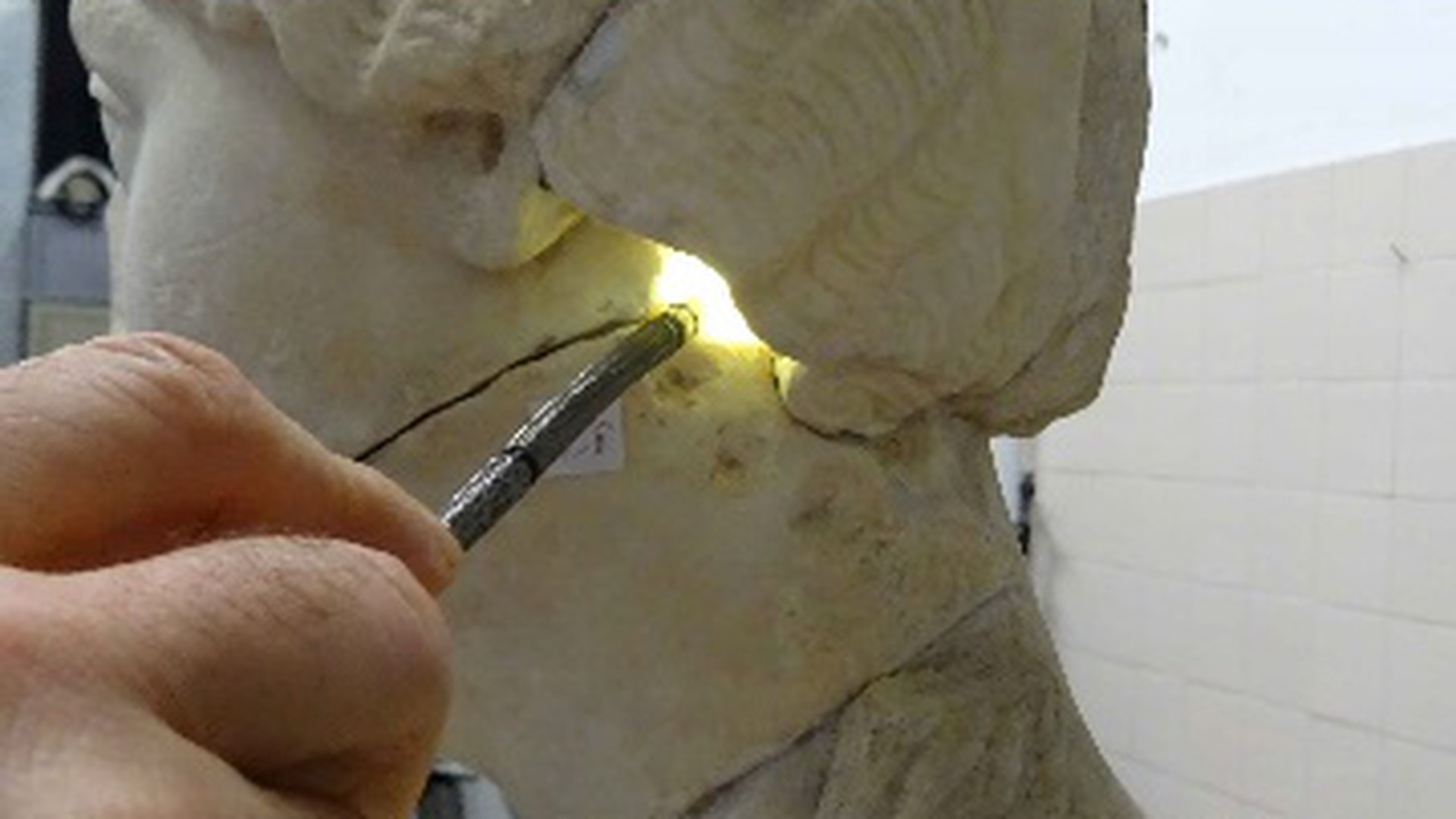
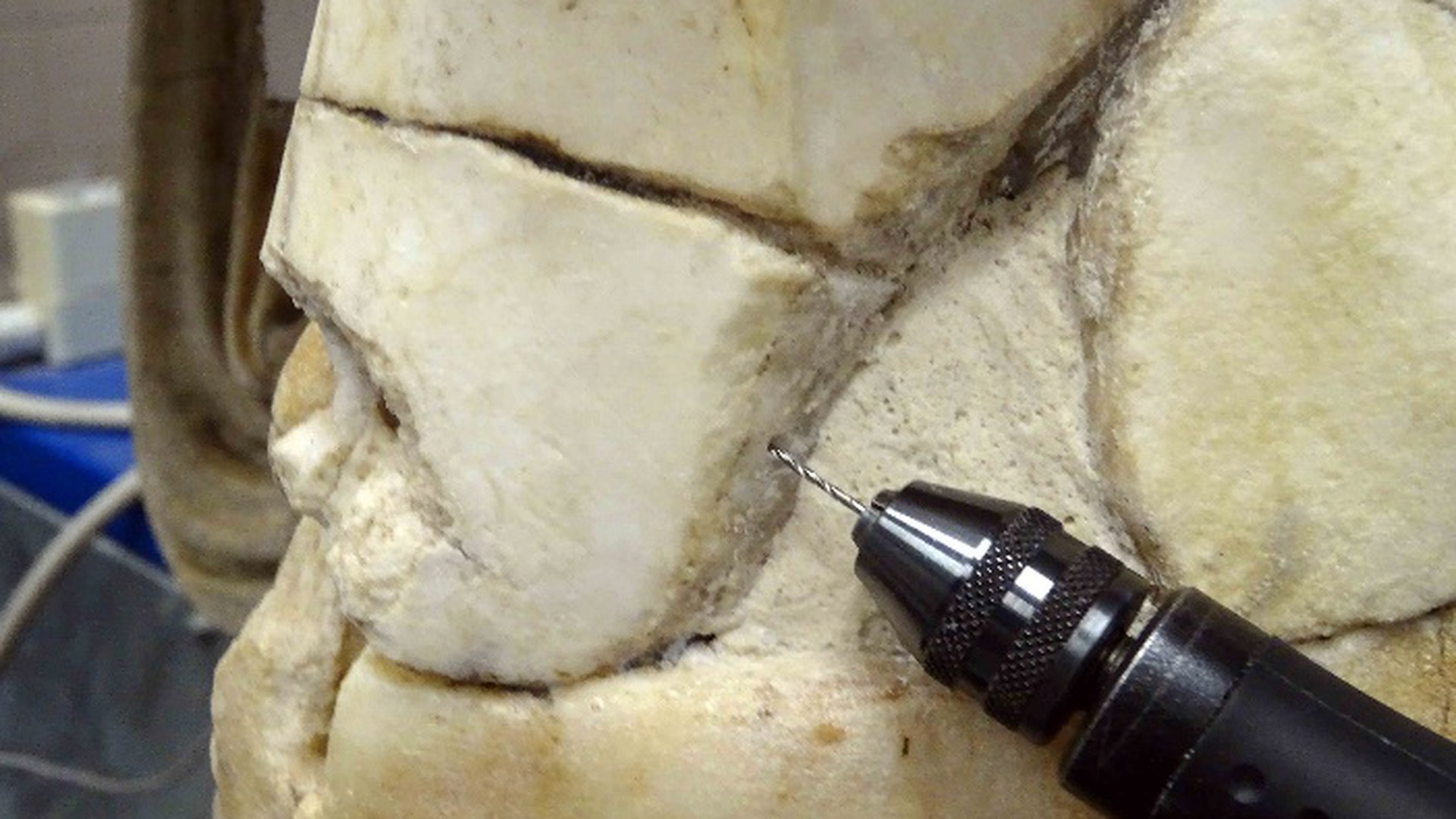
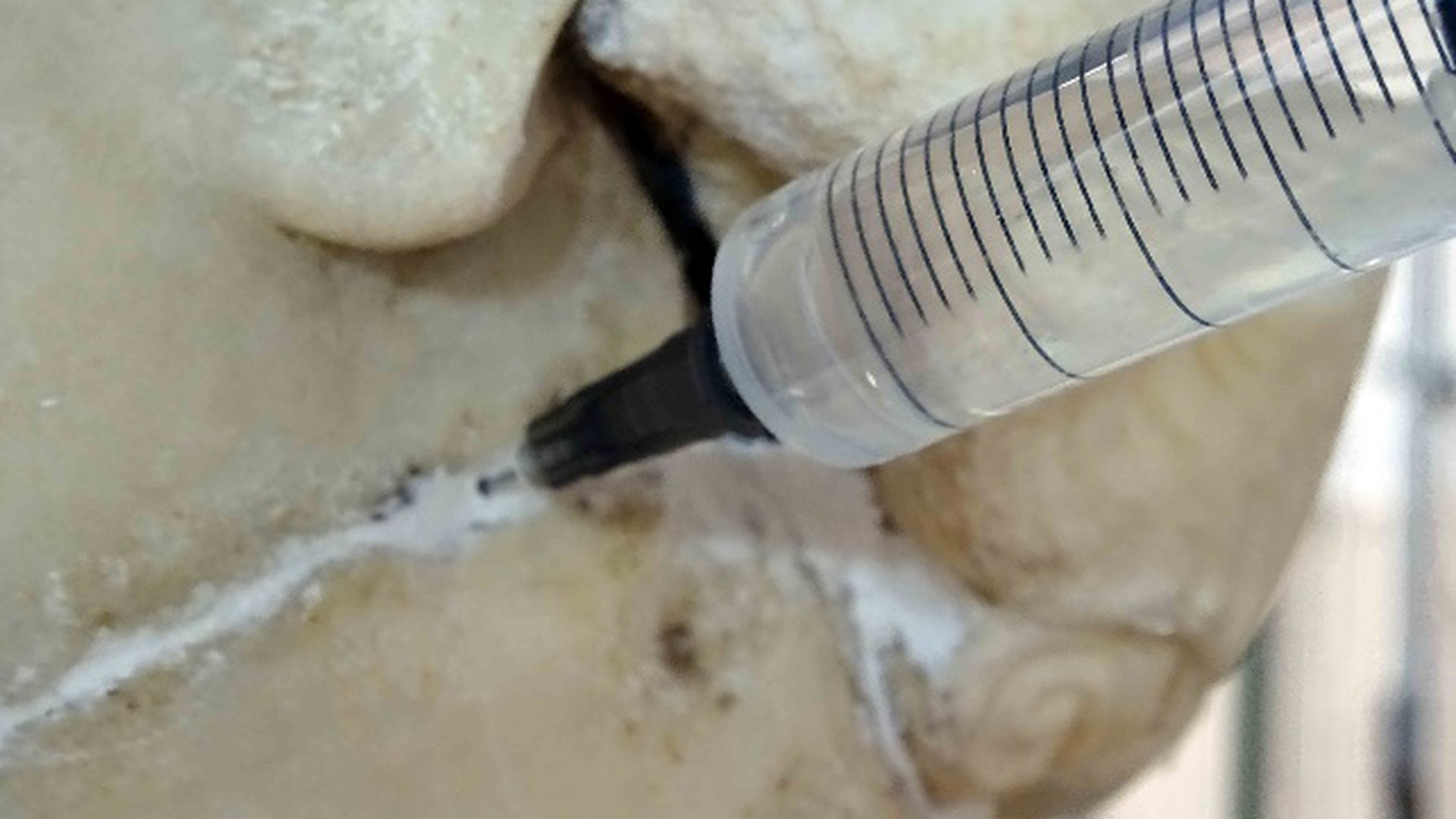
Restoration and Reproduction Statue of Flora
Restoration of lion's head fountain decoration
Restoration of the marble basin
This project includes the restoration of the marble Flora statue and a full-size copy, made by 3D printing in resin, which will be located at the fountain to replace the original. The requirements for the reproduction are under evaluation: resistance to outdoor weathering, surface finish imitating antique marble, and anchor system to the base placed in the niche. Evaluating these elements is preliminary to obtaining estimates from three outside firms. The restoration of the ancient statue is in the final stages. Work in the future includes the right arm consolidation with a small carbon fiber bar and the application of the final protective coating. Some tests are underway for both interventions. Upon completion of the restoration, the statue will find its indoor location in the exhibition itinerary. The new site will be in the Gregorian Profane Museum. Collecting histories, previous placements, and historical restorations are in the historical report prepared by Eleonora Ferrazza (Greek and Roman Antiquities Department). Following the previous restoration report (April 2022), work focused on the fountain, which consists of a lion's head decoration and a marble basin resting on two large marble corbels. This phase of the work was slow because of the assembly of the construction site in the Pinacoteca Courtyard and the timing required to calibrate the advanced laser technologies.

Statue of Flora
Details
Adopted by: The California Chapter
Patrons: The Hall Family
Inventory: 20298
Artist: Unknown
Classification: Statue
Materials: Marble
Museum: Chiaramonti Museum
Department: Greek and Roman Antiquities
Laboratory: Stone Materials
Description
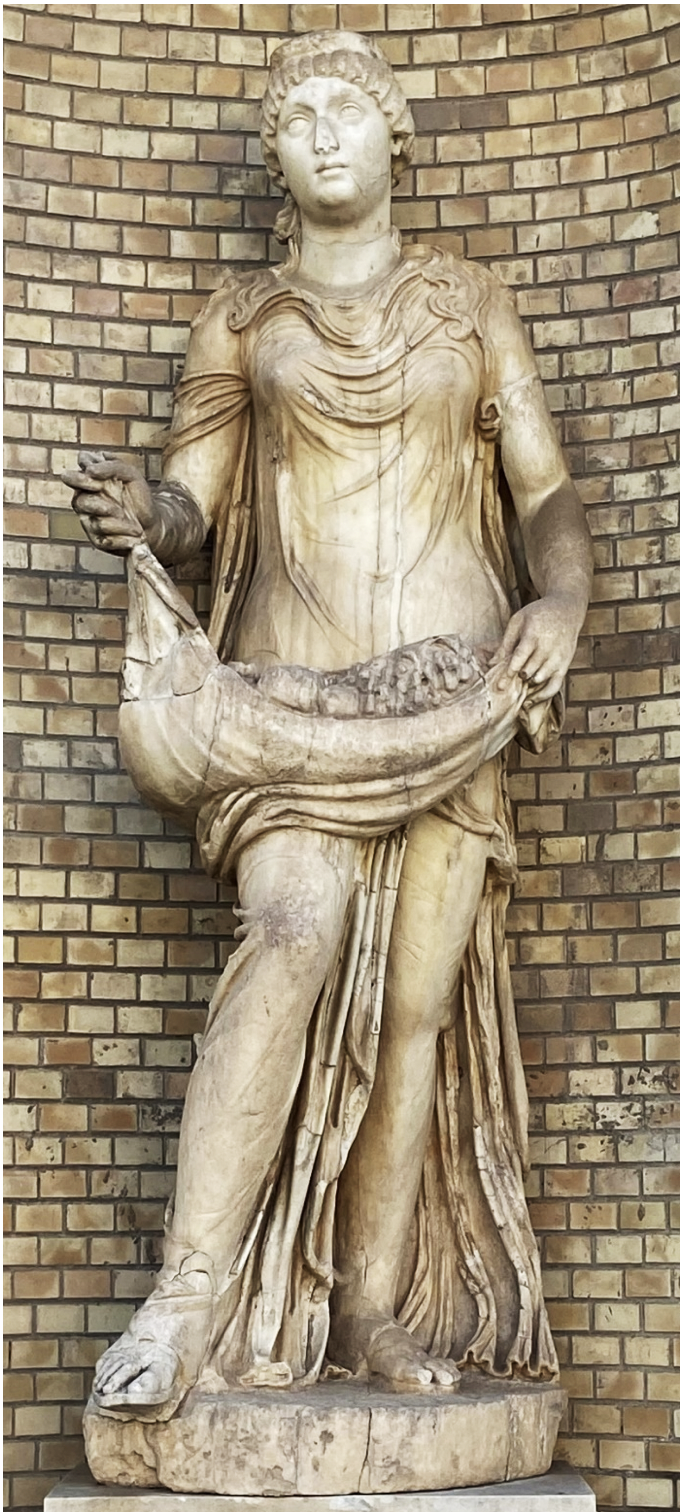
The statue represents Flora or Pomona - the goddess of Nature and Abundance. The statue normally sits on top of the principle drinkable water fountain on the Terrace of the Vatican Pinacoteca (Painting Gallery), one of the most visited places in the Vatican Museums with one of the best views of St. Peter's Basilica.
State of Preservation
The intervention of the Flora statue started because it was in a more precarious condition than the other statues, and it needed urgent intervention. The interventions on the protome and the basin will be carried out next to the fountain and at a specific site. It will be essential to avoid the cold season, which is not as suitable for the adopted methodologies.
Modern open-air exposure for more than a century caused parts of advanced degradation to the Flora statue in different ways. In addition to the ancient and post-ancient restoration, the statue underwent alterations.
The result is a degradation that affects both the surface and the structure. In particular, the main problems that require interventions are:
- Cracks (more or less advanced) provoked by the spontaneous decohesion of the material and levels typical of the marble.
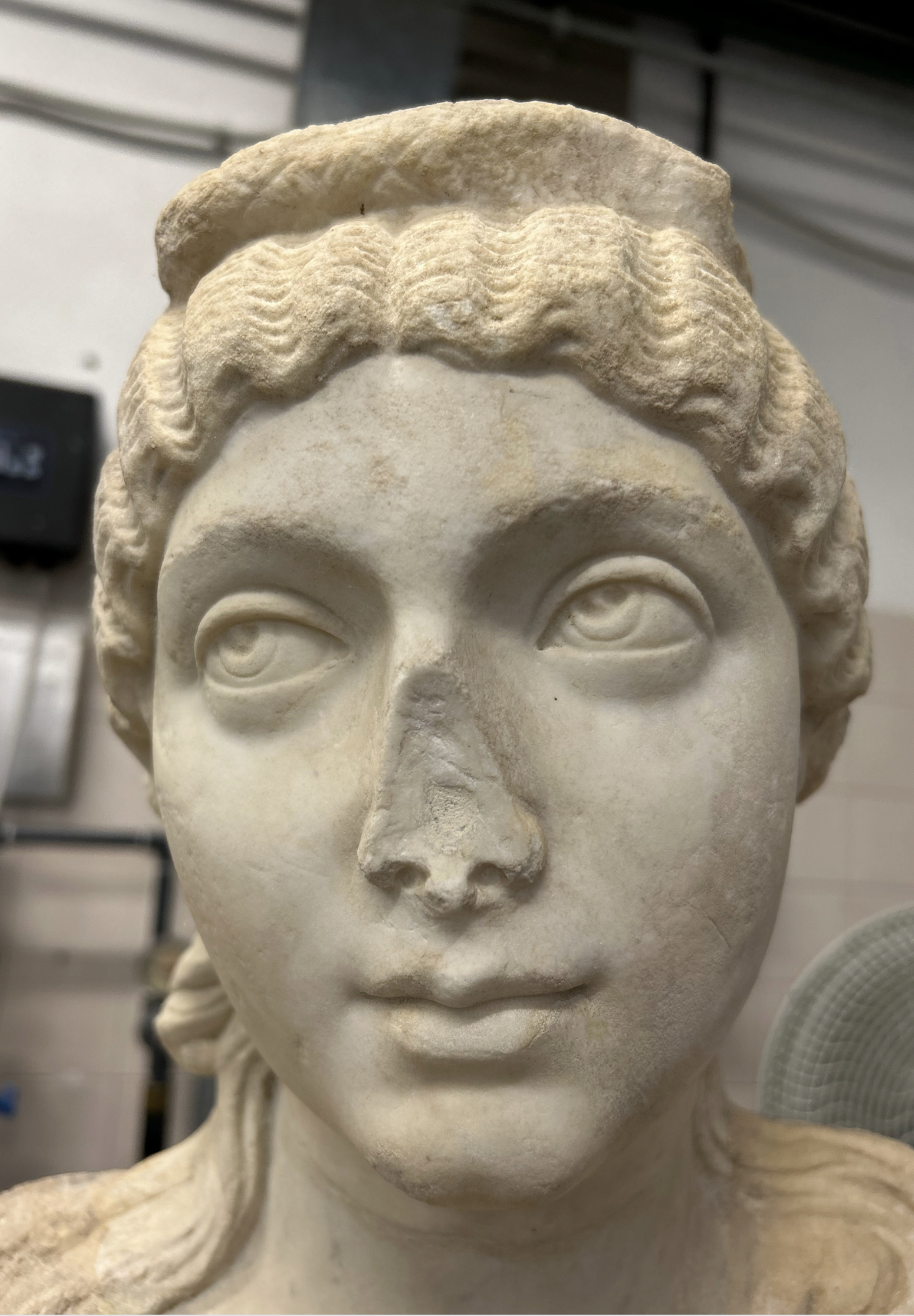
- Special research conducted from historical photos showed that the fissures along the left cheek were already there in the 30s of the XIX century. They seem not to be progressing if they are subject to a stable microclimate
Nonetheless, diagnostic investigations are on the agenda to verify that there are no metallic elements in active expansion.
- There is superficial erosion in the most exposed areas and de-cohesion on the right arm, the support of the right hand, and the hair inserts. On the right arm, the phenomenon produced the formation of a superficial crust, raised cracks, and detachments from the forearm. Underneath, the crystalline texture has almost lost its consistency, and the right hand has spontaneously detached from the forearm. Fortunately, this happened when the statue was already protected and provided with temporary support. The operation minimized the damage caused by the detachment.
- There is a phenomenon of chromatic alterations due to internal oxidation of the marble. There are also deposits and infiltration of foreign particles, residues of bio-deteriogenic attacks, and alterations of superimposed artificial substances such as partial patination.
The peculiarity of this restoration, and the urgency, show the complexity. Additionally, it shows how the different problems connect. It is necessary to find particular solutions and operational sequences that do not interfere with each other.
Restoration Procedures
The necessary and preventive diagnostic campaign carried out so far by GRS used the ultraviolet fluorescence filming and analytical sampling for stratigraphic analysis. In addition, a 3D acquisition of the statue in its pre-restoration state was performed to produce a prototype copy to insert in the niche of the fountain that remained empty. The statue will be displayed in the gallery at the end of the restoration. During the cleaning, colorimetric measurements were taken to document the reduction of the chromatic changes. The first operation was to remove the old stucco. This task is very tedious because of the bad hydraulics, in cement or synthetic resin, and separating it from the marble border. This area is more fragile than the face because it is intrinsically decohered. On the less de-cohesive and eroded areas with a considerable deposit, almost all on the back, cleaning was carried out by softening absorbent substances, based on zeolitic clay and cellulose. Certain areas have better-preserved surfaces. For others, there is the need for a more delicate cleaning because they were already clear compared to the rest. Restorers use agar agar-based hard gels and
hot deionized water as a buffer. Most of the surface has been treated with laser equipment, which avoids the use of water on the most delicate areas full of salts. So far, only one device has been used. At the moment, the experimentation of other models of machinery is not excluded, according to the needs that will be encountered. Currently, the method of consolidation treatment of the right arm is being investigated, as well as the choice of the most suitable materials and techniques for its replacement. A temporary modular brace currently guarantees its safety. At the moment, the cleaning is continuing. Restorers are compressing some areas already treated with lasers. They are also investigating the use of bacteria and localized biocidal treatments on melamine complexes of meristematic fungal populations (if confirmed by analysis).
Media
Statue of Flora - Before Restoration

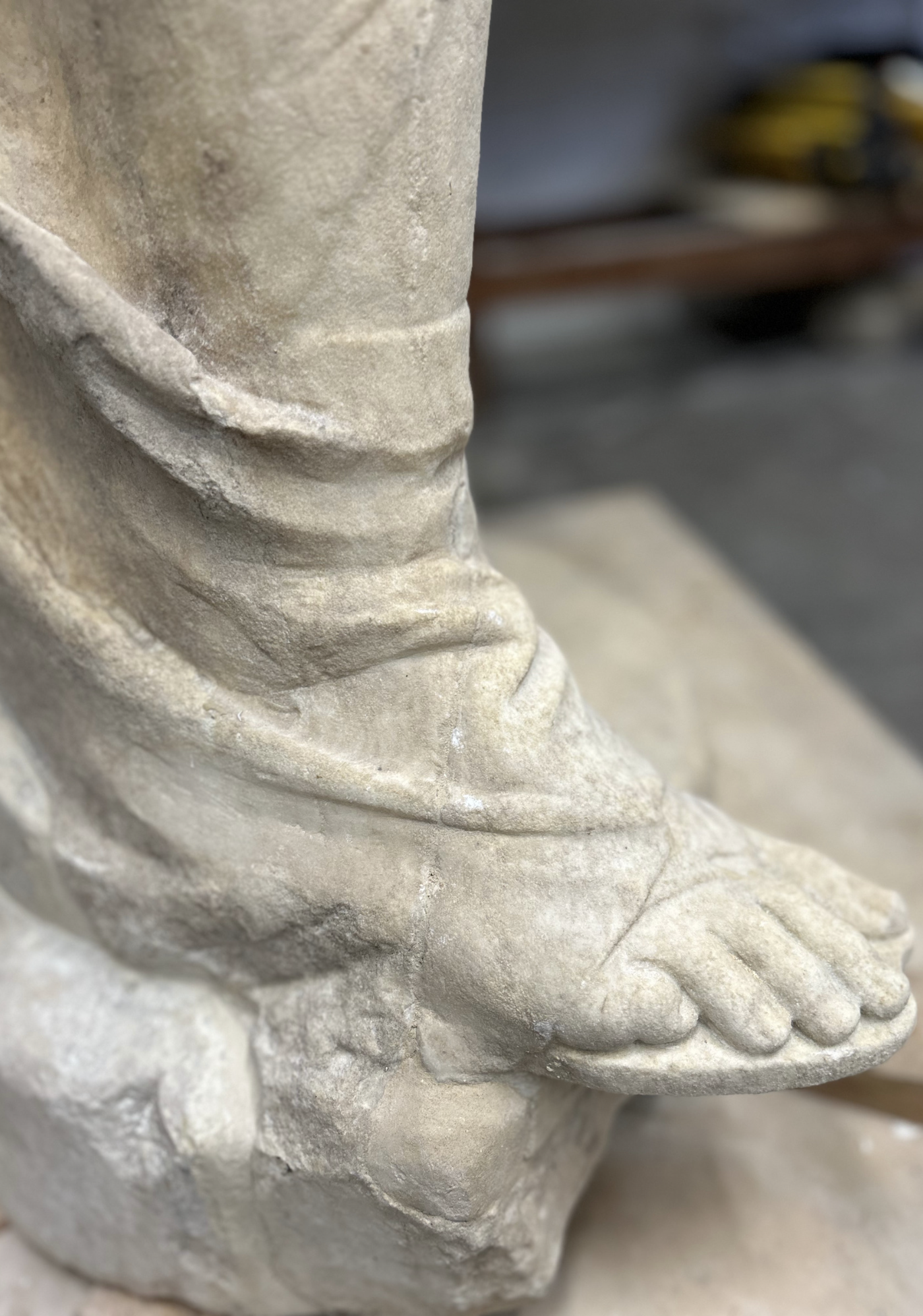
Statue of Flora - Restorer at work

Statue of Flora - During Restoration
Restorations Update: Statue of Flora Final Restoration Report
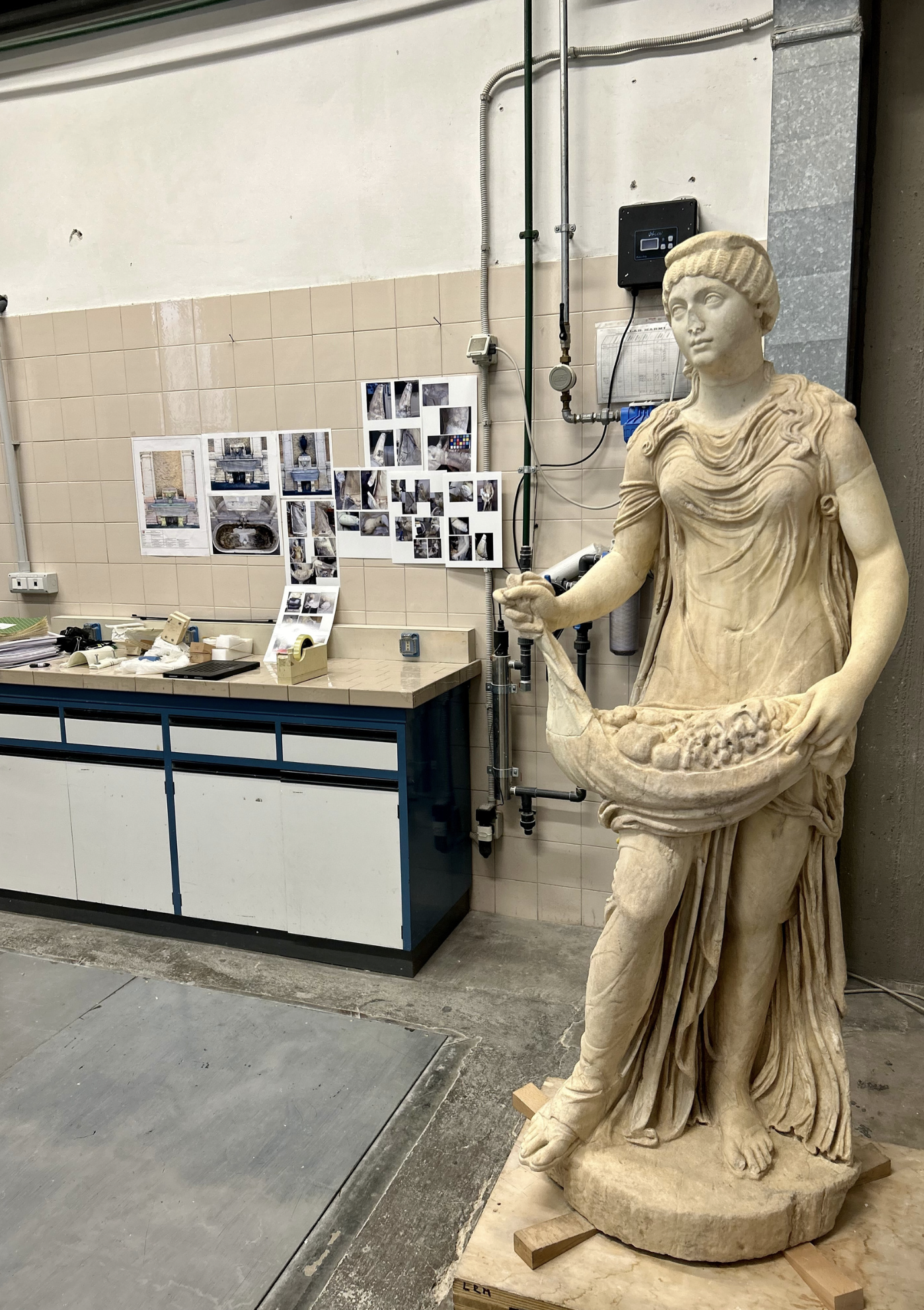
The restorer Stefano Spada completed structural work and plastering on the sculpture, developing valuable innovations for the choice of materials used, design solutions, and the actual technical process steps. The most challenging and delicate phase was the preparation for the final gluing of the right hand.
Because of the delicacy of the right arm, even after the conservation intervention, the restorer created a provisional support and brace sleeve for the arm, which has provided stability for the last movement of the statue from the Stone Materials Restoration Laboratory to the Gregorian Profane Museum.

Restorations Update: Restoration Update - Statue of Flora
The restoration of Flora has reached its last stage, and the consolidation of the right arm of this ancient statue, detached in March during the restoration works, is being undertaken.
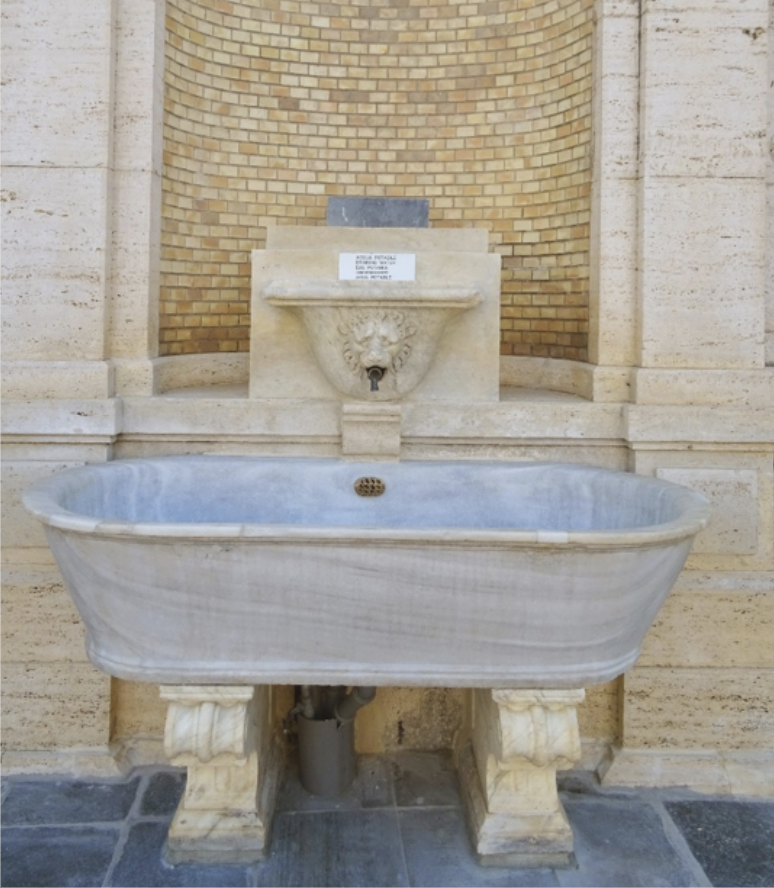
Restoration of the fountain, which consists of a lion's head decoration and a marble basin set on two large marble corbels, was performed inside the construction site in the Pinacoteca Courtyard. As of today, the construction site has been dismantled, and it is once again possible for visitors to use the drinking water fountain. The fountain is now equipped with an anti-scale device to prevent harmful deposits.
During the same period of time, the question arose of how best to preserve and enhance the statue, rehousing and displaying it in the museum, and what to replace it with in the niche. The installation base for the new artifact was appropriately prepared and modified.
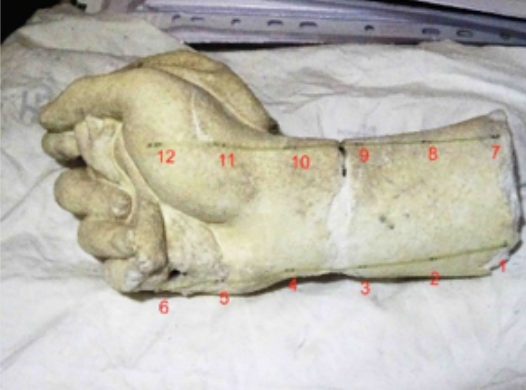
At the same time, work continued on the sculpture, where the main focus was on the consolidation of the right arm and hand with an advanced and highly effective method, but rather complex in its application, both from the point of view of the modalities (by immersion) and in compliance with precise chemical-physical and environmental parameters.
Most of the plastering has been done, creating numerous new mixes for the different mixtures following the considerable chromatic variability of the sculpture's patina, respecting the use of materials used in the current restoration tradition. There is a lack of grout and color rebalancing related to areas where structural restoration still needs to be completed.


Restorations Update: Restoration Update - Statue of Flora
Restoration and Reproduction Statue of Flora
Restoration of lion's head fountain decoration
Restoration of the marble basin
This project includes the restoration of the marble Flora statue and a full-size copy, made by 3D printing in resin, which will be located at the fountain to replace the original. The requirements for the reproduction are under evaluation: resistance to outdoor weathering, surface finish imitating antique marble, and anchor system to the base placed in the niche. Evaluating these elements is preliminary to obtaining estimates from three outside firms. The restoration of the ancient statue is in the final stages. Work in the future includes the right arm consolidation with a small carbon fiber bar and the application of the final protective coating. Some tests are underway for both interventions. Upon completion of the restoration, the statue will find its indoor location in the exhibition itinerary. The new site will be in the Gregorian Profane Museum. Collecting histories, previous placements, and historical restorations are in the historical report prepared by Eleonora Ferrazza (Greek and Roman Antiquities Department). Following the previous restoration report (April 2022), work focused on the fountain, which consists of a lion's head decoration and a marble basin resting on two large marble corbels. This phase of the work was slow because of the assembly of the construction site in the Pinacoteca Courtyard and the timing required to calibrate the advanced laser technologies.
© 2026 Patrons of the Arts
in the Vatican Museums
Vatican Museums V-00120,
Vatican City State (Europe)
+39 0669864499