

Preliminary studies for the feasibility of the Restoration of the Statue of the Hercules Mastai
Artist: Unknown
Date: Second half of 2nd century A.D.
Classification: Statue
Dimensions: High 383 cm
Materials: Golden Bronze
Adopted By: The Northwest Chapter
Total Cost: € 27,000
Description
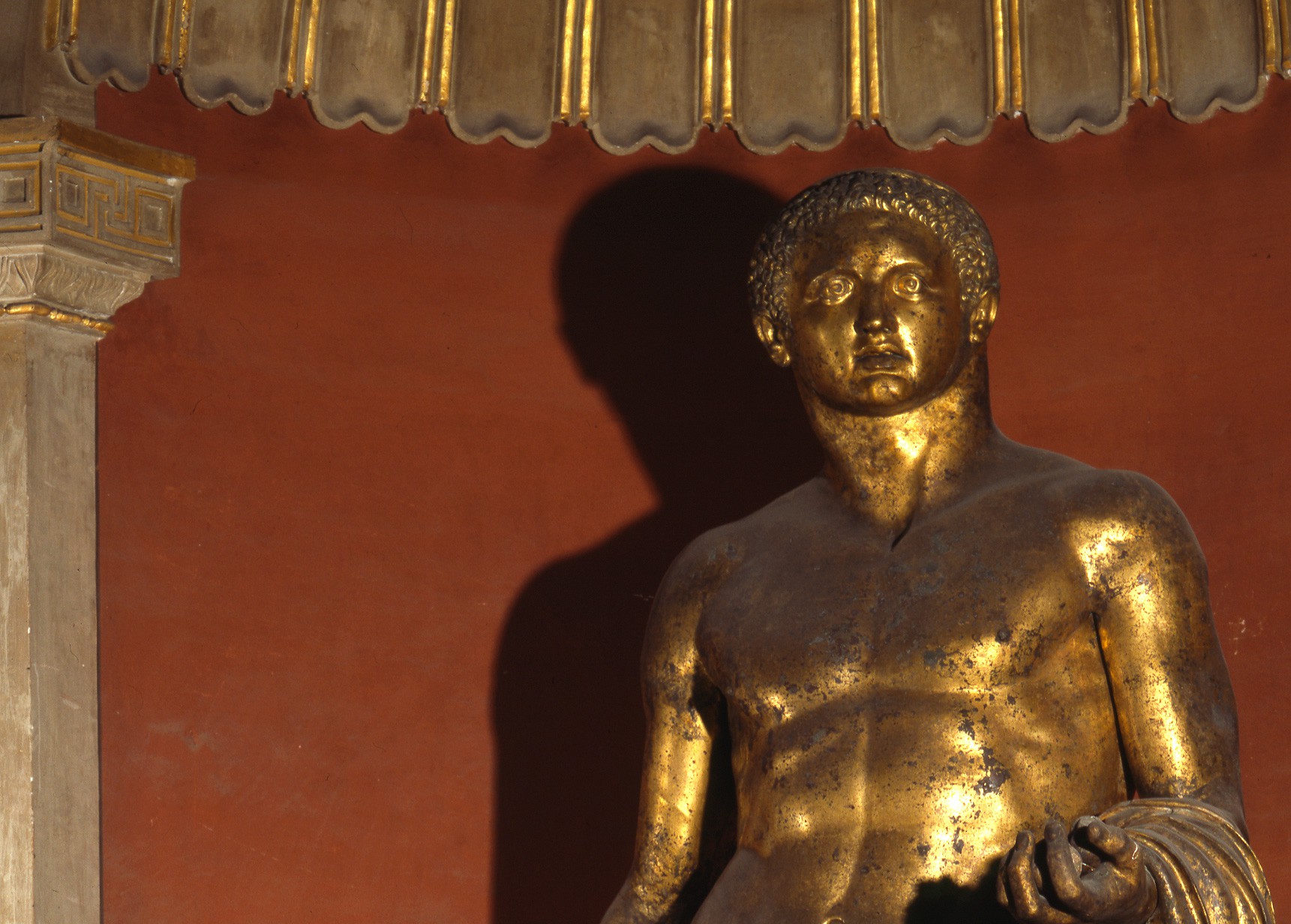
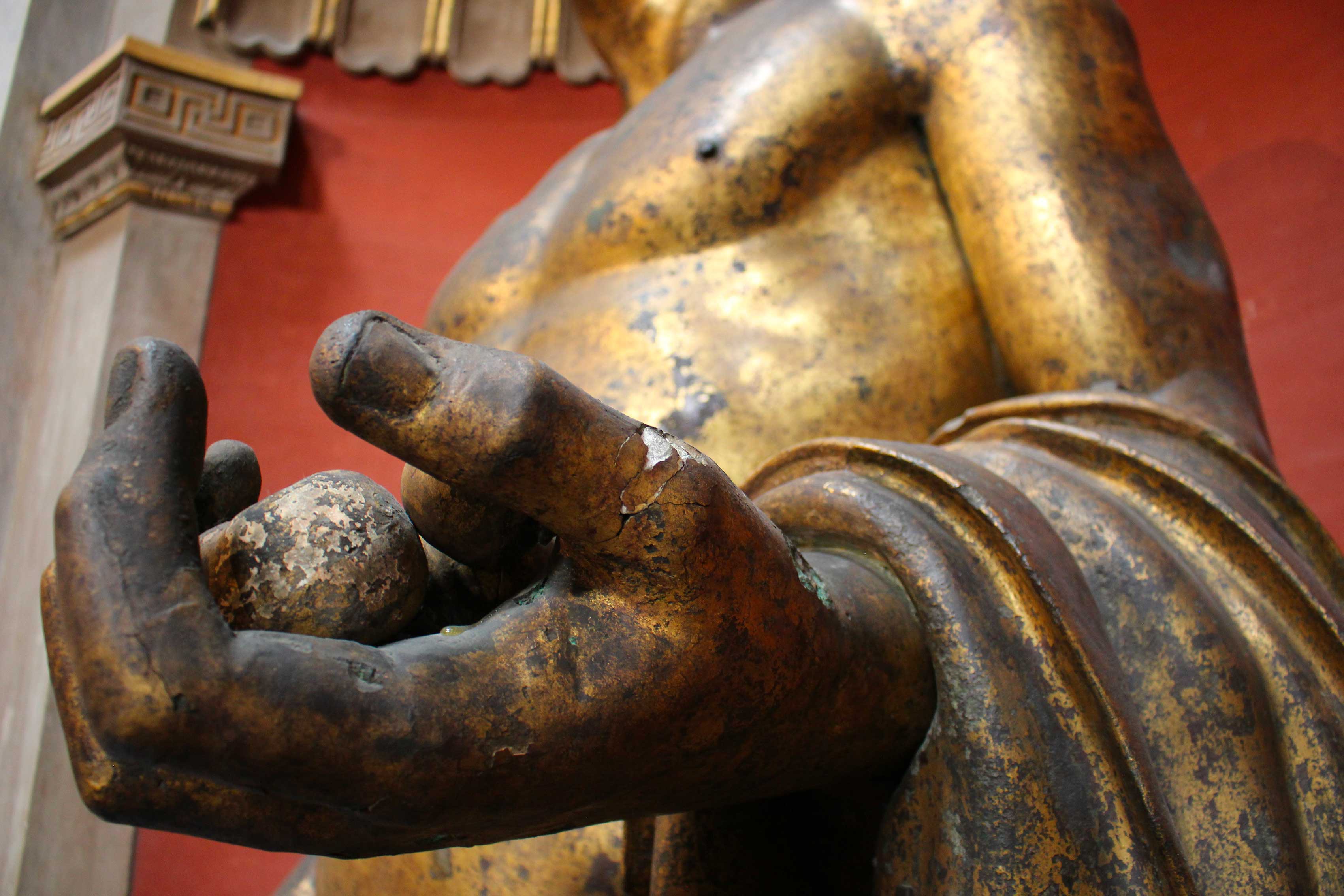
Founded in 1864 under the courtyard of Palazzo Pio Righetti in Campo de' Fiori, in the area of the ancient theater of Pompey inaugurated in 55 BC, Pope Pius IX Mastai received this gilded bronze statue. At the time of the discovery, the statue was laid horizontally inside a pit, covered with travertine slabs on which the following letters were engraved: F C S, or F (ulgur) C (onditum) S (ummanium). The Heracles had been struck by lightning and, according to its burial by the Romans, it was laid to rest with the remains of a lamb as a ritual. The statue, extensively restored by Pietro Tenerani who created additions made mainly in plaster, depicts a young Hercules leaning on the club, with the knobs of the Hesperides in his left hand. Once dated between 390 and 370 BC, the work, perhaps inspired by a model of Attic school, is now dated between the end of the 1st century AD and the beginning of the third century AD.
There has been no intervention on the colossal bronze upon its placement in the Vatican. Therefore, the detachment of the plaster additions are causing numerous critical issues which are also harmful to the phenomenon of oxidation of the bronze. A restoration intervention is necessary which, given its complexity, will be preceded by a thorough campaign of diagnostic investigations by the Scientific Research Laboratory according to the indications of the Metal Restoration Laboratory and the supervision of the Greek and Roman Antiquities Department.
Detail
Artist: Unknown
Date: Second half of 2nd century A.D.
Provenience: Ancient Rome
Dimensions: High 383 cm
Materials: Golden Bronze
Department:
Greek and Roman AntiquitiesCurators:
Dr. Giandomenico Spinolamuseum:
Pio Clementino MuseumTotal Cost
€ 27,000
Preliminary Restoration Studies

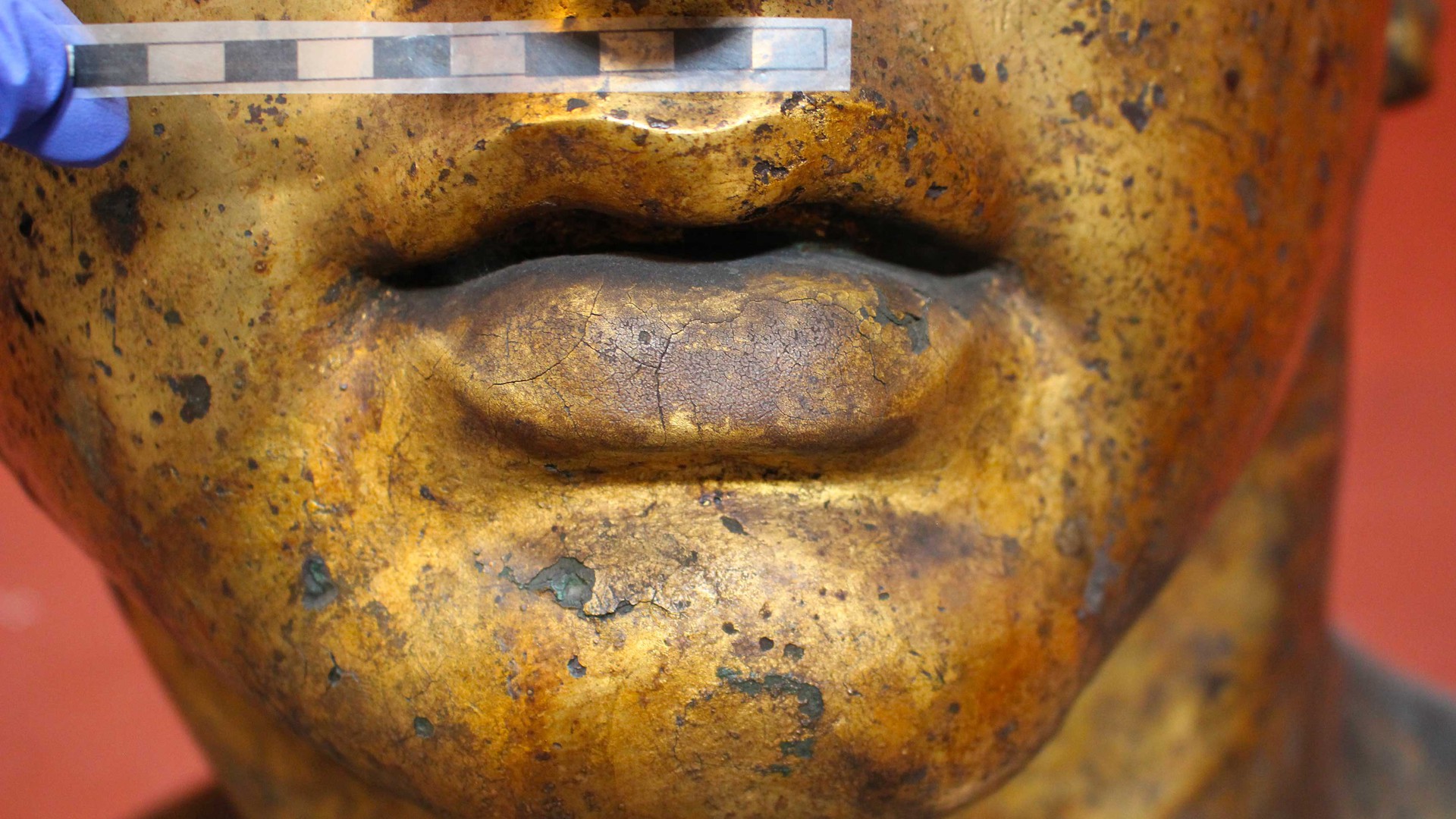
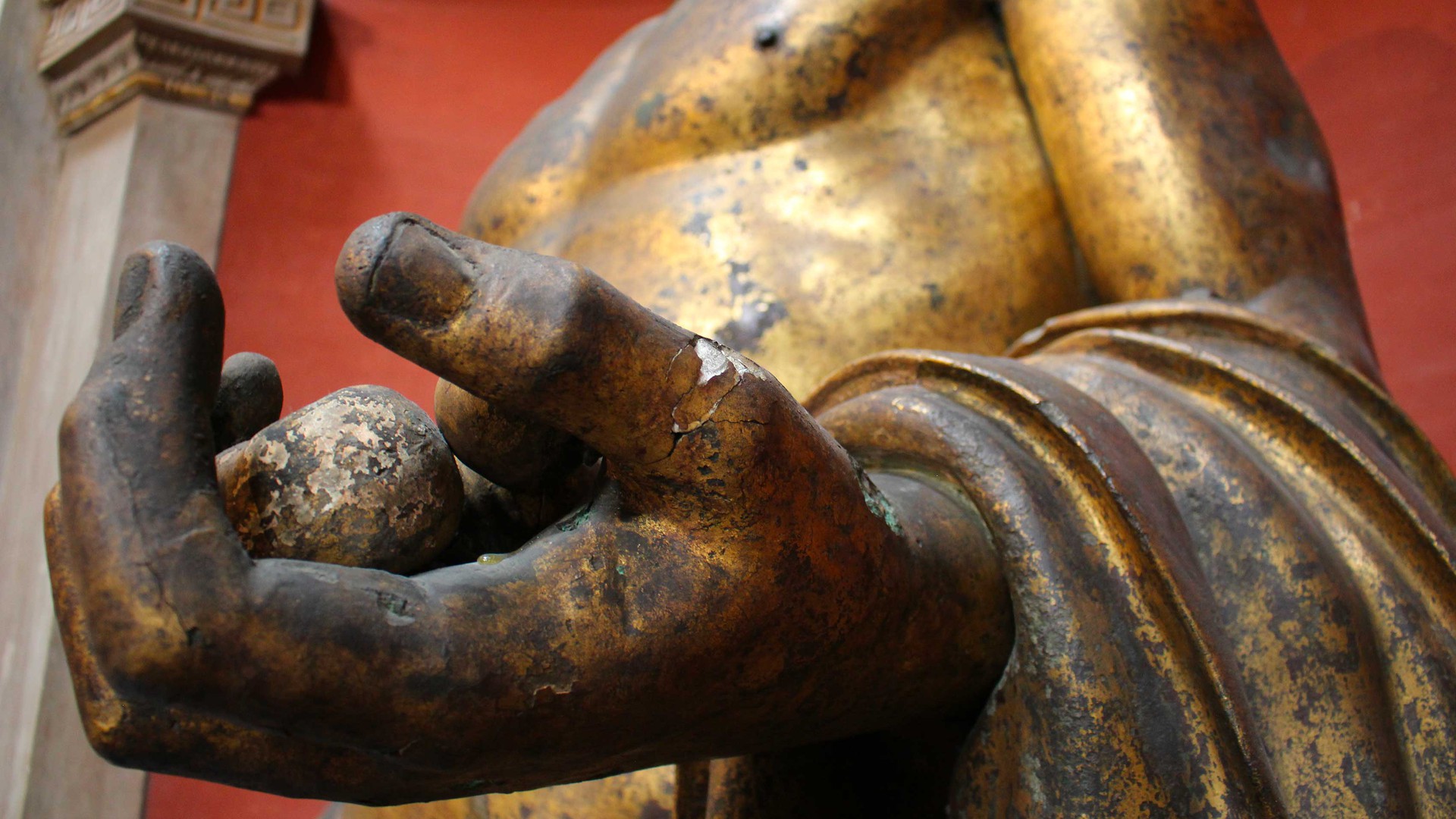
In the month of September, restorers proceeded with the preliminary restoration studies of the monumental bronze statue of the Hercules Mastai, exhibited in the Sala Rotonda of the Vatican Museums.
The conservation problems are from the inadequate and previous restoration interventions and the reconstruction of the missing parts. In particular, the static structural conditions of the work, anchored and supported by a series of iron brackets fixed to the walls of the niche that houses it, needed urgent control.
Following the internal inspection and the verification of all the surfaces, restorers performed some cleaning tests in order to foresee methods, timing, costs, and results of the restoration intervention.
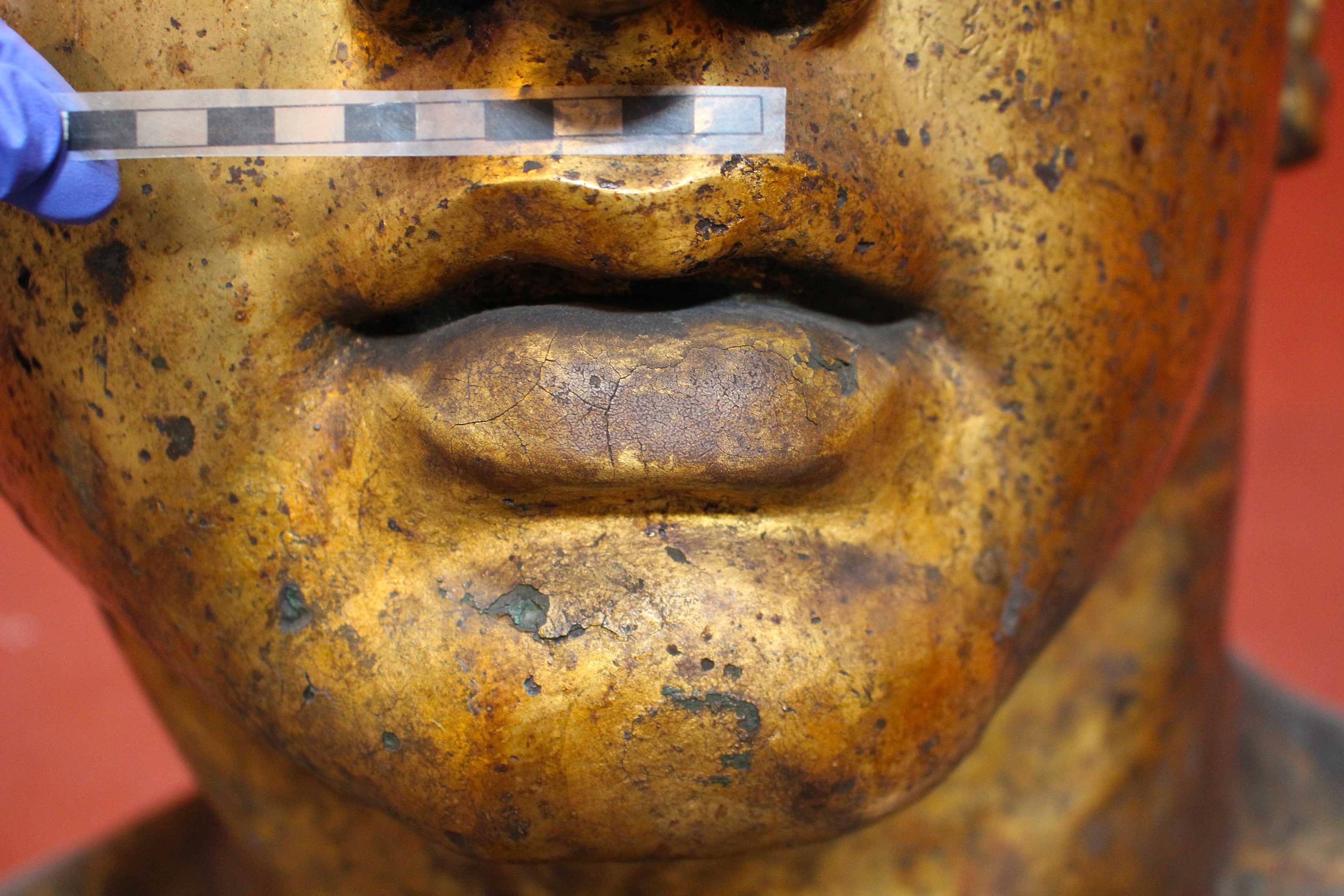
The removal of the altered and deteriorating protective agents revealed brighter surfaces from presumably manufactured gold leaf gilding. This inspection also revealed the numerous and mimetic interventions of gilded stucco remakes that hide the defects, failures, and forms of alteration of the bronze.
The part of the Scientific Laboratory for the Restoration Diagnostic is currently conducting an investigation to evaluate the cracks and the stability of the statue. Prof. Santamaria applied a monitoring system, made up of a control unit and vibration sensors, directly onto the iron supporting structures. Already, since the end of October, the processed data showed elaborate and successful evidence of a properly stable work. In the coming months, the research with endoscopic and 3D scans of the entire statue, above all, will provide a more in-depth analysis of the gravitational forces.

Preliminary studies for the feasibility of the Restoration of the Statue of the Hercules Mastai
Details
Adopted by: The Northwest Chapter
Patrons: Lisa and Richard Altig Family
Artist: Unknown
Date: Second half of 2nd century A.D.
Provenience: Ancient Rome
Classification: Statue
Materials: Golden Bronze
Dimensions: High 383 cm
Museum: Pio Clementino Museum
Department: Greek and Roman Antiquities
Description
Founded in 1864 under the courtyard of Palazzo Pio Righetti in Campo de' Fiori, in the area of the ancient theater of Pompey inaugurated in 55 BC, Pope Pius IX Mastai received this gilded bronze statue. At the time of the discovery, the statue was laid horizontally inside a pit, covered with travertine slabs on which the following letters were engraved: F C S, or F (ulgur) C (onditum) S (ummanium). The Heracles had been struck by lightning and, according to its burial by the Romans, it was laid to rest with the remains of a lamb as a ritual. The statue, extensively restored by Pietro Tenerani who created additions made mainly in plaster, depicts a young Hercules leaning on the club, with the knobs of the Hesperides in his left hand. Once dated between 390 and 370 BC, the work, perhaps inspired by a model of Attic school, is now dated between the end of the 1st century AD and the beginning of the third century AD.
There has been no intervention on the colossal bronze upon its placement in the Vatican. Therefore, the detachment of the plaster additions are causing numerous critical issues which are also harmful to the phenomenon of oxidation of the bronze. A restoration intervention is necessary which, given its complexity, will be preceded by a thorough campaign of diagnostic investigations by the Scientific Research Laboratory according to the indications of the Metal Restoration Laboratory and the supervision of the Greek and Roman Antiquities Department.
Media
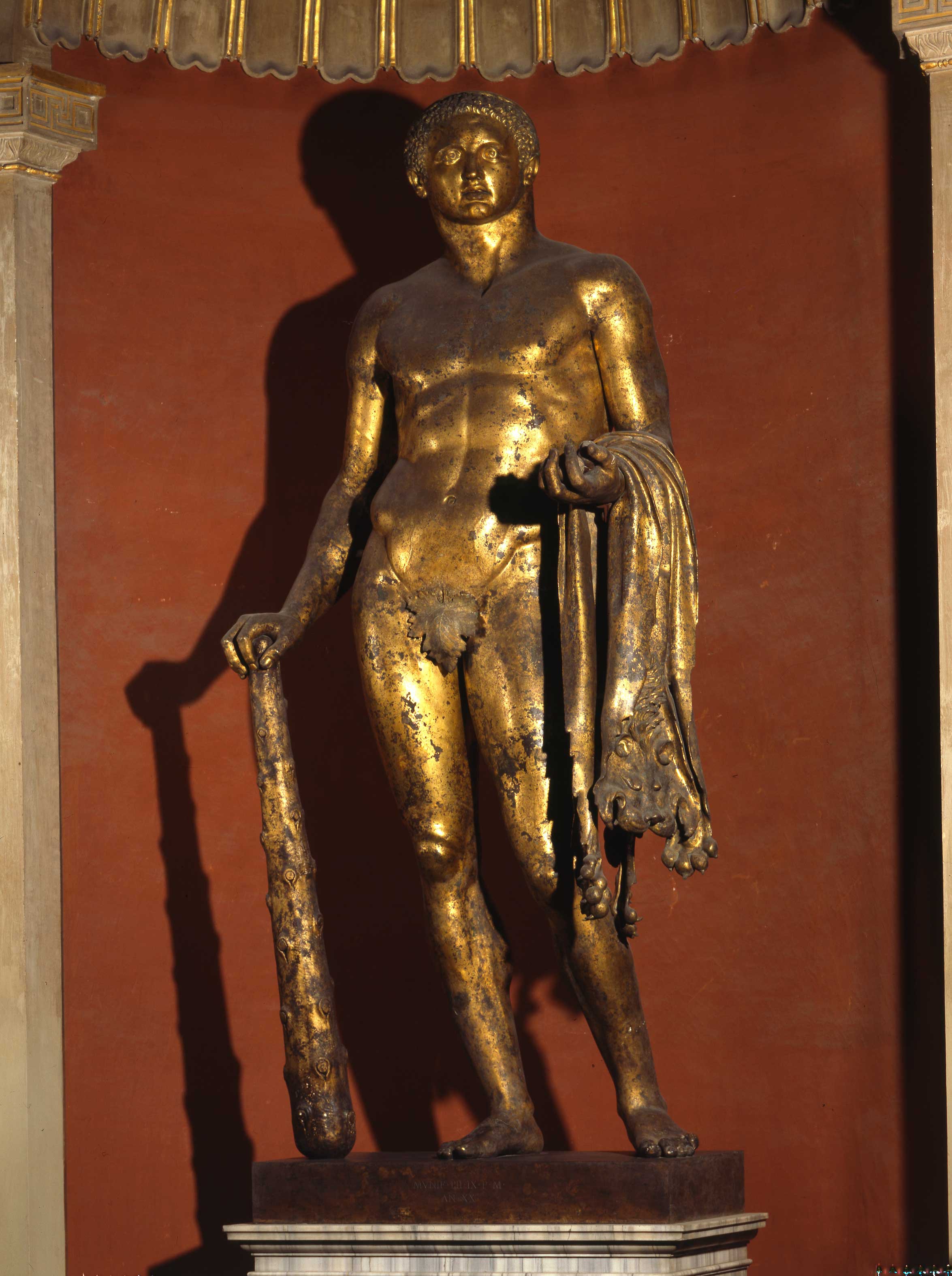
Statue of the Mastai Heracles
Restorations Update: Preliminary Restoration Studies

In the month of September, restorers proceeded with the preliminary restoration studies of the monumental bronze statue of the Hercules Mastai, exhibited in the Sala Rotonda of the Vatican Museums.
The conservation problems are from the inadequate and previous restoration interventions and the reconstruction of the missing parts. In particular, the static structural conditions of the work, anchored and supported by a series of iron brackets fixed to the walls of the niche that houses it, needed urgent control.
Following the internal inspection and the verification of all the surfaces, restorers performed some cleaning tests in order to foresee methods, timing, costs, and results of the restoration intervention.
The removal of the altered and deteriorating protective agents revealed brighter surfaces from presumably manufactured gold leaf gilding. This inspection also revealed the numerous and mimetic interventions of gilded stucco remakes that hide the defects, failures, and forms of alteration of the bronze.
The part of the Scientific Laboratory for the Restoration Diagnostic is currently conducting an investigation to evaluate the cracks and the stability of the statue. Prof. Santamaria applied a monitoring system, made up of a control unit and vibration sensors, directly onto the iron supporting structures. Already, since the end of October, the processed data showed elaborate and successful evidence of a properly stable work. In the coming months, the research with endoscopic and 3D scans of the entire statue, above all, will provide a more in-depth analysis of the gravitational forces.
© 2026 Patrons of the Arts
in the Vatican Museums
Vatican Museums V-00120,
Vatican City State (Europe)
+39 0669864499