

L’Arbre de Vie
Artist: Henri Matisse
Date: 1949
Dimensions: 5.145 x 2.520 cm
Materials: Papiers découpés on canvas paper
Adopted By: The Italian & International Chapter
Description
HIGH PRIORITY PROJECT
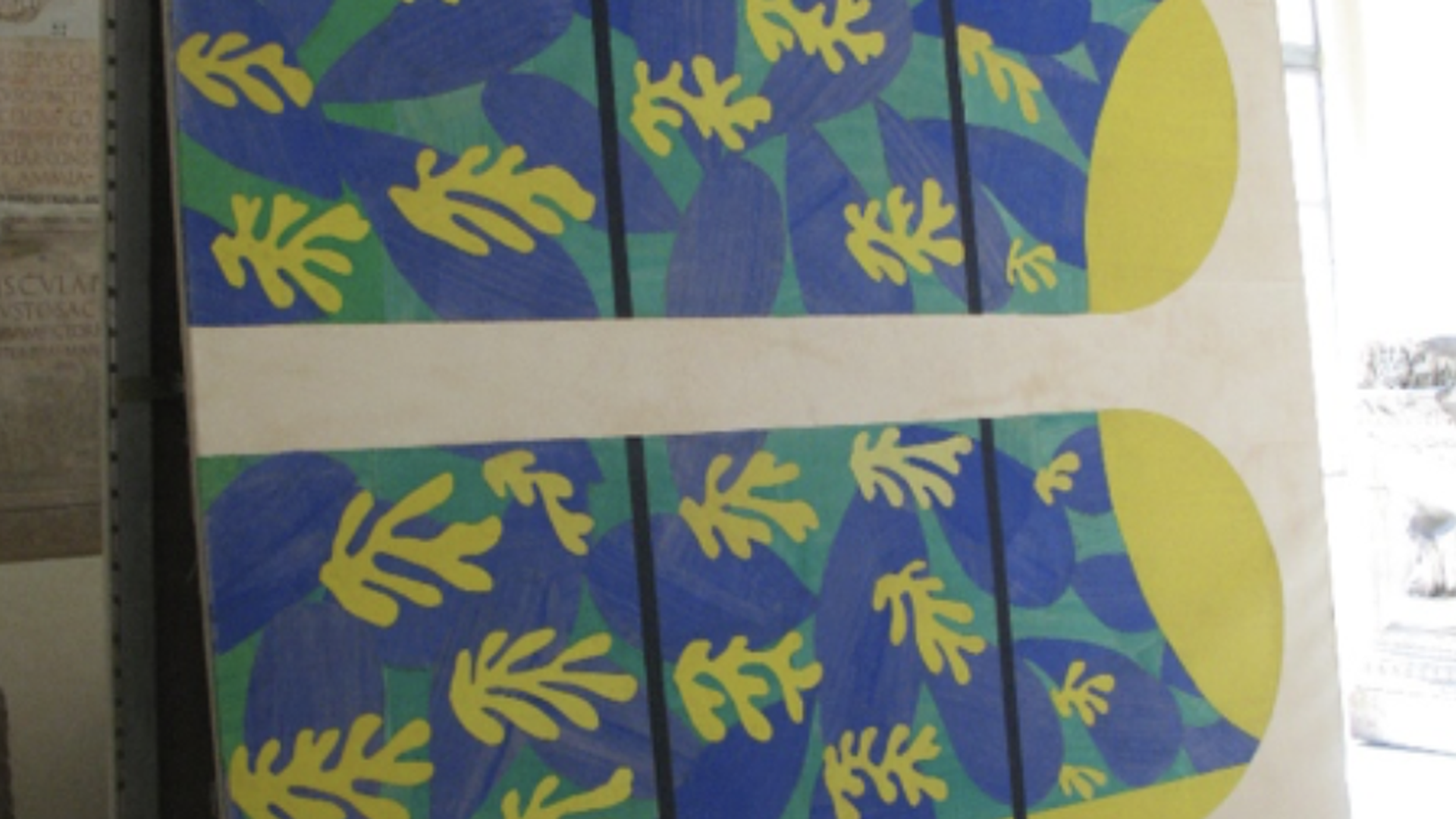
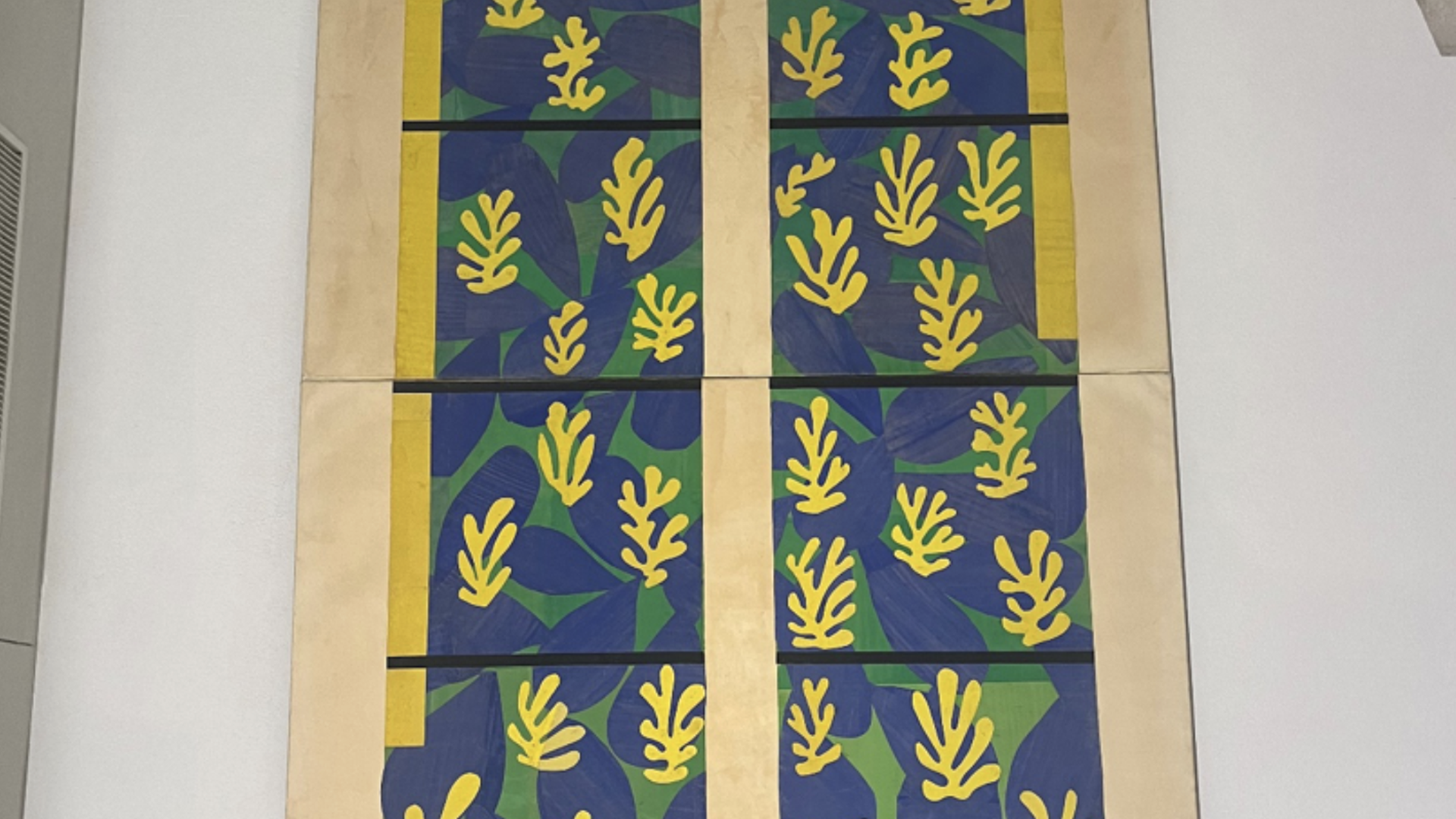
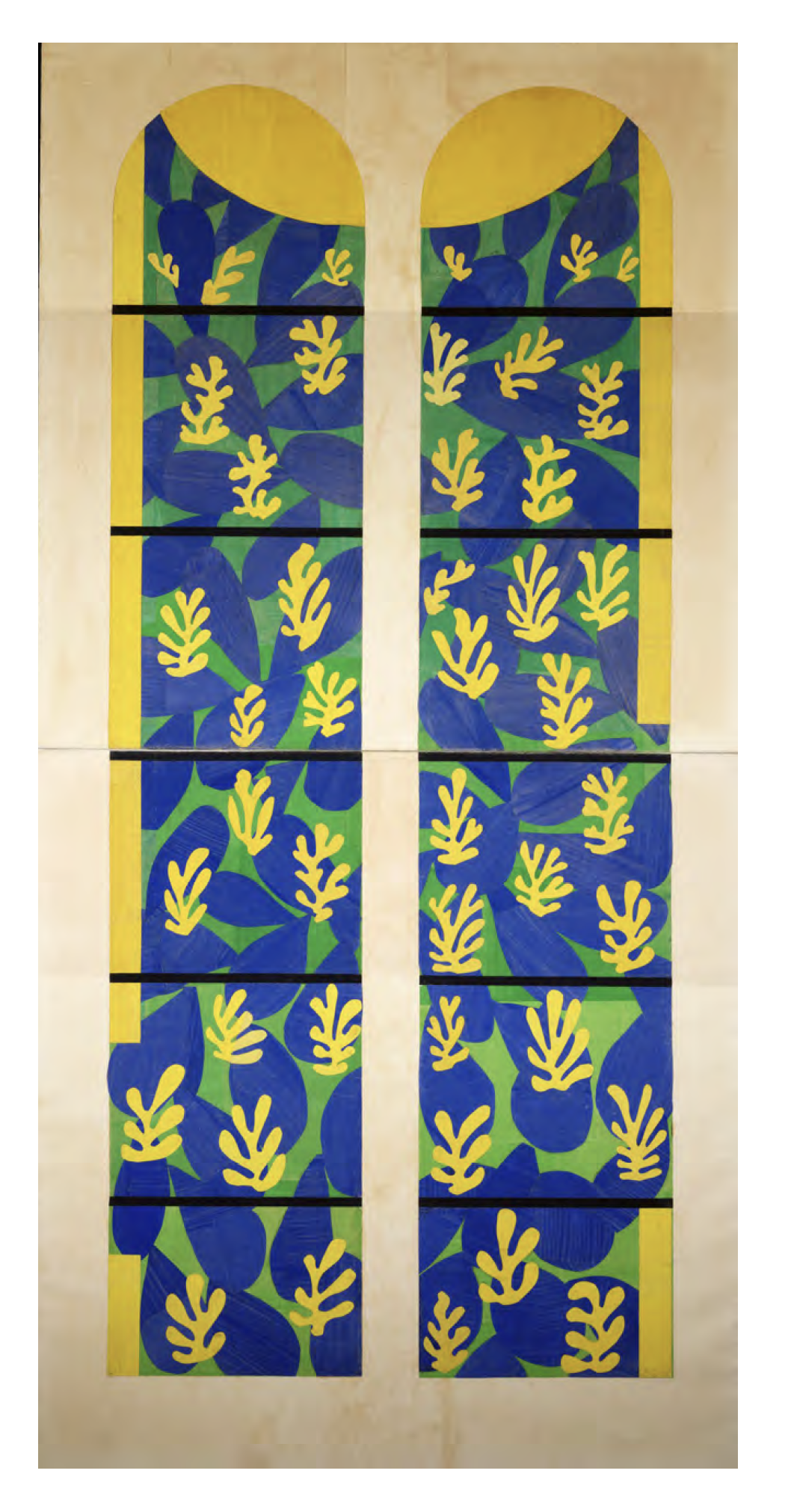
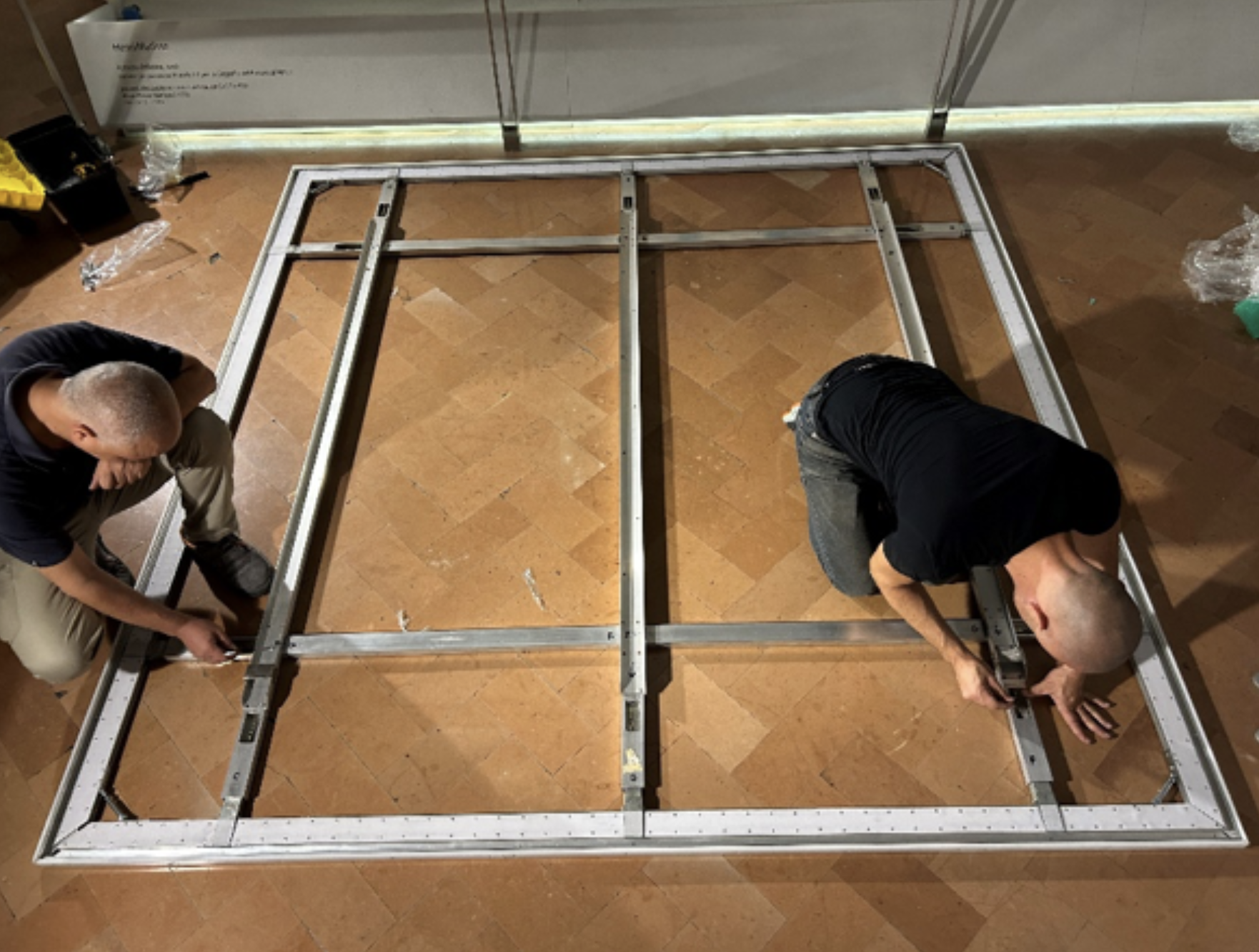
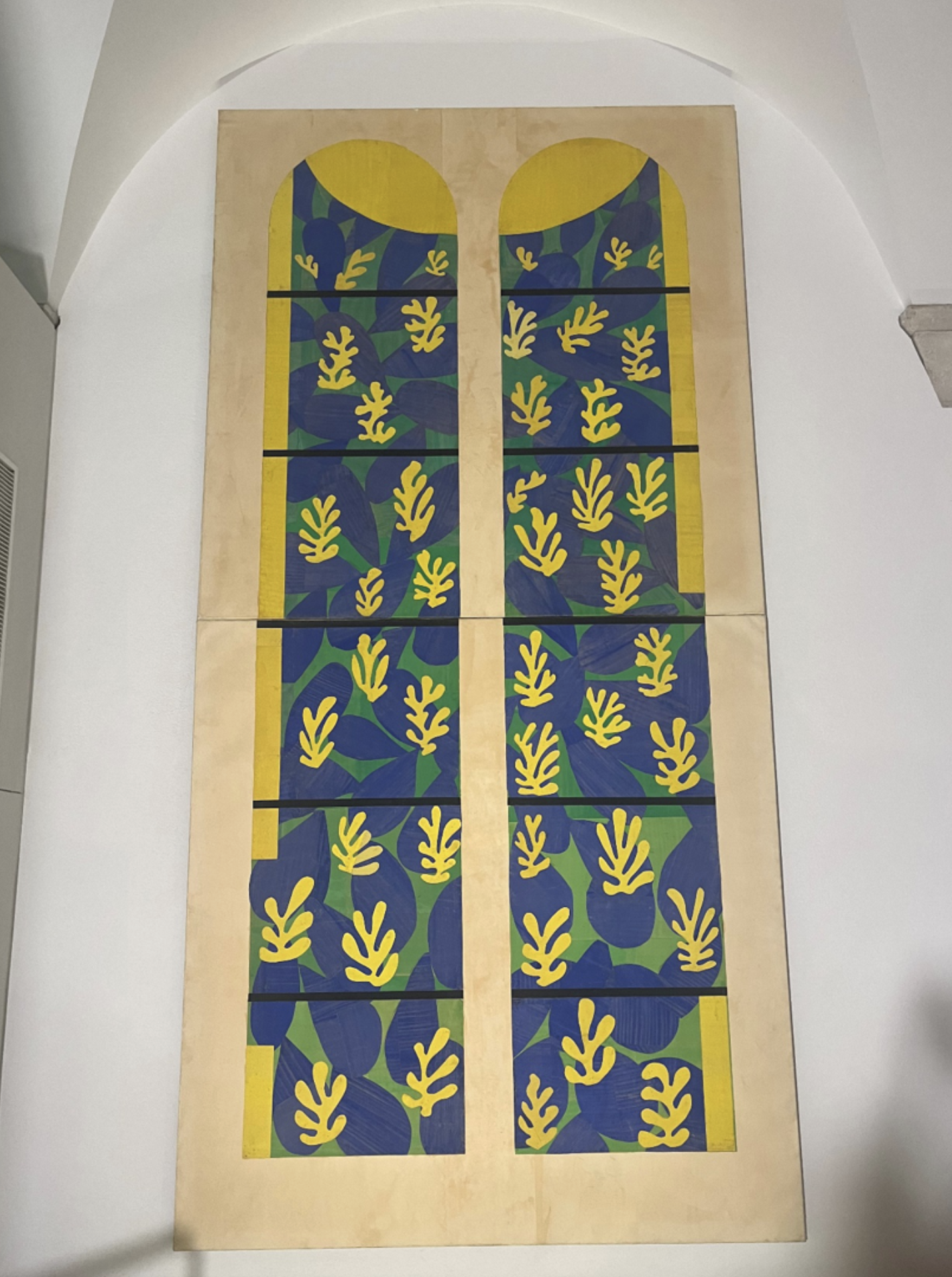
Henri Matisse made this study for the apse of the Rosary Chapel in Vence between 1949 and 1951. It consists of two juxtaposed rectangular panels, made using the papiers découpé technique: sheets of gouache-painted paper (yellow, green, and blue) that were cut into the desired shapes and glued, sometimes overlapping each other, onto a large sheet of thick, smooth white paper. Once the composition was completed, the sketches were mounted on wooden frames. In 1987, the wooden frames were replaced with Rigamonti anodized aluminum elastic frames. The frames are connected to each other and attached to the wall with metal brackets.
TOTAL COST: € 54.352,10 ($ 58,080.65)
State of Preservation
The wood has been deteriorating over the years. The works previously had aluminum frames with mounts and open corners in the 1990s. They are in a permanent display in the Matisse Room, and during the annual inspections, there were revelations of abnormal tensions that created abrasions and split the edges. Finally, the works show a strong undulation on the surface and on the corners.
Restoration Procedures
- Photographs before and after the intervention
- Disassembly from the exhibition wall and microaspiration of inconsistent particulate matter
- Cleaning with sponges and gentle rubbers of the different constituent parts of the works
- Reassembly of the modified aluminum frames
- Fixing the tears and adding protection for the edges
Detail
Adopted By:
The Italian & International ChapterPatrons:
Italian & International Chapter and John McCaffrey
Inventory N°: 23757, 23758
Artist: Henri Matisse
Date: 1949
Dimensions: 5.145 x 2.520 cm
Materials: Papiers découpés on canvas paper
Department:
XIX Century and Contemporary ArtLaboratories:
PaperWishbook year: 2024
L’Arbre de Vie - Final Restoration Report
Restoration Procedures
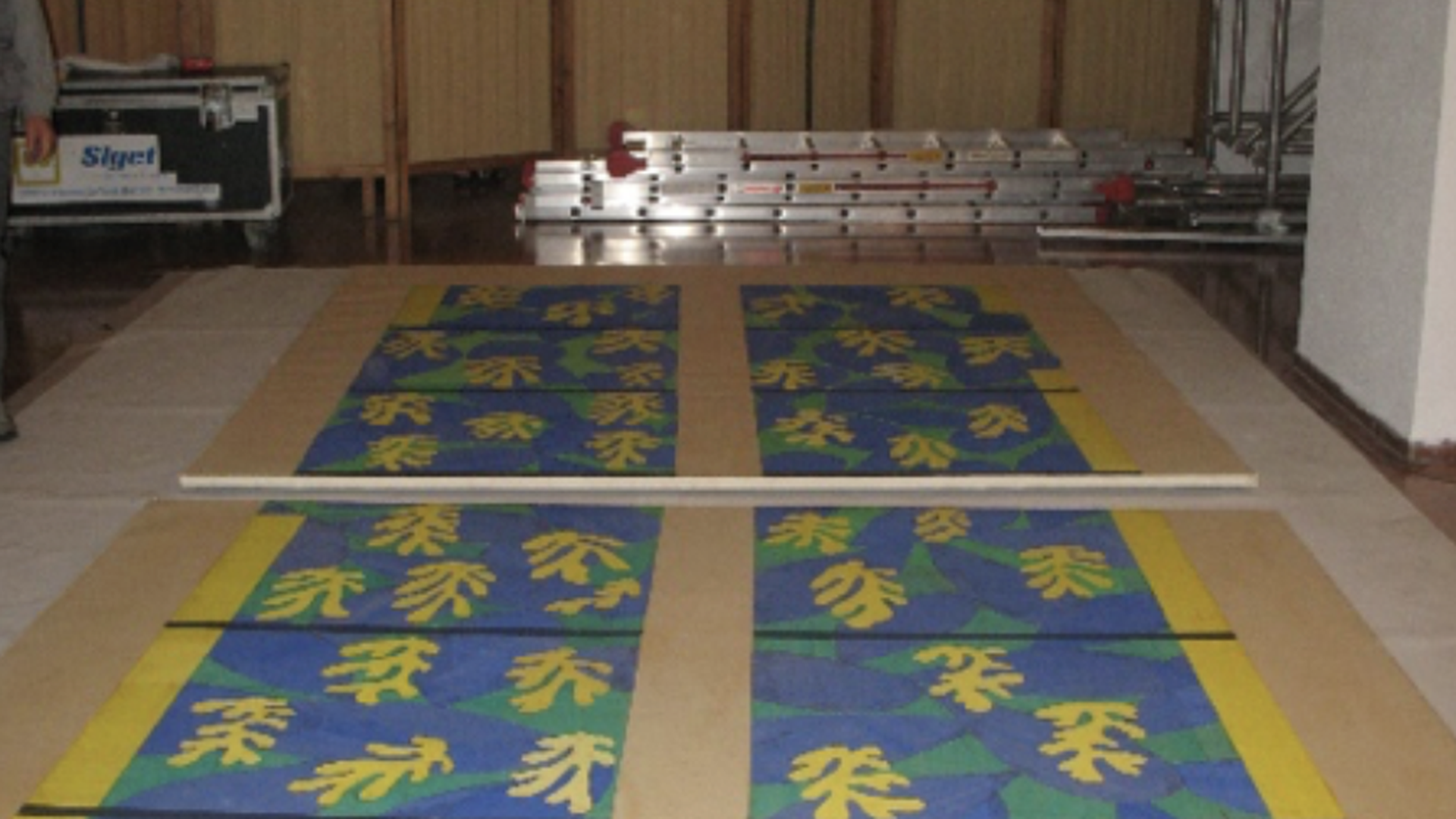
The two large-format cartoons, Arbre de Vie (inventory numbers 23757 and 23758), are the final full-size sketches made in 1949 for the stained-glass windows of the apse of the Rosary Chapel in the church of Saint Paul de Vence. The artwork, made using the "papiers paint decoupés" technique, measures 5,14 x 2,52 meters and is on permanent exhibition in the Matisse Room.
Individual elements of Matisse's gouache paintings on blue, yellow, and green paper were cut out and applied to a white paper background (CA Grain Canson paper) using protein glue.
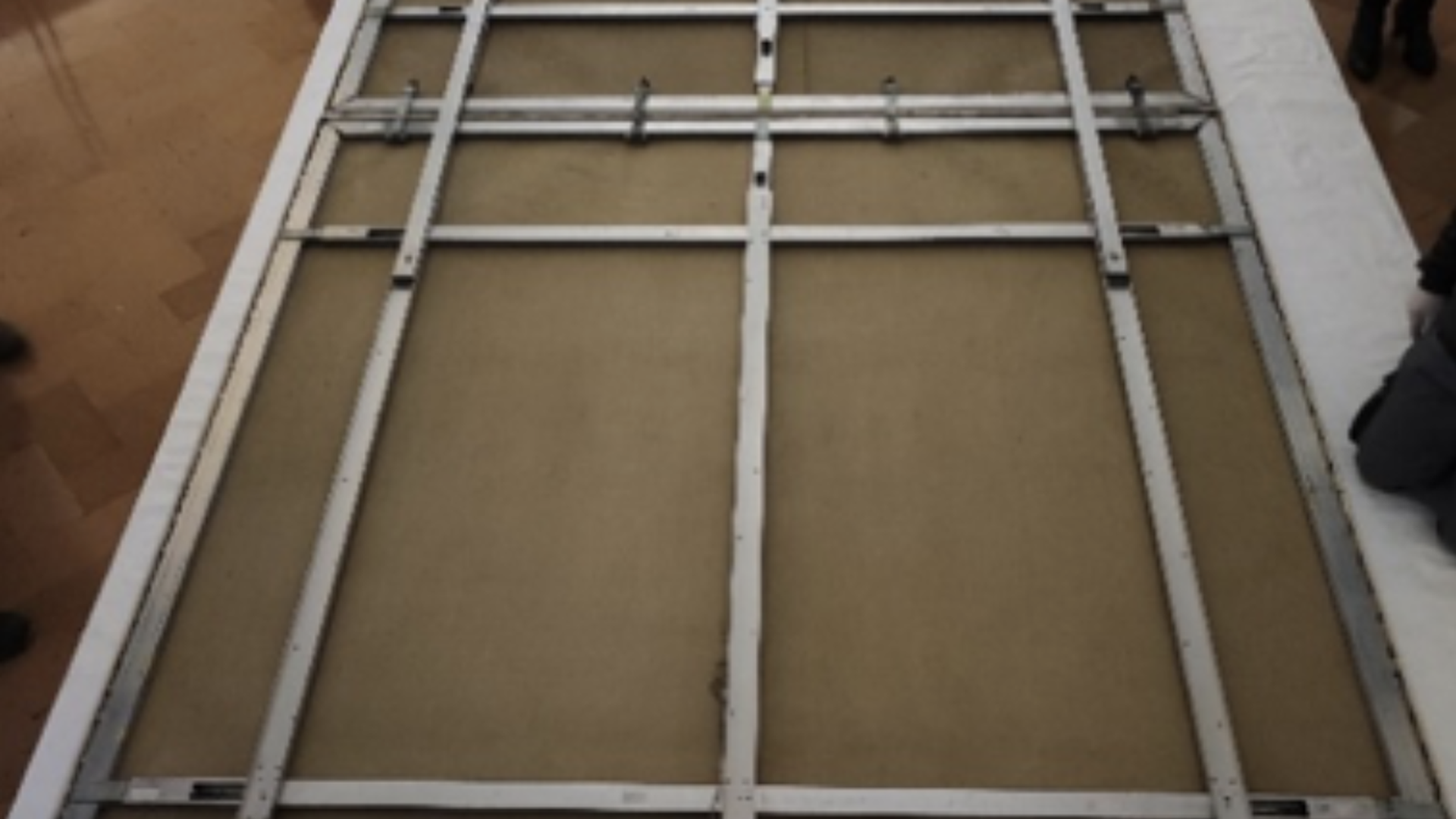
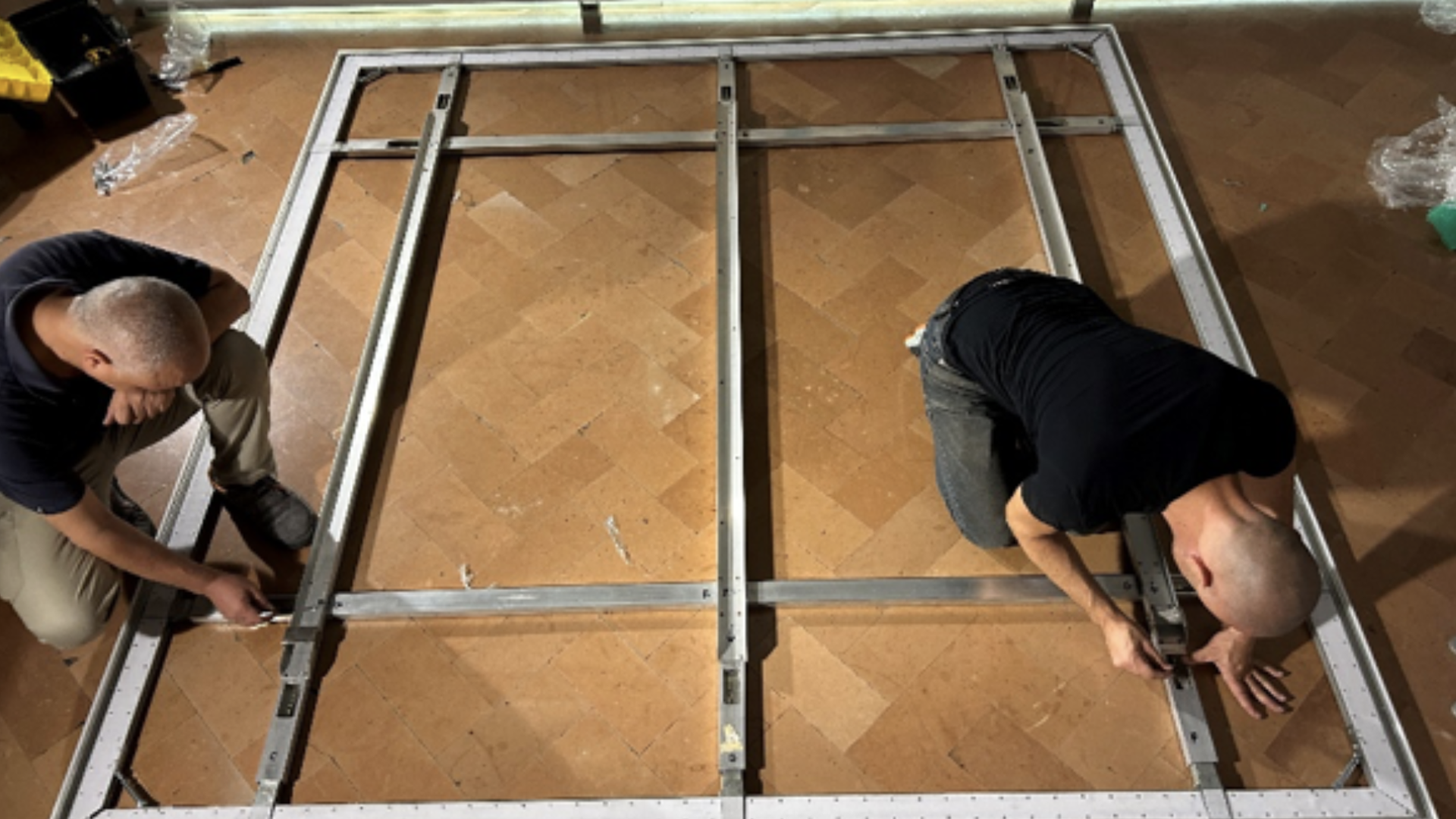
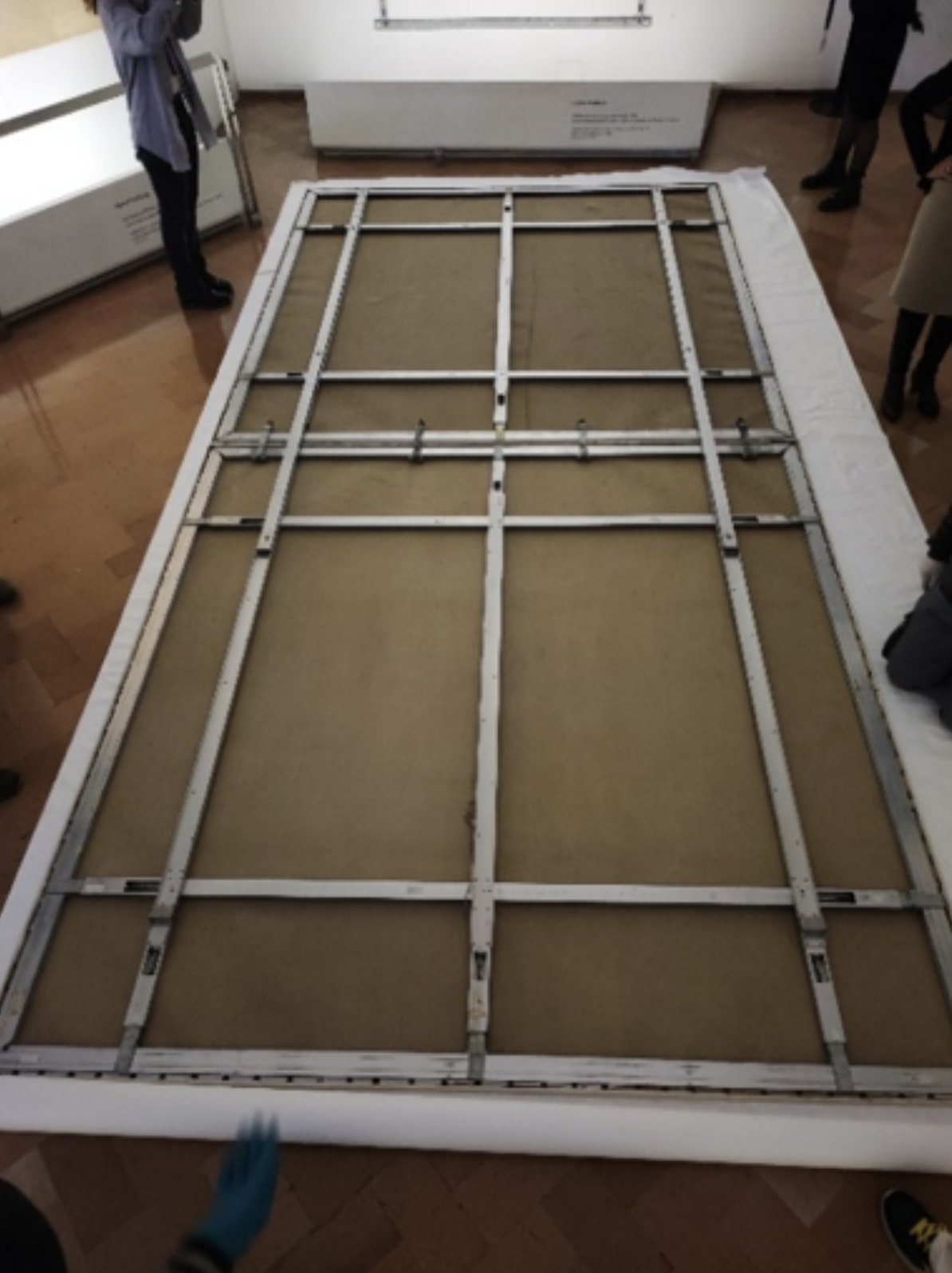
Kraft paper was added to the white paper; then, it was mounted on canvas and wooden frames, replaced in the late 1990s by aluminum frames with open corners and retractable springs, considered the optimum mounting.
The installation of the Matisse Room for the permanent exhibition of the cartoons in the apse, nave, and choir dates back to 2007, and, in the following years, the pieces have undergone work to secure the edges, which have been reinforced with Japanese paper as they have cracked and torn, due to the abnormal draughts caused by the opening of the aluminum frames.
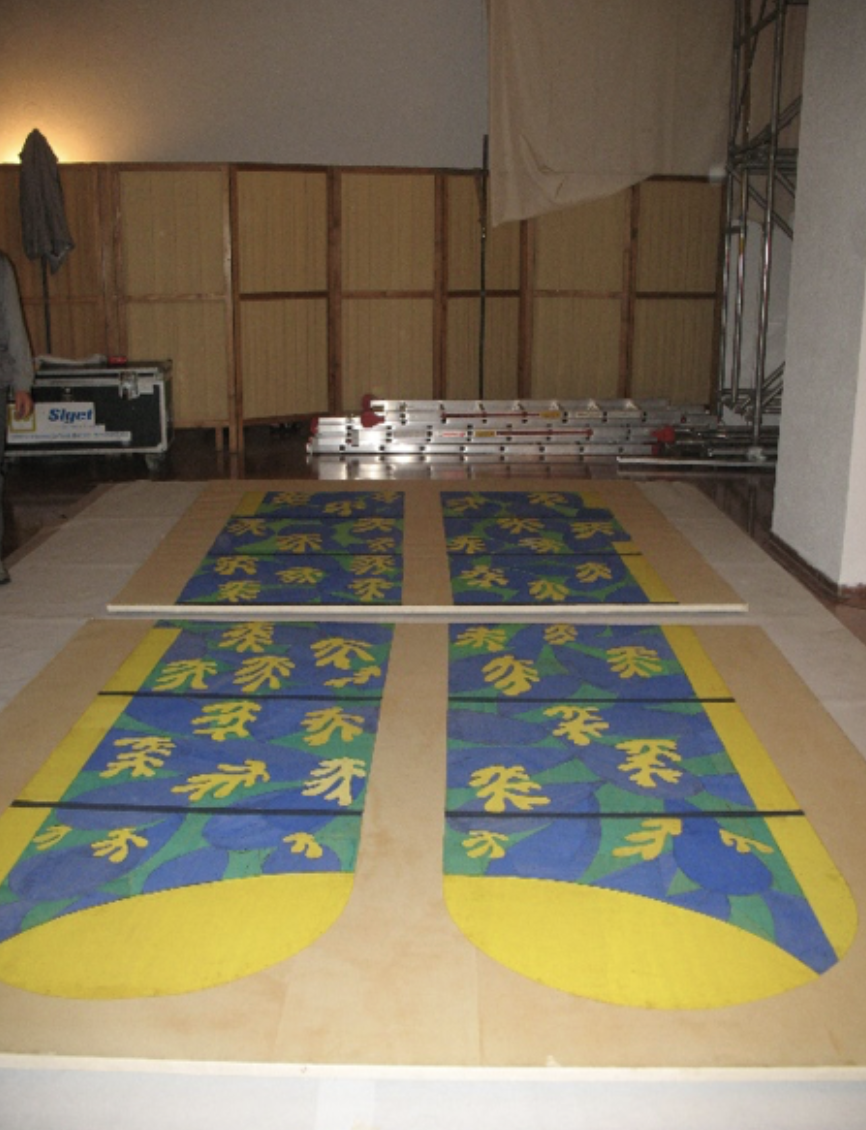
The regular maintenance of the room made it possible to monitor the state of conservation, to note a deterioration in the tension of the frames, despite the control of the environmental parameters, and therefore to decide to intervene to modify the frames themselves. The first operation was to dust with soft brushes and Kriolan sponges while the painting was still on the wall. The restorers removed the large painting Arbre de Vie from the wall and separated the two cartoons that make it up from each other by removing the connecting hooks (screw hooks). The Paper Laboratory restorers worked on-site in the Matisse room, given the size of the works. The first panel restored was the lower one (inv. number 23758); after carefully vacuuming off the thick layer of dust on the frame and the lining cloth, the restorers removed the Japanese paper reinforcing strips applied to the outer perimeter of the panels during previous interventions, without using water or other solvents.

L’Arbre de Vie
Details
Adopted by: The Italian & International Chapter
Patrons: Italian & International Chapter and John McCaffrey
Inventory: 23757, 23758
Artist: Henri Matisse
Date: 1949
Materials: Papiers découpés on canvas paper
Dimensions: 5.145 x 2.520 cm
Department: XIX Century and Contemporary Art
Laboratory: Paper
Wishbook year: 2024
Description
HIGH PRIORITY PROJECT
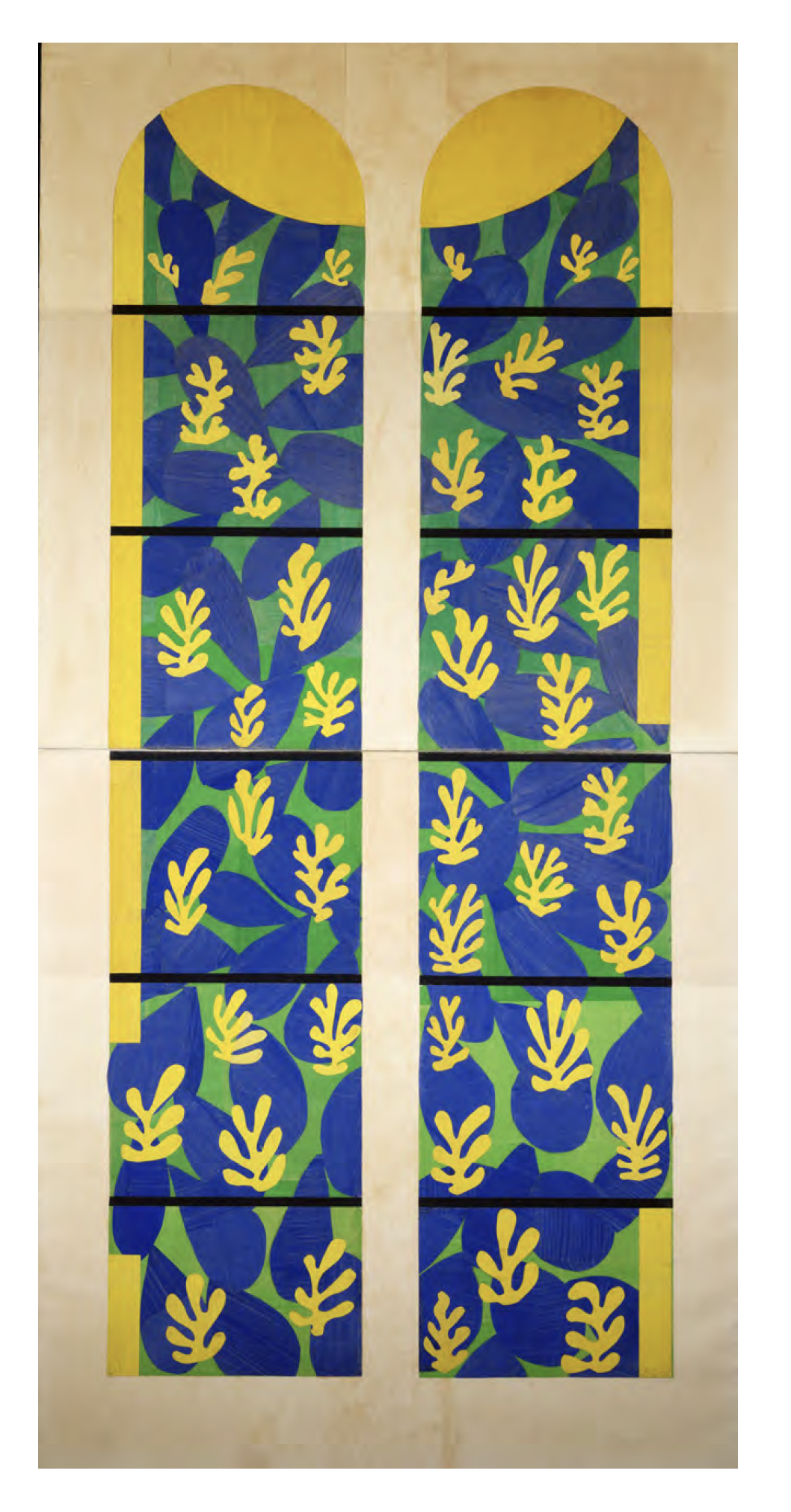
Henri Matisse made this study for the apse of the Rosary Chapel in Vence between 1949 and 1951. It consists of two juxtaposed rectangular panels, made using the papiers découpé technique: sheets of gouache-painted paper (yellow, green, and blue) that were cut into the desired shapes and glued, sometimes overlapping each other, onto a large sheet of thick, smooth white paper. Once the composition was completed, the sketches were mounted on wooden frames. In 1987, the wooden frames were replaced with Rigamonti anodized aluminum elastic frames. The frames are connected to each other and attached to the wall with metal brackets.
TOTAL COST: € 54.352,10 ($ 58,080.65)
State of Preservation
The wood has been deteriorating over the years. The works previously had aluminum frames with mounts and open corners in the 1990s. They are in a permanent display in the Matisse Room, and during the annual inspections, there were revelations of abnormal tensions that created abrasions and split the edges. Finally, the works show a strong undulation on the surface and on the corners.
Restoration Procedures
- Photographs before and after the intervention
- Disassembly from the exhibition wall and microaspiration of inconsistent particulate matter
- Cleaning with sponges and gentle rubbers of the different constituent parts of the works
- Reassembly of the modified aluminum frames
- Fixing the tears and adding protection for the edges
Media
L’Arbre de Vie
Restorations Update: L’Arbre de Vie - Final Restoration Report
Restoration Procedures
The two large-format cartoons, Arbre de Vie (inventory numbers 23757 and 23758), are the final full-size sketches made in 1949 for the stained-glass windows of the apse of the Rosary Chapel in the church of Saint Paul de Vence. The artwork, made using the "papiers paint decoupés" technique, measures 5,14 x 2,52 meters and is on permanent exhibition in the Matisse Room.
Individual elements of Matisse's gouache paintings on blue, yellow, and green paper were cut out and applied to a white paper background (CA Grain Canson paper) using protein glue.
Kraft paper was added to the white paper; then, it was mounted on canvas and wooden frames, replaced in the late 1990s by aluminum frames with open corners and retractable springs, considered the optimum mounting.
The installation of the Matisse Room for the permanent exhibition of the cartoons in the apse, nave, and choir dates back to 2007, and, in the following years, the pieces have undergone work to secure the edges, which have been reinforced with Japanese paper as they have cracked and torn, due to the abnormal draughts caused by the opening of the aluminum frames.
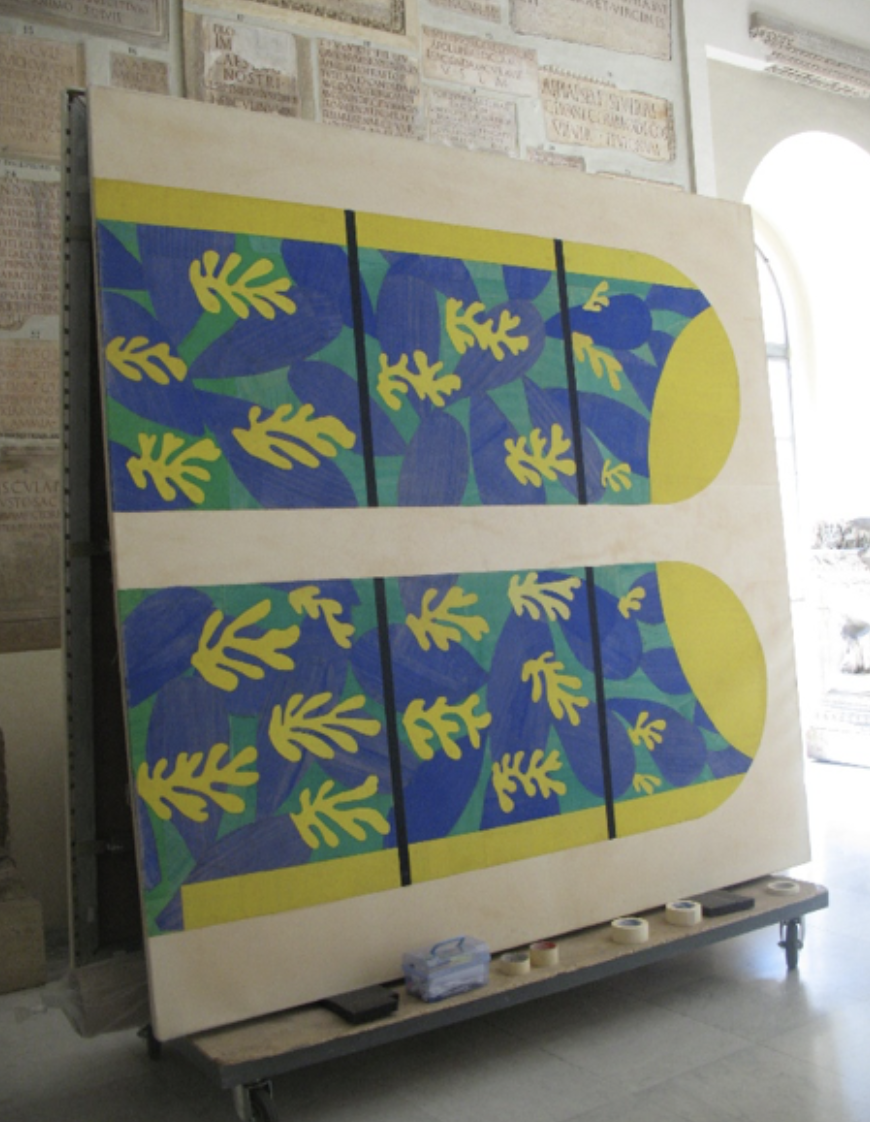
The regular maintenance of the room made it possible to monitor the state of conservation, to note a deterioration in the tension of the frames, despite the control of the environmental parameters, and therefore to decide to intervene to modify the frames themselves. The first operation was to dust with soft brushes and Kriolan sponges while the painting was still on the wall. The restorers removed the large painting Arbre de Vie from the wall and separated the two cartoons that make it up from each other by removing the connecting hooks (screw hooks). The Paper Laboratory restorers worked on-site in the Matisse room, given the size of the works. The first panel restored was the lower one (inv. number 23758); after carefully vacuuming off the thick layer of dust on the frame and the lining cloth, the restorers removed the Japanese paper reinforcing strips applied to the outer perimeter of the panels during previous interventions, without using water or other solvents.
© 2026 Patrons of the Arts
in the Vatican Museums
Vatican Museums V-00120,
Vatican City State (Europe)
+39 0669864499