

Head of Faustina Major (the Elder)
Artist: Unknown
Date: 140-60 A.D.
Classification: Statue
Dimensions: 67 cm h
Materials: White marble
Adopted By: The Washington D.C. Chapter
Description
HIGH PRIORITY PROJECT
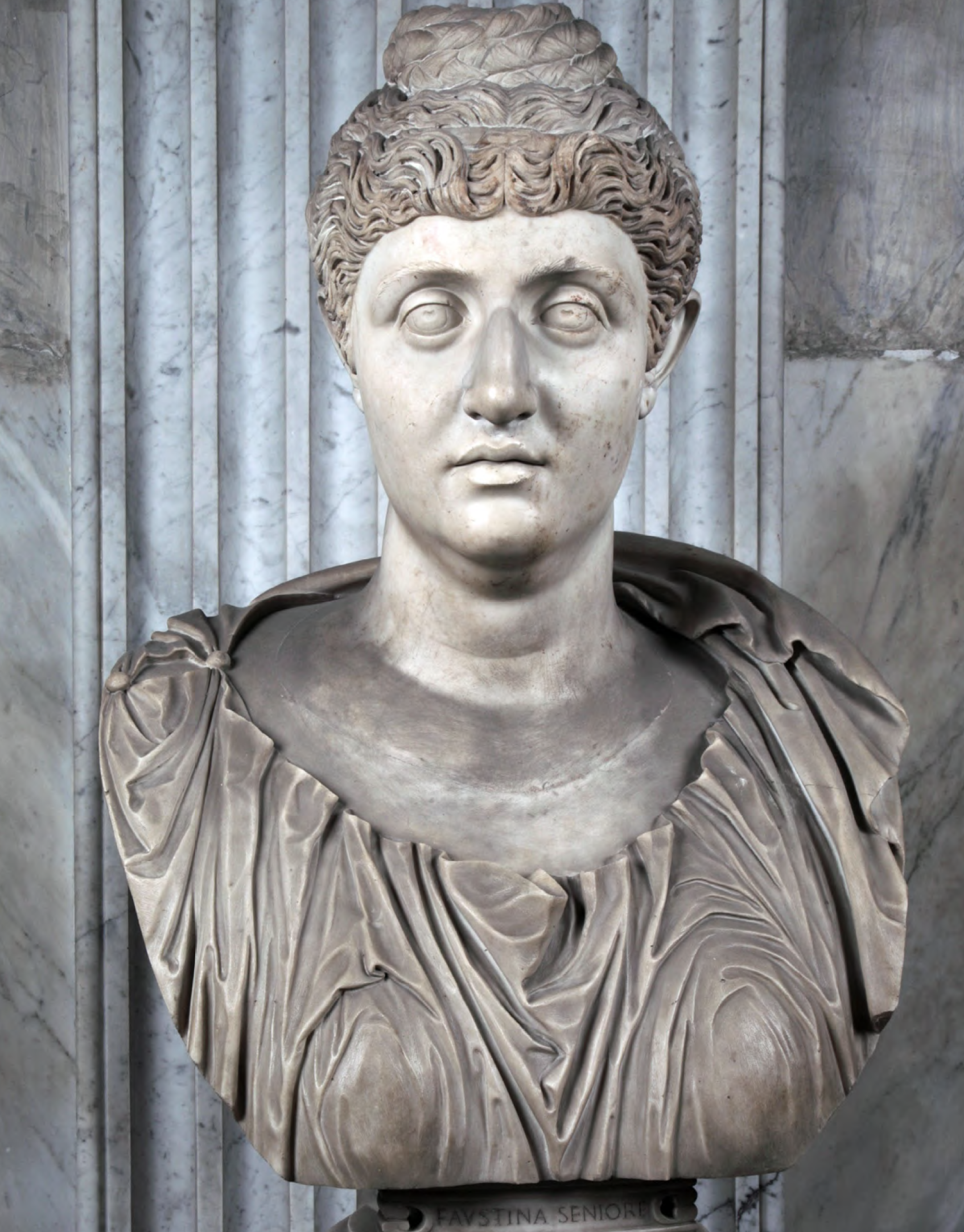
The portrait depicts Faustina Major (the Elder), who married Emperor Antoninus Pius (138-161 A.D.). In 138 A.D. Faustina received the title of Augusta in 138 A.D. and was deified soon after her death in 141 A.D. The Vatican specimen is one of the best portraits of the empress, which was also used for postmortem depictions. During the excavations conducted by Gavin Hamilton in the locality known as Pantanello, the head was discovered in 1769 in an area located near the Greek Theater of the grand Villa Adriana where, probably as early as late antiquity, marbles pertaining to the villa’s sculptural furnishings had accumulated. An effigy of Faustina must have decorated one of the rooms of Villa Adriana, testifying to the constant attendance of the imperial family in the residence during the 2nd century A.D. In 1776, the artefact was sold to Pius VI and mounted on a bust executed by the papal restorer Giovanni Pierantoni. The sculpture was displayed in the Sala Rotonda in the Vatican Museums, where it is seen today.
TOTAL COST: € 16.762,35 ($ 17,912.24)
State of Preservation
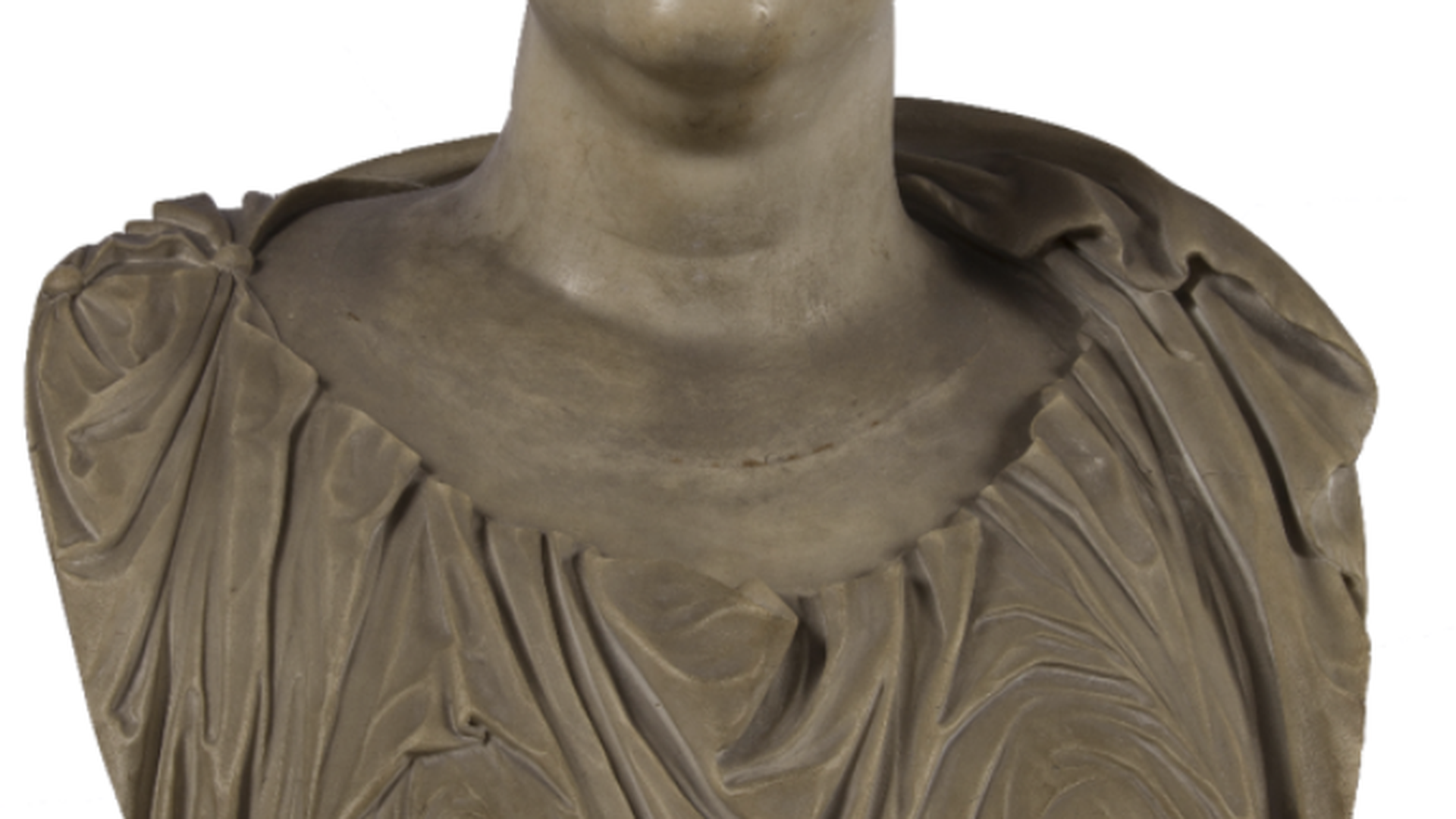
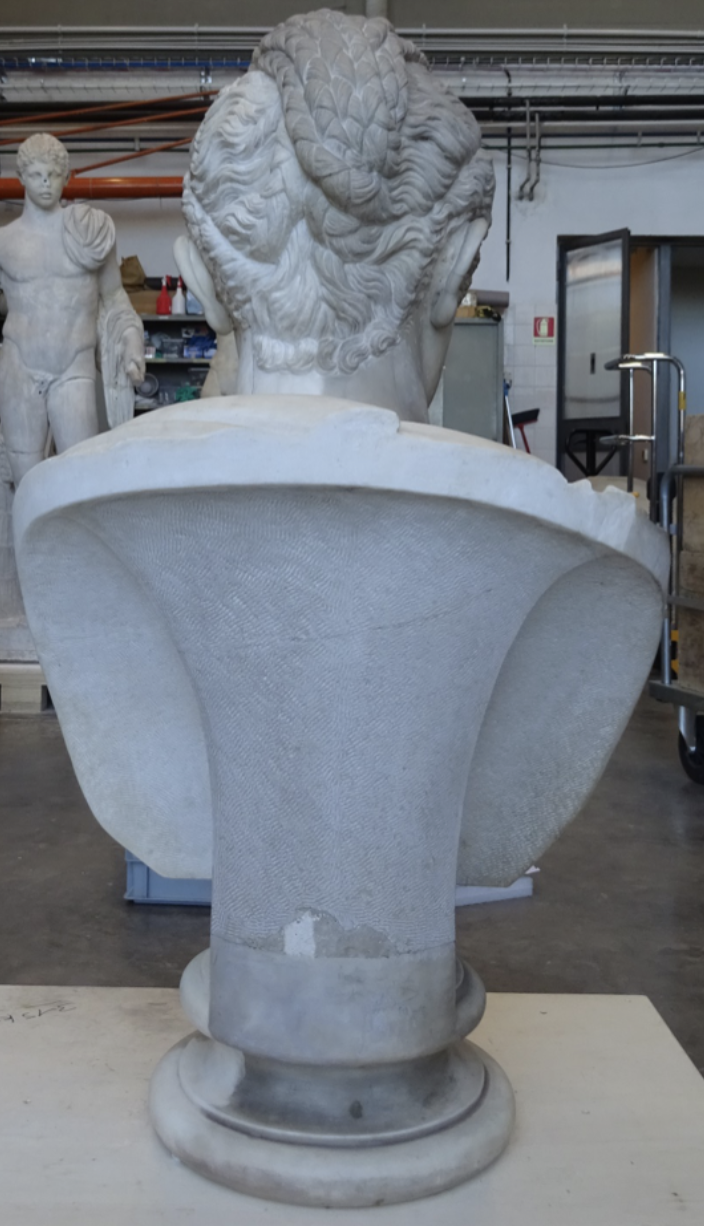
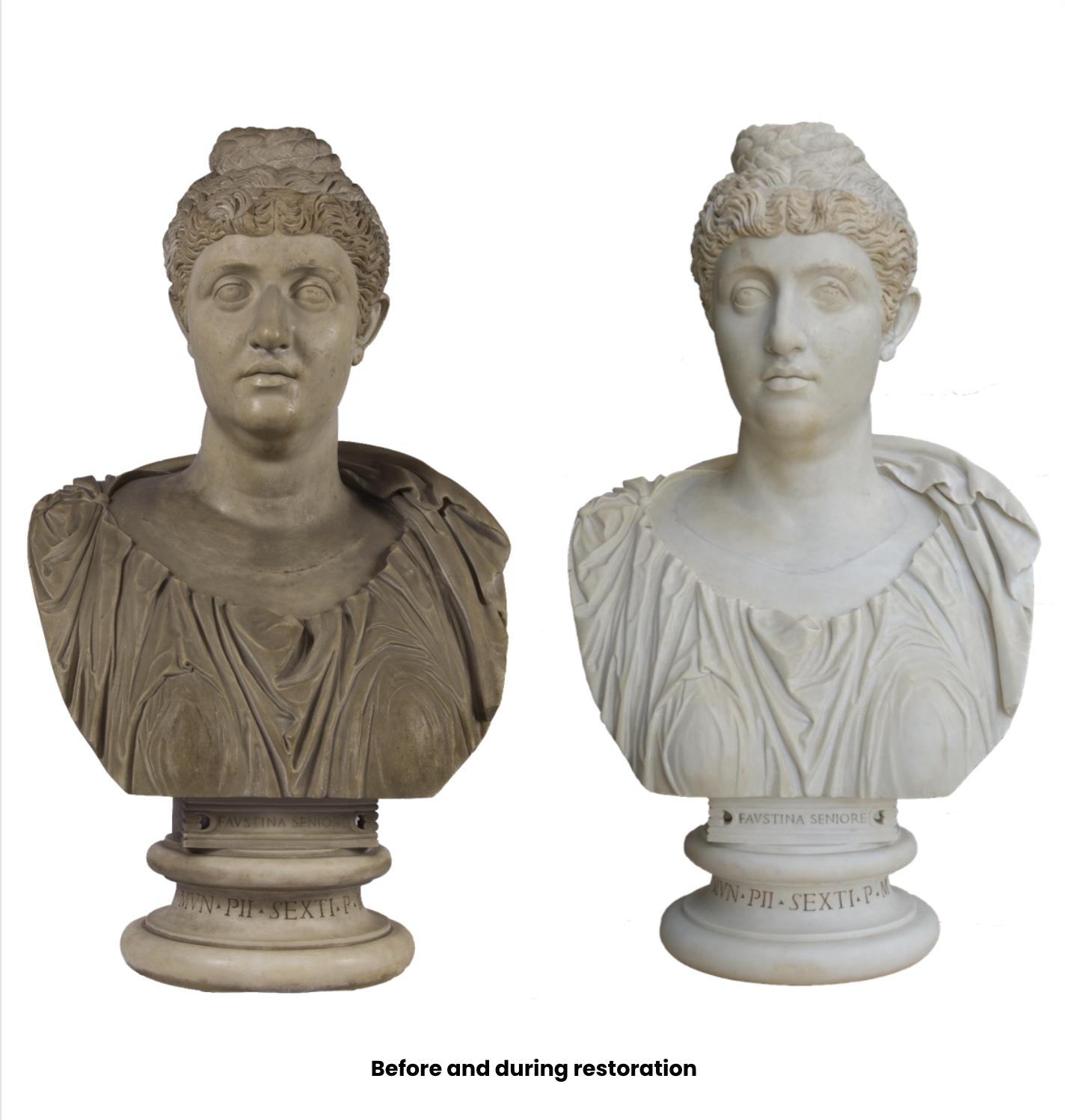
The sculpture appears opaque and darkened due to the presence of consistent deposits. There are areas with various stains and inhomogeneities on the surface of the head (of ancient workmanship) and the bust (of modern age). There are also cracks, fractures, and small and medium-sized lacunae.
Restoration Procedures
- Structural verification of the bond between the torso and head
- Dry removal of incoherent surface deposits with specific micro vacuum cleaners and paint brushes
- A cleaning plan will be determined after the analytical testing
- Integrate the stucco and micro stucco work with suitable materials compatible with the original
- Perform localized chromatic balancing to restore harmony for reading the work
- A final application of a protective coat will complete the restoration
Detail
Adopted By:
The Washington D.C. ChapterInventory N°: 255
Artist: Unknown
Date: 140-60 A.D.
Dimensions: 67 cm h
Materials: White marble
Wishbook year: 2024
Head of Faustina Major (the Elder) - Final Restoration Report
Historical & Archival Notes
When Antoninus became emperor in 138, she was given the title of Augusta.
1769: the head was found during excavations carried out by Gavin Hamilton in the area known as Pantanello in Villa Adriana.
1776: the head was sold for 200 scudi to Pope Pius VI, who commissioned Giovanni Pierantoni to complete the bust.
Ennio Quirino Visconti writes in his book on the Clementine Museum: "...and among so many, almost all of them of egregious sculpture, he can be sure that the present one, not a point inferior to the others for the excellence of style, for its almost colossal size and its beautiful preservation, is the most estimable of all.
Restoration Procedures
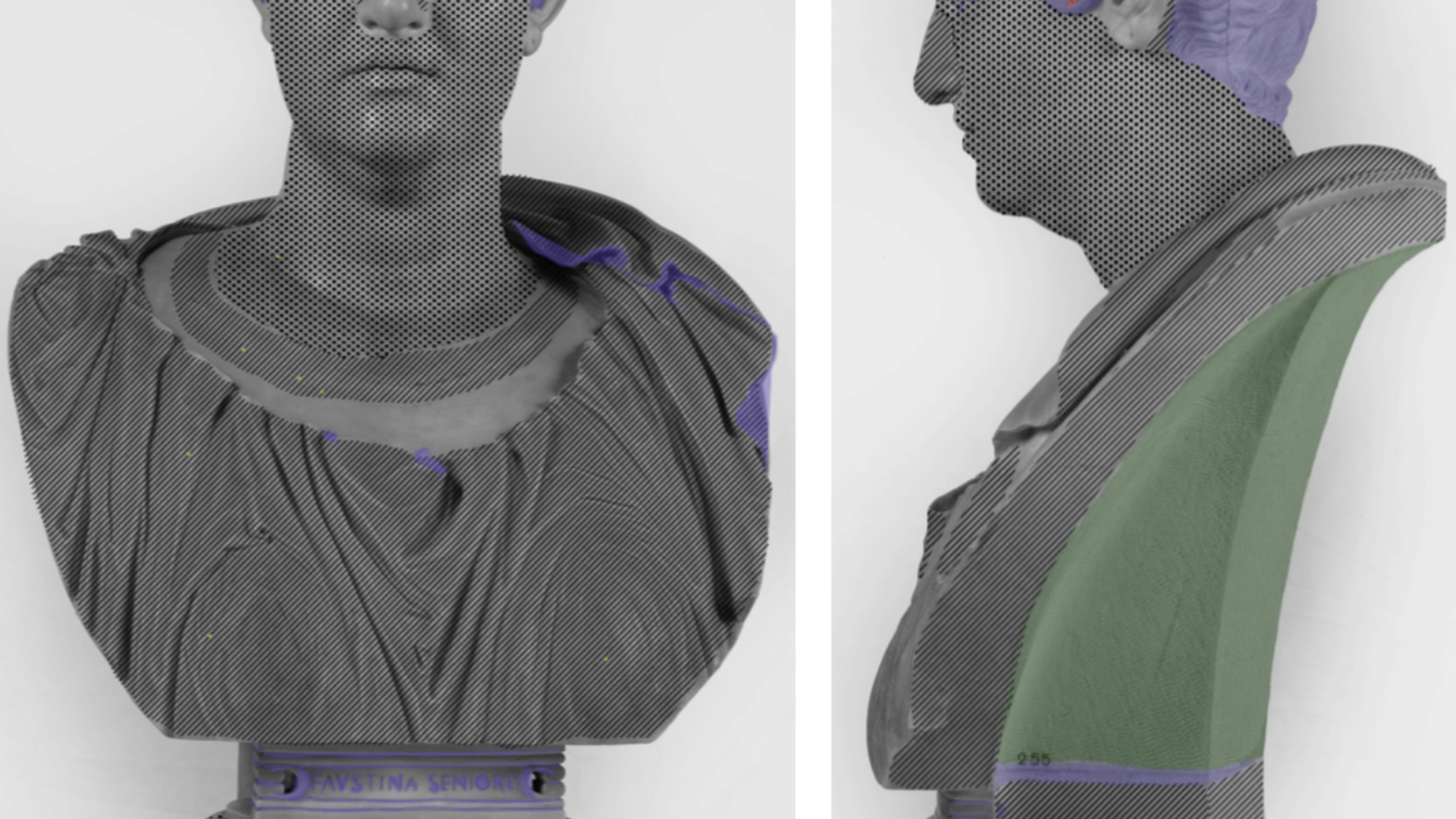
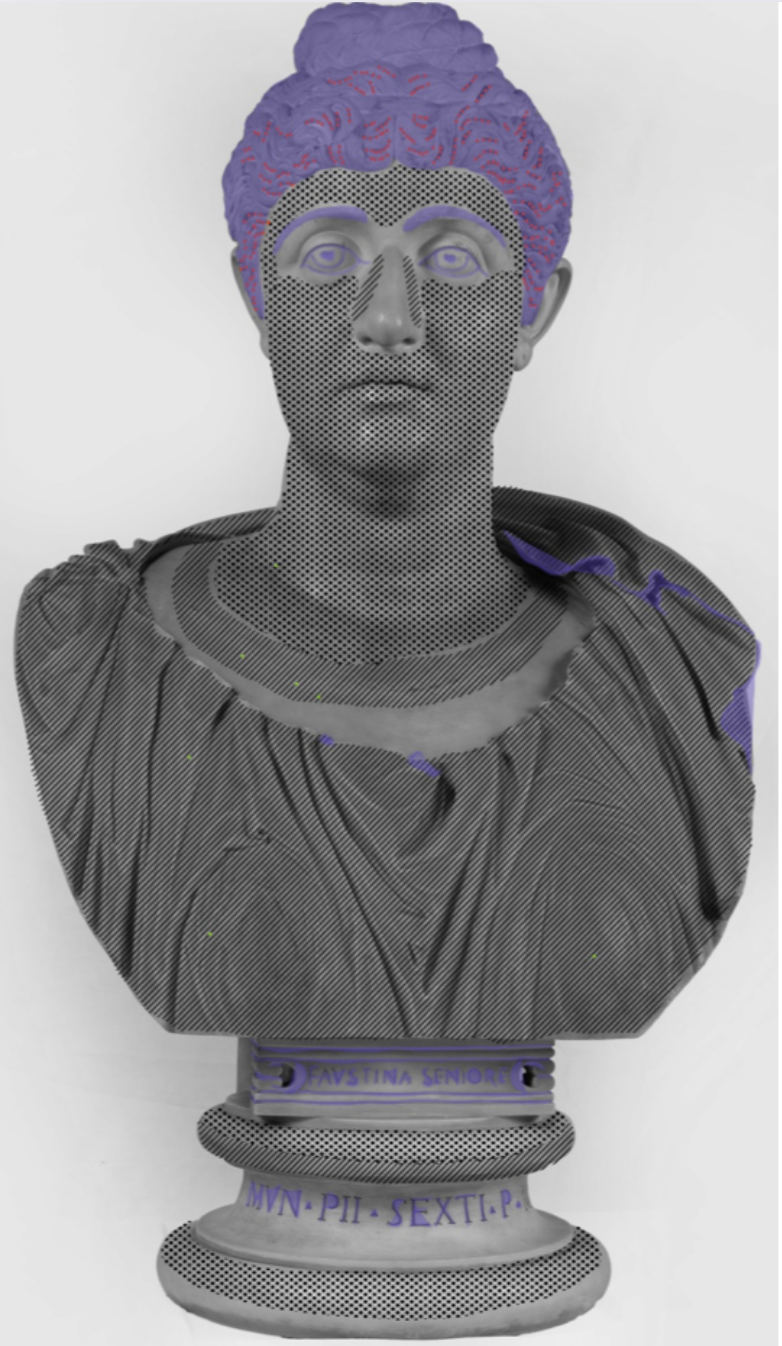
The Scientific Research Laboratory performed non-destructive analyses, such as induced ultraviolet fluorescence and XRF and FTIR fluorescence analyses, to reveal the presence and nature of various substances.
The main results obtained from induced UV fluorescence are:
- The presence of colophony;
- Weak fluorescence on the fabric due to anthropic contact;
- A significant difference in fluorescence between antique marble and inlay marble.
The main results obtained from the XRF and FTIR fluorescence analyses are:
- Presence of iron, gypsum, silicates, and waxes.
- Possible traces of a lime finish pigmented with ochre.
The Scientific Research Laboratory also conducted Microanalytical investigations, and, more specifically, spectroscopic analyses on samples to identify the overlying layers. These analyses revealed the presence of rosin, gypsum, calcite, calcium oxalates, and silicates (possibly due to the chalk patination).
Head of Faustina Major (the Elder) - Restoration Update
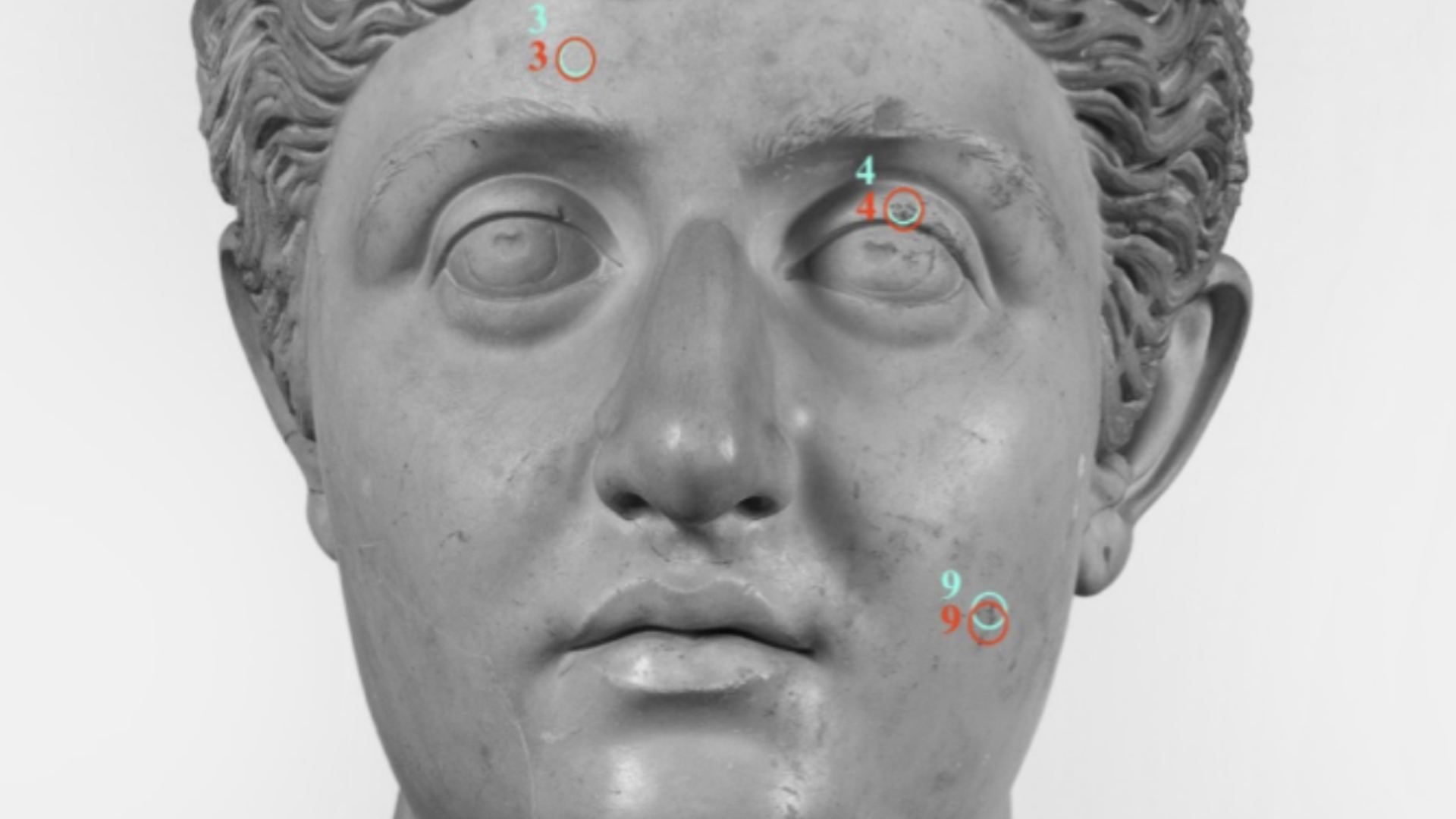
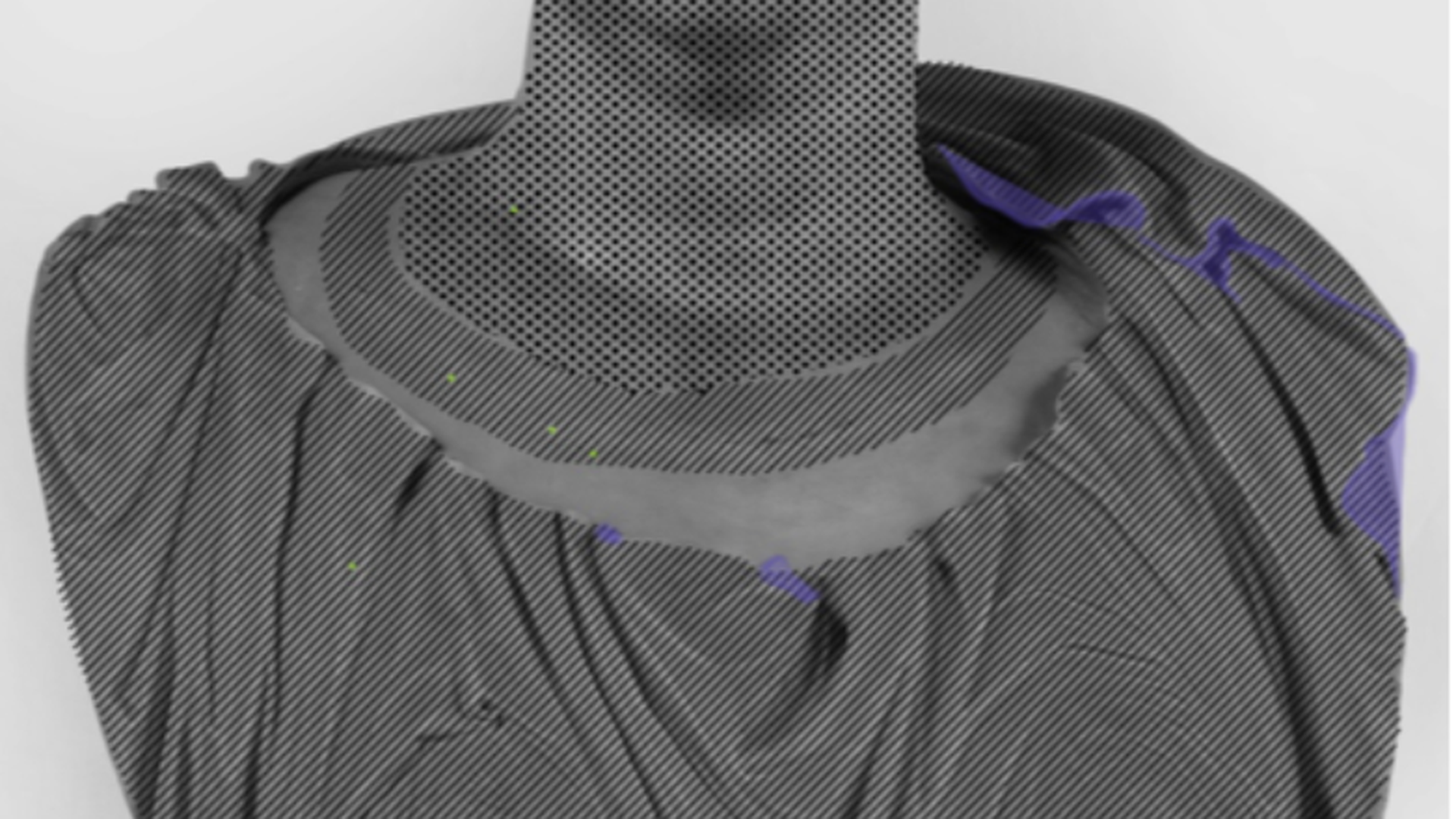
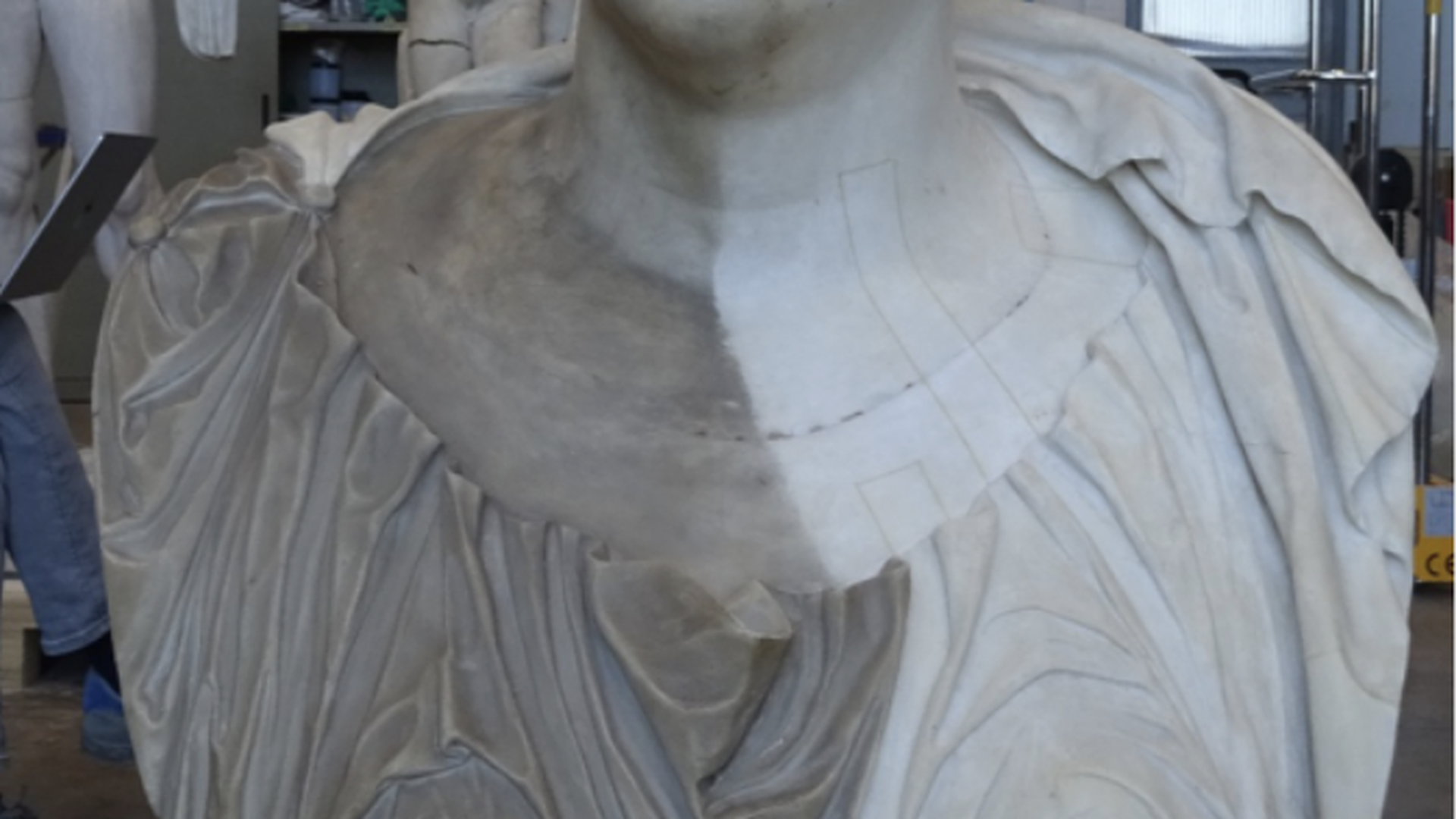
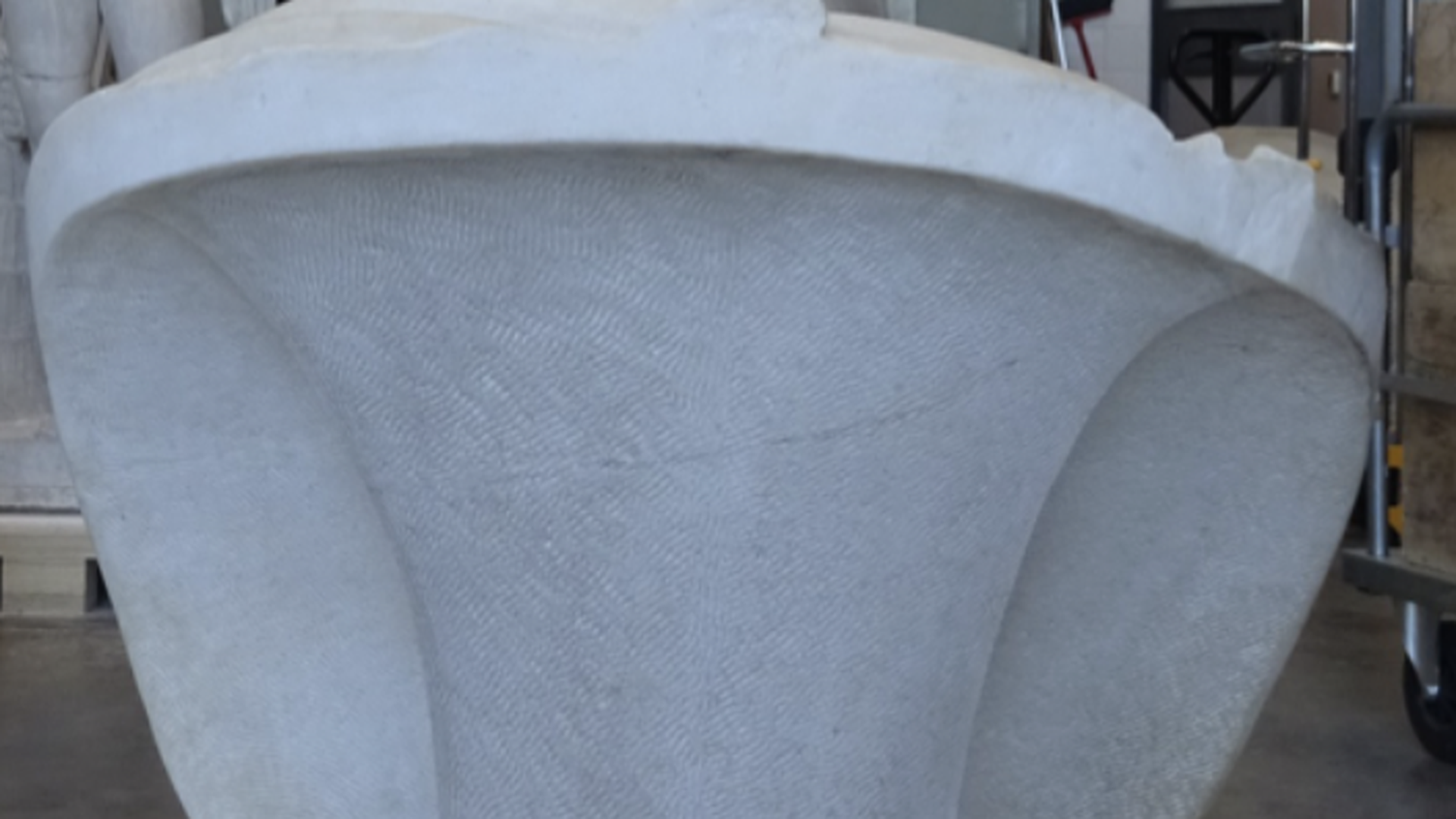
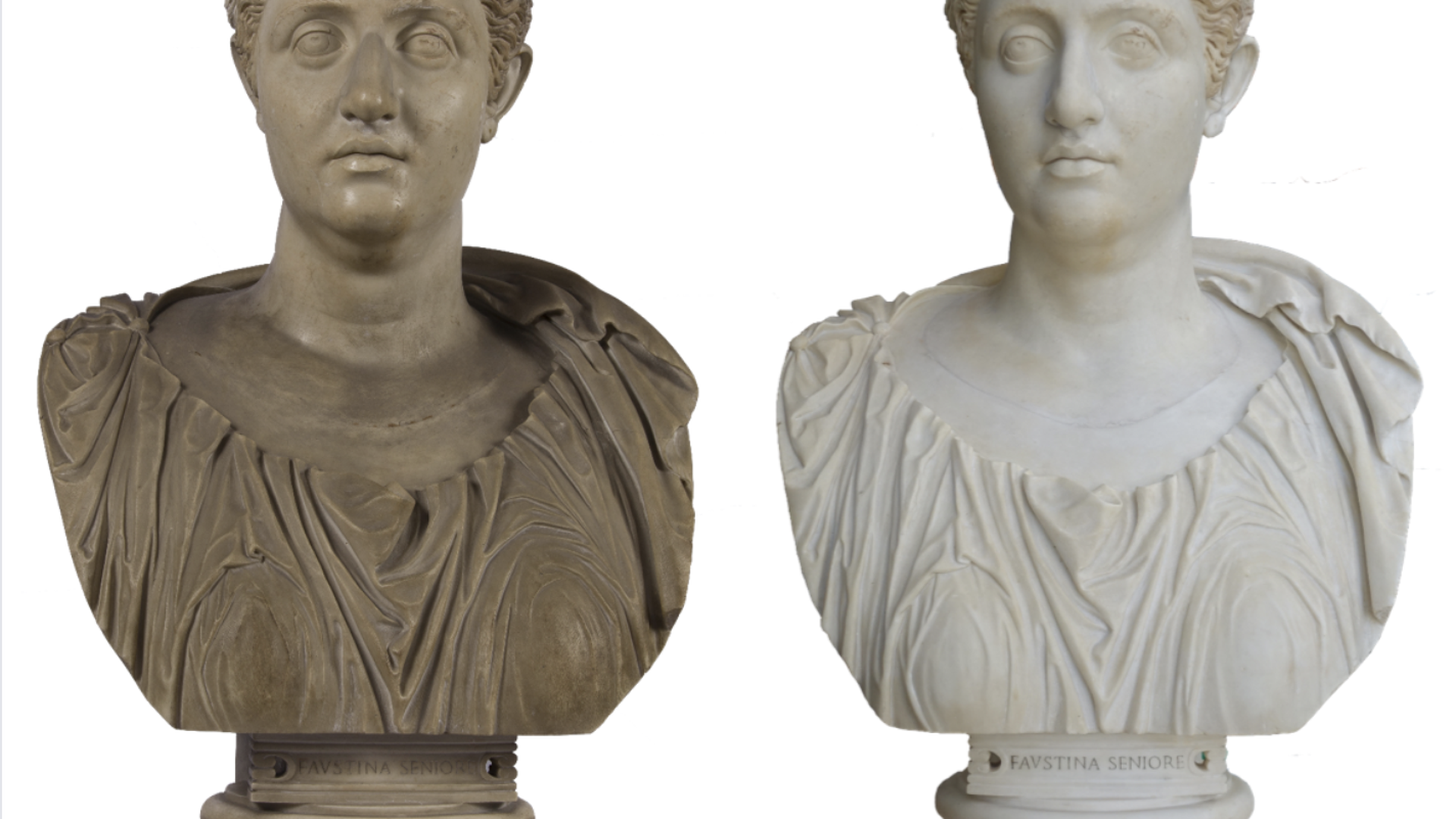
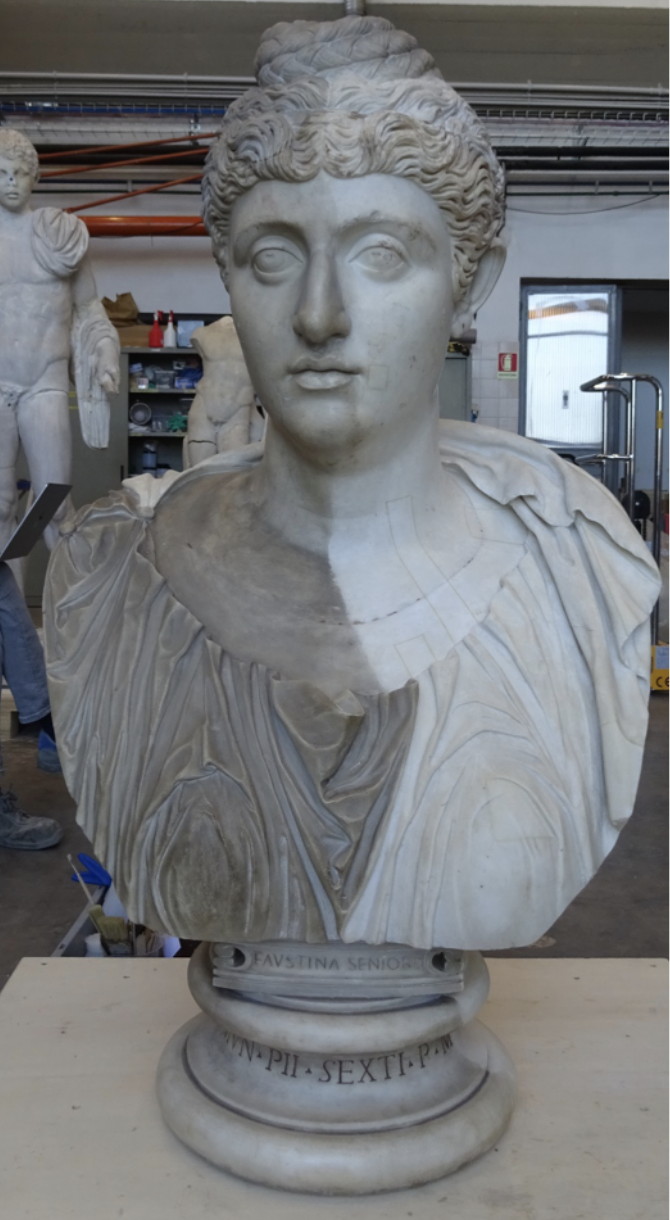
Diagnostic investigations performed by the Scientific Research Laboratory have preceded the first phase of the cleaning process .

Head of Faustina Major (the Elder)
Details
Adopted by: The Washington D.C. Chapter
Inventory: 255
Artist: Unknown
Date: 140-60 A.D.
Classification: Statue
Materials: White marble
Dimensions: 67 cm h
Museum: Pio Clementino Museum
Department: Greek and Roman Antiquities
Laboratory: Stone Materials
Wishbook year: 2024
Description
HIGH PRIORITY PROJECT
The portrait depicts Faustina Major (the Elder), who married Emperor Antoninus Pius (138-161 A.D.). In 138 A.D. Faustina received the title of Augusta in 138 A.D. and was deified soon after her death in 141 A.D. The Vatican specimen is one of the best portraits of the empress, which was also used for postmortem depictions. During the excavations conducted by Gavin Hamilton in the locality known as Pantanello, the head was discovered in 1769 in an area located near the Greek Theater of the grand Villa Adriana where, probably as early as late antiquity, marbles pertaining to the villa’s sculptural furnishings had accumulated. An effigy of Faustina must have decorated one of the rooms of Villa Adriana, testifying to the constant attendance of the imperial family in the residence during the 2nd century A.D. In 1776, the artefact was sold to Pius VI and mounted on a bust executed by the papal restorer Giovanni Pierantoni. The sculpture was displayed in the Sala Rotonda in the Vatican Museums, where it is seen today.
TOTAL COST: € 16.762,35 ($ 17,912.24)
State of Preservation
The sculpture appears opaque and darkened due to the presence of consistent deposits. There are areas with various stains and inhomogeneities on the surface of the head (of ancient workmanship) and the bust (of modern age). There are also cracks, fractures, and small and medium-sized lacunae.
Restoration Procedures
- Structural verification of the bond between the torso and head
- Dry removal of incoherent surface deposits with specific micro vacuum cleaners and paint brushes
- A cleaning plan will be determined after the analytical testing
- Integrate the stucco and micro stucco work with suitable materials compatible with the original
- Perform localized chromatic balancing to restore harmony for reading the work
- A final application of a protective coat will complete the restoration
Media
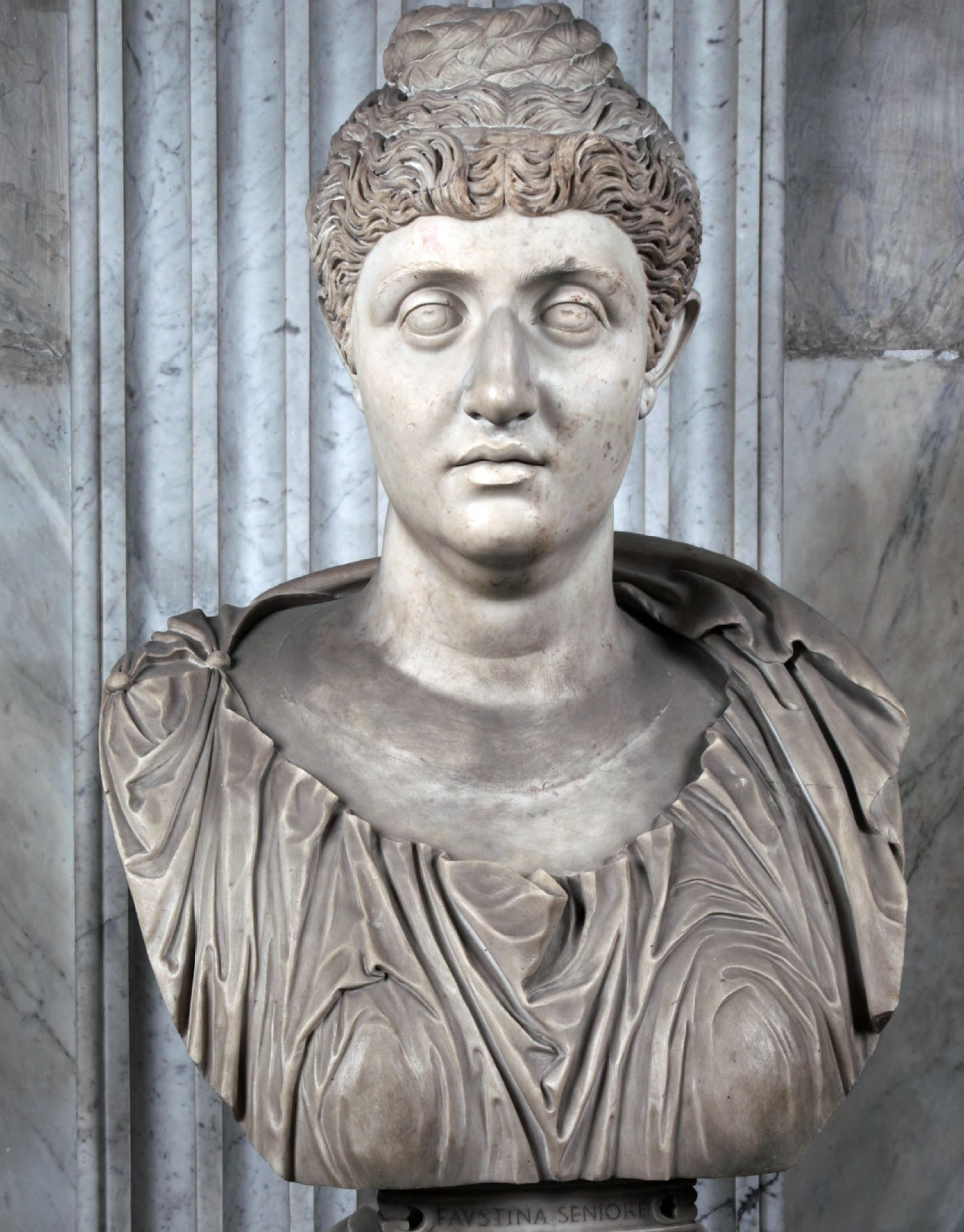
Head of Faustina Major (the Elder)
Restorations Update: Head of Faustina Major (the Elder) - Final Restoration Report
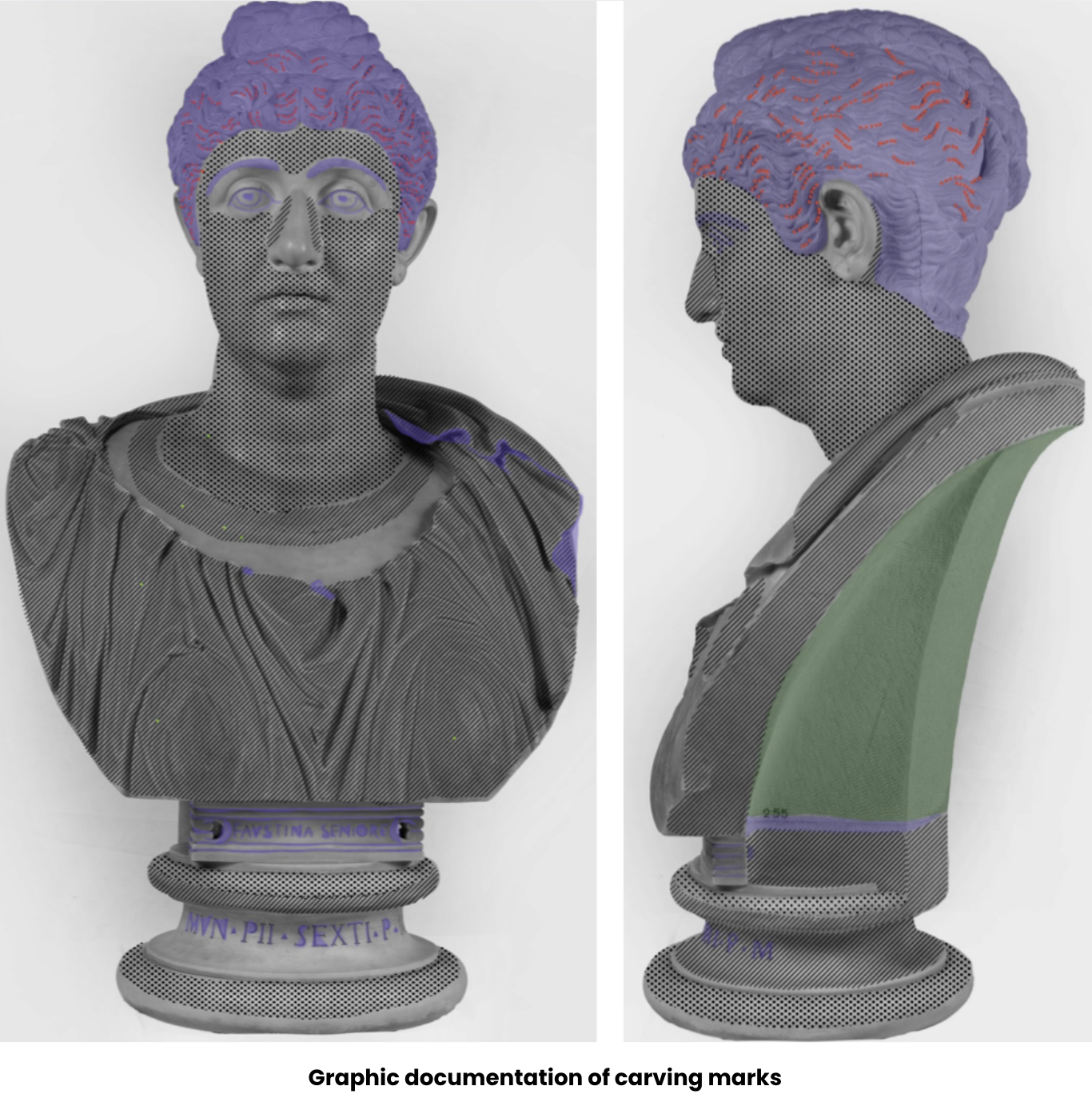
Historical & Archival Notes
When Antoninus became emperor in 138, she was given the title of Augusta.
1769: the head was found during excavations carried out by Gavin Hamilton in the area known as Pantanello in Villa Adriana.
1776: the head was sold for 200 scudi to Pope Pius VI, who commissioned Giovanni Pierantoni to complete the bust.
Ennio Quirino Visconti writes in his book on the Clementine Museum: "...and among so many, almost all of them of egregious sculpture, he can be sure that the present one, not a point inferior to the others for the excellence of style, for its almost colossal size and its beautiful preservation, is the most estimable of all.
Restoration Procedures
The Scientific Research Laboratory performed non-destructive analyses, such as induced ultraviolet fluorescence and XRF and FTIR fluorescence analyses, to reveal the presence and nature of various substances.
The main results obtained from induced UV fluorescence are:
- The presence of colophony;
- Weak fluorescence on the fabric due to anthropic contact;
- A significant difference in fluorescence between antique marble and inlay marble.
The main results obtained from the XRF and FTIR fluorescence analyses are:
- Presence of iron, gypsum, silicates, and waxes.
- Possible traces of a lime finish pigmented with ochre.
The Scientific Research Laboratory also conducted Microanalytical investigations, and, more specifically, spectroscopic analyses on samples to identify the overlying layers. These analyses revealed the presence of rosin, gypsum, calcite, calcium oxalates, and silicates (possibly due to the chalk patination).
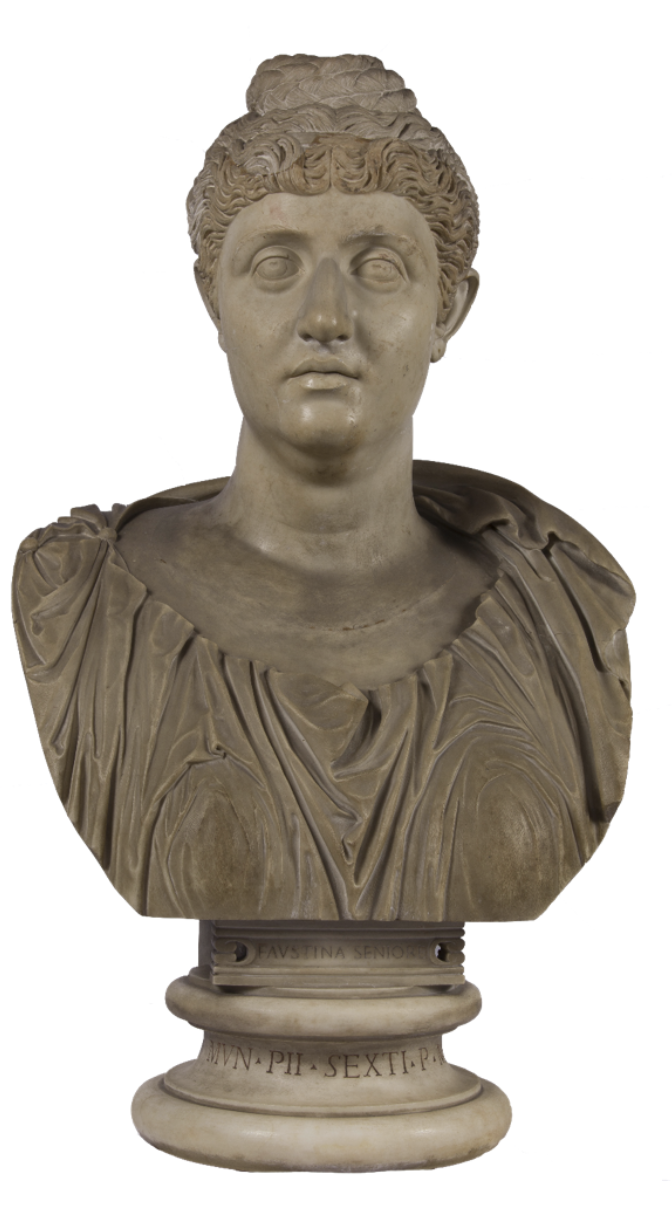
Restorations Update: Head of Faustina Major (the Elder) - Restoration Update
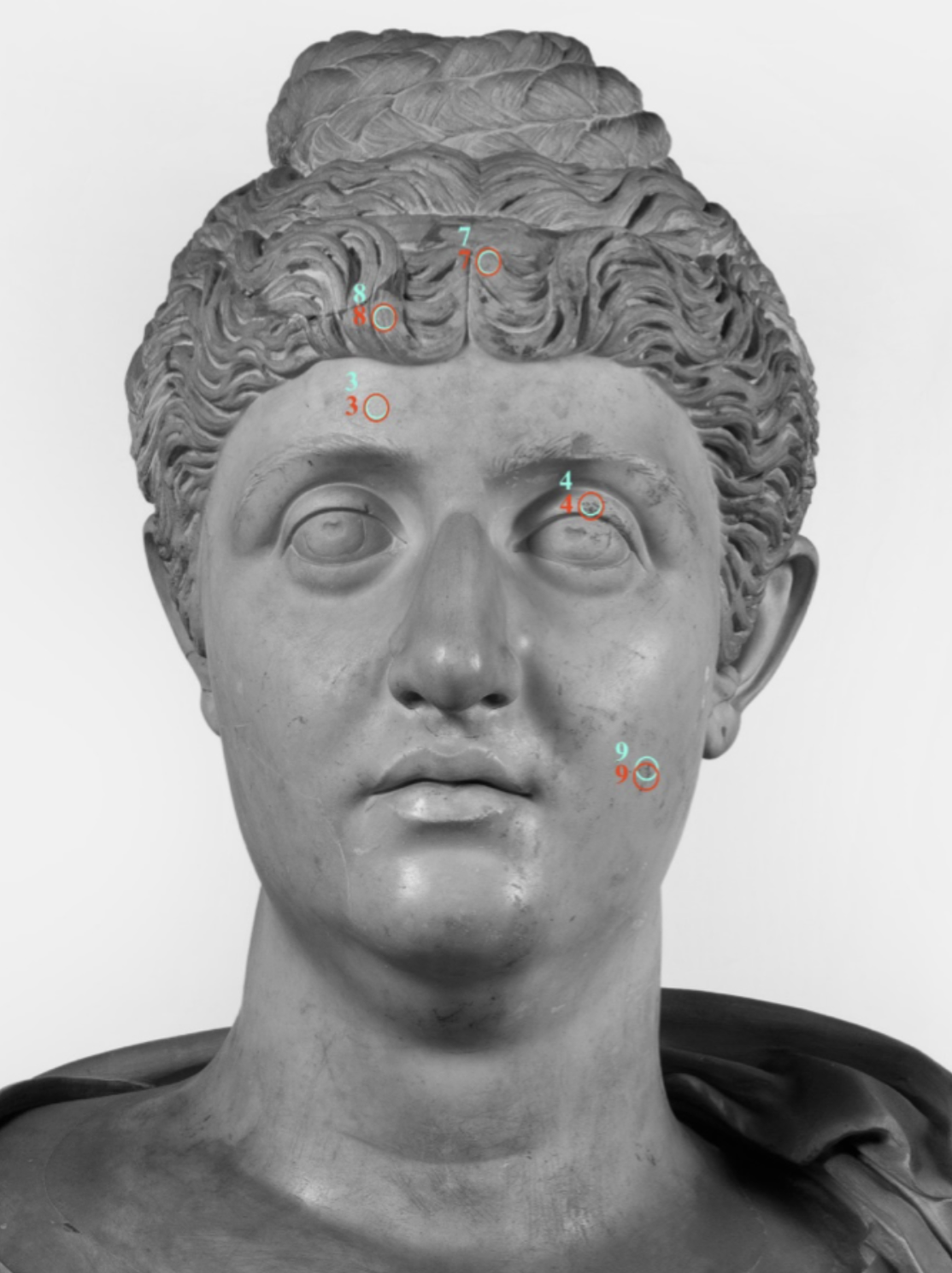
Diagnostic investigations performed by the Scientific Research Laboratory have preceded the first phase of the cleaning process .
© 2026 Patrons of the Arts
in the Vatican Museums
Vatican Museums V-00120,
Vatican City State (Europe)
+39 0669864499