

Four Marble Artworks from the Niche of the Apollo del Belvedere
Artist: Unknown
Date: Variouse
Classification: Sculpture, Front of Sarcophagus, Noe-Attic Relief
Dimensions: Variouse
Materials: Marble
Adopted By: The Michigan Chapter
Total Cost: € 50,000
Description
Neoactic Relief with two feminine figures and a bull - Inv. 1010
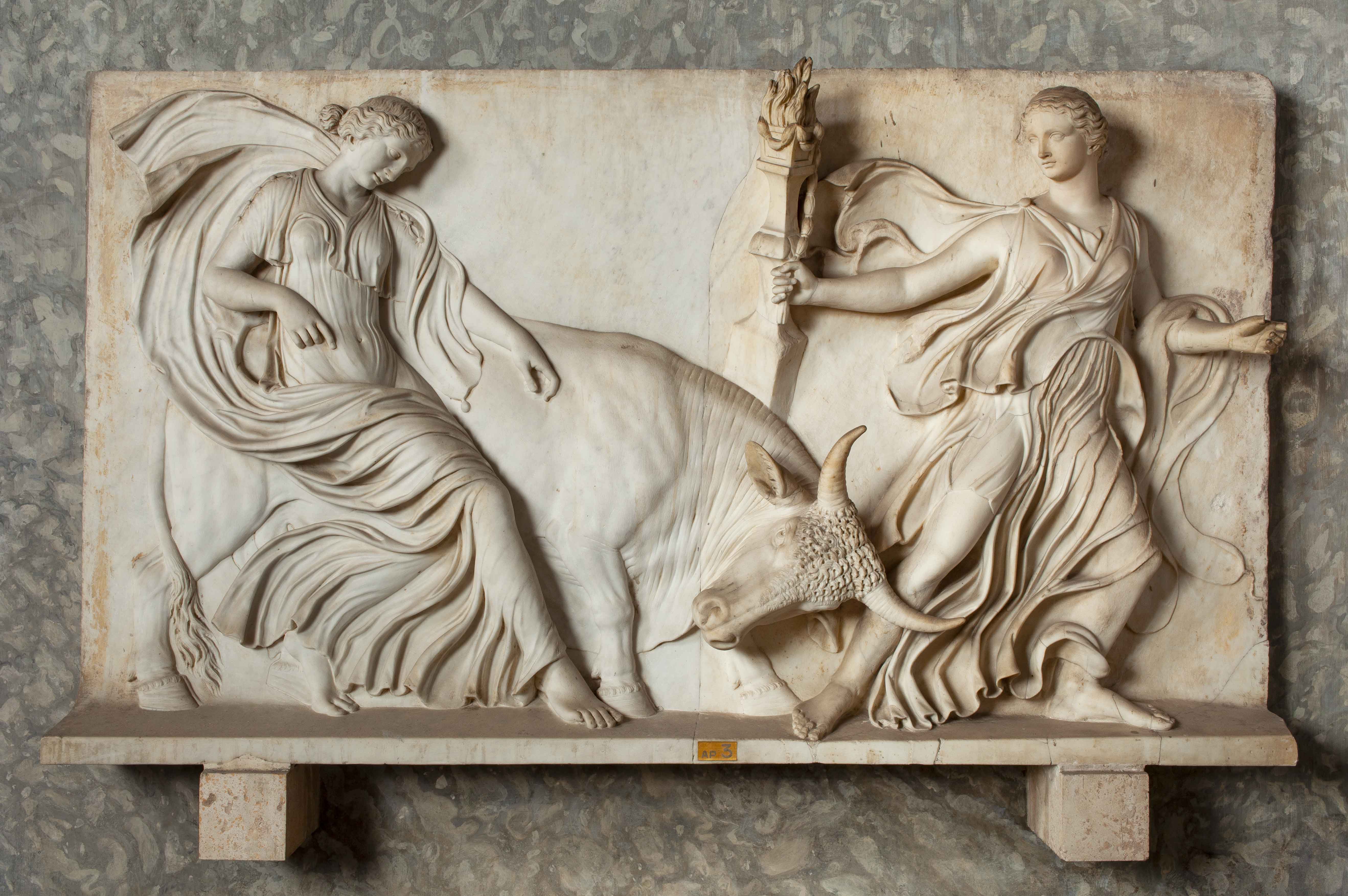
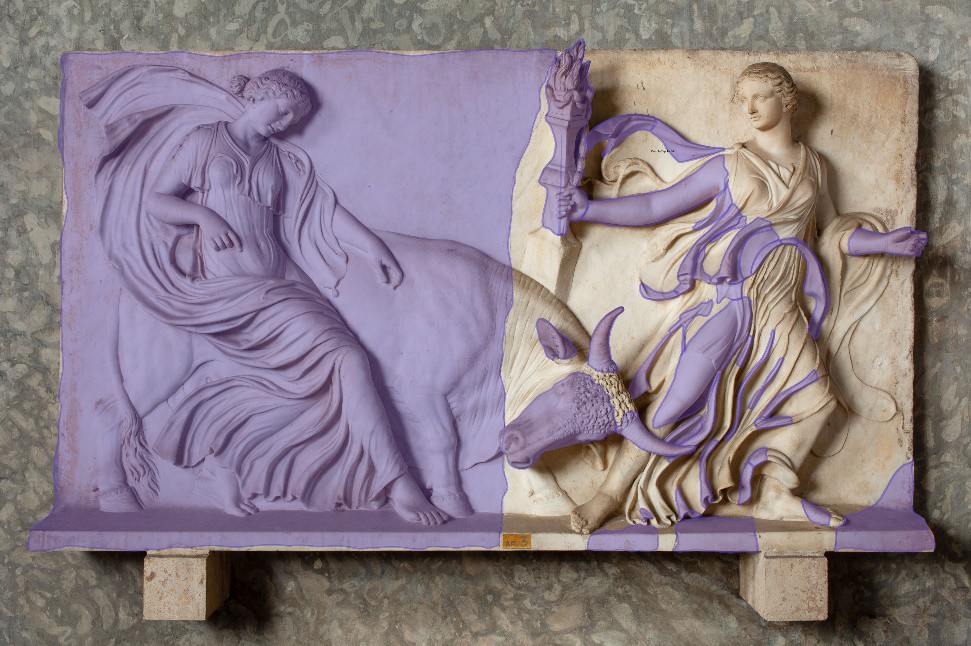
This neoactic relief illustrates two female figures and a bull. Only the right section is ancient and dates back to the first century B.C. or Hadrian age. This relief measures 100 x 175 cm, while the ancient section is 85 cm high.
Front of a Continuous Frise Sarcophagus with lion hunting scene - Inv. 1011
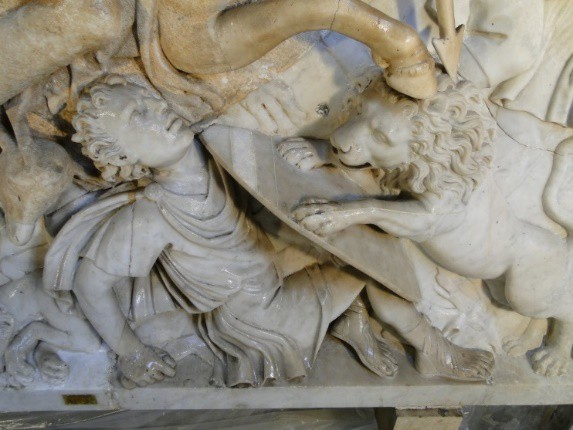
This front of sarcophagus illustrates a lion-hunting scene and dates back to the 220-230 A.D. The front measures 185 x 125 cm; the ancient section measures 135 x 100 cm.
Statue of Athena Promachos - Inv. 1017
This statue of Athena Promachos is dressed in a peplum and aegis, and holds a shield with the head of Medusa on her left arm. Models of the late IV - early III century BC, inspired this statue. The head of Athena, with Corinthian helmet, does not belong to the statue and derives from a model of the mid IV century. B.C. The statue is 157 cm high and the head measures 26 cm.
Statue of a Female Figure - Inv. 1018
This statue of female figure, perhaps a Muse, is dressed in a high-waisted chiton. The head does not belong to the statue. With her left hand, she holds a helmet resting on a pillar. The body dates back to the second half of the II century AD. Inspired by models of the second half of the III century BC, while the head dates back to the late I - early II century A.D., and inspired by models from the second half of the IV century B.C. The statue is 134 cm high and the head measures 24 cm.
Detail
Adopted By:
The Michigan ChapterInventory N°: 1010, 1011, 1017, 1018
Artist: Unknown
Date: Variouse
Dimensions: Variouse
Materials: Marble
Department:
Greek and Roman AntiquitiesCurators:
Dr. Giandomenico Spinolamuseum:
Pio Clementino MuseumLaboratories:
Stone MaterialsTotal Cost
€ 50,000
Front of a Continuous Frise Sarcophagus with lion hunting scene - Final Restoration Report
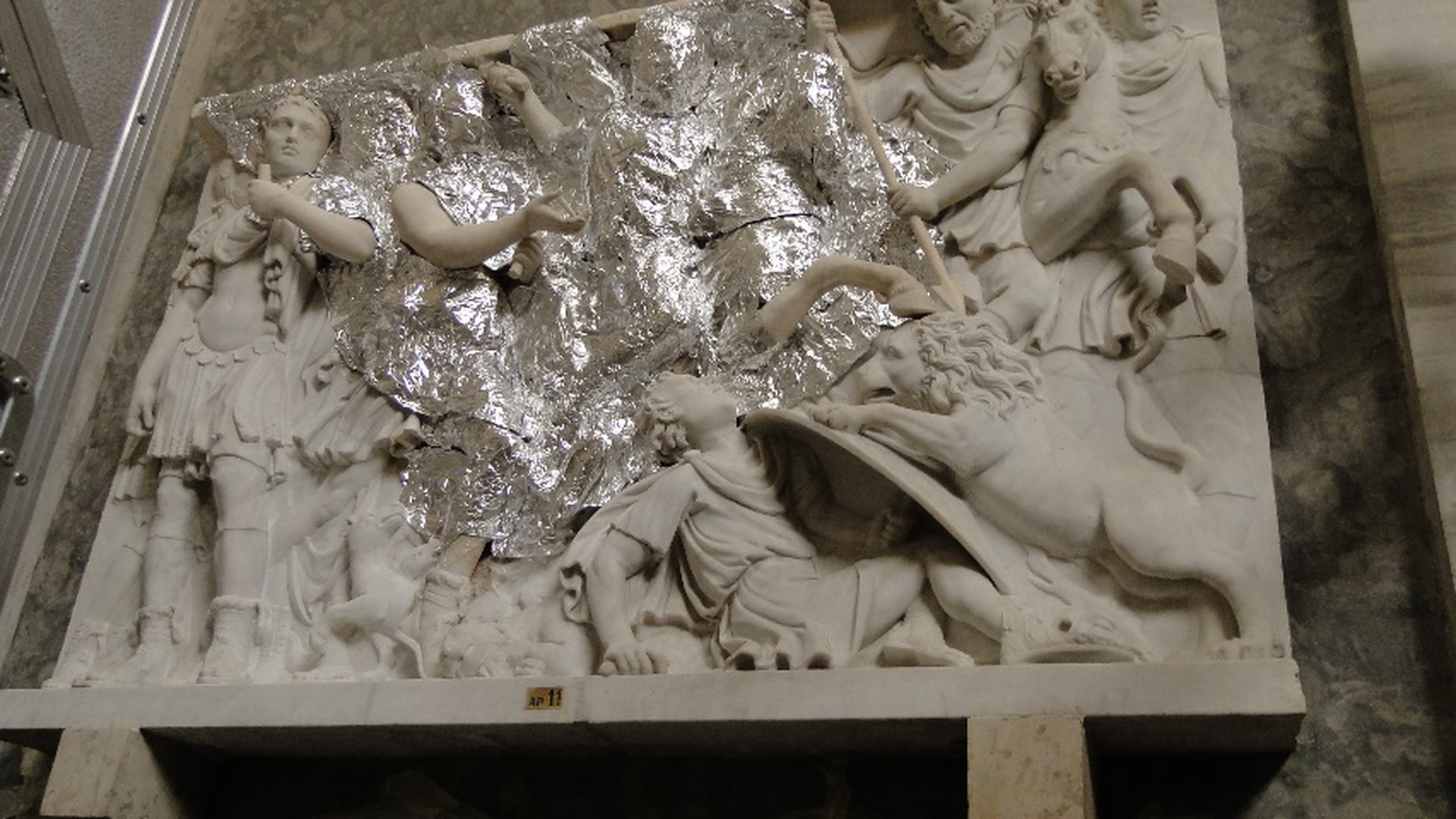
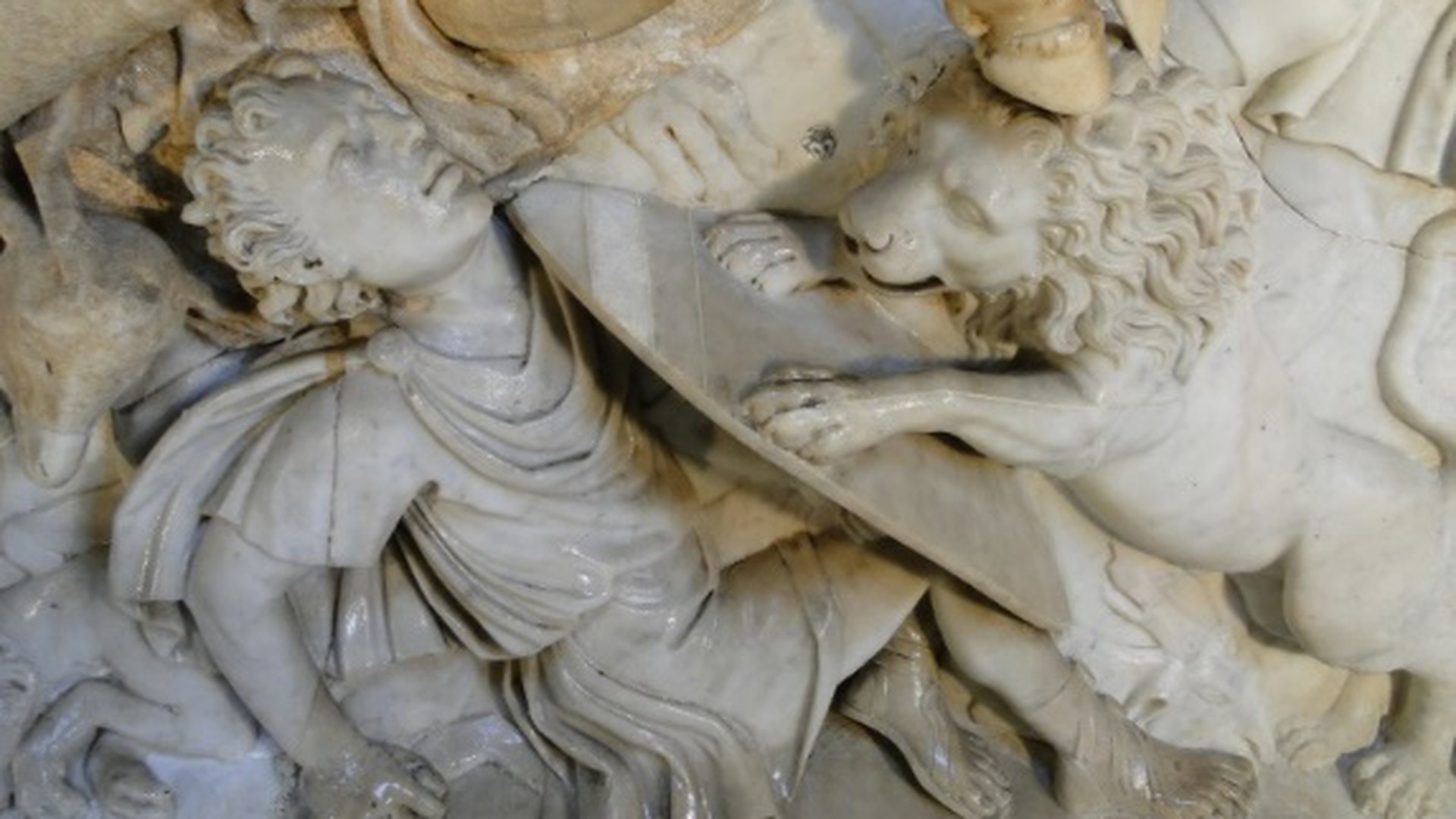
In the restoration of the front of the sarcophagus, MV 1011, the major phase of interest was the cleaning of the sulfur that neutralized a pinkish chalk patina. Another large task was analyzing the deterioration of the stone material caused by “black crusts” and by layers of deposits of various kinds, the phase of disinfection from numerous biological attacks. Numerous varieties of biodeteriogenic microorganisms of bacterial and fungal nature infiltrated between the crystals of the stone material. Professor Santamaria of the Scientific Research Laboratory of the Vatican Museums assisted in the solution of the problem by proposing a chemical and physical approach using biocide treatments and laser irradiation until the total inactivation of the biofilm. After the plastering of the joints, the entire work was able to maintain the chromatic diversity that characterizes the different types of marbles used in the ancient restoration.
Neolithic relief with two feminine figures and a bull - Final Restoration Report
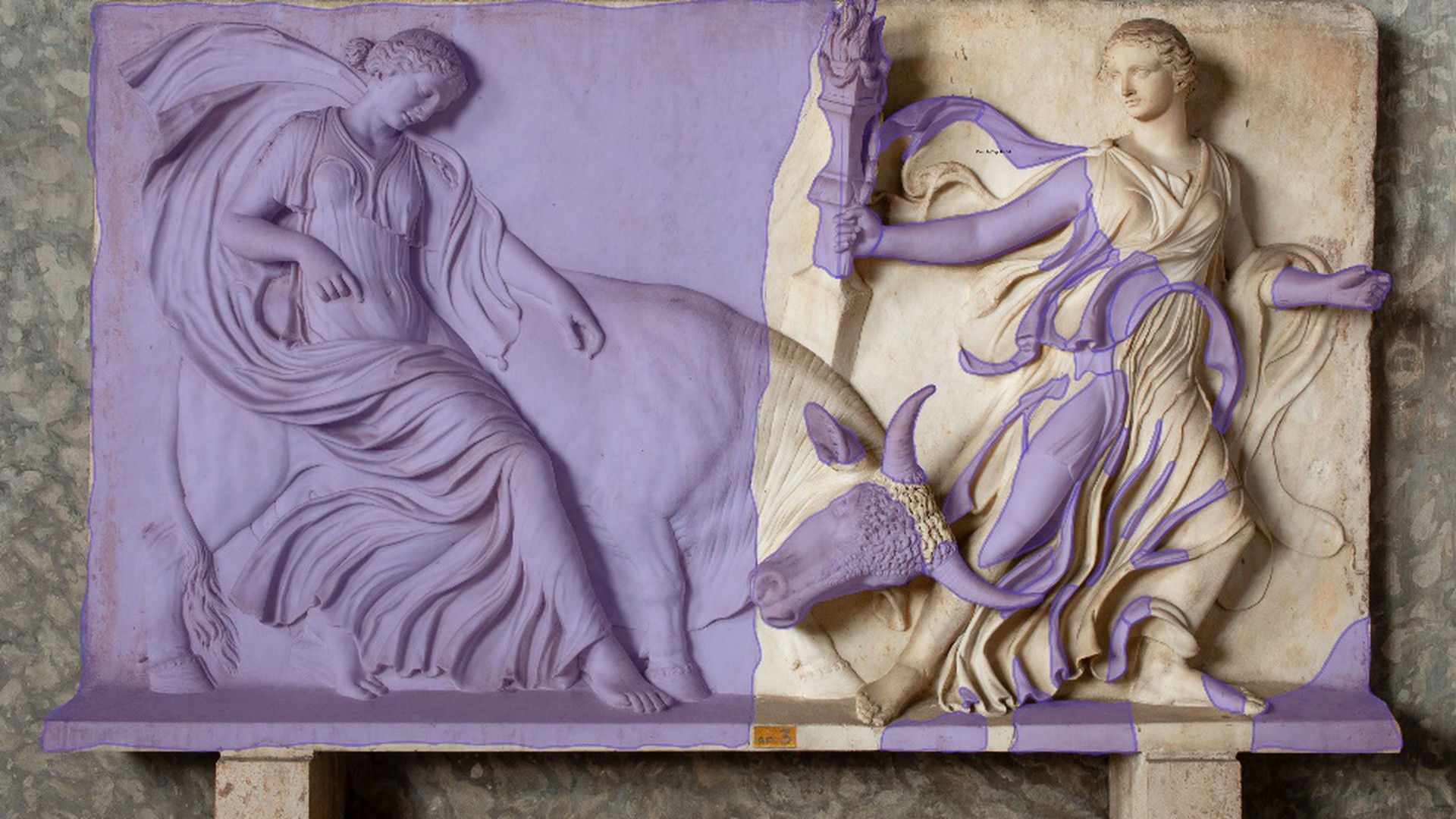

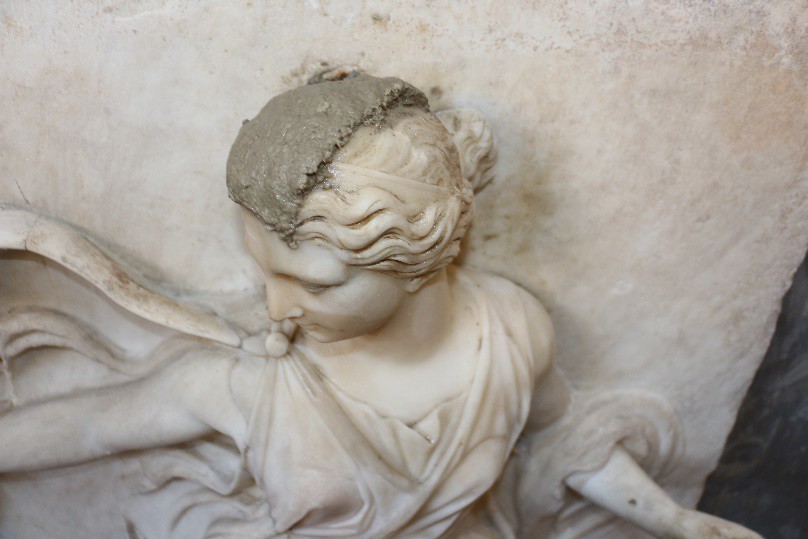
The relief dates back to the I century B.C., the ancient part is in Pentelic marble integrated with various inserts in Luna marble made by F.A.Franzoni in 1790 and perfectly inserted in the original. The restoration intervention of the work MV 1010 ended in March 2021, the relief is in the Cabinet of Apollo of the Belvedere is currently closed for the Apollo restoration project. On the whole relief, both on the ancient portion and the more recent one, there was a coherent layer of deposit and some splashes of coloring attributable to the painting of the walls. Along the perimeter there were residues of pozzolanic mortar; overflowing rosin was visible on some inserts. The cleaning was carried out by applying tablets of sepiolite and paper soaked with water and ammonium carbonate solution at 20%. Then it was possible to remove the deposit and the incrustations using soft brushes and a latex sponge. A cotton swab soaked in 3% triammonium citrate added the finishing touches of the molded parts.
Cleaning Intervention
All the joints between the inserts of the relief were filled with mortar made of marble powder and lime putty obtaining the right tone of the fillings without adding pigments.
Final Effect

Four Marble Artworks from the Niche of the Apollo del Belvedere
Details
Adopted by: The Michigan Chapter
Inventory: 1010, 1011, 1017, 1018
Artist: Unknown
Date: Variouse
Classification: Sculpture, Front of Sarcophagus, Noe-Attic Relief
Materials: Marble
Dimensions: Variouse
Museum: Pio Clementino Museum
Department: Greek and Roman Antiquities
Laboratory: Stone Materials
Description
Neoactic Relief with two feminine figures and a bull - Inv. 1010
This neoactic relief illustrates two female figures and a bull. Only the right section is ancient and dates back to the first century B.C. or Hadrian age. This relief measures 100 x 175 cm, while the ancient section is 85 cm high.
Front of a Continuous Frise Sarcophagus with lion hunting scene - Inv. 1011
This front of sarcophagus illustrates a lion-hunting scene and dates back to the 220-230 A.D. The front measures 185 x 125 cm; the ancient section measures 135 x 100 cm.
Statue of Athena Promachos - Inv. 1017
This statue of Athena Promachos is dressed in a peplum and aegis, and holds a shield with the head of Medusa on her left arm. Models of the late IV - early III century BC, inspired this statue. The head of Athena, with Corinthian helmet, does not belong to the statue and derives from a model of the mid IV century. B.C. The statue is 157 cm high and the head measures 26 cm.
Statue of a Female Figure - Inv. 1018
This statue of female figure, perhaps a Muse, is dressed in a high-waisted chiton. The head does not belong to the statue. With her left hand, she holds a helmet resting on a pillar. The body dates back to the second half of the II century AD. Inspired by models of the second half of the III century BC, while the head dates back to the late I - early II century A.D., and inspired by models from the second half of the IV century B.C. The statue is 134 cm high and the head measures 24 cm.
Media

Neoactic Relief - Inv. 1010 Before Restoration
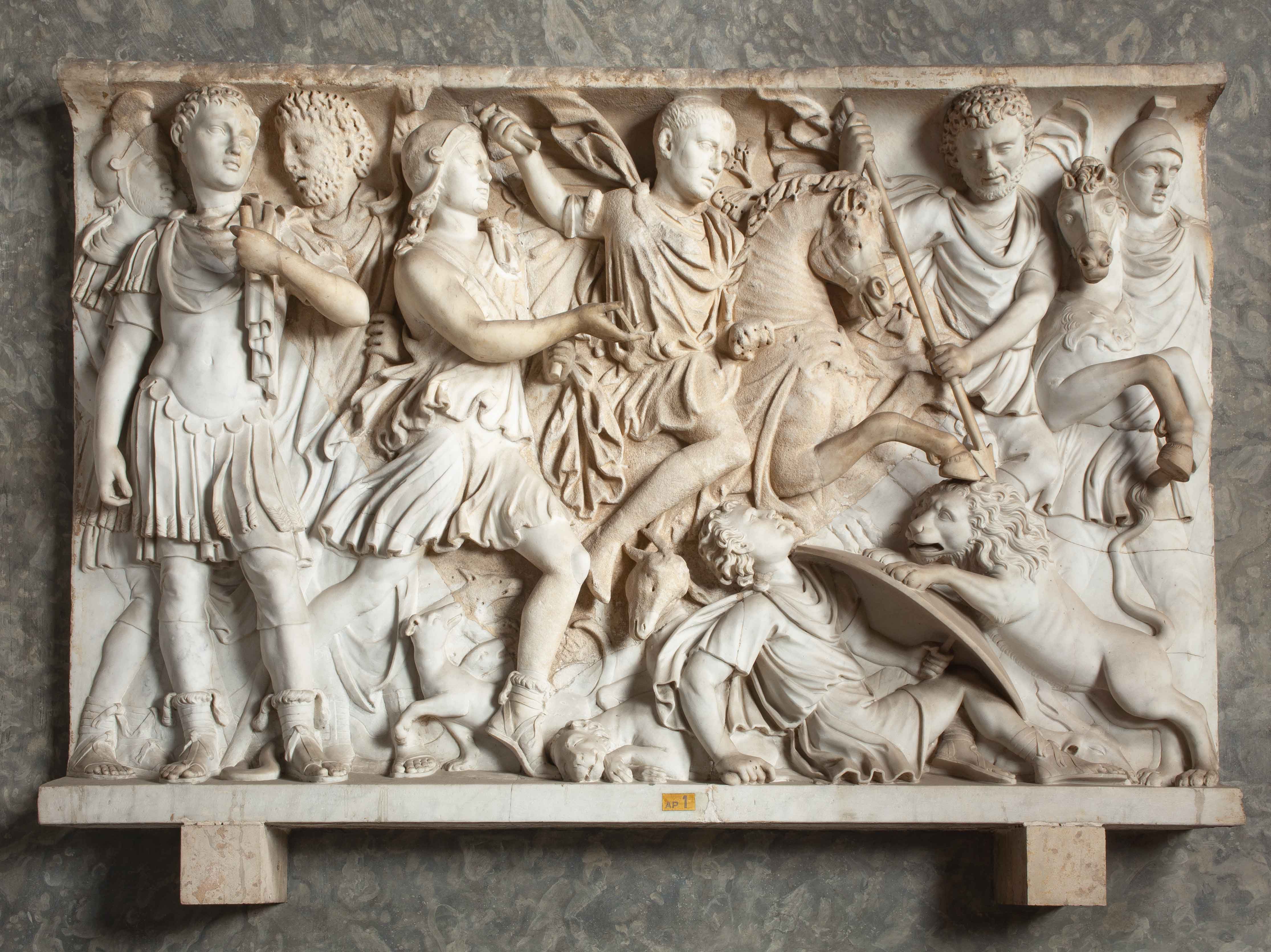
Front of a Continuous Frise Sarcophagus - Inv. 1011
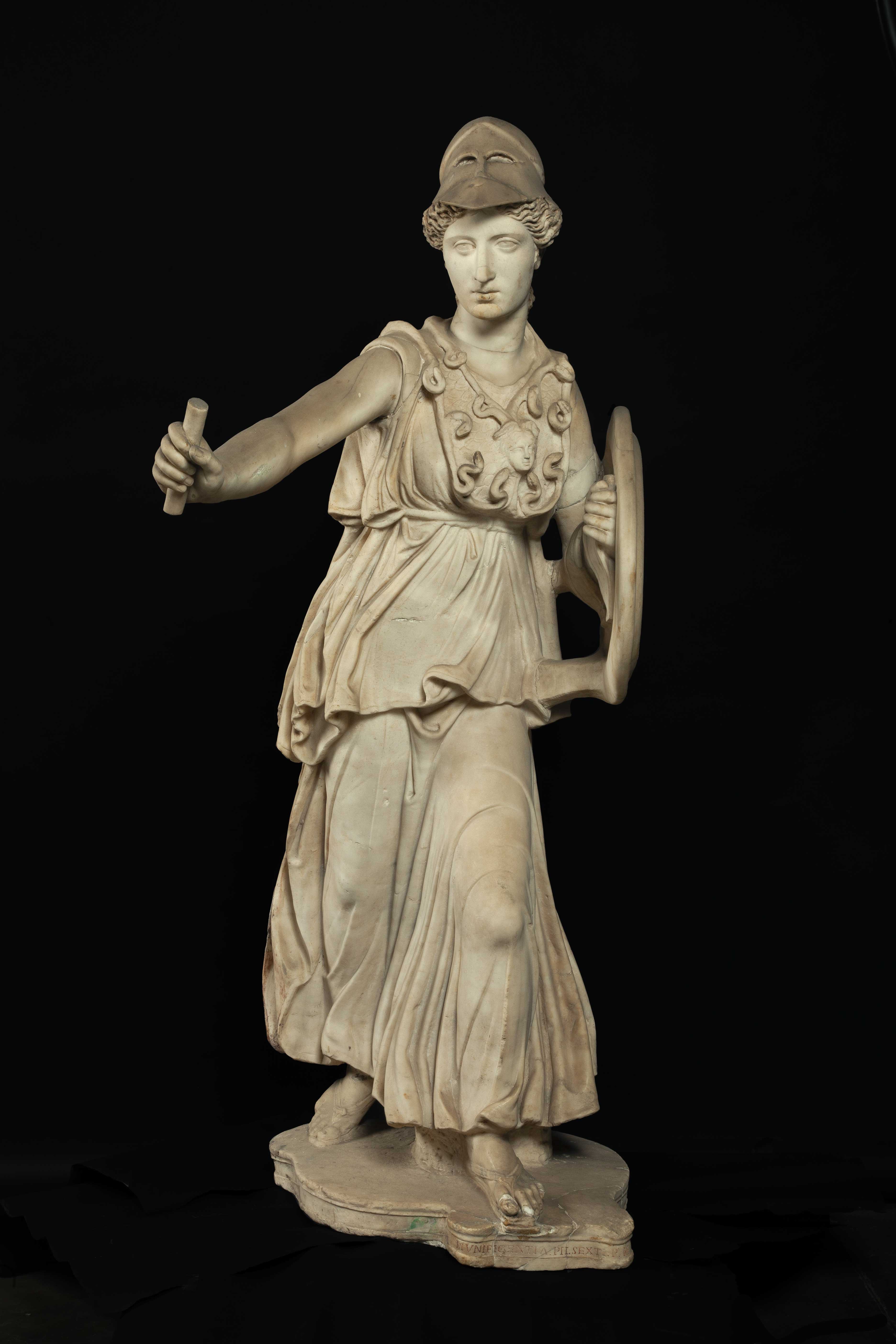
Statue of Athena Promachos - Inv. 1017 Front Before Restoration
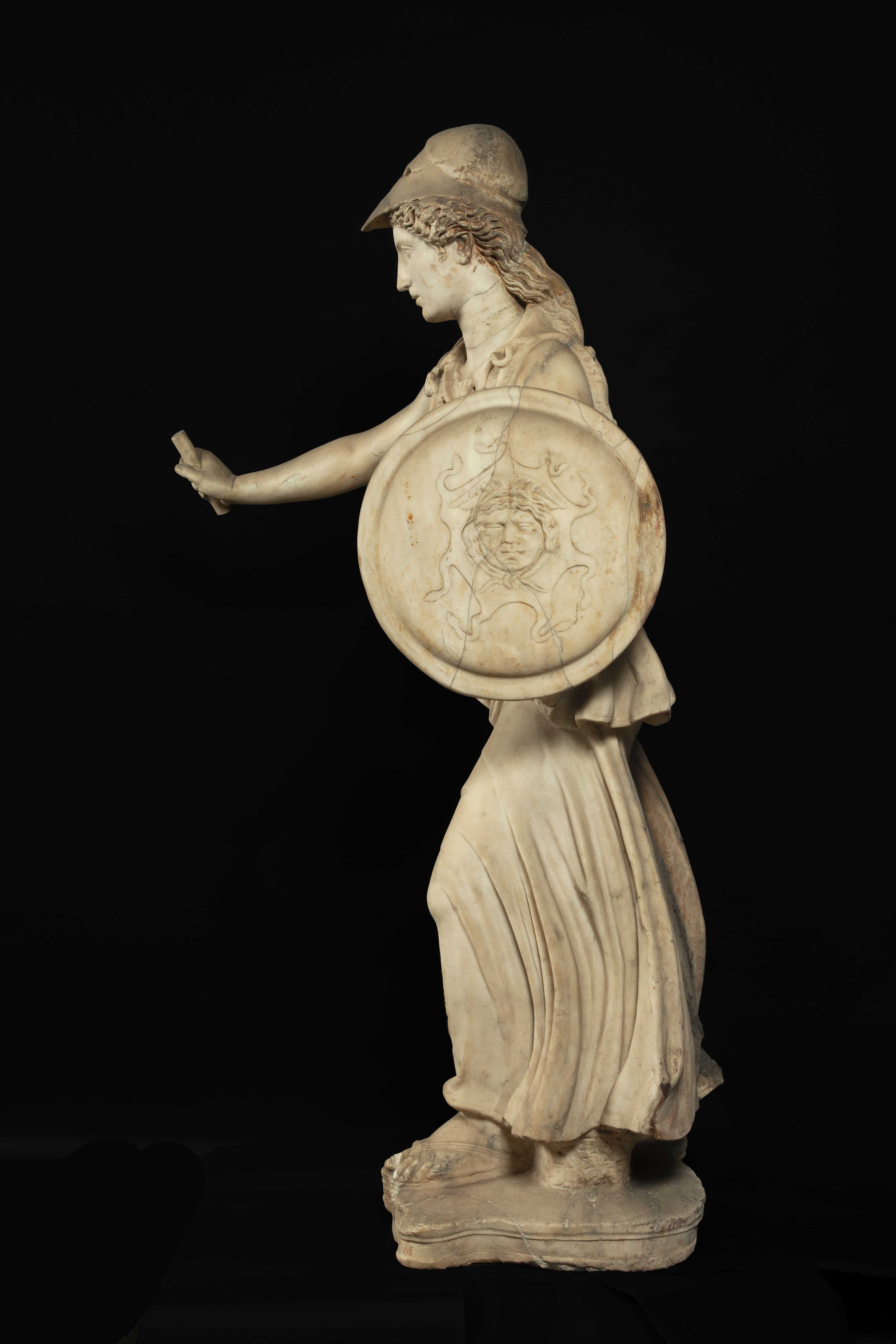
Statue of Athena Promachos - Inv. 1017 Side Before Restoration
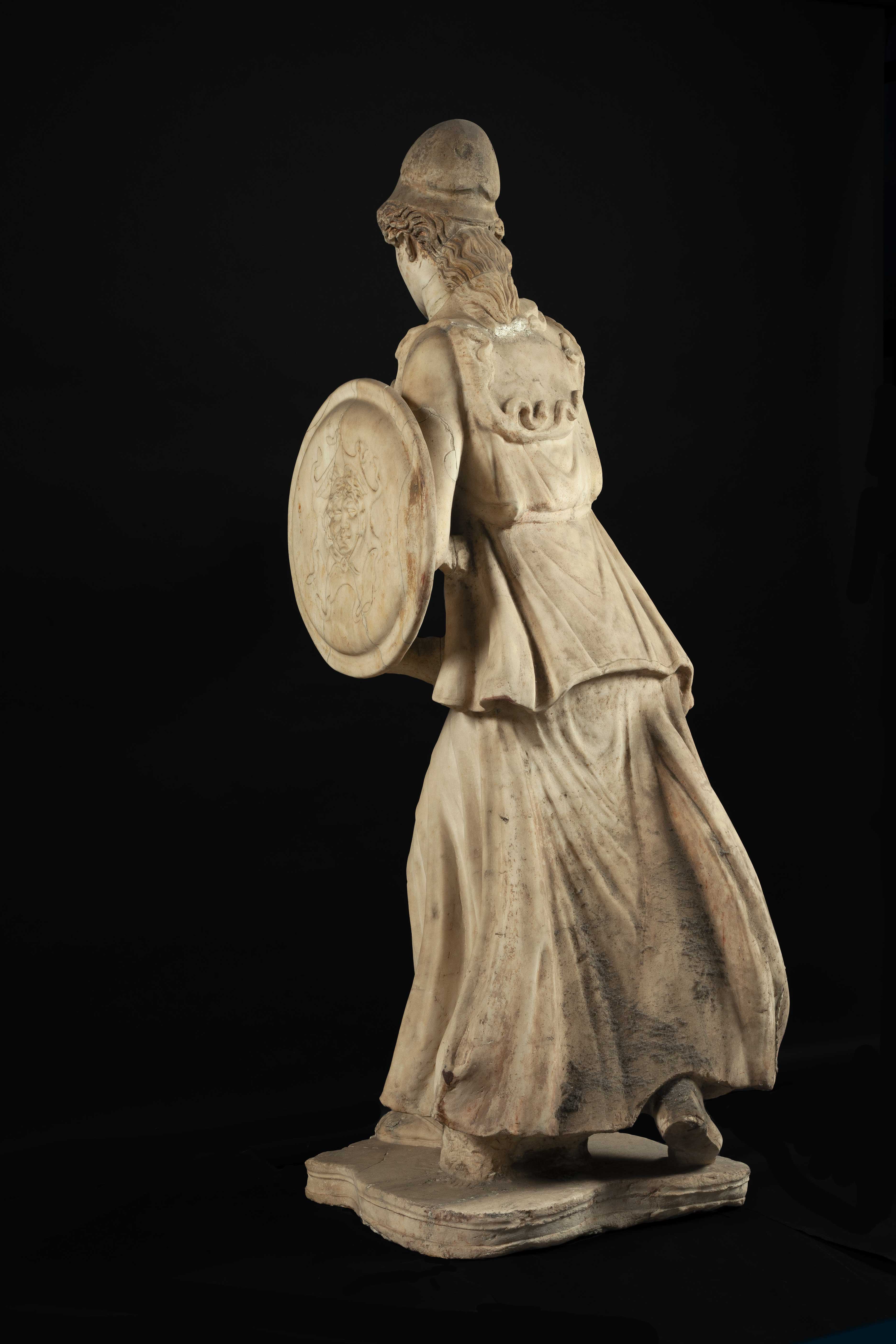
Statue of Athena Promachos - Inv. 1017 Back Before Restoration
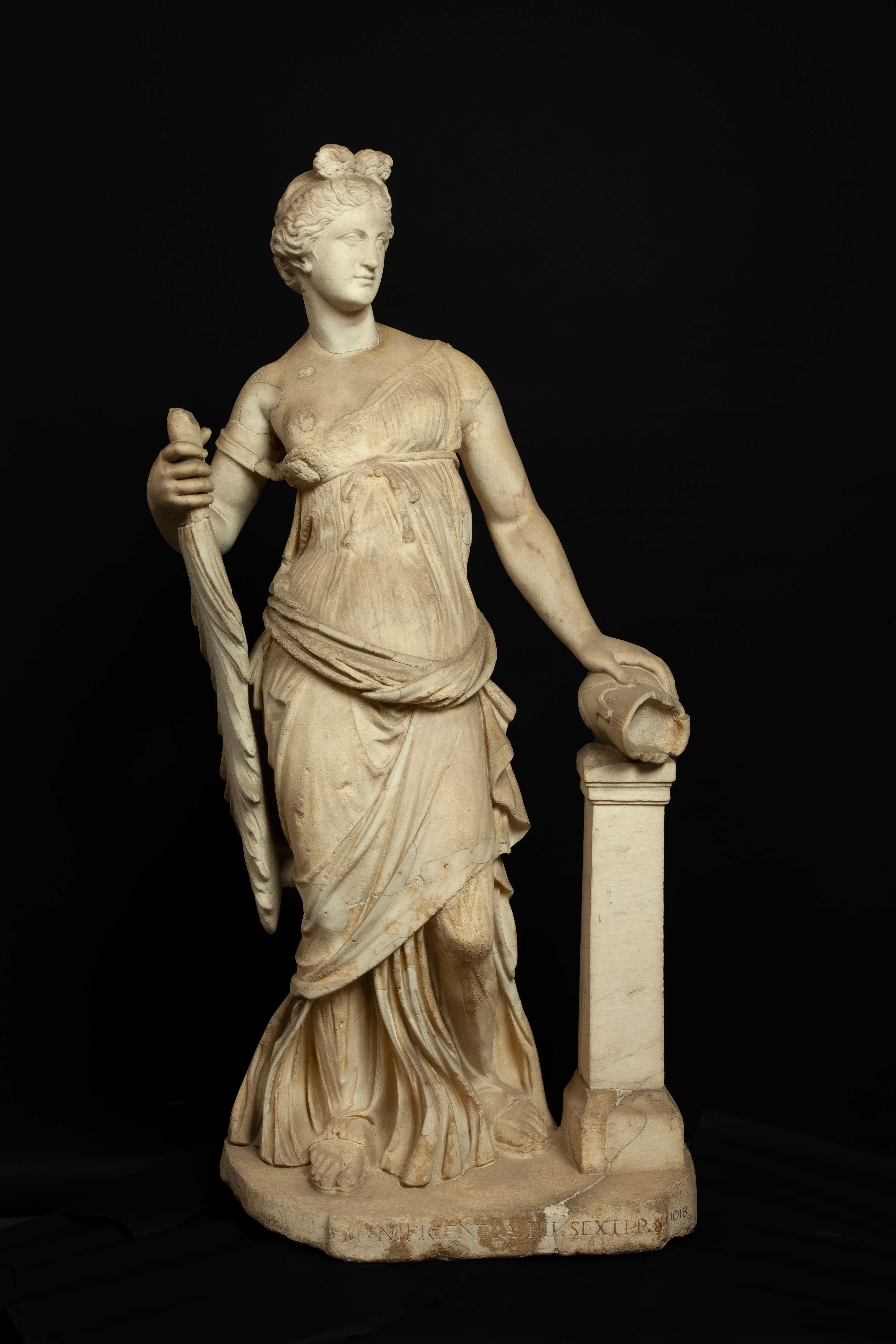
Statue of a Female Figure - Inv. 1018 Front Before Restoration
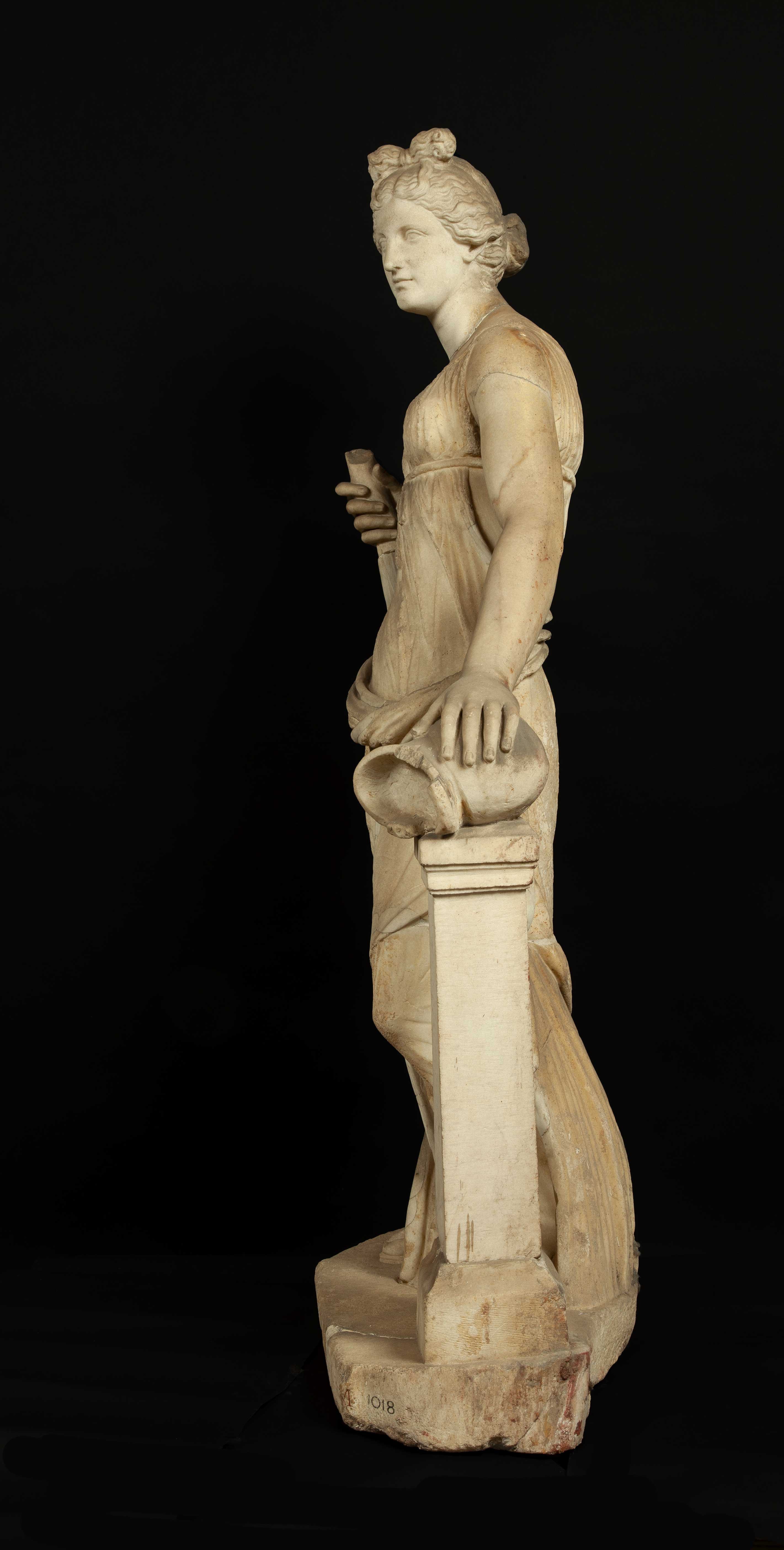
Statue of a Female Figure - Inv. 1018 Side Before Restoration
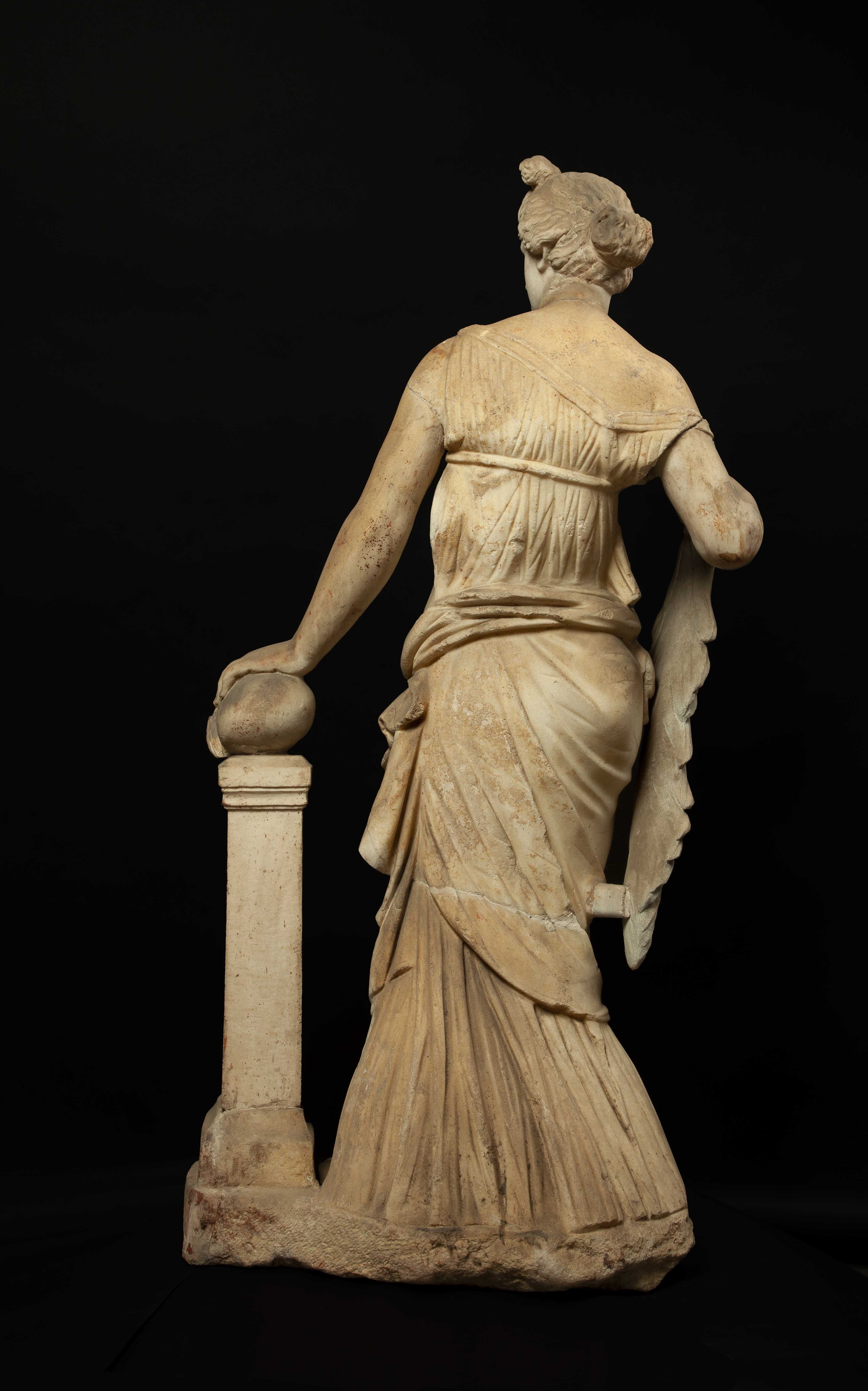
Statue of a Female Figure - Inv. 1018 Back Before Restorationn
Restorations Update: Front of a Continuous Frise Sarcophagus with lion hunting scene - Final Restoration Report
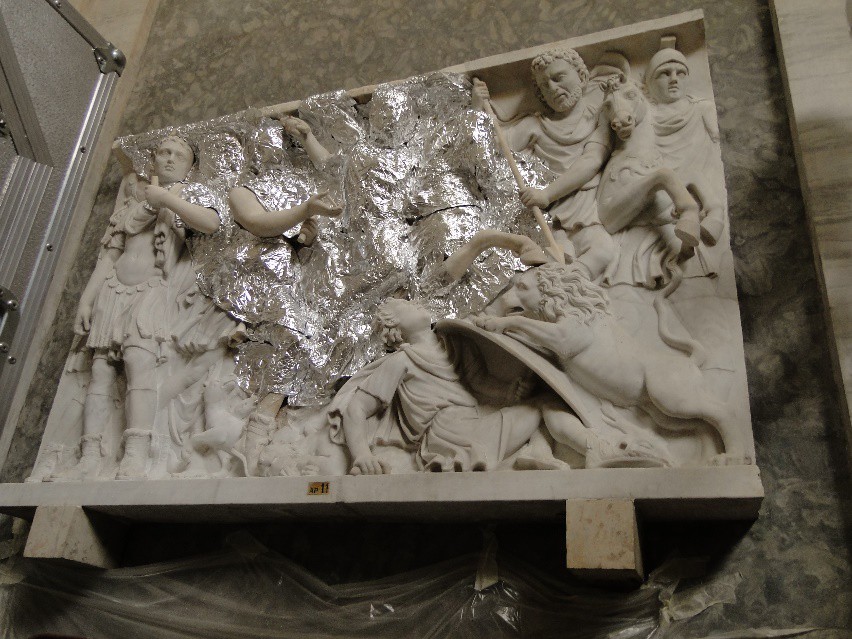
In the restoration of the front of the sarcophagus, MV 1011, the major phase of interest was the cleaning of the sulfur that neutralized a pinkish chalk patina. Another large task was analyzing the deterioration of the stone material caused by “black crusts” and by layers of deposits of various kinds, the phase of disinfection from numerous biological attacks. Numerous varieties of biodeteriogenic microorganisms of bacterial and fungal nature infiltrated between the crystals of the stone material. Professor Santamaria of the Scientific Research Laboratory of the Vatican Museums assisted in the solution of the problem by proposing a chemical and physical approach using biocide treatments and laser irradiation until the total inactivation of the biofilm. After the plastering of the joints, the entire work was able to maintain the chromatic diversity that characterizes the different types of marbles used in the ancient restoration.
Restorations Update: Neolithic relief with two feminine figures and a bull - Final Restoration Report
The relief dates back to the I century B.C., the ancient part is in Pentelic marble integrated with various inserts in Luna marble made by F.A.Franzoni in 1790 and perfectly inserted in the original. The restoration intervention of the work MV 1010 ended in March 2021, the relief is in the Cabinet of Apollo of the Belvedere is currently closed for the Apollo restoration project. On the whole relief, both on the ancient portion and the more recent one, there was a coherent layer of deposit and some splashes of coloring attributable to the painting of the walls. Along the perimeter there were residues of pozzolanic mortar; overflowing rosin was visible on some inserts. The cleaning was carried out by applying tablets of sepiolite and paper soaked with water and ammonium carbonate solution at 20%. Then it was possible to remove the deposit and the incrustations using soft brushes and a latex sponge. A cotton swab soaked in 3% triammonium citrate added the finishing touches of the molded parts.
Cleaning Intervention
All the joints between the inserts of the relief were filled with mortar made of marble powder and lime putty obtaining the right tone of the fillings without adding pigments.
Final Effect
© 2026 Patrons of the Arts
in the Vatican Museums
Vatican Museums V-00120,
Vatican City State (Europe)
+39 0669864499