

Female Statue of Zitella
Artist: Unknown
Date: 1st century A.D. / 1559-1565
Classification: Statue
Dimensions: H 230 cm; W 150 cm; D 80 cm
Materials: Pentelic marble, Carrara marble
Adopted By: The Illinois Chapter
Description
MEDIUM PRIORITY PROJECT
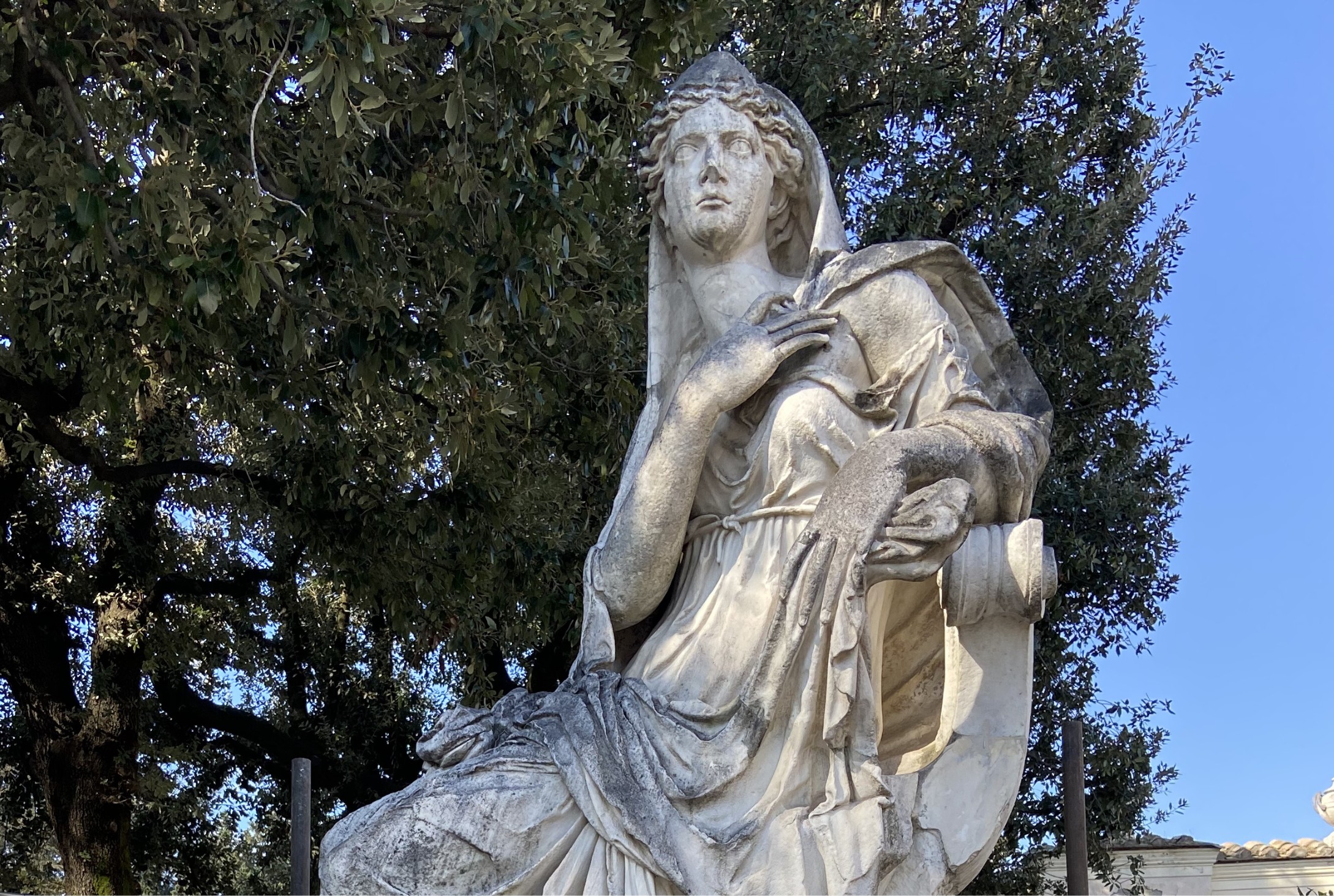
The female statue, known as the Zitella (the Spinster), placed on a high base adorning a small fountain in the Boschetto of the Vatican Gardens, has been there since the time of Pope Pius IV (1559–1565). The statue depicts a veiled woman adorned with a diadem, seated on a high-backed chair, leaning on it with her left arm. Her right arm adheres against her torso and she holds a flap of the cloak covering her head with her hand. The statue’s current appearance is the result of a restoration carried out by one of the many sculptors who worked on the Vatican Belvedere and the decorations of Pius IV’s exquisite Casina stucture in the gardens, directed by the Neapolitan architect Pirro Ligorio. Using a valuable first-century A.D. sculpture made of Pentelic marble, possibly depicting a Muse, the anonymous sixteenth-century artist skillfully integrated the head and arms, partly modifying the drapery to create a more chaste version of Vesta, the ancient Roman goddess of the domestic hearth. This splendid sculpture was believed to be fully original until a few decades ago, when cross- studying iconographic and documentary sources revealed that the Roman statue, without the additions, had been in the Belvedere since 1532–33. While the location of its archeological discovery remains unknown, the distinctive carving on the back suggests that it was part of the pediment decoration of an ancient Roman temple.
Total Cost: € 186.586,00 ($ 219,537.09)
State of Preservation
The statue is in a poor state of preservation. The marble surface shows extensive disintegration of the crystalline texture, to the point of ‘chalking’, due to the combined harmful effects of atmospheric agents and widespread biological attacks. The morphological nature of the Pentelic marble itself has accentuated this phenomenon on horizontal surfaces. Due to the extent of the deterioration and the sculpture’s historical and artistic value, its relocation indoors and replacement in the gardens with an identical marble copy is imperative.
Restoration Procedures
- Disassembly of the fountain mouth with lion protome and removal of the grout between the statue and the base
- Moving the statue to the laboratory
- Cleaning the statue, removing deposits and fungal formations, and applying a biocide treatment
- Disassembly of the statue’s moving parts and replacement of pins
- Localized cleaning and adjustment of patinas on the statue’s surface
- Reconstruction of fillings and color balancing
- Removal of basement limestone formations in the gardens
- Reconstruction of gaps in the fountain catch basin
- Moving to the new exhibition site at the first wall of the Chiaramonti Gallery
- Fabrication of the marble copy from a 3D model by a specialized firm, with DL supervision during the various execution phases
- Placement of the marble copy to adorn the fountain in the gardens, replacing the original
- Relocating the lion protome and reconstructing the plasterwork to restore the fountain
Detail
Adopted By:
The Illinois ChapterInventory N°: 37736
Artist: Unknown
Date: 1st century A.D. / 1559-1565
Dimensions: H 230 cm; W 150 cm; D 80 cm
Materials: Pentelic marble, Carrara marble
Department:
Greek and Roman AntiquitiesLaboratories:
Stone MaterialsWishbook year: 2026
Female Statue of Zitella - Restoration Update
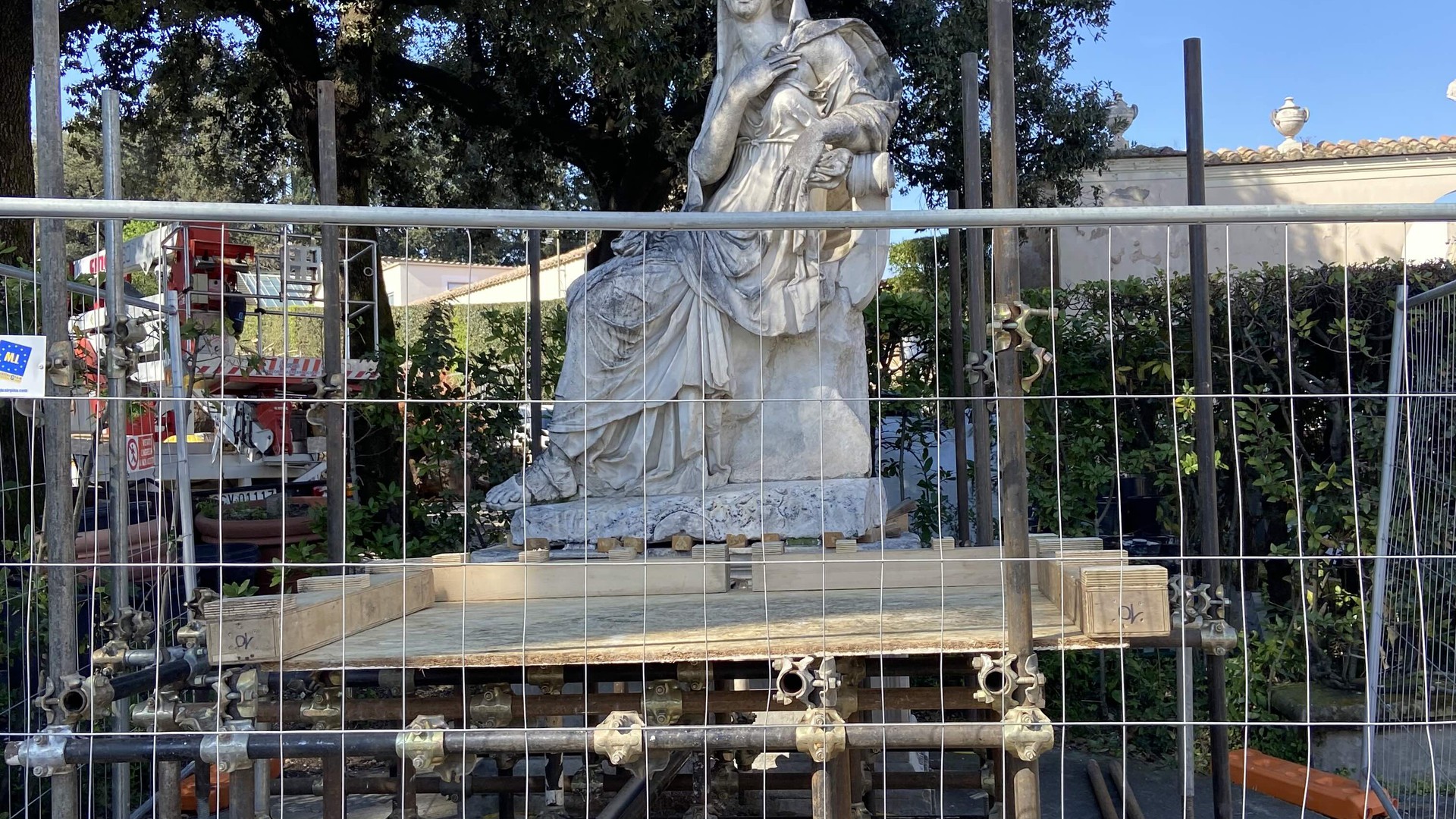
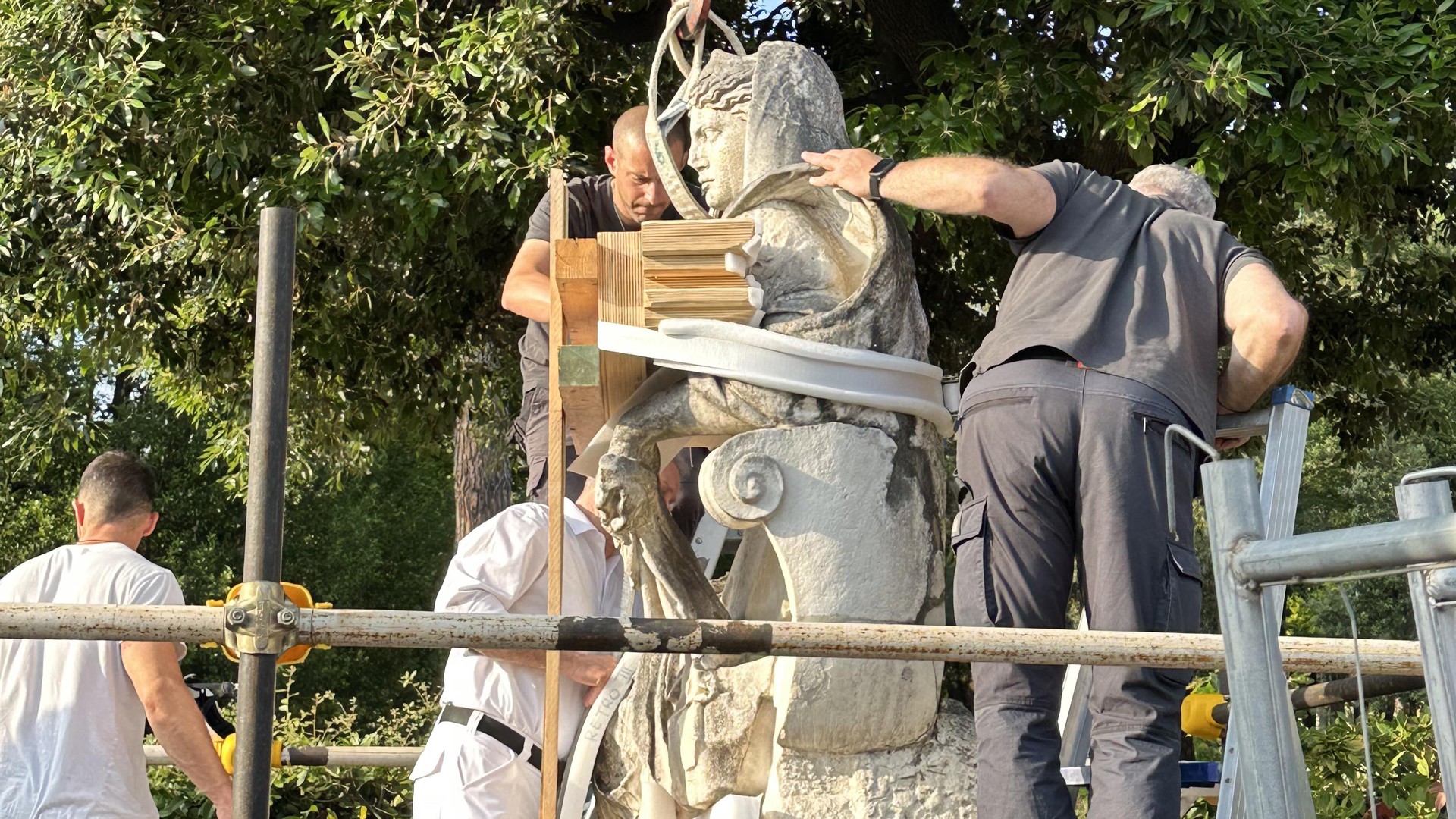
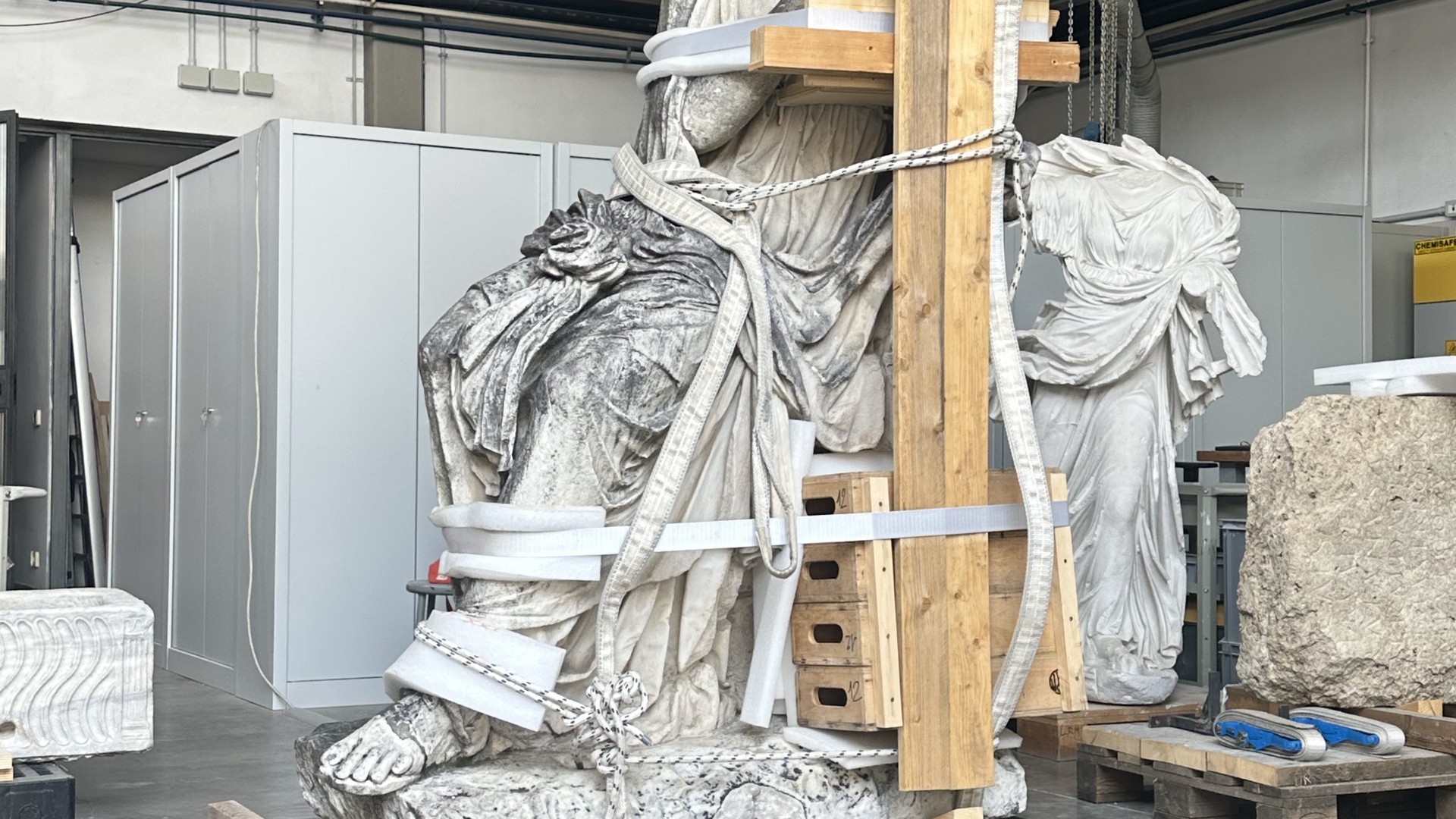
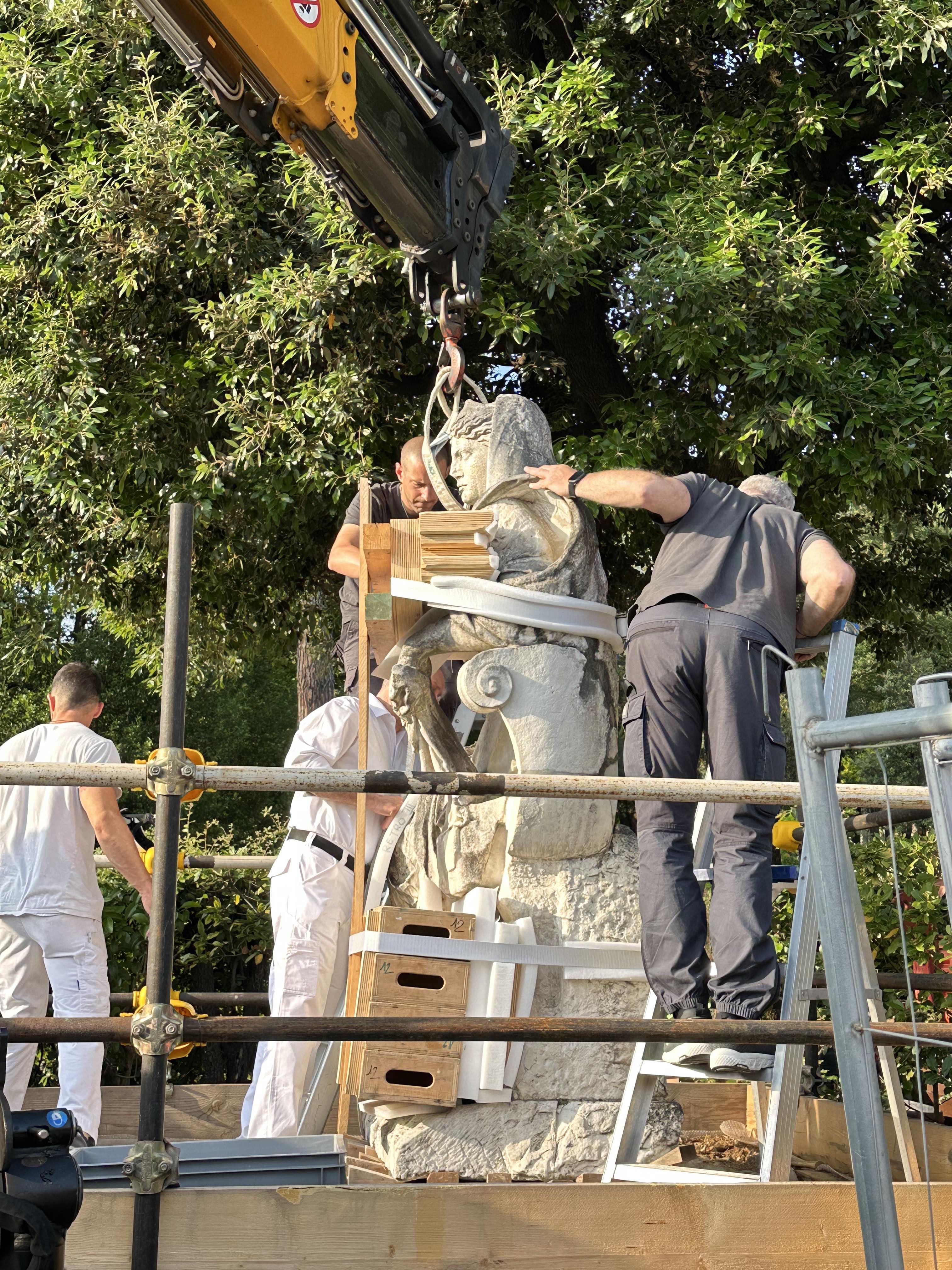
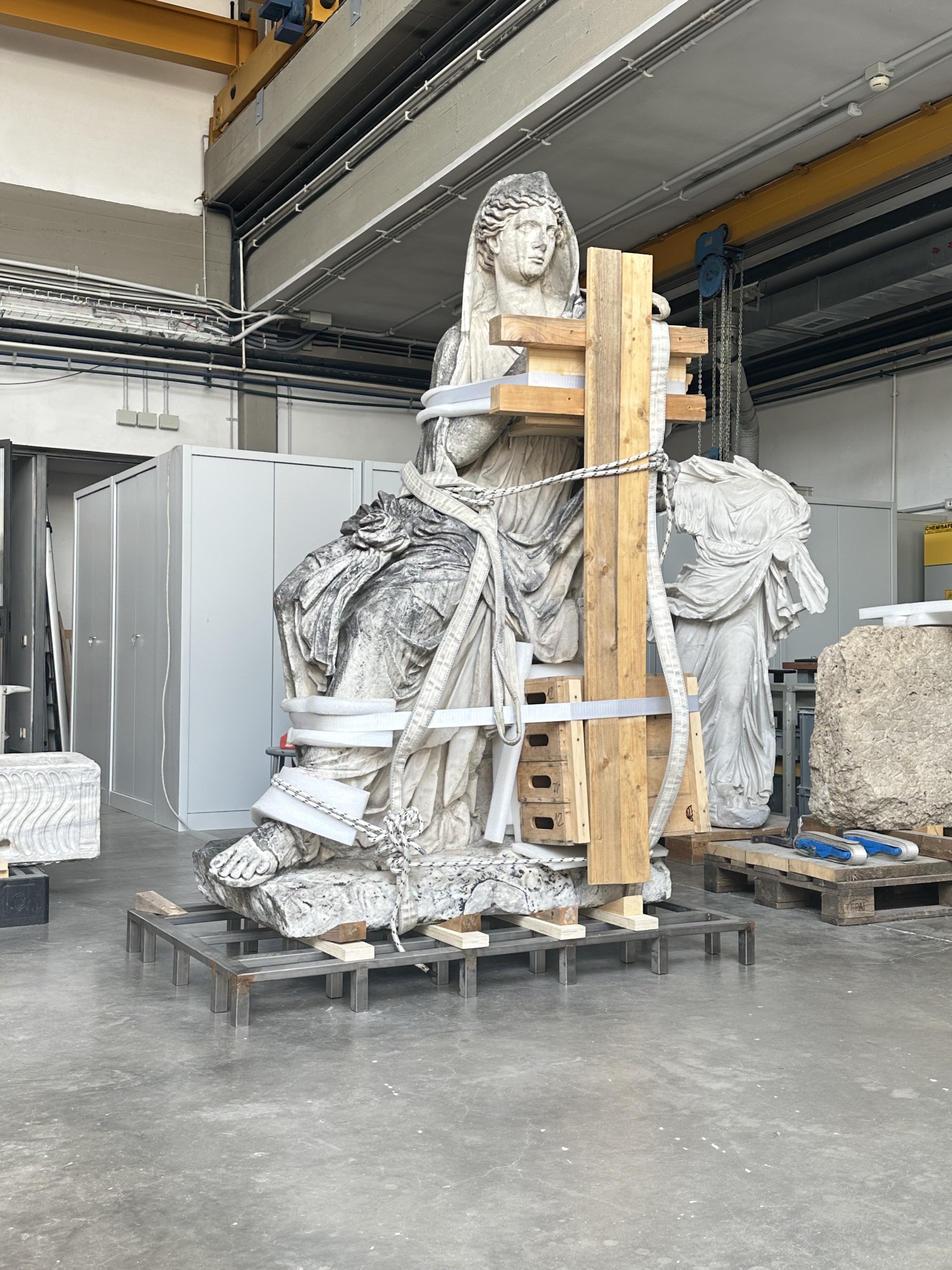
In June, the statue was secured to a wooden-and-steel platform for transport to the laboratory. Now the statue will begin restoration, starting with surface cleaning and the removal of deposits and biological growth.

Female Statue of Zitella
Details
Adopted by: The Illinois Chapter
Inventory: 37736
Artist: Unknown
Date: 1st century A.D. / 1559-1565
Classification: Statue
Materials: Pentelic marble, Carrara marble
Dimensions: H 230 cm; W 150 cm; D 80 cm
Department: Greek and Roman Antiquities
Laboratory: Stone Materials
Wishbook year: 2026
Description
MEDIUM PRIORITY PROJECT
The female statue, known as the Zitella (the Spinster), placed on a high base adorning a small fountain in the Boschetto of the Vatican Gardens, has been there since the time of Pope Pius IV (1559–1565). The statue depicts a veiled woman adorned with a diadem, seated on a high-backed chair, leaning on it with her left arm. Her right arm adheres against her torso and she holds a flap of the cloak covering her head with her hand. The statue’s current appearance is the result of a restoration carried out by one of the many sculptors who worked on the Vatican Belvedere and the decorations of Pius IV’s exquisite Casina stucture in the gardens, directed by the Neapolitan architect Pirro Ligorio. Using a valuable first-century A.D. sculpture made of Pentelic marble, possibly depicting a Muse, the anonymous sixteenth-century artist skillfully integrated the head and arms, partly modifying the drapery to create a more chaste version of Vesta, the ancient Roman goddess of the domestic hearth. This splendid sculpture was believed to be fully original until a few decades ago, when cross- studying iconographic and documentary sources revealed that the Roman statue, without the additions, had been in the Belvedere since 1532–33. While the location of its archeological discovery remains unknown, the distinctive carving on the back suggests that it was part of the pediment decoration of an ancient Roman temple.
Total Cost: € 186.586,00 ($ 219,537.09)
State of Preservation
The statue is in a poor state of preservation. The marble surface shows extensive disintegration of the crystalline texture, to the point of ‘chalking’, due to the combined harmful effects of atmospheric agents and widespread biological attacks. The morphological nature of the Pentelic marble itself has accentuated this phenomenon on horizontal surfaces. Due to the extent of the deterioration and the sculpture’s historical and artistic value, its relocation indoors and replacement in the gardens with an identical marble copy is imperative.
Restoration Procedures
- Disassembly of the fountain mouth with lion protome and removal of the grout between the statue and the base
- Moving the statue to the laboratory
- Cleaning the statue, removing deposits and fungal formations, and applying a biocide treatment
- Disassembly of the statue’s moving parts and replacement of pins
- Localized cleaning and adjustment of patinas on the statue’s surface
- Reconstruction of fillings and color balancing
- Removal of basement limestone formations in the gardens
- Reconstruction of gaps in the fountain catch basin
- Moving to the new exhibition site at the first wall of the Chiaramonti Gallery
- Fabrication of the marble copy from a 3D model by a specialized firm, with DL supervision during the various execution phases
- Placement of the marble copy to adorn the fountain in the gardens, replacing the original
- Relocating the lion protome and reconstructing the plasterwork to restore the fountain
Restorations Update: Female Statue of Zitella - Restoration Update
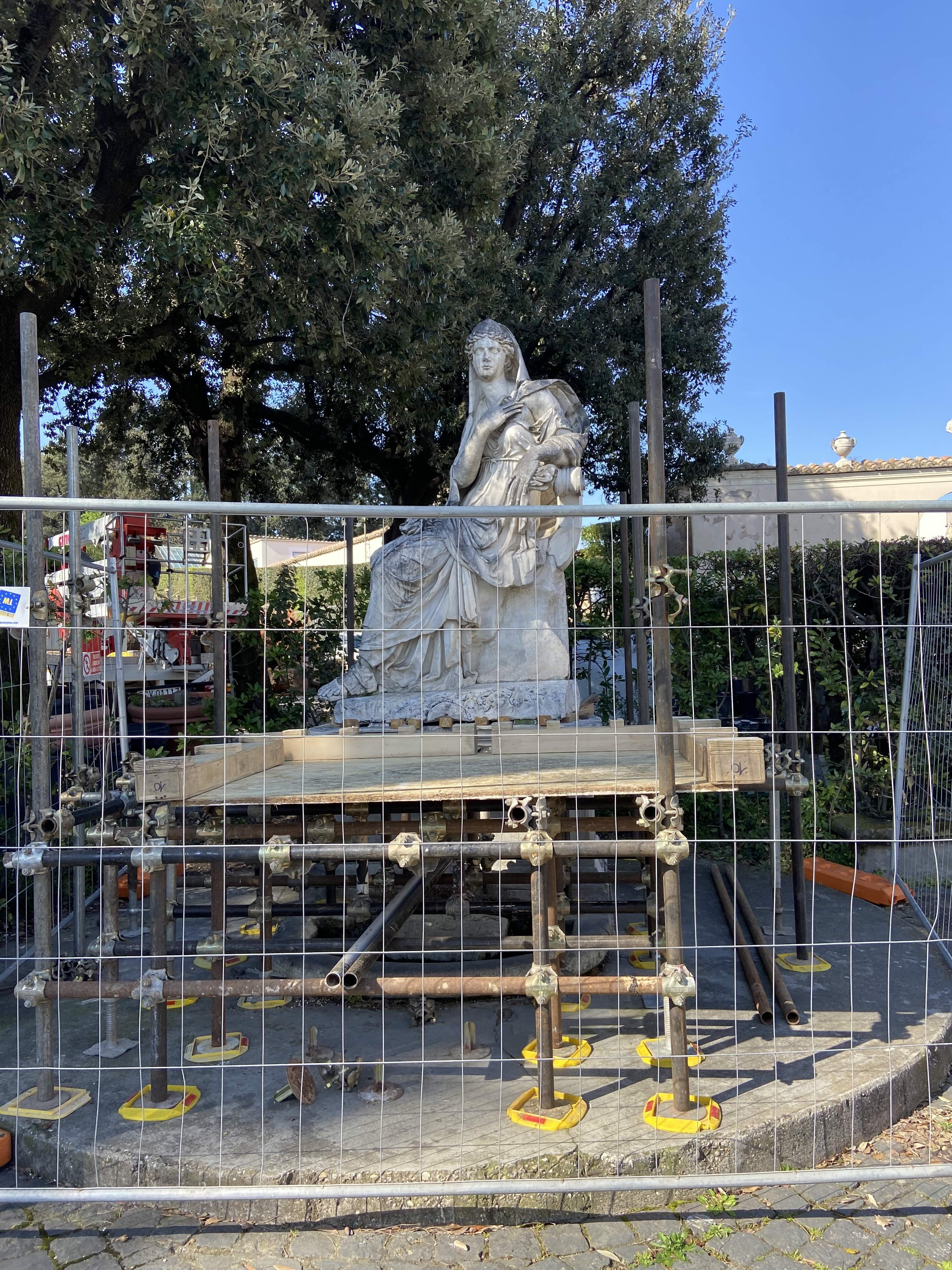
In June, the statue was secured to a wooden-and-steel platform for transport to the laboratory. Now the statue will begin restoration, starting with surface cleaning and the removal of deposits and biological growth.
© 2026 Patrons of the Arts
in the Vatican Museums
Vatican Museums V-00120,
Vatican City State (Europe)
+39 0669864499