

Ethnological Materials Conservation Laboratory - The Architectural Project
Description
HIGH PRIORITY PROJECT
For nearly 25 years, the Ethnological Materials Conservation Laboratory has been dedicated to preserving and enhancing one of the world’s most valuable ethnographic collections, housed in the Ethnological Museum Anima Mundi of the Vatican Museums. The team’s expertise stems from daily interactions with objects of rare beauty and profound cultural significance. Guided by an ethical and institutional mission to safeguard a unique heritage, the restorers have developed a conservation plan to address the emergency state and severe deterioration of multiple artifacts. Following numerous conservation efforts, the Ethnological Materials Conservation Laboratory now aims to promote the conservation of ethnographic assets as living heritage, reflecting the knowledge and skills of Indigenous communities. Collaborating closely with the Museums’ Directorate, the Ethnological Department, the Scientific Research Laboratory, the Conservator’s Office, and other Vatican Museums restoration laboratories, the team employs a dynamic, interdisciplinary approach that respects the original context of the works and carefully considers the best conservation strategies. Since 1997, the collections of the Ethnological Museum Anima Mundi have challenged restorers to find suitable conservation strategies. The diversity of materials and cultural context necessitates an interdisciplinary approach to highlight the cultural and spiritual richness these collections bring to the Vatican Museums. This complexity became apparent when the collections, previously housed in the Passarelli Wing, were found in significant deterioration, prompting urgent intervention. Since then, the conservation of the ethnographic collections has been managed by a team of restorers specialized in various materials: wood, plant fibers, paper material, parchment, plumaria; textiles such as cotton, wool, flax, bamboo, silk, etc.; lacquer, leather, fur, hair, ivory, bone, shells, natural resins, organic pigments, quills (porcupine), beaten bark (tapa), seeds, beetle and orthoptera elytra, animal armor, birds, stuffed animals, etc; stone material, ceramics, raw clay, metal (gold, silver, iron, copper, steel, metal alloys, etc.), glass, inorganic pigments, gems, plastics, synthetic resins, cement; photographic material. This dedicated group has embraced the ambitious challenge of providing their expertise for a collaborative and dynamic conservation project. An initial intervention strategy was established and refined over time, simplifying tasks across relevant departments and facilitating comprehensive documentation of the project’s phases. The Ethnological Materials Conservation Laboratory, one of seven specialized laboratories within the Vatican Museums, focuses on the conservation of the Ethnological Museum Anima Mundi collections. Unlike other laboratories that specialize in specific artifact types, this laboratory handles a wide range of organic and inorganic materials from global cultures, each presenting unique conservation challenges. Comprising eight highly skilled conservators, the laboratory emphasizes dialogue and critical reflection on culturally sensitive and inclusive conservation practices, avoiding a Eurocentric perspective. Over the past two decades, they have developed a restoration methodology that involves collaboration with source communities to understand the cultural context and significance of the objects. This approach includes engaging directly with these communities or institutions in the countries of origin, fostering mutual learning and respect. Adhering to the principle of minimal intervention, the conservators aim to preserve the original materials’ integrity and halt degradation. They prioritize natural, sustainable materials in their conservation efforts, aligning with principles of environmental responsibility and cultural sensitivity.
Total Cost: € 908.500,00 ($ 934,483.10)
State of Preservation
The preservation of the Ethnological collections of objects made from an array of different materials is carried out in the Ethnological Materials Conservation Laboratory, which will be relocated to one of the double-height construction protruding to the rear side of the building, toward the garden along Viale dello Sport. It is part of the large annex added to the Museums in the 70s and designed by A/E Passarelli firm from Rome.
Restoration Procedures
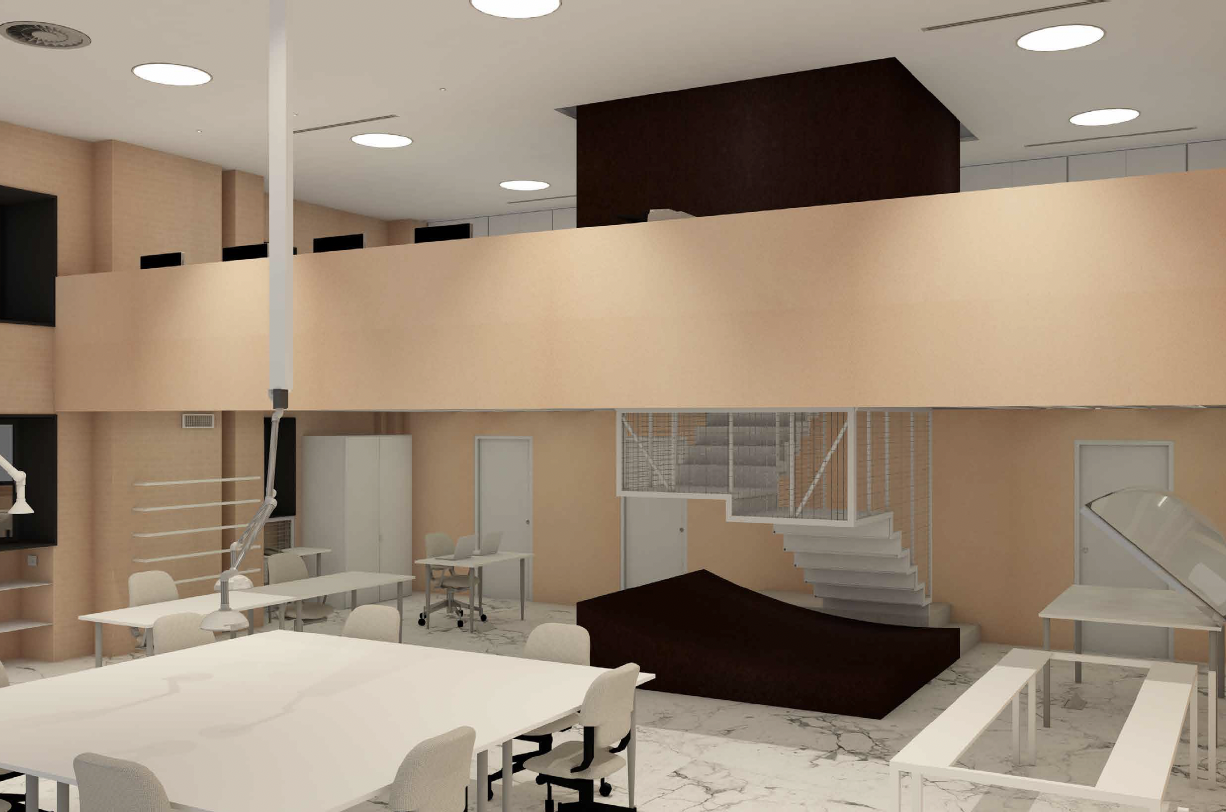
The architectural approach tries to maximize the space for the laboratory by adding a mezzanine while preserving the original features of the space. The perimeter brick facing will be restored and painted, and the ornamental cantilevering volume will be used to confine and highlight the new staircase connecting the two levels. The original round ceiling enclosures containing lighting fixtures will be used as the perimeter for new LED circular ceiling lamps and the marble floor will be restored and polished. The project includes two new transparent glazed partitions and doors in order to have access into the space and will allow visitors to enjoy ongoing art restorations. New windows will increase natural light, and new restrooms will make the space independent from the rest of the Museum. The Ethnological Materials Conservation Laboratory will be provided with mechanical and electrical facilities by current standards and the most modern equipment.
Detail
Department:
Ethnological Collections Anima MundiLaboratories:
Ethnological MaterialsWishbook year: 2025

Ethnological Materials Conservation Laboratory - The Architectural Project
Details
Department: Ethnological Collections Anima Mundi
Laboratory: Ethnological Materials
Wishbook year: 2025
Description
HIGH PRIORITY PROJECT
For nearly 25 years, the Ethnological Materials Conservation Laboratory has been dedicated to preserving and enhancing one of the world’s most valuable ethnographic collections, housed in the Ethnological Museum Anima Mundi of the Vatican Museums. The team’s expertise stems from daily interactions with objects of rare beauty and profound cultural significance. Guided by an ethical and institutional mission to safeguard a unique heritage, the restorers have developed a conservation plan to address the emergency state and severe deterioration of multiple artifacts. Following numerous conservation efforts, the Ethnological Materials Conservation Laboratory now aims to promote the conservation of ethnographic assets as living heritage, reflecting the knowledge and skills of Indigenous communities. Collaborating closely with the Museums’ Directorate, the Ethnological Department, the Scientific Research Laboratory, the Conservator’s Office, and other Vatican Museums restoration laboratories, the team employs a dynamic, interdisciplinary approach that respects the original context of the works and carefully considers the best conservation strategies. Since 1997, the collections of the Ethnological Museum Anima Mundi have challenged restorers to find suitable conservation strategies. The diversity of materials and cultural context necessitates an interdisciplinary approach to highlight the cultural and spiritual richness these collections bring to the Vatican Museums. This complexity became apparent when the collections, previously housed in the Passarelli Wing, were found in significant deterioration, prompting urgent intervention. Since then, the conservation of the ethnographic collections has been managed by a team of restorers specialized in various materials: wood, plant fibers, paper material, parchment, plumaria; textiles such as cotton, wool, flax, bamboo, silk, etc.; lacquer, leather, fur, hair, ivory, bone, shells, natural resins, organic pigments, quills (porcupine), beaten bark (tapa), seeds, beetle and orthoptera elytra, animal armor, birds, stuffed animals, etc; stone material, ceramics, raw clay, metal (gold, silver, iron, copper, steel, metal alloys, etc.), glass, inorganic pigments, gems, plastics, synthetic resins, cement; photographic material. This dedicated group has embraced the ambitious challenge of providing their expertise for a collaborative and dynamic conservation project. An initial intervention strategy was established and refined over time, simplifying tasks across relevant departments and facilitating comprehensive documentation of the project’s phases. The Ethnological Materials Conservation Laboratory, one of seven specialized laboratories within the Vatican Museums, focuses on the conservation of the Ethnological Museum Anima Mundi collections. Unlike other laboratories that specialize in specific artifact types, this laboratory handles a wide range of organic and inorganic materials from global cultures, each presenting unique conservation challenges. Comprising eight highly skilled conservators, the laboratory emphasizes dialogue and critical reflection on culturally sensitive and inclusive conservation practices, avoiding a Eurocentric perspective. Over the past two decades, they have developed a restoration methodology that involves collaboration with source communities to understand the cultural context and significance of the objects. This approach includes engaging directly with these communities or institutions in the countries of origin, fostering mutual learning and respect. Adhering to the principle of minimal intervention, the conservators aim to preserve the original materials’ integrity and halt degradation. They prioritize natural, sustainable materials in their conservation efforts, aligning with principles of environmental responsibility and cultural sensitivity.
Total Cost: € 908.500,00 ($ 934,483.10)
State of Preservation
The preservation of the Ethnological collections of objects made from an array of different materials is carried out in the Ethnological Materials Conservation Laboratory, which will be relocated to one of the double-height construction protruding to the rear side of the building, toward the garden along Viale dello Sport. It is part of the large annex added to the Museums in the 70s and designed by A/E Passarelli firm from Rome.
Restoration Procedures
The architectural approach tries to maximize the space for the laboratory by adding a mezzanine while preserving the original features of the space. The perimeter brick facing will be restored and painted, and the ornamental cantilevering volume will be used to confine and highlight the new staircase connecting the two levels. The original round ceiling enclosures containing lighting fixtures will be used as the perimeter for new LED circular ceiling lamps and the marble floor will be restored and polished. The project includes two new transparent glazed partitions and doors in order to have access into the space and will allow visitors to enjoy ongoing art restorations. New windows will increase natural light, and new restrooms will make the space independent from the rest of the Museum. The Ethnological Materials Conservation Laboratory will be provided with mechanical and electrical facilities by current standards and the most modern equipment.
© 2026 Patrons of the Arts
in the Vatican Museums
Vatican Museums V-00120,
Vatican City State (Europe)
+39 0669864499