

Early Christian Sarcophagus
Artist: Unknown
Date: Second half of the 3rd century A.D.
Classification: Sarcophagus
Dimensions: 75 x 240 x 70 cm
Materials: White Marble
Adopted By: The Minnesota & North Dakota Chapter
Total Cost: € 16,130
Description
Originally from Rome on the Via Salaria, Vigna Bertone then in 1881, it was transported to the Amante property in Via di Porta Angelica. It has been in the Pio Christian Museum since 1888.
The sarcophagus of the Via Salaria is the par excellence sarcophagus of the Christian antiquities, being one of the most famous pieces in this collection of the Vatican Museums.
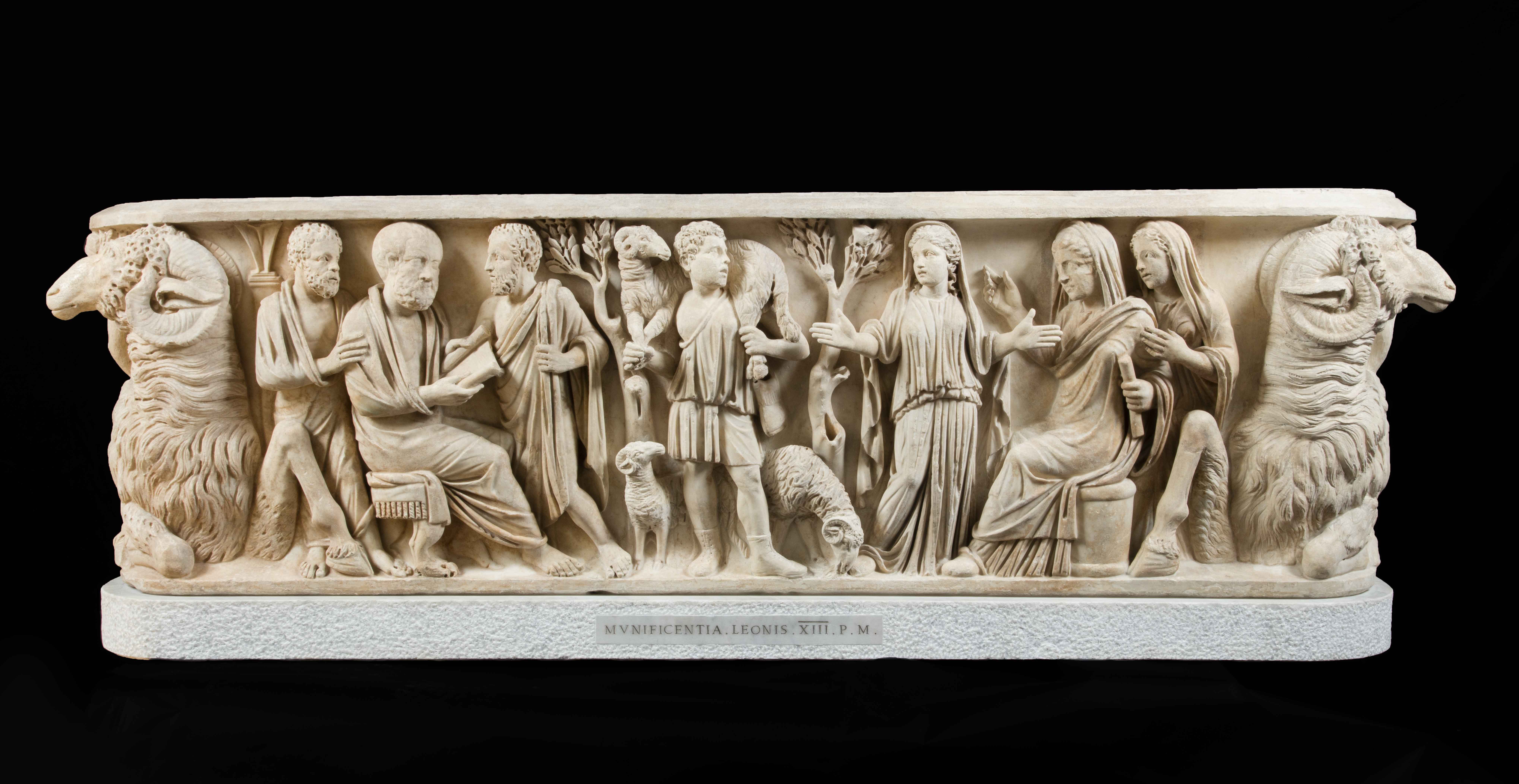
The Christian sarcophagi of the second half of the 3rd Century are covered with figures and symbols of spiritual imagery of late imperial Rome—of note are the pastor, the person in prayer, the symbolic personification of philanthropy (humanitas) and the other of piety (pietas) to the gods and men. Christians reinterpret these symbolic representations in a decisively new way: the first referring to Christ himself, the Good Shepherd, the true divine philanthropist; the other to the mercy he demonstrated to his followers both in dialogue and communion of prayer.
Another item inherited by the Christians from the Greco-Roman world is that of philosophical wisdom, considered by the ancient as a true and healthy otium: the abstraction from earthly commitments and concerns (negotia) to rise to spiritual things. It is understandable that early Christians considered this a favorable concept, obviously in reference to the Christian wisdom and, ultimately, to the contemplation of the mysteries revealed in the Old and New Testament biblical writings.
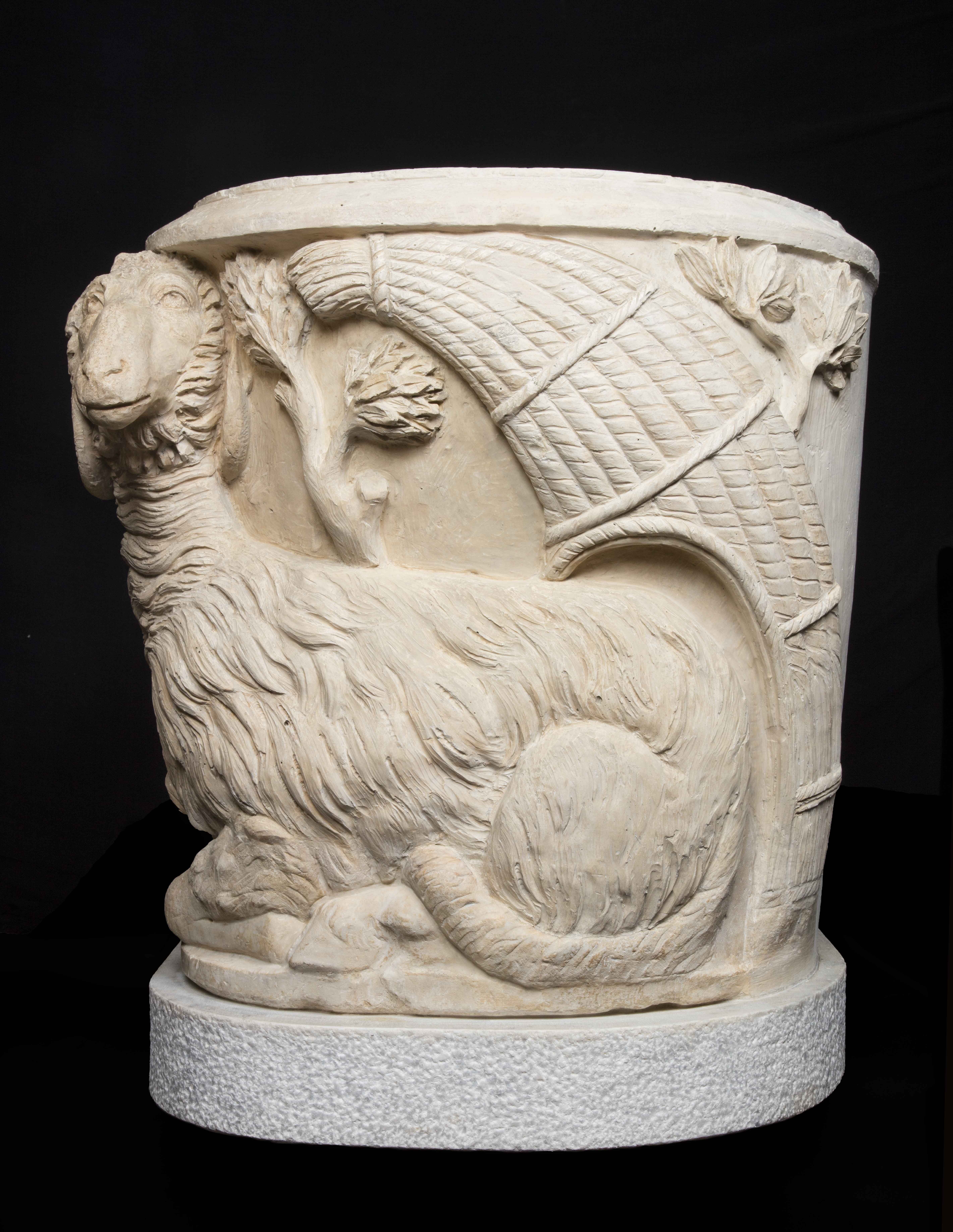
In the light of these observations, the iconographic designs of the sarcophagus of the Via Salaria can be easily decoded. The dead who were buried in this sarcophagus are, in fact, depicted engaging in a dialogue on wisdom. They are the two people elegantly dressed, sitting to the left and right on the front of the sarcophagus. Observe how their two figures are practically mirrored: sitting on two seats, both holding a written volume (one rolled and the other unrolled), flanked by assistants. The husband and his two assistants are dressed in clothing that was typical of cynical philosophers (that is with the cloak wrapped around the nude figure without a tunic); while his wife and the only assistant at her shoulder, are clad in a tunic and palla, an article of clothing worn by women that covered their bodies as well as their heads.
What is the subject of such elevated dialogue? In order to understand, we need to pass from the level of reality – a portrait of a bride and groom – to the symbolic figures that are before them. This is because the two figures of the shepherd and person in prayer are, in truth, the subject of this dialogue. What do they discuss? Humanitas and piety in the ancient world, perhaps, as virtues exercised in the same manner both in life and in death? Or true Christian piety and prayer, turned with hope towards the divine philanthropist, Christ, the Good Shepherd? The subject of the bride and groom making passage through “the valley of darkness” (Psalm 23 [22]: 4) is addressed and implies that their faith is still strong, even in death, and that God walks with them on their way.
In the absence of more precise data about the couple depicted on this sarcophagus, in the form of an epigraphic reference or reliable data on its origin, it is not be easy to formulate an answer to this question. Of course, if the hypothesis is true, that this article is indeed related to the above ground burial of a catacomb of the Via Salaria, doubts would then be entirely dispelled. The Sarcophagus of the Via Salaria would then certainly be referred to as a Christian burial: a couple who loved each other so much in life and are, in the moment of death, still bound together by their love of each other.
State of Preservation
A thorough cleaning of this sarcophagus recovered the original splendor of its white marble which was blackened by dirt and weathered paint.
Restoration Procedures
- Removal of dust
- Consolidation of cracks and gaps
- Complete overall cleaning
- Scientific research
- Photographic documentation
Detail
Adopted By:
The Minnesota & North Dakota ChapterInventory N°: 31540
Artist: Unknown
Date: Second half of the 3rd century A.D.
Dimensions: 75 x 240 x 70 cm
Materials: White Marble
Wishbook year: 2013
Total Cost
€ 16,130

Early Christian Sarcophagus

Details
Adopted by: The Minnesota & North Dakota Chapter
Inventory: 31540
Artist: Unknown
Date: Second half of the 3rd century A.D.
Classification: Sarcophagus
Materials: White Marble
Dimensions: 75 x 240 x 70 cm
Department: Christian Antiquities
Laboratory: Stone Materials
Wishbook year: 2013
Description
Originally from Rome on the Via Salaria, Vigna Bertone then in 1881, it was transported to the Amante property in Via di Porta Angelica. It has been in the Pio Christian Museum since 1888.
The sarcophagus of the Via Salaria is the par excellence sarcophagus of the Christian antiquities, being one of the most famous pieces in this collection of the Vatican Museums.
The Christian sarcophagi of the second half of the 3rd Century are covered with figures and symbols of spiritual imagery of late imperial Rome—of note are the pastor, the person in prayer, the symbolic personification of philanthropy (humanitas) and the other of piety (pietas) to the gods and men. Christians reinterpret these symbolic representations in a decisively new way: the first referring to Christ himself, the Good Shepherd, the true divine philanthropist; the other to the mercy he demonstrated to his followers both in dialogue and communion of prayer.
Another item inherited by the Christians from the Greco-Roman world is that of philosophical wisdom, considered by the ancient as a true and healthy otium: the abstraction from earthly commitments and concerns (negotia) to rise to spiritual things. It is understandable that early Christians considered this a favorable concept, obviously in reference to the Christian wisdom and, ultimately, to the contemplation of the mysteries revealed in the Old and New Testament biblical writings.
In the light of these observations, the iconographic designs of the sarcophagus of the Via Salaria can be easily decoded. The dead who were buried in this sarcophagus are, in fact, depicted engaging in a dialogue on wisdom. They are the two people elegantly dressed, sitting to the left and right on the front of the sarcophagus. Observe how their two figures are practically mirrored: sitting on two seats, both holding a written volume (one rolled and the other unrolled), flanked by assistants. The husband and his two assistants are dressed in clothing that was typical of cynical philosophers (that is with the cloak wrapped around the nude figure without a tunic); while his wife and the only assistant at her shoulder, are clad in a tunic and palla, an article of clothing worn by women that covered their bodies as well as their heads.
What is the subject of such elevated dialogue? In order to understand, we need to pass from the level of reality – a portrait of a bride and groom – to the symbolic figures that are before them. This is because the two figures of the shepherd and person in prayer are, in truth, the subject of this dialogue. What do they discuss? Humanitas and piety in the ancient world, perhaps, as virtues exercised in the same manner both in life and in death? Or true Christian piety and prayer, turned with hope towards the divine philanthropist, Christ, the Good Shepherd? The subject of the bride and groom making passage through “the valley of darkness” (Psalm 23 [22]: 4) is addressed and implies that their faith is still strong, even in death, and that God walks with them on their way.
In the absence of more precise data about the couple depicted on this sarcophagus, in the form of an epigraphic reference or reliable data on its origin, it is not be easy to formulate an answer to this question. Of course, if the hypothesis is true, that this article is indeed related to the above ground burial of a catacomb of the Via Salaria, doubts would then be entirely dispelled. The Sarcophagus of the Via Salaria would then certainly be referred to as a Christian burial: a couple who loved each other so much in life and are, in the moment of death, still bound together by their love of each other.
State of Preservation
A thorough cleaning of this sarcophagus recovered the original splendor of its white marble which was blackened by dirt and weathered paint.
Restoration Procedures
- Removal of dust
- Consolidation of cracks and gaps
- Complete overall cleaning
- Scientific research
- Photographic documentation
Media

Early Christian Sarcophagus 1 - After Restoration

Early Christian Sarcophagus 2 - After Restoration

Early Christian Sarcophagus - After Restoration
Early Christian Sarcophagus 3 - After Restoration
Early Christian Sarcophagus 4 - After Restoration
© 2026 Patrons of the Arts
in the Vatican Museums
Vatican Museums V-00120,
Vatican City State (Europe)
+39 0669864499