

Cristo Giacente
Artist: Leone Tommasi
Date: 1943
Classification: Sculpture
Dimensions: 192 x 73 x 53 cm
Materials: Bronze
Adopted By: The Florida Chapter
Total Cost: € 7,265
Description
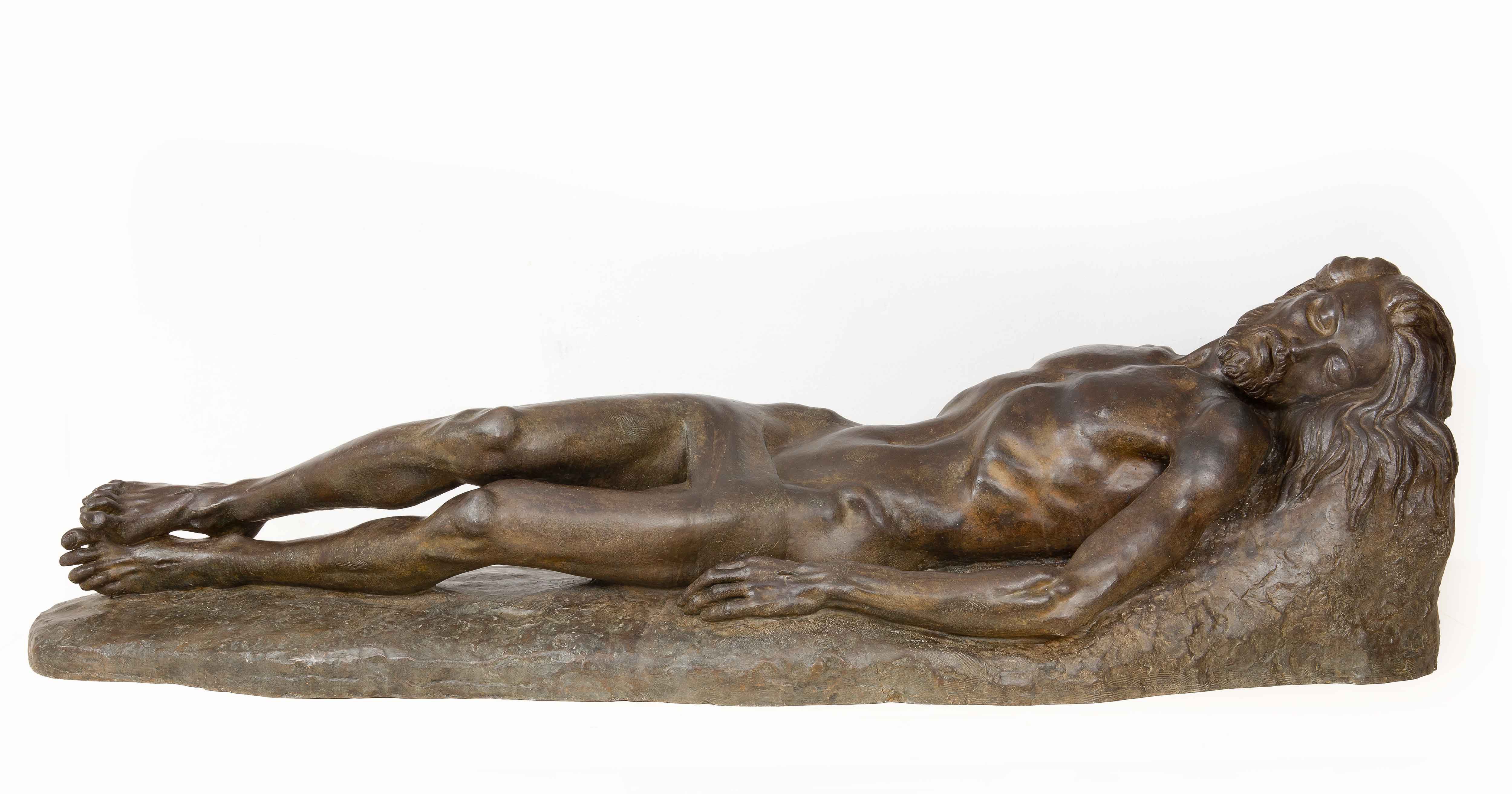
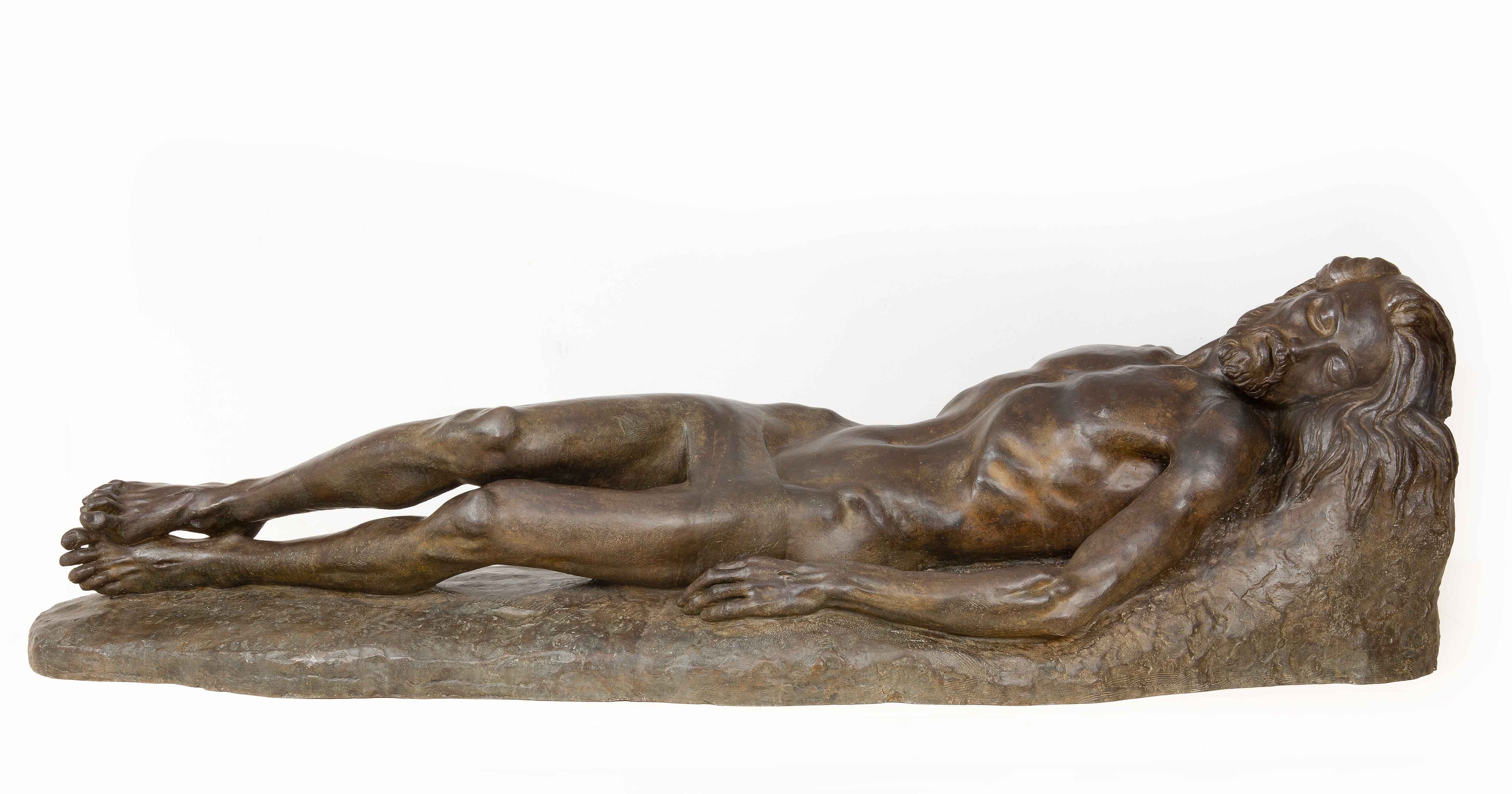
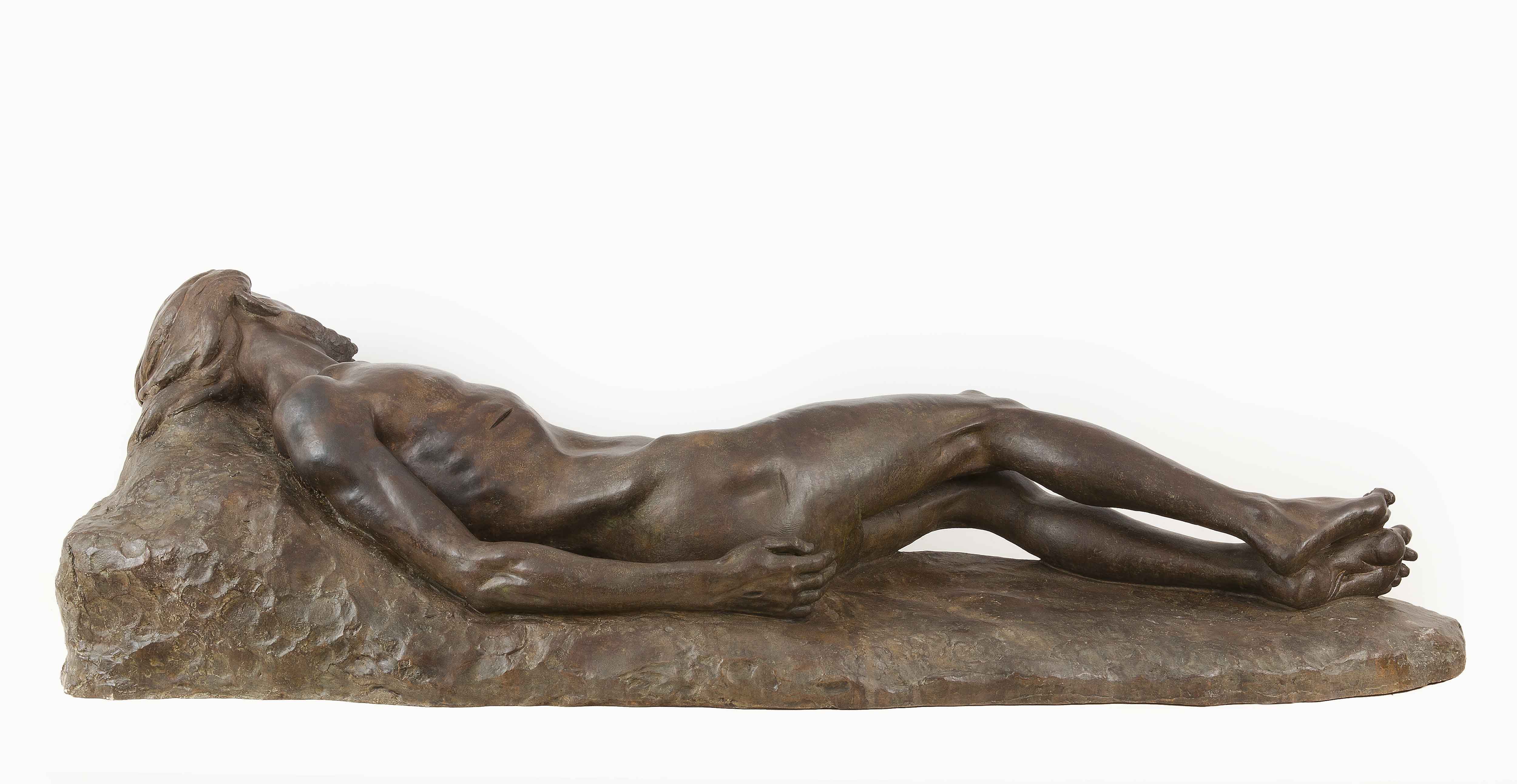
Italian sculptor Leone Tommasi (1903-1965) is a notable personality of the XX century art scene. Born in Pietrasanta, a small village in Versilia, Tuscany, he chose to remain there for most of his life, removed from the mainstream cultural and artistic scenes of which he did not approve. The only exception to this would be his work-related travel to Argentina for the monument to Eva Peron. Despite his isolation, he quickly became known for the unique style and high quality of his pieces. The widow of Tommasi donated this splendid sculpture representing the Dead Christ in 1977. This bronze artwork dates to the artist’s mature period and was completed in 1943 from a version of the Dead Christ in white marble. The artist's son Marcello Tommasi, in a critical note to a volume which he dedicated to his father, wrote that the sculptor had "modeled and executed this statue in marble for his parents’ tomb in the graveyard of Pietrasanta - where he is now buried". In this beautiful sculpture Leone Tommasi highlights the essentiality of the body of Christ, seen most noticeably in the nerves and muscles emphasized on the knees. In looking at this piece we cannot ignore the sharpness of the design, and he captured Christ’s arms, legs, hands, knees, and even the elaborate abdominal muscles, on which the light creates delicate reflections of light and dark shadow. One of the knees is still raised despite Christ’s postmortem state, perhaps suggesting the promise of eternal life held by the beautiful outstretched body of the Son of God. This is one of Tommasi’s most successful works because it is so far removed from the nineteenth-century academic style. Instead, in this work the artist relates directly to the sculpture of the Renaissance and Tuscan Mannerism, which he studied with great interest and then replicated, integrating his modern spirit and personal style.
State of Preservation
The overall state of preservation of the Dead Christ was good. The restoration focused on scientific analysis on the patine, the final varnishes spread over the surface to polish the sculpture at the end of the work, and the material itself. An accurate photographic campaign was carried out for future references both with digital photos and Ektachrome before and after restoration.
Restoration Procedures
- Dust suction and micro-dust suction
- Scientific research
- Overall cleaning
- Photographic documentation
Detail
Adopted By:
The Florida ChapterInventory N°: 23957
Artist: Leone Tommasi
Date: 1943
Dimensions: 192 x 73 x 53 cm
Materials: Bronze
Wishbook year: 2012
Total Cost
€ 7,265

Cristo Giacente
Details
Adopted by: The Florida Chapter
Inventory: 23957
Artist: Leone Tommasi
Date: 1943
Classification: Sculpture
Materials: Bronze
Dimensions: 192 x 73 x 53 cm
Department: XIX Century and Contemporary Art
Laboratory: Metals & Ceramics
Wishbook year: 2012
Description
Italian sculptor Leone Tommasi (1903-1965) is a notable personality of the XX century art scene. Born in Pietrasanta, a small village in Versilia, Tuscany, he chose to remain there for most of his life, removed from the mainstream cultural and artistic scenes of which he did not approve. The only exception to this would be his work-related travel to Argentina for the monument to Eva Peron. Despite his isolation, he quickly became known for the unique style and high quality of his pieces. The widow of Tommasi donated this splendid sculpture representing the Dead Christ in 1977. This bronze artwork dates to the artist’s mature period and was completed in 1943 from a version of the Dead Christ in white marble. The artist's son Marcello Tommasi, in a critical note to a volume which he dedicated to his father, wrote that the sculptor had "modeled and executed this statue in marble for his parents’ tomb in the graveyard of Pietrasanta - where he is now buried". In this beautiful sculpture Leone Tommasi highlights the essentiality of the body of Christ, seen most noticeably in the nerves and muscles emphasized on the knees. In looking at this piece we cannot ignore the sharpness of the design, and he captured Christ’s arms, legs, hands, knees, and even the elaborate abdominal muscles, on which the light creates delicate reflections of light and dark shadow. One of the knees is still raised despite Christ’s postmortem state, perhaps suggesting the promise of eternal life held by the beautiful outstretched body of the Son of God. This is one of Tommasi’s most successful works because it is so far removed from the nineteenth-century academic style. Instead, in this work the artist relates directly to the sculpture of the Renaissance and Tuscan Mannerism, which he studied with great interest and then replicated, integrating his modern spirit and personal style.
State of Preservation
The overall state of preservation of the Dead Christ was good. The restoration focused on scientific analysis on the patine, the final varnishes spread over the surface to polish the sculpture at the end of the work, and the material itself. An accurate photographic campaign was carried out for future references both with digital photos and Ektachrome before and after restoration.
Restoration Procedures
- Dust suction and micro-dust suction
- Scientific research
- Overall cleaning
- Photographic documentation
Media
Cristo Giacente - Front After Restoration
Cristo Giacente - Back After Restoration
© 2026 Patrons of the Arts
in the Vatican Museums
Vatican Museums V-00120,
Vatican City State (Europe)
+39 0669864499