

Colossal Portrait of Plotina
Artist: Unknown
Date: Head: 122-138 A.D.; Bust: 1782-83 A.D.
Classification: Statue
Dimensions: 55 cm h
Materials: White marble
Description
HIGH PRIORITY PROJECT
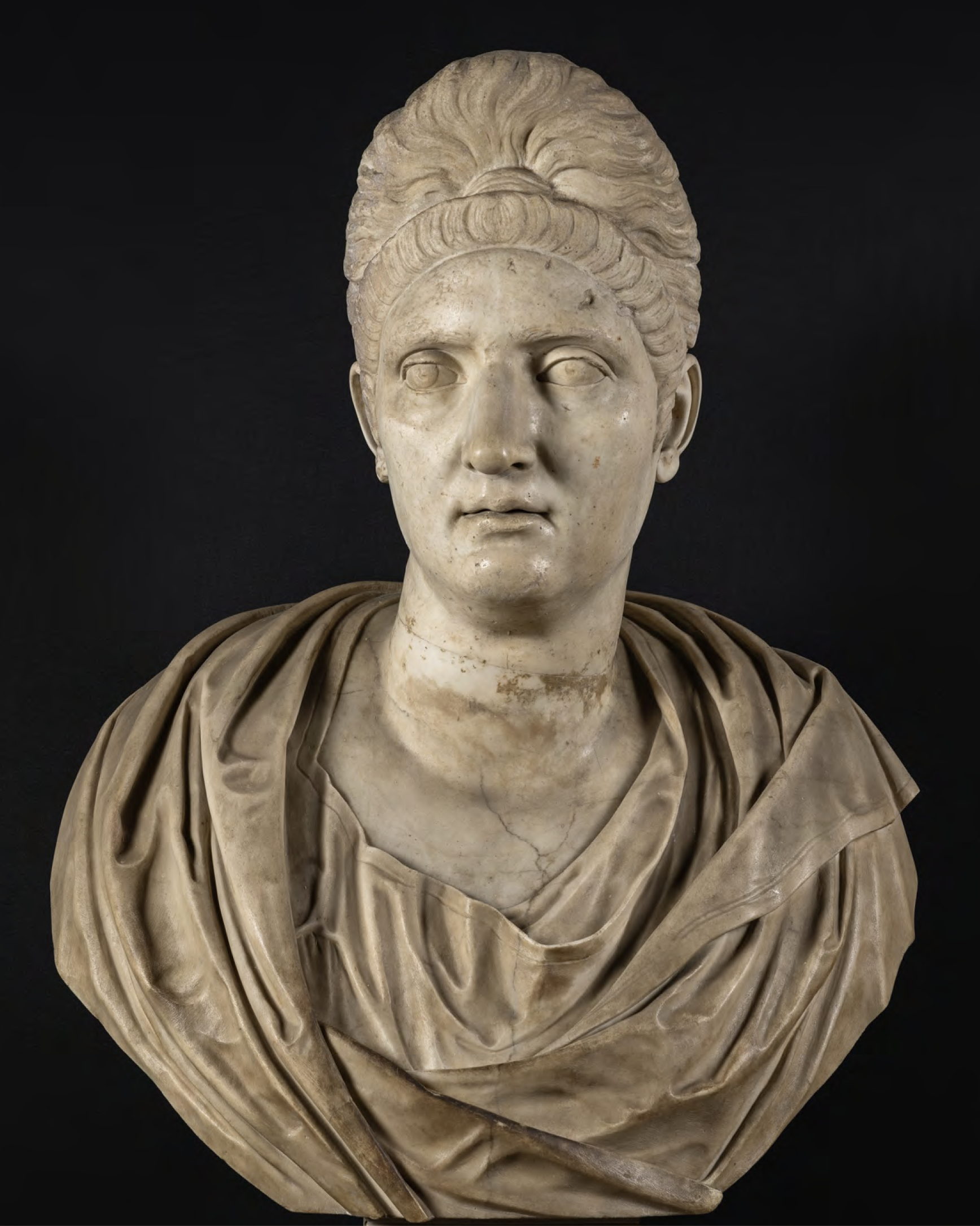
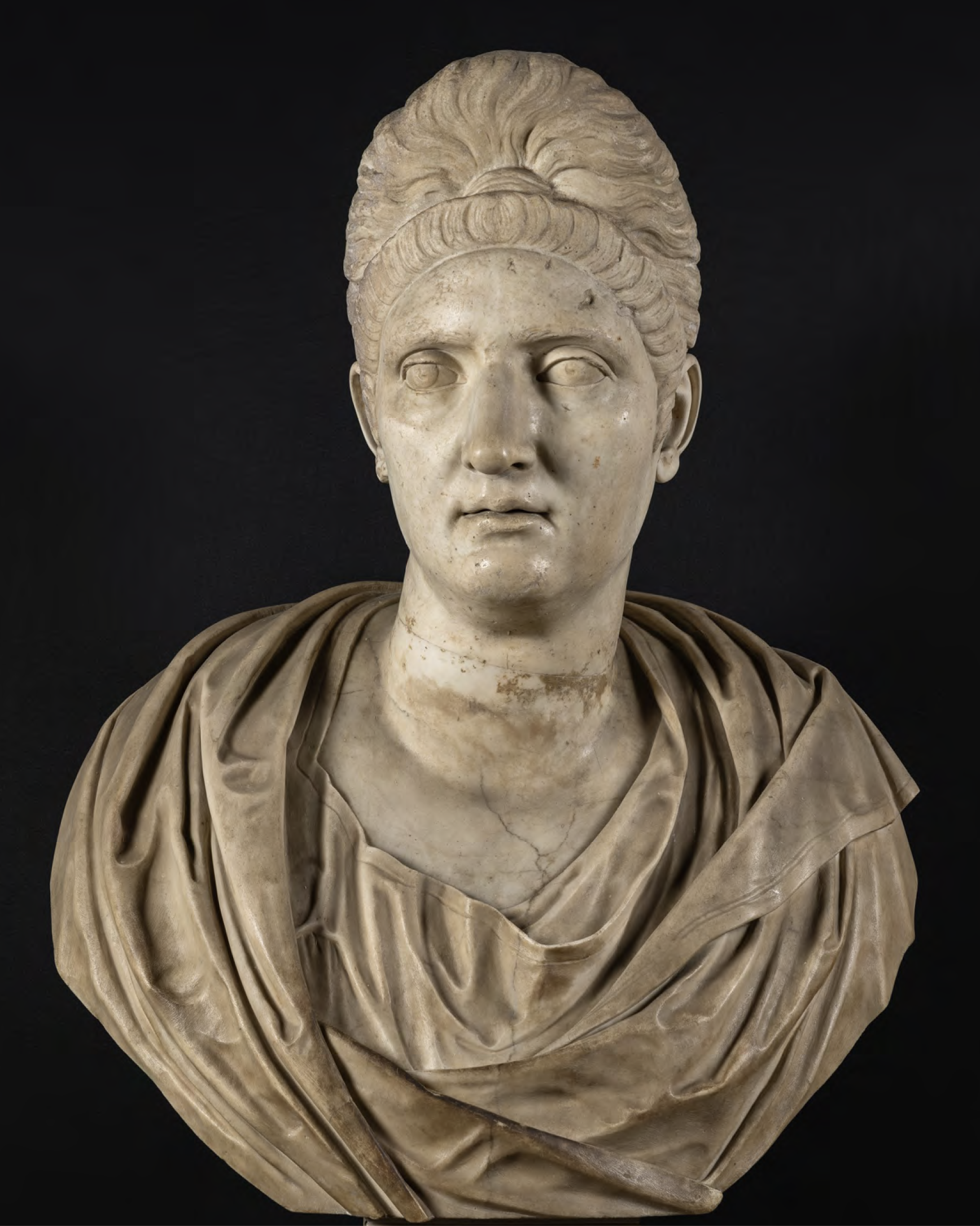
The head was part of the Mattei Collection and housed in the Villa Celimontana on a different bust, as seen on the engraving by Ridolfino Venuti (published in the Monumenta Mattheiana, II, Rome 1776, table XV, fig. II, pg. 34). In 1770, Duke Giuseppe Mattei sold it to Pope Clement XIV, along with other objects from his famous collection that would comprise the first nucleus of the art collection of the future Pio Clementino Museum. Between 1782 and 1783, the sculpture underwent restoration and the bust, probably damaged, was made ex novo by the papal sculptors Gaspare Sibilla and Giovanni Pierantoni. In the face we recognize the features of Pompeia Plotina, beloved wife of the Emperor Trajan (98-117 A.D.). Literary sources of the time describe her as a cultured and intelligent woman with great modesty and devotion to her husband. In 105 A.D., she received the title of Augusta from the Senate, and in 129 A.D., a few years after her death, she was declared a Diva (deified) by Emperor Hadrian, her adopted son.
TOTAL COST: € 15.894,52 ($ 16,984.89)
State of Preservation
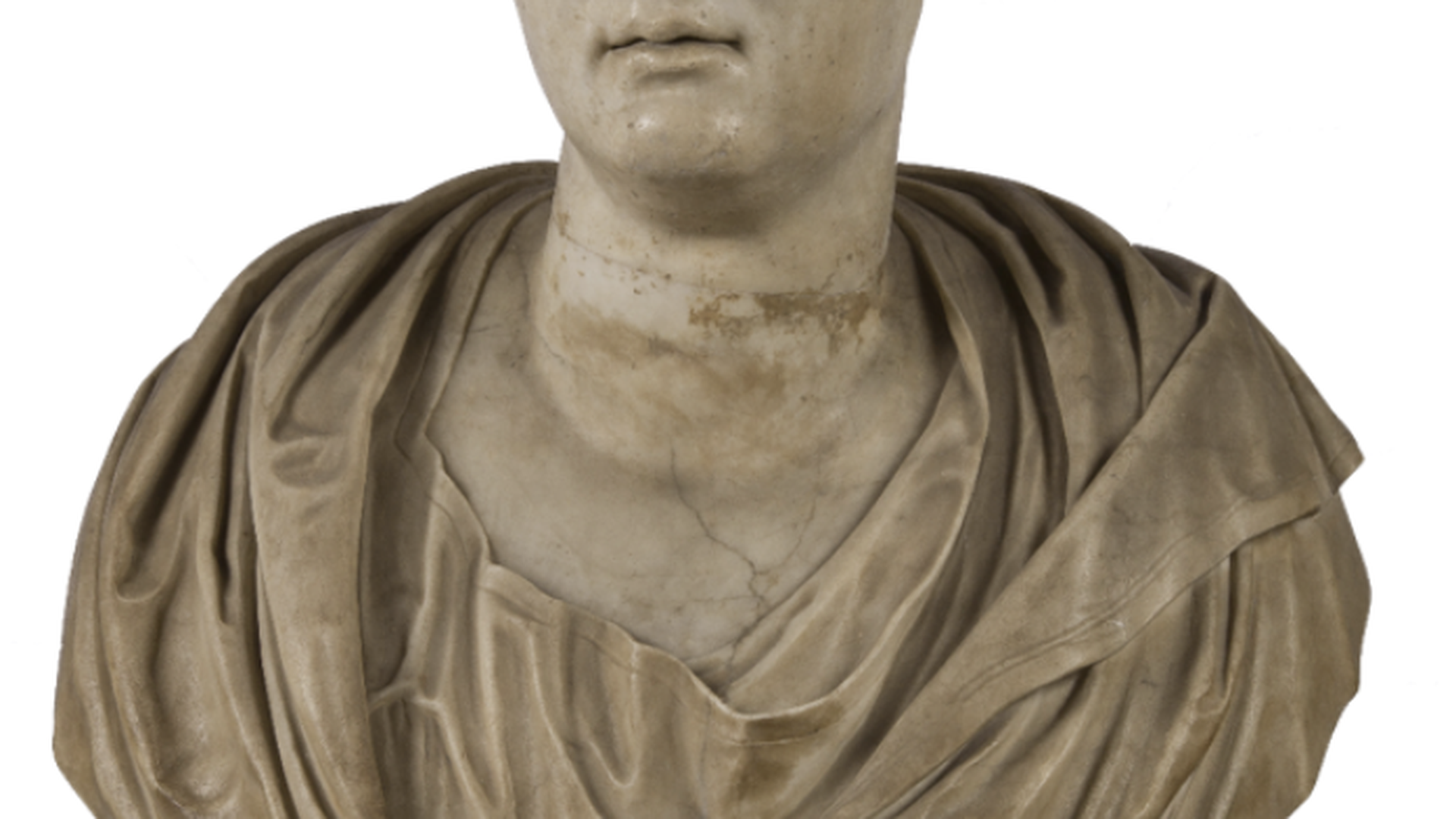
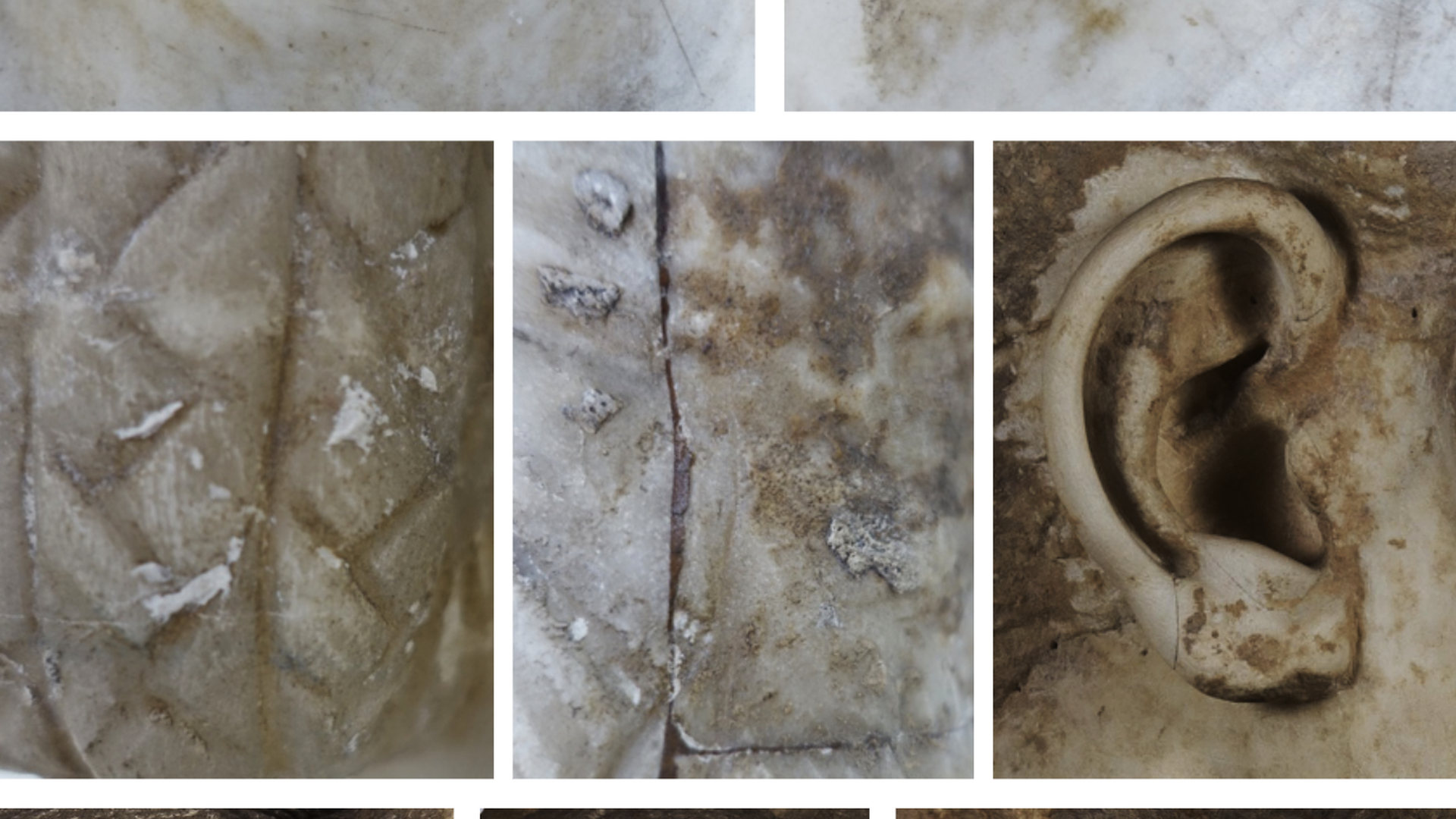
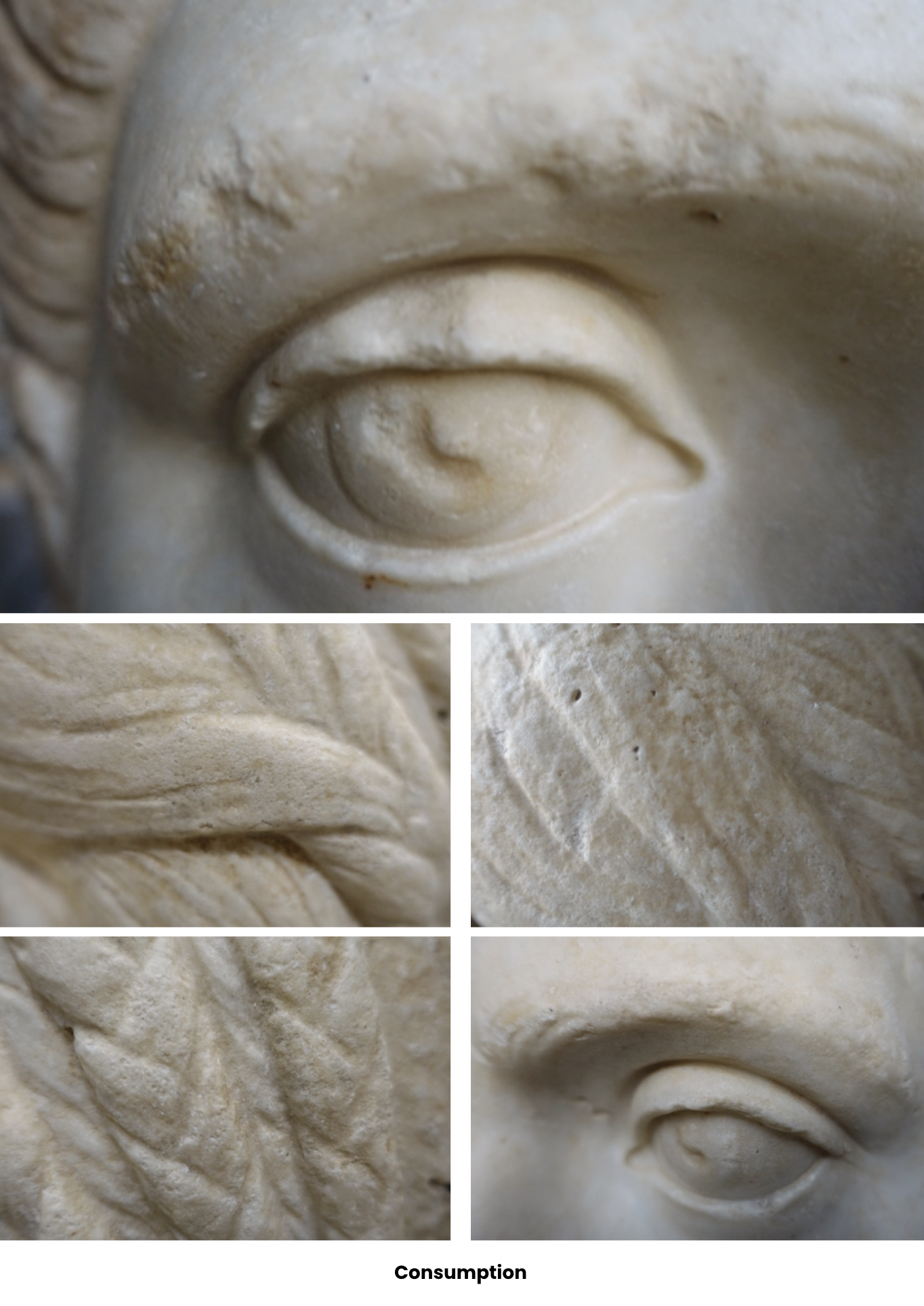
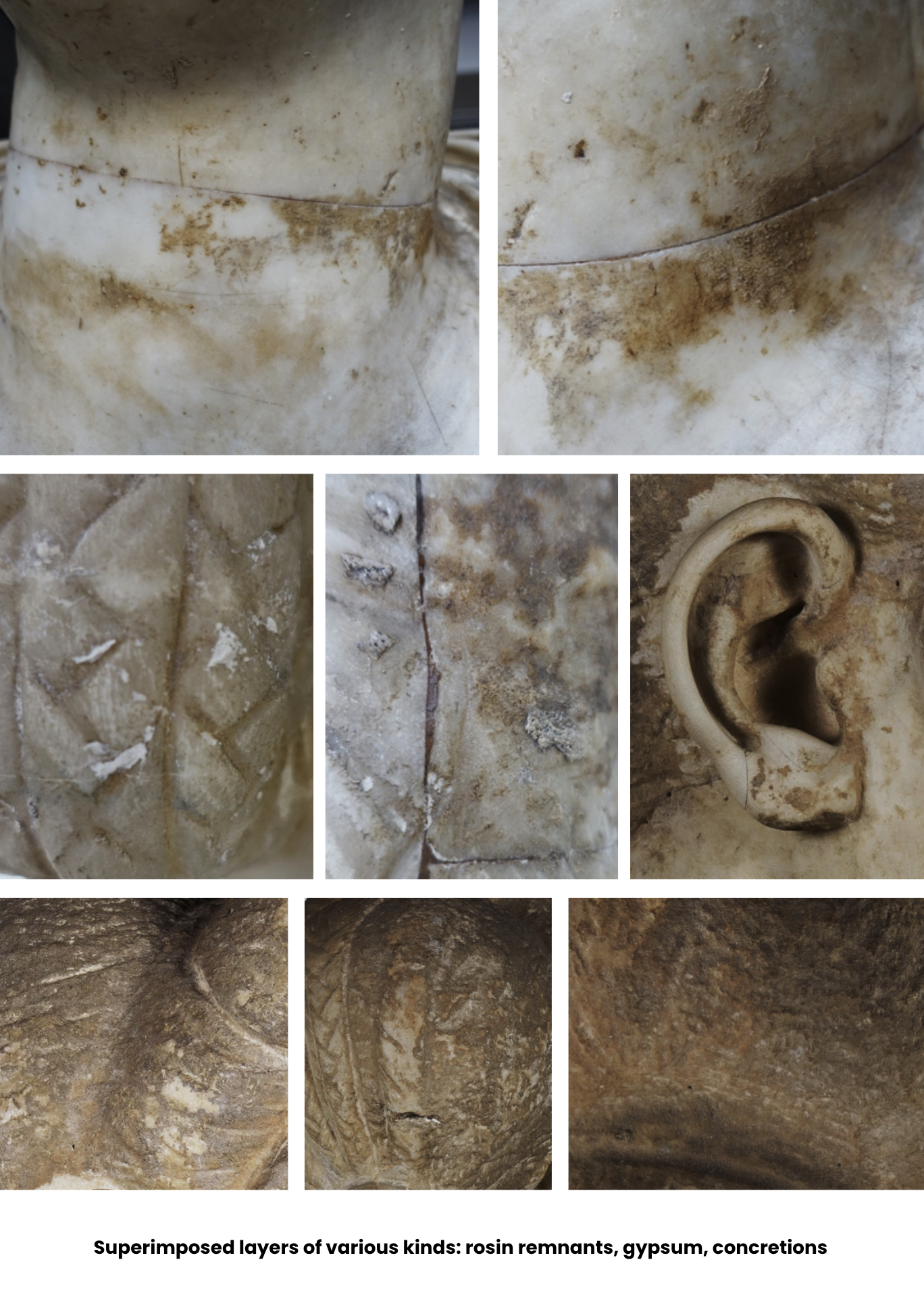
The sculpture appears quite darkened and opaque due to the presence of consistent deposits. There are areas with various stains and inhomogeneities on the surface of the head (of ancient workmanship) and the bust (of modern age). There are also cracks, fractures, and small and medium-sized lacunae.
Restoration Procedures
- Structural verification of the bond between the torso and head
- Removal of incoherent dry deposits with micro vacuum cleaners, paint brushes and drills
- A cleaning plan will be determined after the analytical testing
- Complete the stucco and micro stucco works with suitable materials compatible with the original
- Perform localized chromatic balancing to restore harmony to read the work
- A final application of a protective coat will complete the restoration
Detail
Patrons:
Rick and Lisa Altig
Inventory N°: 240
Artist: Unknown
Date: Head: 122-138 A.D.; Bust: 1782-83 A.D.
Dimensions: 55 cm h
Materials: White marble
Department:
Greek and Roman AntiquitiesCurators:
Dr. Claudia Valerimuseum:
Pio Clementino MuseumLaboratories:
Stone MaterialsWishbook year: 2024
Colossal Portrait of Plotina - Final Restoration Report
Pompeia Plotina Claudia Phoebe Piso, born in Nemausus, Gaul, in 65/70 AD and deceased in 121 AD, was the wife of Emperor Trajan and then empress consort with the title Augusta during his reign from 117 to 121 AD. Childless, she adopted Hadrian, who deified her when he became emperor.
1770: The head was sold by Duke Giuseppe Mattei to Pope Pius VI. Gaspare Sibilla and Giovanni Pierantoni were commissioned to complete the bust (1782 - 1783).
Ennio Quirino Visconti, in his book on the Clementine Museum, writes:
"...the very noble colossal head...gives us the likeness of Plotina Augusta, excellent wife of the excellent prince, cieè of Trajan...images of this woman Augusta are rare, perhaps her modesty was the reason for their rarity... The only head is ancient and is made of fine-grained Greek marble, commonly called Grechetto. The bust is the work of the papal sculptor Sig. Pierantoni...."
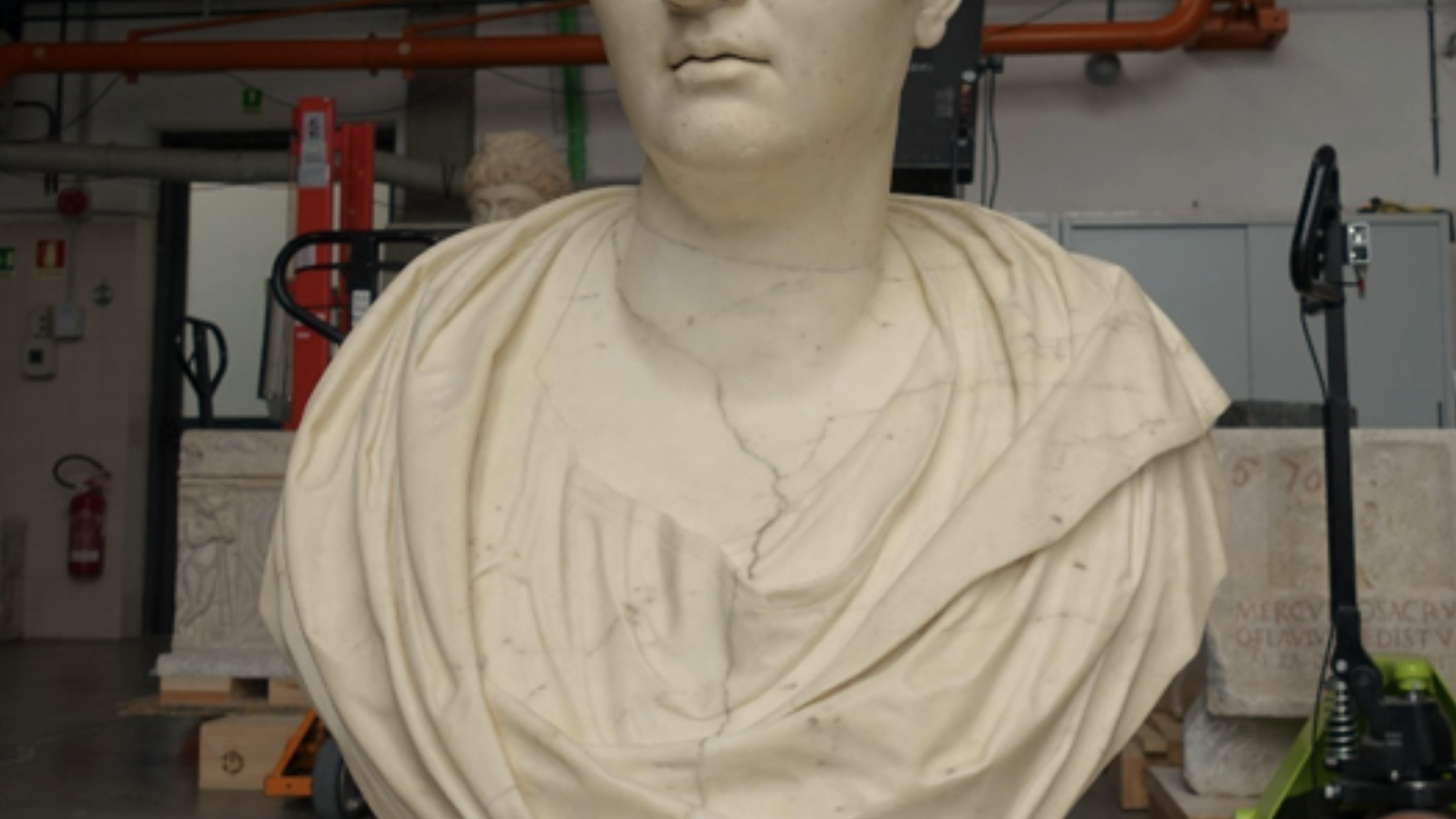
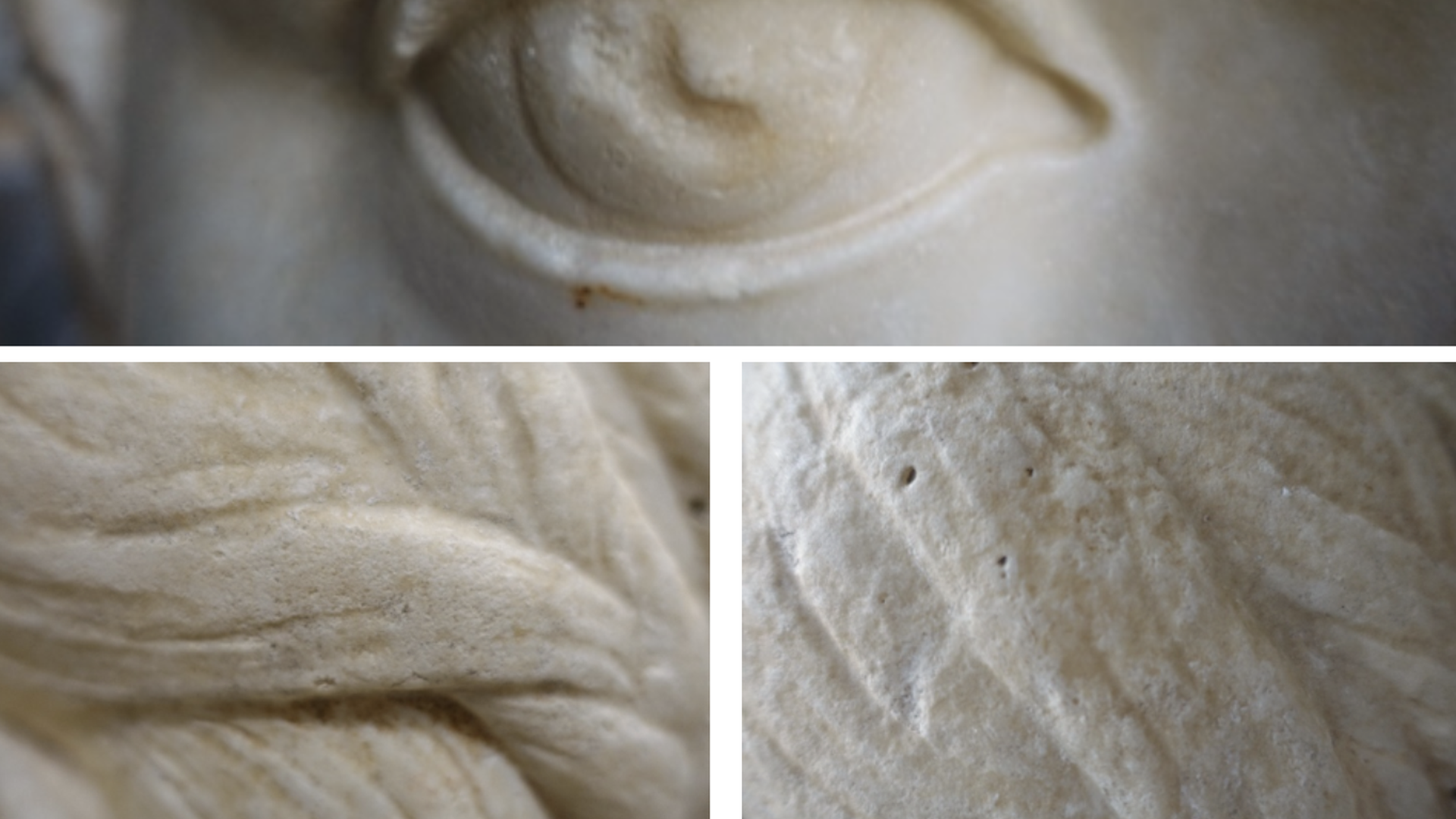
Removal of persistent and adhering surface deposits; greasy dusts, waxes: chemical and physical cleaning
- First application with buffered acetone
- Application of Ligroin emulsion (so-called "dewaxing emulsion")
- Application of 1% triammonium citrate on Japanese paper followed by rinsing with water
- Final cleaning by laser ablation (Thunder Compact and Blaster/Infinito)

Colossal Portrait of Plotina
Details
Patrons: Rick and Lisa Altig
Inventory: 240
Artist: Unknown
Date: Head: 122-138 A.D.; Bust: 1782-83 A.D.
Classification: Statue
Materials: White marble
Dimensions: 55 cm h
Museum: Pio Clementino Museum
Department: Greek and Roman Antiquities
Laboratory: Stone Materials
Wishbook year: 2024
Description
HIGH PRIORITY PROJECT
The head was part of the Mattei Collection and housed in the Villa Celimontana on a different bust, as seen on the engraving by Ridolfino Venuti (published in the Monumenta Mattheiana, II, Rome 1776, table XV, fig. II, pg. 34). In 1770, Duke Giuseppe Mattei sold it to Pope Clement XIV, along with other objects from his famous collection that would comprise the first nucleus of the art collection of the future Pio Clementino Museum. Between 1782 and 1783, the sculpture underwent restoration and the bust, probably damaged, was made ex novo by the papal sculptors Gaspare Sibilla and Giovanni Pierantoni. In the face we recognize the features of Pompeia Plotina, beloved wife of the Emperor Trajan (98-117 A.D.). Literary sources of the time describe her as a cultured and intelligent woman with great modesty and devotion to her husband. In 105 A.D., she received the title of Augusta from the Senate, and in 129 A.D., a few years after her death, she was declared a Diva (deified) by Emperor Hadrian, her adopted son.
TOTAL COST: € 15.894,52 ($ 16,984.89)
State of Preservation
The sculpture appears quite darkened and opaque due to the presence of consistent deposits. There are areas with various stains and inhomogeneities on the surface of the head (of ancient workmanship) and the bust (of modern age). There are also cracks, fractures, and small and medium-sized lacunae.
Restoration Procedures
- Structural verification of the bond between the torso and head
- Removal of incoherent dry deposits with micro vacuum cleaners, paint brushes and drills
- A cleaning plan will be determined after the analytical testing
- Complete the stucco and micro stucco works with suitable materials compatible with the original
- Perform localized chromatic balancing to restore harmony to read the work
- A final application of a protective coat will complete the restoration
Media
Colossal Portrait of Plotina
Restorations Update: Colossal Portrait of Plotina - Final Restoration Report

Pompeia Plotina Claudia Phoebe Piso, born in Nemausus, Gaul, in 65/70 AD and deceased in 121 AD, was the wife of Emperor Trajan and then empress consort with the title Augusta during his reign from 117 to 121 AD. Childless, she adopted Hadrian, who deified her when he became emperor.
1770: The head was sold by Duke Giuseppe Mattei to Pope Pius VI. Gaspare Sibilla and Giovanni Pierantoni were commissioned to complete the bust (1782 - 1783).
Ennio Quirino Visconti, in his book on the Clementine Museum, writes:
"...the very noble colossal head...gives us the likeness of Plotina Augusta, excellent wife of the excellent prince, cieè of Trajan...images of this woman Augusta are rare, perhaps her modesty was the reason for their rarity... The only head is ancient and is made of fine-grained Greek marble, commonly called Grechetto. The bust is the work of the papal sculptor Sig. Pierantoni...."
Removal of persistent and adhering surface deposits; greasy dusts, waxes: chemical and physical cleaning
- First application with buffered acetone
- Application of Ligroin emulsion (so-called "dewaxing emulsion")
- Application of 1% triammonium citrate on Japanese paper followed by rinsing with water
- Final cleaning by laser ablation (Thunder Compact and Blaster/Infinito)

© 2026 Patrons of the Arts
in the Vatican Museums
Vatican Museums V-00120,
Vatican City State (Europe)
+39 0669864499