

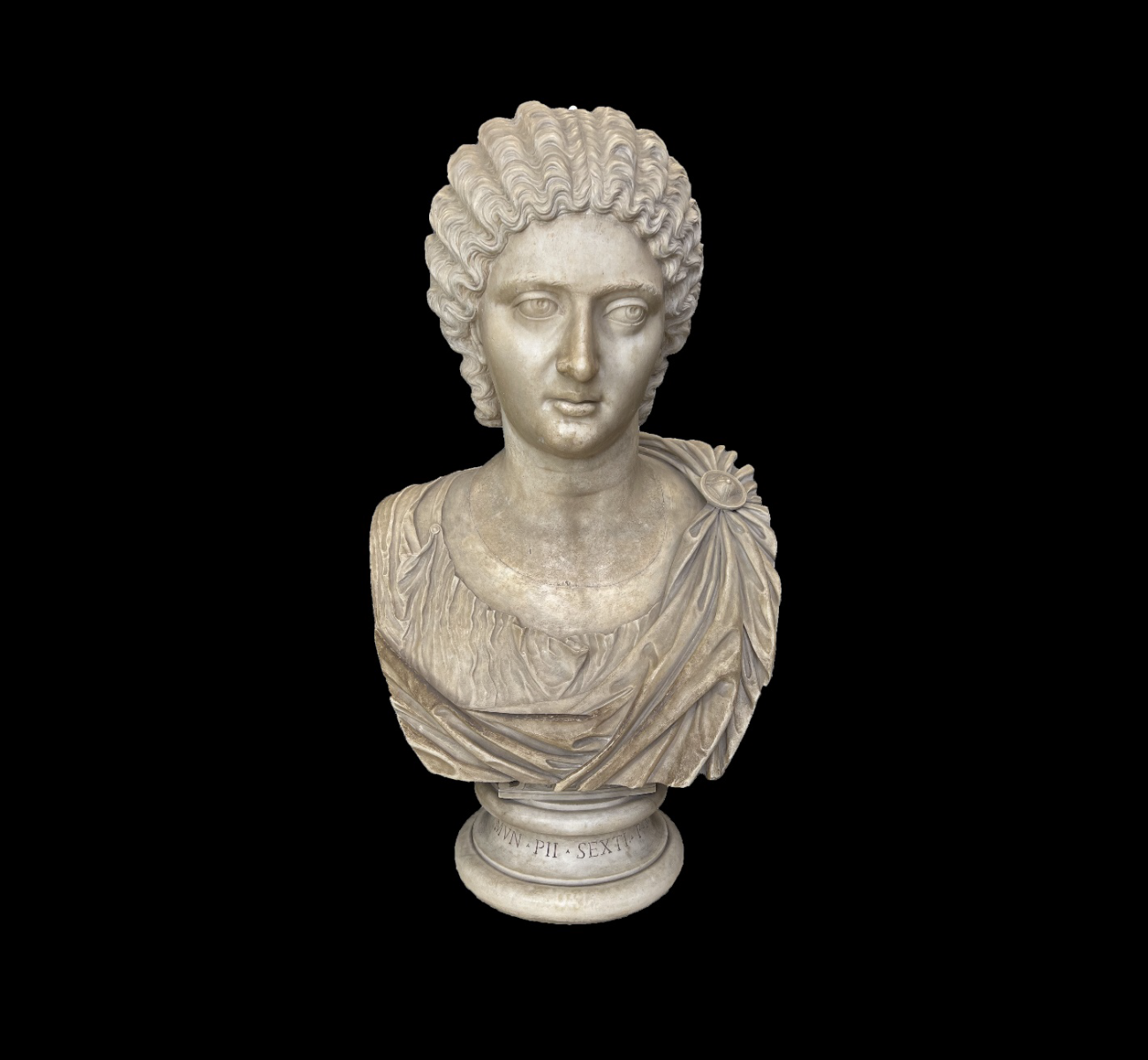
Colossal Portrait of Giulia Domna
Artist: Unknown
Date: 210-230 A.D.
Classification: Statue
Dimensions: 58 cm h
Materials: White marble
Adopted By: The Northwest Chapter
Description
HIGH PRIORITY PROJECT
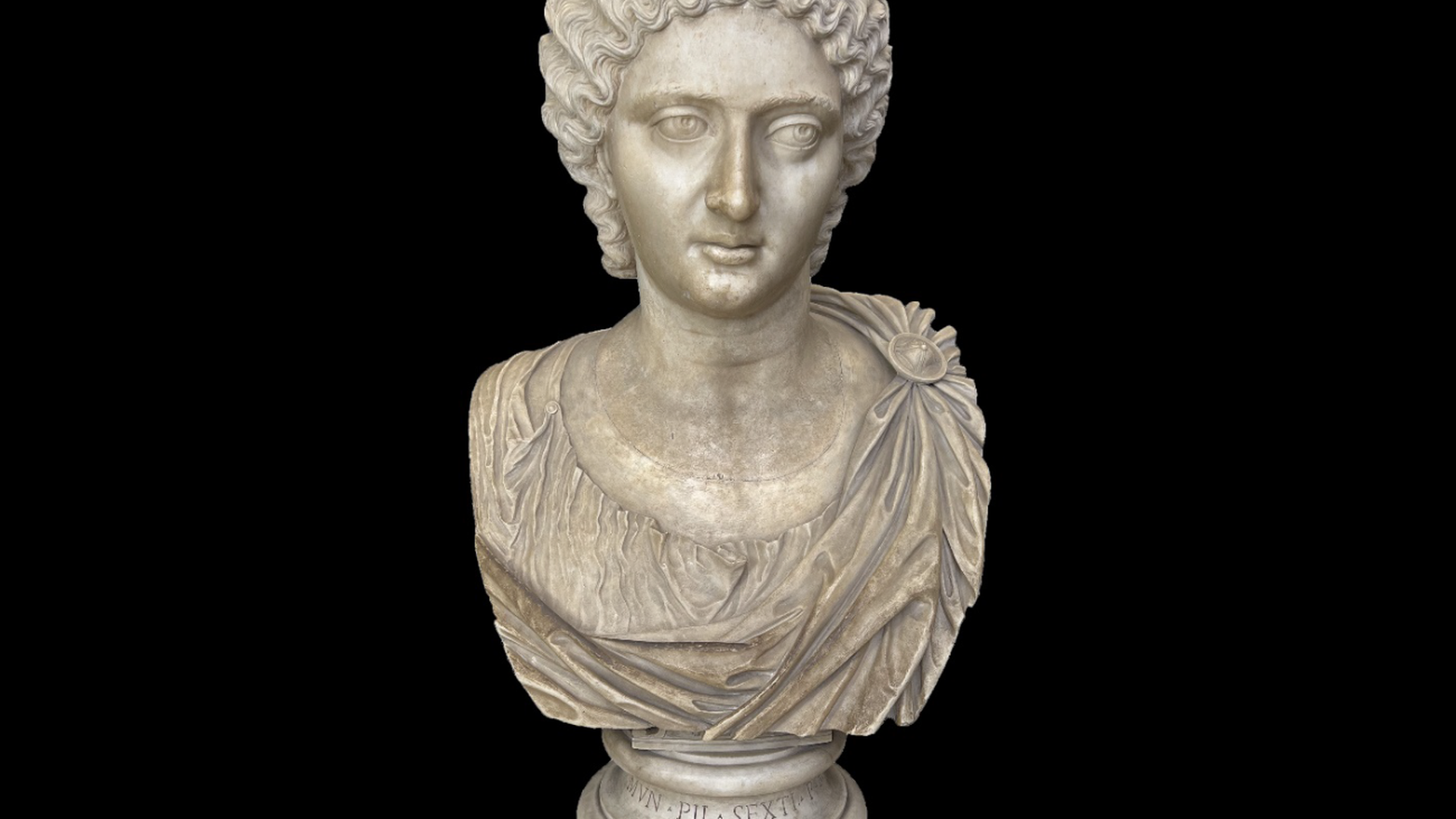
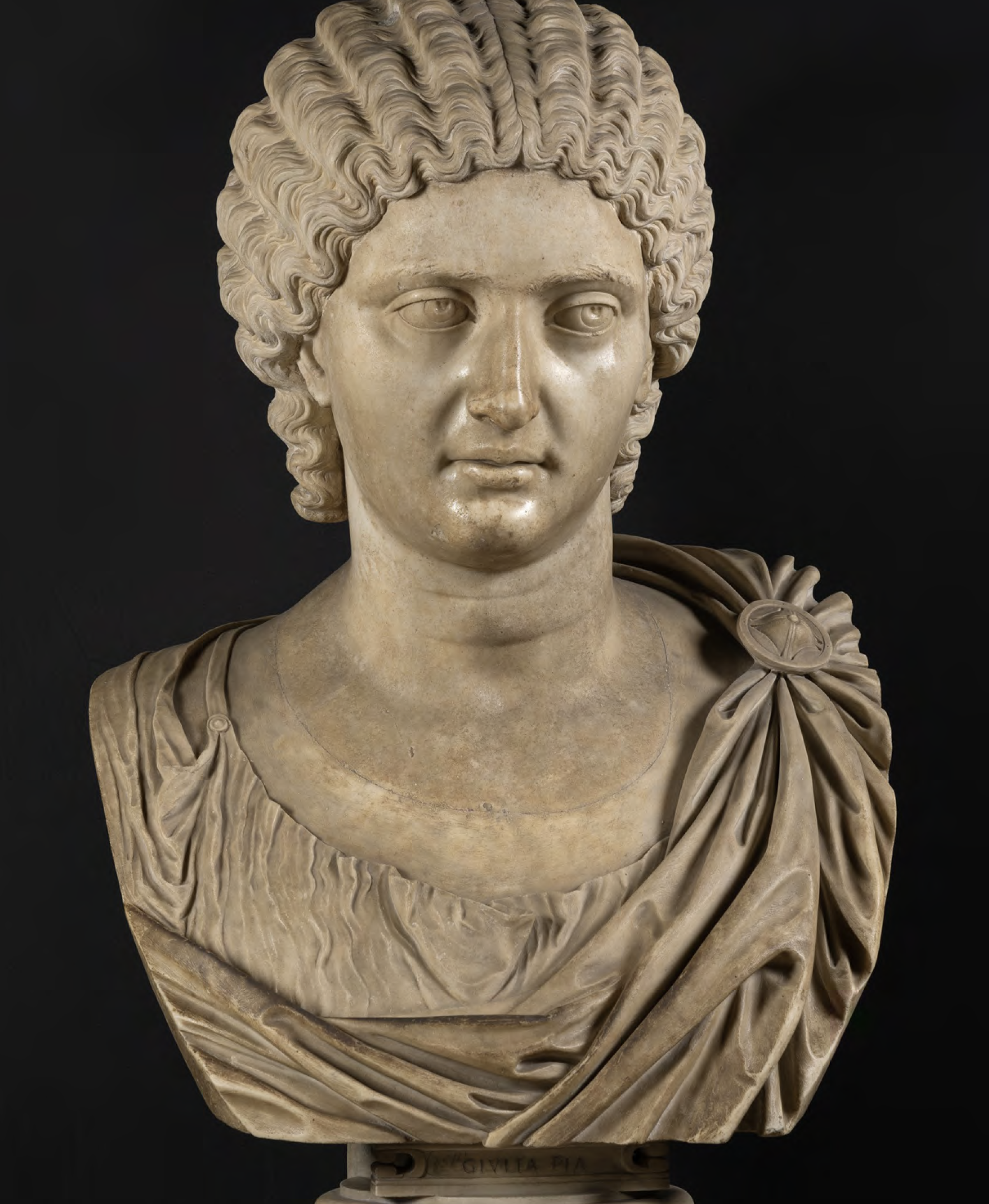
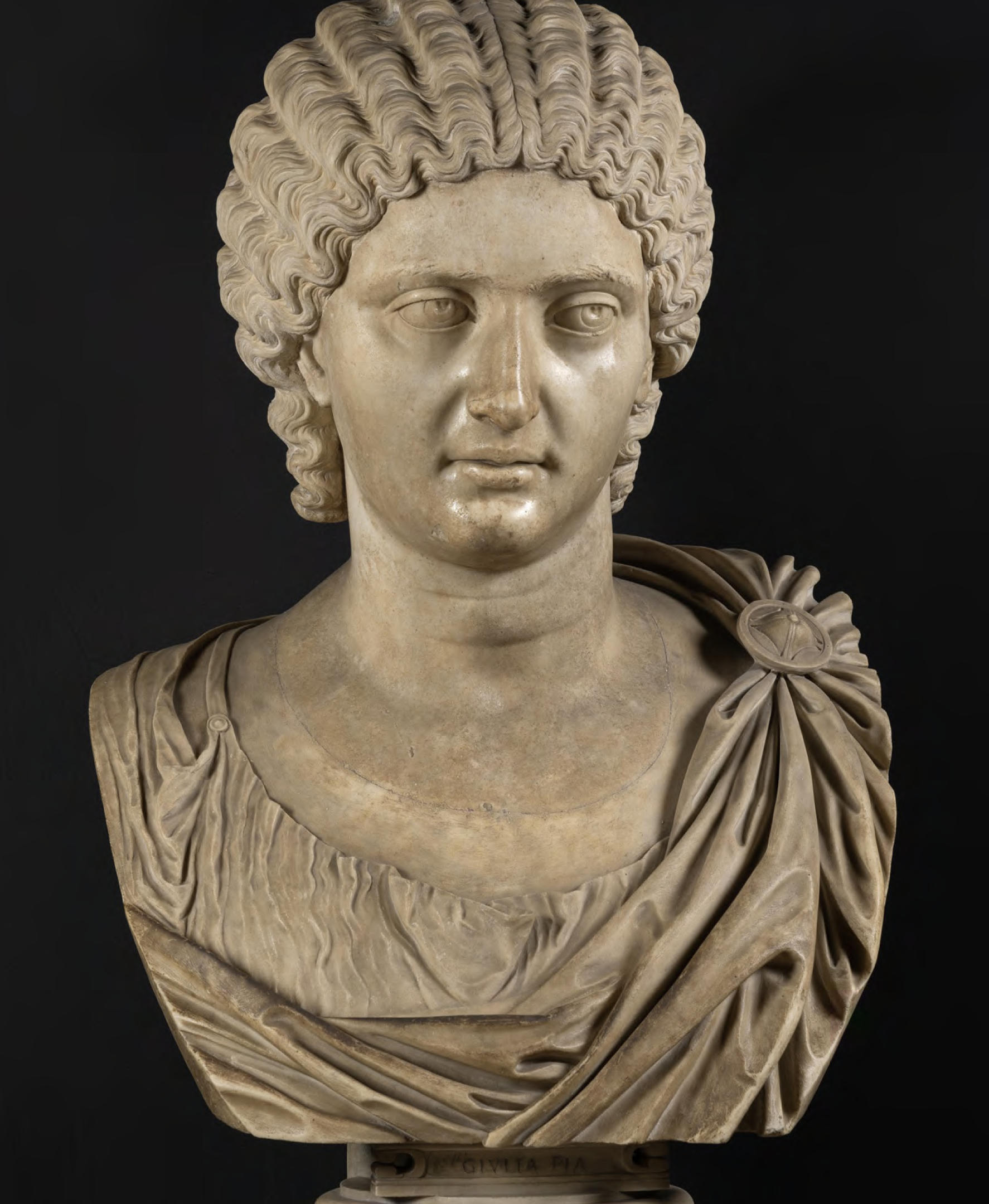
Giovanni Volpato found the sculpture during the excavations in 1780 on the Quadraro estate, located outside Porta San Giovanni, between the Via Appia and the Via Tuscolana. Purchased by Pope Pius VI in 1781, Ferdinando Lisandroni restored the head, integrated all the hair, the tip of the nose, and made the monumental bust as the base. Ennio Quirino Visconti selected the portrait for the Sala Rotonda of the Pio Clementino Museum, where it still stands today. Visconti identified it as Giulia Domna, wife of Emperor Septimius Severus (193-211 A.D.), of Syrian origin and an influential adviser to her husband. Recent bibliography has superseded this hypothesis. The face, with highly idealized somatic features, includes large eyes, thick eyebrows, a slightly aquiline nose, and a small mouth with full lips. Such features suggest the identity belongs to Giulia Domna’s sister, Giulia Mesa, or the latter’s daughter, Giulia Sohemia, mother of Emperor Elagabalus (218-222 A.D.). Nevertheless, she is undoubtedly an imperial princess of the Severi family that ruled Rome between the end of the second and the first decades of the 3rd century A.D.
TOTAL COST: € 14.833,92 ($ 15,851.52)
State of Preservation
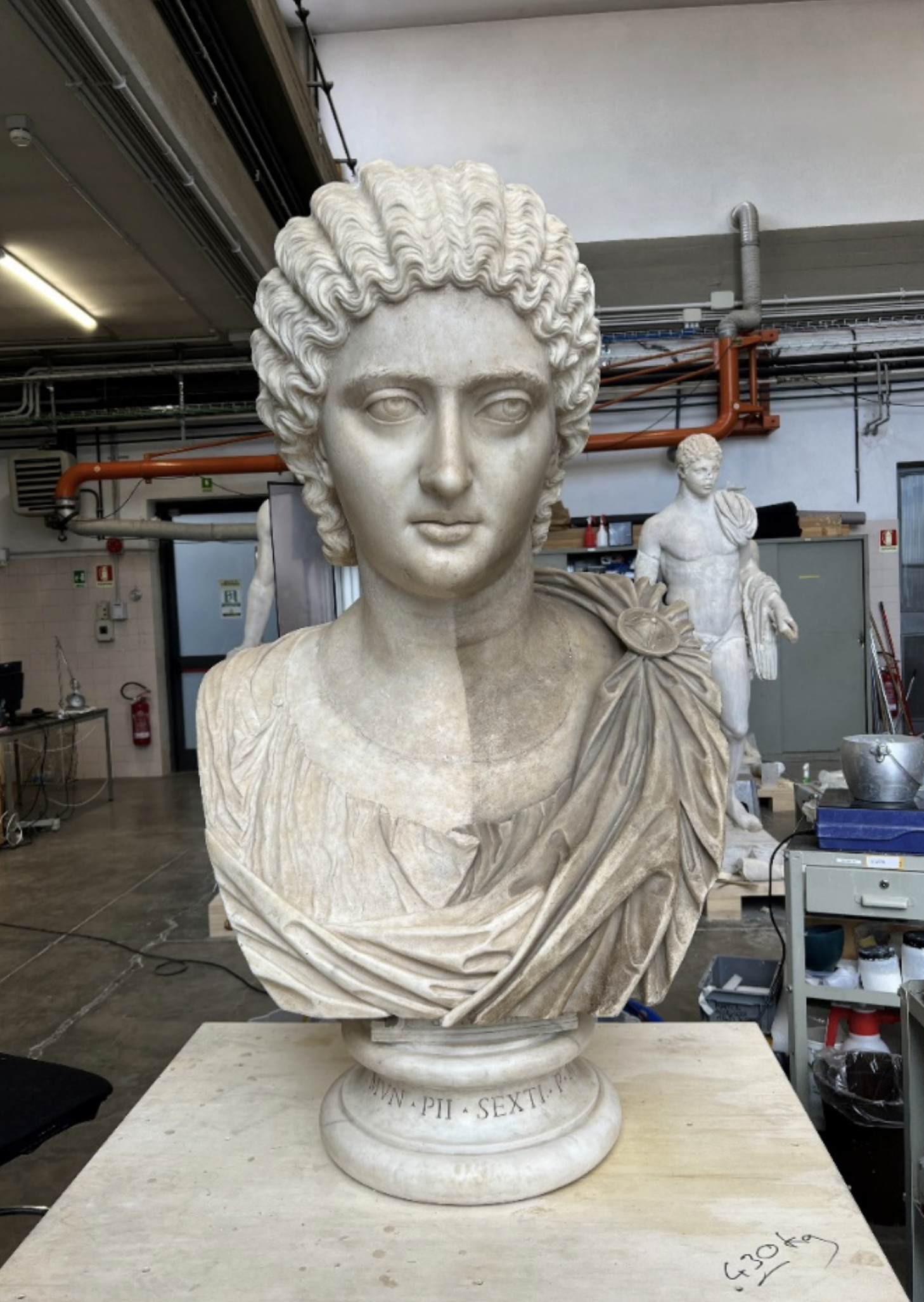
The sculpture appears very opaque and darkened due to the presence of consistent deposits. There are areas with stains of various kinds and inhomogeneities on the surface of the head (of ancient workmanship) and the bust (of modern age). There are also cracks, fractures, and lacunae.
Restoration Procedures
- Dry removal of incoherent deposits with micro vacuum cleaners, paint brushes and drills
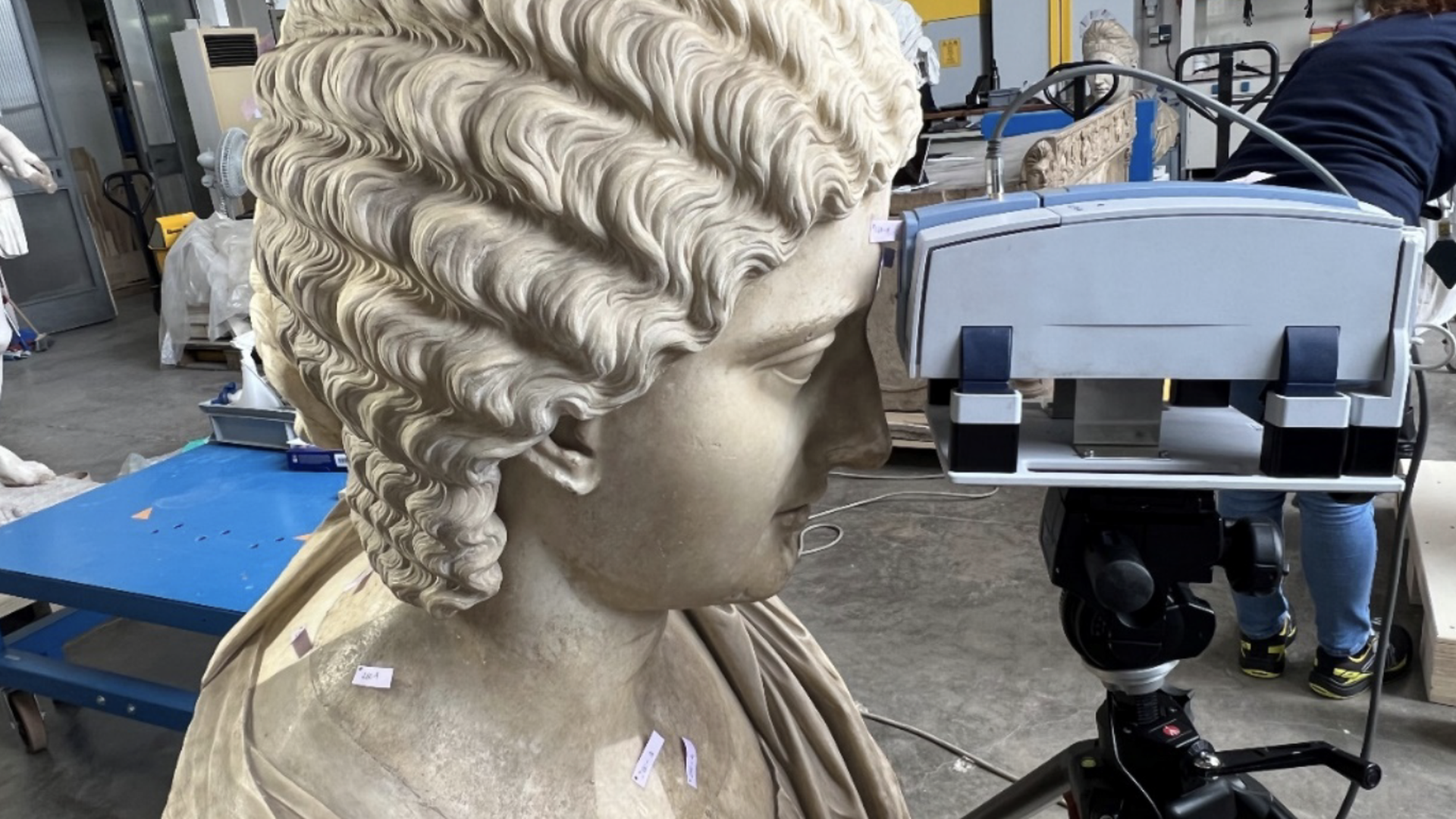
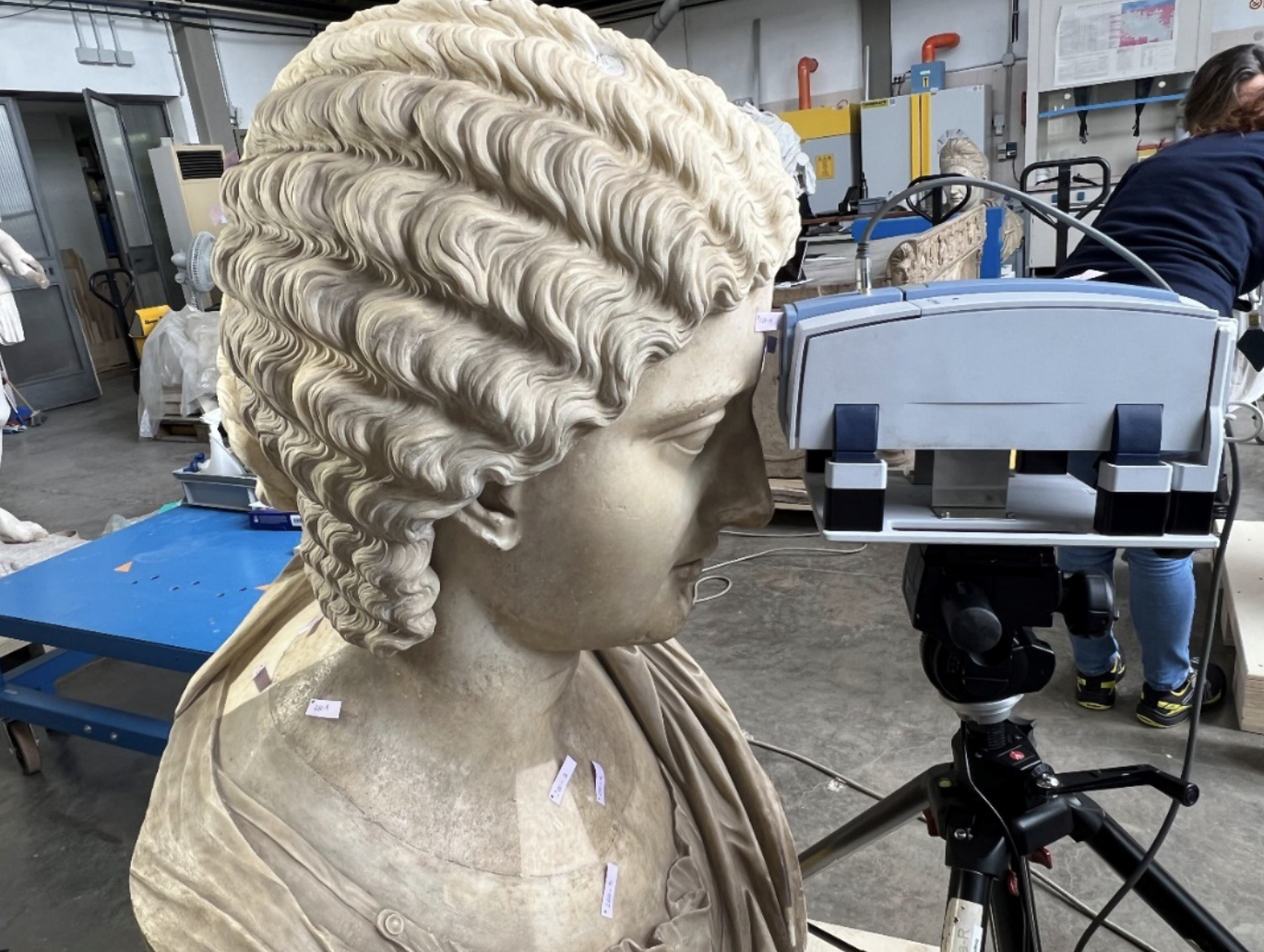
- A cleaning plan will follow analytical testing
- Refinishing of the cleaning with scalpels, brushes, and precision micro drills
- Reintegration with stucco and micro stucco work in suitable materials compatible with the original
- Eventual localized chromatic balancing to restore harmony to read the work
- Eventual application of a final protective coat
Detail
Inventory N°: 260
Artist: Unknown
Date: 210-230 A.D.
Dimensions: 58 cm h
Materials: White marble
Wishbook year: 2024
Colossal Portrait of Giulia Domna - Final Restoration Report
Historical Documentation
State of Preservation
- The white marble sculpture appears very darkened and blackened due to the presence of coherent deposits mixed with waxy substances.
- Stains of various kinds and unevenness between the surface of the head, of ancient workmanship, and the bust of modern age.
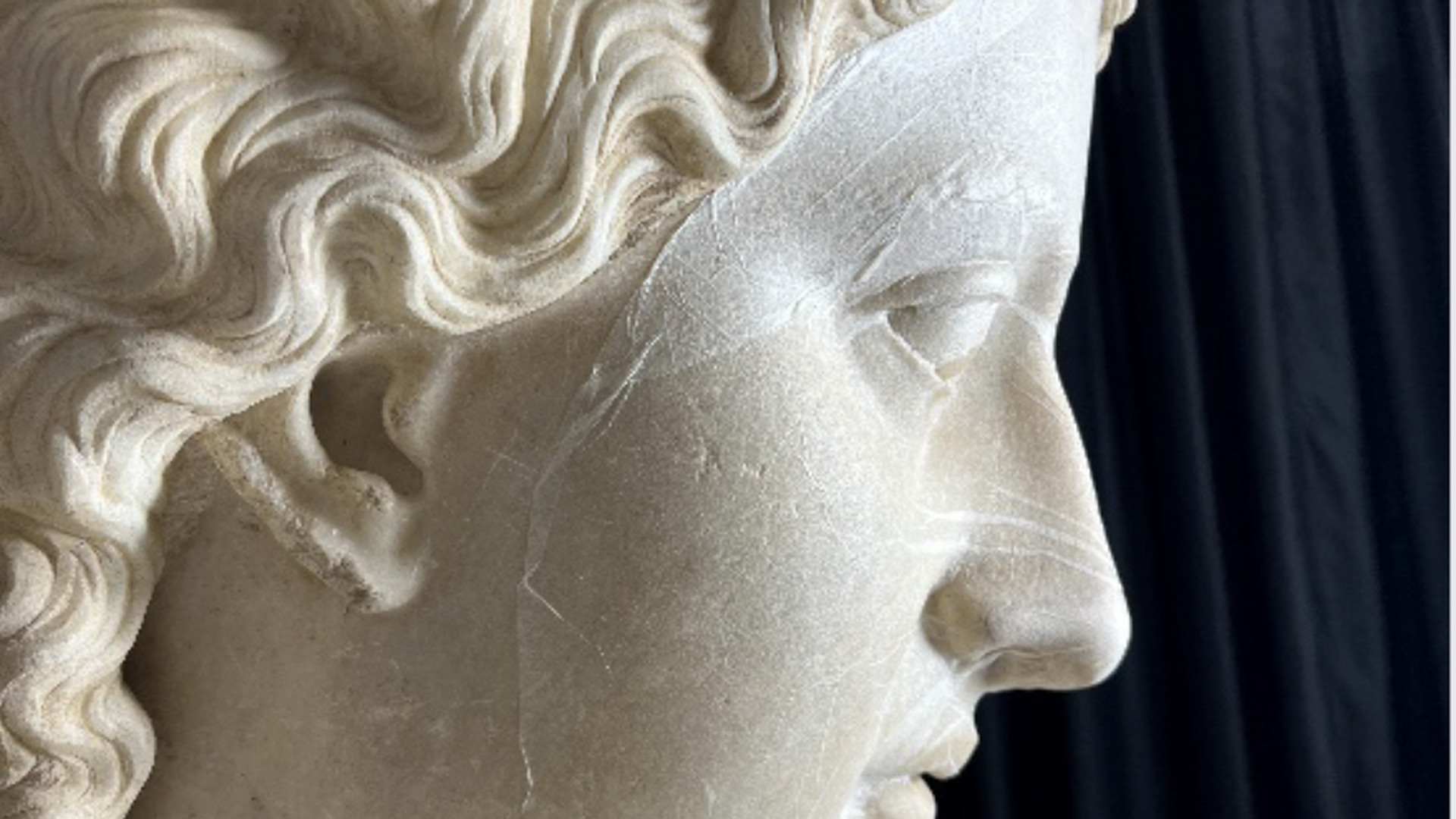
- Abrasions, scratches, and nicks on the marble
Restoration Procedures
- Remove incoherent dry deposits with vacuum cleaners, brushes, etc
- Cleaning defined after testing
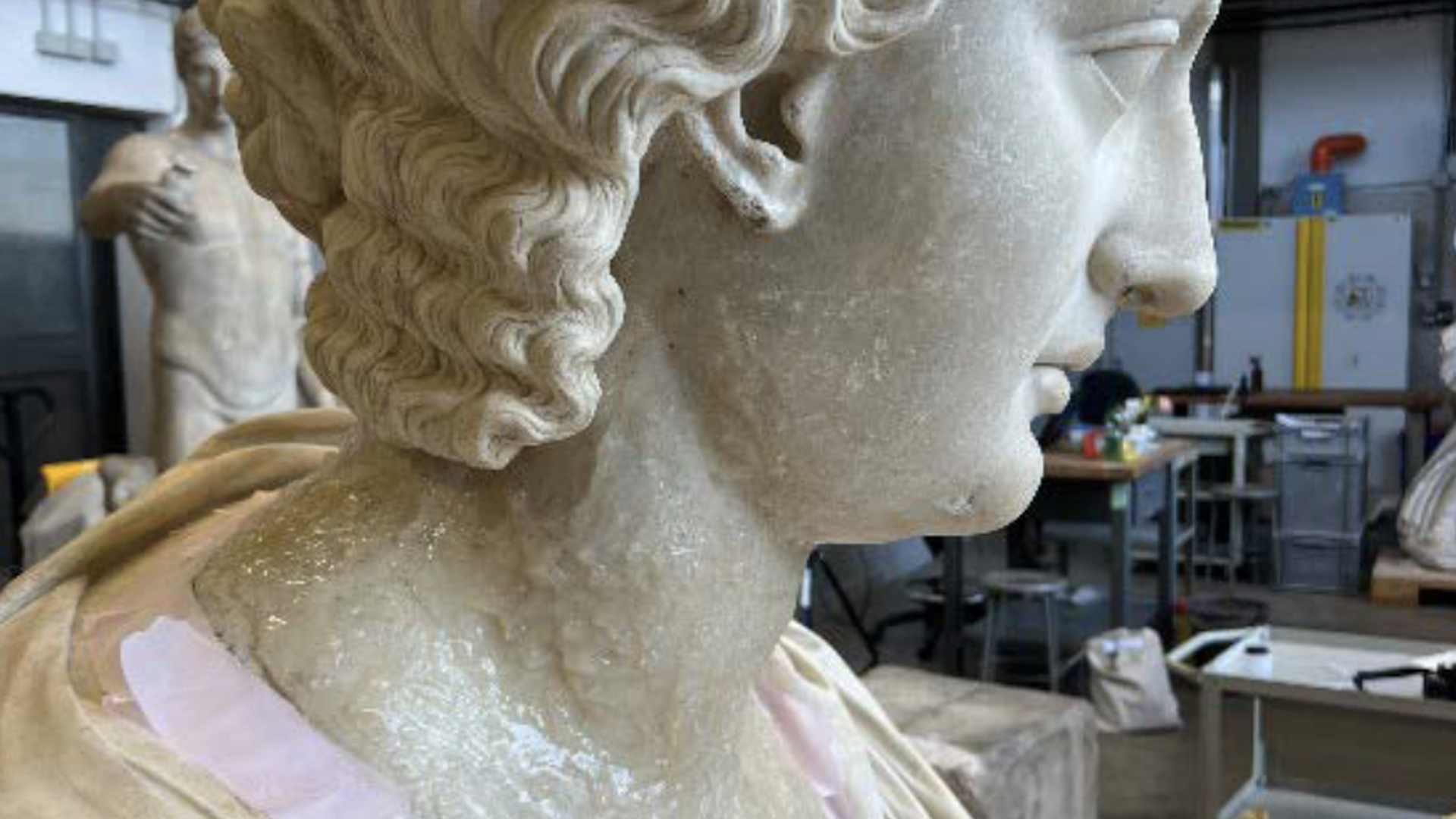
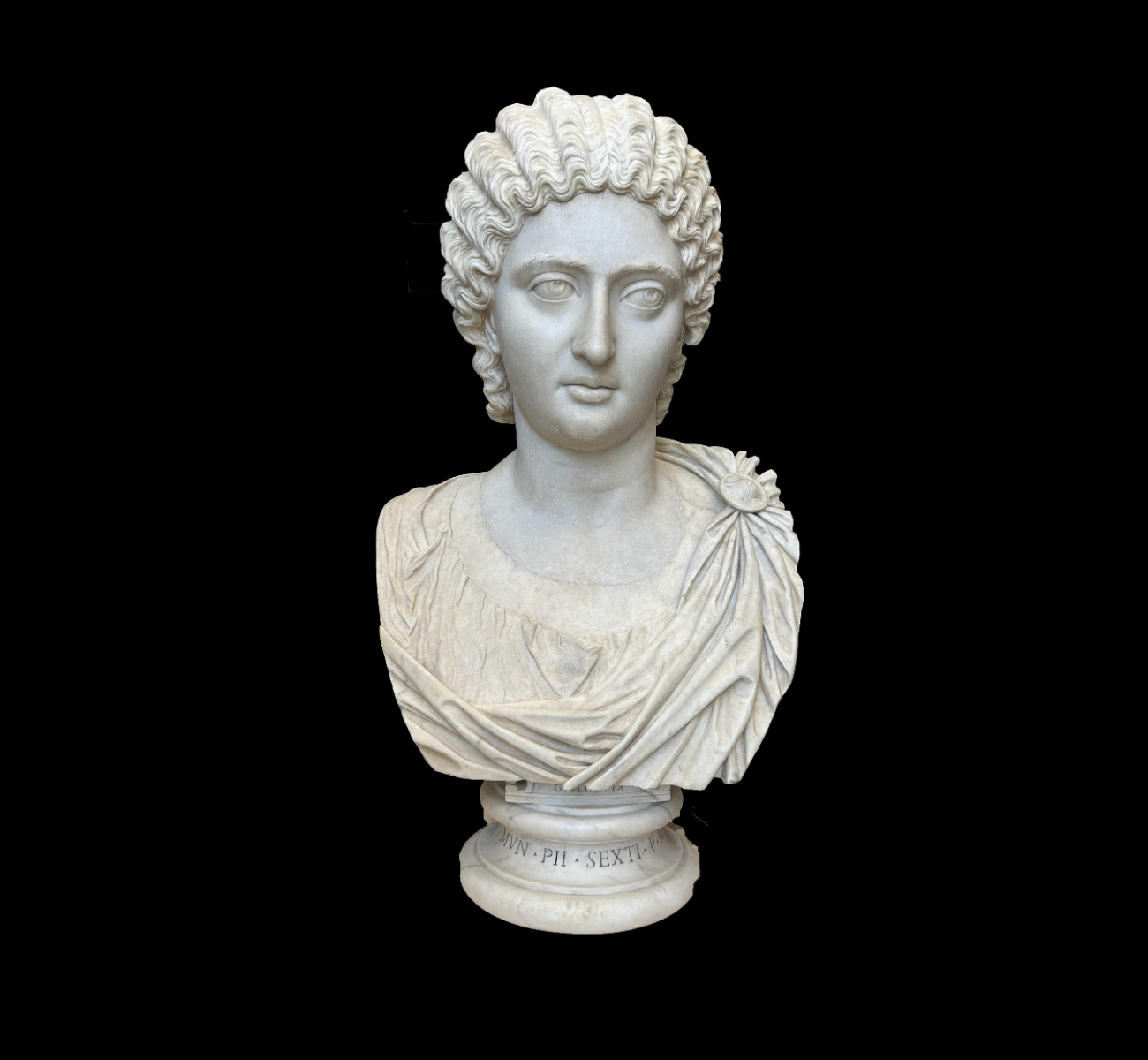
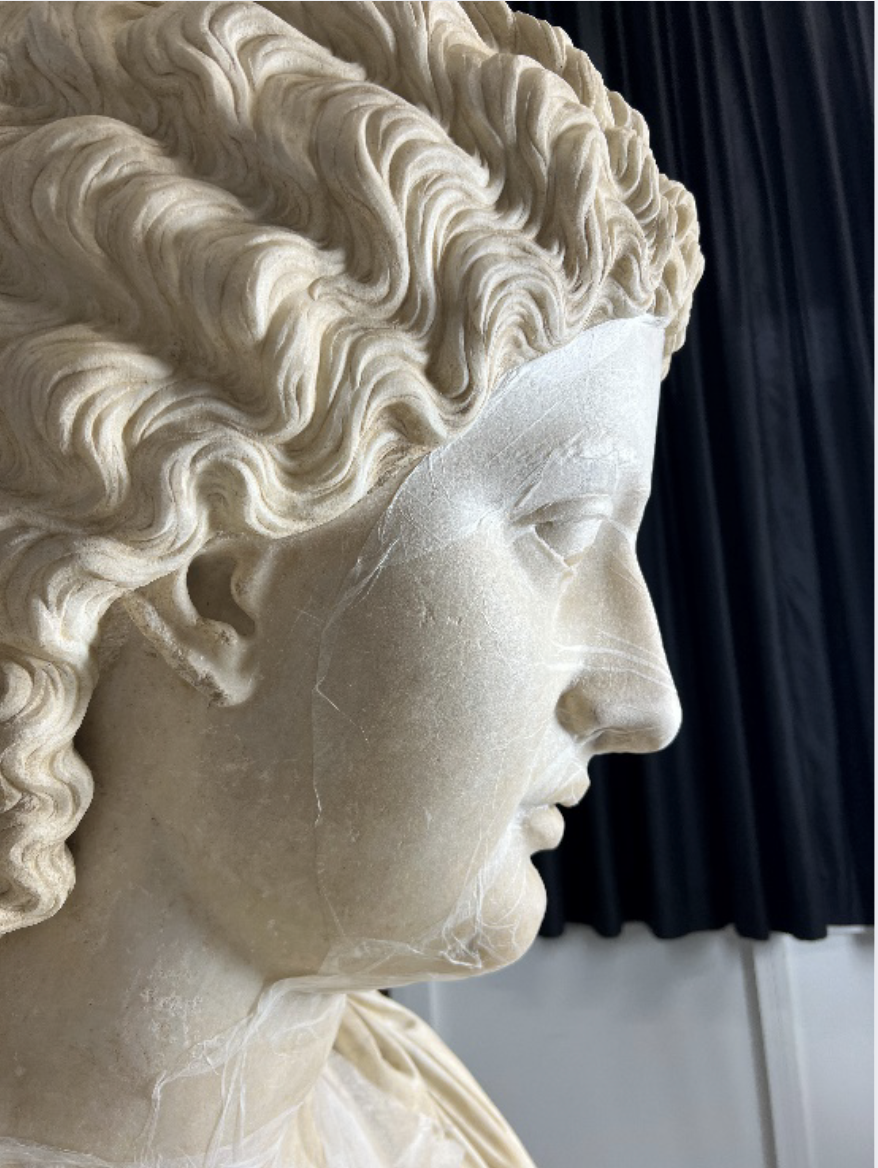
- Final cleaning (gel and laser)
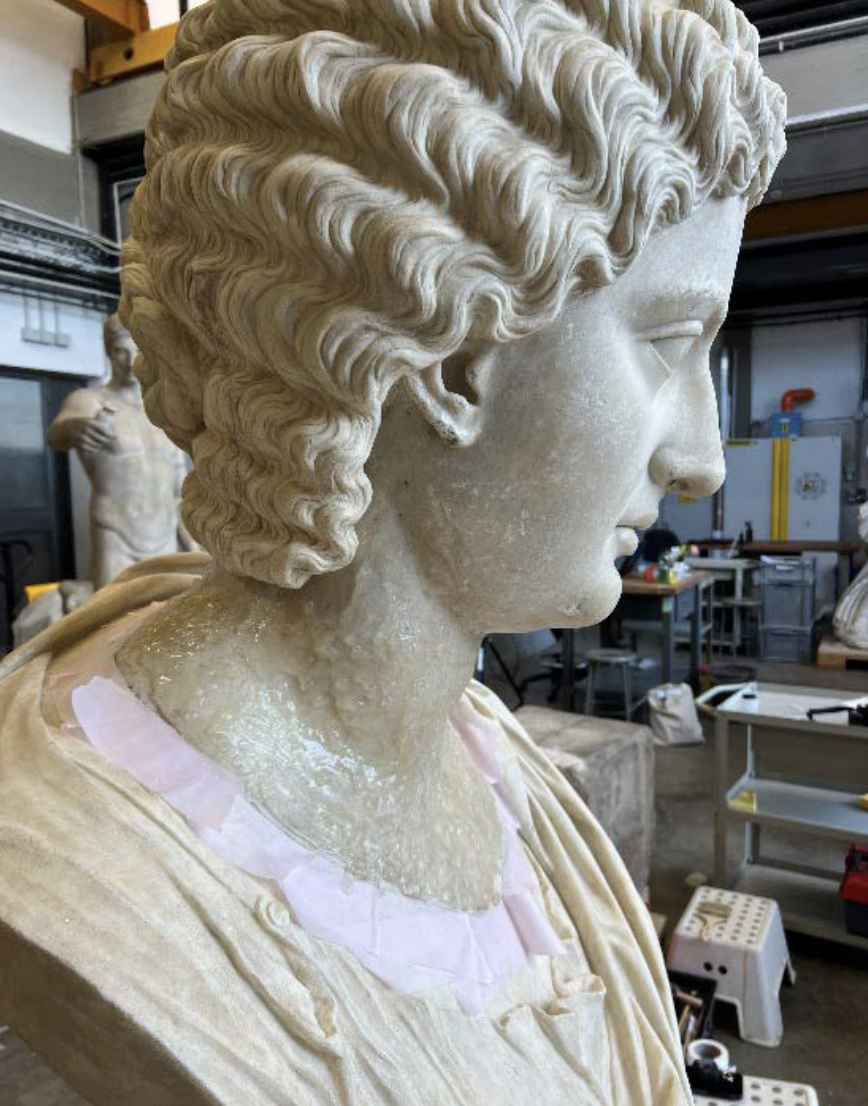
- Sealing and micro-sealing with suitable materials compatible with the original in composition and color
- Localized chromatic balancing to restore balance to the reading of the work.
- Application of the final protective coating

Colossal Portrait of Giulia Domna
Details
Adopted by: The Northwest Chapter
Patrons: Gail James
Inventory: 260
Artist: Unknown
Date: 210-230 A.D.
Classification: Statue
Materials: White marble
Dimensions: 58 cm h
Museum: Pio Clementino Museum
Department: Greek and Roman Antiquities
Laboratory: Stone Materials
Wishbook year: 2024
Description
HIGH PRIORITY PROJECT
Giovanni Volpato found the sculpture during the excavations in 1780 on the Quadraro estate, located outside Porta San Giovanni, between the Via Appia and the Via Tuscolana. Purchased by Pope Pius VI in 1781, Ferdinando Lisandroni restored the head, integrated all the hair, the tip of the nose, and made the monumental bust as the base. Ennio Quirino Visconti selected the portrait for the Sala Rotonda of the Pio Clementino Museum, where it still stands today. Visconti identified it as Giulia Domna, wife of Emperor Septimius Severus (193-211 A.D.), of Syrian origin and an influential adviser to her husband. Recent bibliography has superseded this hypothesis. The face, with highly idealized somatic features, includes large eyes, thick eyebrows, a slightly aquiline nose, and a small mouth with full lips. Such features suggest the identity belongs to Giulia Domna’s sister, Giulia Mesa, or the latter’s daughter, Giulia Sohemia, mother of Emperor Elagabalus (218-222 A.D.). Nevertheless, she is undoubtedly an imperial princess of the Severi family that ruled Rome between the end of the second and the first decades of the 3rd century A.D.
TOTAL COST: € 14.833,92 ($ 15,851.52)
State of Preservation
The sculpture appears very opaque and darkened due to the presence of consistent deposits. There are areas with stains of various kinds and inhomogeneities on the surface of the head (of ancient workmanship) and the bust (of modern age). There are also cracks, fractures, and lacunae.
Restoration Procedures
- Dry removal of incoherent deposits with micro vacuum cleaners, paint brushes and drills
- A cleaning plan will follow analytical testing
- Refinishing of the cleaning with scalpels, brushes, and precision micro drills
- Reintegration with stucco and micro stucco work in suitable materials compatible with the original
- Eventual localized chromatic balancing to restore harmony to read the work
- Eventual application of a final protective coat
Media
Colossal Portrait of Giulia Domna
Colossal Portrait of Giulia Domna Restoration 1
Giulia Domna After Restoration
Restorations Update: Colossal Portrait of Giulia Domna - Final Restoration Report
Historical Documentation
State of Preservation
- The white marble sculpture appears very darkened and blackened due to the presence of coherent deposits mixed with waxy substances.
- Stains of various kinds and unevenness between the surface of the head, of ancient workmanship, and the bust of modern age.
- Abrasions, scratches, and nicks on the marble
Restoration Procedures
- Remove incoherent dry deposits with vacuum cleaners, brushes, etc
- Cleaning defined after testing
- Final cleaning (gel and laser)
- Sealing and micro-sealing with suitable materials compatible with the original in composition and color
- Localized chromatic balancing to restore balance to the reading of the work.
- Application of the final protective coating
© 2026 Patrons of the Arts
in the Vatican Museums
Vatican Museums V-00120,
Vatican City State (Europe)
+39 0669864499