

A collection of Roman Weights and Scales
Artist: Unknown
Date: 2nd century AD
Classification: Artifacts
Dimensions: 11 x 6 cm
Materials: Bronze
Adopted By: The Texas Chapter
Total Cost: € 7,210
Description
Weighing instruments find their origin in civilization’s development of the need to quantify and compare the world around them, via the principle of balanced weights. Studies in historical metrology have dated the earliest known balance scale back the fourth millennium BC, in ancient Egypt. Since their induction into civilization, scales have been commonly used not only in trade but also in many production processes, including that of wool and fabric dyeing. In the ancient Roman world, there were two predominant types of scales. The first type, called libra or trutina, generally consisted of two arms of equal length. The second, called a statera, consisted of a scale with two arms of different sizes, a weighted cursor, the aequipondium, and a plate or set of hooks to hold the load to be weighed.
The four scales of the Vatican’s Profane Museum belong to this second group and are very interesting examples of ancient Roman Ponderaria tools. Due to the very small amount of data we currently have on these specific tools, they cannot be decisively dated. They are most likely from the 1st or 2nd Centuries AD, however a later dating may be possible.
In early history, the scale was an indispensable tool in the production of coins, so much so, that the scale itself was eventually depicted on the faces of coins, in the likeness of the instrument or even represented as a cornucopia. At the same time, the use of the scale was also essential in trade and international currency exchanges. For these purposes, small, precise scales were necessary. The scale has held a leading role in all trade, from weighed goods to weighed currency, since ancient times. Prior to the introduction of the first form of currency, negotiations were carried out by weighting bronze on the scale, aes et libra. In maritime or fluvial transport and commerce, weighing operations were essential procedures in all ports. Ancient paintings and reliefs depict scenes of everyday life with scenes of weighing scales and weights.
Exhibition and Display
Preceding this restoration, the Profane Museum itself was thoroughly renovated and restored by other Patrons. Thankfully, these precious artifacts will now be housed in new, custom-built glass cases that cater not only to their conservation but also to their mode of display, with appropriate lighting and labeling. Additionally, as the result of an extensive study of archival and inventorial sources (a project started in 2000), these artifacts are part of the collection’s newly formulated layout, which places them into a more appropriate context, by provenance and among similar objects. The weights and scales are displayed alongside other 1st-2nd century objects of ancient Rome that were similarly discovered during excavations of the Pontifical State during the 17th and 18th centuries. Nearly all museum traffic gets the opportunity to see them, as these wonderful displays are situated in the gallery space which serves as a central path of connecting the nucleus of the Museums with the Sistine Chapel. Currently, the weights and scales are part of a very special Vatican Museums exhibit, titled Precious Antiquities: The Profane Museum at the time of Pius VI, which opened in October 2013 and will last until January 2014.
Restoration Procedures
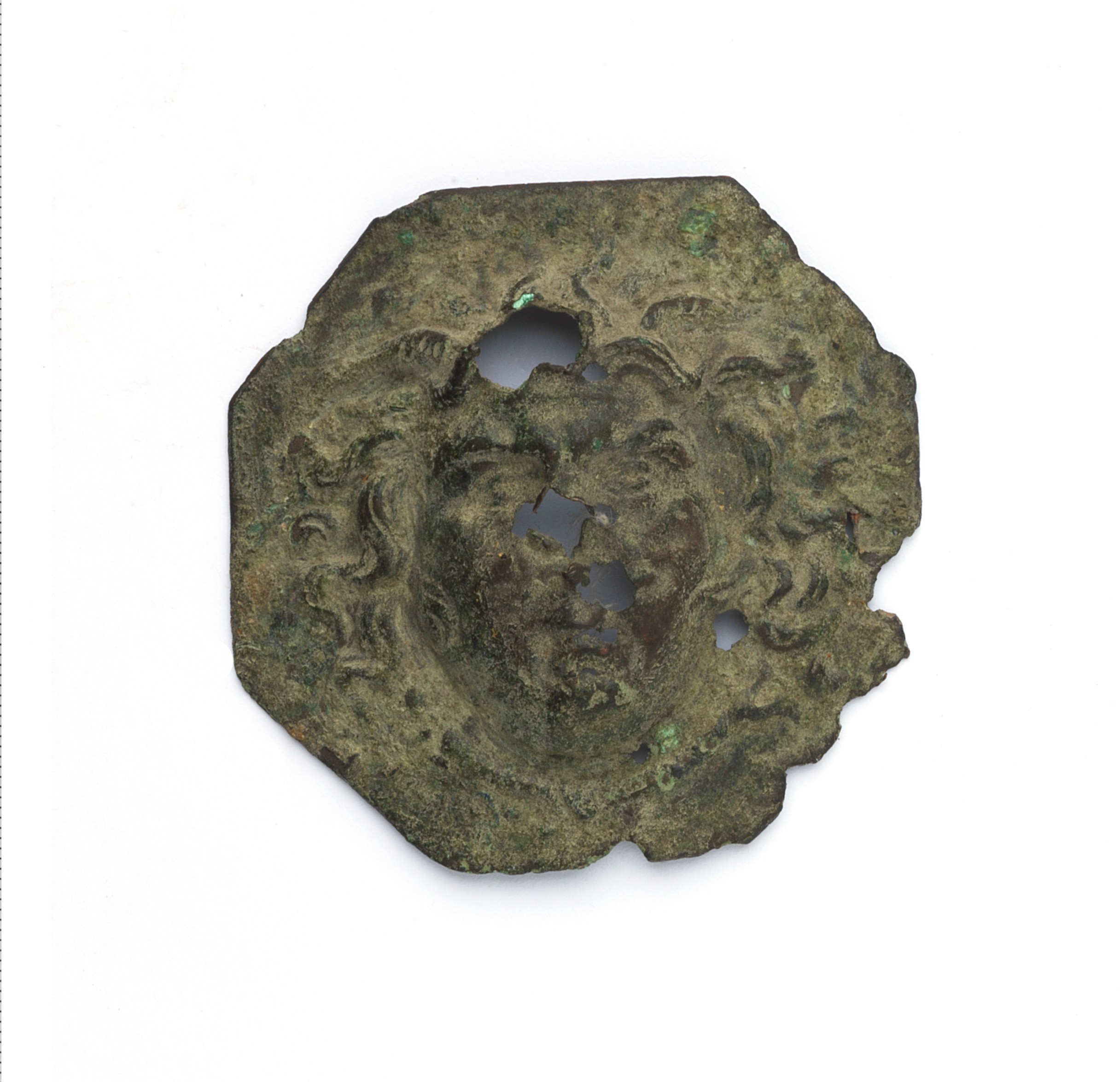
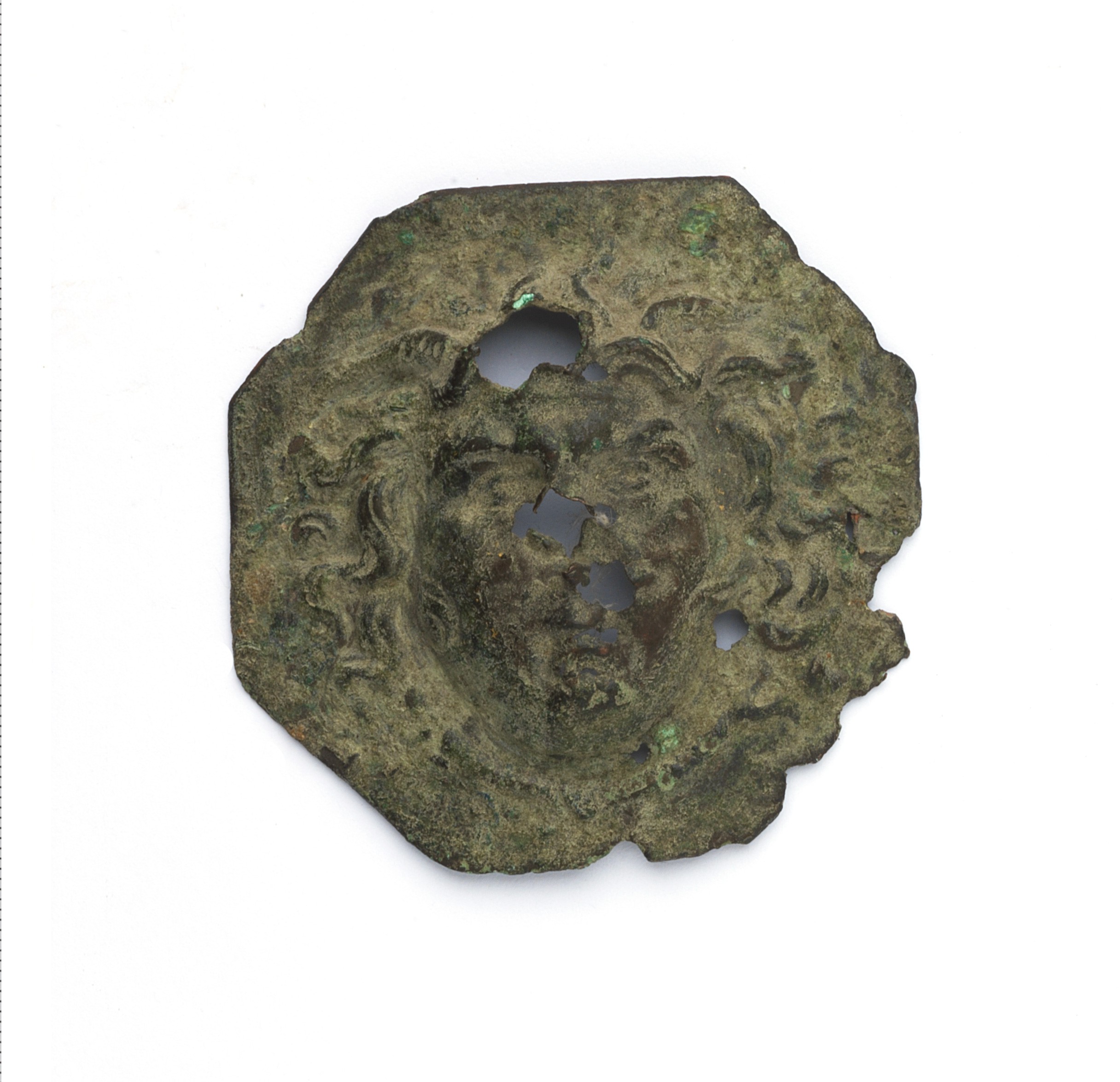
Before undergoing treatment, the condition of these four Roman artifacts had been compromised over time, due to their age and lack of sufficient housing conditions. Their surfaces were visibly worn, highly affected by organic residues and bi-products of bronze corrosion.
The first stage of this project involved a thorough scientific analysis of each object, in order to determine the exact type of corrosion affecting the bronze and to distinguish what specific bi-products were present on their surfaces. Once the Laboratory identified corrosive salt as the most damaging bi-product, a restorer began the initial cleaning process. After eliminating all traces of this water soluble salt, the cleaning proceeded with a systematic cleaning of all small surfaces. In this kind of restoration, working with objects that vary in shape and composition throughout their structure—for example, the fragile bronze chains and hooks of the scale, the spherical curvatures of its weighted cursor—require very detailed and attentive cleaning. Therefore, this treatment was performed by hand, with the aid of very delicate solvents and brushes. After the mechanical cleaning, all objects underwent a stabilizing treatment to remove any residual products of corrosion: this treatment takes part in their conservation, and functions to slow or prevent further deterioration of their surfaces.
Once cleaned, each individual object was carefully re-examined: restorers located and recorded all fractures and holes, assessing every case before implementing restorative measures. In order to restore the objects to their former readability, all fractures were consolidated and lacunae (small holes) were filled in. The chosen filler material will be supportive of the object’s structure, yet, it is also removable, keeping with current ethical standards of Restoration recognized by the Vatican Museums. As the ultimate step in their conservation, a final protective varnish was applied, coating all surfaces in order to prevent the further possibility of corrosion.
Detail
Adopted By:
The Texas ChapterInventory N°: 65617, 66157, 66158, 66159, 6531, 66465, 65761, 65762
Artist: Unknown
Date: 2nd century AD
Dimensions: 11 x 6 cm
Materials: Bronze
Wishbook year: 2012
Total Cost
€ 7,210

A collection of Roman Weights and Scales
Details
Adopted by: The Texas Chapter
Inventory: 65617, 66157, 66158, 66159, 6531, 66465, 65761, 65762
Artist: Unknown
Date: 2nd century AD
Classification: Artifacts
Materials: Bronze
Dimensions: 11 x 6 cm
Museum: Profane Museum
Department: Decorative Arts
Laboratory: Metals & Ceramics
Wishbook year: 2012
Description
Weighing instruments find their origin in civilization’s development of the need to quantify and compare the world around them, via the principle of balanced weights. Studies in historical metrology have dated the earliest known balance scale back the fourth millennium BC, in ancient Egypt. Since their induction into civilization, scales have been commonly used not only in trade but also in many production processes, including that of wool and fabric dyeing. In the ancient Roman world, there were two predominant types of scales. The first type, called libra or trutina, generally consisted of two arms of equal length. The second, called a statera, consisted of a scale with two arms of different sizes, a weighted cursor, the aequipondium, and a plate or set of hooks to hold the load to be weighed.
The four scales of the Vatican’s Profane Museum belong to this second group and are very interesting examples of ancient Roman Ponderaria tools. Due to the very small amount of data we currently have on these specific tools, they cannot be decisively dated. They are most likely from the 1st or 2nd Centuries AD, however a later dating may be possible.
In early history, the scale was an indispensable tool in the production of coins, so much so, that the scale itself was eventually depicted on the faces of coins, in the likeness of the instrument or even represented as a cornucopia. At the same time, the use of the scale was also essential in trade and international currency exchanges. For these purposes, small, precise scales were necessary. The scale has held a leading role in all trade, from weighed goods to weighed currency, since ancient times. Prior to the introduction of the first form of currency, negotiations were carried out by weighting bronze on the scale, aes et libra. In maritime or fluvial transport and commerce, weighing operations were essential procedures in all ports. Ancient paintings and reliefs depict scenes of everyday life with scenes of weighing scales and weights.
Exhibition and Display
Preceding this restoration, the Profane Museum itself was thoroughly renovated and restored by other Patrons. Thankfully, these precious artifacts will now be housed in new, custom-built glass cases that cater not only to their conservation but also to their mode of display, with appropriate lighting and labeling. Additionally, as the result of an extensive study of archival and inventorial sources (a project started in 2000), these artifacts are part of the collection’s newly formulated layout, which places them into a more appropriate context, by provenance and among similar objects. The weights and scales are displayed alongside other 1st-2nd century objects of ancient Rome that were similarly discovered during excavations of the Pontifical State during the 17th and 18th centuries. Nearly all museum traffic gets the opportunity to see them, as these wonderful displays are situated in the gallery space which serves as a central path of connecting the nucleus of the Museums with the Sistine Chapel. Currently, the weights and scales are part of a very special Vatican Museums exhibit, titled Precious Antiquities: The Profane Museum at the time of Pius VI, which opened in October 2013 and will last until January 2014.
Restoration Procedures
Before undergoing treatment, the condition of these four Roman artifacts had been compromised over time, due to their age and lack of sufficient housing conditions. Their surfaces were visibly worn, highly affected by organic residues and bi-products of bronze corrosion.
The first stage of this project involved a thorough scientific analysis of each object, in order to determine the exact type of corrosion affecting the bronze and to distinguish what specific bi-products were present on their surfaces. Once the Laboratory identified corrosive salt as the most damaging bi-product, a restorer began the initial cleaning process. After eliminating all traces of this water soluble salt, the cleaning proceeded with a systematic cleaning of all small surfaces. In this kind of restoration, working with objects that vary in shape and composition throughout their structure—for example, the fragile bronze chains and hooks of the scale, the spherical curvatures of its weighted cursor—require very detailed and attentive cleaning. Therefore, this treatment was performed by hand, with the aid of very delicate solvents and brushes. After the mechanical cleaning, all objects underwent a stabilizing treatment to remove any residual products of corrosion: this treatment takes part in their conservation, and functions to slow or prevent further deterioration of their surfaces.
Once cleaned, each individual object was carefully re-examined: restorers located and recorded all fractures and holes, assessing every case before implementing restorative measures. In order to restore the objects to their former readability, all fractures were consolidated and lacunae (small holes) were filled in. The chosen filler material will be supportive of the object’s structure, yet, it is also removable, keeping with current ethical standards of Restoration recognized by the Vatican Museums. As the ultimate step in their conservation, a final protective varnish was applied, coating all surfaces in order to prevent the further possibility of corrosion.
Media
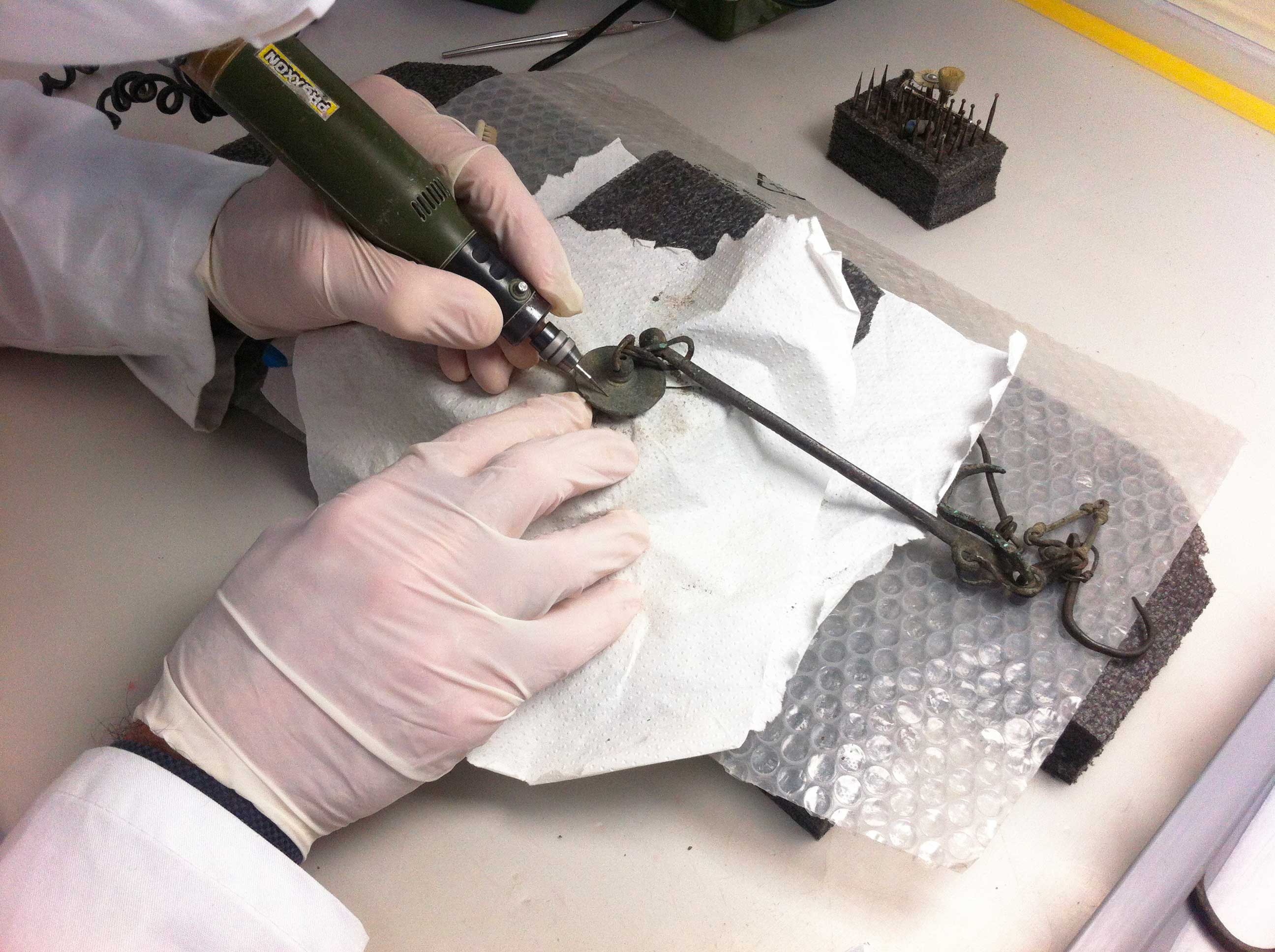
Restorer working on the scales
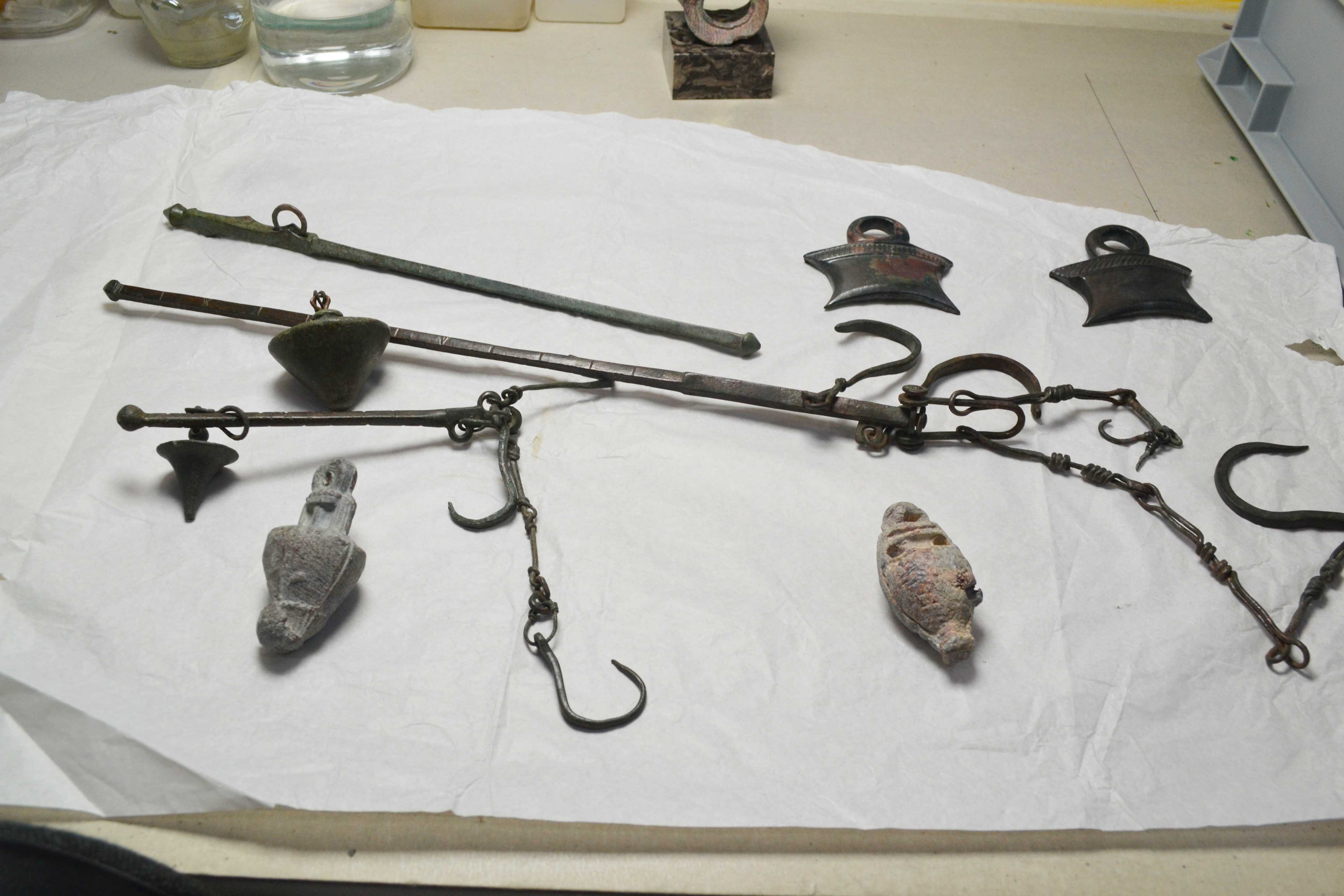
Roman Weights and Scales - Under Restoration
Roman Weights and Scales - After Restoration
© 2026 Patrons of the Arts
in the Vatican Museums
Vatican Museums V-00120,
Vatican City State (Europe)
+39 0669864499