

Celestial globe by Matthaeus Greuter and Terrestrial globe by John Baptist Nicolosi
Artist: Matthaeus Greuter, Giovanni Battista Nicolosi
Date: 1636 (inv. 70155); second half of the 17th century (inv. 70156)
Classification: Globe
Dimensions: Height 38 cm, diameter 27 cm
Materials: Engraving on watercolor paper
Adopted By: The New England Chapter
Total Cost: € 34,400
Description
HIGH PRIORITY PROJECT
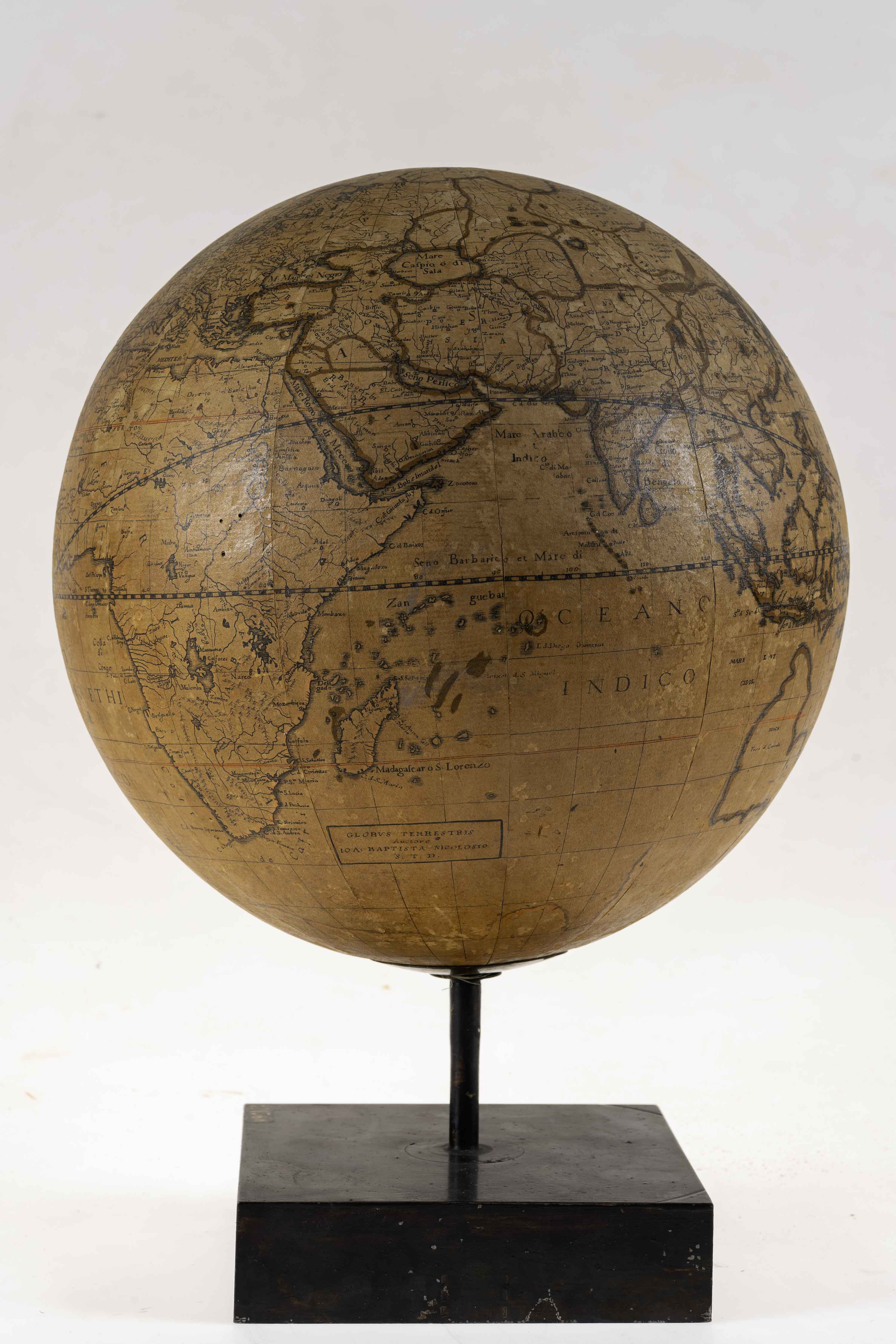
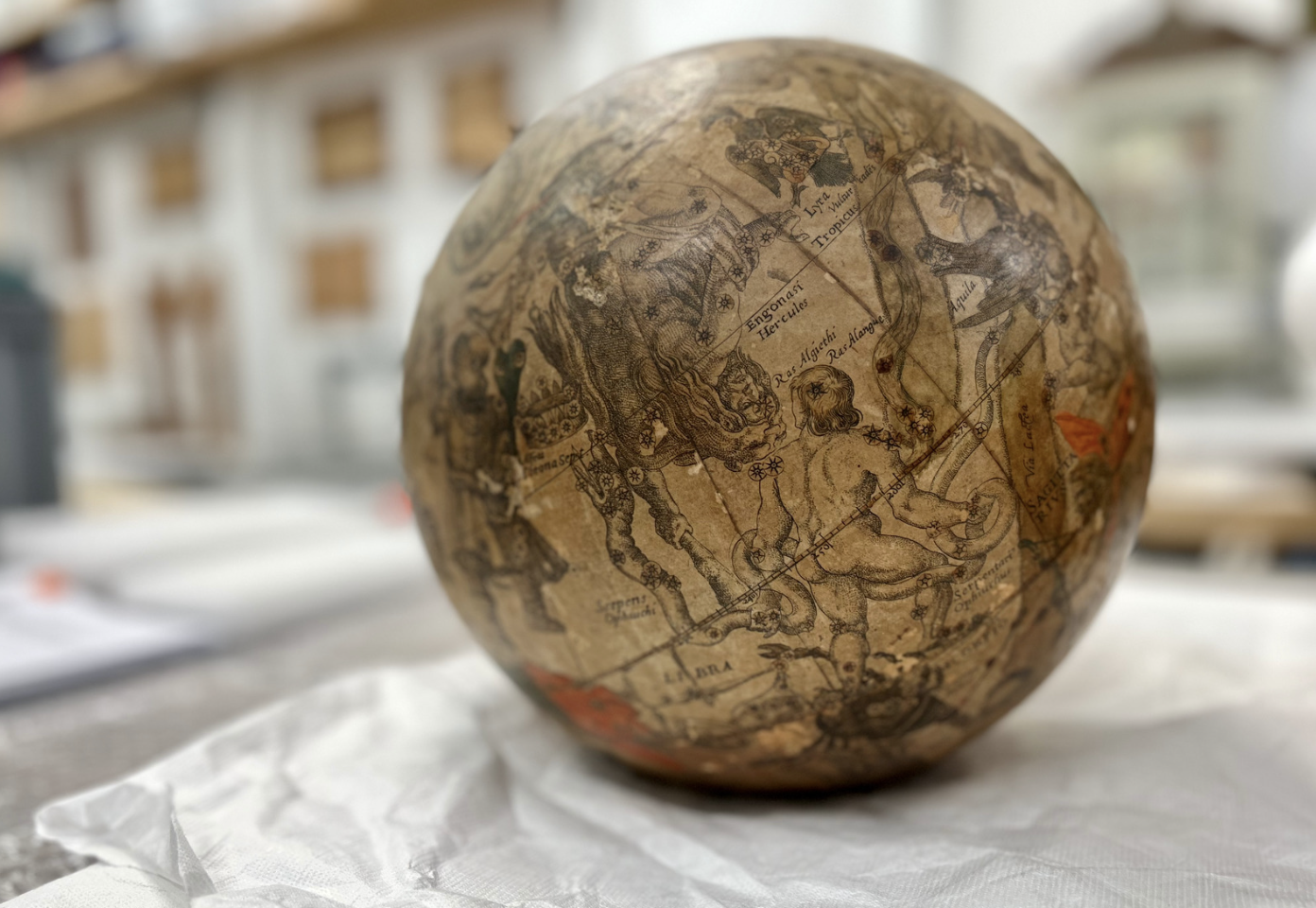
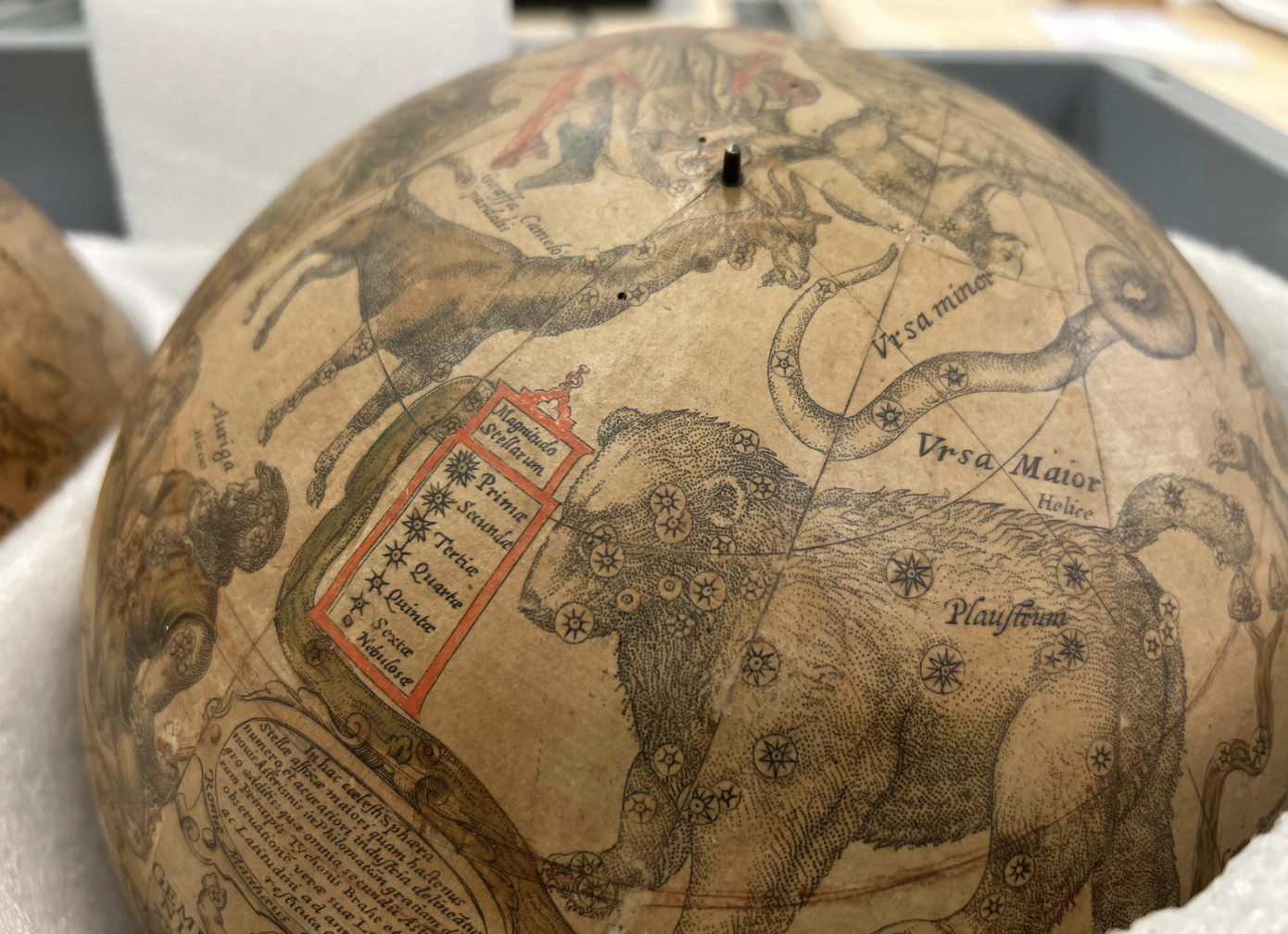
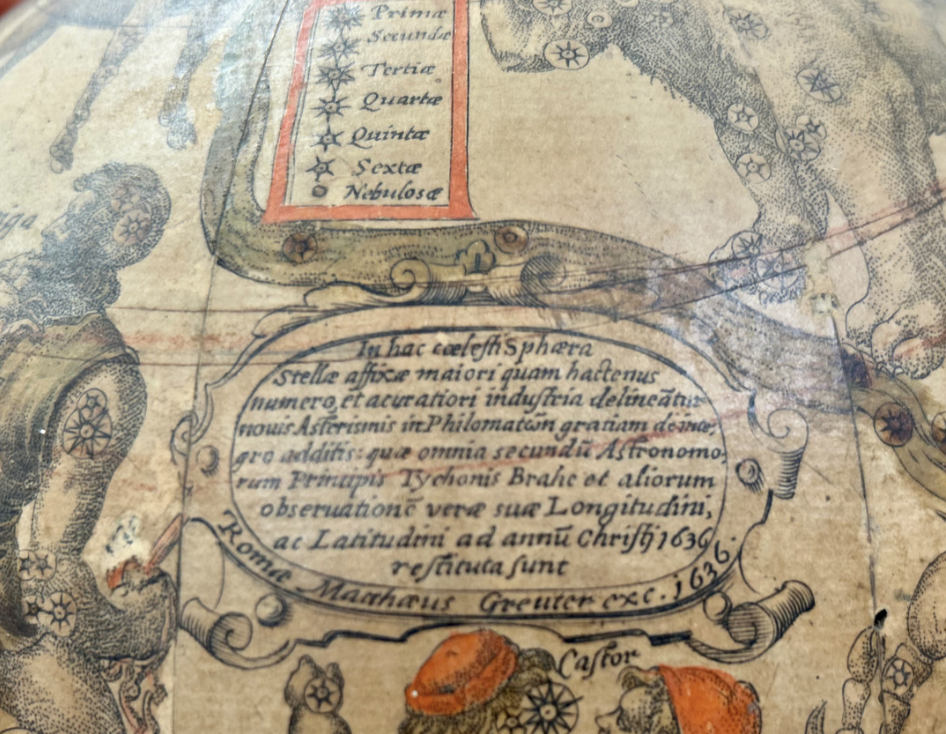
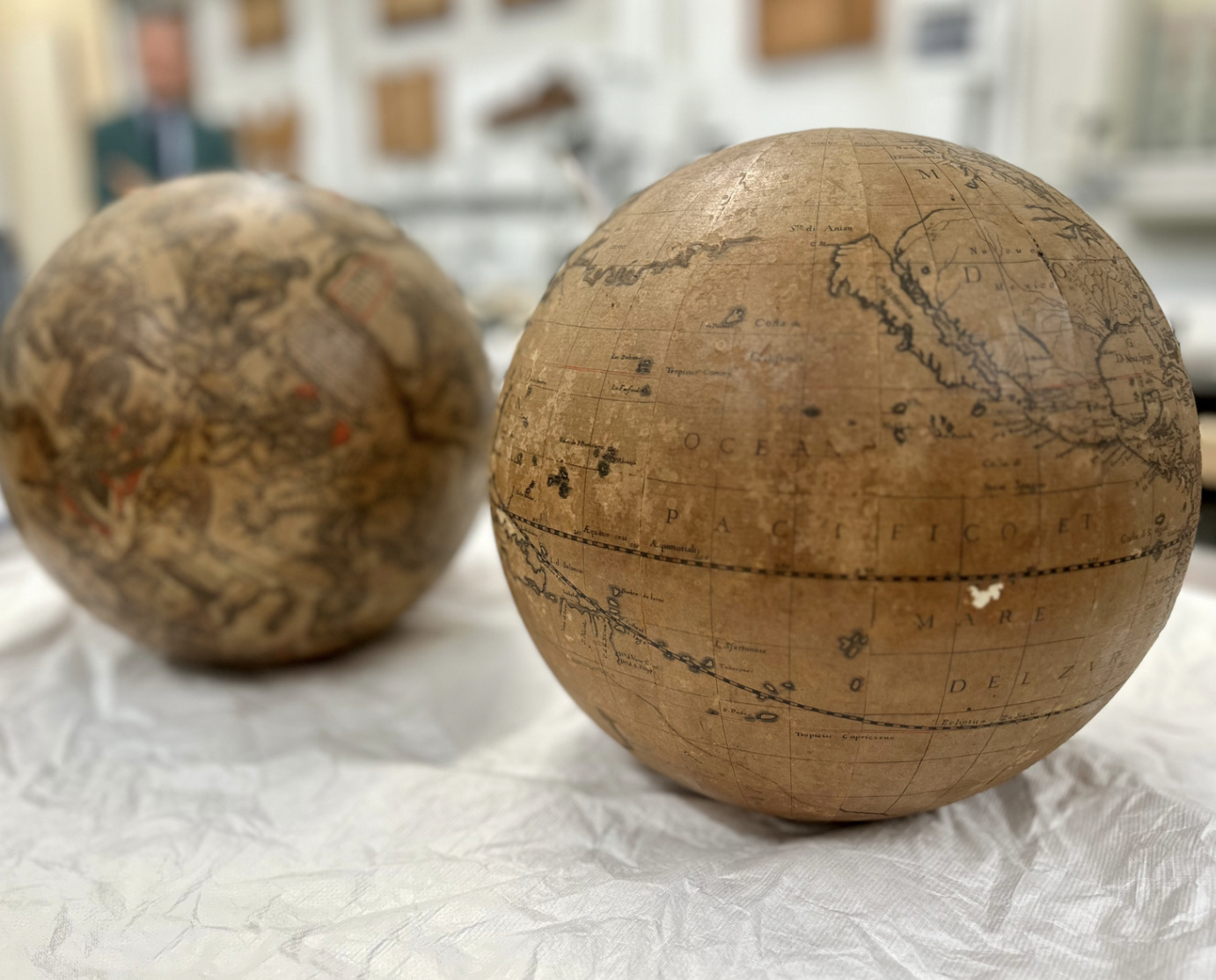
The first celestial globe reproduces the heavenly sky with the constellations and is dated 1636. It was completed by Matthaeus Greuter, who started a profitable production of terrestrial and celestial globes in Rome at the beginning of the 1630s. The terrestrial globe (inv. 70156) is from the second half of the 17th century by the Sicilian Giovanni Battista Nicolosi, S.T.D., active in Rome and one of the most critical scholars of the geography of this period. The purpose of the restoration will return the two globes to a new and unique showcase in the Pauline Hall, alongside other similarly themed artifacts found in the collection.
TOTAL COST: € 34.382,18 ($ 33,605.14)
Restoration Procedures
-
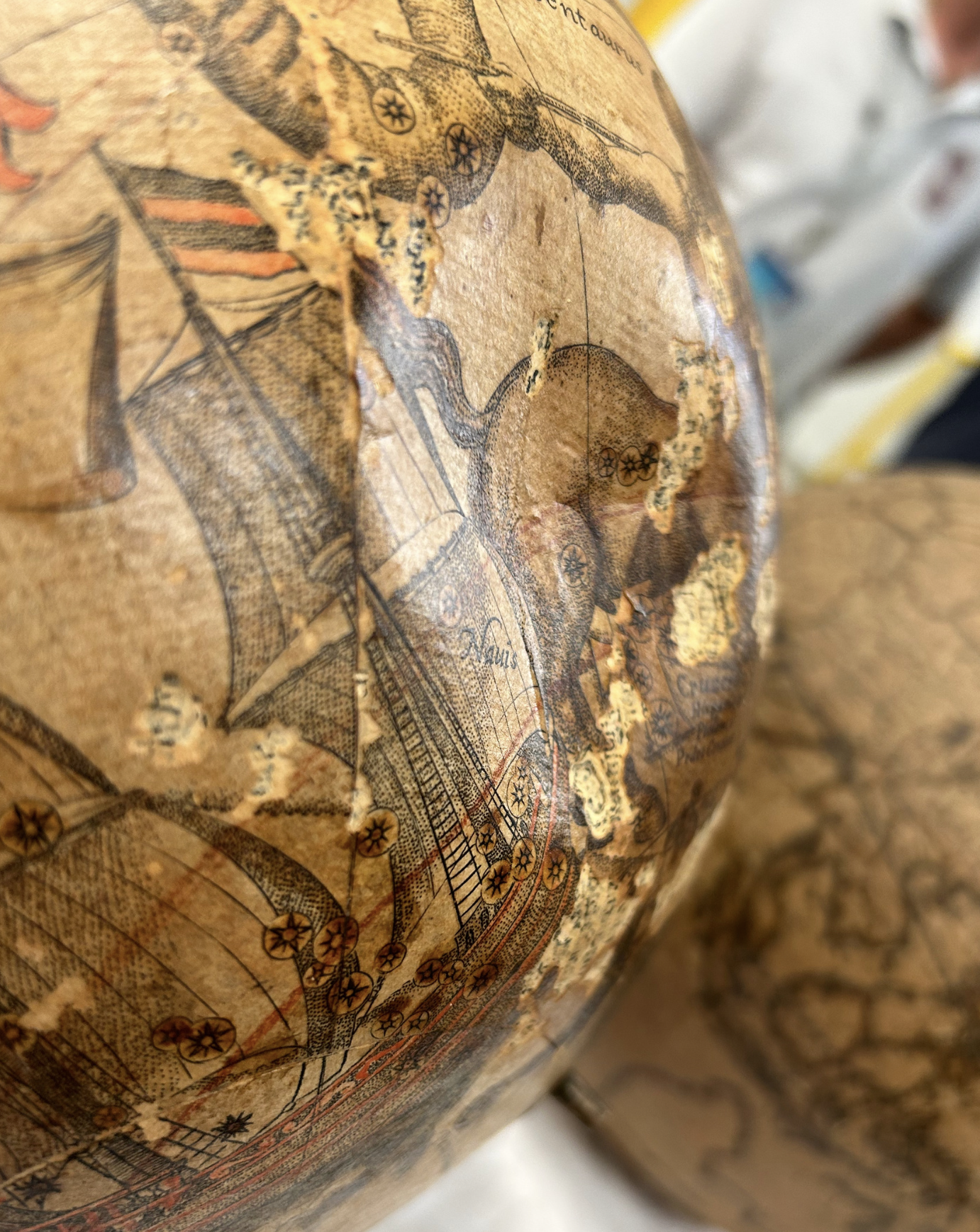
Cleaning and grouting of abrasions and holes due to xylophagous insects
-
Consolidation of fragile parts of the paper surface of the two works
-
Closure of the cracks present on the surface of the work inv. 70156
-
Consolidation of the lower part of the work inv. 70156
-
Color rebalancing
-
Mounting on new support (painting laboratory)
Detail
Adopted By:
The New England ChapterInventory N°: 70155, 70156
Artist: Matthaeus Greuter, Giovanni Battista Nicolosi
Date: 1636 (inv. 70155); second half of the 17th century (inv. 70156)
Dimensions: Height 38 cm, diameter 27 cm
Materials: Engraving on watercolor paper
Wishbook year: 2023
Total Cost
€ 34,400
Celestial globe by Matthaeus Greuter and Terrestrial globe by John Baptist Nicolosi - New Support
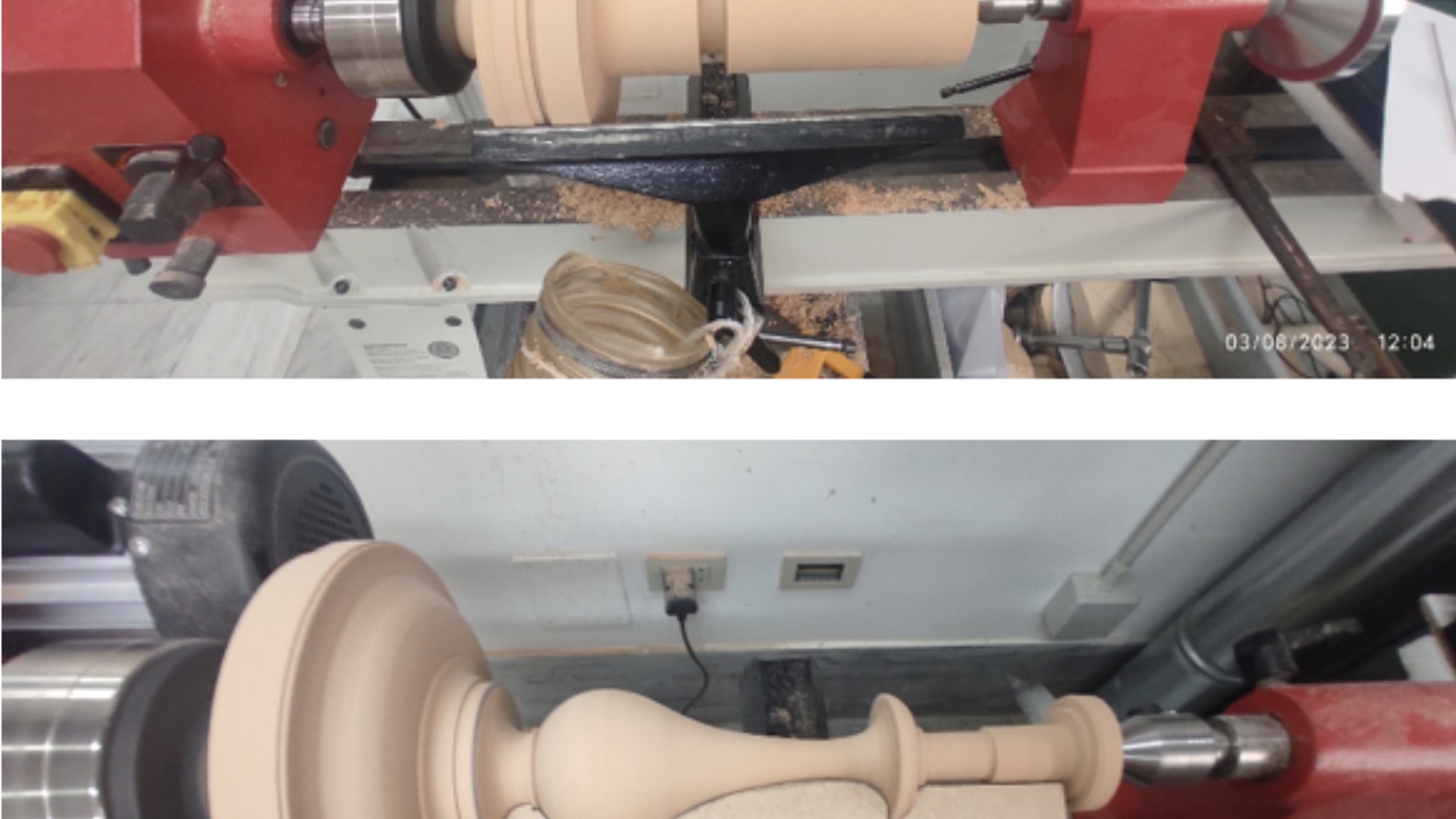
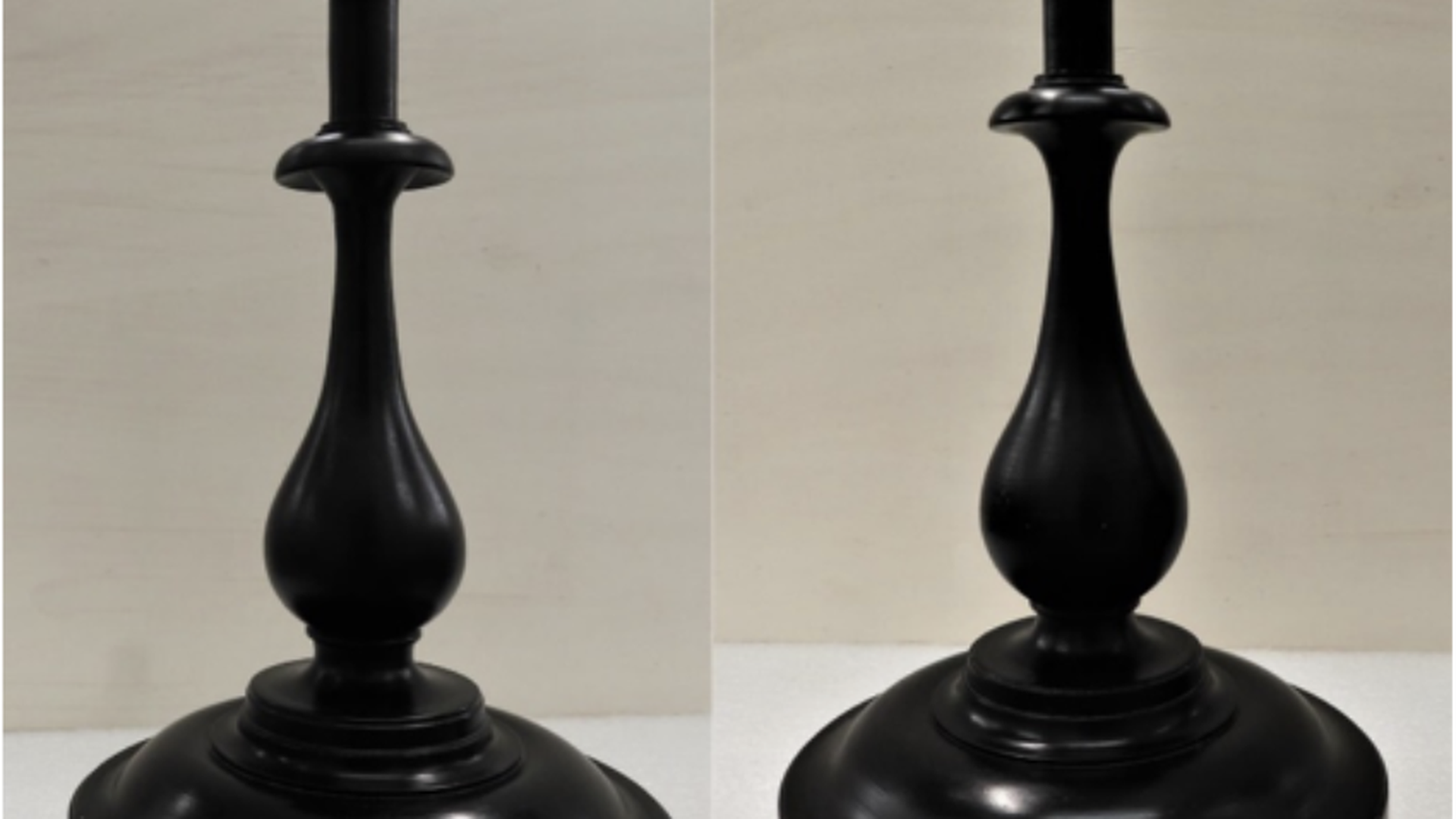
The two globes underwent anoxic treatment.
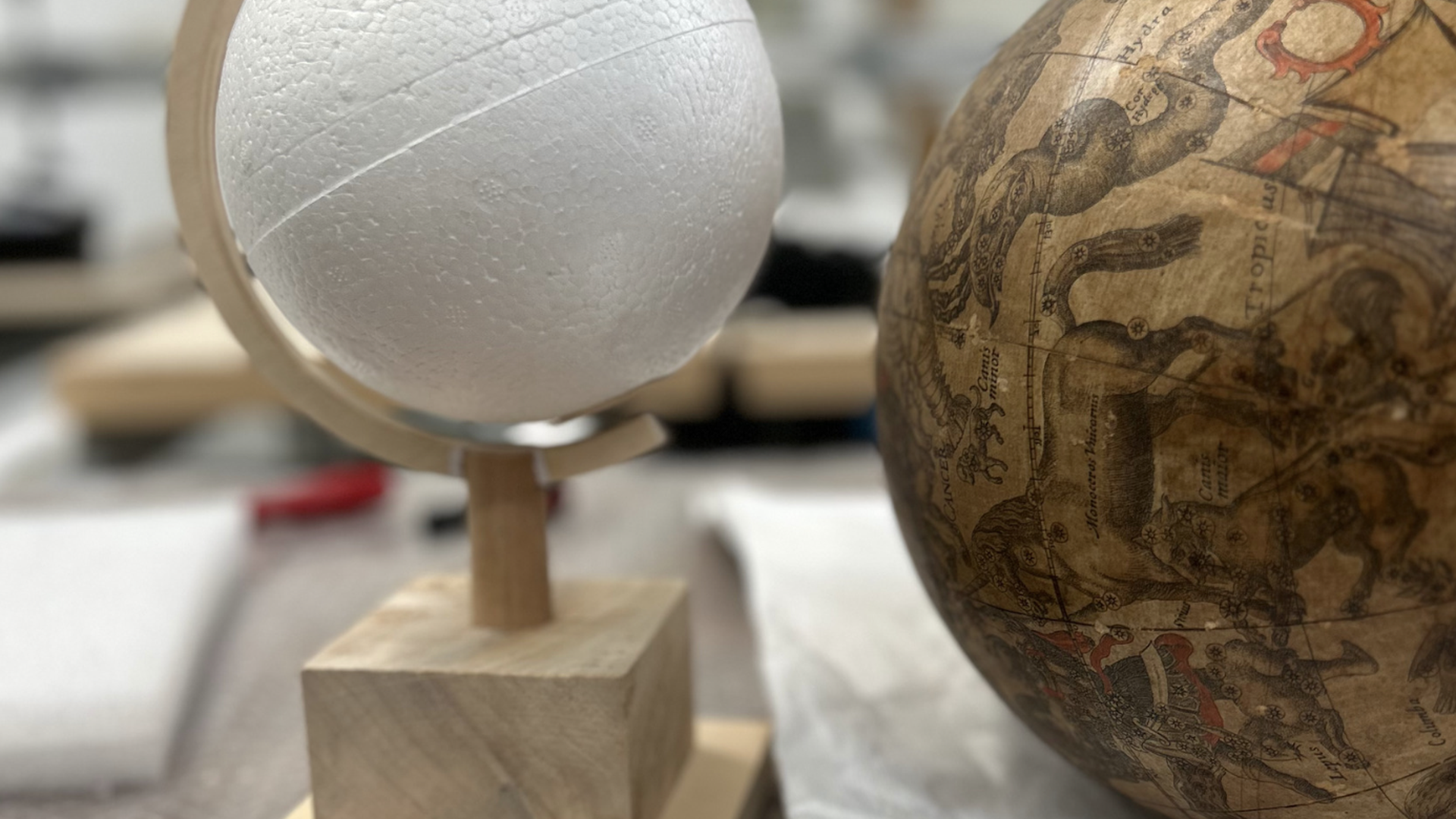
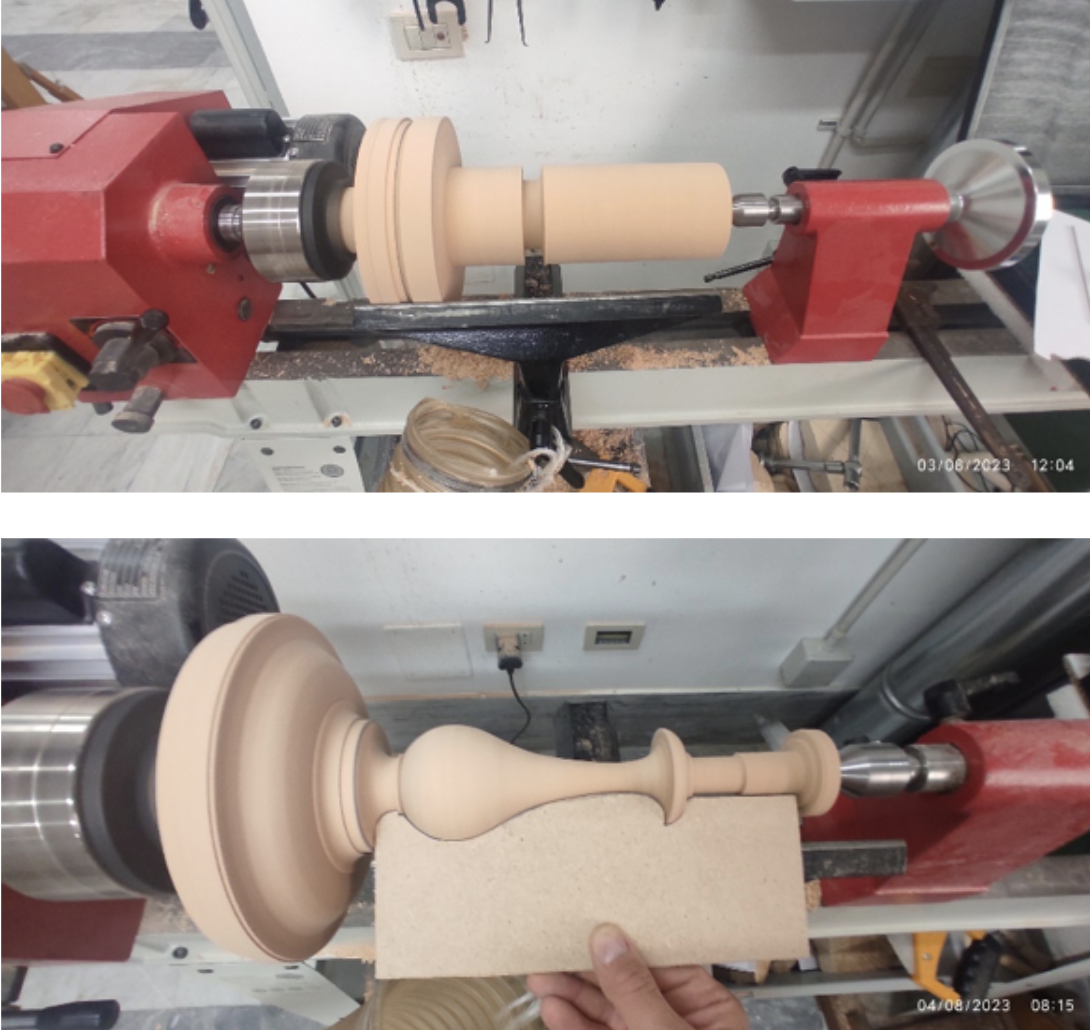
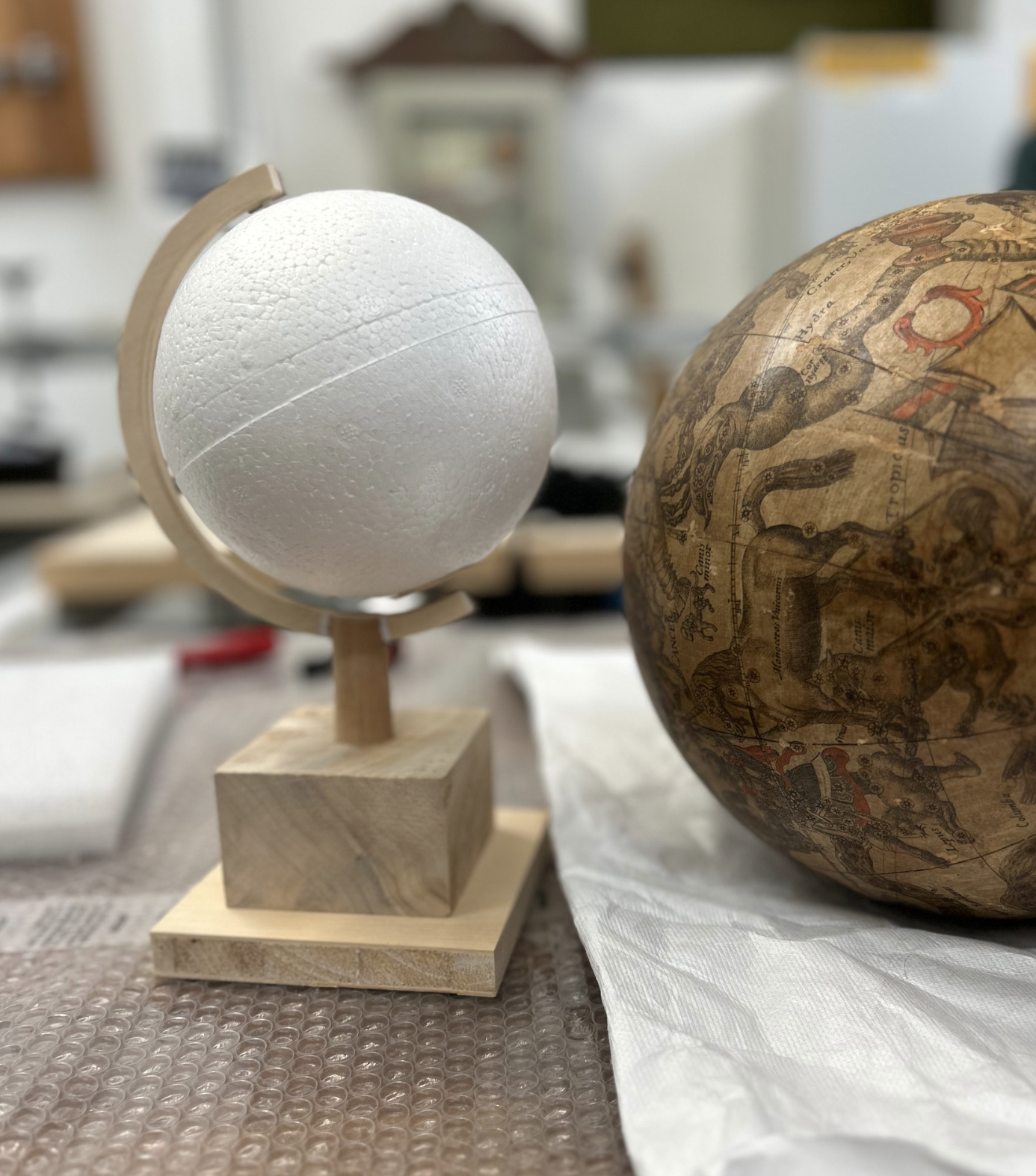
In addition to the restoration project, the restorer deemed it necessary to provide a new support base for proper and safe display.
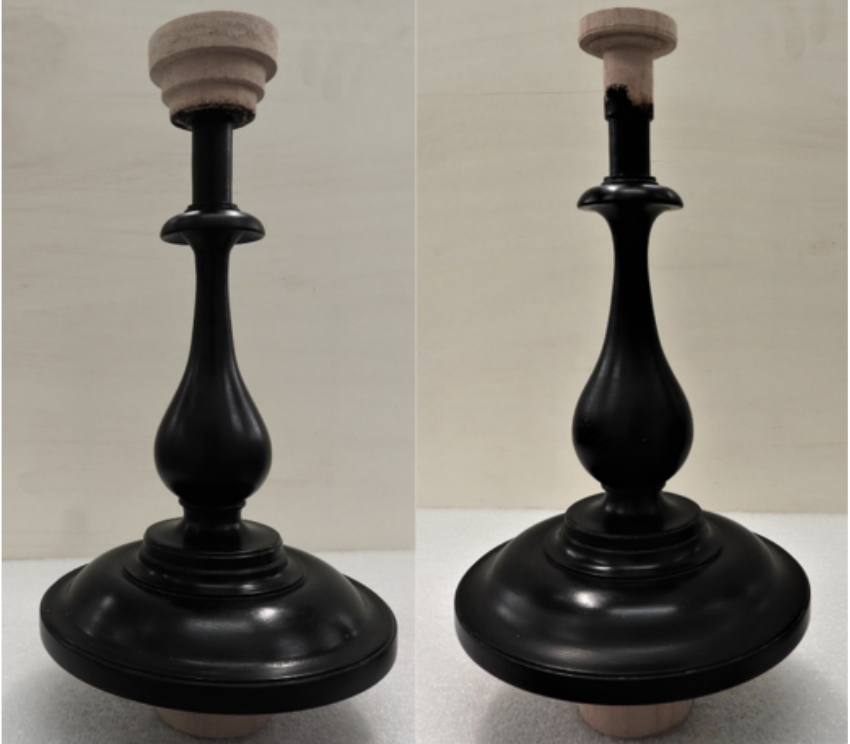
In this regard, many types of support with different shapes and materials (wood, metal, or plexiglass) were proposed, but the final choice was oriented, on the curator's indication and design, toward a black-painted wooden base.
Inside the two globes, there will be a recreation of the so-called dead man's stick (inner support stick), now lost, to restore the correct inclination of the Earth's axis.
Meridian rings will have to be made, again in wood, which will be bound to the new bases we have made. They will return the stability, proper position, and correct artwork reading.
The two globes are currently at the Scientific Research Laboratory, where the restorers are performing the following analyses:
- XRF
- endoscopy for Globe MV.70156
- non-destructive FTIR
- false color infrared
- ultraviolet
- 3D reconstruction
Once the analyses are completed, the restorer will repair the surface abrasions and gaps.
Celestial globe by Matthaeus Greuter and Terrestrial globe by John Baptist Nicolosi - Restoration Update
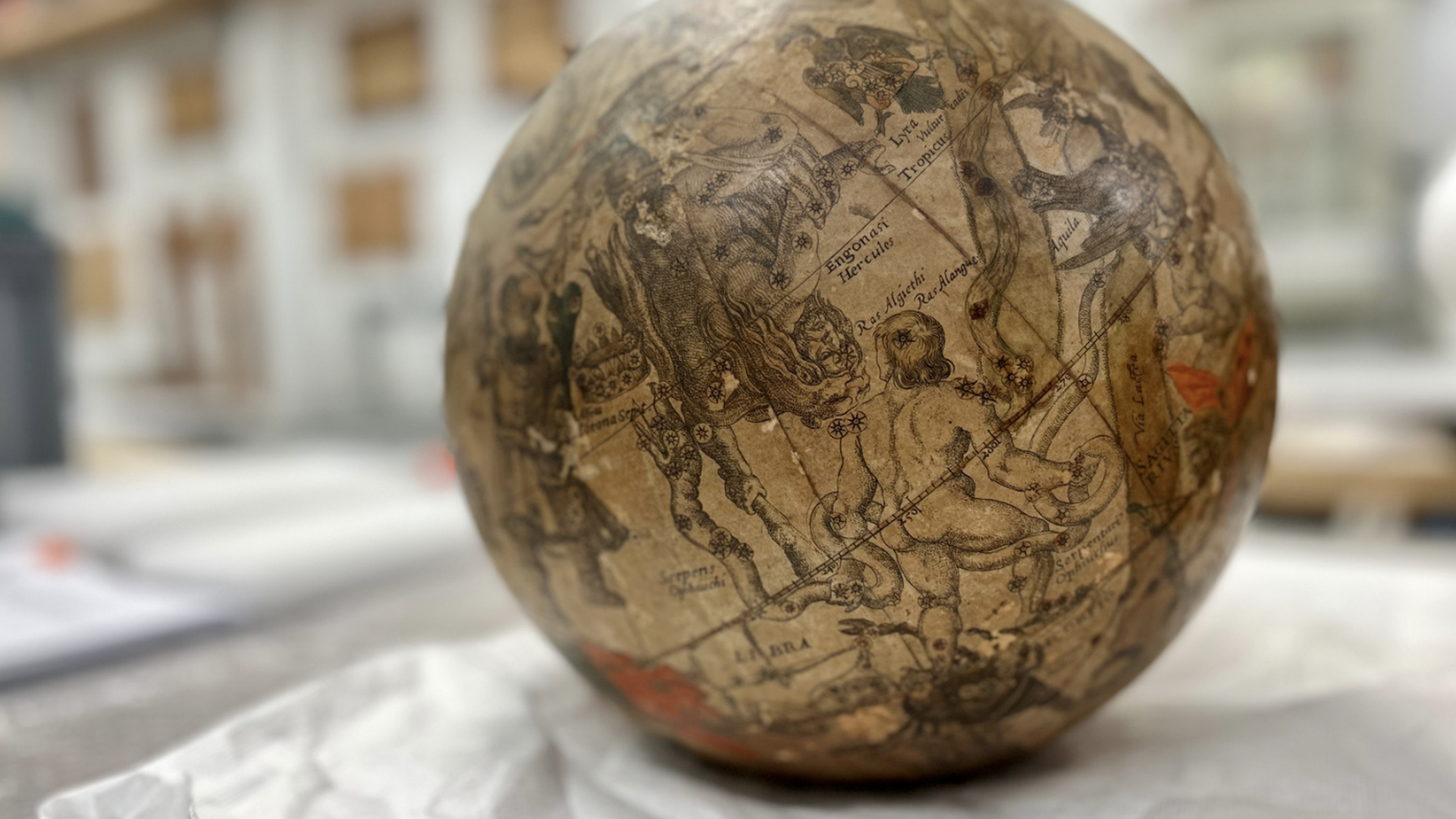
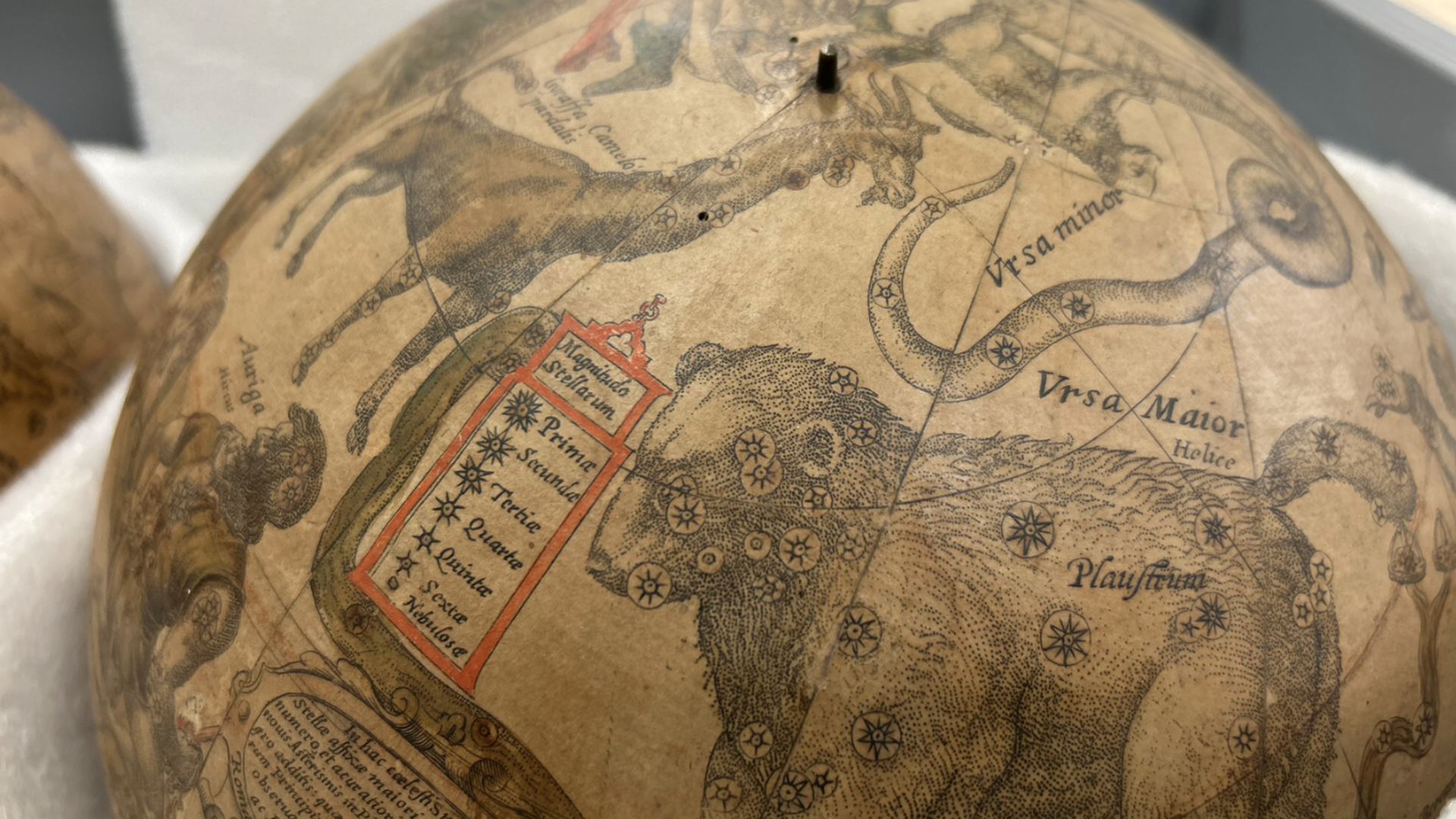
CELESTIAL GLOBE
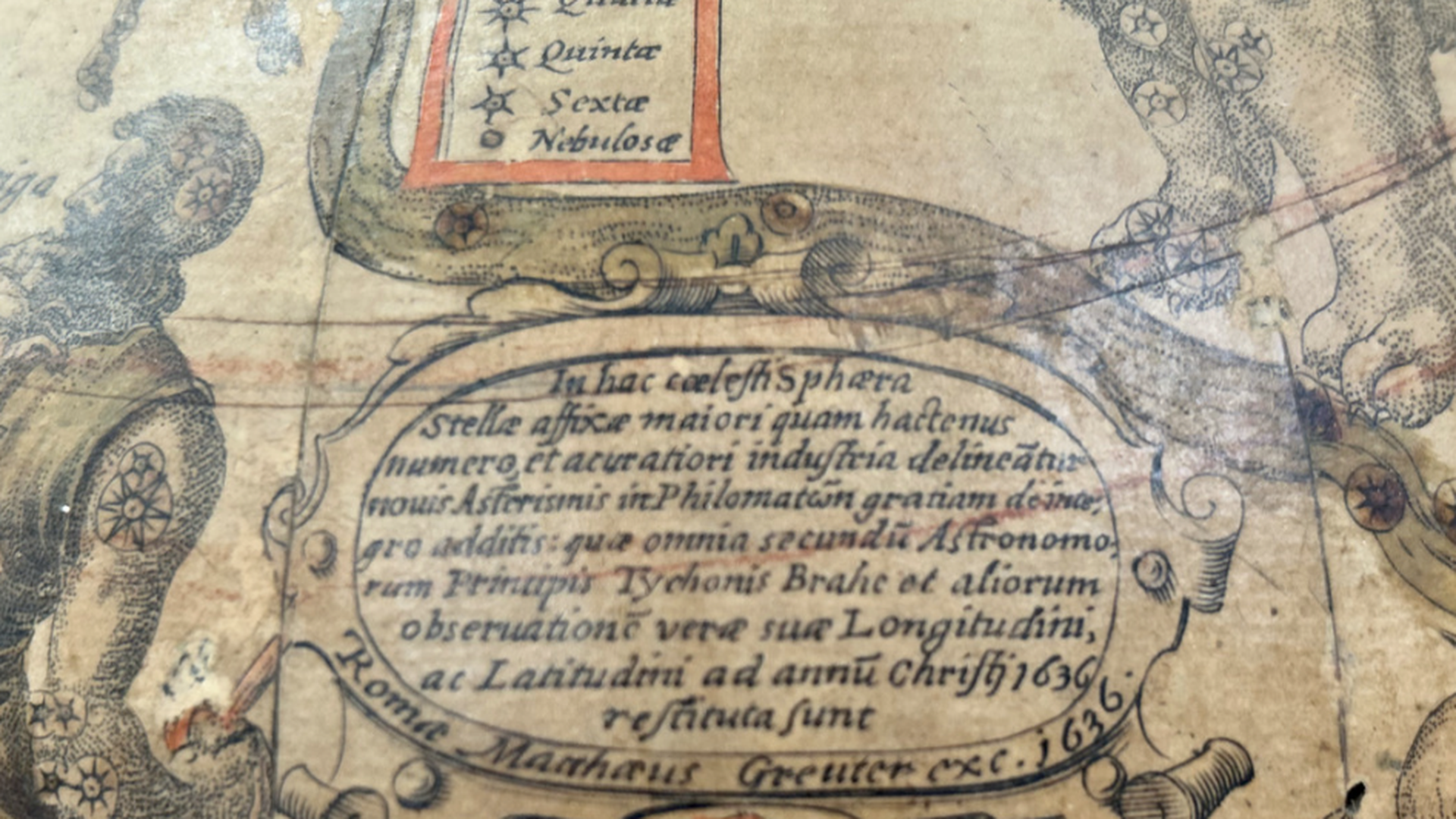
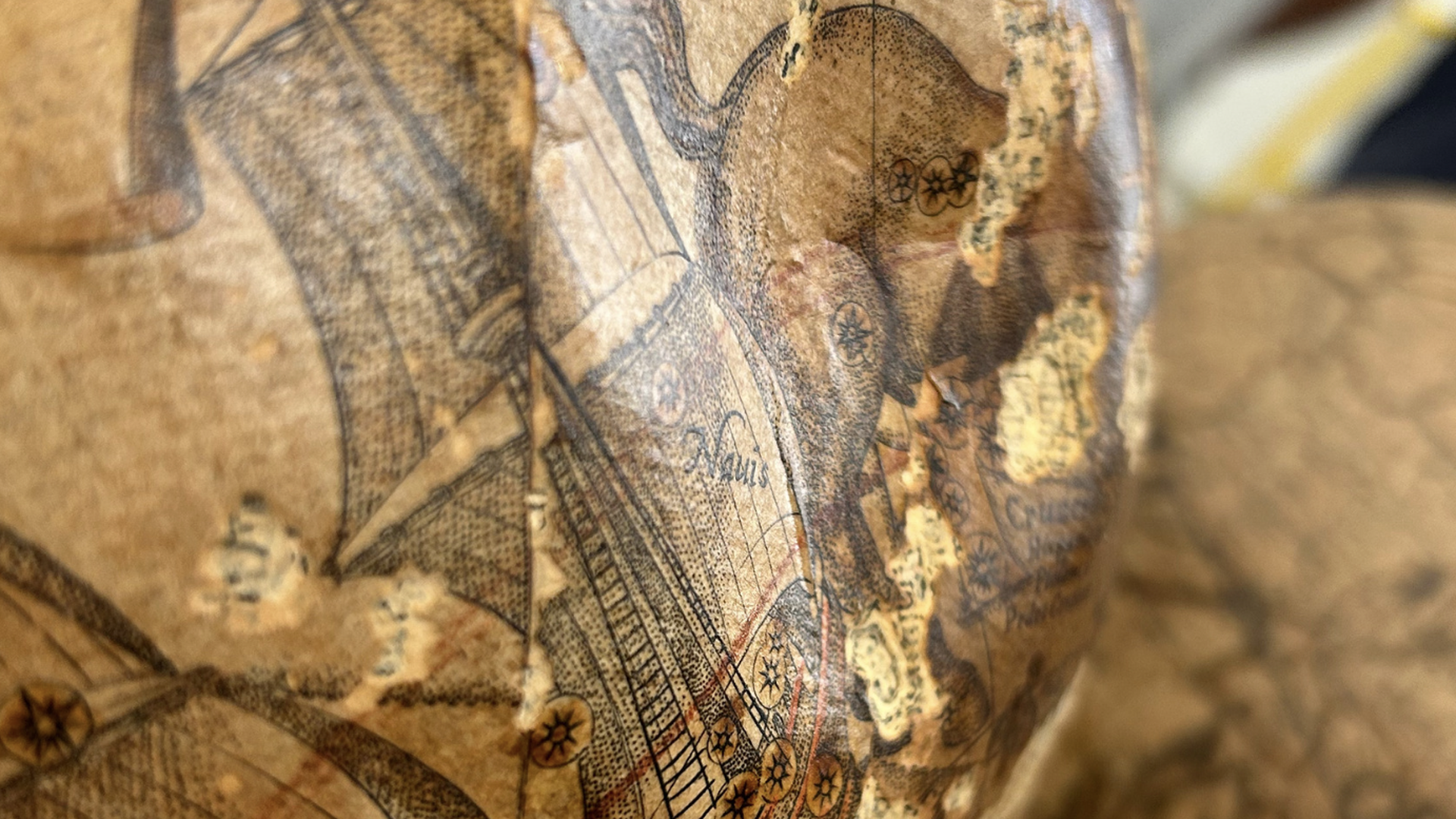
This small Celestial Globe (inventory number 70155) was engraved by Matthias Greuter in 1636, as shown by the dedication, and measures 27 cm in diameter. It appears to be in fair condition, and the finishing varnish does not seem altered, while areas of layered erosion caused by insects (silverfish and woodworms) are visible on the surface. The watercolor paints appear stable and in good condition, while the head restorer of the Paper Laboratory, Chiara Fornaciari, found it necessary to replace the bases of the two globes. Indeed, it is a heavy stone base of recent manufacture that does not provide any stability to the celestial globe.
For this reason, the Painting and Wood Restoration Laboratory has been consulted and is studying a new arrangement that will be correct from the points of view of conservation, functionality, and historical reading.
TERRESTRIAL GLOBE
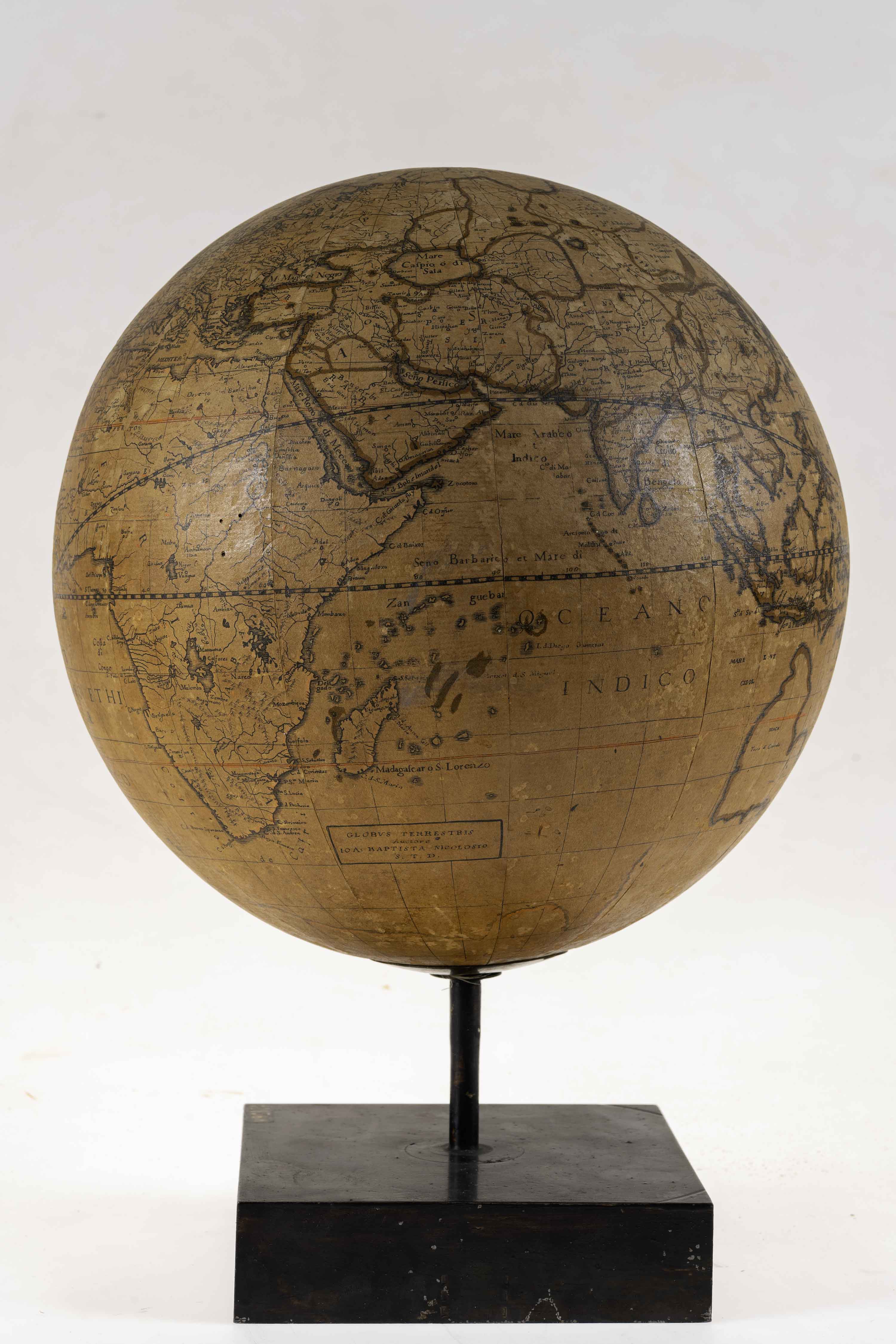
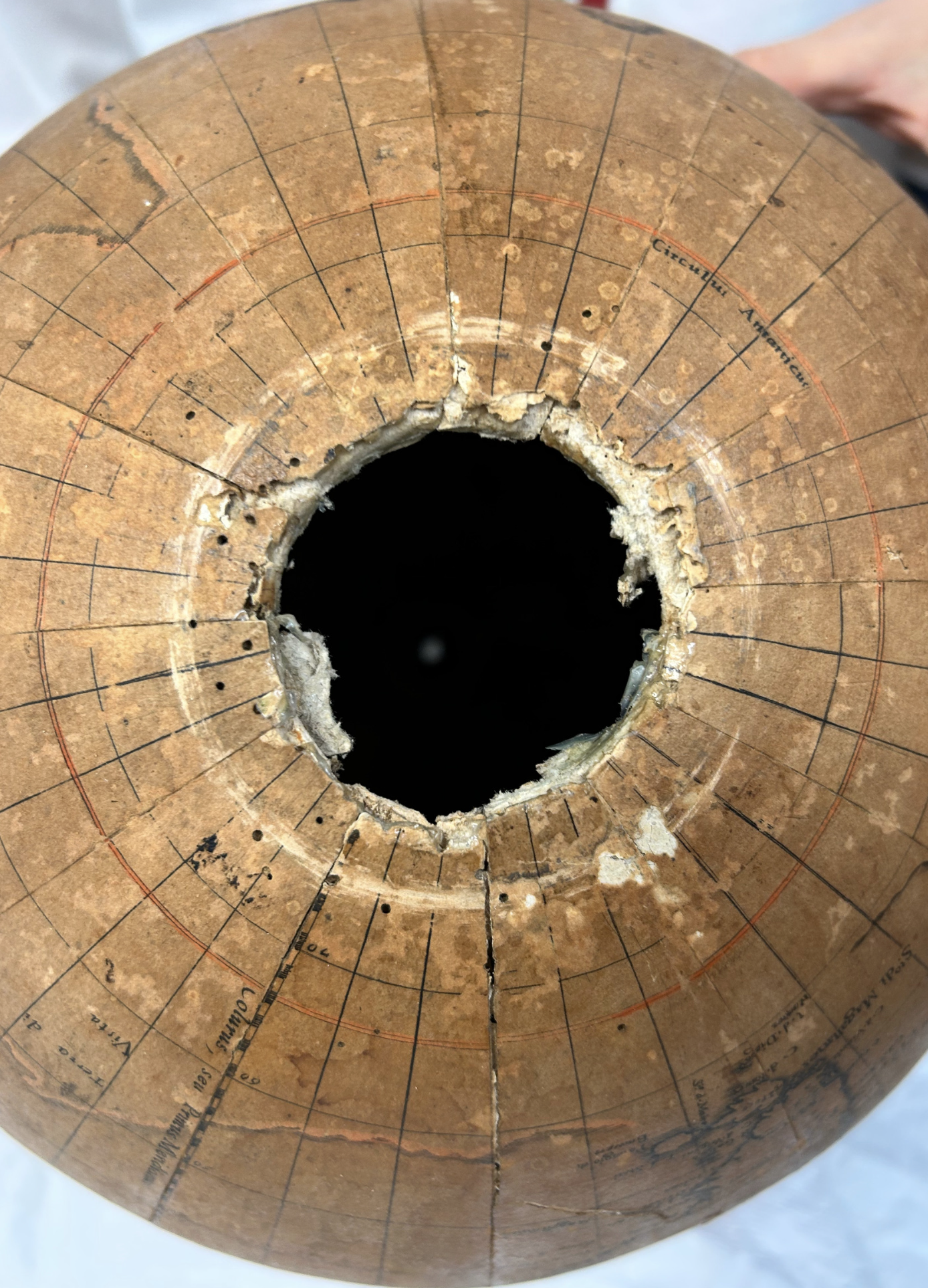
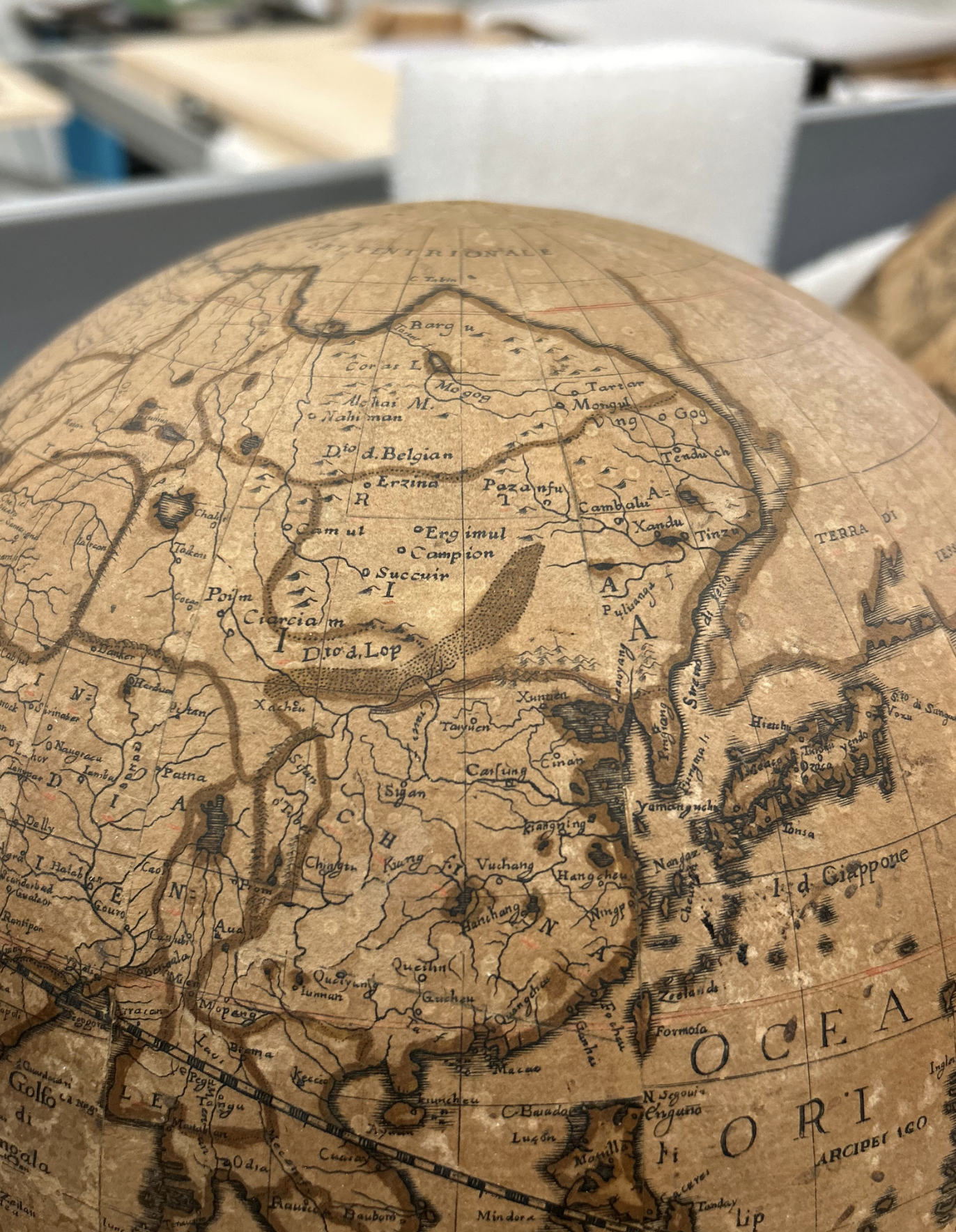
The Terrestrial Globe (inventory number 70156) was engraved by Giovanni Battista Nicolosi in the second half of the 17th century. This small globe measures 27 cm in diameter and appears in fair condition. Watercolored only along some of the boundary lines of the lands depicted, it shows, as does the celestial globe, areas of surface erosion caused by insects (silverfish and woodworms). Also mounted on a stone base, it has a large hole at the bottom that will allow the restorer to investigate inside the globe to study its construction technique.
- Dusting with brushes and microaspiration
- Grouting of abrasions and holes due to xylophagous insects
- Consolidating fragile parts of the paper surface
- Closure of the cracks present on the surface of the globe inv. MV.70156
- Consolidation of the lower part of the globe inv. 70156
- Veiling of the abraded parts with pastels
- Chromatic rebalancing of the fillings
- Mounting on new support created by the Painting and Wood Laboratory

Celestial globe by Matthaeus Greuter and Terrestrial globe by John Baptist Nicolosi
Details
Adopted by: The New England Chapter
Inventory: 70155, 70156
Artist: Matthaeus Greuter, Giovanni Battista Nicolosi
Date: 1636 (inv. 70155); second half of the 17th century (inv. 70156)
Classification: Globe
Materials: Engraving on watercolor paper
Dimensions: Height 38 cm, diameter 27 cm
Museum: BAV Gallery of the Ancient Library
Department: Decorative Arts
Laboratory: Paper
Wishbook year: 2023
Description
HIGH PRIORITY PROJECT
The first celestial globe reproduces the heavenly sky with the constellations and is dated 1636. It was completed by Matthaeus Greuter, who started a profitable production of terrestrial and celestial globes in Rome at the beginning of the 1630s. The terrestrial globe (inv. 70156) is from the second half of the 17th century by the Sicilian Giovanni Battista Nicolosi, S.T.D., active in Rome and one of the most critical scholars of the geography of this period. The purpose of the restoration will return the two globes to a new and unique showcase in the Pauline Hall, alongside other similarly themed artifacts found in the collection.
TOTAL COST: € 34.382,18 ($ 33,605.14)
Restoration Procedures
-
Cleaning and grouting of abrasions and holes due to xylophagous insects
-
Consolidation of fragile parts of the paper surface of the two works
-
Closure of the cracks present on the surface of the work inv. 70156
-
Consolidation of the lower part of the work inv. 70156
-
Color rebalancing
-
Mounting on new support (painting laboratory)
Media
Globe - inv. 70156
Restorations Update: Celestial globe by Matthaeus Greuter and Terrestrial globe by John Baptist Nicolosi - New Support
The two globes underwent anoxic treatment.
In addition to the restoration project, the restorer deemed it necessary to provide a new support base for proper and safe display.
In this regard, many types of support with different shapes and materials (wood, metal, or plexiglass) were proposed, but the final choice was oriented, on the curator's indication and design, toward a black-painted wooden base.
Inside the two globes, there will be a recreation of the so-called dead man's stick (inner support stick), now lost, to restore the correct inclination of the Earth's axis.
Meridian rings will have to be made, again in wood, which will be bound to the new bases we have made. They will return the stability, proper position, and correct artwork reading.
The two globes are currently at the Scientific Research Laboratory, where the restorers are performing the following analyses:
- XRF
- endoscopy for Globe MV.70156
- non-destructive FTIR
- false color infrared
- ultraviolet
- 3D reconstruction
Once the analyses are completed, the restorer will repair the surface abrasions and gaps.
Restorations Update: Celestial globe by Matthaeus Greuter and Terrestrial globe by John Baptist Nicolosi - Restoration Update
CELESTIAL GLOBE
This small Celestial Globe (inventory number 70155) was engraved by Matthias Greuter in 1636, as shown by the dedication, and measures 27 cm in diameter. It appears to be in fair condition, and the finishing varnish does not seem altered, while areas of layered erosion caused by insects (silverfish and woodworms) are visible on the surface. The watercolor paints appear stable and in good condition, while the head restorer of the Paper Laboratory, Chiara Fornaciari, found it necessary to replace the bases of the two globes. Indeed, it is a heavy stone base of recent manufacture that does not provide any stability to the celestial globe.
For this reason, the Painting and Wood Restoration Laboratory has been consulted and is studying a new arrangement that will be correct from the points of view of conservation, functionality, and historical reading.
TERRESTRIAL GLOBE
The Terrestrial Globe (inventory number 70156) was engraved by Giovanni Battista Nicolosi in the second half of the 17th century. This small globe measures 27 cm in diameter and appears in fair condition. Watercolored only along some of the boundary lines of the lands depicted, it shows, as does the celestial globe, areas of surface erosion caused by insects (silverfish and woodworms). Also mounted on a stone base, it has a large hole at the bottom that will allow the restorer to investigate inside the globe to study its construction technique.
- Dusting with brushes and microaspiration
- Grouting of abrasions and holes due to xylophagous insects
- Consolidating fragile parts of the paper surface
- Closure of the cracks present on the surface of the globe inv. MV.70156
- Consolidation of the lower part of the globe inv. 70156
- Veiling of the abraded parts with pastels
- Chromatic rebalancing of the fillings
- Mounting on new support created by the Painting and Wood Laboratory
© 2026 Patrons of the Arts
in the Vatican Museums
Vatican Museums V-00120,
Vatican City State (Europe)
+39 0669864499