

Banner of the Noble Guard of His Holiness Pope Pius VII
Artist: Roman Manufactory
Date: 1801
Dimensions: 80 x 290 cm; 322 cm
Materials: Painted silk
Adopted By: The Italian & International Chapter
Description
MEDIUM PRIORITY PROJECT
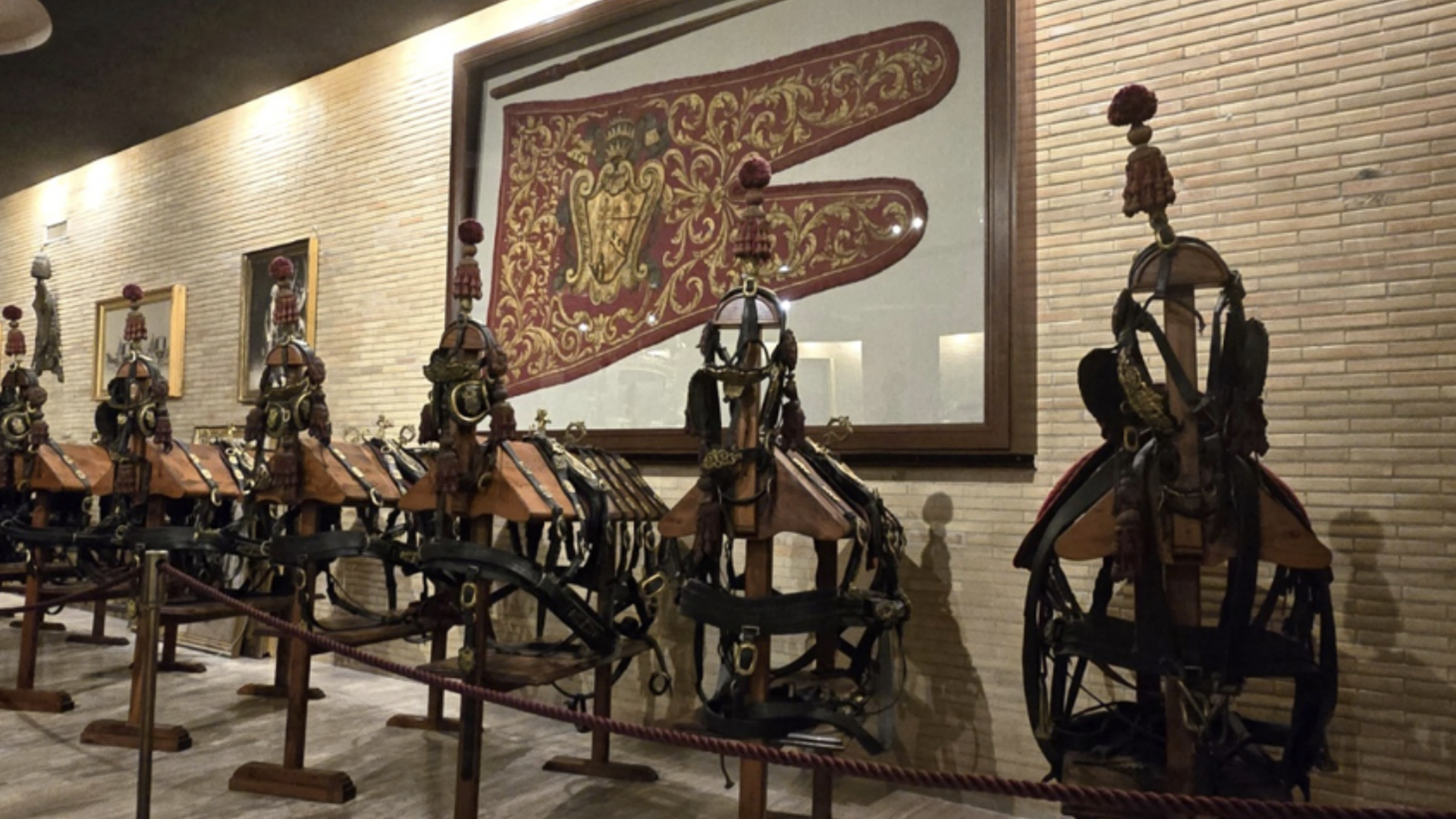
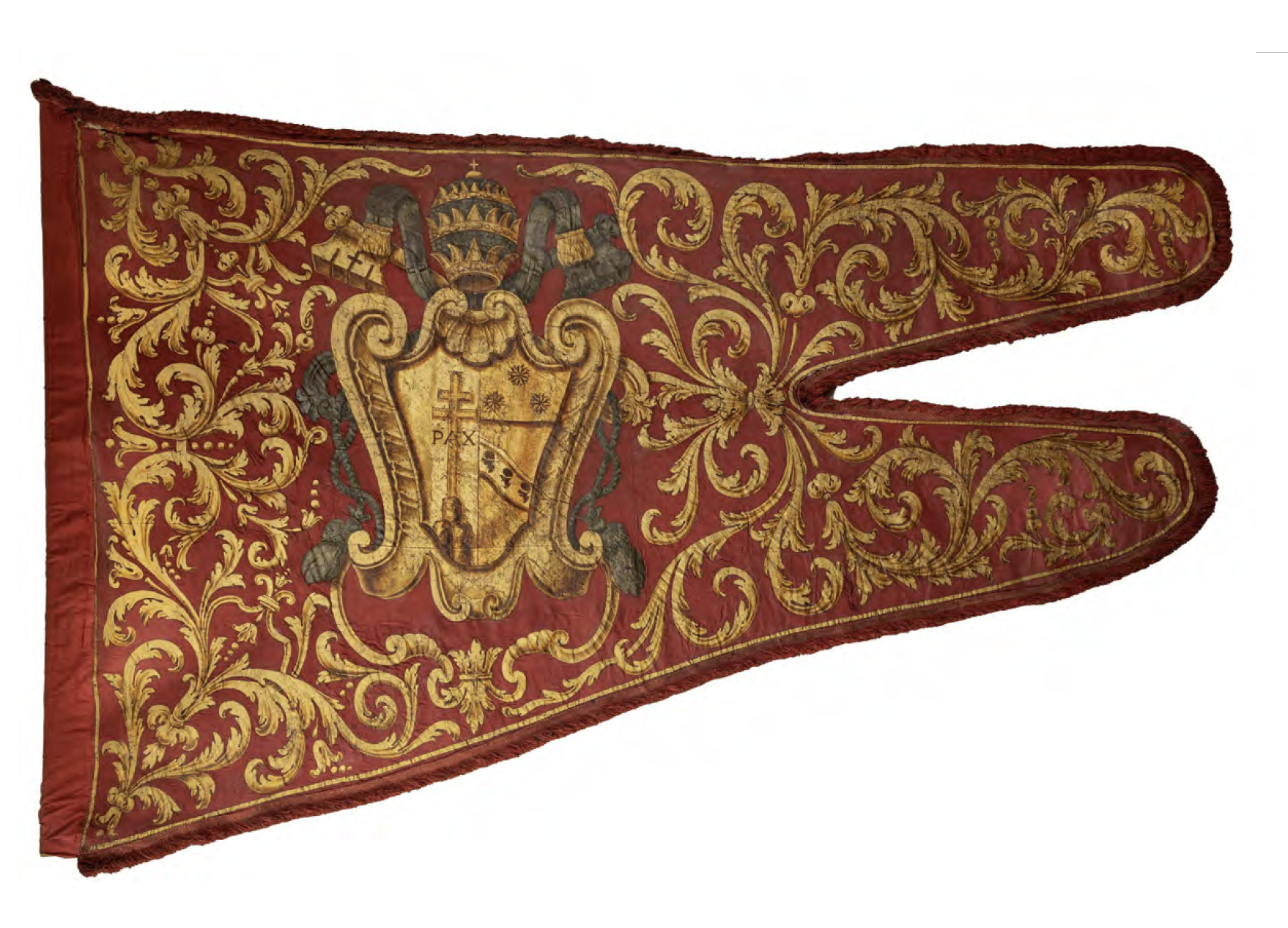
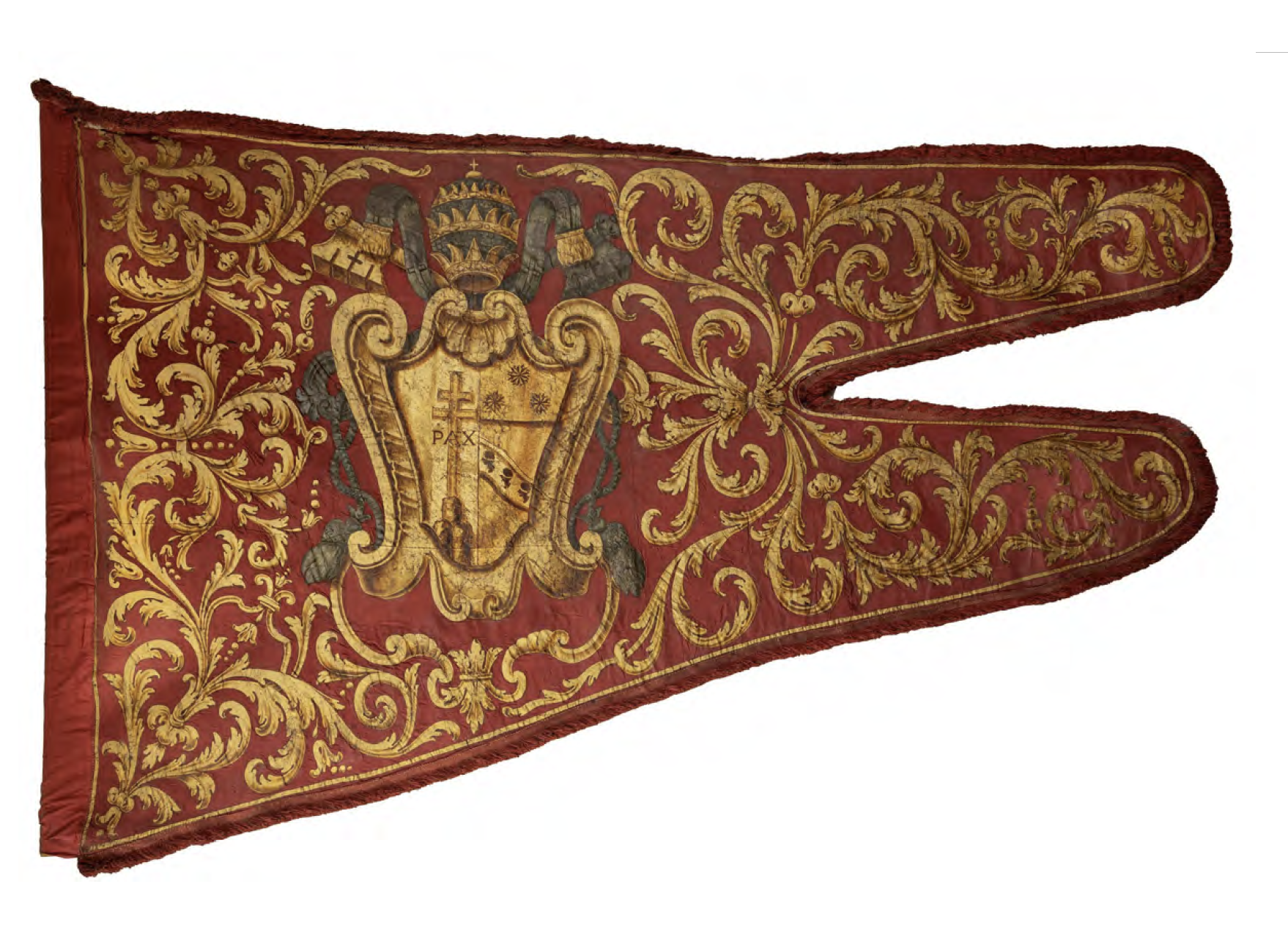
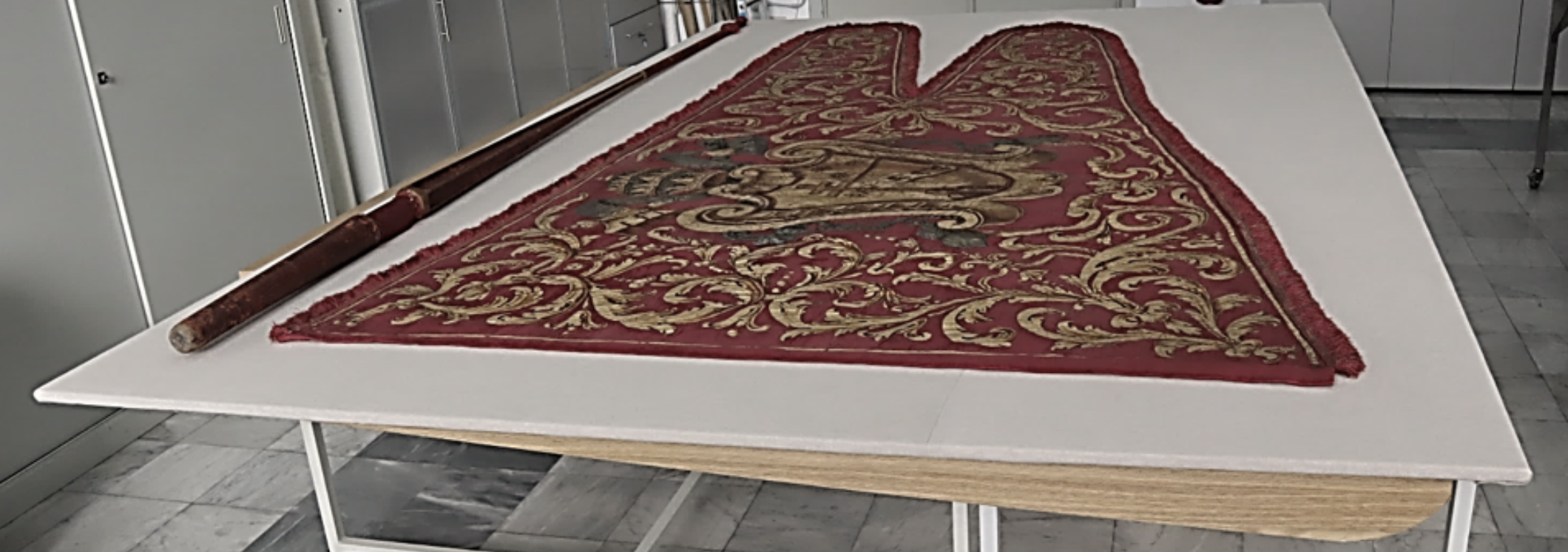
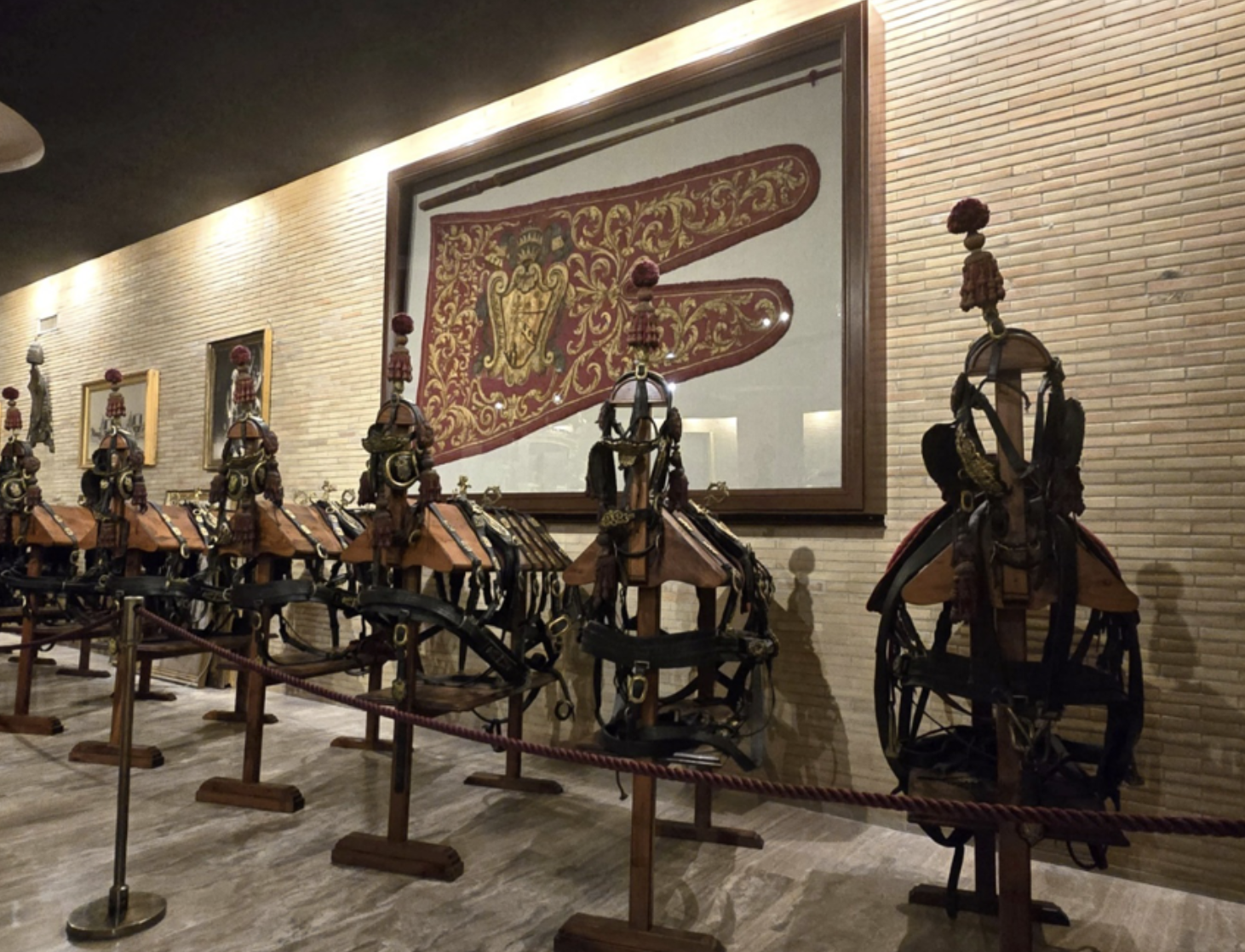
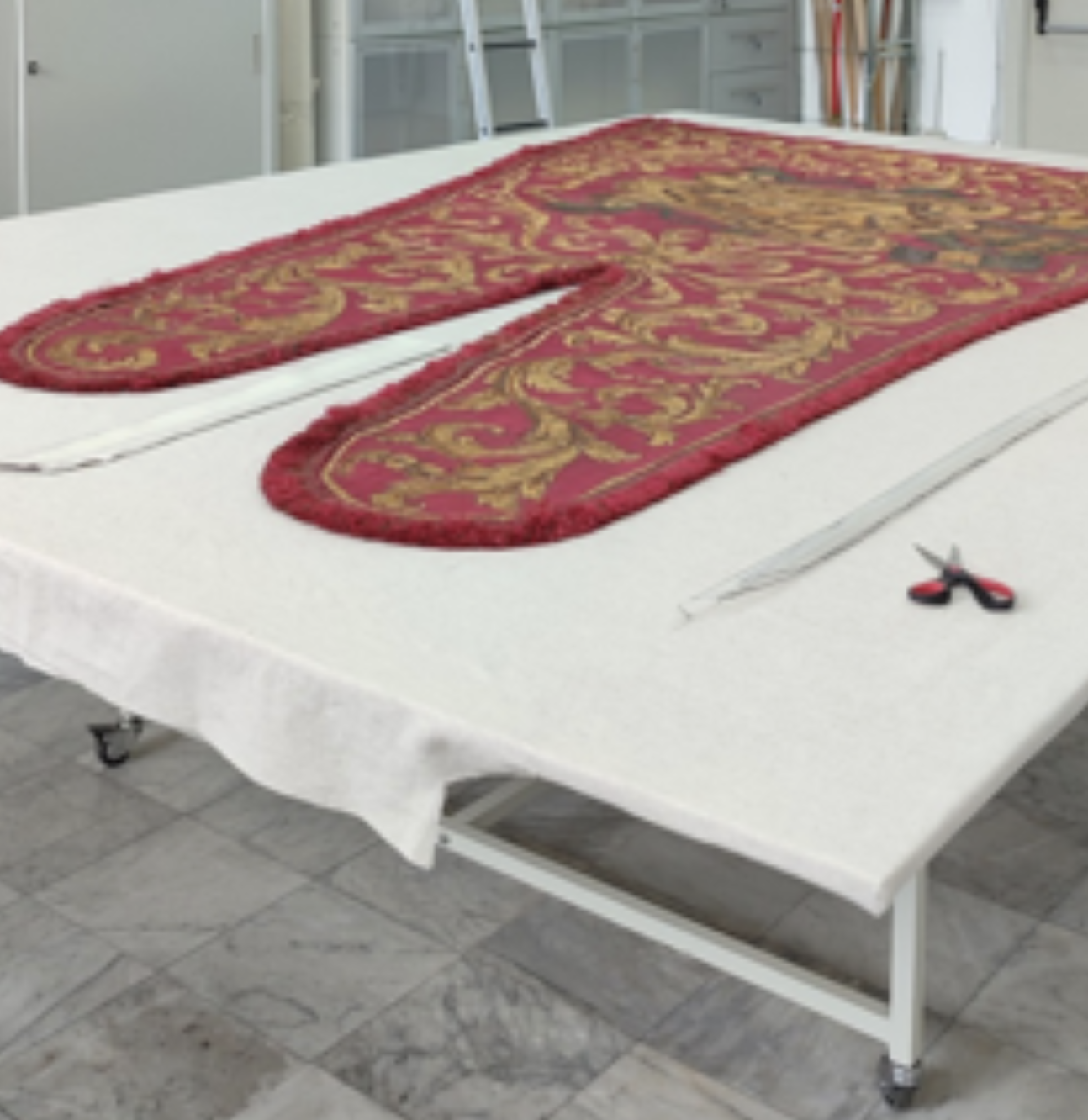
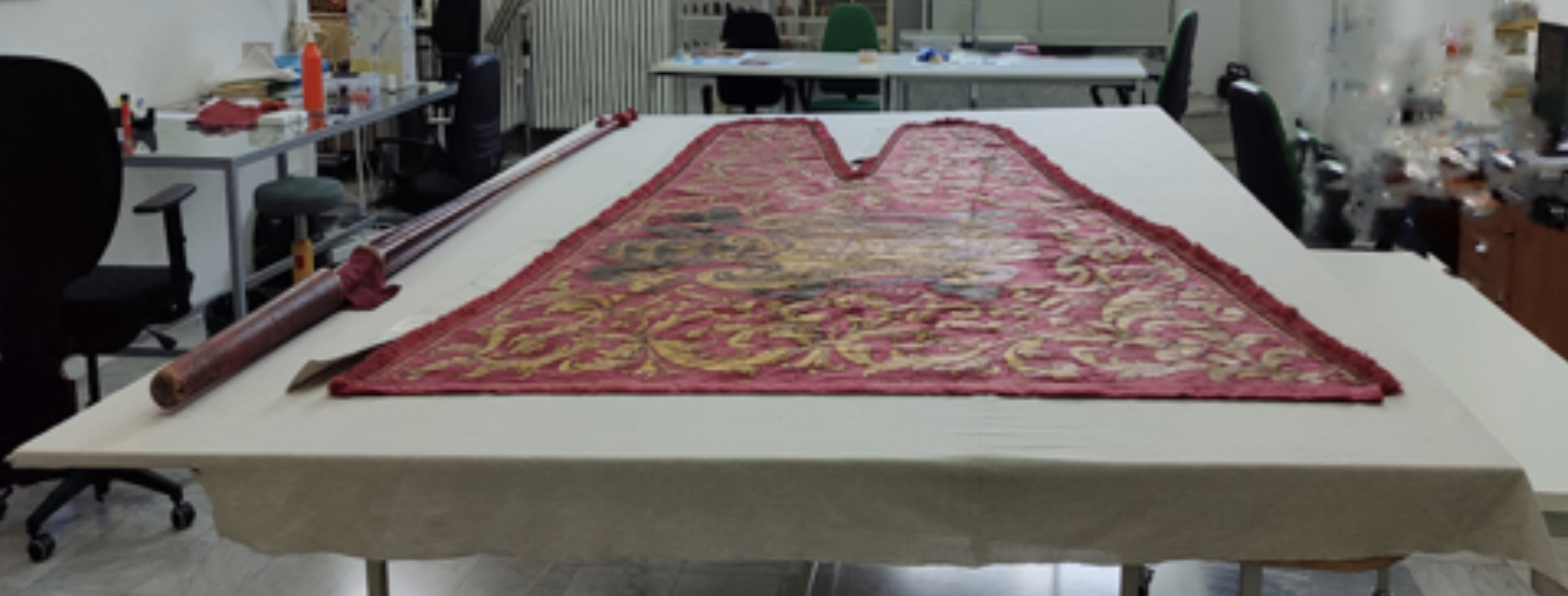
In 1973 Urbano Barberini-Sacchetti, XII Prince of Palestrina, donated this historic banner of Pope Pius VII’s Noble Guard to the Vatican. It is the first representation of the former Pontifical Noble Guard, an elite corps of cavalrymen composed of recruits from the cadets of noble Roman families, who, from May 11, 1801, were tasked with personally escorting the Pontiff, a function it performed until September 14, 1970, when, at the behest of Pope Paul VI, the Noble Guard was suppressed and replaced in this task by the Swiss Guard. This first banner was thus in use from the day of its foundation up until May 31, 1820.
TOTAL COST: € 20.291,04 ($ 21,683.01)
State of Preservation
Restoration Procedures
- Disinfestation will be necessary on the silk banner and the supporting pole
- Careful microaspiration will remove the inconsistent particulate matter
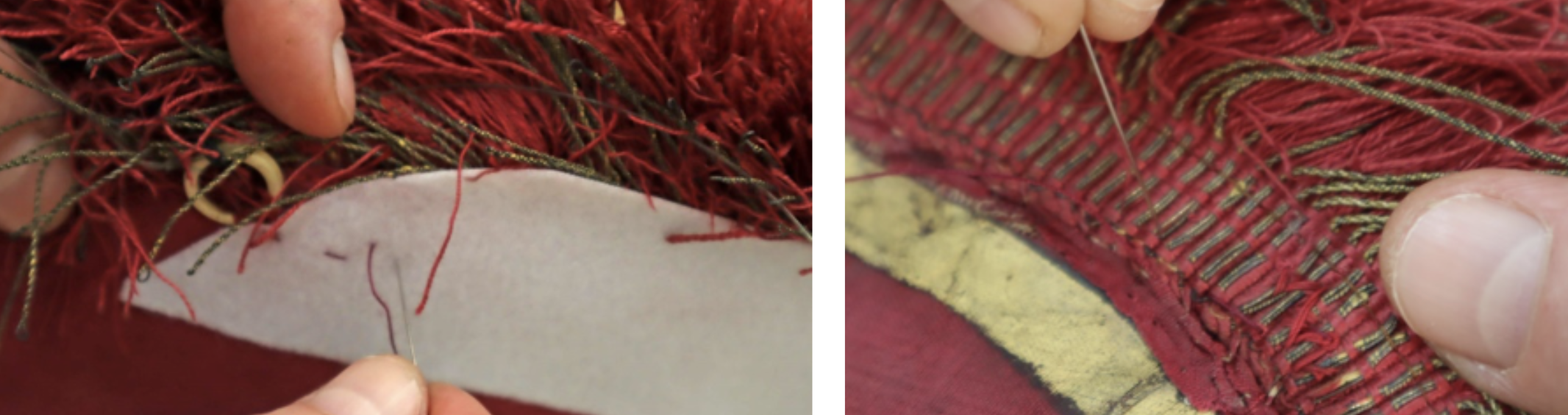
- The fringe needs to be sewn back in certain areas
- For display, a support made of suitable and lightweight material for preservation and mobility will allow adaptability so it can shape and follow the contour of the work so that it is not visible
- An aluminum honeycomb panel or something similar is recommended. The fabric will cover the panel and the sewn banner will have anchorage
Detail
Adopted By:
The Italian & International ChapterPatrons:
Italian & International Chapter and John McCaffrey
Inventory N°: 29457
Artist: Roman Manufactory
Date: 1801
Dimensions: 80 x 290 cm; 322 cm
Materials: Painted silk
Laboratories:
Tapestry and TextilesWishbook year: 2024
Banner of the Noble Guard of His Holiness Pope Pius VII - Final Restoration Report
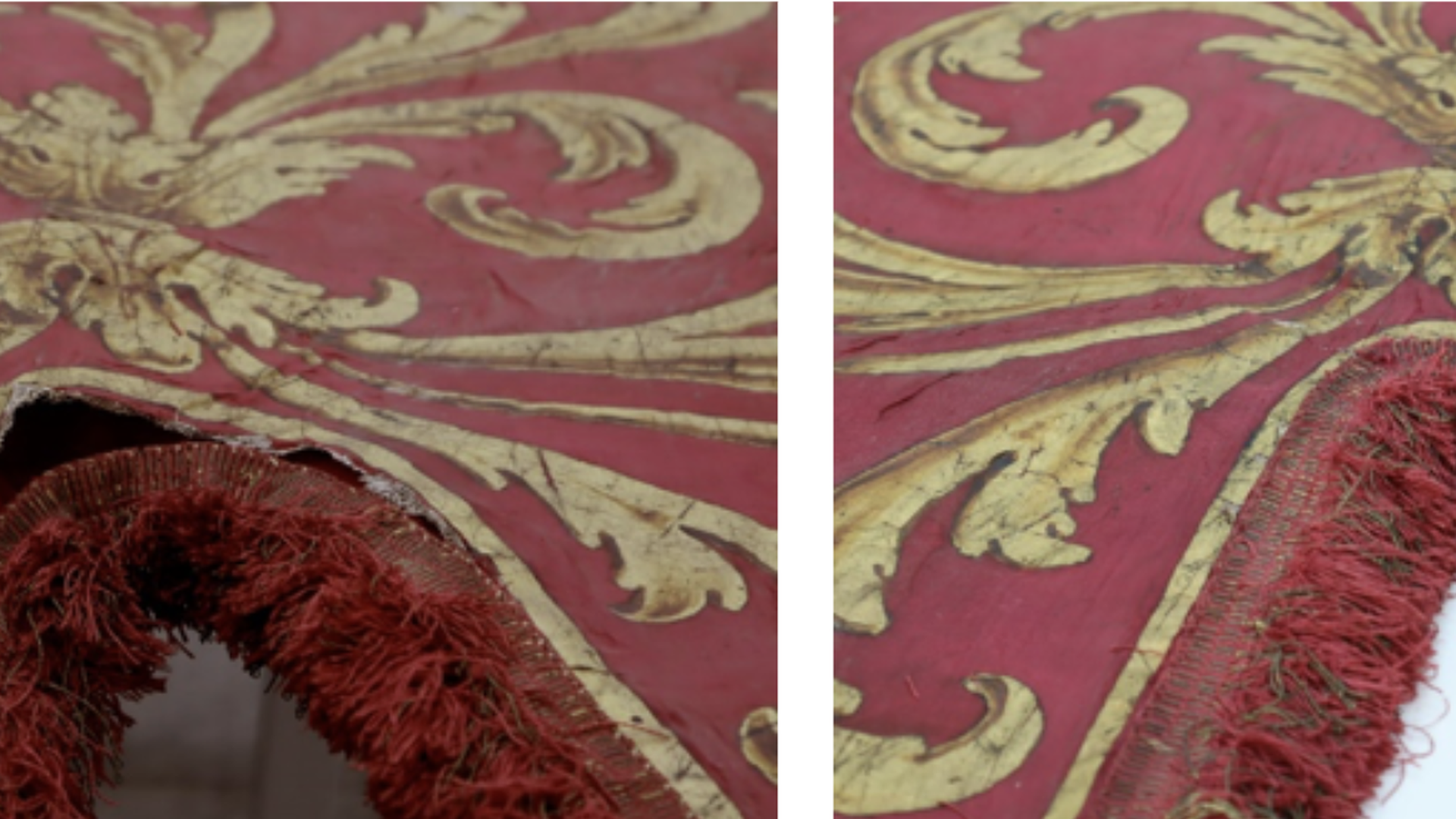
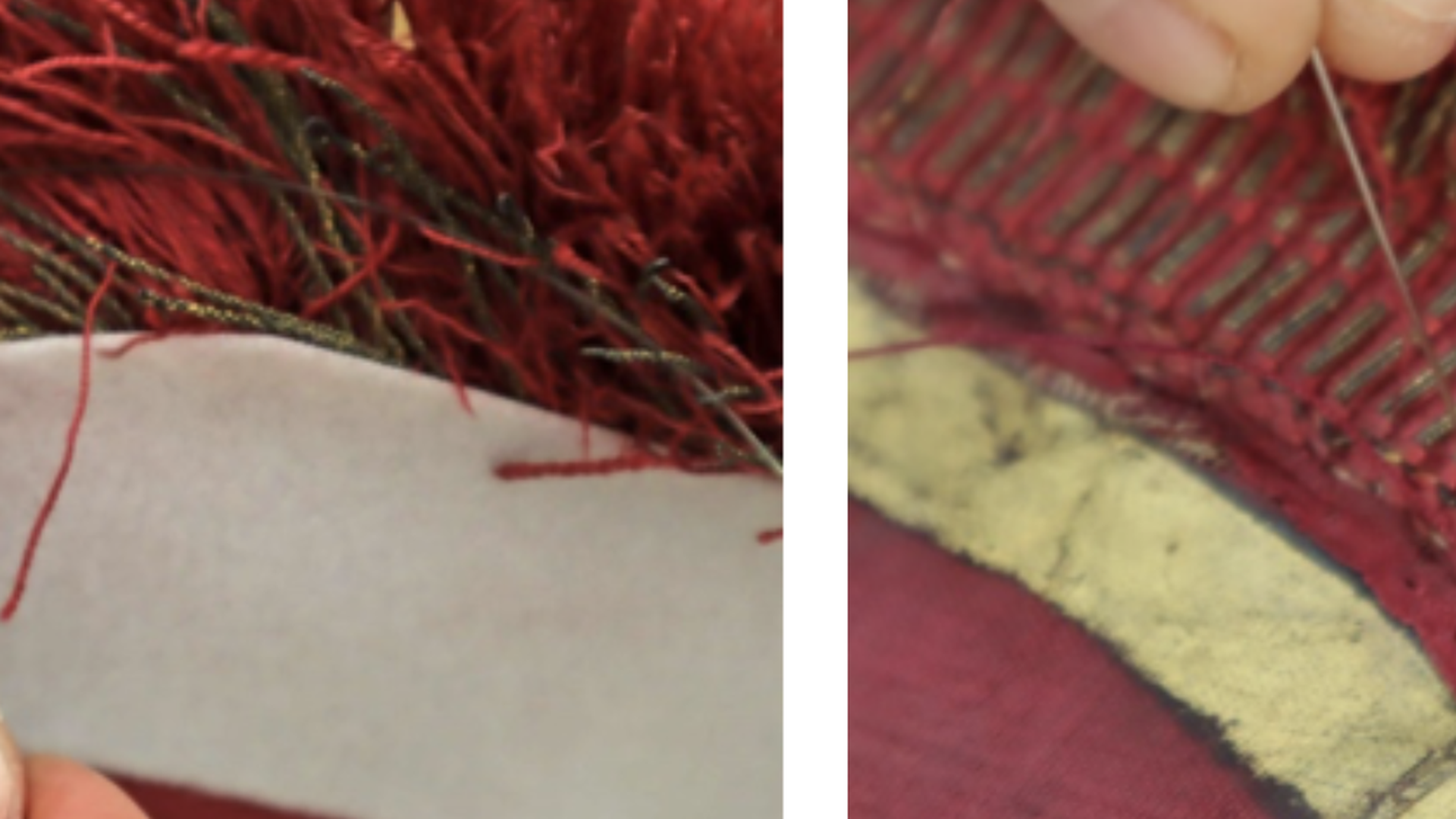
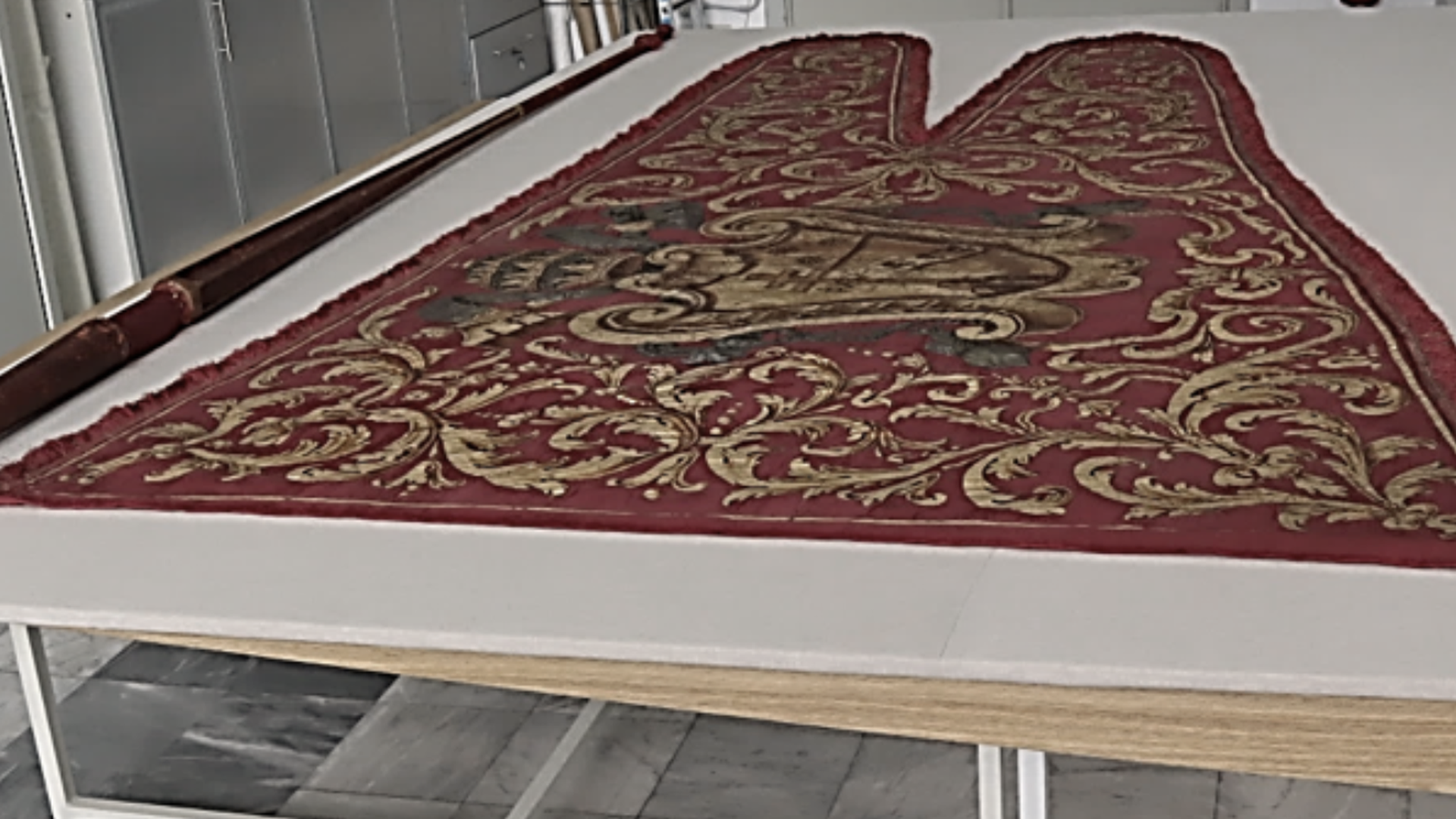
Restorers made graphic and photographic documentation of the object and took a sample of fabric and gauze for analysis by GRS to determine the nature of the glue/adhesive used in the previous restoration. Perform a thorough micro-aspiration to remove incoherent particles over the entire surface. Continue cleaning with a pad soaked in deionized water.
Next, restorers reattached the sections of the silk that had been lifted and detached from the border using starch glue. Then, they fixed the banner to a plywood panel, previously covered with two layers of fabric, to avoid direct contact with the work.
The banner was then placed in a specially constructed display case.
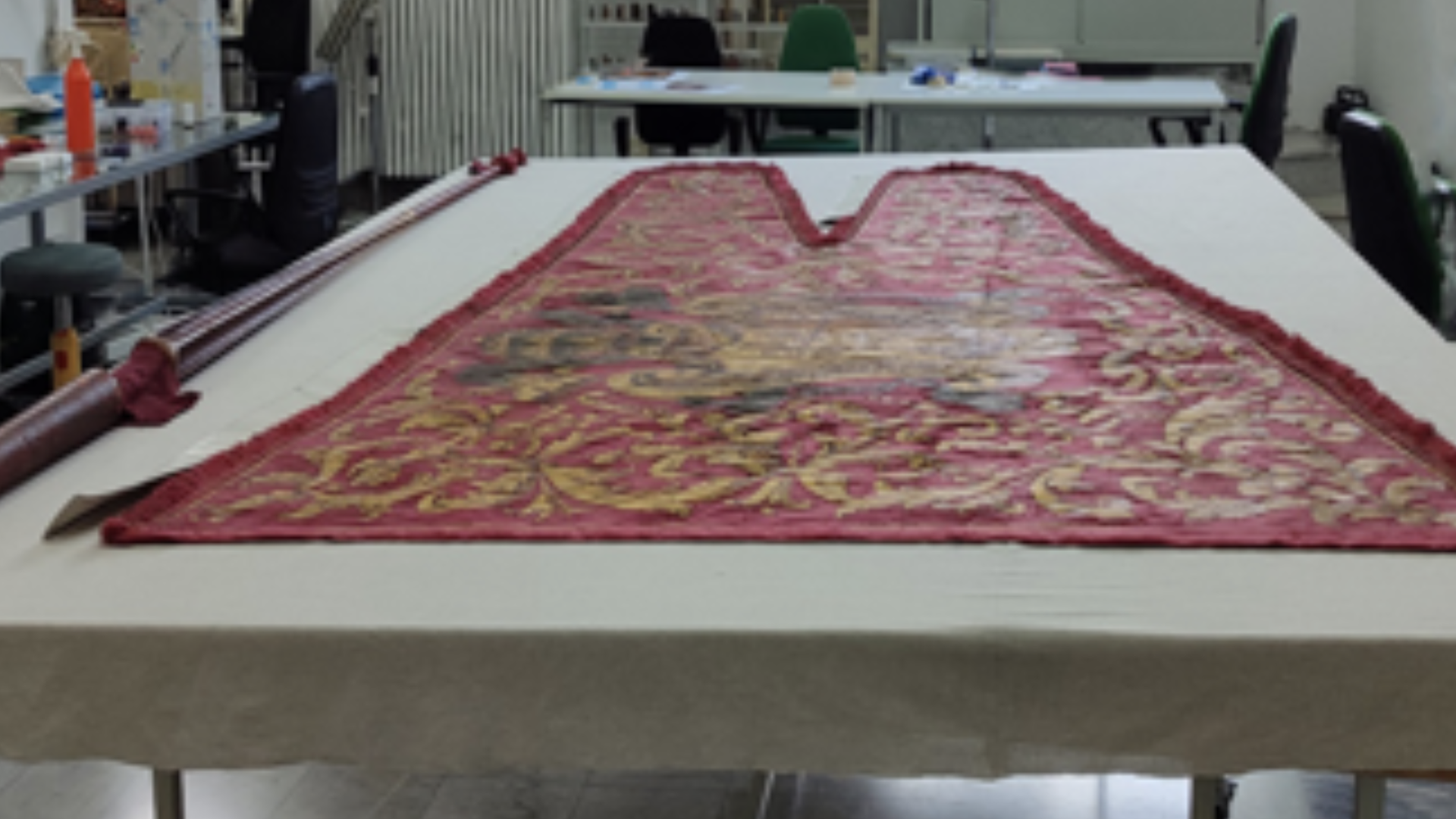
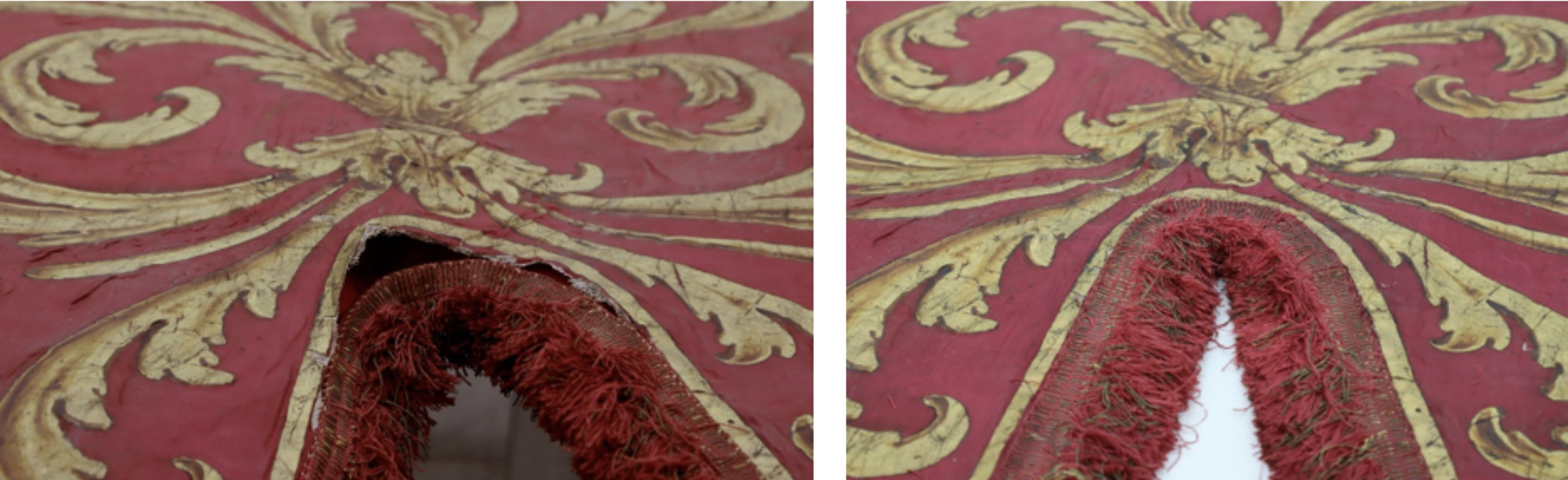
Unfortunately, the glue used to cover the entire work made the fabric extremely stiff, effectively changing its nature and causing several tears in the most stressed areas, such as where it splits in two. The flag has several tears and folds over its entire surface.
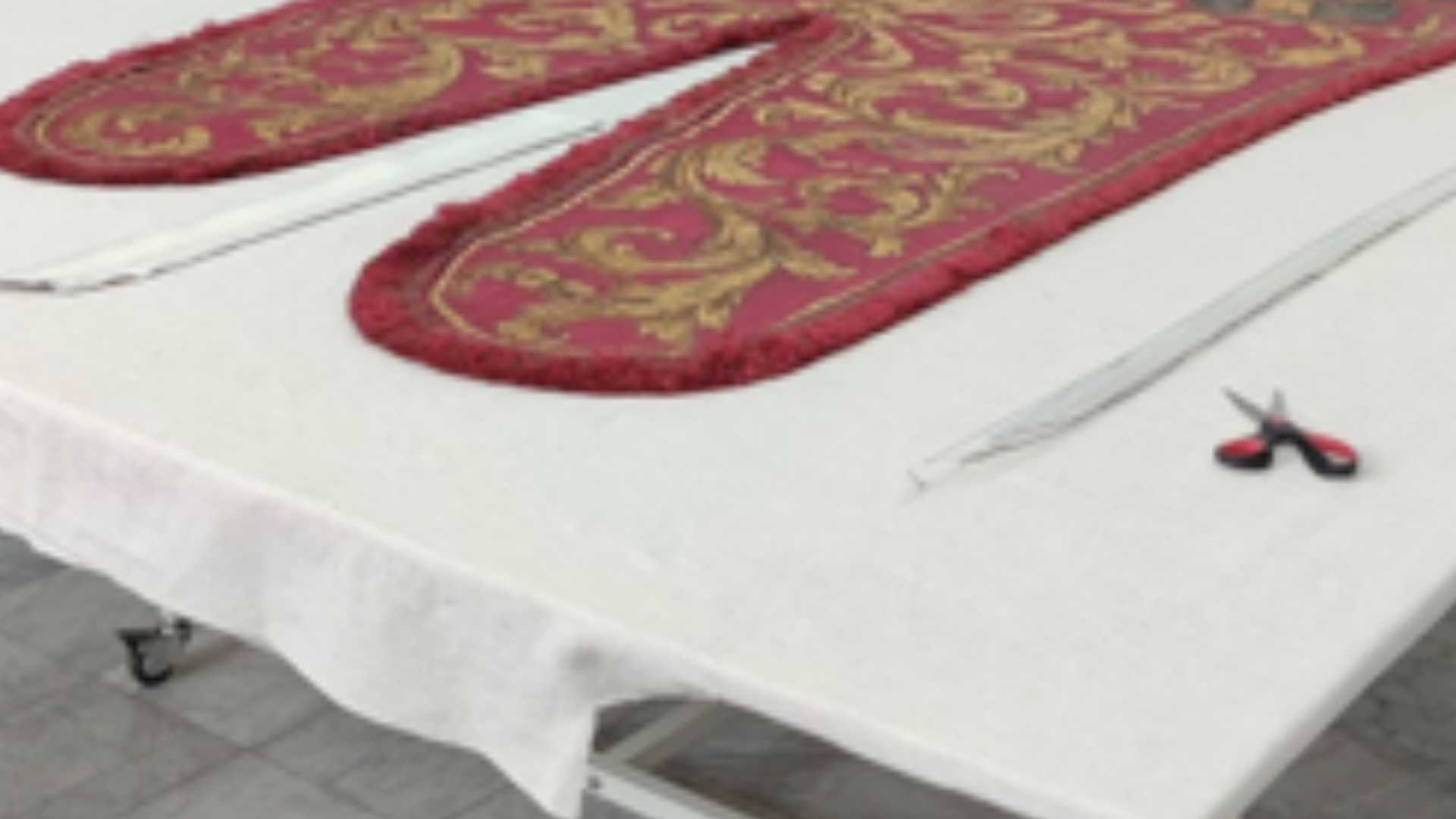
The fringed chevron shows rough stitching and numerous tears.
The work was very dusty, with creases due to uneven gluing and wear to the silk pouch where the rod was inserted.
Banner of the Noble Guard of His Holiness Pope Pius VII - Restoration Update
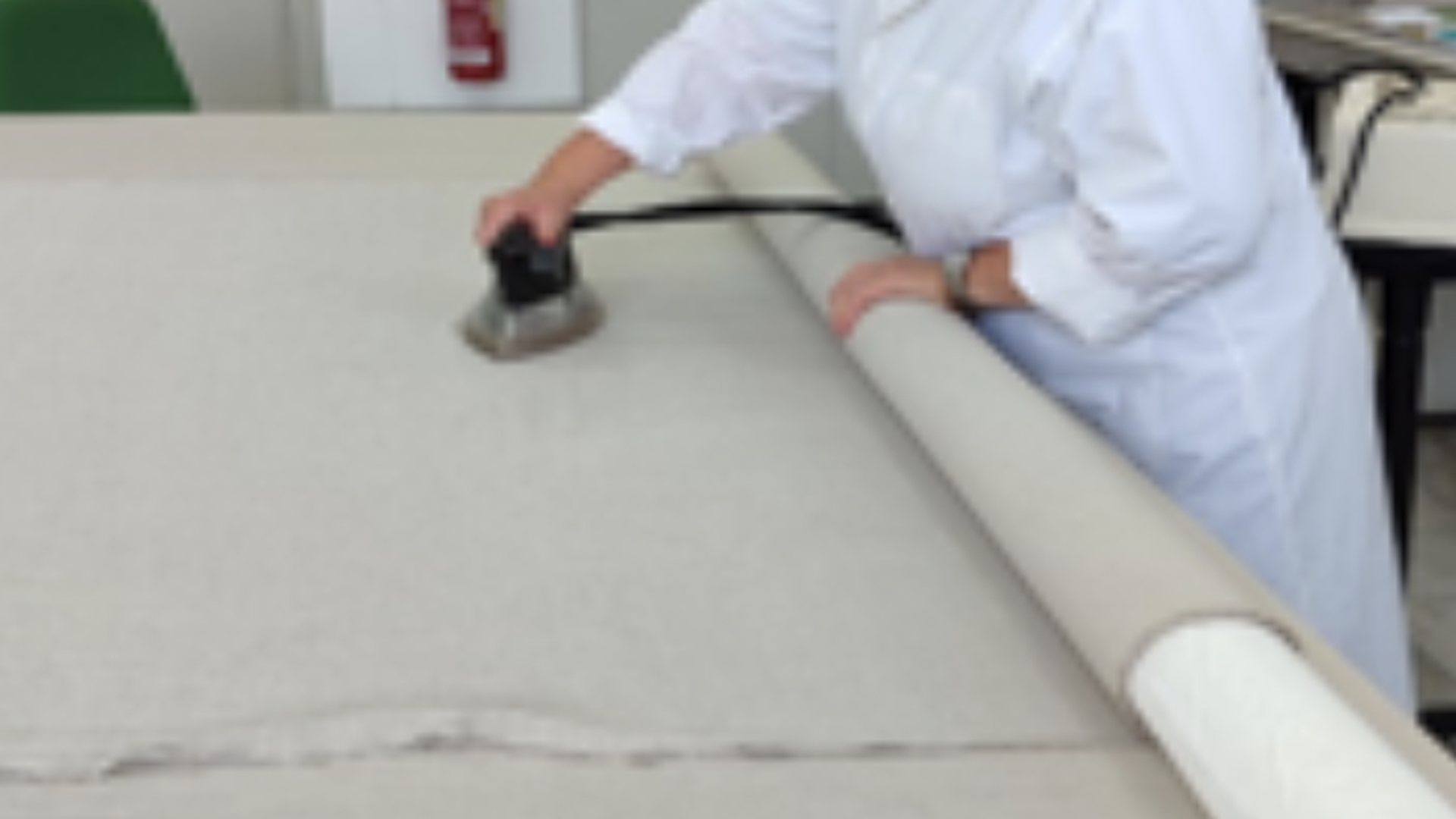
The restorers have received the plywood panel, chosen to be more resistant to changes in hygrometric values and, therefore, to any movement caused by the natural shrinkage of the wood, and are preparing it to be able to exhibit the banner.
Two layers of fabric must be interlaced to avoid direct contact between the work and the plywood.
The restorers initially fixed the first layer of cotton clothespins, which, considering the considerable size of the panel, with pins to give the fabric the proper tension. It was then permanently fixed to the bottom of the panel with the staple gun to avoid any accidental contact between the staple and the vessel.

Banner of the Noble Guard of His Holiness Pope Pius VII
Details
Adopted by: The Italian & International Chapter
Patrons: Italian & International Chapter and John McCaffrey
Inventory: 29457
Artist: Roman Manufactory
Date: 1801
Materials: Painted silk
Dimensions: 80 x 290 cm; 322 cm
Laboratory: Tapestry and Textiles
Wishbook year: 2024
Description
MEDIUM PRIORITY PROJECT
In 1973 Urbano Barberini-Sacchetti, XII Prince of Palestrina, donated this historic banner of Pope Pius VII’s Noble Guard to the Vatican. It is the first representation of the former Pontifical Noble Guard, an elite corps of cavalrymen composed of recruits from the cadets of noble Roman families, who, from May 11, 1801, were tasked with personally escorting the Pontiff, a function it performed until September 14, 1970, when, at the behest of Pope Paul VI, the Noble Guard was suppressed and replaced in this task by the Swiss Guard. This first banner was thus in use from the day of its foundation up until May 31, 1820.
TOTAL COST: € 20.291,04 ($ 21,683.01)
State of Preservation
Restoration Procedures
- Disinfestation will be necessary on the silk banner and the supporting pole
- Careful microaspiration will remove the inconsistent particulate matter
- The fringe needs to be sewn back in certain areas
- For display, a support made of suitable and lightweight material for preservation and mobility will allow adaptability so it can shape and follow the contour of the work so that it is not visible
- An aluminum honeycomb panel or something similar is recommended. The fabric will cover the panel and the sewn banner will have anchorage
Media
Banner of the Noble Guard of His Holiness Pope Pius VII
Restorations Update: Banner of the Noble Guard of His Holiness Pope Pius VII - Final Restoration Report
Restorers made graphic and photographic documentation of the object and took a sample of fabric and gauze for analysis by GRS to determine the nature of the glue/adhesive used in the previous restoration. Perform a thorough micro-aspiration to remove incoherent particles over the entire surface. Continue cleaning with a pad soaked in deionized water.
Next, restorers reattached the sections of the silk that had been lifted and detached from the border using starch glue. Then, they fixed the banner to a plywood panel, previously covered with two layers of fabric, to avoid direct contact with the work.
The banner was then placed in a specially constructed display case.
Unfortunately, the glue used to cover the entire work made the fabric extremely stiff, effectively changing its nature and causing several tears in the most stressed areas, such as where it splits in two. The flag has several tears and folds over its entire surface.
The fringed chevron shows rough stitching and numerous tears.
The work was very dusty, with creases due to uneven gluing and wear to the silk pouch where the rod was inserted.
Restorations Update: Banner of the Noble Guard of His Holiness Pope Pius VII - Restoration Update
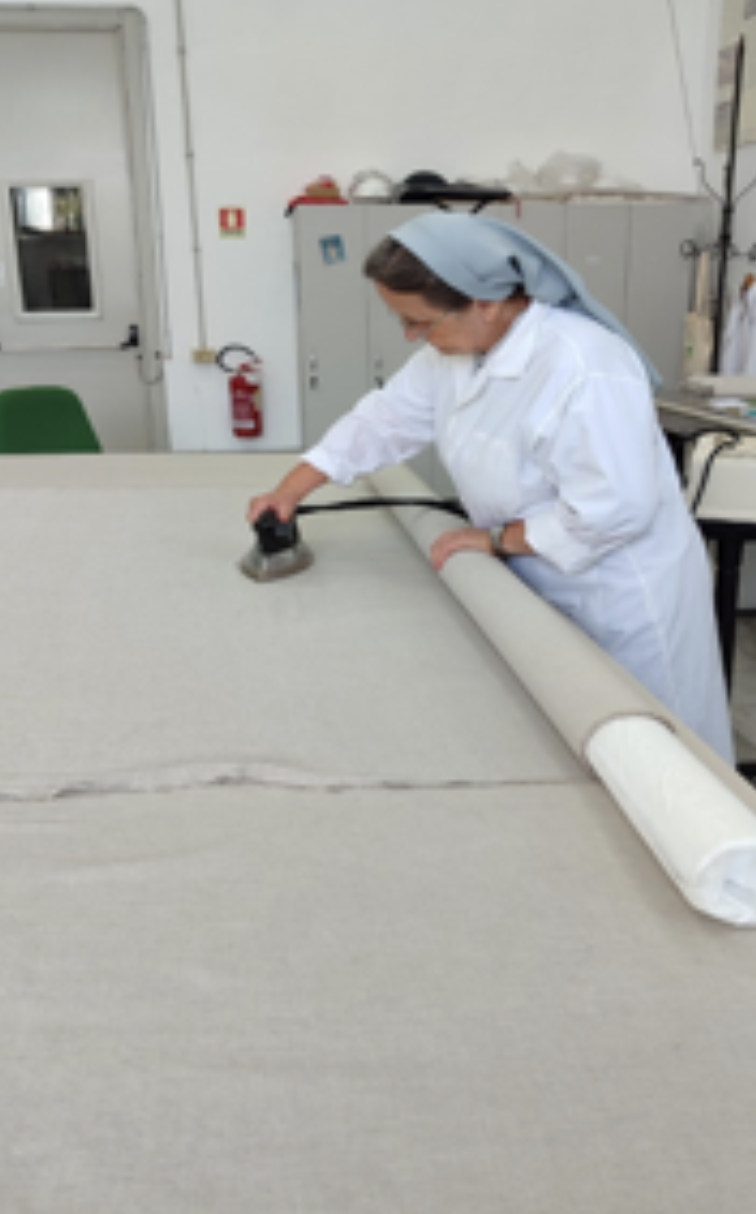
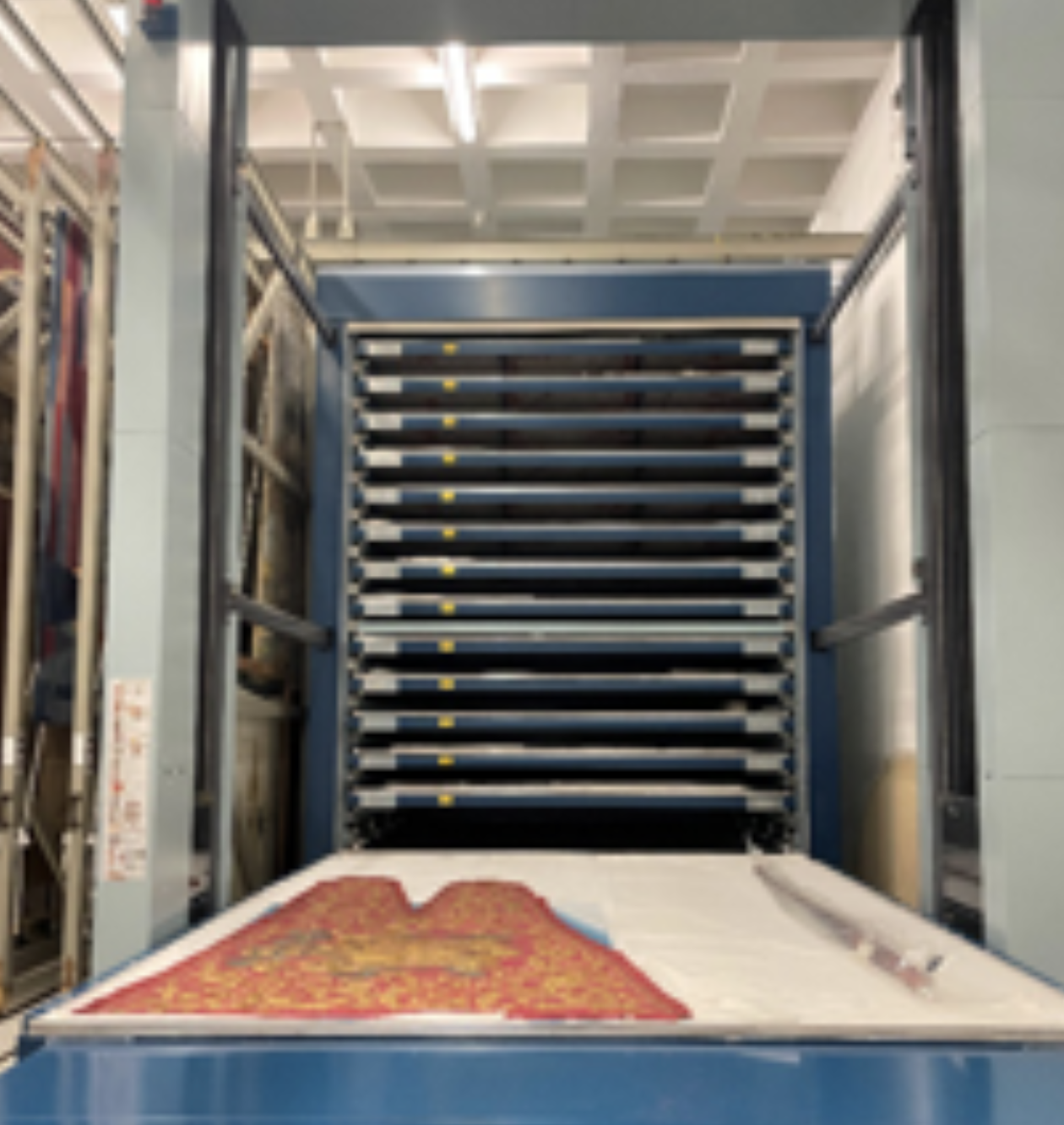
The restorers have received the plywood panel, chosen to be more resistant to changes in hygrometric values and, therefore, to any movement caused by the natural shrinkage of the wood, and are preparing it to be able to exhibit the banner.
Two layers of fabric must be interlaced to avoid direct contact between the work and the plywood.
The restorers initially fixed the first layer of cotton clothespins, which, considering the considerable size of the panel, with pins to give the fabric the proper tension. It was then permanently fixed to the bottom of the panel with the staple gun to avoid any accidental contact between the staple and the vessel.
© 2026 Patrons of the Arts
in the Vatican Museums
Vatican Museums V-00120,
Vatican City State (Europe)
+39 0669864499