

Alabaster Altar by Eduardo Chillida
Artist: Eduardo Chillida
Date: 1969
Classification: Scupture
Dimensions: 36 x 65 x 41 cm
Materials: Alabaster
Adopted By: The Texas Chapter
Total Cost: $ 12,400
Description
Eduardo Chillida was a Spanish sculptor born on January 10, 1924 in San Sebastian, in the Basque country. In 1943, Chillida began to study architecture, but soon dropped out. Later, in 1947, he registered at the private art academy "Circulo de Bellas Artes" in Madrid.
His first sculptures in gypsum and clay earned critical acclaim.
In 1949, Eduardo Chillida began working on iron sculptures during a sojourn to Paris, and upon his return he settled in the Spanish town of Hernani, where he began to produce the abstract sculpture "Llarik" in 1950, in which his views on sculptural art are represented through the special focus of the work. During the following years the idea of the limitations of space permeated his sculptural oeuvre in more and more reflecting parallels.
Over the following years, Eduardo Chillida became a renowned sculptor and graphic artist, and his work as been displayed at numerous international exhibitions and at several "documenta" exhibitions and Biennales.
In 1958, he was awarded the Grand Prize for Sculpture at the Venice Biennale and two years later he received the Kandinsky Prize.
Further international awards followed and in 1980, the New York Guggenheim Museum exhibited a retrospective of his work.
Eduardo Chillida spent the last few years of his artistic career in San Sebastián.
Chillida became one of the most important Spanish sculptors, whose concrete style, homogeneous material, and division of figure shapes became characteristics of his sculptural work.
Eduardo Chillida died in San Sebastián on August 19, 2002.
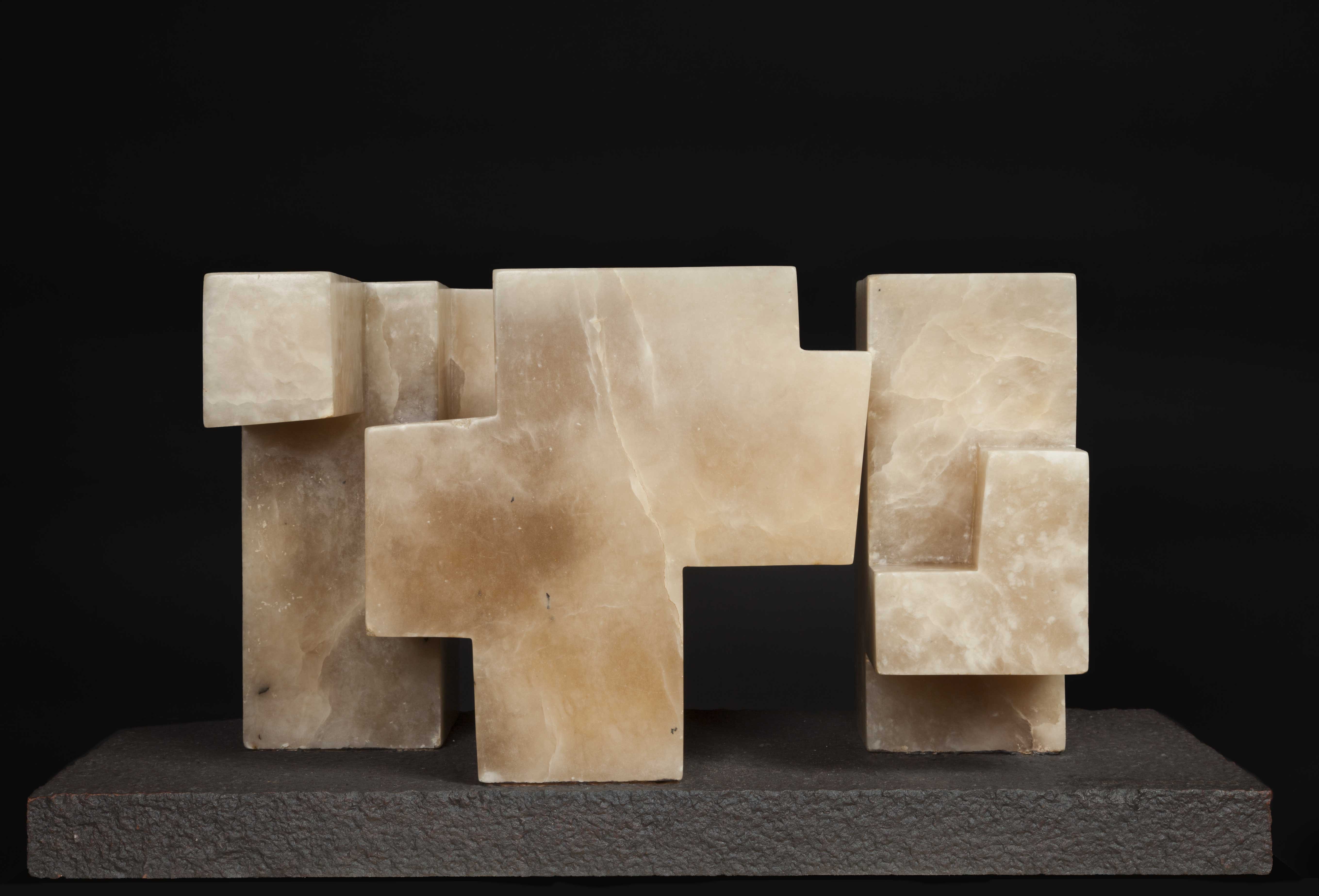
In the mid 1960s, Eduardo Chillida began to experiment with alabaster, a material that highly interested the Basque sculptor because of its particular transparency and sensibility to light. He considered alabaster an element capable of rendering visible the invisible transcendence of reality.
His project dates back to 1967 as a project for a monument. The project was initially co-conceived by Chillida together with the architect Jan Daniel Fullaondo as a piece for the Stortoget Square in Lund, Sweden. It was composed of four cruciform structures, cut from the same block, yet separated to leave a central empty space. The project was abandoned, but the artist continued to reflect on the work and in 1969 decided to eliminate the four crosses/walls in order to let more light penetrate the space. It was at this moment that the “monument” transformed into an “altar,” bound for a new residency at the center of the Aranzazu Sanctuary. Even in this second case, the project was not completely carried out.
In 1973 Chillida donated his prototype to the Vatican Museums. It was not until 1998 that he agreed to proceed in making a copy in white granite, subsequently placed in 2000 in the Church of St. Peter in Cologne as an altar cross for the chapel in the left nave.
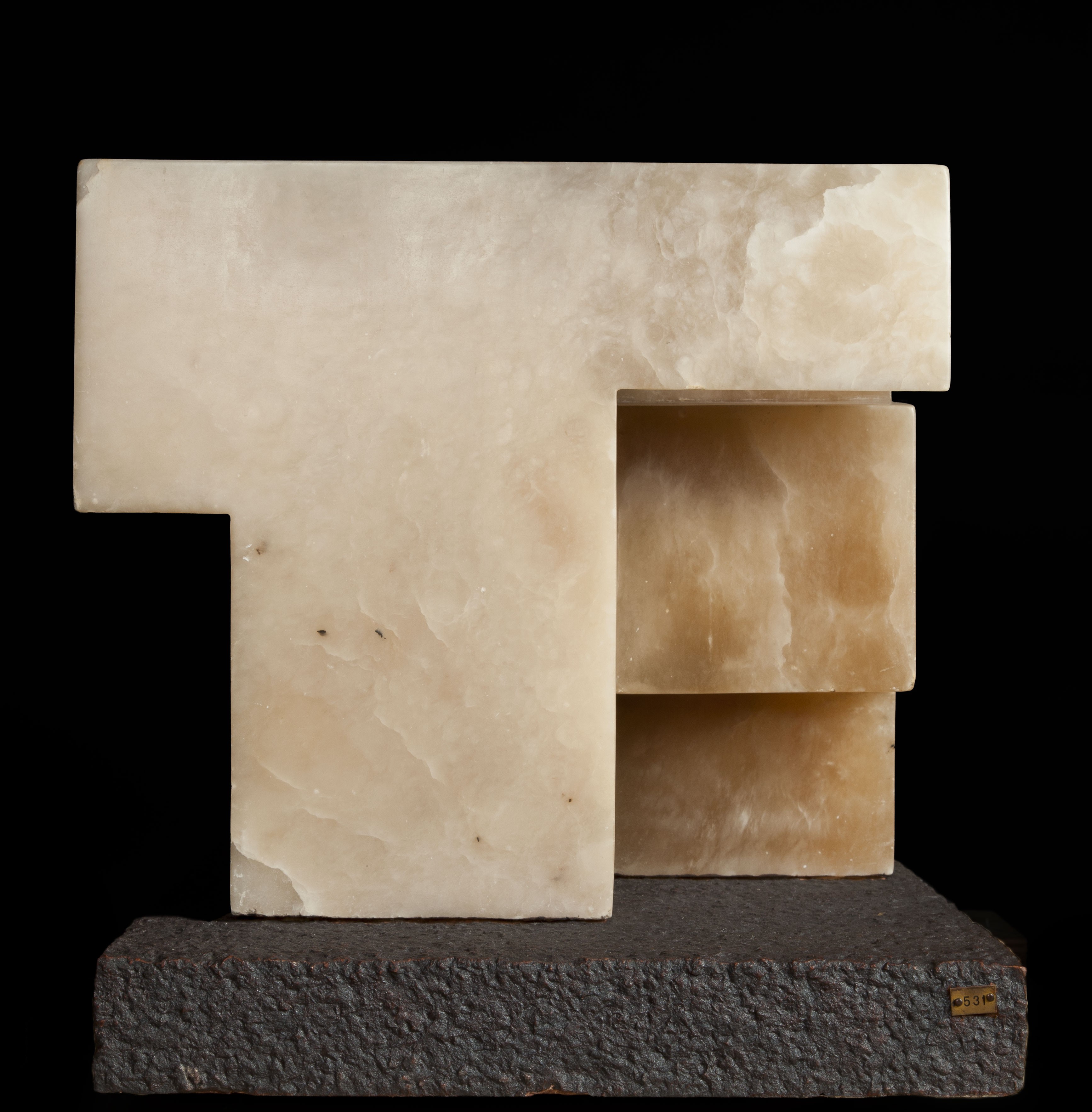
In every cut, Chillida avoids right angles as much as possible. His work is characterized by the slightest irregularities in order to give the work greater harmony. The altar joined the Contemporary Art Collection on the anniversary of his birthday, as requested by Pope Paul VI.
Work preliminary to the actual restoration included analyses by the Laboratory of Diagnostics in the Vatican Museums. Using techniques of infrared spectrometry to look at the composition of the constituent material. They detected the presence of calcium di-hydrous sulfate, thus helping to identify precisely the nature of the chalky alabaster components on the finish of the surface that had been applied as a polishing treatment. These results highly influenced and supported the restoration during its delicate phases.
The initial state of the altar presented a variety of challenges for conservation. The restoration involves removing homogeneous as well as inconsistent deposits. By removing the deposit layers resulting from both environmental and anthropogenic causes, the original surface was newly exposed. The surface quality was revitalized to one appearing velvety to the touch, a typical characteristic of alabaster. The glossy finish that was imparted by the artist—one with a reflective brightness and ascetic transparency—was also renewed.
After cleaning and the final installation, it was decided to forgo applying a final protective coating to the piece. In this way, no foreign substance is introduced, which maintains accord with the pure materials used by the artist and his intentions for the project as a whole.
The work was placed back on display in the center of one of the rooms in the contemporary collection, where pieces by other Iberian artists reside. The surrounding pieces are selected in order to enhance the viewing experience of the altar and ensure it can be enjoyed from a safe distance. The new method of display augments the relationship that the alabaster has with natural light, rendering the altar even more endearing.The transparent alabaster’s various layers are able to “dance” together; golden shades containing iron oxides alternate with those of pure white, creating a veritable unique viewing experience.
State of Preservation
This sculpture was in an overall good state of preservation. However, in order to preserve its wonderful alabaster and prevent future damages this sculpture had been cleaned and restored.
Restoration Procedures
- Total check of itscondition
- Testsfor the various phasesof the completion of the work itself
- Theremovalof dust deposits on the overall surface (both consistent and inconsistent)
- Removal of substancesof various nature, such as wax, etc.
- Replacing ofthesupport base
- Removalofmetallic elementssuch assafety pins
- Photographic documentation
Detail
Inventory N°: 23114
Artist: Eduardo Chillida
Date: 1969
Dimensions: 36 x 65 x 41 cm
Materials: Alabaster
Department:
XIX Century and Contemporary ArtCurators:
Dr. Micol Fortimuseum:
Collection of Contemporary ArtLaboratories:
Stone MaterialsWishbook year: 2016
Total Cost
$ 12,400

Alabaster Altar by Eduardo Chillida

Details
Adopted by: The Texas Chapter
Patrons: Tigges Family
Inventory: 23114
Artist: Eduardo Chillida
Date: 1969
Classification: Scupture
Materials: Alabaster
Dimensions: 36 x 65 x 41 cm
Museum: Collection of Contemporary Art
Department: XIX Century and Contemporary Art
Laboratory: Stone Materials
Wishbook year: 2016
Description
Eduardo Chillida was a Spanish sculptor born on January 10, 1924 in San Sebastian, in the Basque country. In 1943, Chillida began to study architecture, but soon dropped out. Later, in 1947, he registered at the private art academy "Circulo de Bellas Artes" in Madrid.
His first sculptures in gypsum and clay earned critical acclaim.
In 1949, Eduardo Chillida began working on iron sculptures during a sojourn to Paris, and upon his return he settled in the Spanish town of Hernani, where he began to produce the abstract sculpture "Llarik" in 1950, in which his views on sculptural art are represented through the special focus of the work. During the following years the idea of the limitations of space permeated his sculptural oeuvre in more and more reflecting parallels.
Over the following years, Eduardo Chillida became a renowned sculptor and graphic artist, and his work as been displayed at numerous international exhibitions and at several "documenta" exhibitions and Biennales.
In 1958, he was awarded the Grand Prize for Sculpture at the Venice Biennale and two years later he received the Kandinsky Prize.
Further international awards followed and in 1980, the New York Guggenheim Museum exhibited a retrospective of his work.
Eduardo Chillida spent the last few years of his artistic career in San Sebastián.
Chillida became one of the most important Spanish sculptors, whose concrete style, homogeneous material, and division of figure shapes became characteristics of his sculptural work.
Eduardo Chillida died in San Sebastián on August 19, 2002.
In the mid 1960s, Eduardo Chillida began to experiment with alabaster, a material that highly interested the Basque sculptor because of its particular transparency and sensibility to light. He considered alabaster an element capable of rendering visible the invisible transcendence of reality.
His project dates back to 1967 as a project for a monument. The project was initially co-conceived by Chillida together with the architect Jan Daniel Fullaondo as a piece for the Stortoget Square in Lund, Sweden. It was composed of four cruciform structures, cut from the same block, yet separated to leave a central empty space. The project was abandoned, but the artist continued to reflect on the work and in 1969 decided to eliminate the four crosses/walls in order to let more light penetrate the space. It was at this moment that the “monument” transformed into an “altar,” bound for a new residency at the center of the Aranzazu Sanctuary. Even in this second case, the project was not completely carried out.
In 1973 Chillida donated his prototype to the Vatican Museums. It was not until 1998 that he agreed to proceed in making a copy in white granite, subsequently placed in 2000 in the Church of St. Peter in Cologne as an altar cross for the chapel in the left nave.
In every cut, Chillida avoids right angles as much as possible. His work is characterized by the slightest irregularities in order to give the work greater harmony. The altar joined the Contemporary Art Collection on the anniversary of his birthday, as requested by Pope Paul VI.
Work preliminary to the actual restoration included analyses by the Laboratory of Diagnostics in the Vatican Museums. Using techniques of infrared spectrometry to look at the composition of the constituent material. They detected the presence of calcium di-hydrous sulfate, thus helping to identify precisely the nature of the chalky alabaster components on the finish of the surface that had been applied as a polishing treatment. These results highly influenced and supported the restoration during its delicate phases.
The initial state of the altar presented a variety of challenges for conservation. The restoration involves removing homogeneous as well as inconsistent deposits. By removing the deposit layers resulting from both environmental and anthropogenic causes, the original surface was newly exposed. The surface quality was revitalized to one appearing velvety to the touch, a typical characteristic of alabaster. The glossy finish that was imparted by the artist—one with a reflective brightness and ascetic transparency—was also renewed.
After cleaning and the final installation, it was decided to forgo applying a final protective coating to the piece. In this way, no foreign substance is introduced, which maintains accord with the pure materials used by the artist and his intentions for the project as a whole.
The work was placed back on display in the center of one of the rooms in the contemporary collection, where pieces by other Iberian artists reside. The surrounding pieces are selected in order to enhance the viewing experience of the altar and ensure it can be enjoyed from a safe distance. The new method of display augments the relationship that the alabaster has with natural light, rendering the altar even more endearing.The transparent alabaster’s various layers are able to “dance” together; golden shades containing iron oxides alternate with those of pure white, creating a veritable unique viewing experience.
State of Preservation
This sculpture was in an overall good state of preservation. However, in order to preserve its wonderful alabaster and prevent future damages this sculpture had been cleaned and restored.
Restoration Procedures
- Total check of itscondition
- Testsfor the various phasesof the completion of the work itself
- Theremovalof dust deposits on the overall surface (both consistent and inconsistent)
- Removal of substancesof various nature, such as wax, etc.
- Replacing ofthesupport base
- Removalofmetallic elementssuch assafety pins
- Photographic documentation
Media
Alabaster Altar by Eduardo Chillida 1 - After Restoration
Alabaster Altar by Eduardo Chillida - After Restoration
Alabaster Altar by Eduardo Chillida - Signature
© 2026 Patrons of the Arts
in the Vatican Museums
Vatican Museums V-00120,
Vatican City State (Europe)
+39 0669864499