

5 Drawings from Early Christian Frescoes
Artist: Carlo Ruspi, Various
Date: 1850 ca.
Classification: Drawing
Dimensions: 450 x 270 cm
Materials: Tempera, Panel
Total Cost: € 77,900
Description
The Pius Christian Museum houses an important series of copies of catacomb pictures commissioned by Father Giuseppe Marchi in the middle of the 19th Century. During this time, the preparation and creation of a new Christian Antiquities Museum was underway. This was done at the request of Pope Pius IX, and for this reason, the Pius Christian Museum was dedicated in his name.
Father Marchi, remembering the antique reproductions of the frescoes from the Roman catacombs by Antonio Bosio on the “Underground Rome” (1632), highlighted the importance of these new “exact copies”, that the Holy Father (Pius IX) requested of the early Christian cemeteries. These never-before-seen pictures are likely more significant than the very first copies by Bosio, and no one after him took the care to preserve them.
The subjects selected by Marchi display more variety and showcase interesting examples of Roman cemetery pictures because of the iconographic aspects and the monumental size of each decoration. Many of these pictures were just discovered in those years thanks to the excavations conducted by the Pontifical Commission of Sacred Archaeology, and the work of the famed archaeologist Giovanni Battista de Rossi: student of Marchi and true founder of the modern science of Christian archaeology.
Previously on display in the Lateran Museum, this gallery moved to the Vatican at the request of Pope John XXIII (1963). After the move, the copies were placed in storage and forgotten. Recently, three pieces were rediscovered and placed back on exhibition in the Pius Christian Museum, in the grand hall near the “dogmatic sarcophagus”. Thanks to the generosity of Mr. Greg Stanislawsky, from the California Chapter of the Patrons of the Arts, a large number of these drawing have already been cleaned. However, these last five pieces are in precarious condition and in need of intervention.
These five large drawings are part of a larger group consisting of 33 pieces. They are on paper, painted in tempera, lined on canvas and mounted on wooden frames; they represent 19th century copies of wall frescoes of Roman catacombs.
The drawings, carefully packed in crates, were discovered in the attic storage (‘Soffittoni’) in 2015 and underwent a first stage of 'safe-keeping': the works were treated by an anoxic disinfectation method, cleaned with rectangular / reverse micro-vacuuming and consolidated with Funori glue.
These operations, carried out by Terrei Company, permitted the documentation of conservation status for each single drawing. It also served as an in-depth study to detect urgent restoration issues for the entire group.
State of Preservation
All works were in poor condition and presented the following damages:
- The painted surface and the canvas lining revealed massive accomulation of non-consistent particulate deposition over the years
- The uneven stretching due to the canvas lining for the paper surface as well as deformation of the wooden frames created noticeable lacerations on the borders.
- There were large gaps and tears on the painted surface caused by the precarious state of conservation and material displacements over time.
- The tempera-painted surface lacked cohesion and had become brittle and detached, with obvious lifting of the pictorial surface and large gaps of color.
- On the painted surface there was major shifting of both material and color.
- The edges were weakened and broken in multiple areas.
- The wooden frame of Inv.69854 was deformed along the right side due to a junction of paper overlaid on the outer edge; such preservation conditions caused the paper to tear as the frame shifted.
Restoration Procedures
The work was executed by the Vatican Museums Laboratory of Restoration and the Terrei Company.
- Mechanical cleaning on both front and back, using a small vacuum aspirator
- Initial cleaning of the painted surface with natural latex sponges (dry cleaning method)
- Fixing the color with Funori glue, with a 0.5% mix with water
- Consolidation of detached areas using a mix of 6% Tylose glue in water and alcohol
- Adherence of large areas relieved by Tylose MH 300P in water and alcohol at 6%
- Detachment, when necessary, of old paper restorations on the back and replacement with Hanji paper plaster and Tylose MH 300P glue
- Stuccoing repair of the flaked painted layer and filling in color gaps with cellulose stoneware micronized in alcohol (Cercol)
- Reinforcement of Hanji paper in different thicknesses (1303 and 1401) using Zin Shofu glue
- Pictorial reintegration with water-soluble pigments and Tylose MH 300 P alcohol, Winsor & Newton watercolors and Derwent pastels
- Mounting of protective frames and panels on the back of each work; these were provided by the Equilibrarte Company
Before the work began, GRS (Scientific Laboratory) performed the following analyzes: XRF, paper content analysis performed in comparison with a fragment of the Ruspi panel paper made in the same years by the same authors. The paper turned out to be completely different (see Material Comparison by the GRS).
Verifications were also made on the most suitable materials for consolidation and fixative operations (Nikawa glue, Klucell in water and alcohol, Funori dissolved at various percentages and Tylose in alcohol and water).
Detail
Inventory N°: 69862, 69854, 69883, 69876, 69863
Artist: Carlo Ruspi, Various
Date: 1850 ca.
Provenience: Rome
Dimensions: 450 x 270 cm
Materials: Tempera, Panel
Department:
Christian AntiquitiesCurators:
Dr. Umberto Utromuseum:
Pius-Christian MuseumLaboratories:
PaperWishbook year: 2016
Total Cost
€ 77,900

5 Drawings from Early Christian Frescoes
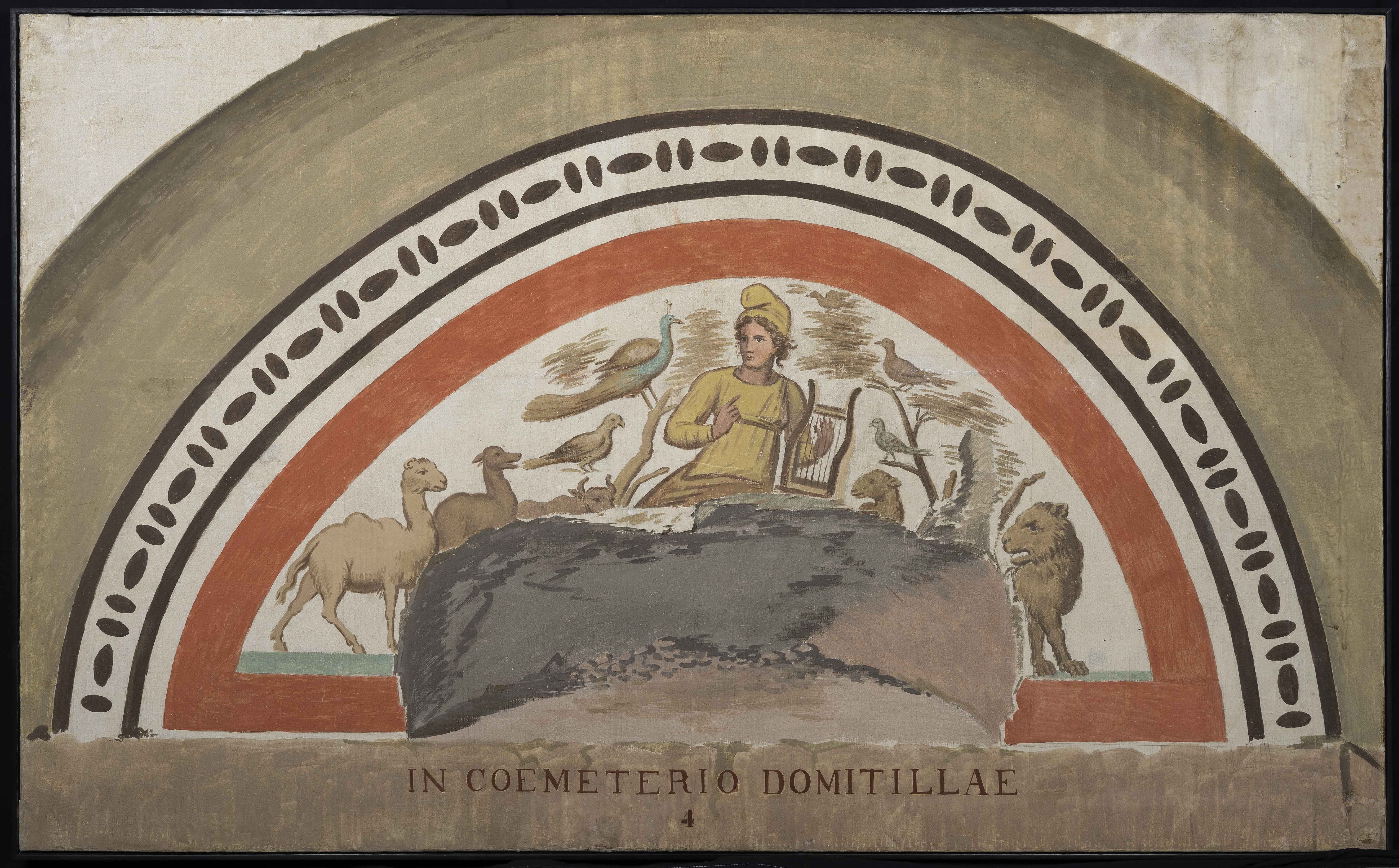
Details
Inventory: 69862, 69854, 69883, 69876, 69863
Artist: Carlo Ruspi, Various
Date: 1850 ca.
Provenience: Rome
Classification: Drawing
Materials: Tempera, Panel
Dimensions: 450 x 270 cm
Museum: Pius-Christian Museum
Department: Christian Antiquities
Laboratory: Paper
Wishbook year: 2016
Description
The Pius Christian Museum houses an important series of copies of catacomb pictures commissioned by Father Giuseppe Marchi in the middle of the 19th Century. During this time, the preparation and creation of a new Christian Antiquities Museum was underway. This was done at the request of Pope Pius IX, and for this reason, the Pius Christian Museum was dedicated in his name.
Father Marchi, remembering the antique reproductions of the frescoes from the Roman catacombs by Antonio Bosio on the “Underground Rome” (1632), highlighted the importance of these new “exact copies”, that the Holy Father (Pius IX) requested of the early Christian cemeteries. These never-before-seen pictures are likely more significant than the very first copies by Bosio, and no one after him took the care to preserve them.
The subjects selected by Marchi display more variety and showcase interesting examples of Roman cemetery pictures because of the iconographic aspects and the monumental size of each decoration. Many of these pictures were just discovered in those years thanks to the excavations conducted by the Pontifical Commission of Sacred Archaeology, and the work of the famed archaeologist Giovanni Battista de Rossi: student of Marchi and true founder of the modern science of Christian archaeology.
Previously on display in the Lateran Museum, this gallery moved to the Vatican at the request of Pope John XXIII (1963). After the move, the copies were placed in storage and forgotten. Recently, three pieces were rediscovered and placed back on exhibition in the Pius Christian Museum, in the grand hall near the “dogmatic sarcophagus”. Thanks to the generosity of Mr. Greg Stanislawsky, from the California Chapter of the Patrons of the Arts, a large number of these drawing have already been cleaned. However, these last five pieces are in precarious condition and in need of intervention.
These five large drawings are part of a larger group consisting of 33 pieces. They are on paper, painted in tempera, lined on canvas and mounted on wooden frames; they represent 19th century copies of wall frescoes of Roman catacombs.
The drawings, carefully packed in crates, were discovered in the attic storage (‘Soffittoni’) in 2015 and underwent a first stage of 'safe-keeping': the works were treated by an anoxic disinfectation method, cleaned with rectangular / reverse micro-vacuuming and consolidated with Funori glue.
These operations, carried out by Terrei Company, permitted the documentation of conservation status for each single drawing. It also served as an in-depth study to detect urgent restoration issues for the entire group.
State of Preservation
All works were in poor condition and presented the following damages:
- The painted surface and the canvas lining revealed massive accomulation of non-consistent particulate deposition over the years
- The uneven stretching due to the canvas lining for the paper surface as well as deformation of the wooden frames created noticeable lacerations on the borders.
- There were large gaps and tears on the painted surface caused by the precarious state of conservation and material displacements over time.
- The tempera-painted surface lacked cohesion and had become brittle and detached, with obvious lifting of the pictorial surface and large gaps of color.
- On the painted surface there was major shifting of both material and color.
- The edges were weakened and broken in multiple areas.
- The wooden frame of Inv.69854 was deformed along the right side due to a junction of paper overlaid on the outer edge; such preservation conditions caused the paper to tear as the frame shifted.
Restoration Procedures
The work was executed by the Vatican Museums Laboratory of Restoration and the Terrei Company.
- Mechanical cleaning on both front and back, using a small vacuum aspirator
- Initial cleaning of the painted surface with natural latex sponges (dry cleaning method)
- Fixing the color with Funori glue, with a 0.5% mix with water
- Consolidation of detached areas using a mix of 6% Tylose glue in water and alcohol
- Adherence of large areas relieved by Tylose MH 300P in water and alcohol at 6%
- Detachment, when necessary, of old paper restorations on the back and replacement with Hanji paper plaster and Tylose MH 300P glue
- Stuccoing repair of the flaked painted layer and filling in color gaps with cellulose stoneware micronized in alcohol (Cercol)
- Reinforcement of Hanji paper in different thicknesses (1303 and 1401) using Zin Shofu glue
- Pictorial reintegration with water-soluble pigments and Tylose MH 300 P alcohol, Winsor & Newton watercolors and Derwent pastels
- Mounting of protective frames and panels on the back of each work; these were provided by the Equilibrarte Company
Before the work began, GRS (Scientific Laboratory) performed the following analyzes: XRF, paper content analysis performed in comparison with a fragment of the Ruspi panel paper made in the same years by the same authors. The paper turned out to be completely different (see Material Comparison by the GRS).
Verifications were also made on the most suitable materials for consolidation and fixative operations (Nikawa glue, Klucell in water and alcohol, Funori dissolved at various percentages and Tylose in alcohol and water).
Media
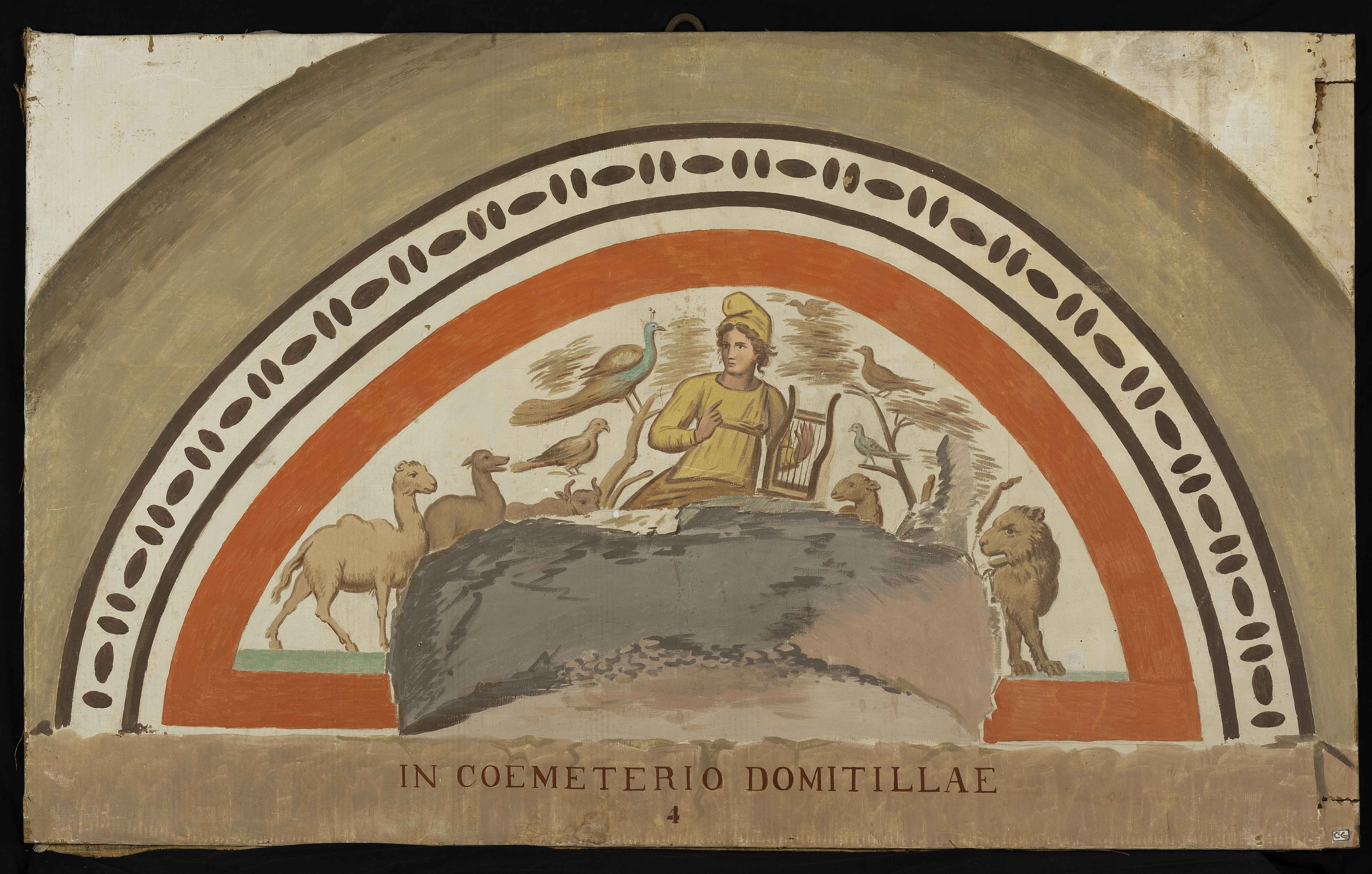
Inv. 69854-Before Restoration
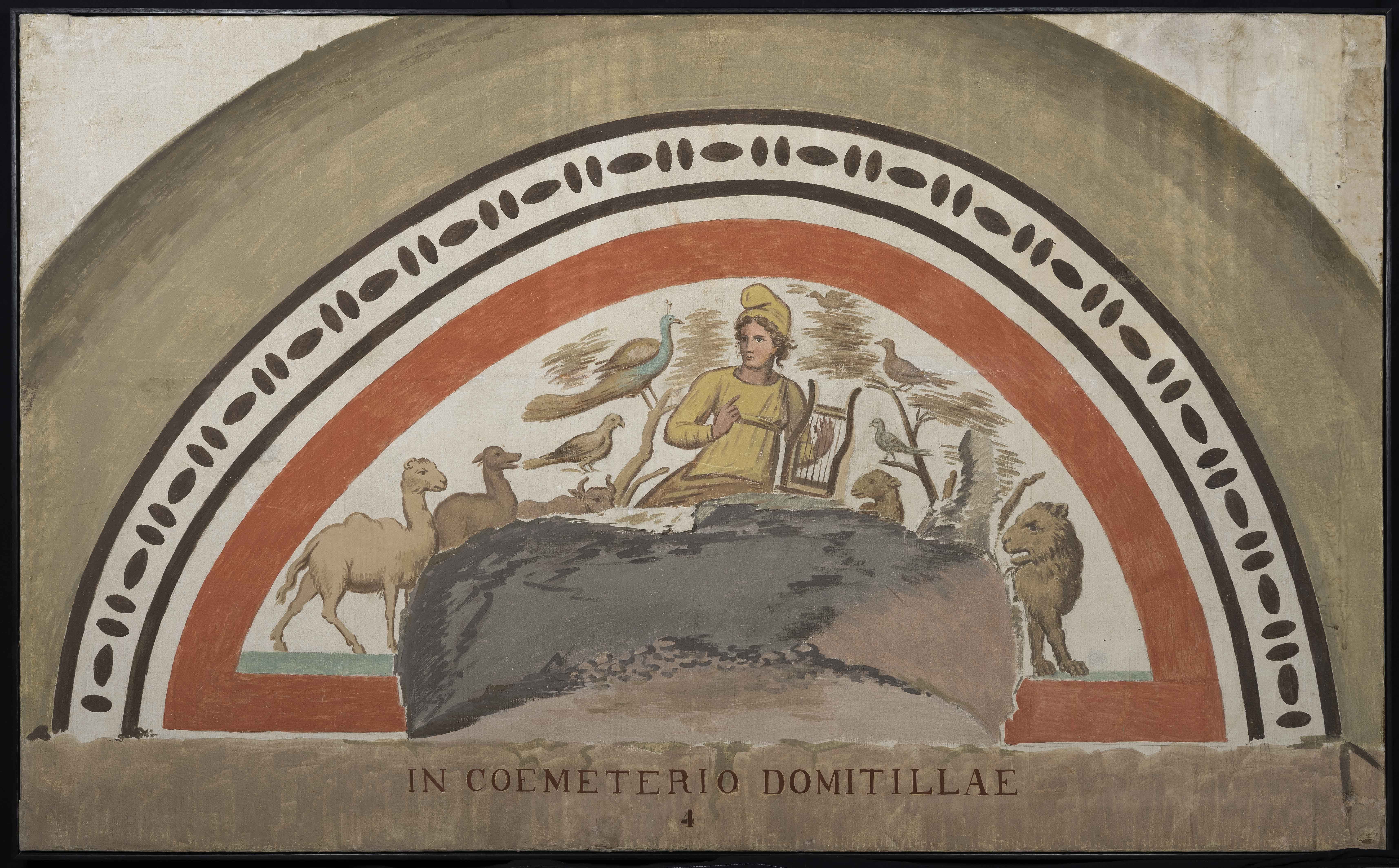
Inv.69854-After Restoration
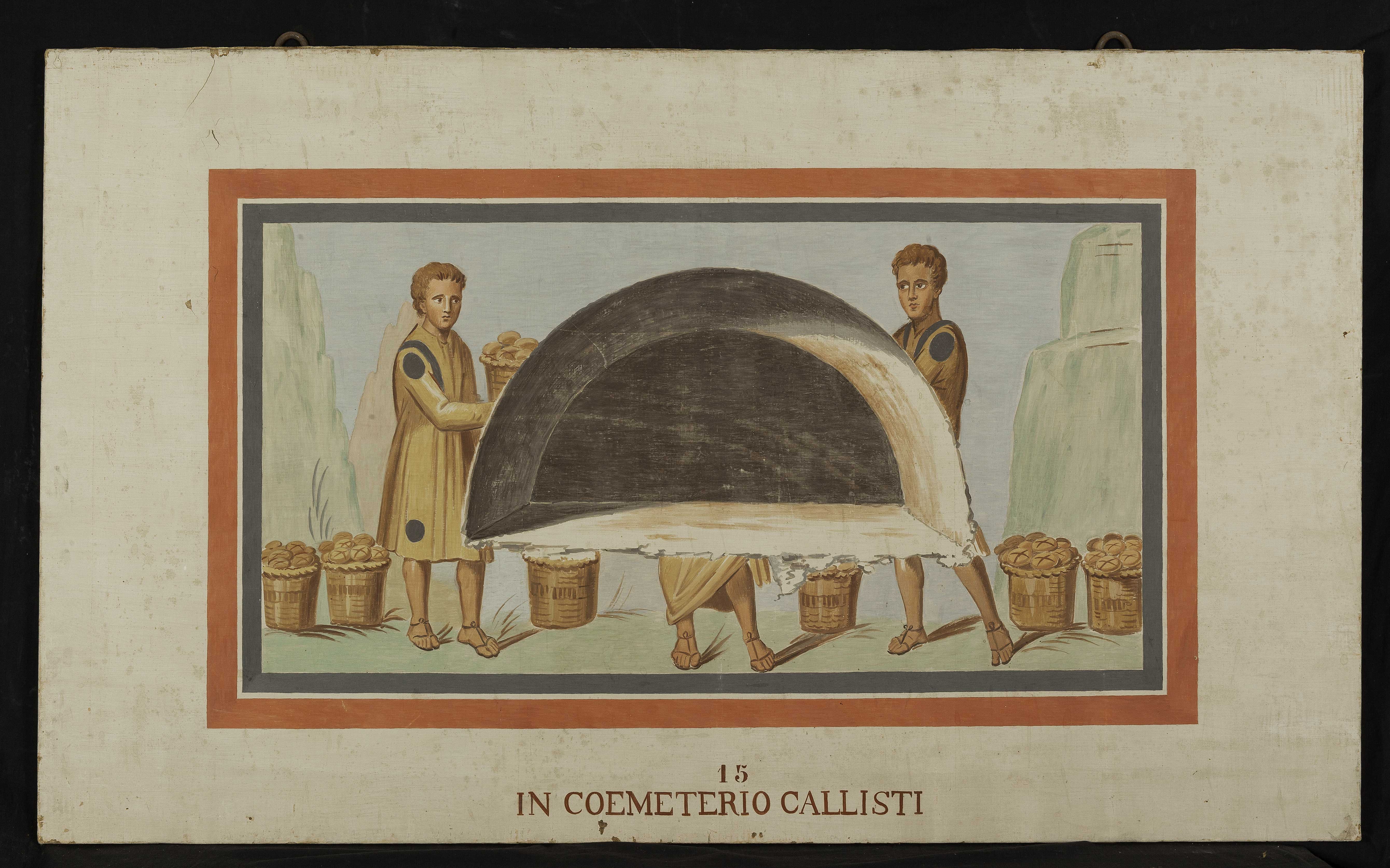
Inv.69862-Before Restoration
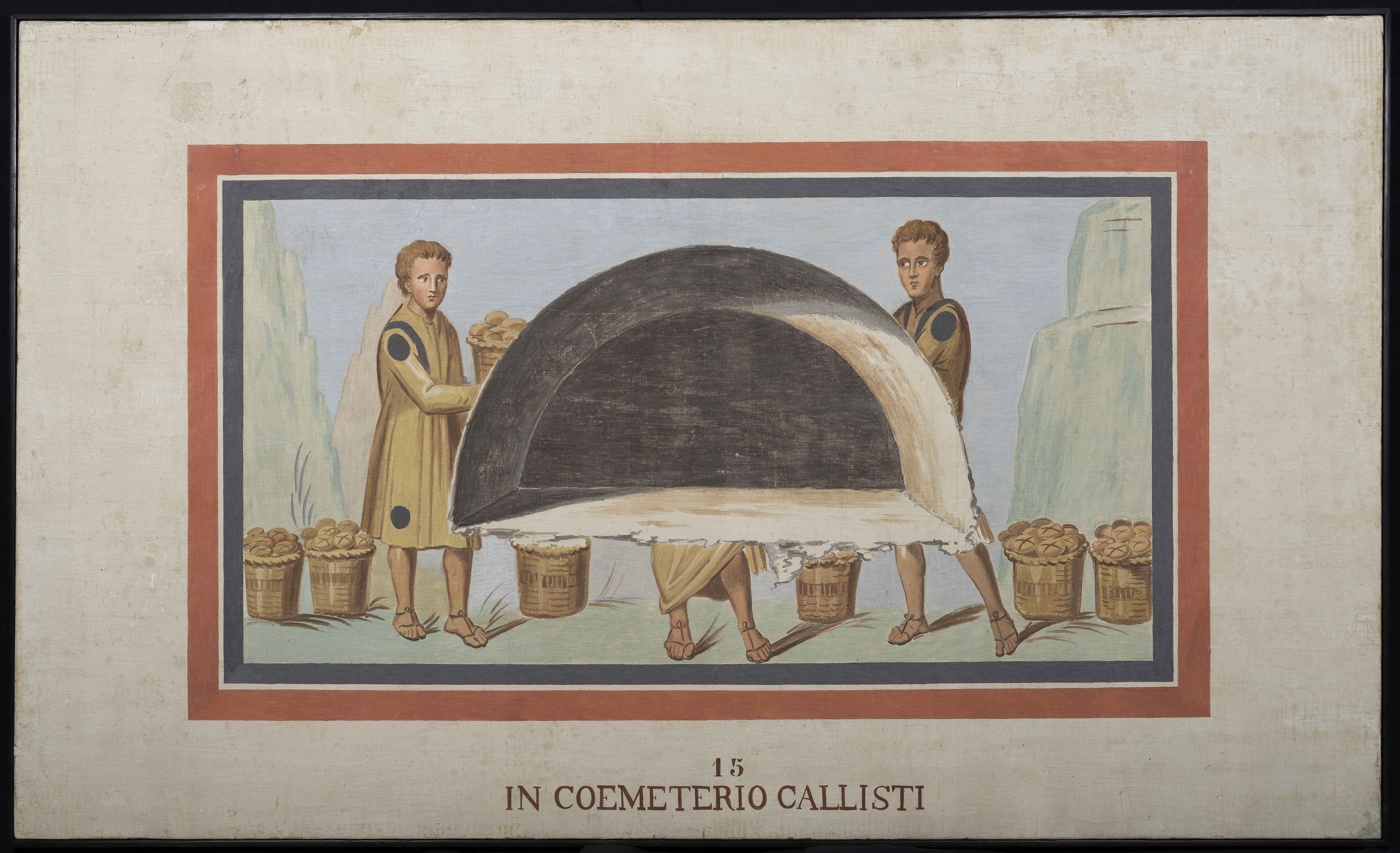
Inv.69862-After Restoration
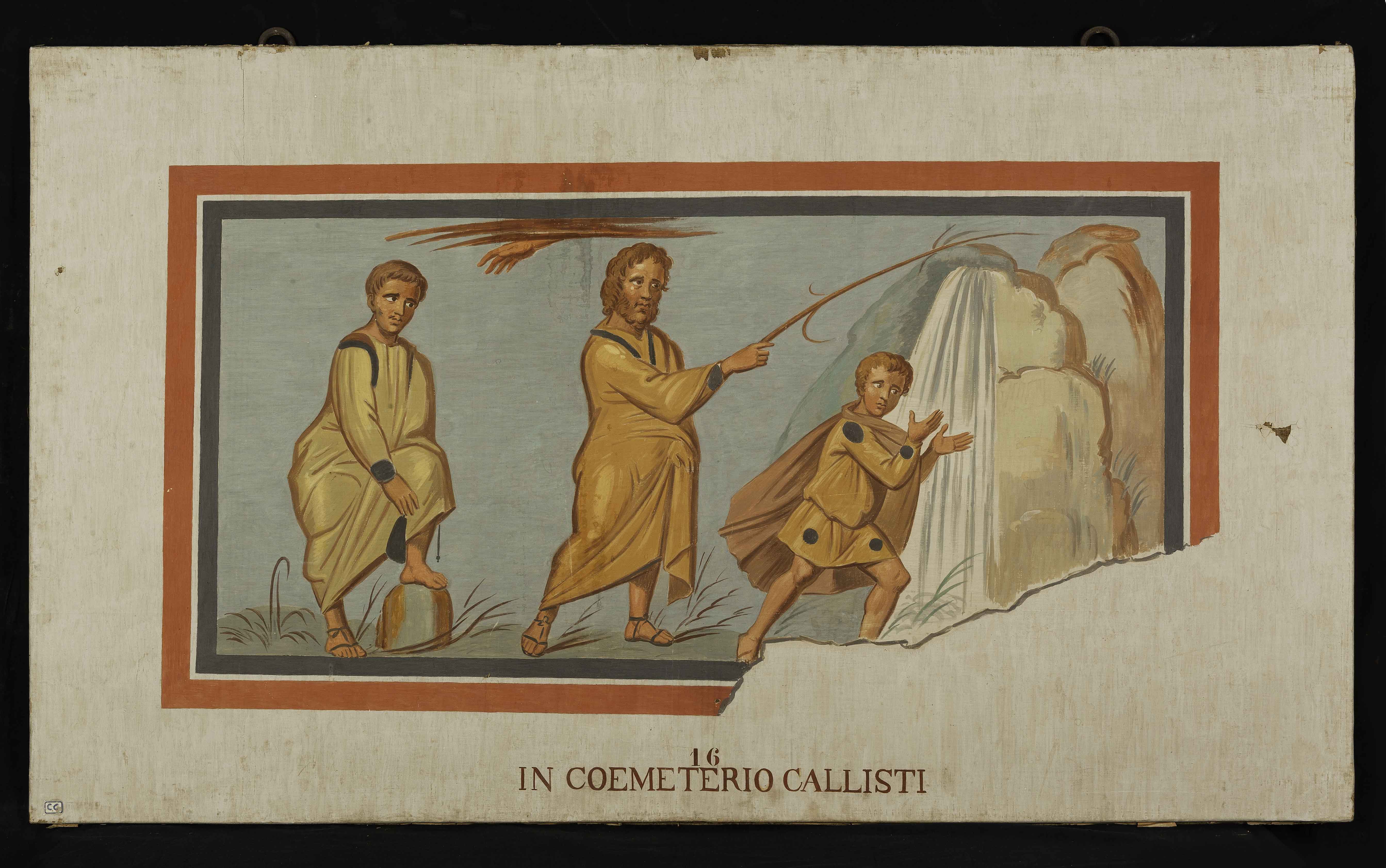
Inv.69863-Before Restoration
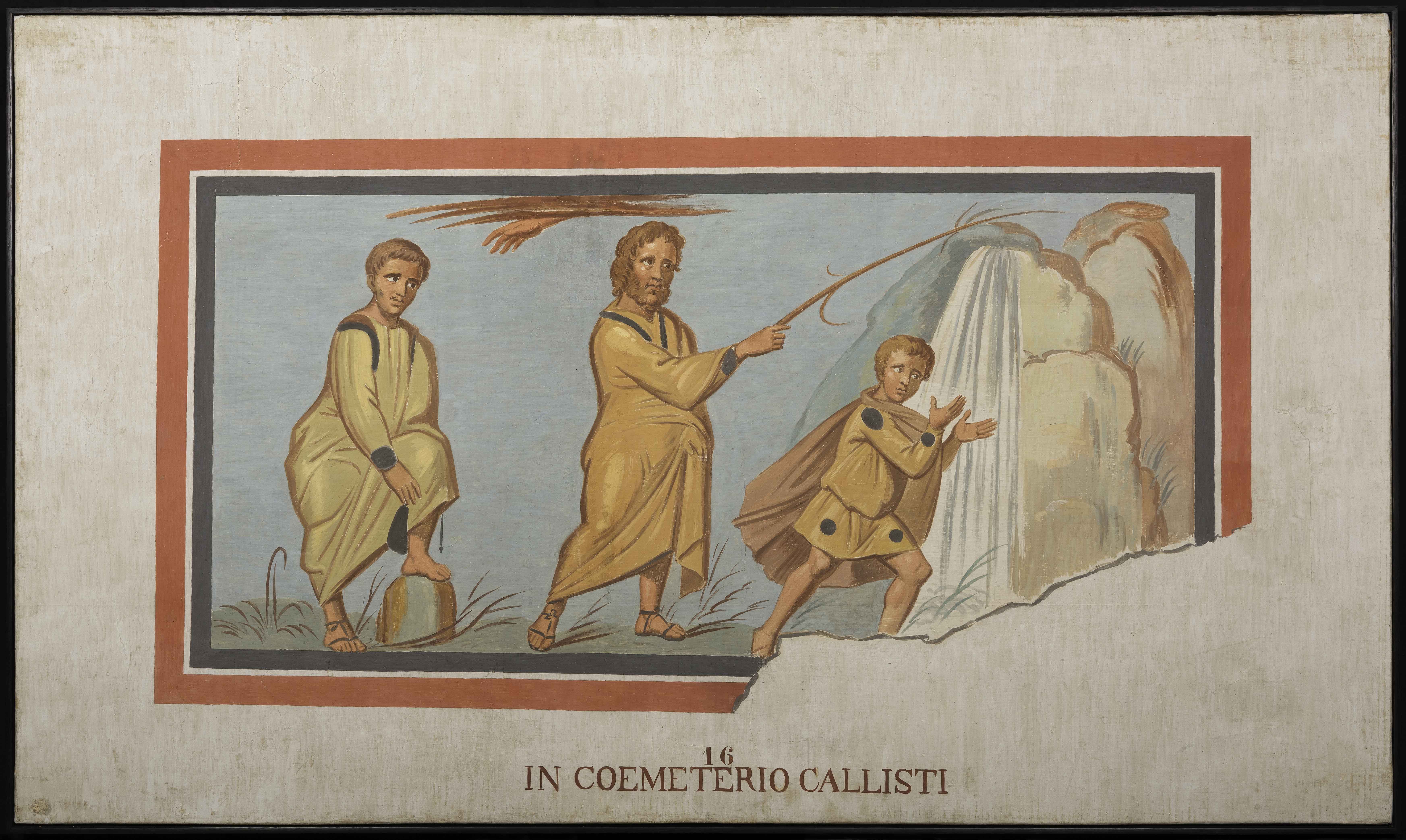
Inv.69863-After Restoration
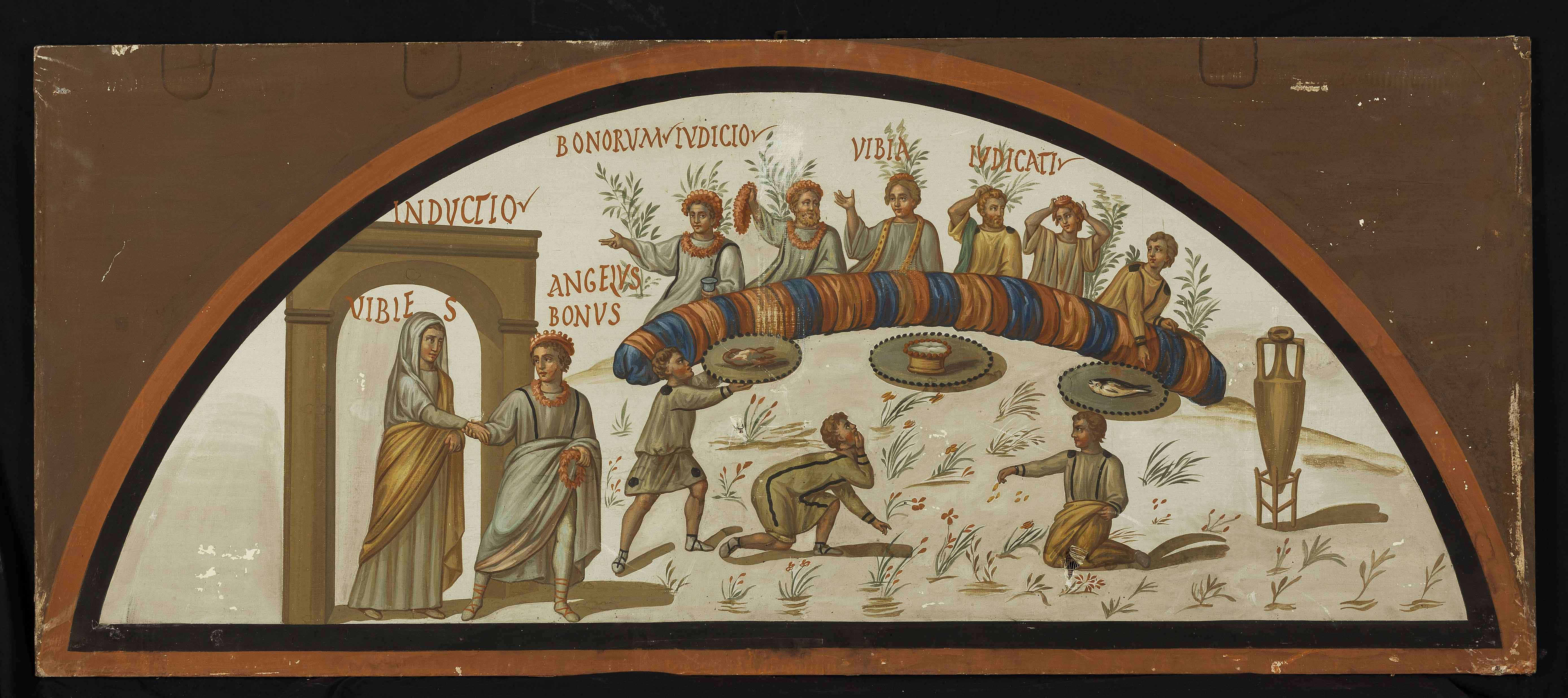
Inv. 69876-Before Restoration
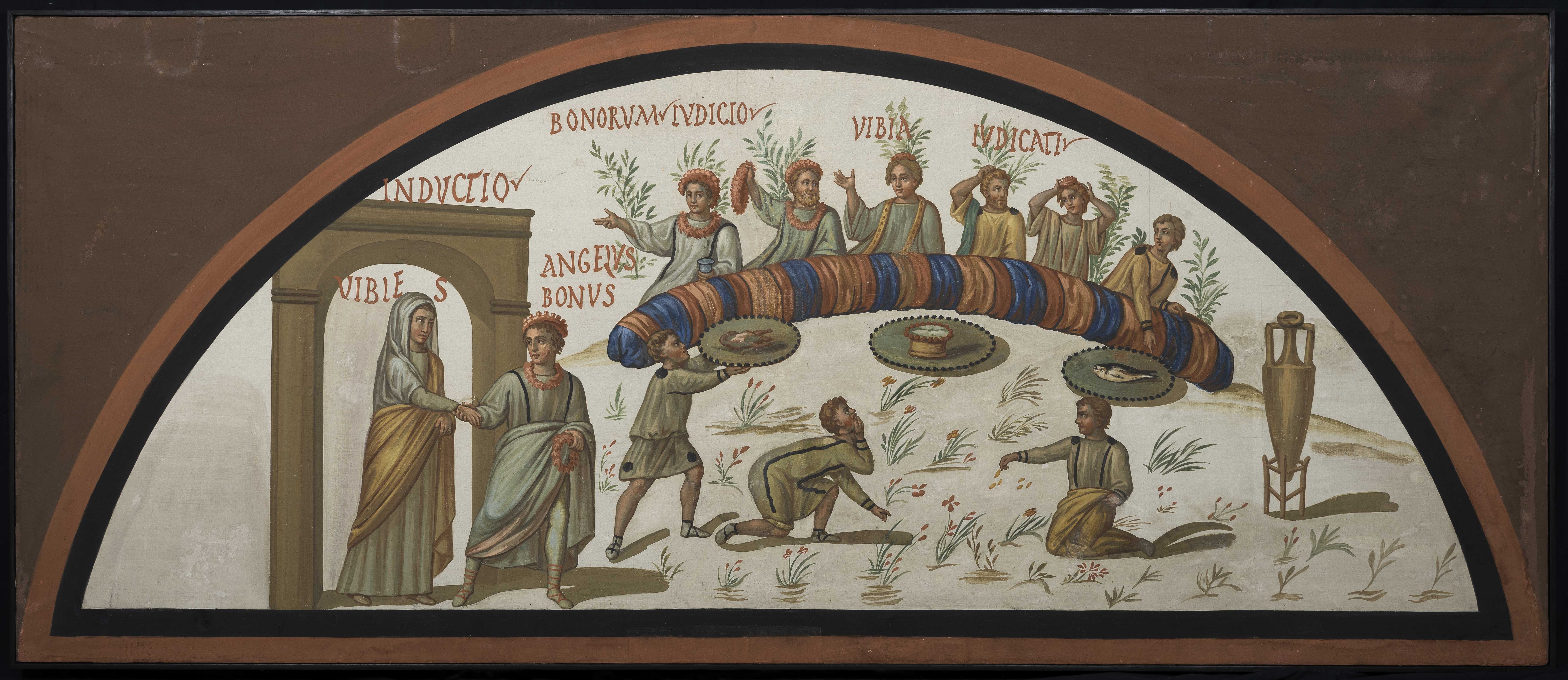
Inv. 69876-After Restoration
© 2026 Patrons of the Arts
in the Vatican Museums
Vatican Museums V-00120,
Vatican City State (Europe)
+39 0669864499