

Gallery of the Candelabra
Artist: A.Angelini, D.Torti, L.Seitz
Date: 1883-1888
Classification: Mural Painting
Dimensions: Various
Materials: Various
Adopted By: The Ohio Chapter
Total Cost: € 685,500
Description
One of the most famous, well transited, and breathtaking areas in the Vatican Museums is the Gallery of the Candelabras. Originally an open-air loggia built in 1761, the long hallway was walled at the end of the 18th century. The Gallery was redecorated by artists Ludovico Seitz, Domenico Torti, Annibale Angelini, and students under Leo XIII between 1883 and 1887. The occasion that prompted the work was the commemoration of Leo XIII’s 50th anniversary of priestly ordination.
Subdivided among six monumental rooms separated by arches, the figurative panes in the center of the sides of the vault house works by Ludovico Seitz and Domenico Torti. The Galley has a score decorated in chiaroscuro and grisaille that garnish the walls and vaults. Chiaroscuro uses strong contrasts of light and dark and bold contrasts, while grisaille is a painting technique using gray tones as a base, and may be used as an underpainting for an oil painting with other colors. These techniques help make the images in the Gallery appear three dimensional and extremely particular.
The decorative ensemble is one of great fascination and elegance in which the heralded papacy of the last renaissance Pope, Leo X, is combined with interests for the “new arts” represented by the painting “the allegory of photography.”
The paintings of the central room by Ludovico Seitz are particularly beautiful with the background compositions featuring faux gold mosaic, elegant angelic figures, and characteristically idealized views of the city of Rome. The internal decoration is a tempera painting on the wall.
What makes this gallery unique from the technical point of view:
- Its historical period – the decoration was painted on other previous decorations, without removing them with the result of a cross-section made of many layers. All these materials (glues, pigments, oils, resins, varnishes, gildings…) reacted differently to the environment with consequent decay.
- The painting technique – it’s a secco painting: means that was painted using a binder (animal glue, in some case mixed with oil) on dry plaster. It is not a fresco painting, which is a more resistant technique. Consequently, the paint layer is more fragile and sensible: this increases its decay and makes any intervention difficult.
- The environment – on such fragile decoration the environment plays an important role: the gallery is exposed to the outside environment on both its long walls. As a consequence, it’s very cold in winter and very hot in summer: moreover, the flow of visitors traffic (28.000 in a day) develop heats and humidity (our body is made of water and a person’s body heats the environment like an 80 watt light bulb).
State of Preservation
The Gallery has suffered two types of conservation problems: water leaking in through the roof and descending down the walls; and problems with the humidity that has induced flaking of the pictorial surface and formed cavities on the painting. In August of 2009, there were evident reports of fallen paint chips and an increase of peeling and buckling on the pictorial surface, elements illustrating that a much-needed intervention in the Gallery, and especially in the third room, was crucial.
As determined by technical analysis by the Painting and Wood Restoration Laboratory, the work has been divided into 4 phases for a total of 30 months which comprised the time to disassemble and reassemble the scaffolding with a 4 person team comprised of 2 restorers and 2 decorators. It occurred with two simultaneous spans starting with the most damaged work.
This intervention has been coordinated with the Technical Services of the Vatican who will resolve the relative problems of the roof leak.
During the restoration, the fixtures and glass windows have been replaced with anti UV and heat coverings. The intervention also included the installation of new curtains to reduce the direct sunlight and completed the substitution of the fixtures and windows.
Restoration Procedures
- Diagnostic Laboratory studies
- Replacement window coverings/curtains
- Photographic documentation
- Water damage clean up
- Complete restoration & materials
- Stabilizing the bricks structure of the vaults
- Isolating the roof using special waterproof materials
- Replacement of fixtures and windows
- Wiring and replacement lighting
- Publication and presentation of work
- Reinforcing of the wooden elements of the trusses.
Detail
Adopted By:
The Ohio ChapterArtist: A.Angelini, D.Torti, L.Seitz
Date: 1883-1888
Dimensions: Various
Materials: Various
Wishbook year: 2011
Total Cost
€ 685,500

Gallery of the Candelabra

Details
Adopted by: The Ohio Chapter
Artist: A.Angelini, D.Torti, L.Seitz
Date: 1883-1888
Classification: Mural Painting
Materials: Various
Dimensions: Various
Department: XIX Century and Contemporary Art
Laboratory: Painting & Wood
Wishbook year: 2011
Description
One of the most famous, well transited, and breathtaking areas in the Vatican Museums is the Gallery of the Candelabras. Originally an open-air loggia built in 1761, the long hallway was walled at the end of the 18th century. The Gallery was redecorated by artists Ludovico Seitz, Domenico Torti, Annibale Angelini, and students under Leo XIII between 1883 and 1887. The occasion that prompted the work was the commemoration of Leo XIII’s 50th anniversary of priestly ordination.
Subdivided among six monumental rooms separated by arches, the figurative panes in the center of the sides of the vault house works by Ludovico Seitz and Domenico Torti. The Galley has a score decorated in chiaroscuro and grisaille that garnish the walls and vaults. Chiaroscuro uses strong contrasts of light and dark and bold contrasts, while grisaille is a painting technique using gray tones as a base, and may be used as an underpainting for an oil painting with other colors. These techniques help make the images in the Gallery appear three dimensional and extremely particular.
The decorative ensemble is one of great fascination and elegance in which the heralded papacy of the last renaissance Pope, Leo X, is combined with interests for the “new arts” represented by the painting “the allegory of photography.”
The paintings of the central room by Ludovico Seitz are particularly beautiful with the background compositions featuring faux gold mosaic, elegant angelic figures, and characteristically idealized views of the city of Rome. The internal decoration is a tempera painting on the wall.
What makes this gallery unique from the technical point of view:
- Its historical period – the decoration was painted on other previous decorations, without removing them with the result of a cross-section made of many layers. All these materials (glues, pigments, oils, resins, varnishes, gildings…) reacted differently to the environment with consequent decay.
- The painting technique – it’s a secco painting: means that was painted using a binder (animal glue, in some case mixed with oil) on dry plaster. It is not a fresco painting, which is a more resistant technique. Consequently, the paint layer is more fragile and sensible: this increases its decay and makes any intervention difficult.
- The environment – on such fragile decoration the environment plays an important role: the gallery is exposed to the outside environment on both its long walls. As a consequence, it’s very cold in winter and very hot in summer: moreover, the flow of visitors traffic (28.000 in a day) develop heats and humidity (our body is made of water and a person’s body heats the environment like an 80 watt light bulb).
State of Preservation
The Gallery has suffered two types of conservation problems: water leaking in through the roof and descending down the walls; and problems with the humidity that has induced flaking of the pictorial surface and formed cavities on the painting. In August of 2009, there were evident reports of fallen paint chips and an increase of peeling and buckling on the pictorial surface, elements illustrating that a much-needed intervention in the Gallery, and especially in the third room, was crucial.
As determined by technical analysis by the Painting and Wood Restoration Laboratory, the work has been divided into 4 phases for a total of 30 months which comprised the time to disassemble and reassemble the scaffolding with a 4 person team comprised of 2 restorers and 2 decorators. It occurred with two simultaneous spans starting with the most damaged work.
This intervention has been coordinated with the Technical Services of the Vatican who will resolve the relative problems of the roof leak.
During the restoration, the fixtures and glass windows have been replaced with anti UV and heat coverings. The intervention also included the installation of new curtains to reduce the direct sunlight and completed the substitution of the fixtures and windows.
Restoration Procedures
- Diagnostic Laboratory studies
- Replacement window coverings/curtains
- Photographic documentation
- Water damage clean up
- Complete restoration & materials
- Stabilizing the bricks structure of the vaults
- Isolating the roof using special waterproof materials
- Replacement of fixtures and windows
- Wiring and replacement lighting
- Publication and presentation of work
- Reinforcing of the wooden elements of the trusses.
Media

Gallery of the Candelabra - Before Restoration
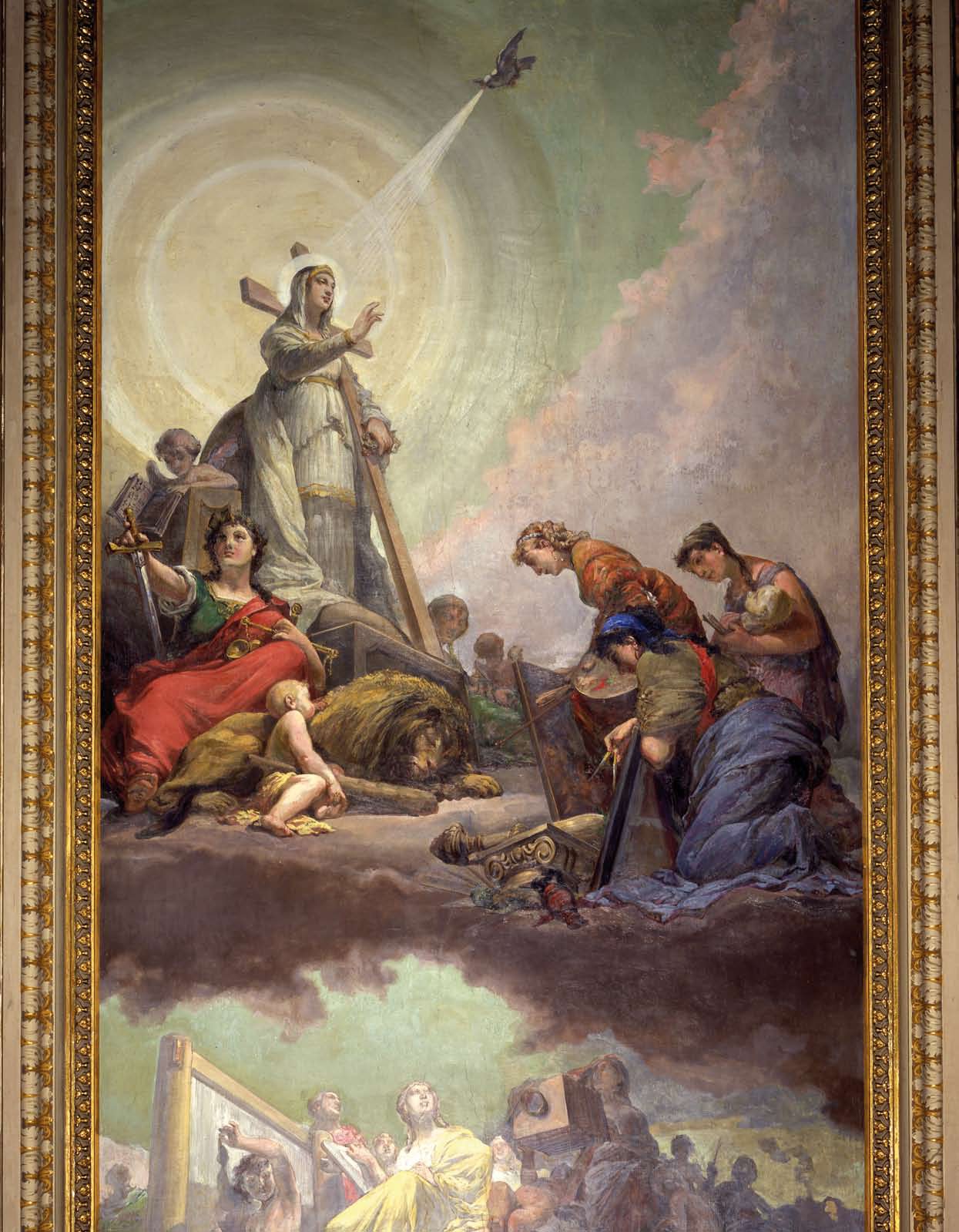
Gallery of the Candelabra - Mural Painting
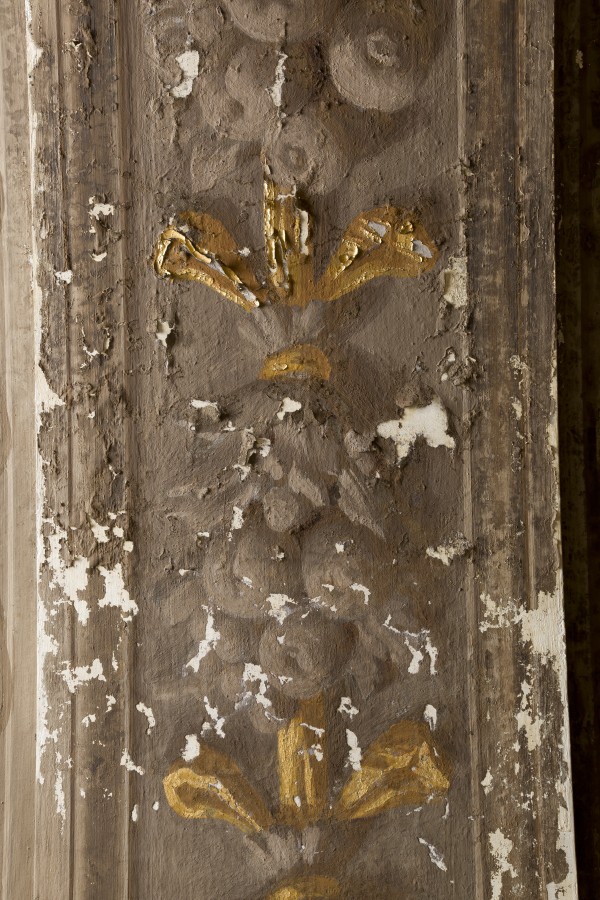
Gallery of the Candelabra - Guilding Before
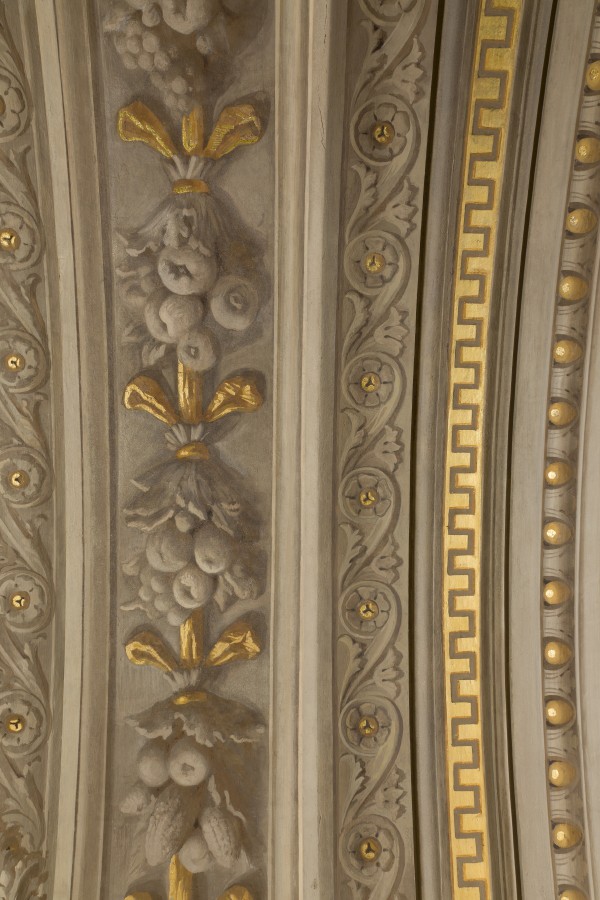
Gallery of the Candelabra - Ghirlanda After

Gallery of the Candelabra - After Restoration view

Gallery of the Candelabra - After Restoration
© 2026 Patrons of the Arts
in the Vatican Museums
Vatican Museums V-00120,
Vatican City State (Europe)
+39 0669864499