

Triptych with Crucifixion and Saints
Artist: Niccolò di Liberatore called The Pupil
Date: 1480
Classification: Painting
Dimensions: Central panel 250 x 117 cm; Right panel 151 x 84 cm; Left panel 157 x 84 cm
Materials: Tempera on wood
Adopted By: The New York Chapter
Description
HIGH PRIORITY PROJECT
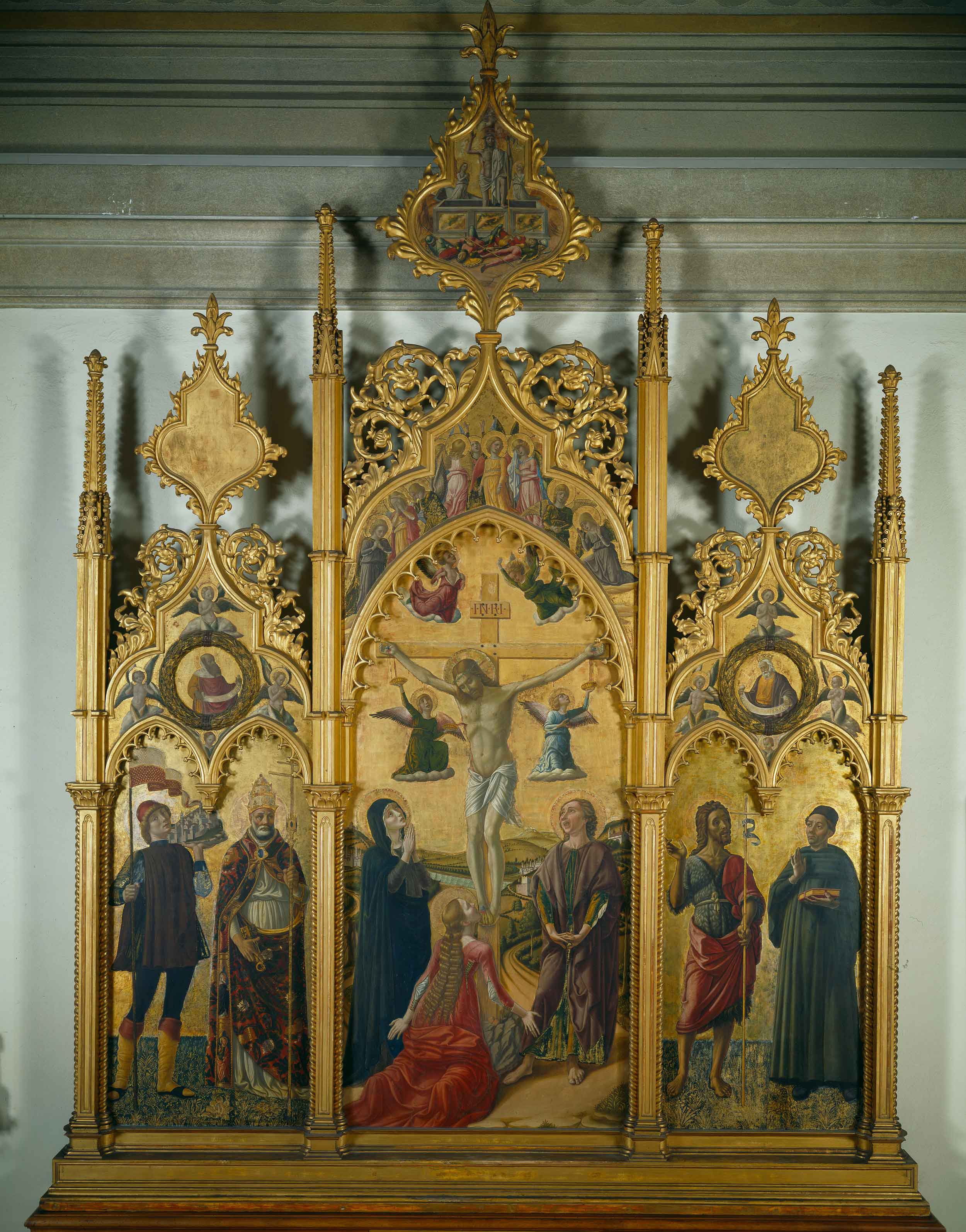
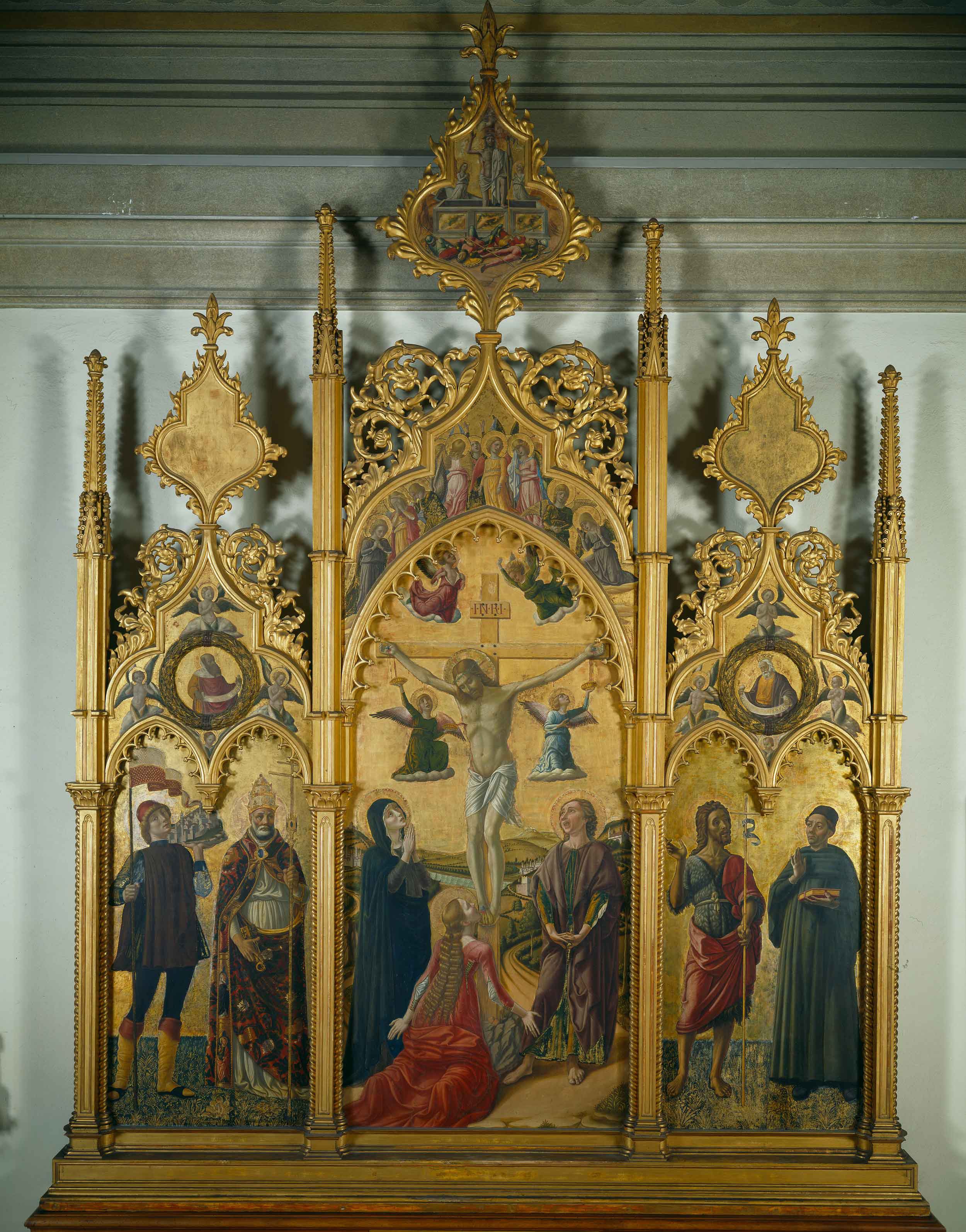
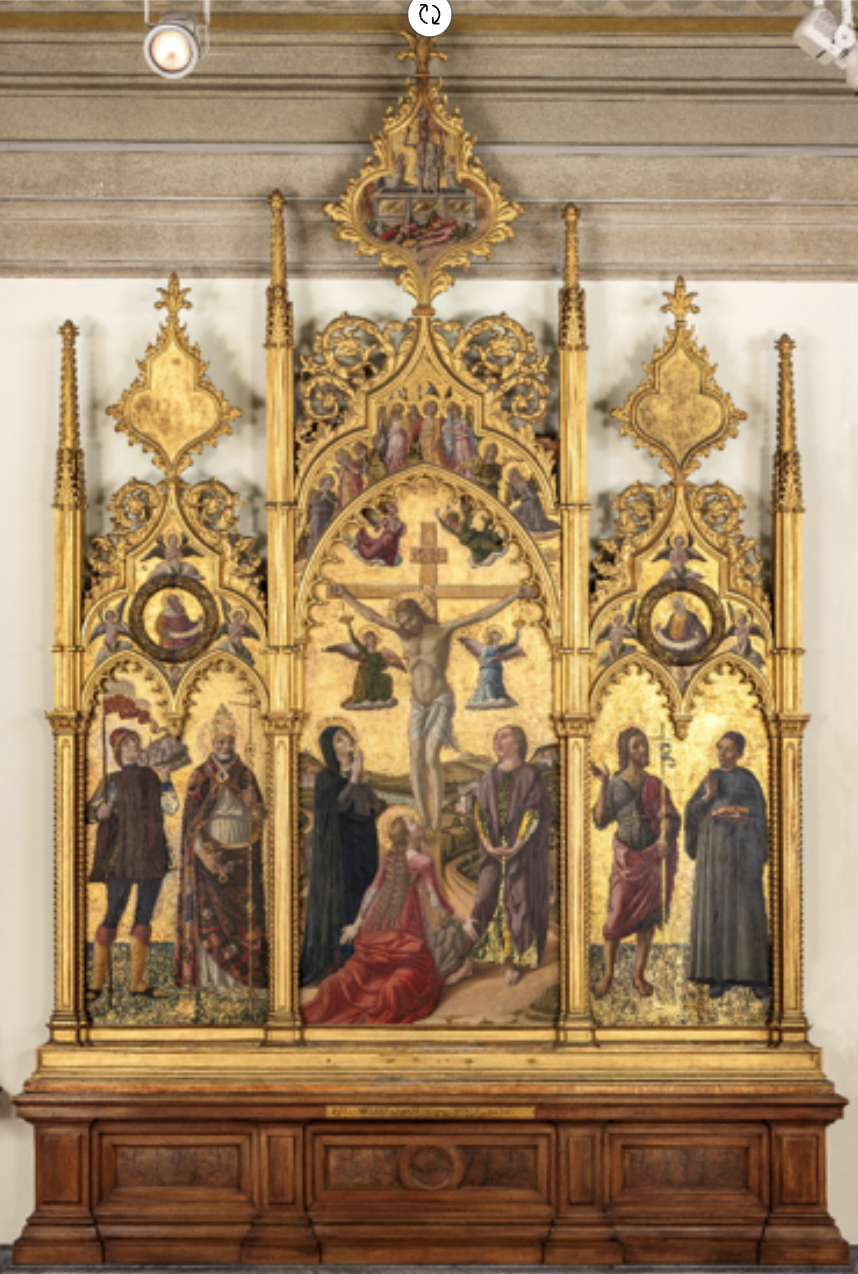
The splendid tryptic, now on display in Room VI of the Vatican Pinacoteca, was painted for the Valenti chapel of the collegiate church of San Venanzio in Camerino, Marche. The work is set within an imposing and elaborate mixtilinear frame and has divisions into three registers. The central panel, in line with the resurrection in the upper register, depicts Christ on the cross, surrounded by angels and with the praying Madonna, Magdalene, and the Baptist at his feet. The intense naturalism and pathos of the composition denote tangents with the manner of Carlo Crivelli and Nordic influences. The landscape in the background, extraordinarily realistic and innovative despite the gold background, shows knowledge of the works of Perugino. Saint Venantius holds up the city of Camerino in the left panel.
TOTAL COST: € 153.791,61 ($ 150,315.92)
Restoration Procedures
-
Support: surface glazing, disassembly of the various elements, and anoxic treatment
-
Removal of the old parquetry, consolidation of the wood, and restoration of the deformed elements
-
Restoration by inserting poplar wedges in all cracks
-
Stain application to chromatically equalize the wooden elements added to the structure
-
Design and construction of a new parquetry and support structure
-
Treatment of the entire structure with virgin wax
Detail
Adopted By:
The New York ChapterInventory N°: 40299
Artist: Niccolò di Liberatore called The Pupil
Date: 1480
Dimensions: Central panel 250 x 117 cm; Right panel 151 x 84 cm; Left panel 157 x 84 cm
Materials: Tempera on wood
Wishbook year: 2023
Triptych of the Madonna and Child with Saints - Final Restoration Report
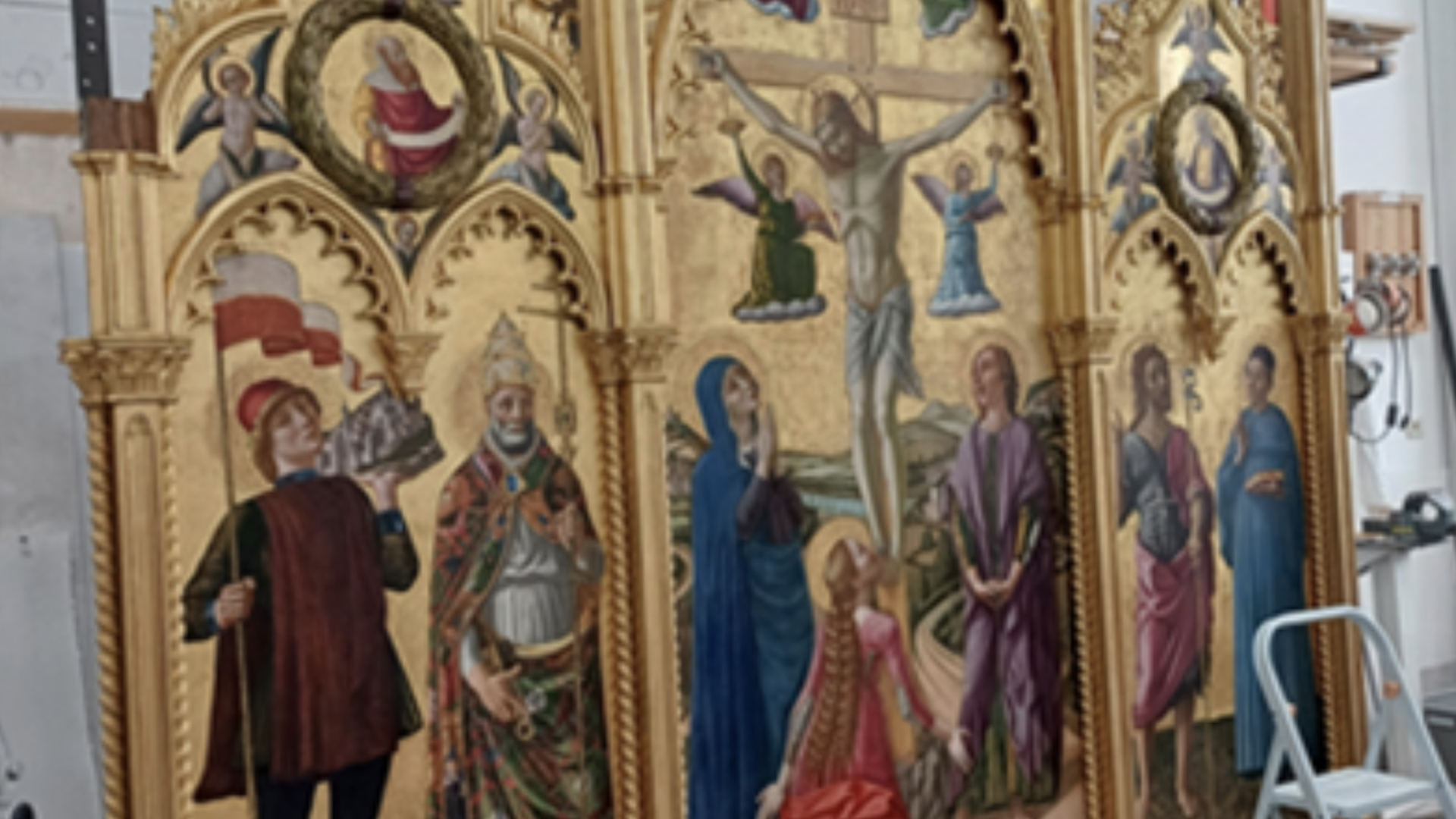
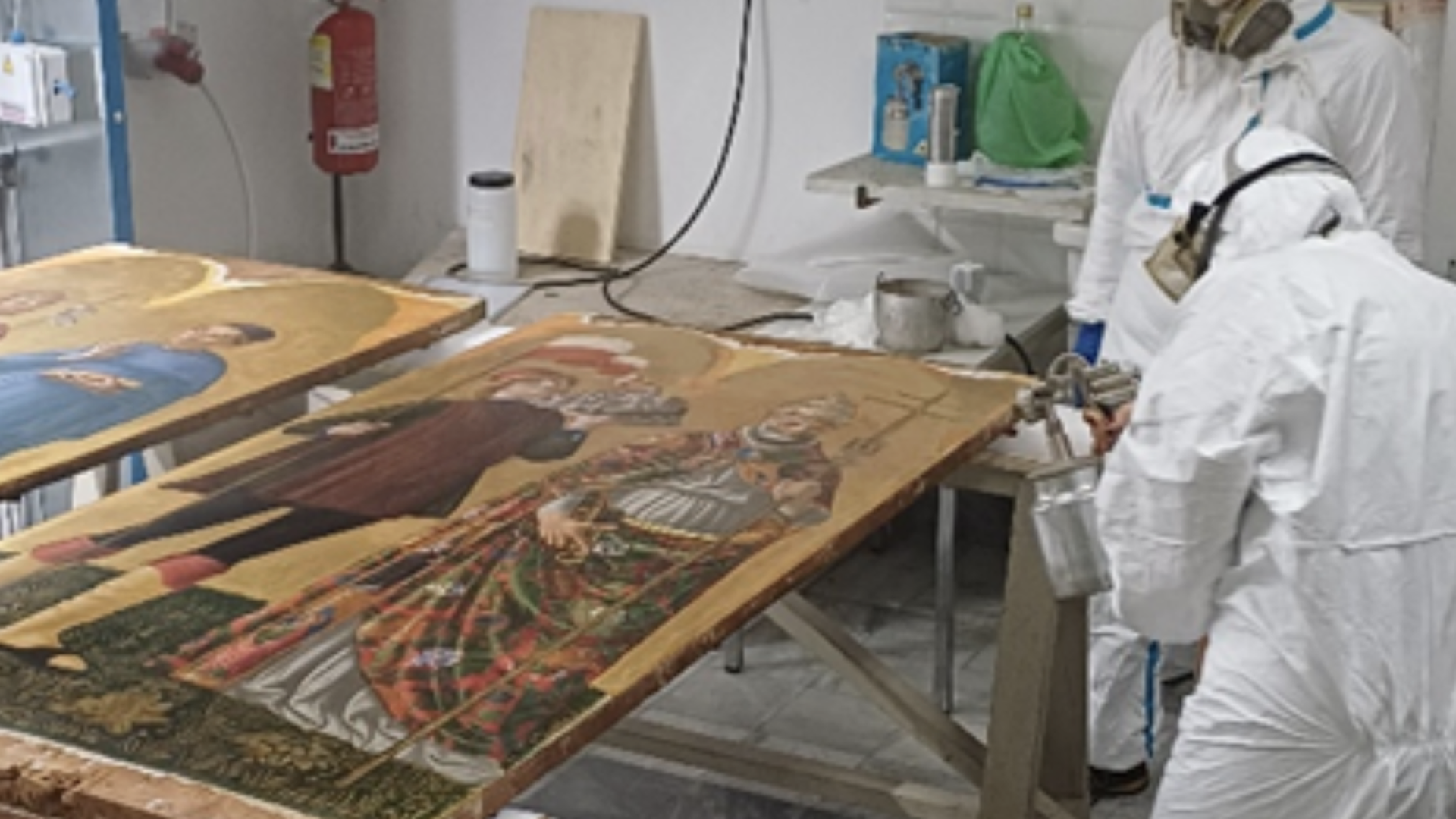
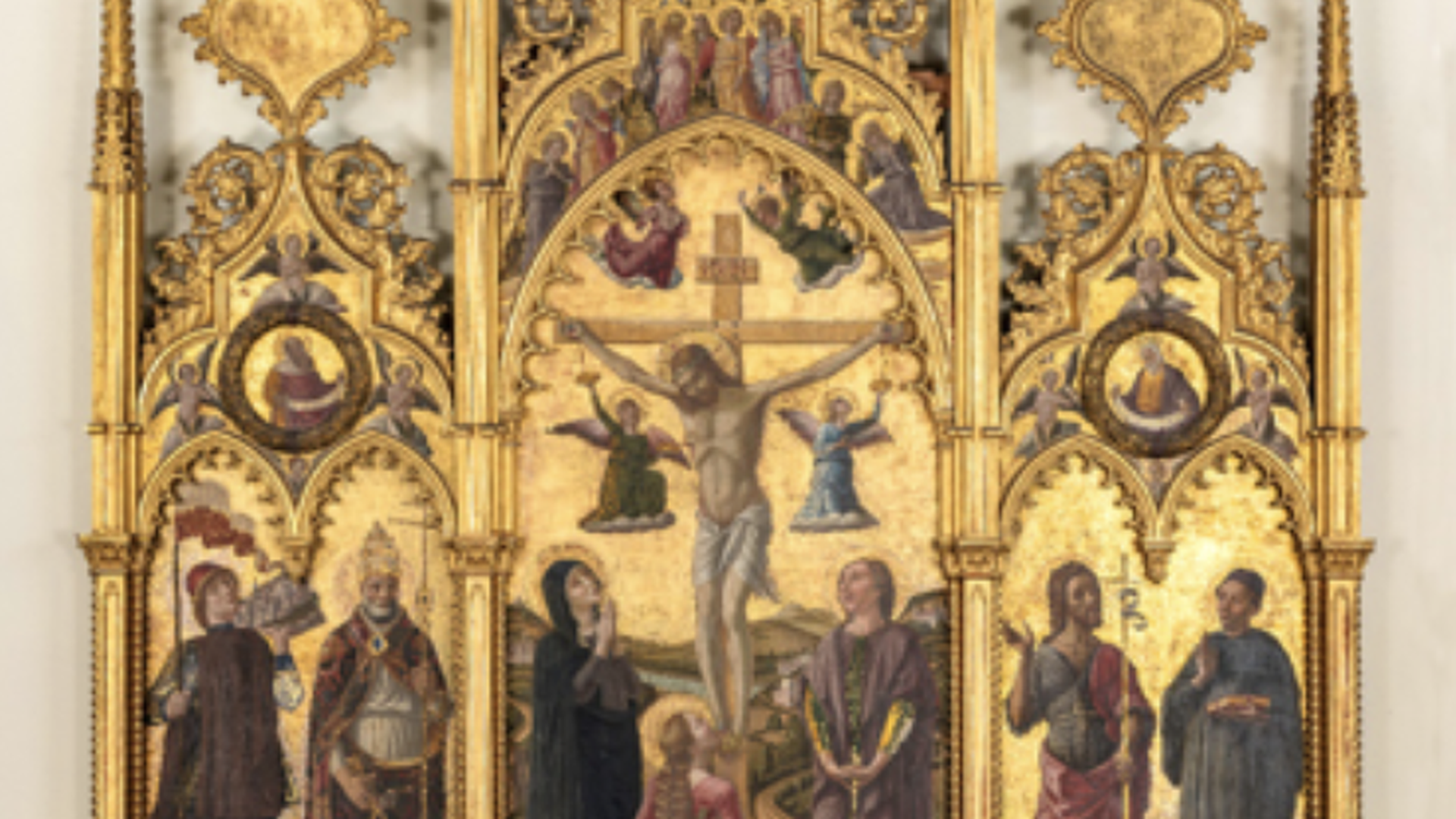
The restoration of the Triptych with Crucifixion and Saints is complete. The only thing left to do is to reassemble it in Room VI of the Pinacoteca.
The movement of the painting will be documented by the photographic laboratory of the Vatican Museums. Meanwhile, the restorers are completing the reintegration and documentation of the artist's technique. The need to make the entire logistic team available and to close Room VI of the Pinacoteca to visitors has delayed the repositioning of the panels, which will take place in the next few days.
It was fascinating to see how the polyptych responds to the typical characteristics of 15th-century panels, according to the dictates mentioned by Cennino Cennini in his Book of Art. The painting, in its elements and methodology, reproduces all the medieval practices for creating a work in tempera with a gilded ground on a panel: the blotting between the panels, the preparation with chalk and glue, the bolus for the gilding, etc.
Triptych with Crucifixion and Saints - Restoration Update
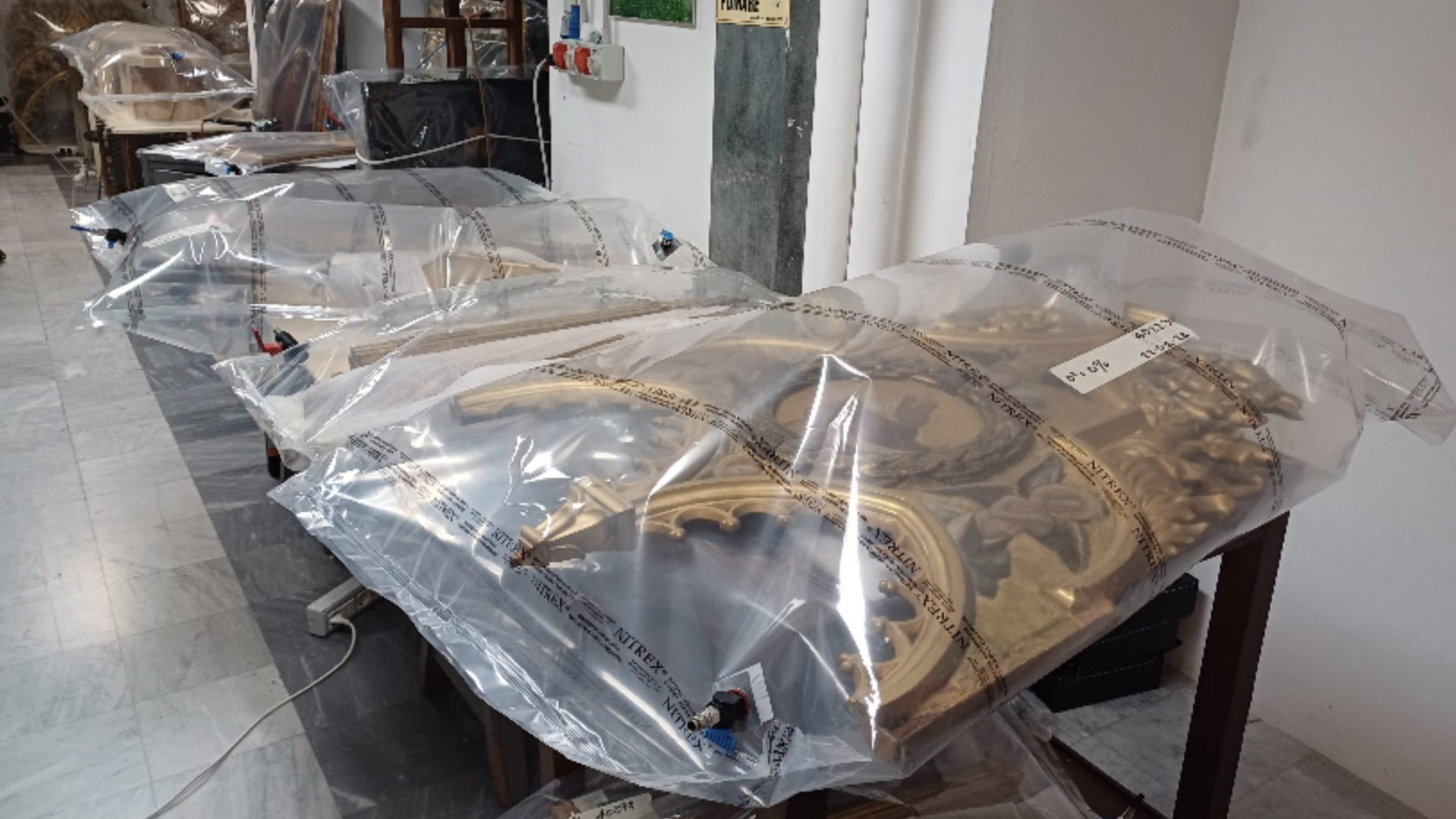
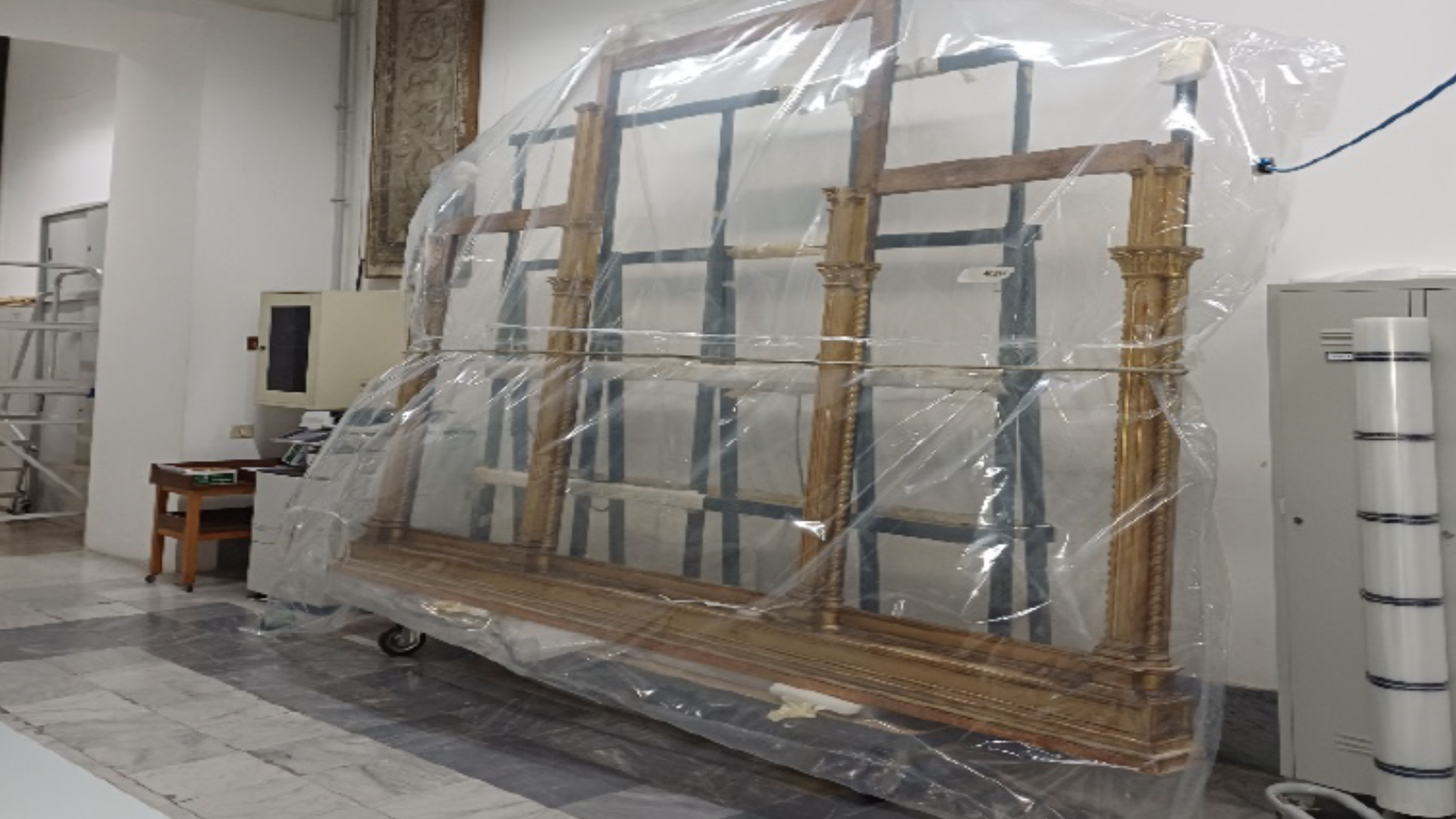
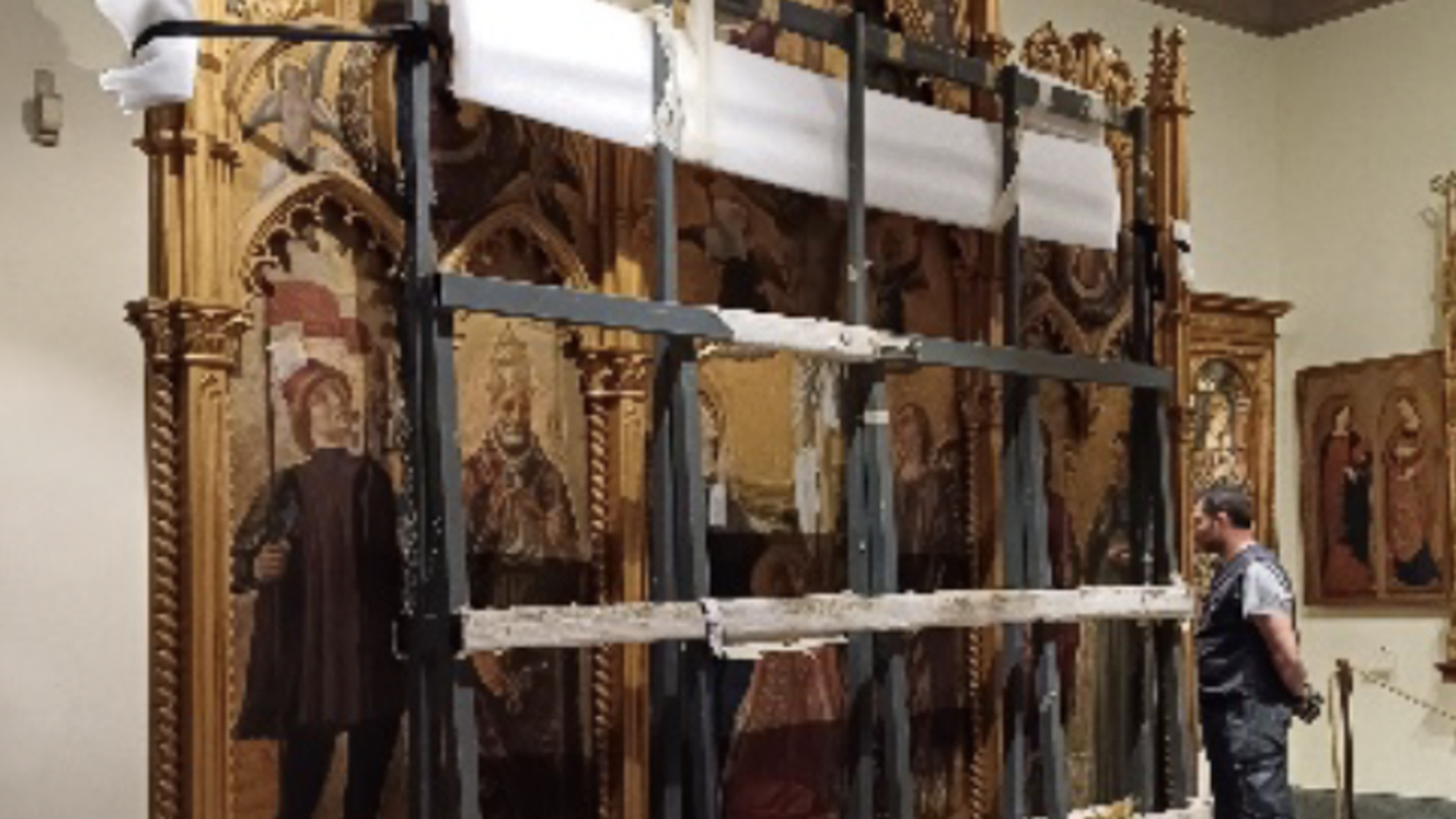
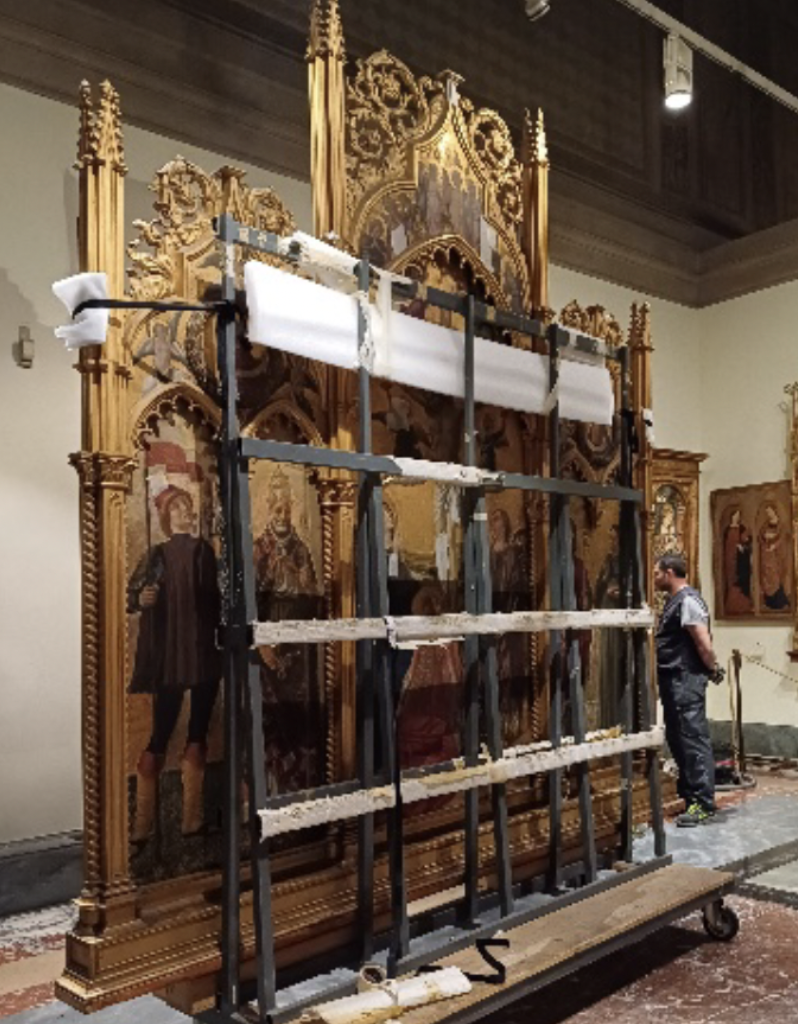
The painting consists of a complex structure of considerable size, one of the biggest and most articulated in the Vatican Pinacoteca. Probably disassembled in the 19th century to transport it from the Marche region, it was reassembled in the Vatican by adding new structural and decorative parts. In November 2023, a complex movement was carried out to transport the polyptych from the Pinacoteca to the Restoration Laboratories.
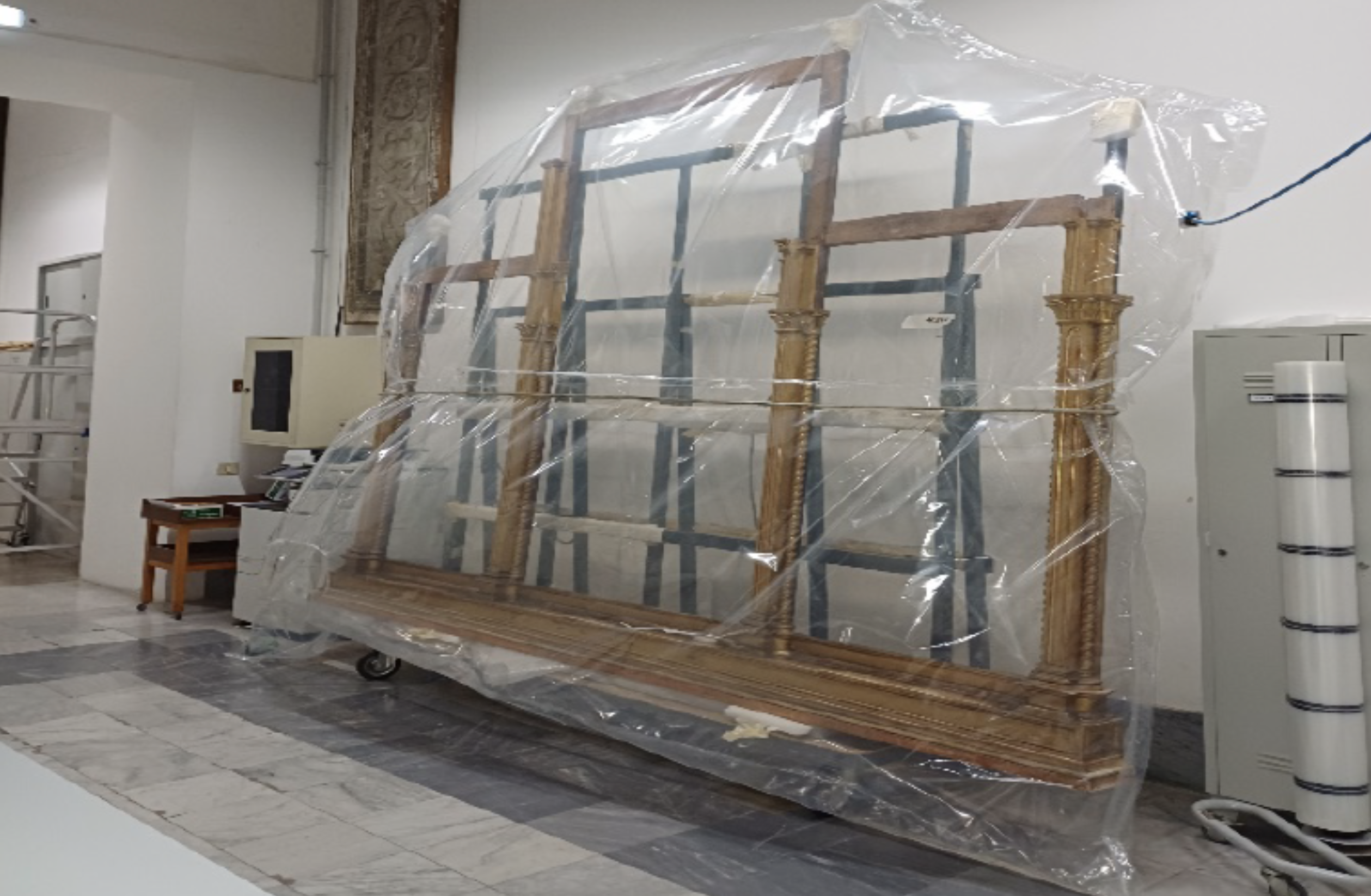
After careful observation under grazing light, the restorers performed minor bandaging where the paint film appeared lifted or unadhered before moving the painting. The veiling with Japanese paper and adhesive in water was done two days earlier to allow perfect drying before moving the work. Exactly as was the case two centuries ago, it was impossible to move the work without disassembling it, an operation that began before removing the polyptych from the wall by removing the highest brush strokes. The individual disassembled parts were placed in plastic bags to perform the anoxic treatment, including of course the frame. The anoxic nitrogen treatment is specifically for Cultural Heritage applications.

Triptych with Crucifixion and Saints
Details
Adopted by: The New York Chapter
Inventory: 40299
Artist: Niccolò di Liberatore called The Pupil
Date: 1480
Classification: Painting
Materials: Tempera on wood
Dimensions: Central panel 250 x 117 cm; Right panel 151 x 84 cm; Left panel 157 x 84 cm
Museum: Pinacoteca
Department: XV-XVI Century Art
Laboratory: Painting & Wood
Wishbook year: 2023
Description
HIGH PRIORITY PROJECT
The splendid tryptic, now on display in Room VI of the Vatican Pinacoteca, was painted for the Valenti chapel of the collegiate church of San Venanzio in Camerino, Marche. The work is set within an imposing and elaborate mixtilinear frame and has divisions into three registers. The central panel, in line with the resurrection in the upper register, depicts Christ on the cross, surrounded by angels and with the praying Madonna, Magdalene, and the Baptist at his feet. The intense naturalism and pathos of the composition denote tangents with the manner of Carlo Crivelli and Nordic influences. The landscape in the background, extraordinarily realistic and innovative despite the gold background, shows knowledge of the works of Perugino. Saint Venantius holds up the city of Camerino in the left panel.
TOTAL COST: € 153.791,61 ($ 150,315.92)
Restoration Procedures
-
Support: surface glazing, disassembly of the various elements, and anoxic treatment
-
Removal of the old parquetry, consolidation of the wood, and restoration of the deformed elements
-
Restoration by inserting poplar wedges in all cracks
-
Stain application to chromatically equalize the wooden elements added to the structure
-
Design and construction of a new parquetry and support structure
-
Treatment of the entire structure with virgin wax
Media
Crucifixion and Saints
Restorations Update: Triptych of the Madonna and Child with Saints - Final Restoration Report
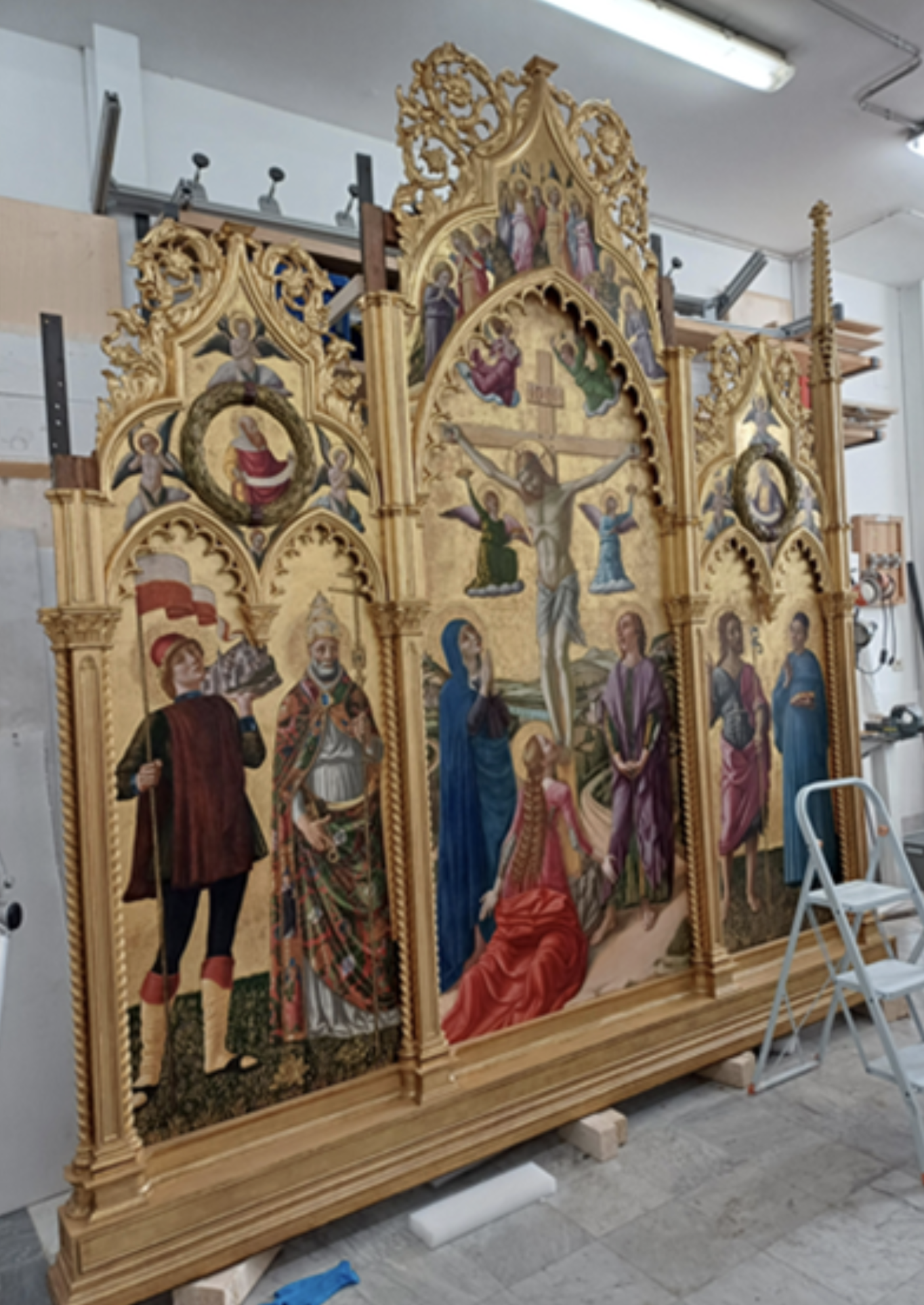
The restoration of the Triptych with Crucifixion and Saints is complete. The only thing left to do is to reassemble it in Room VI of the Pinacoteca.
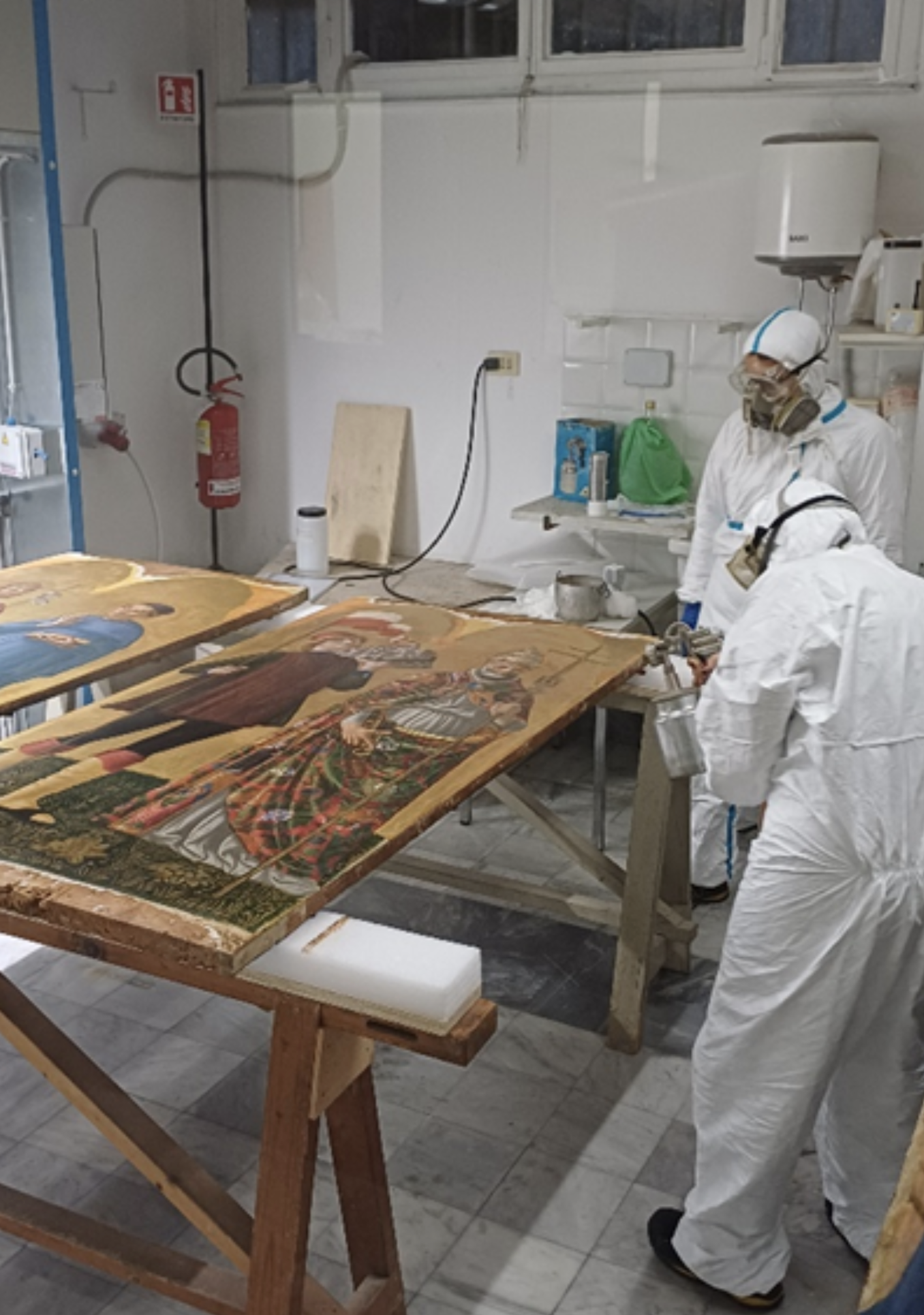
The movement of the painting will be documented by the photographic laboratory of the Vatican Museums. Meanwhile, the restorers are completing the reintegration and documentation of the artist's technique. The need to make the entire logistic team available and to close Room VI of the Pinacoteca to visitors has delayed the repositioning of the panels, which will take place in the next few days.
It was fascinating to see how the polyptych responds to the typical characteristics of 15th-century panels, according to the dictates mentioned by Cennino Cennini in his Book of Art. The painting, in its elements and methodology, reproduces all the medieval practices for creating a work in tempera with a gilded ground on a panel: the blotting between the panels, the preparation with chalk and glue, the bolus for the gilding, etc.
Restorations Update: Triptych with Crucifixion and Saints - Restoration Update
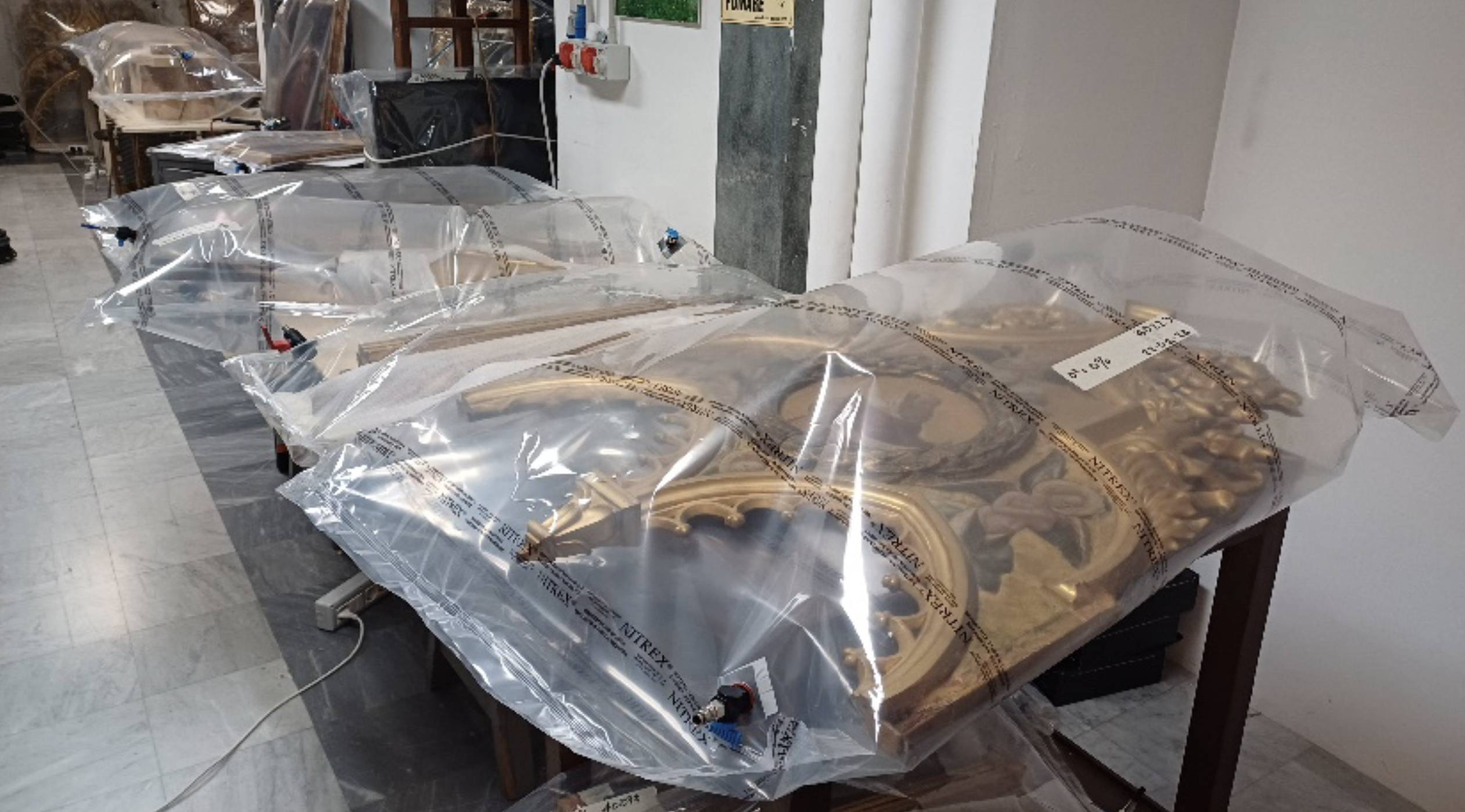
The painting consists of a complex structure of considerable size, one of the biggest and most articulated in the Vatican Pinacoteca. Probably disassembled in the 19th century to transport it from the Marche region, it was reassembled in the Vatican by adding new structural and decorative parts. In November 2023, a complex movement was carried out to transport the polyptych from the Pinacoteca to the Restoration Laboratories.
After careful observation under grazing light, the restorers performed minor bandaging where the paint film appeared lifted or unadhered before moving the painting. The veiling with Japanese paper and adhesive in water was done two days earlier to allow perfect drying before moving the work. Exactly as was the case two centuries ago, it was impossible to move the work without disassembling it, an operation that began before removing the polyptych from the wall by removing the highest brush strokes. The individual disassembled parts were placed in plastic bags to perform the anoxic treatment, including of course the frame. The anoxic nitrogen treatment is specifically for Cultural Heritage applications.
© 2026 Patrons of the Arts
in the Vatican Museums
Vatican Museums V-00120,
Vatican City State (Europe)
+39 0669864499