

Anubis Statue
Artist: Unknown
Date: 1st-2nd century A.D.
Classification: Statue
Dimensions: 155 x 50 x 28 cm
Materials: Marble
Adopted By: The Michigan Chapter
Description
HIGH PRIORITY PROJECT
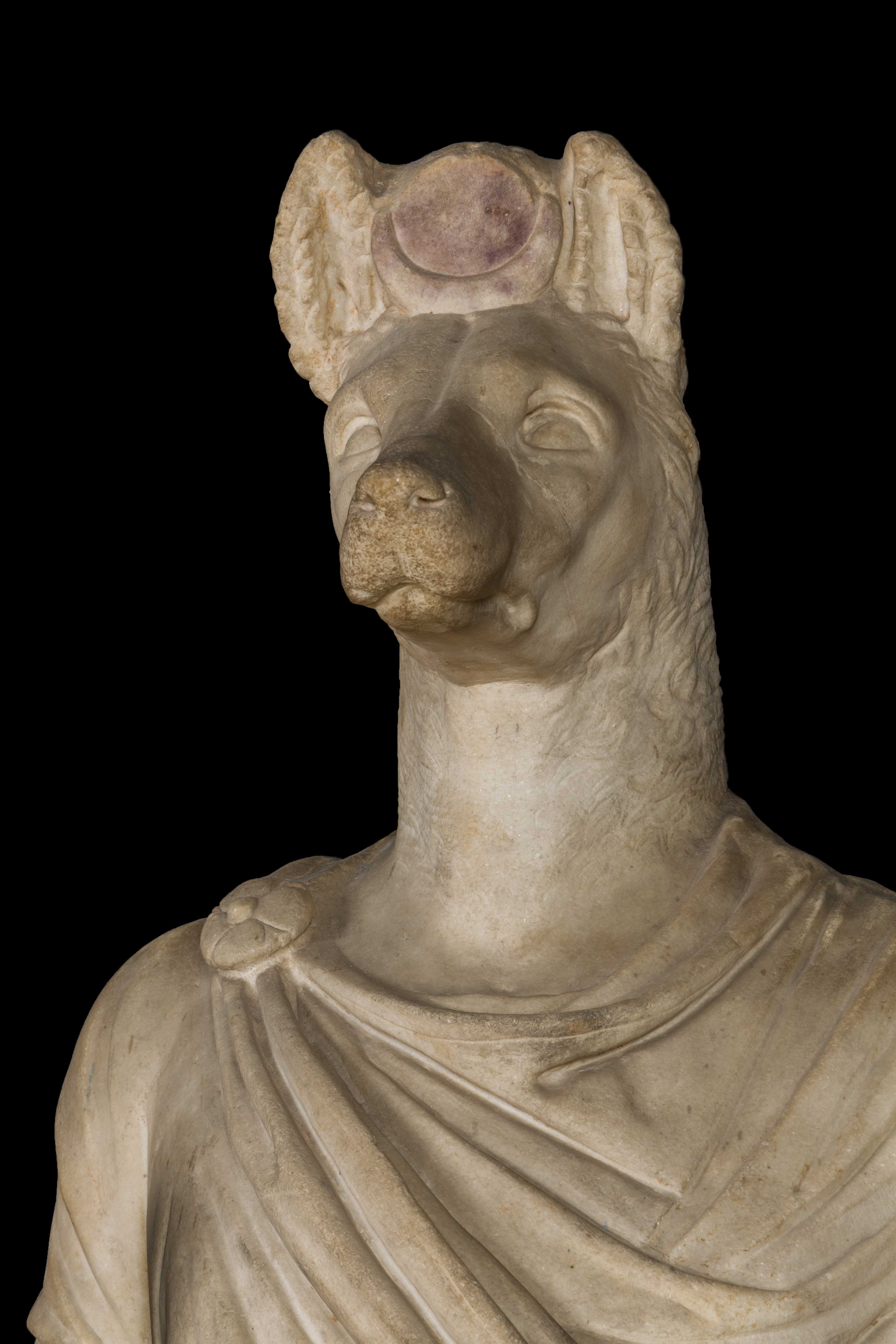
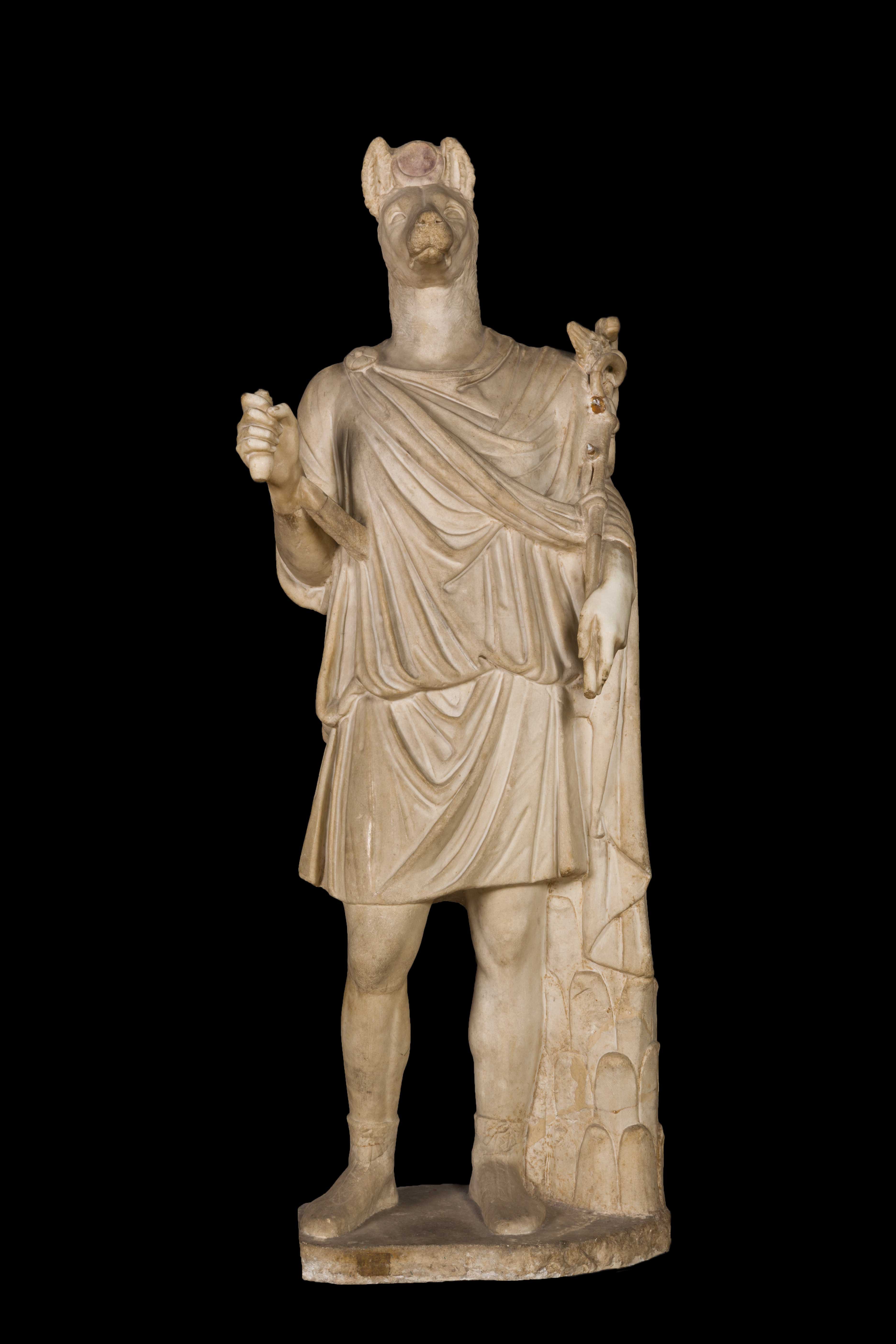
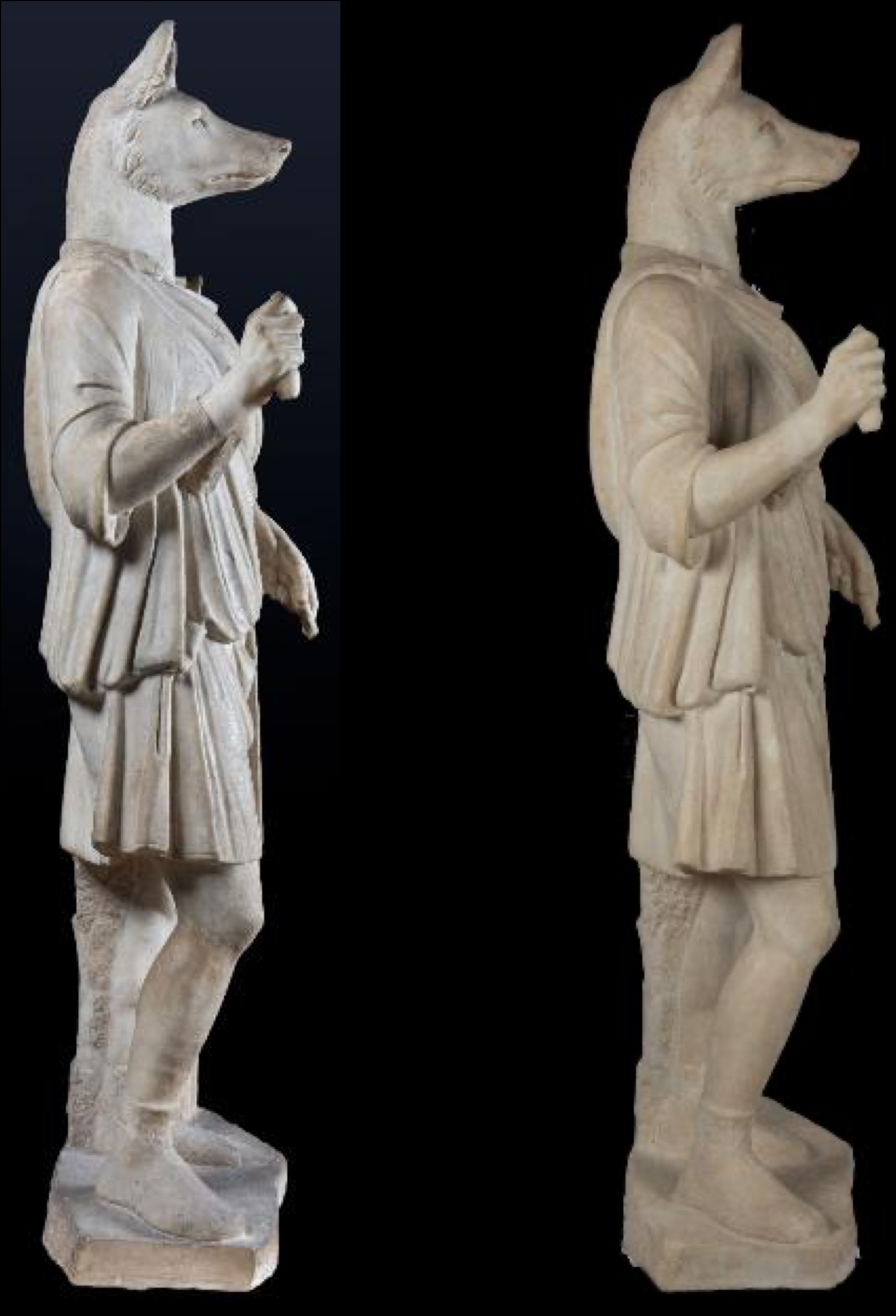
This figurative standing statue is in a knee-length tunic, which includes a belt that partially covers the mantel, and falls upon the side of the body. The right hand holds a sistrum, a musical instrument commonly used during Egyptian religious ceremonies, while the left hand holds a caduceus, an attribute of the god Mercury. There is a solar disk between the ears, and on the left is a palm tree trunk, which evokes the landscape at the Nile River. The head is of the god Anubis, one of the oldest and most important deities of the Egyptian pantheon.
TOTAL COST: € 32.592,53 ($ 31,855.93)
Restoration Procedures
- The use of cyclododecane to localize areas and provide preliminary protection
- Remove surface deposits and any salts present on the surface
- The laser equipment will remove stains and scratches
- Check on the stability of the metal elements supporting the integrations
Detail
Adopted By:
The Michigan ChapterInventory N°: 22840
Artist: Unknown
Date: 1st-2nd century A.D.
Provenience: Egypt
Dimensions: 155 x 50 x 28 cm
Materials: Marble
Department:
Egyptian and Near Eastern AntiquitiesCurators:
Dr. Alessia Amentamuseum:
Gregorian Egyptian MuseumLaboratories:
Stone MaterialsWishbook year: 2023
Anubis Statue - Final Restoration Report
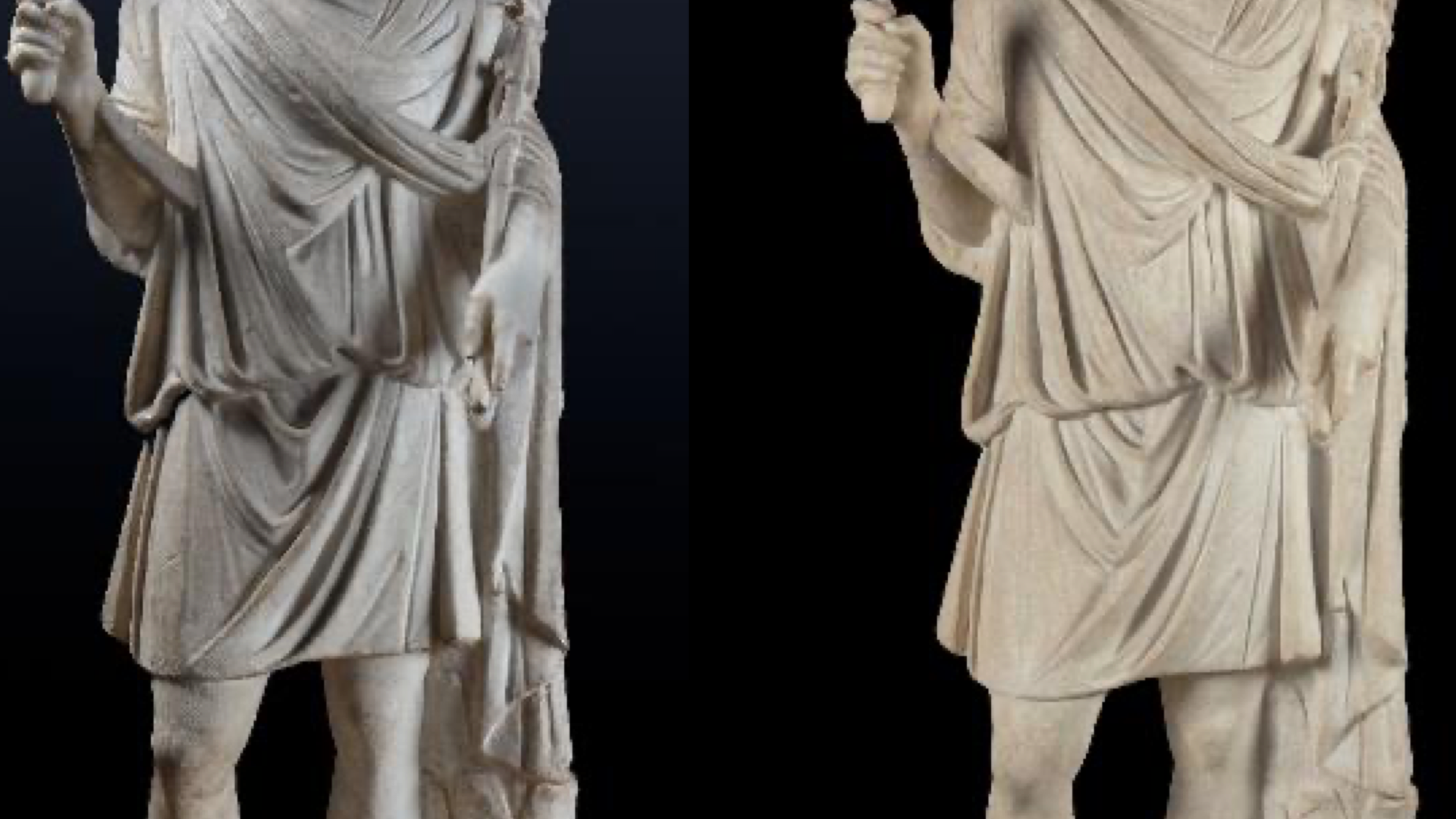
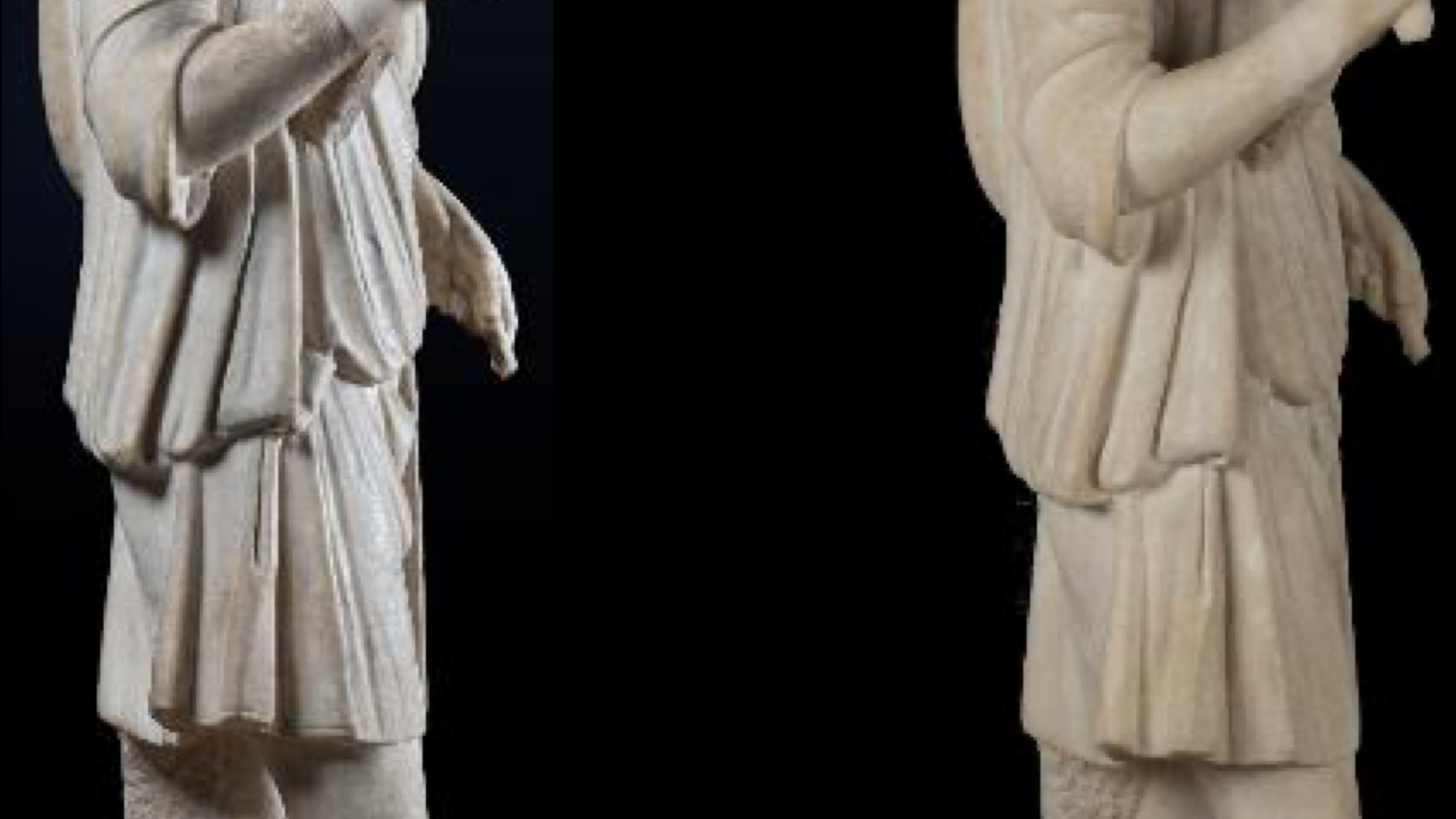
The state of preservation of the piece revealed the following damages:
- Wear and alteration of the gold leaf
- Plastic adhesives
- Differential alteration
- Spray paint
- Altered metal sheets
- Erosion
- Loss of integral parts with exposed pins
- Anthropogenic contributions due to handling
- Graffiti
A very crucial cleaning process was conducted on the statue in two different phases:
- First phase: cellulose pulp and water compresses
- Second phase: chemical removal of random deposits (splashes and drips)
- Originally, there was a gold foil applied to the disc.
- During the period of burial, gypsum accumulated, fragmenting the foil and forming nanometric particles with irregular profiles and varying diameters (32-117 mm).
- The interaction between light and the nanometric gold particles gives the disc its violet color.

Anubis Statue
Details
Adopted by: The Michigan Chapter
Inventory: 22840
Artist: Unknown
Date: 1st-2nd century A.D.
Provenience: Egypt
Classification: Statue
Materials: Marble
Dimensions: 155 x 50 x 28 cm
Museum: Gregorian Egyptian Museum
Department: Egyptian and Near Eastern Antiquities
Laboratory: Stone Materials
Wishbook year: 2023
Description
HIGH PRIORITY PROJECT
This figurative standing statue is in a knee-length tunic, which includes a belt that partially covers the mantel, and falls upon the side of the body. The right hand holds a sistrum, a musical instrument commonly used during Egyptian religious ceremonies, while the left hand holds a caduceus, an attribute of the god Mercury. There is a solar disk between the ears, and on the left is a palm tree trunk, which evokes the landscape at the Nile River. The head is of the god Anubis, one of the oldest and most important deities of the Egyptian pantheon.
TOTAL COST: € 32.592,53 ($ 31,855.93)
Restoration Procedures
- The use of cyclododecane to localize areas and provide preliminary protection
- Remove surface deposits and any salts present on the surface
- The laser equipment will remove stains and scratches
- Check on the stability of the metal elements supporting the integrations
Media

Anubis Statue - Detail
Anubis Statue
Restorations Update: Anubis Statue - Final Restoration Report
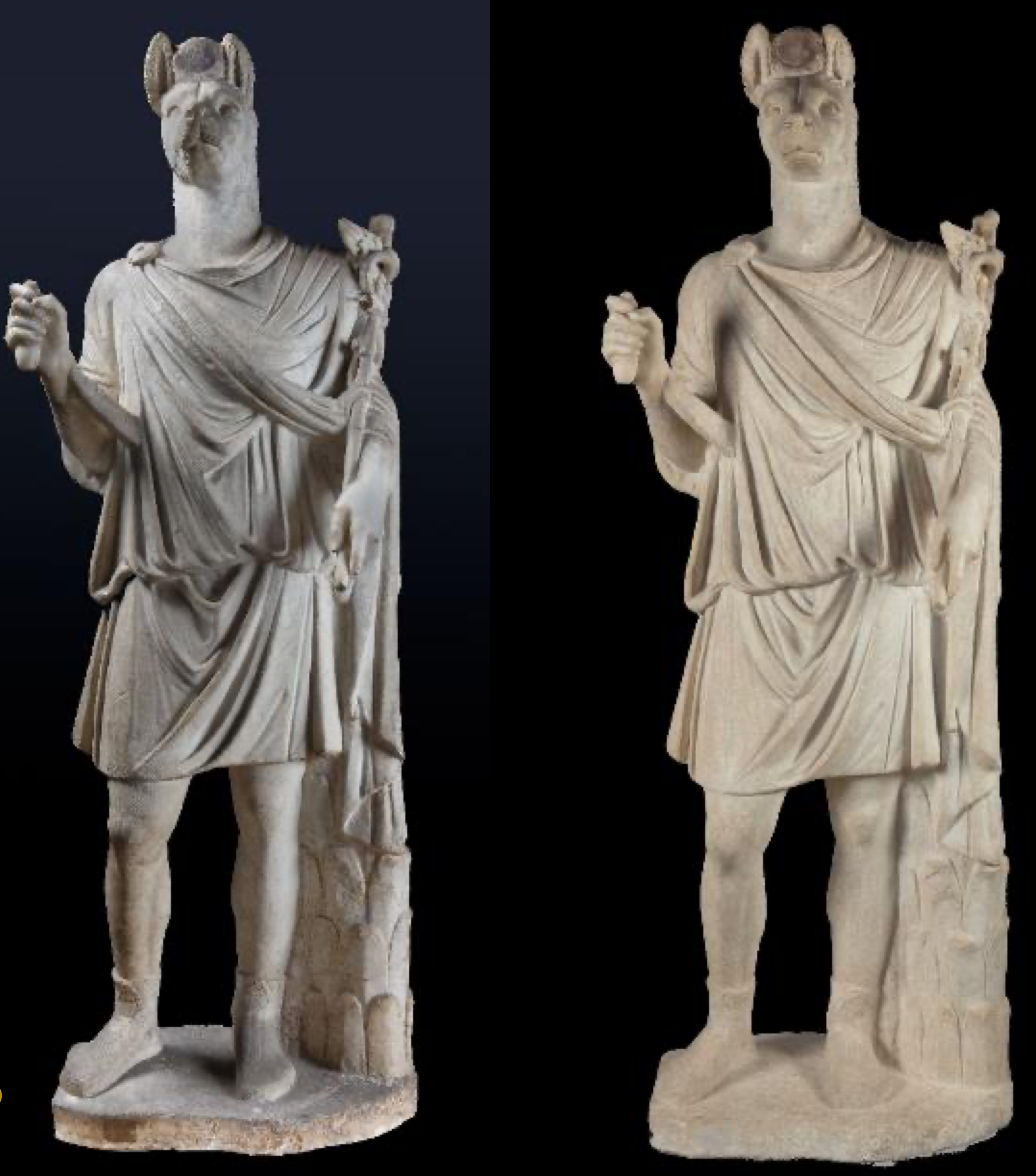
The state of preservation of the piece revealed the following damages:
- Wear and alteration of the gold leaf
- Plastic adhesives
- Differential alteration
- Spray paint
- Altered metal sheets
- Erosion
- Loss of integral parts with exposed pins
- Anthropogenic contributions due to handling
- Graffiti
A very crucial cleaning process was conducted on the statue in two different phases:
- First phase: cellulose pulp and water compresses
- Second phase: chemical removal of random deposits (splashes and drips)
- Originally, there was a gold foil applied to the disc.
- During the period of burial, gypsum accumulated, fragmenting the foil and forming nanometric particles with irregular profiles and varying diameters (32-117 mm).
- The interaction between light and the nanometric gold particles gives the disc its violet color.
© 2026 Patrons of the Arts
in the Vatican Museums
Vatican Museums V-00120,
Vatican City State (Europe)
+39 0669864499